Gallery walls can look easy from far away. Up close, they hold a lot of secrets.
1. The floor is your first gallery wall
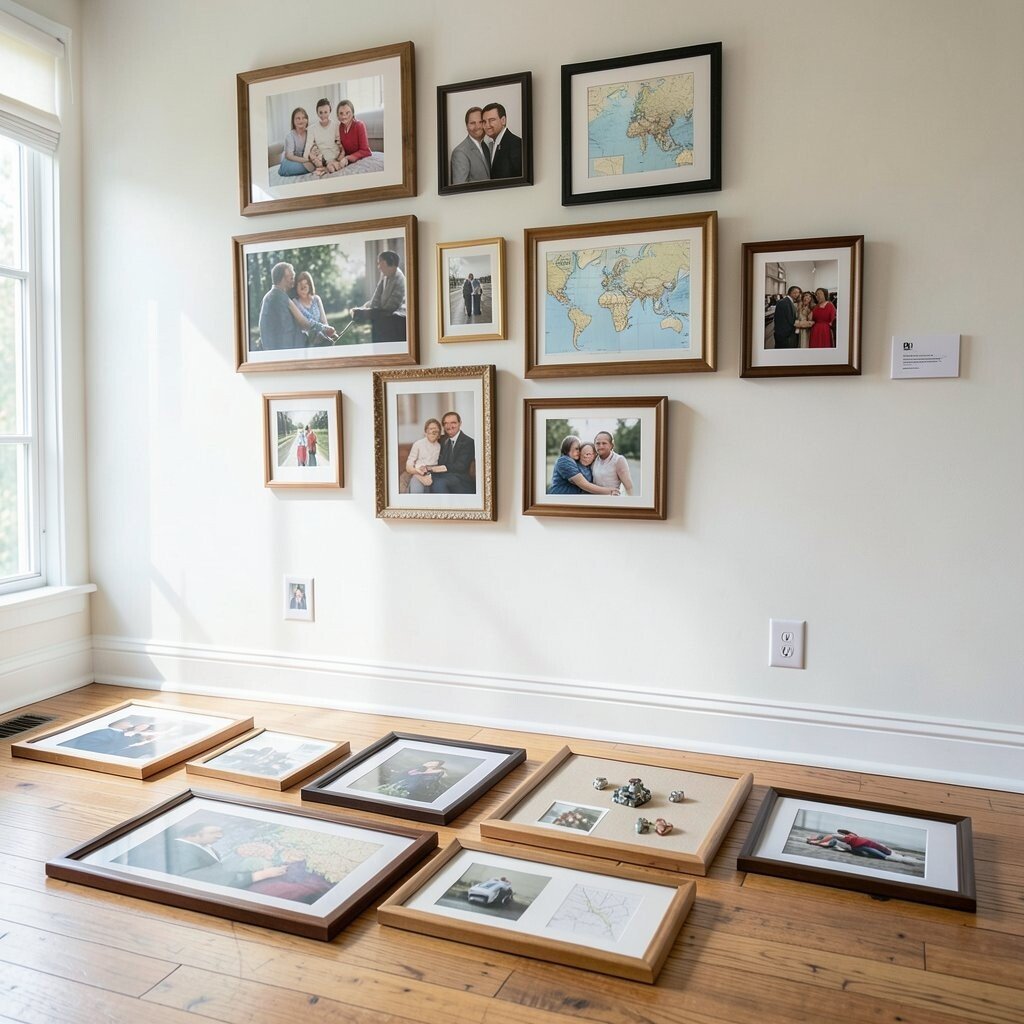
Before a single nail goes in the wall, the real work starts on the floor. Laying out frames on the ground helps you see colors, shapes, and gaps in a way that feels calm and clear.
This trick saves money because you can test ideas before buying extra frames or art. It also helps you make the wall feel personal, since you can mix family photos, prints, maps, and tiny objects that mean something to you. A neat floor plan can turn a messy pile into a style that feels like it belongs in your home.
2. The frame mix matters more than matching
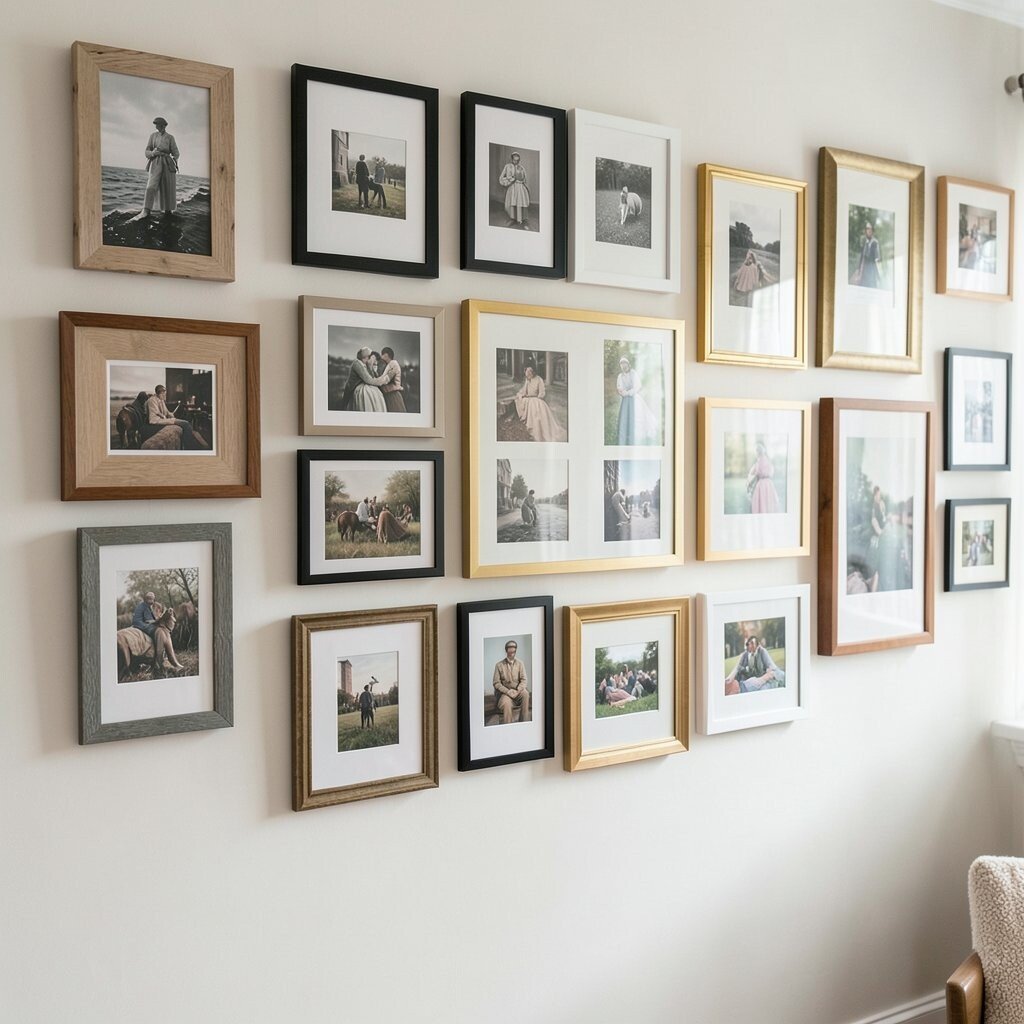
Many people think every frame must match, but that can make a wall feel flat. A mix of wood, black, white, gold, and even painted frames can give the wall more life.
That mix also helps small pieces stand out and makes thrifted finds look special. If you want a modern look, try a few thin frames with clean lines; if you want a cozy look, add warm wood and soft colors. The best part is that you can build the wall slowly and spend less by using frames from secondhand shops or old pieces from around the house.
3. Blank space is part of the design
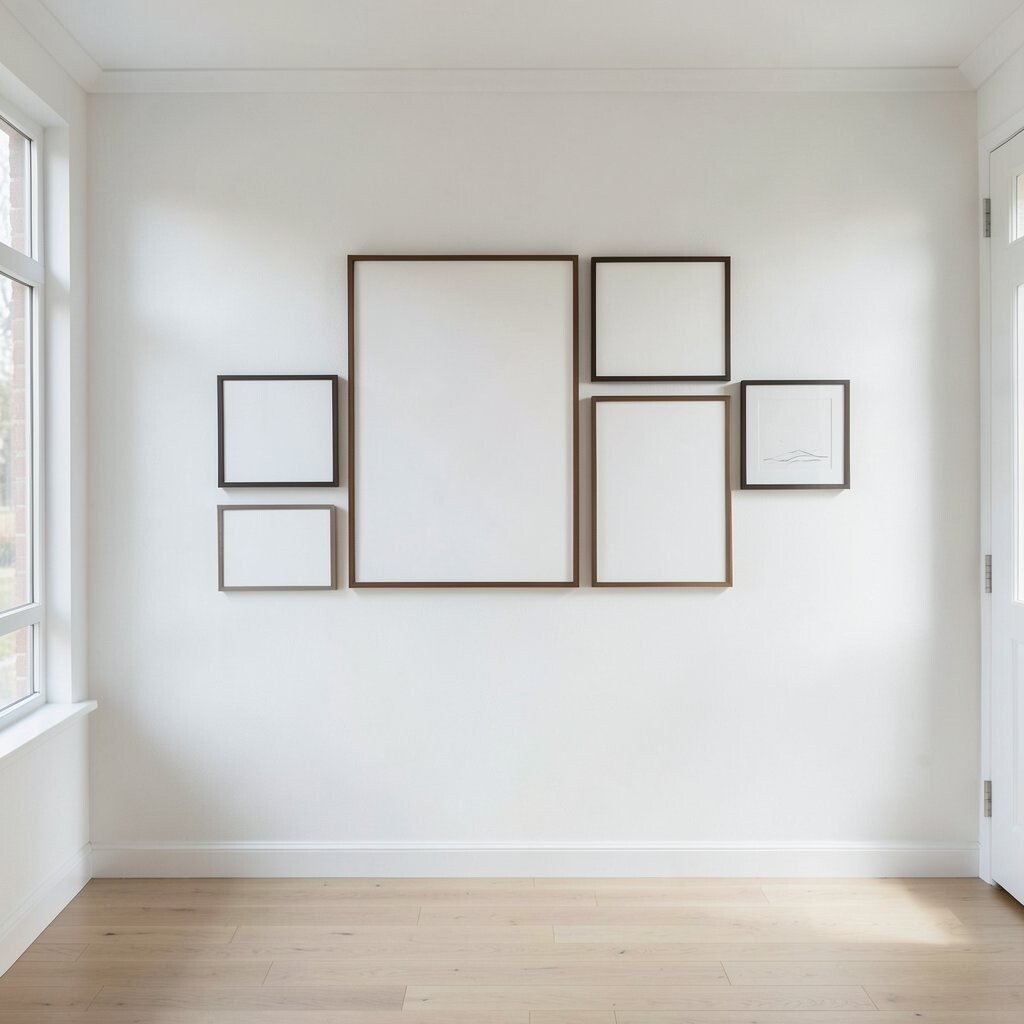
A gallery wall does not need to fill every inch of the wall. Empty space gives your eyes a place to rest and makes the art feel more important.
When pieces are too crowded, the wall can feel busy and hard to enjoy. Leaving room around the edges can make a small room seem calmer and more open. Try starting with a loose shape, then step back and ask if the wall feels balanced instead of packed.
This idea also helps if you are adding pieces over time. You can leave a spot open for a future photo, drawing, or travel find. That makes the wall feel alive and personal, not frozen in one moment.
4. The best walls tell a small story
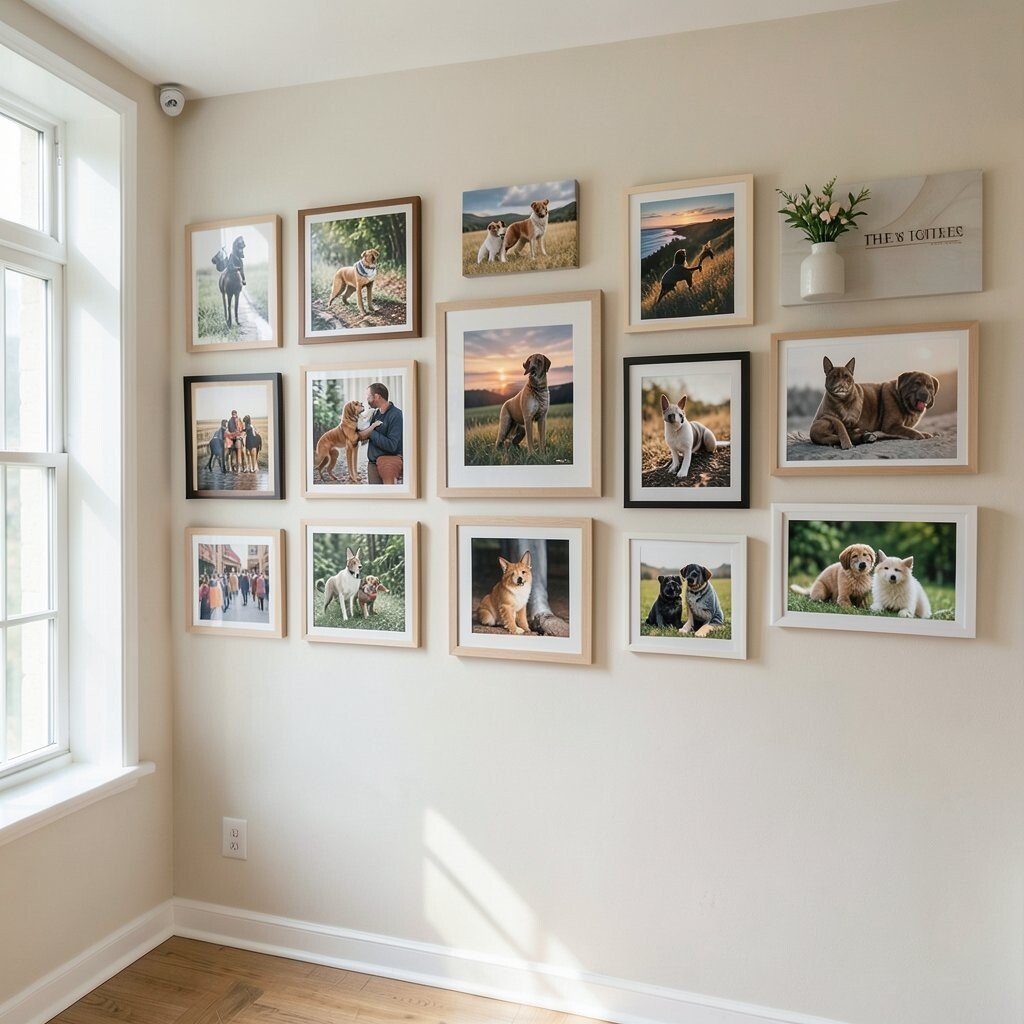
A strong gallery wall often has a theme, even if it looks playful. The theme can be family, travel, nature, pets, music, or a mix of things that share a mood.
Story-based walls feel unique because they show who lives there. They also make good conversation pieces when guests visit, since each item can have a memory behind it. If you are on a budget, a story theme helps you choose what to keep and what to skip, so you spend less on random art that does not fit.
5. Lighting changes everything
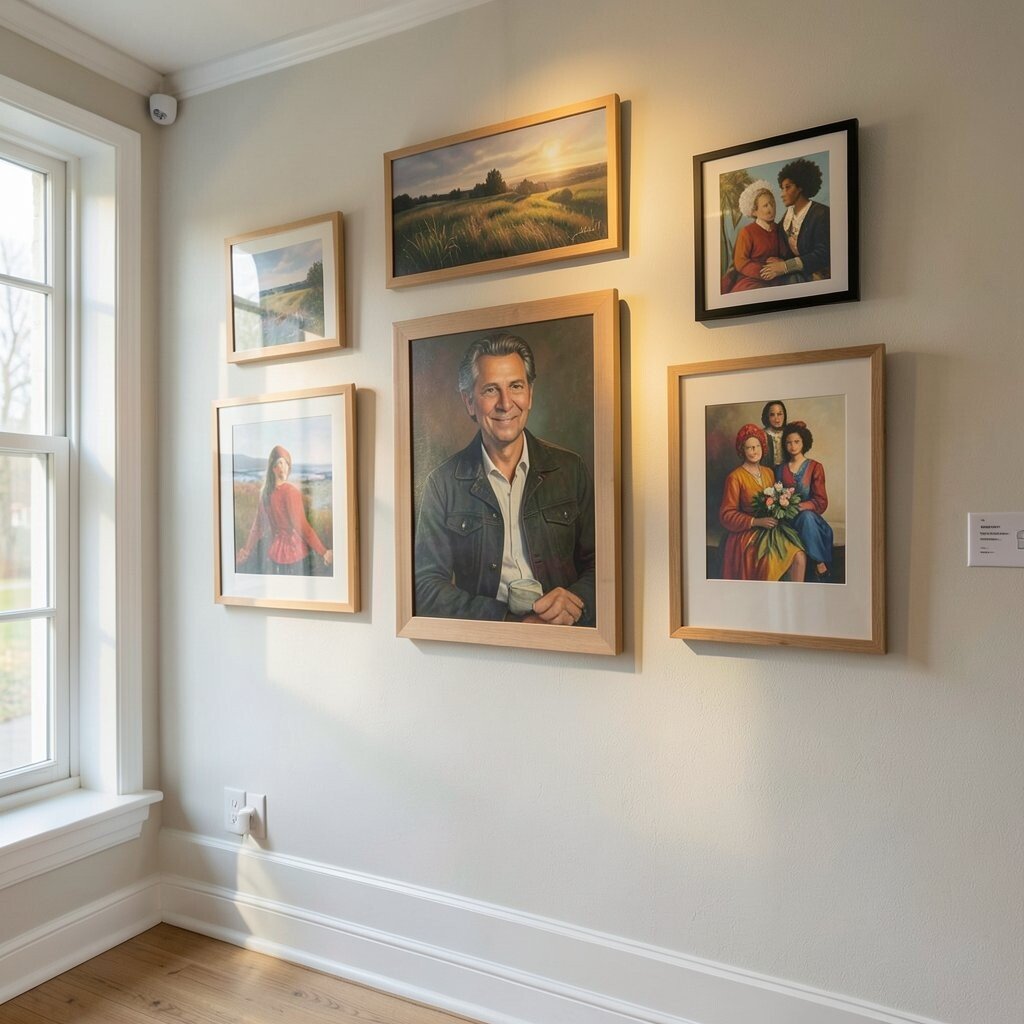
Even the prettiest wall can look dull in the wrong light. Sunlight, lamps, and picture lights all change how colors and textures appear.
Soft light can make a gallery wall feel warm and cozy, while bright light can make bold art pop. If glare is a problem, use glass with a matte finish or move shiny pieces away from direct sun. A small picture light can make a wall feel fancy without costing as much as a full room makeover.
Try viewing the wall at different times of day before you hang everything for good. Morning light may be gentle, while evening light may bring out deeper tones. That simple check can help you place each piece where it looks its best.
6. Odd shapes make the wall feel fresh
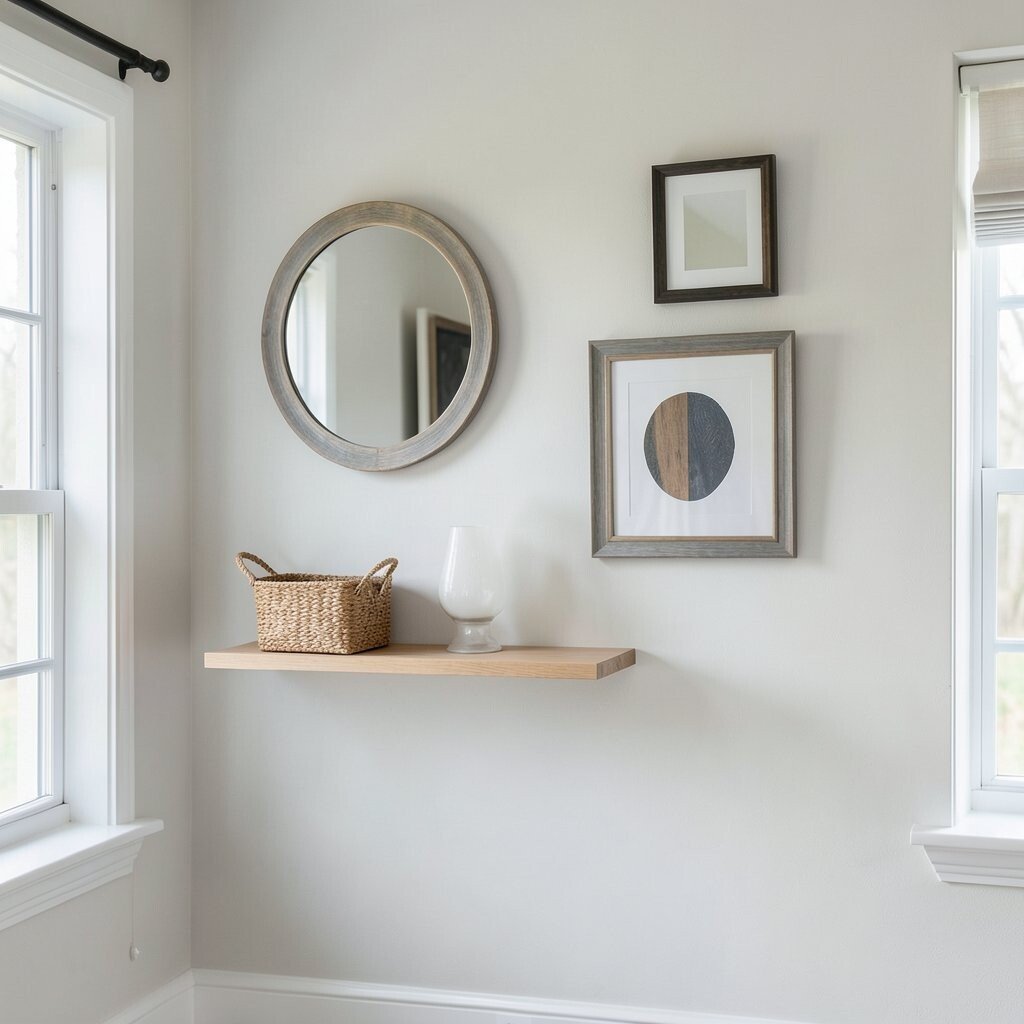
Most people start with square and rectangle frames, but that is only part of the story. Adding a round mirror, a small shelf, or a shaped print can make the wall feel more playful.
These unusual pieces break up the boxy look and give your eye a fun path to follow. They also make the wall feel more current, since mixed shapes are a big trend in home style right now. You do not need expensive decor either; a thrifted mirror or a simple basket can add charm for very little money.
If your room already has a lot of straight lines, one curved piece can soften the space. If your room feels too soft, a few sharp frames can bring it back into balance. That mix is what makes a wall feel designed instead of random.
7. The wall can grow with your life
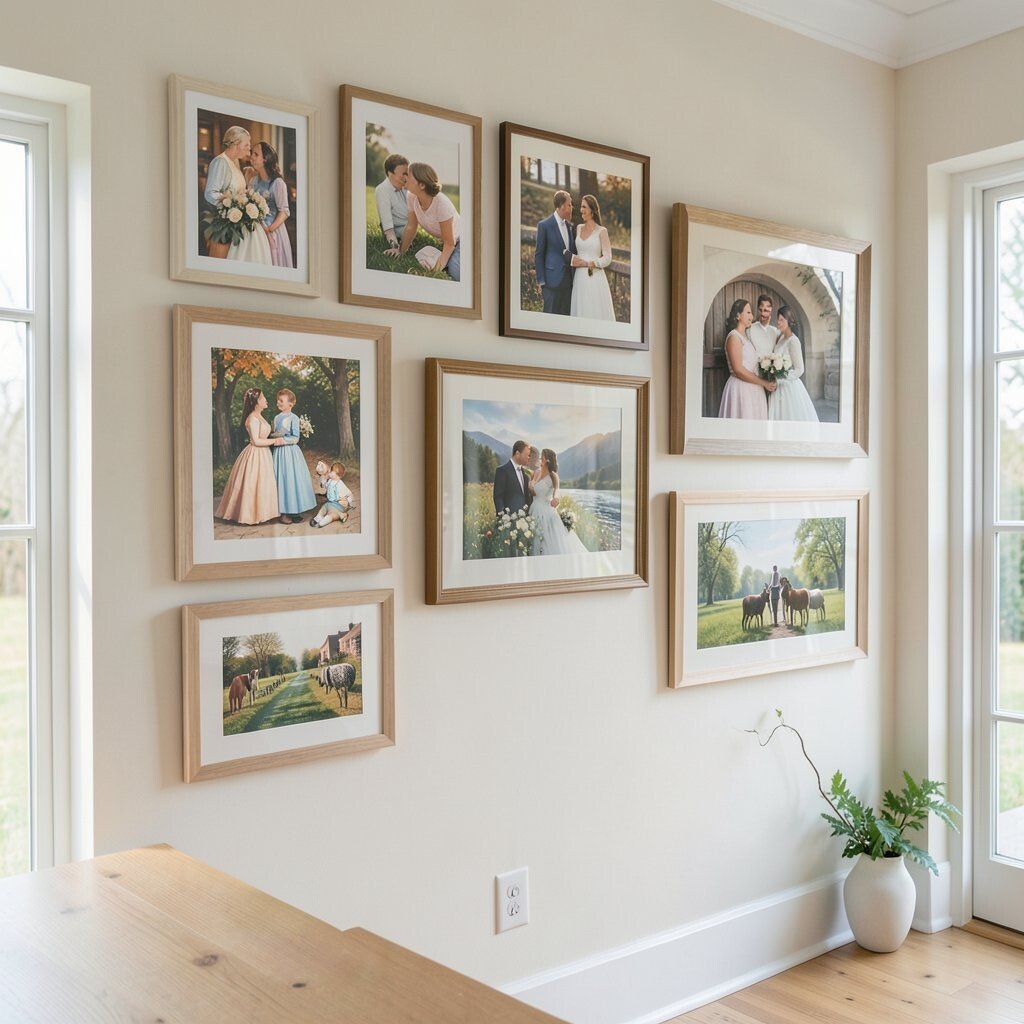
A gallery wall does not have to be finished in one day. In fact, some of the best ones grow slowly as life changes.
You might begin with school art, then add wedding photos, travel prints, or a child’s drawing years later. That slow build keeps costs low and makes the wall feel more real. It also gives you room to change pieces when your taste shifts, which happens more often than people think.
Growth is part of the charm. A wall that changes over time can hold more meaning than one bought all at once. It becomes a living part of the home, not just a decoration.
8. Spacing is harder than it looks
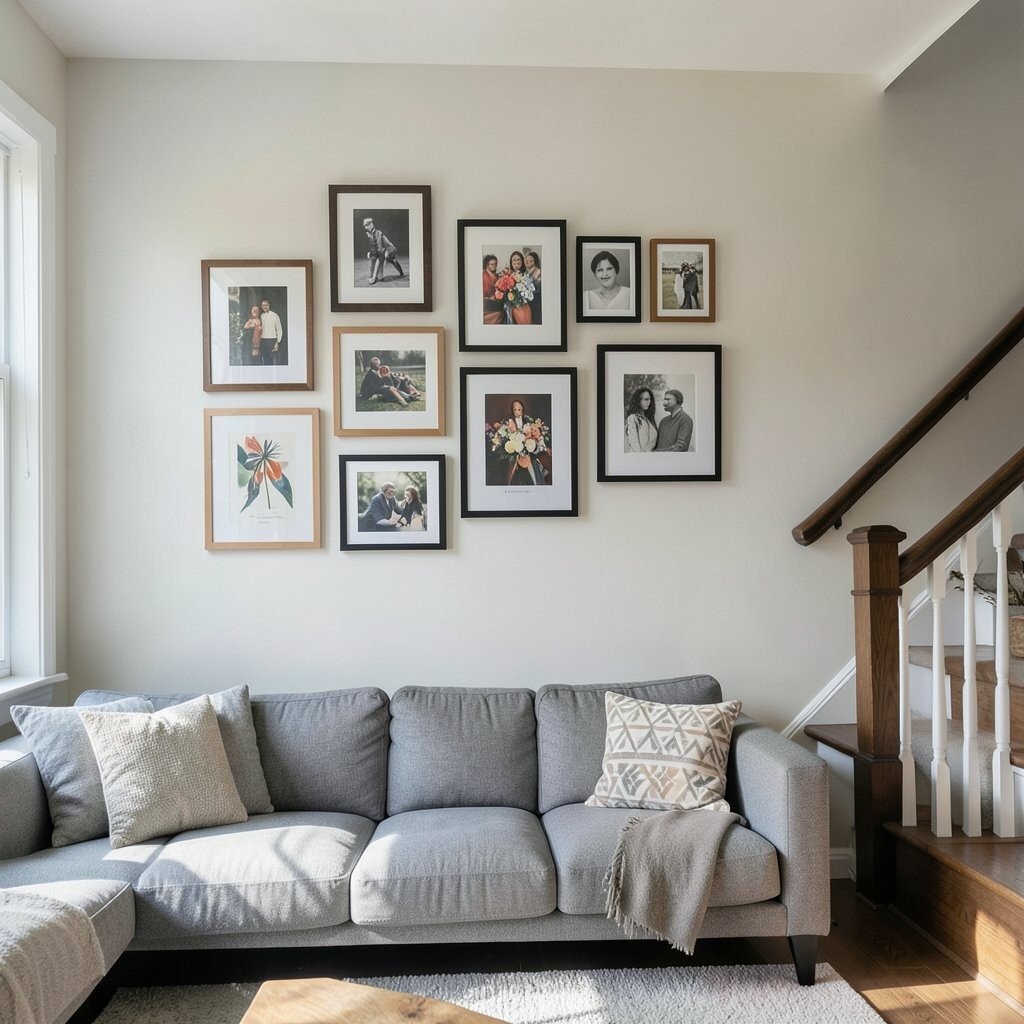
The space between frames can make or break the whole look. Too much room can make the wall feel scattered, while too little can make it feel cramped.
Many people use the width of two fingers as a rough guide, but the best spacing depends on the size of the frames and the wall itself. A tight cluster can work well in a small nook, while a wider layout can look elegant above a sofa or stairway. Test the spacing with paper templates or painter’s tape before you hammer anything in.
Good spacing also helps the wall feel neat even when the art is very different. That is useful if you mix photos, posters, and handmade pieces. The even gaps tie everything together and make the whole wall easier to read.
9. Personal touches beat perfect art
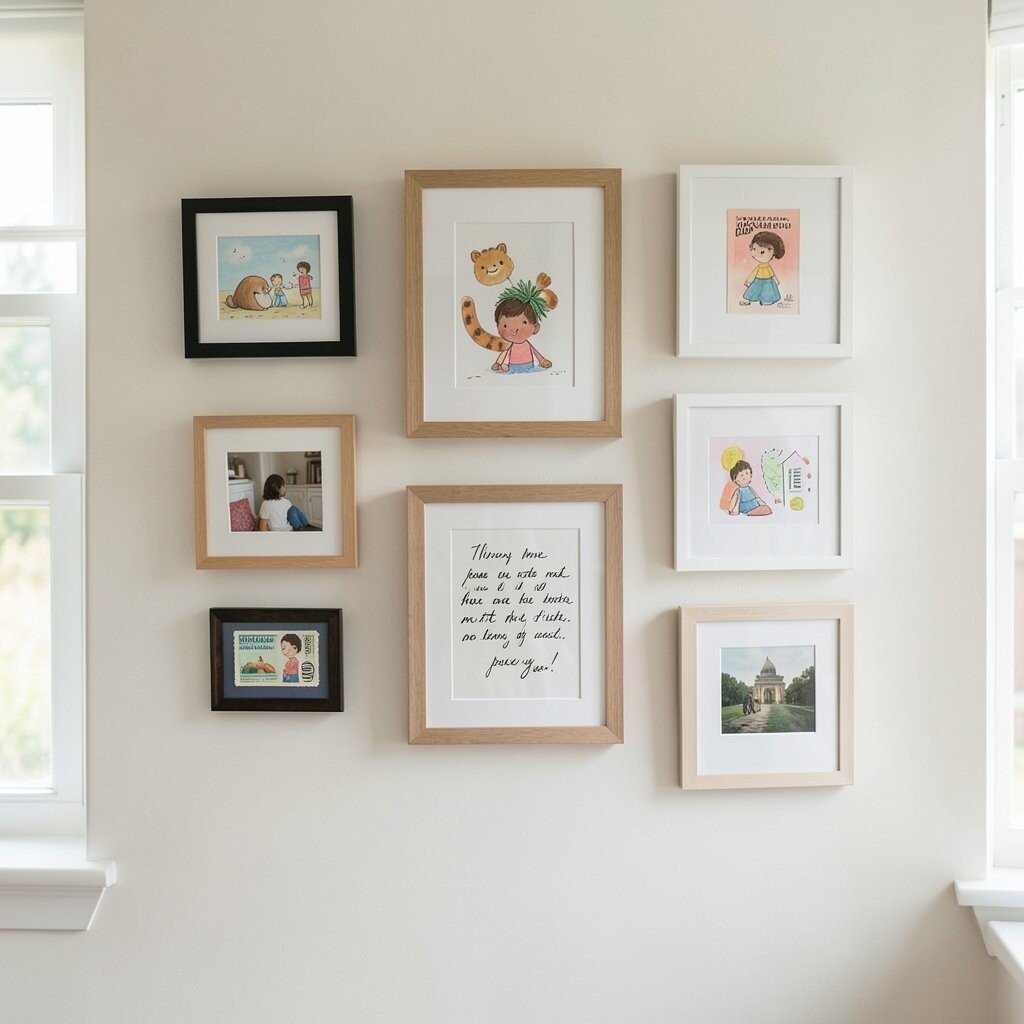
People often worry that every piece must be museum worthy. In truth, the most loved gallery walls usually include personal items that may not be fancy at all.
A child’s drawing, a postcard, a ticket stub, or a handwritten note can mean more than a pricey print. These little pieces make the wall feel warm, honest, and one of a kind. They also keep the cost down, which is great if you want a big look without spending a lot.
Try framing small memories in simple mats so they stand out. A tiny item in a clean frame can look thoughtful and stylish. That mix of beauty and meaning is what makes a gallery wall feel special.
10. Color can guide the whole mood
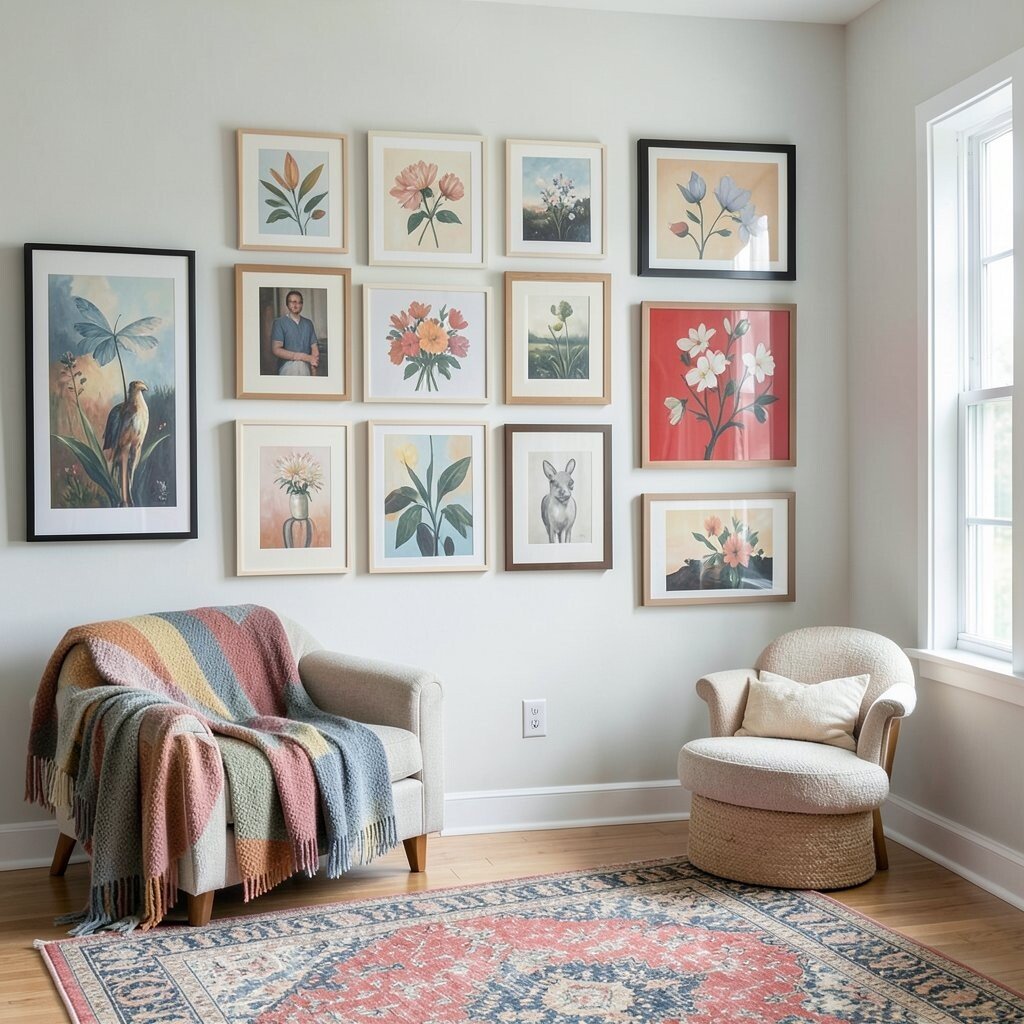
Color is one of the quickest ways to shape how a gallery wall feels. Soft blues and creams can feel calm, while bright reds and yellows can feel lively and bold.
You do not need every piece to match, but it helps to repeat a few colors across the wall. That repetition makes the design feel connected, even if the art styles are very different. If you want a trend-aware look, muted earth tones and soft pastels are still popular and easy to live with.
Color can also help with personalization. You might choose shades that match a favorite blanket, rug, or pillow so the room feels linked together. That makes the wall feel like part of the home instead of a separate project.
11. The wall can be a budget-friendly upgrade
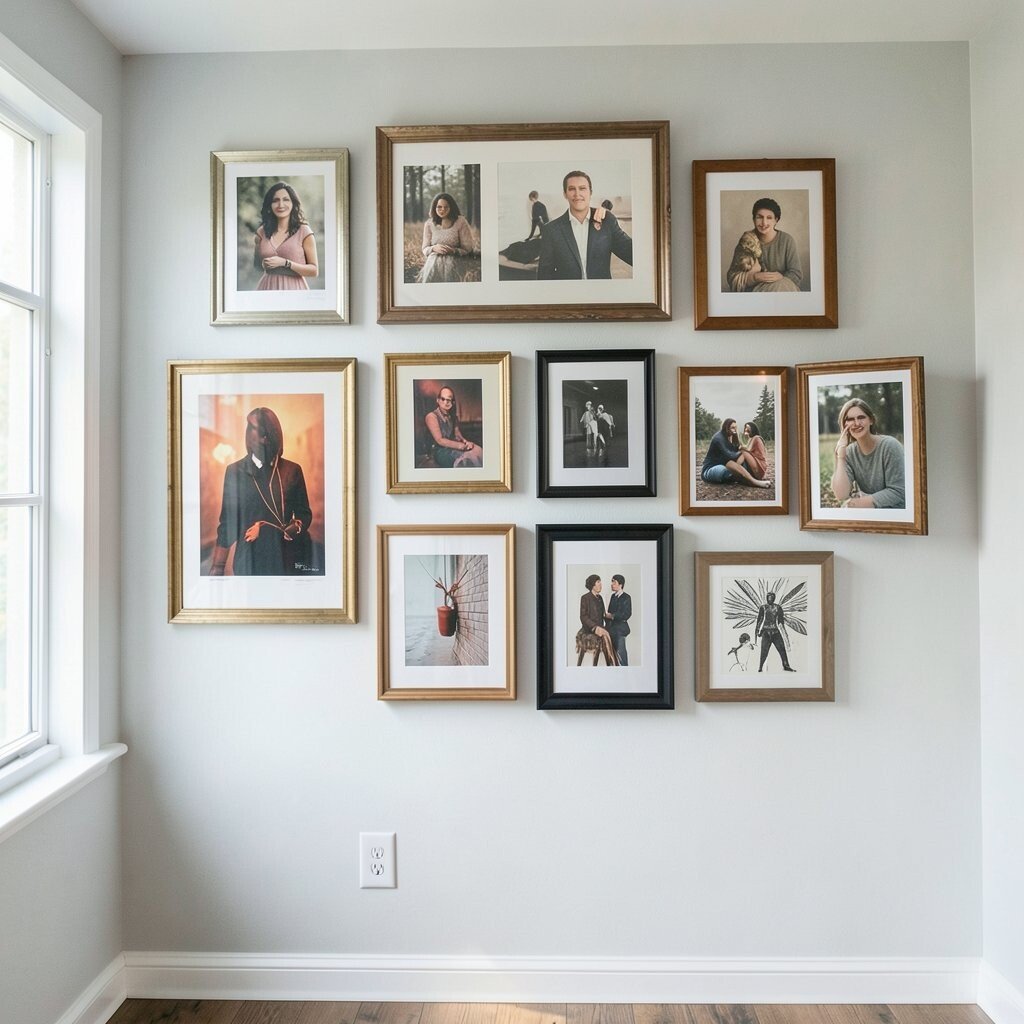
Gallery walls often look expensive, but they do not have to be. Many great walls are built from thrift store frames, free printable art, and photos already on a phone.
Using what you already have is smart and stylish. You can paint old frames, swap in new art, or cut down posters to fit smaller sizes. This keeps spending low while still giving you a polished look that feels custom.
If you want to save even more, start with one main section instead of the whole wall. Add to it piece by piece as you find items you love. That slower approach can feel more rewarding than buying everything at once.
12. Symmetry is safe, but not required
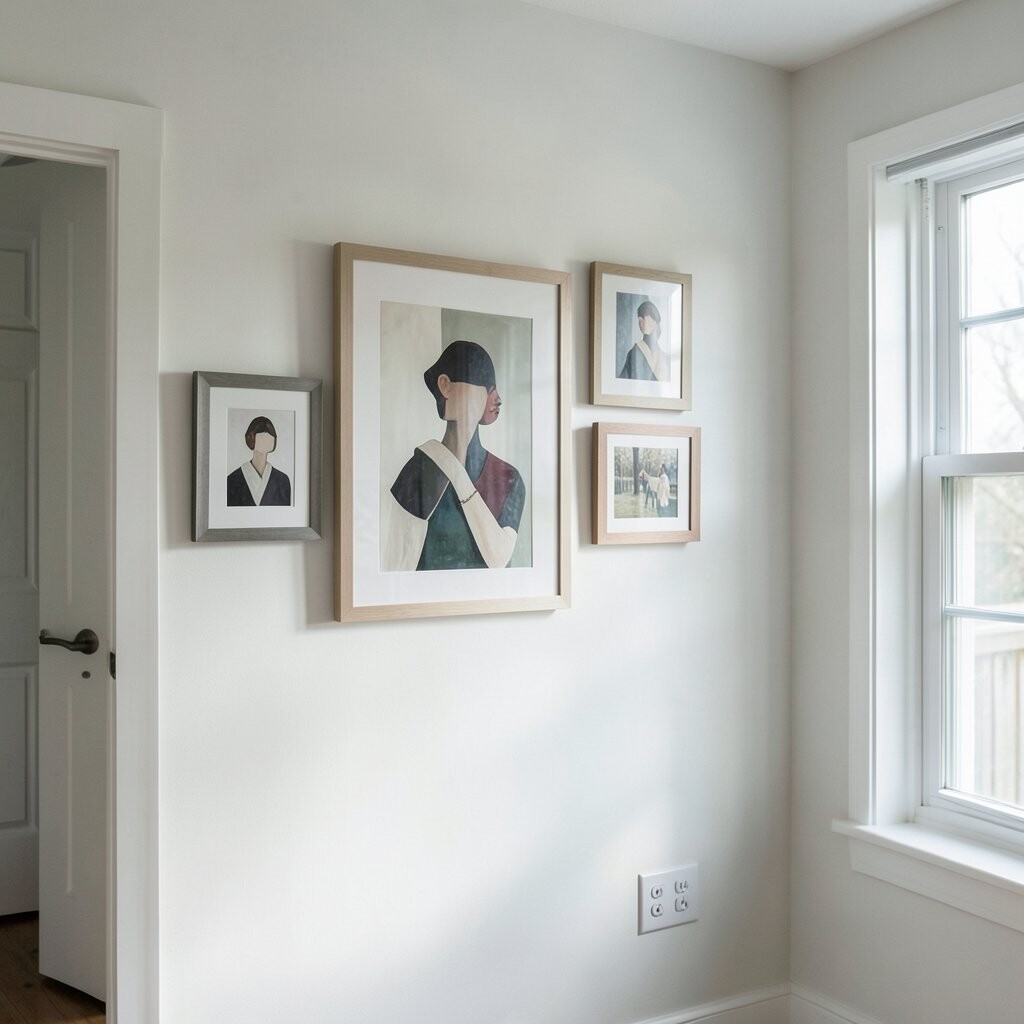
Perfect rows and mirror-image layouts can look neat, but they are not the only good choice. A slightly loose arrangement often feels more relaxed and creative.
Asymmetry can make a wall feel newer and more personal, especially when the art comes in different sizes. It gives you room to place a bigger piece next to a tiny one and still make the whole thing work. If you are worried about balance, use one larger anchor piece and build around it with smaller frames.
This style is helpful in real homes where walls are not always perfect. A lamp, door, or window may sit nearby, and an uneven layout can fit better around those features. That makes the wall look planned for the room instead of forced into it.
13. Texture adds quiet magic
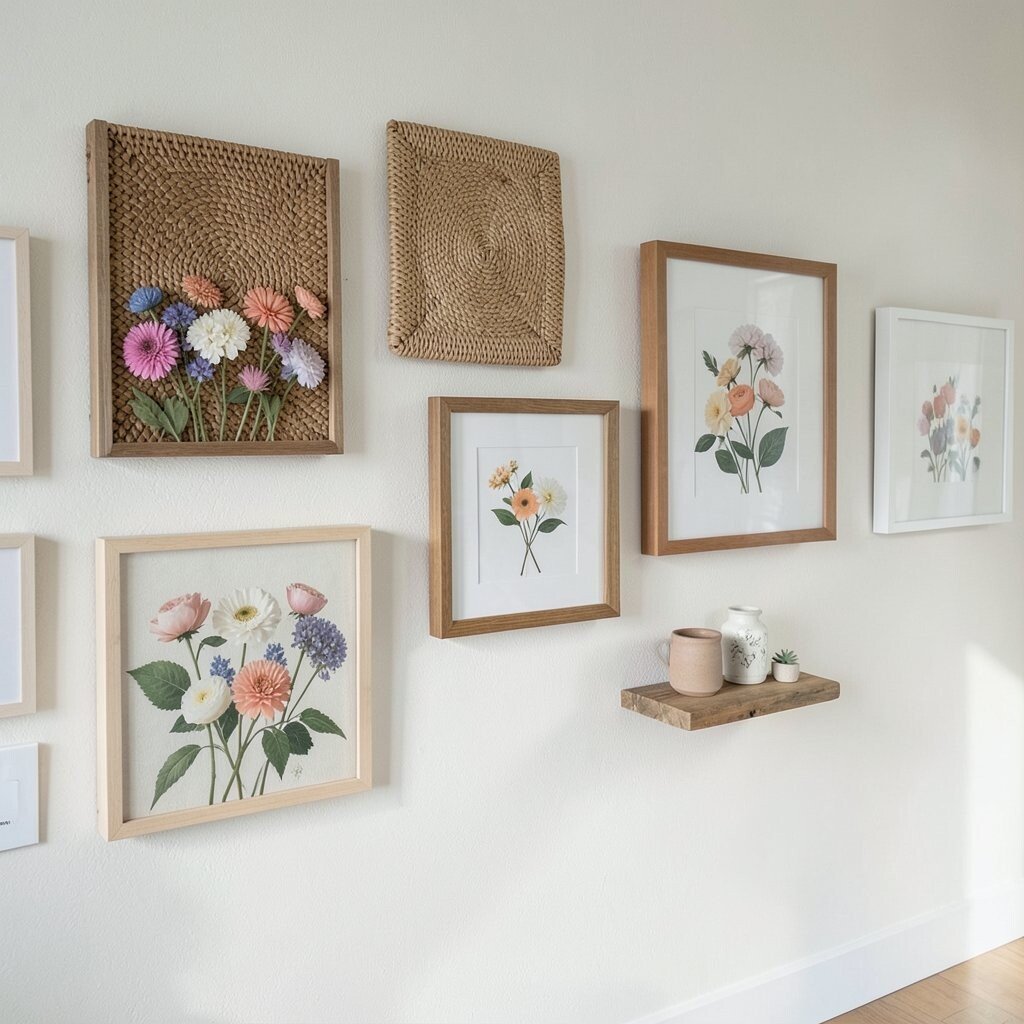
Flat prints are nice, but texture can make a gallery wall feel richer. Woven pieces, pressed flowers, fabric art, and small shelves all bring depth.
Texture catches light in a soft way and keeps the wall from feeling too plain. It also makes the wall more unique, since not everyone thinks to mix materials. If you are on a budget, simple paper art can still feel special when you add one textured piece beside it.
Try pairing smooth glass frames with rough wood or linen mats. The contrast gives the wall a layered look that feels thoughtful. That little touch can make even a simple arrangement feel finished.
14. Height matters more than most people think
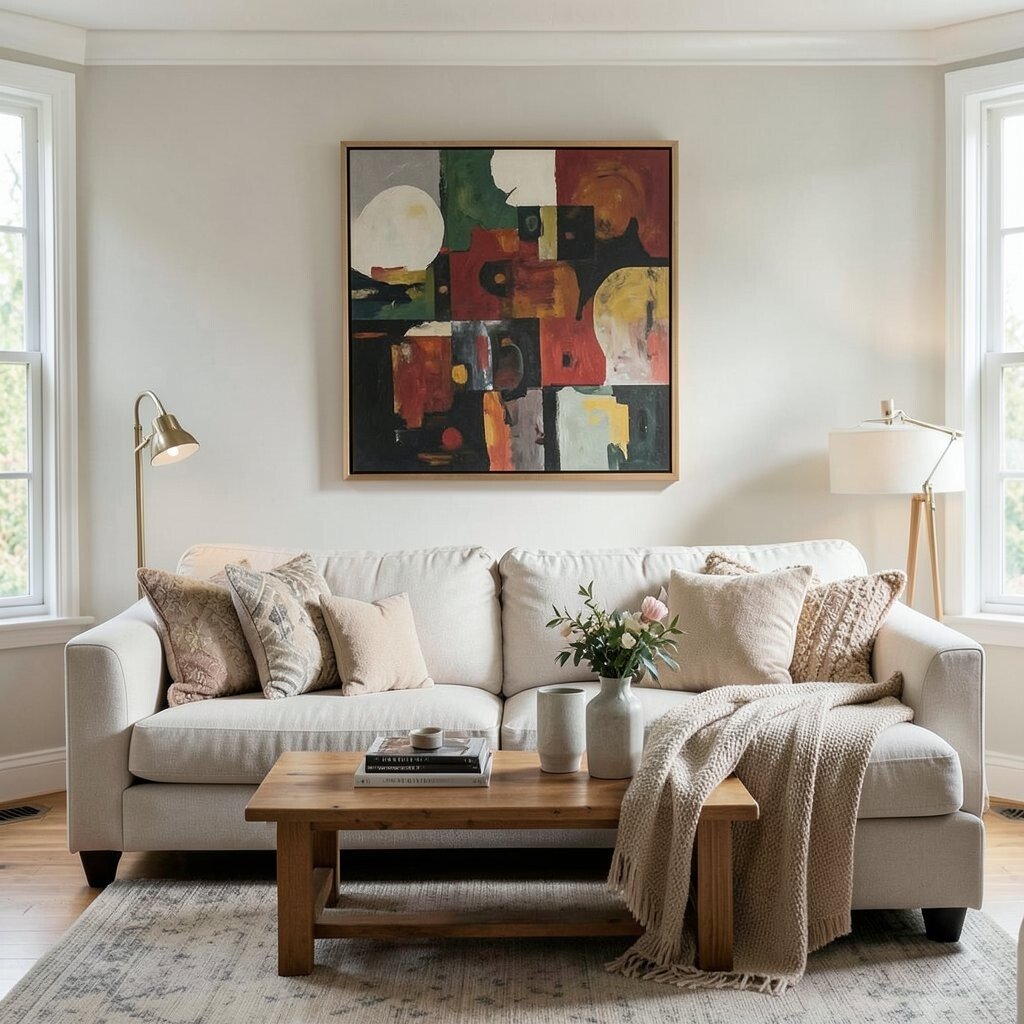
Many gallery walls look awkward because they are hung too high or too low. A wall should feel connected to the furniture and the people in the room.
When a gallery wall sits close to a sofa, bed, or console table, it feels grounded and easy to enjoy. Hanging it too high can make the art feel like it is floating away. A good rule is to keep the center of the group near eye level, then adjust based on the room and the furniture below it.
Height also changes the mood. Lower layouts can feel cozy and intimate, while taller ones can feel grand and dramatic. Pick the feeling that fits your space and your style.
15. The best walls are allowed to change
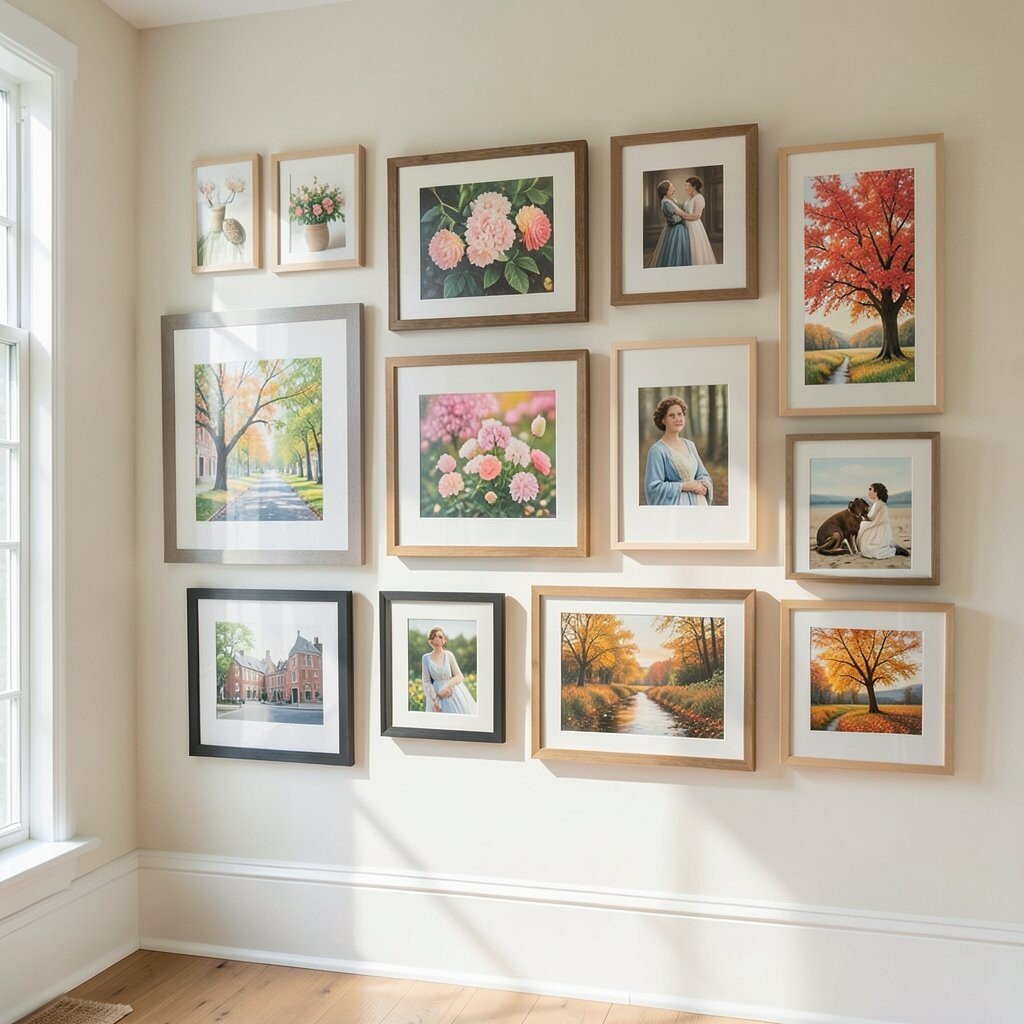
A gallery wall does not need to stay the same forever. Pieces can move, swap, or come down when your taste changes or a new memory comes along.
That freedom is one of the nicest parts of the idea. It means you can keep the wall fresh without buying a whole new set of decor. It also makes the project less scary, because there is no perfect final version you must get right on the first try.
Try keeping a few extra frames or prints in a drawer so you can switch things out later. You can even make seasonal changes, like brighter art in spring and warmer tones in fall. A wall that changes with your life feels more personal, more useful, and much more fun to live with.