The sea has a way of waking up the imagination. Its colors, textures, and moving shapes can fill a room with calm energy.
Ocean themes work in almost any space and style. They can feel playful, peaceful, bold, or dreamy all at once.
1. Paint Soft Wave Washes
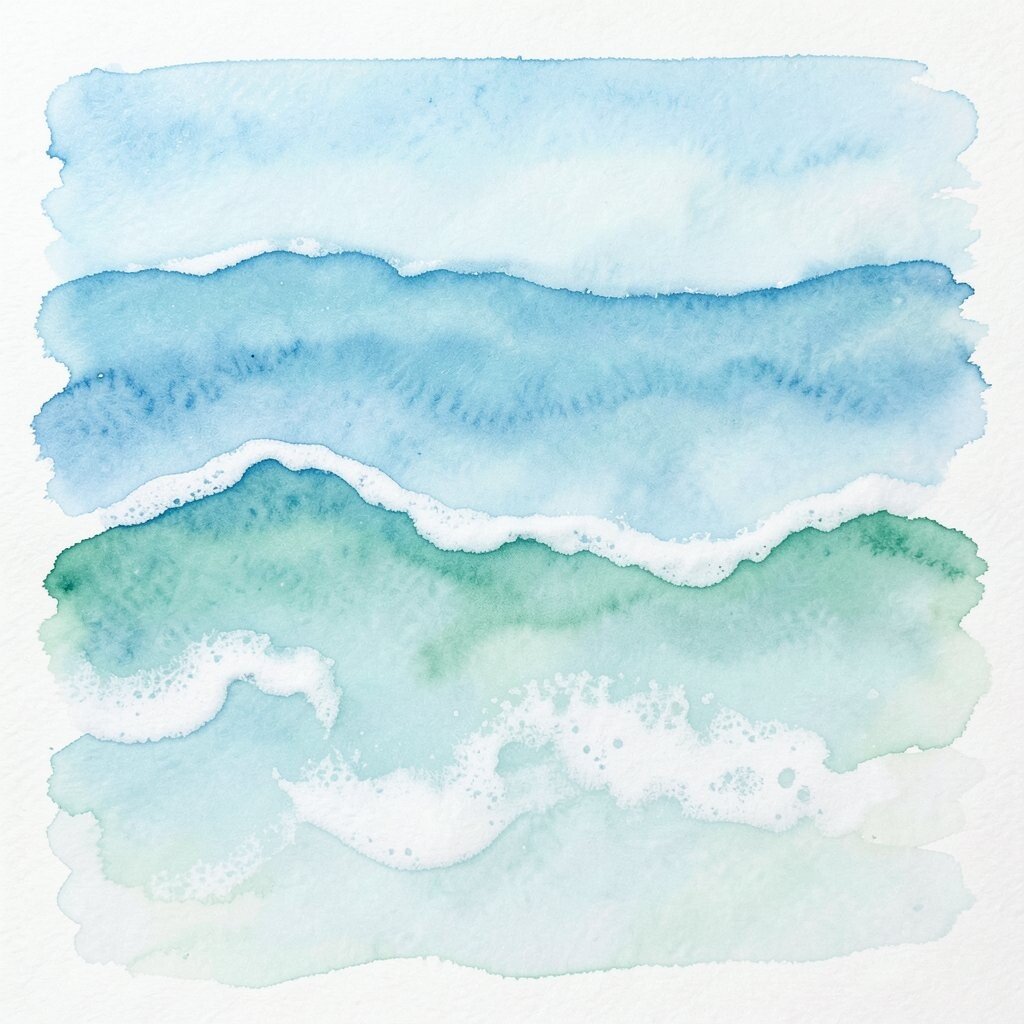
Soft wave washes create gentle bands of blue, green, and white that feel calm and airy. The look is loose and flowing, so it suits artists who like simple shapes and soothing color.
This idea is easy to make with watercolor, acrylic, or even digital brushes. Try mixing a few shades and letting them blend on the page, then add a little white for sea foam and mist.
2. Build a Shell Collage
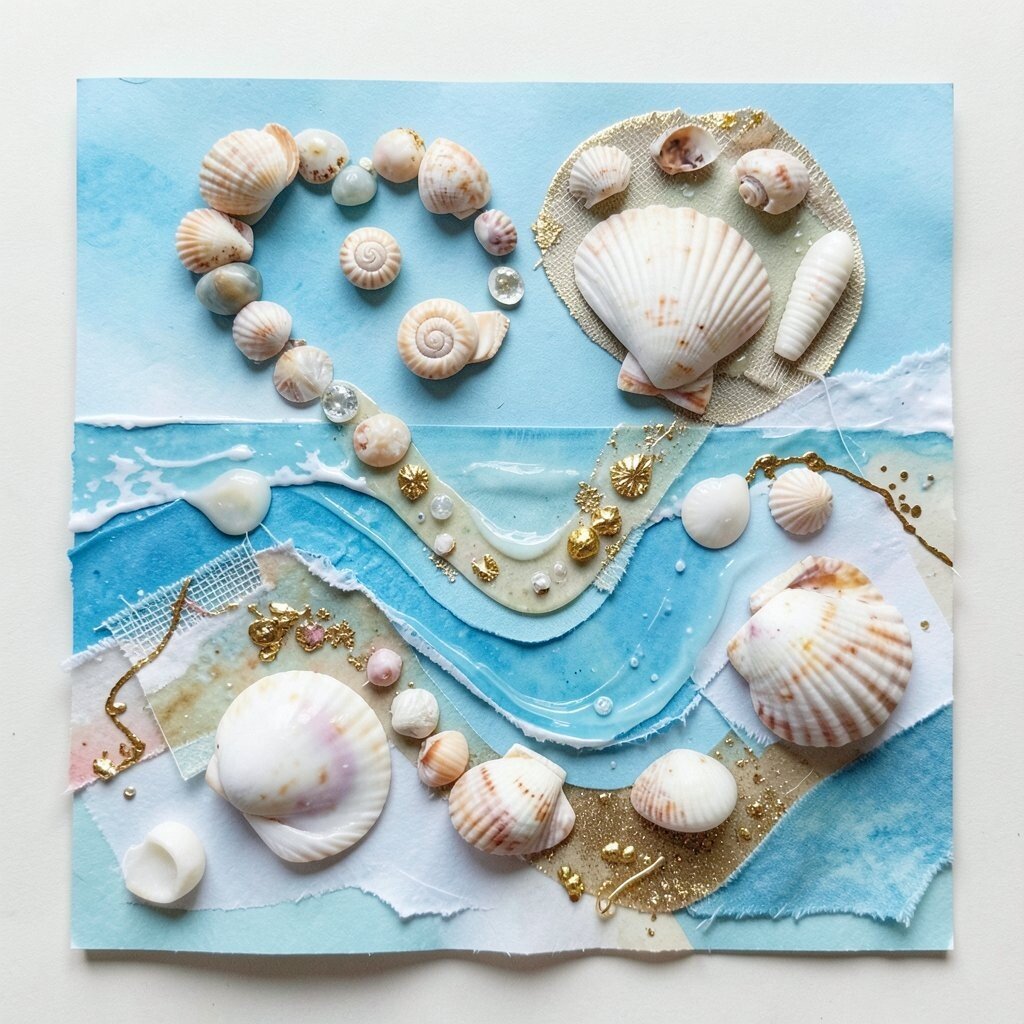
Shell collages bring texture and shine into ocean art in a very charming way. Real shells, paper cutouts, fabric scraps, and gold accents can all work together to make a rich seaside scene.
The beauty of this style is that each piece can feel one of a kind. Use glue, layered paper, or mixed media gel to create depth, and choose natural colors for a soft beach look or bright tones for a modern feel.
It can be a low-cost project if you use found materials, old magazines, or leftover craft bits. Add your own touch by arranging shells in a heart, a spiral, or a wave shape that means something special to you.
3. Sketch Kelp Forest Silhouettes
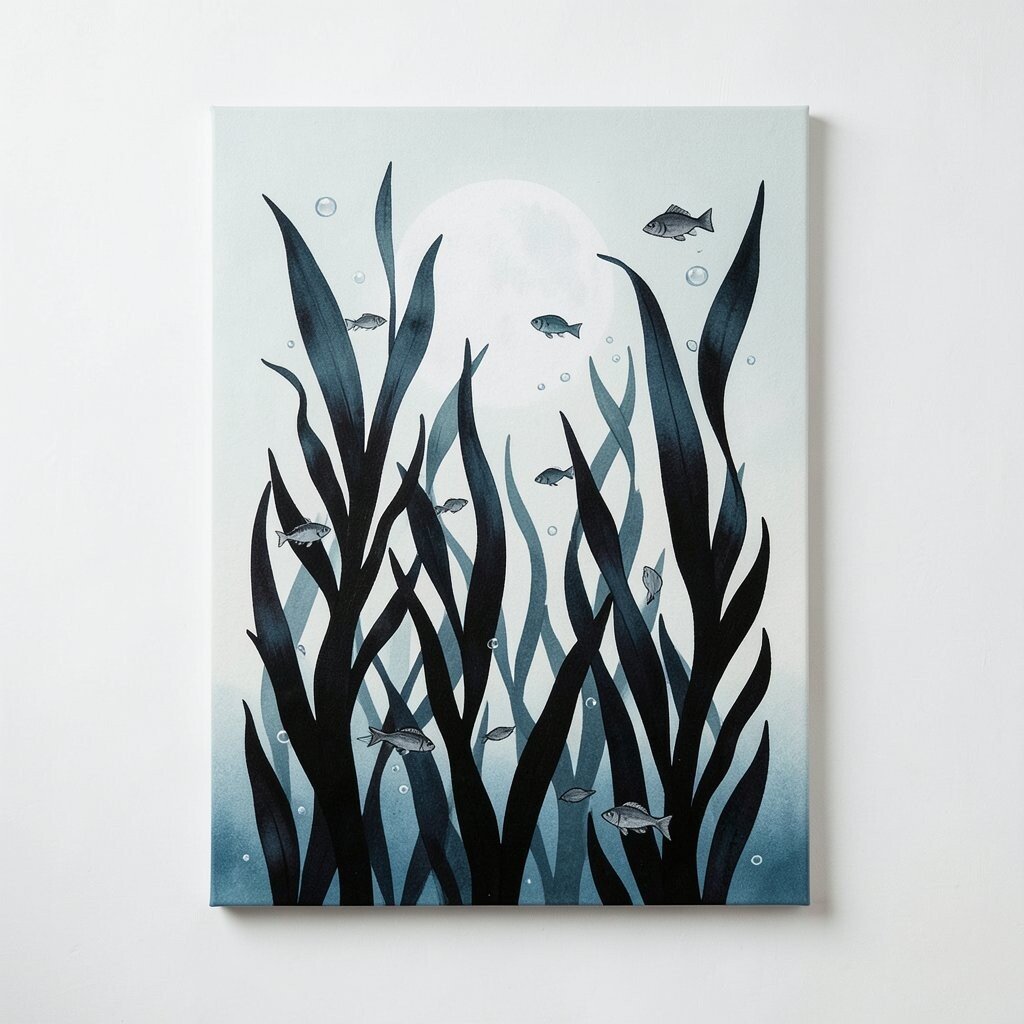
Kelp forest art has a tall, graceful look that feels full of movement. Long plant shapes rise through the water like ribbons, giving your artwork a quiet, underwater mood.
This style is great for ink, marker, or paint because the shapes are simple but still striking. You can keep the background pale and make the kelp dark, or flip that idea for a glowing, moonlit effect.
Many artists like this theme because it feels fresh and modern without needing lots of detail. Try adding tiny fish, bubbles, or drifting leaves, and make the scene personal with colors from a favorite beach trip.
If you want a budget-friendly version, use black paper and white paint pens for strong contrast. The clean lines also fit current wall-art trends that favor calm, nature-based designs.
4. Create Coral Reef Patterns
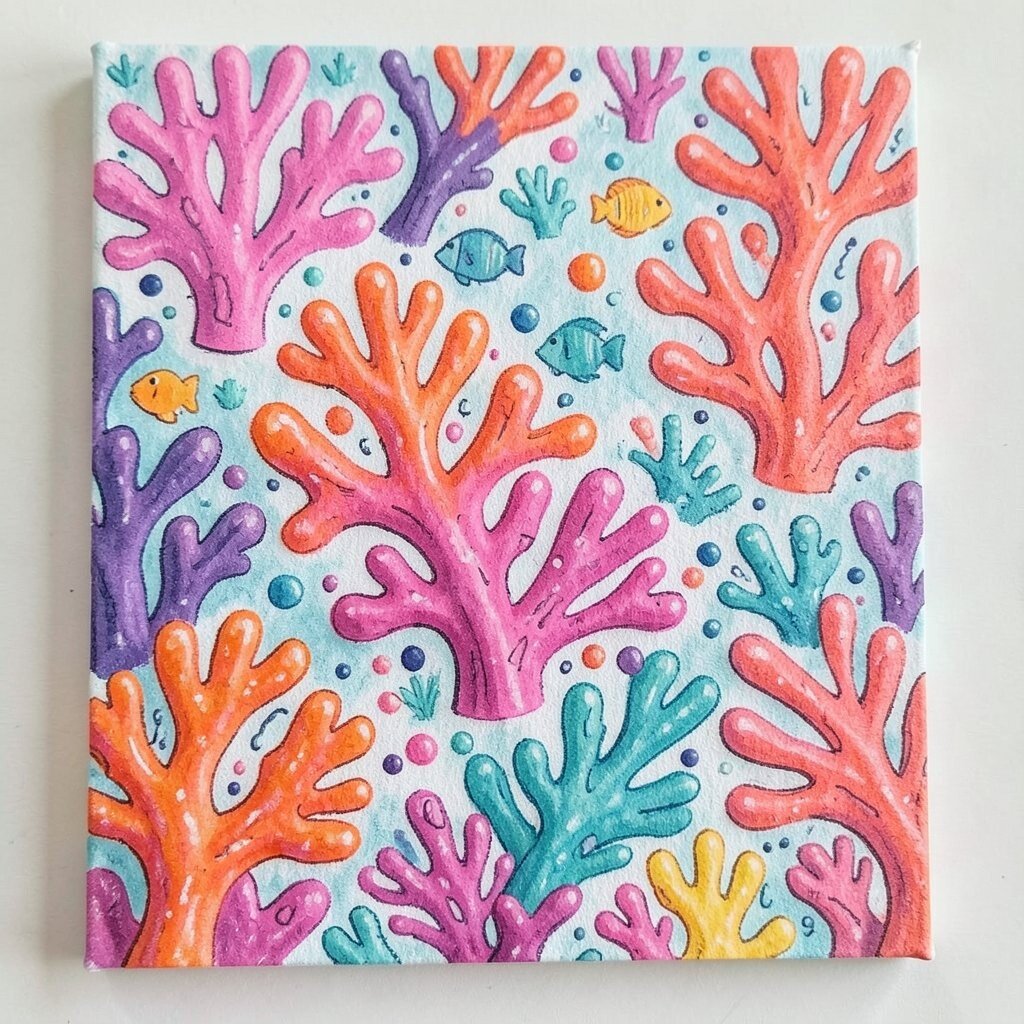
Coral reef patterns burst with lively shapes, curvy lines, and bright sea-life energy. They can look busy in a good way, almost like a party happening under the water.
Use stamps, hand-drawn dots, or sponge painting to build coral forms layer by layer. Warm pinks, oranges, purples, and teals can make the design feel vibrant and cheerful.
This kind of art works well on cards, canvases, notebooks, and even fabric pieces. For a personal twist, turn favorite flowers into coral-like shapes or add initials hidden inside the reef.
5. Make a Tide Pool Scene
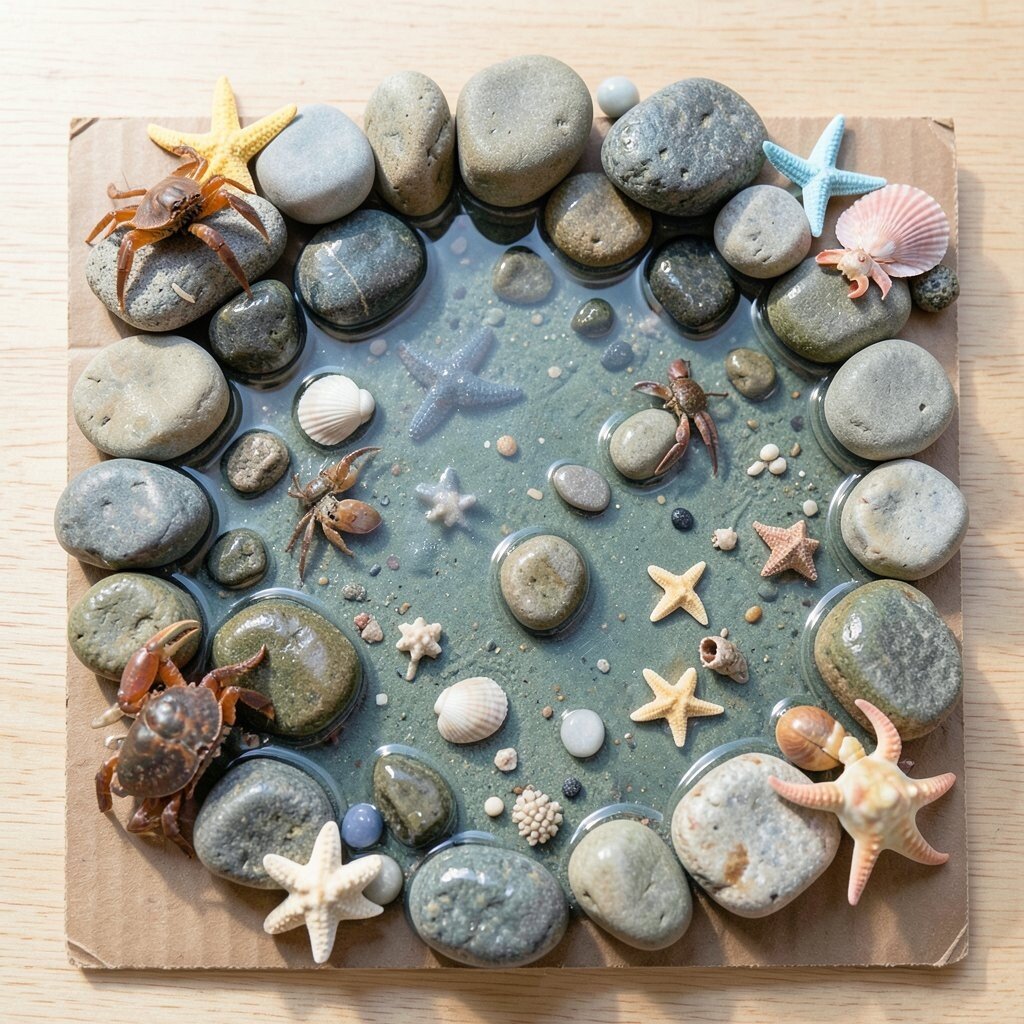
Tide pool art gives you a tiny world full of treasures. Little crabs, rocks, sea stars, and shiny water patches can all fit into one small and lovely scene.
This project is fun because it mixes detail with open space. Paint smooth stones, add clear resin or glossy gel for water, and place bright creatures around the edges for a natural frame.
It can stay simple and affordable if you use cardboard, paper, and basic paint. For a more custom look, include local sea life from your own coast or draw the creatures you remember most.
Many people enjoy tide pool art because it feels peaceful and close to nature. A neat trick is to vary the sizes of the shells and rocks so the scene feels real and full of depth.
6. Design an Abstract Ocean Gradient
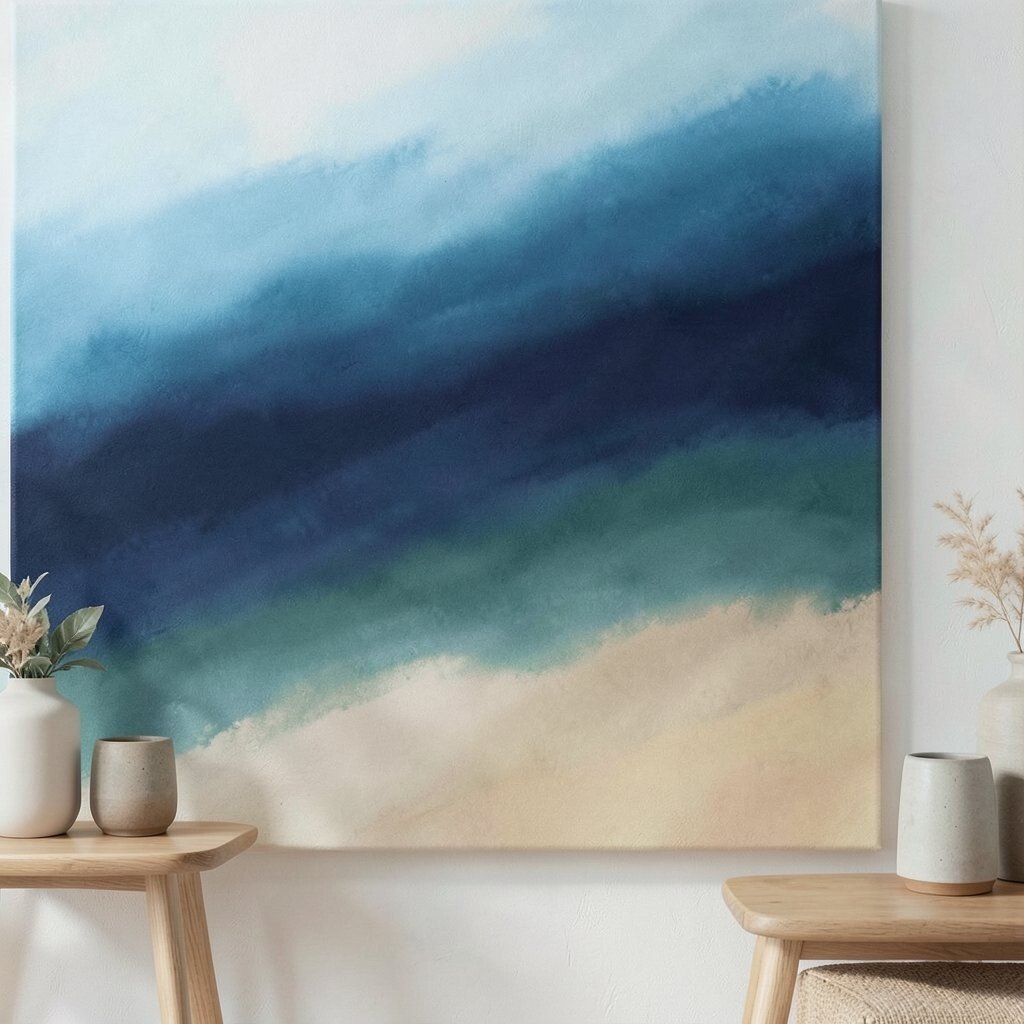
Abstract ocean gradients use smooth color shifts to suggest the sea without showing it plainly. The result can be moody, dreamy, or bright, depending on the shades you choose.
Blending light blue into deep navy or sea green into sandy tan creates a calm flow across the page. This style is friendly for beginners because it does not need perfect shapes or exact drawing skills.
Try using sponges, soft brushes, or digital blur tools to get a misty finish. If you want a more personal piece, choose colors that remind you of sunrise, storm waves, or your favorite island sunset.
Costs can stay low with only a few paint colors and some paper or canvas. The clean, modern look also matches many current home décor styles, especially in rooms with simple furniture and natural wood.
7. Frame a Seaglass Mosaic
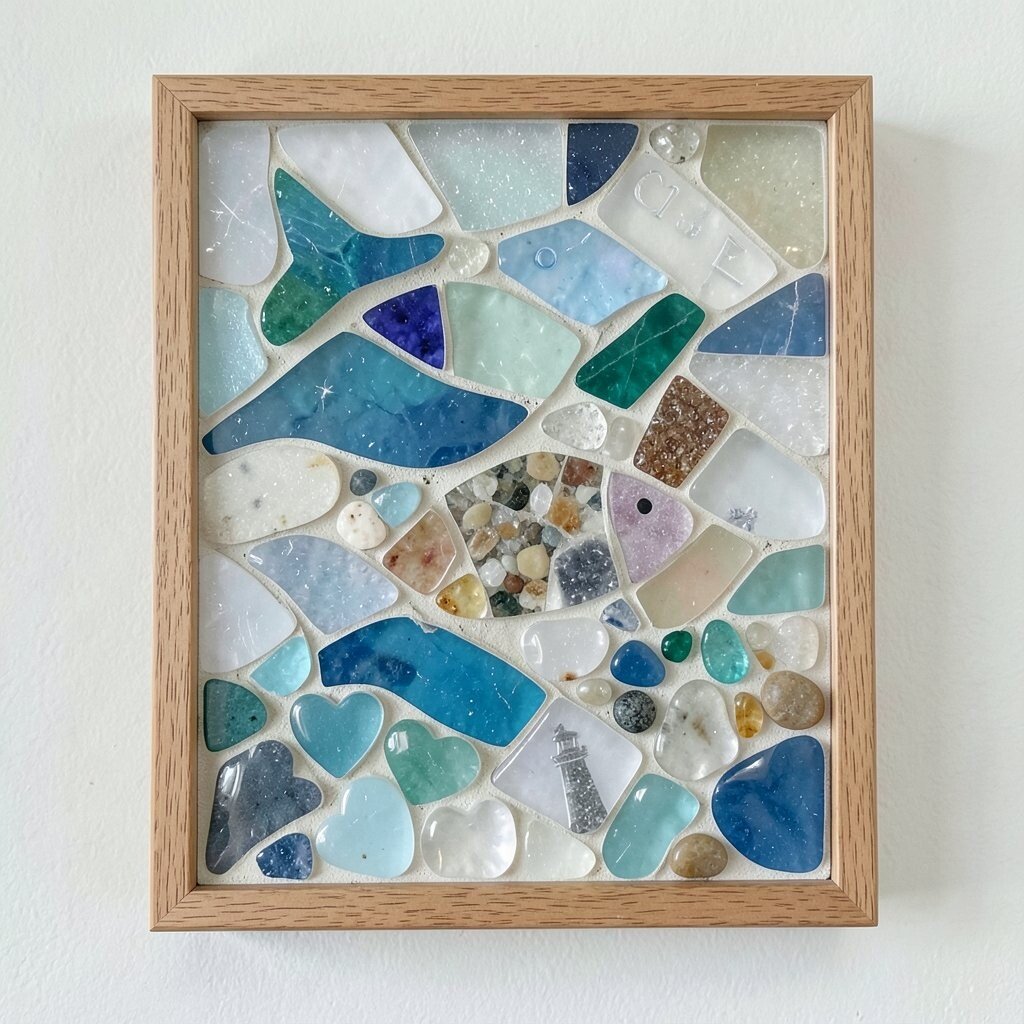
Seaglass mosaics shine with a soft, frosted glow that feels straight from the shore. The broken pieces of glass catch light in a pretty way, making the art sparkle from different angles.
You can arrange seaglass into fish, waves, hearts, or abstract shapes on wood or sturdy board. A small amount of adhesive and grout can give the work a polished finish, while clear sealant helps protect the surface.
This idea can be as low-cost as you want if you use found glass, pebbles, and recycled materials. For a personal touch, shape the mosaic around a meaningful symbol like a family name, a lighthouse, or a favorite beach path.
Because textured wall art is still very popular, this style feels current and special. Be sure to wear gloves and handle sharp edges carefully if you use real glass.
8. Paint Sea Creature Portraits
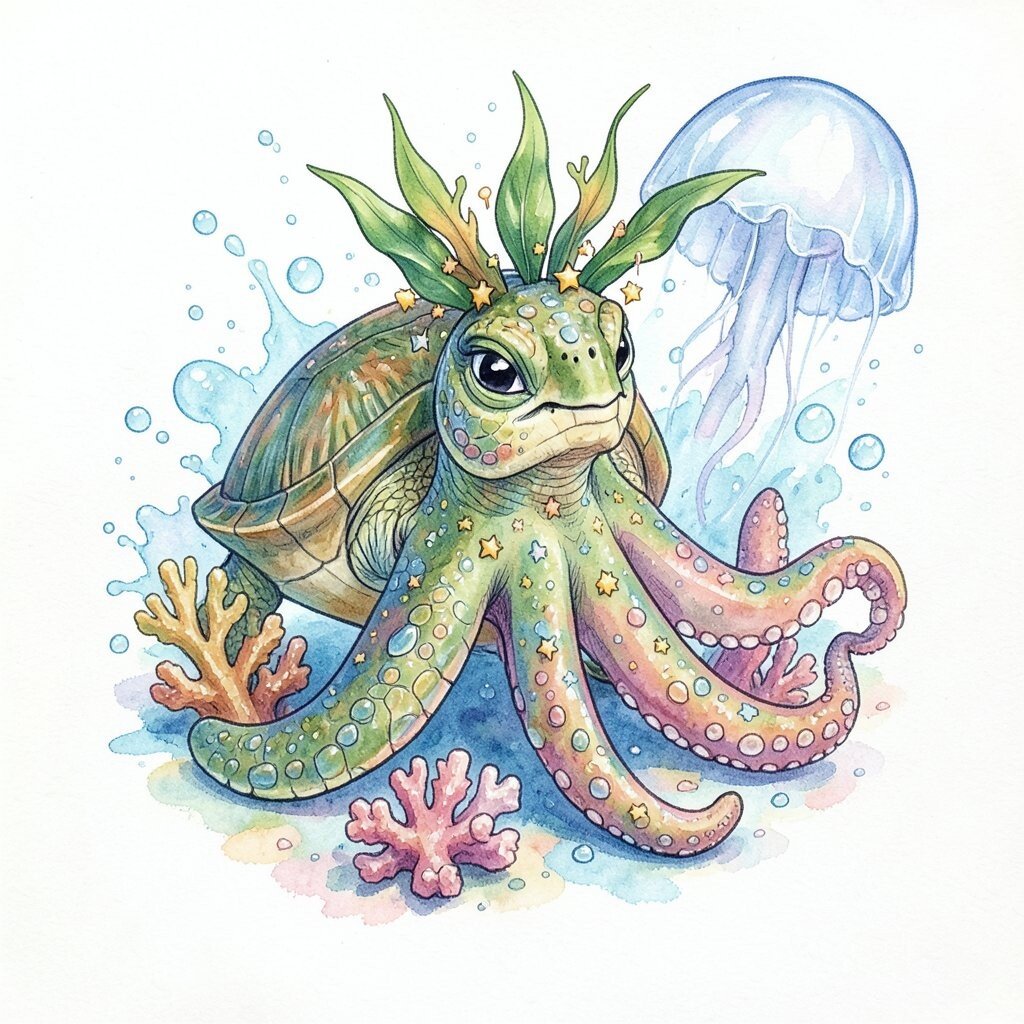
Sea creature portraits give animals a big, bold stage. A turtle, octopus, whale, or jellyfish can become the star of the artwork with a face or pose that feels full of life.
This idea works well with watercolor washes, detailed pencil lines, or bright acrylics. You can keep the background simple so the animal stands out, or add splashes, bubbles, and coral for more energy.
People love this style because it mixes realism with imagination. Try giving your creature a crown of seaweed, a pattern of stars, or colors that match a bedroom theme for a custom piece.
If you want to save money, start with printer paper and a basic set of markers or paints. Sea animal art also fits a current trend of nature-inspired prints that feel cheerful and family-friendly.
A helpful tip is to study a few photos first, then simplify the shapes into easy lines. That keeps the art playful while still making the animal easy to recognize.
9. Craft a Driftwood Wall Piece
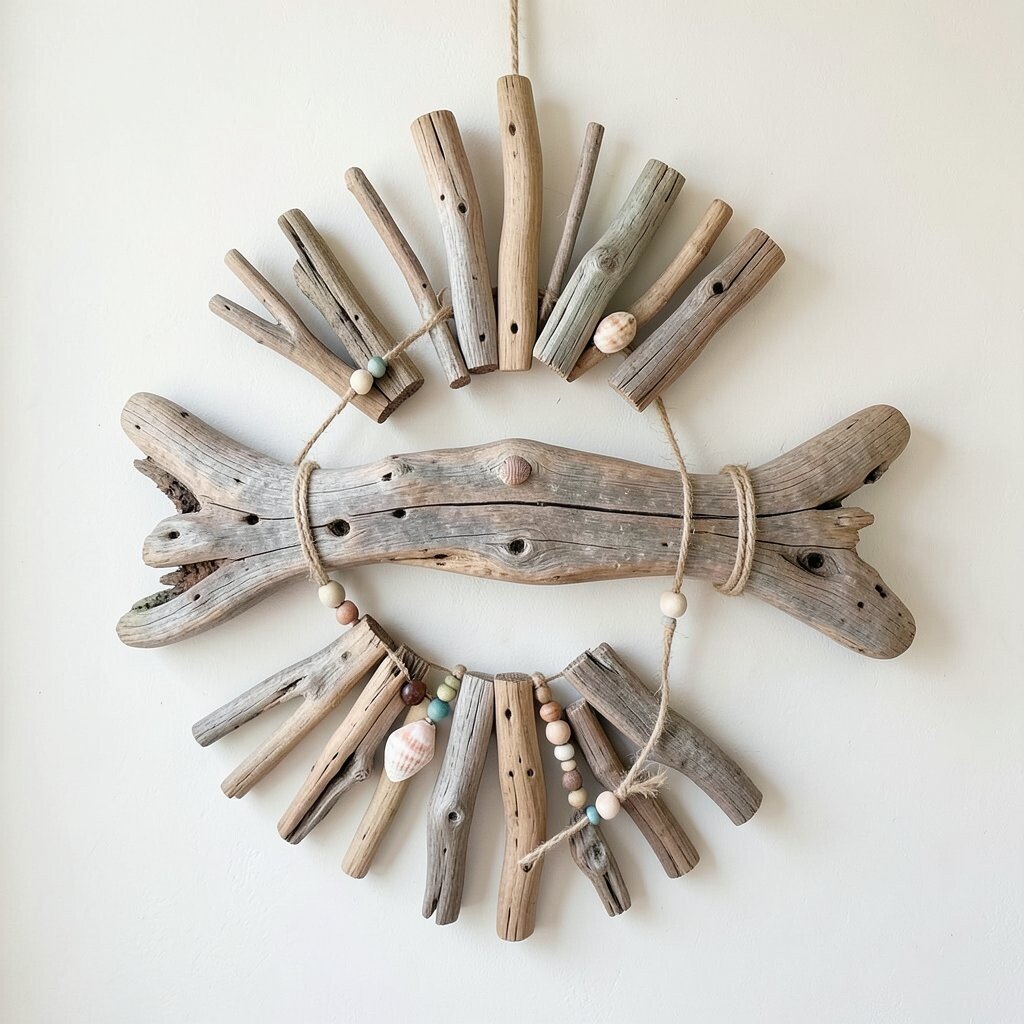
Driftwood wall art brings a rough, weathered charm that feels full of shoreline history. Each branch or plank has its own marks, curves, and faded color, which makes every piece unique.
You can attach driftwood into a sunburst, fish shape, wave form, or simple hanging arrangement. Add twine, beads, shells, or painted details to make the piece feel more complete and more personal.
This project often costs little if you collect natural wood during a beach walk where it is allowed. If driftwood is hard to find, craft stores sell similar wood pieces, and light sanding can help them fit a cleaner style.
Many home decorators like this look because it feels earthy and relaxed. It works well in rustic rooms, coastal bedrooms, and entryways that need a warm handmade touch.
10. Layer Transparent Water Scenes
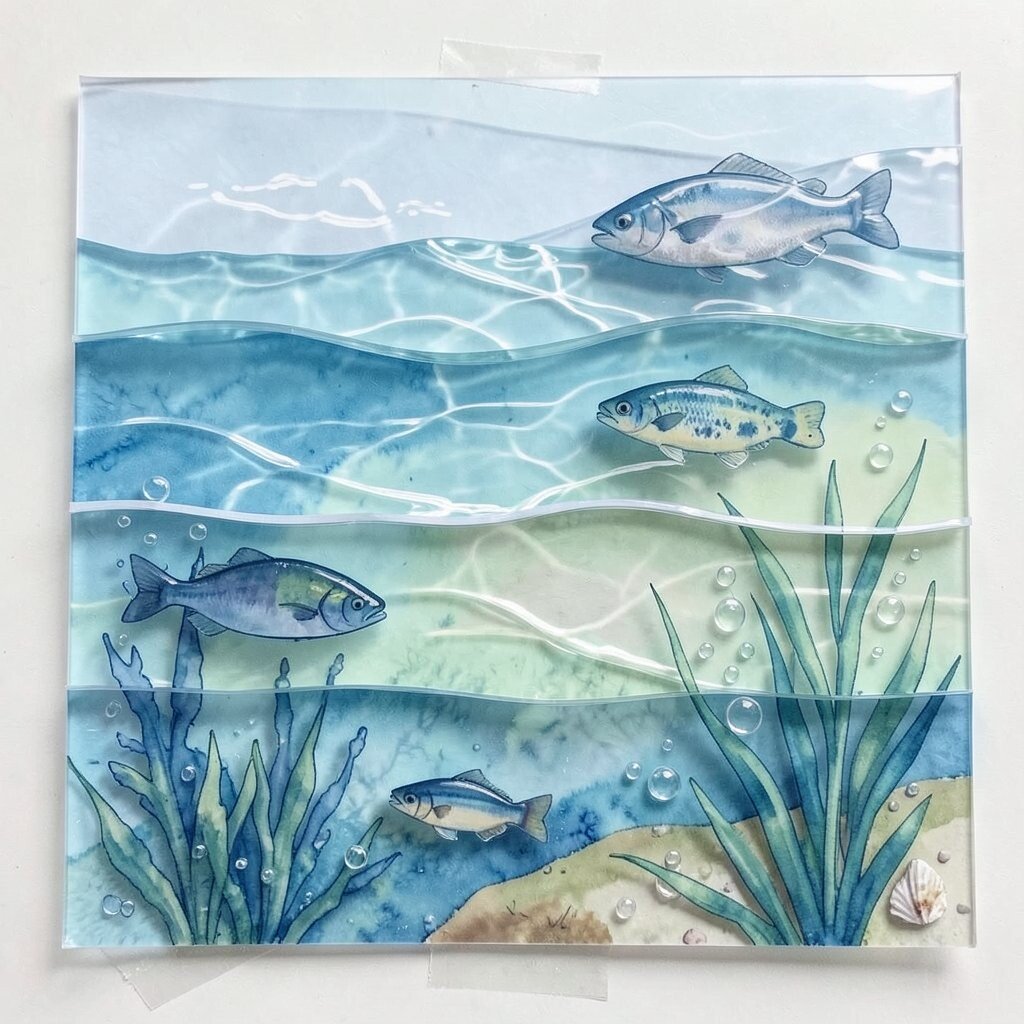
Transparent water scenes use clear layers to make art feel deep and moving. Thin paper, acetate, tracing sheets, or resin layers can create the sense of water over water, almost like looking through a tide pool window.
This effect is special because light passes through parts of the artwork and changes the look as you move past it. Blue inks, pale greens, and soft white lines can suggest ripples, foam, and sunlight on the surface.
Try building the piece in stages, with each layer showing a different part of the scene. Add fish on one layer, sea plants on another, and bubbles or waves on top for a rich finish.
If you want to keep the cost down, use tracing paper and tape before moving to pricier materials. This layered style is also a strong trend in modern craft work because it feels fresh, clever, and slightly magical.
You can make the art more personal by including a favorite swim spot or a memory from a family trip. Even small details, like a tiny boat or a special shell, can make the whole piece feel yours.
11. Build a Starfish Texture Study
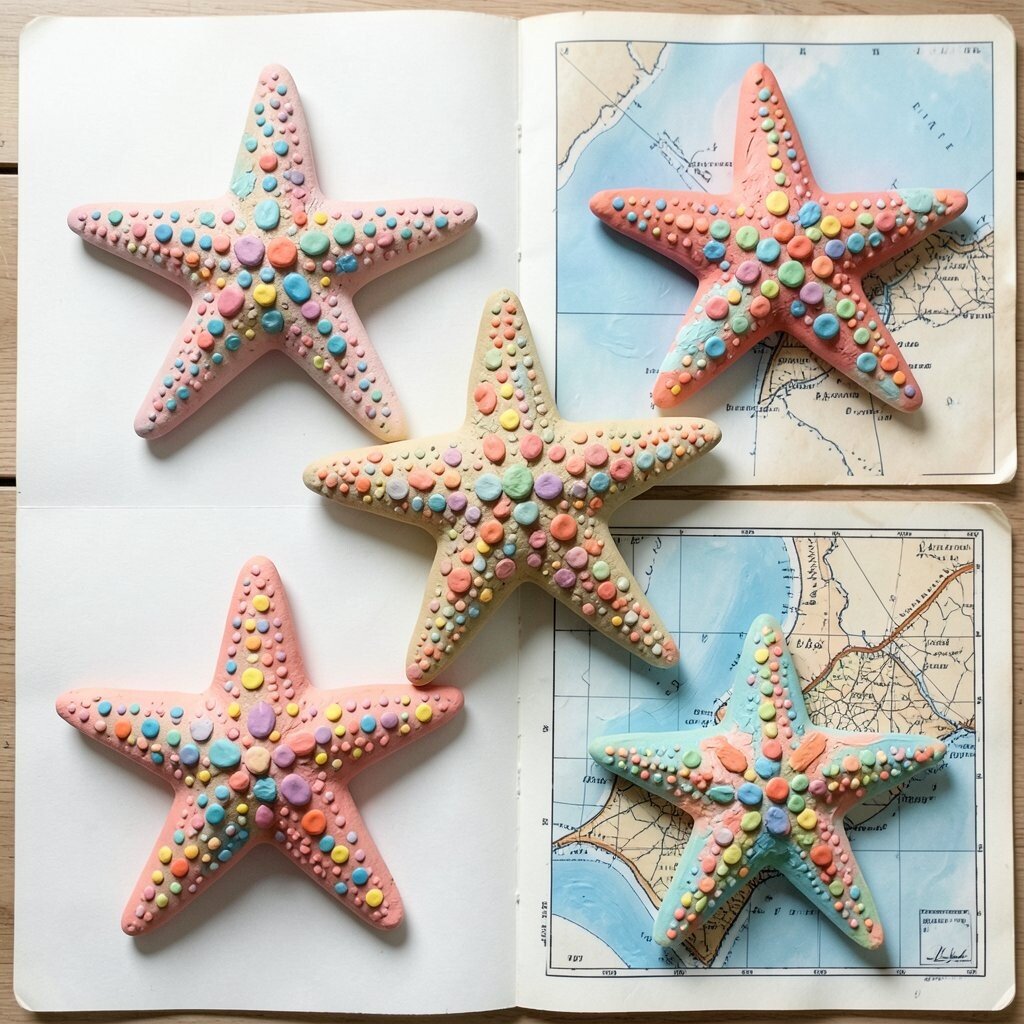
Starfish texture studies focus on touchable-looking surfaces and bold shapes. The five-armed form is simple, but it can be filled with dots, lines, scales, and patterns that make it feel lively.
Use thick paint, pastel, clay, or fabric to give the starfish a raised look. Neutral sands and coral tones work well, but bright rainbow shades can make the design feel fun and modern.
This is a nice project for artists who enjoy details without needing a huge scene. Add one large starfish as the main subject or make a group of them in different sizes for a more playful layout.
Budget-wise, this idea can be done with scraps of paper, cardboard, and simple craft paint. A personal twist might be to place the starfish over a map, a tide chart, or a page from an old travel notebook.
Texture art is popular right now because it looks rich even in small spaces. If you want extra depth, use shadows under each arm so the starfish seems to lift off the page.
12. Illustrate an Underwater Garden
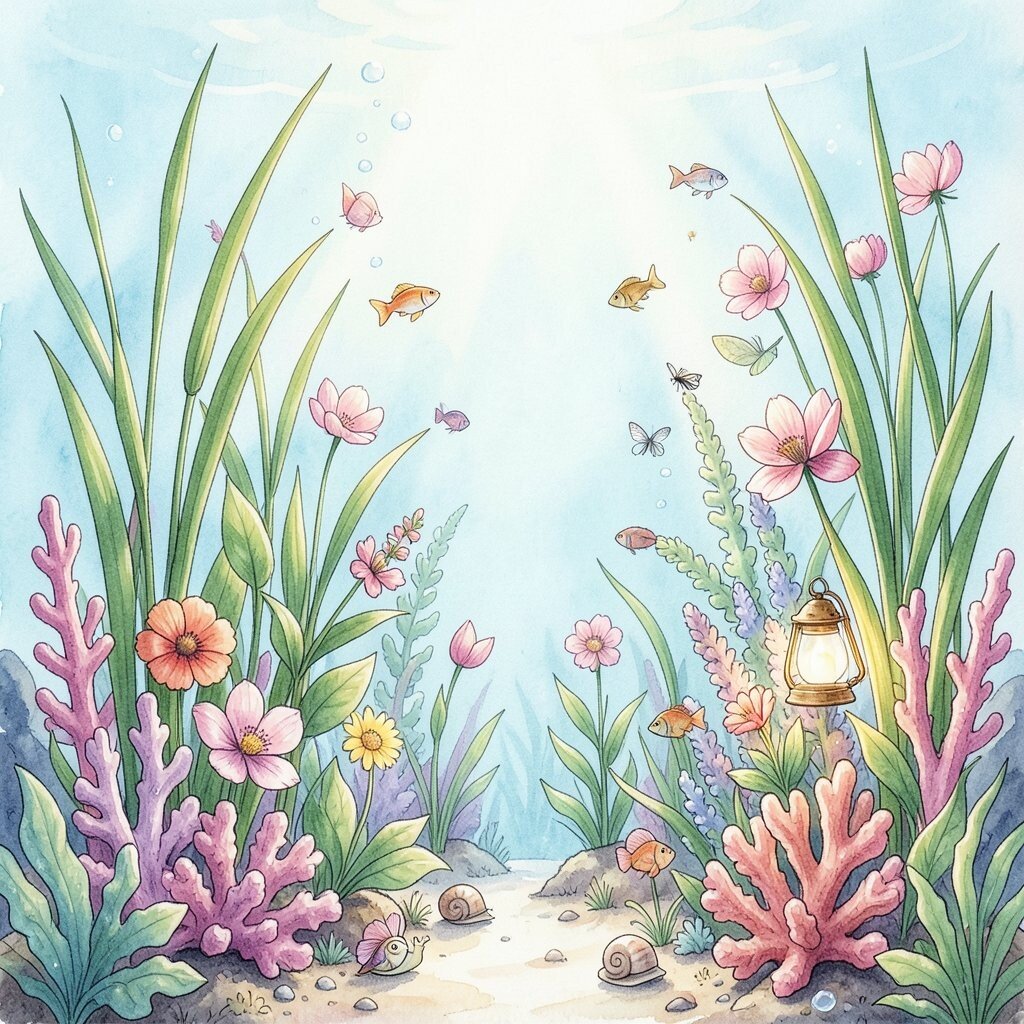
An underwater garden mixes sea plants and blossoms into one beautiful fantasy scene. Tall reeds, soft petals, coral stems, and floating leaves can all blend together to create a dreamy world.
This idea invites bright colors and gentle shapes, so it is perfect for artists who like cheerful pictures. You can use watercolor for soft edges or markers for bold outlines, then add tiny fish or snails as fun surprises.
Personalization is easy because you can choose flowers, plants, and colors that reflect your own style. Some artists even include favorite insects, tiny lanterns, or hidden words among the leaves to make the work feel like a secret garden.
If materials are limited, try colored pencils on plain paper and build the scene slowly. The blend of nature and fantasy keeps this style fresh, and it works well for greeting cards, posters, or bedroom art.
To make the page feel balanced, place larger plants near the bottom and smaller details higher up. That simple layout gives the eye a path to follow through the whole picture.
13. Paint a Moonlit Shoreline
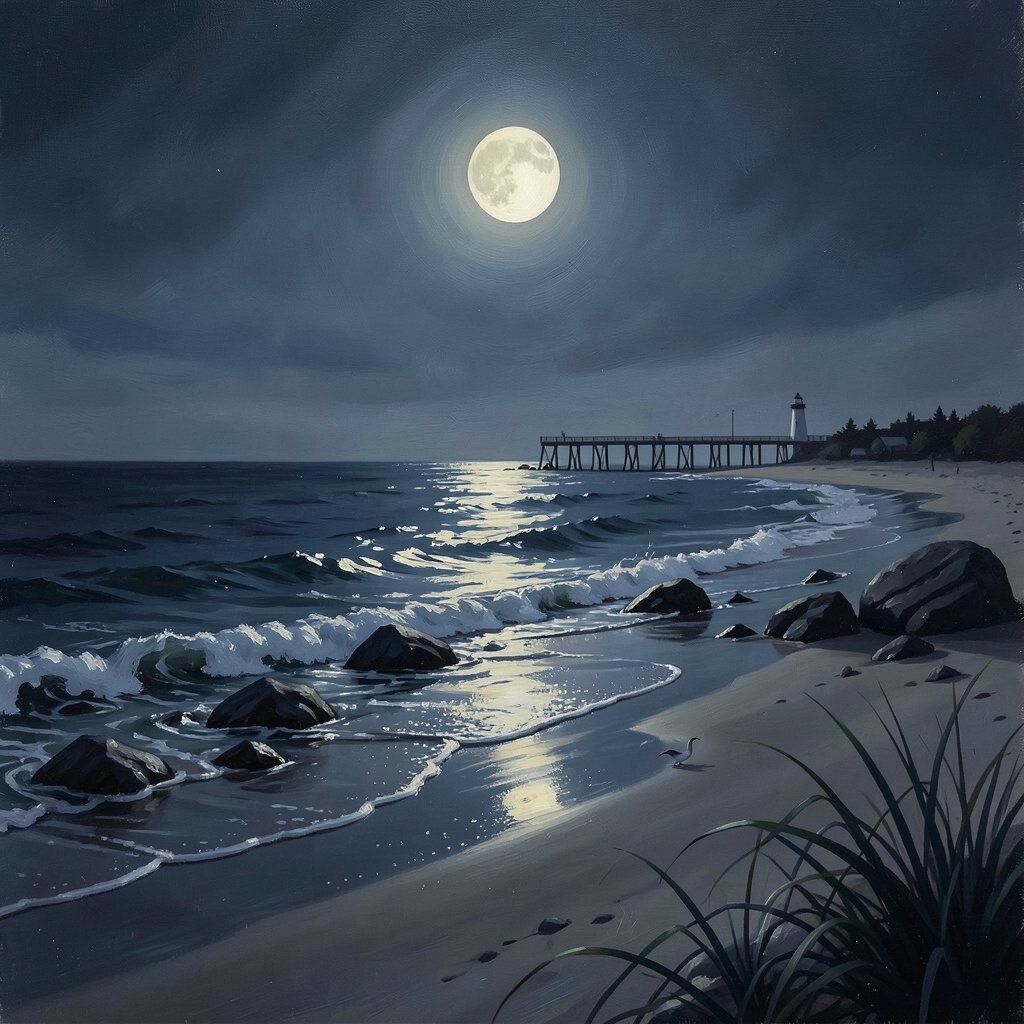
Moonlit shoreline art has a quiet glow that feels both calm and dramatic. Silver reflections, dark water, and soft sand can make the scene look peaceful and full of mystery.
Try deep blues, charcoal grays, and small touches of white or pale yellow for the moonlight. A few simple brushstrokes can show waves sliding onto the beach, while silhouettes of rocks, birds, or grass add shape and contrast.
This theme is great for artists who enjoy mood more than detail. It can be turned into a personal memory piece by adding the shape of a favorite pier, a distant lighthouse, or the outline of a family walk by the sea.
Costs stay friendly because a dark background and a few paint colors can go a long way. The look is also in step with current calm-home trends, since many people want art that feels restful after a busy day.
A final tip is to leave a little open space so the moonlight has room to shine. That simple breathing room helps the whole scene feel larger, softer, and more inviting.