Gallery walls can feel magical before the first nail goes in. One small misstep can make the whole display look busy, crooked, or oddly flat.
1. Hanging Frames Too High
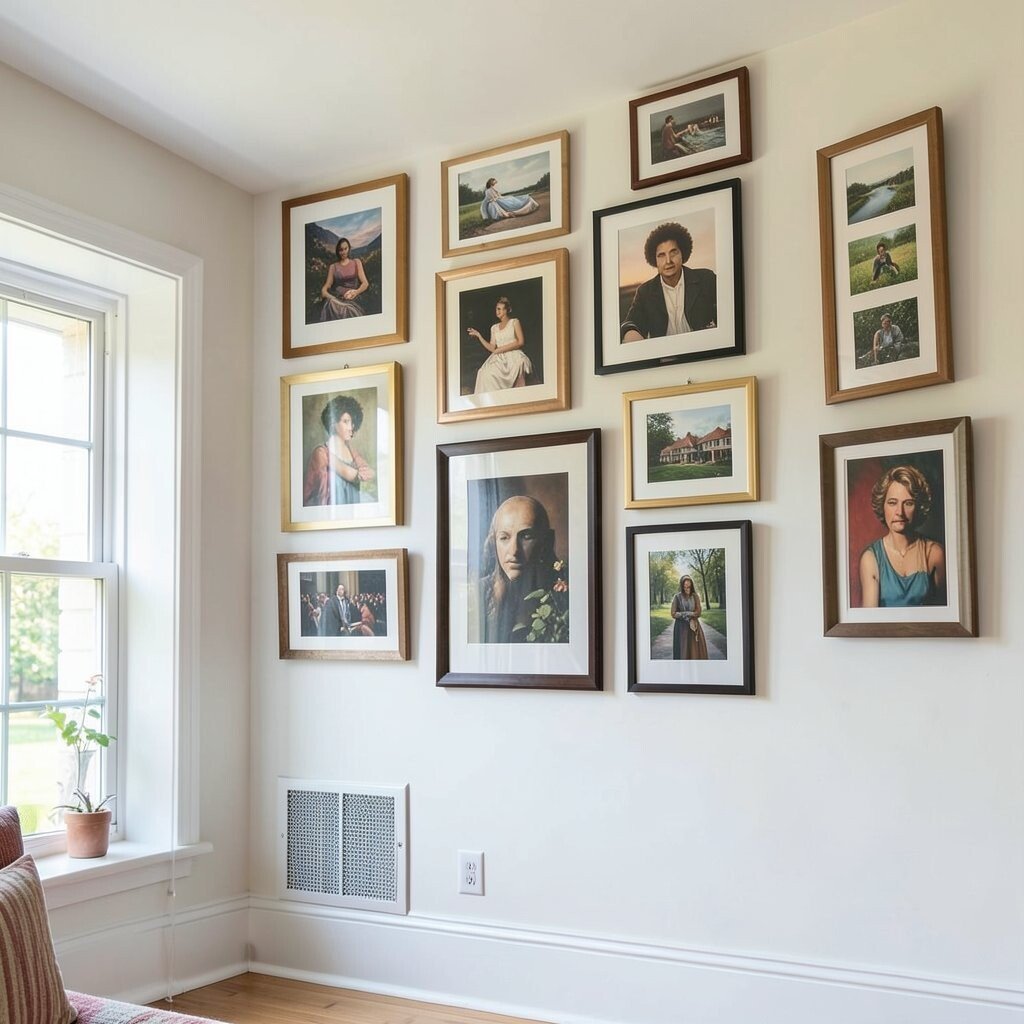
Many people place art near the ceiling because it feels safe and grand. The result can make the room feel top-heavy and hard to enjoy.
A better plan is to keep the center of the wall display close to eye level so the art feels friendly and easy to take in. This simple shift helps the room look balanced and gives the pieces a stronger visual impact. It also makes your favorite prints, photos, and paintings easier to see every day.
2. Ignoring a Clear Theme
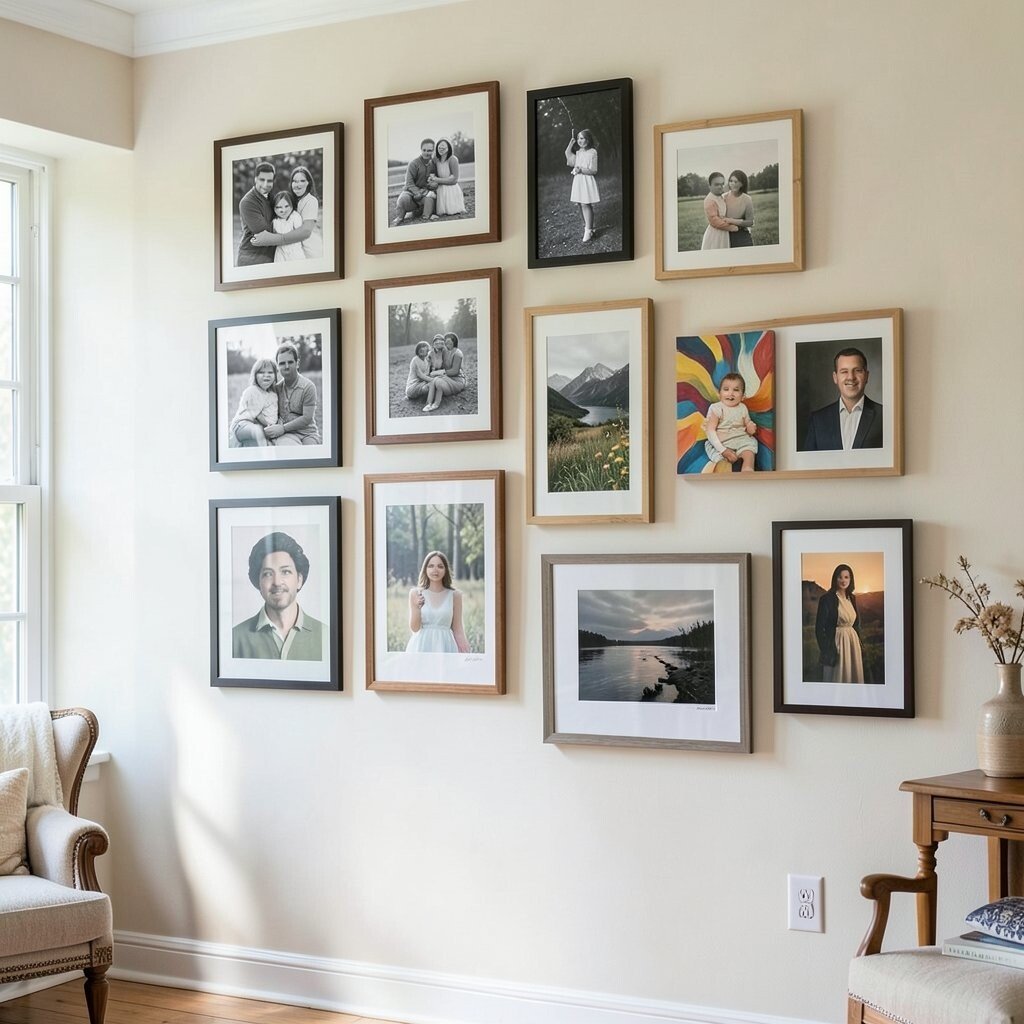
A gallery wall can look messy when every frame tells a different story with no shared thread. Mixed styles can still work, but they need a clear link so the wall feels intentional.
Pick a theme that fits your home, like travel photos, black-and-white family pictures, soft nature prints, or bold modern art. A theme adds uniqueness and makes the wall feel like it belongs to you, not a store display. If you want a trendy look, try mixing art styles inside one color family for a polished but personal feel.
Think about the mood you want before you hang anything. Calm, bright, moody, playful, or classic all send different signals. A simple theme also helps you shop smarter, because you can skip pieces that do not fit and save money over time.
3. Using Frames That Are Too Similar
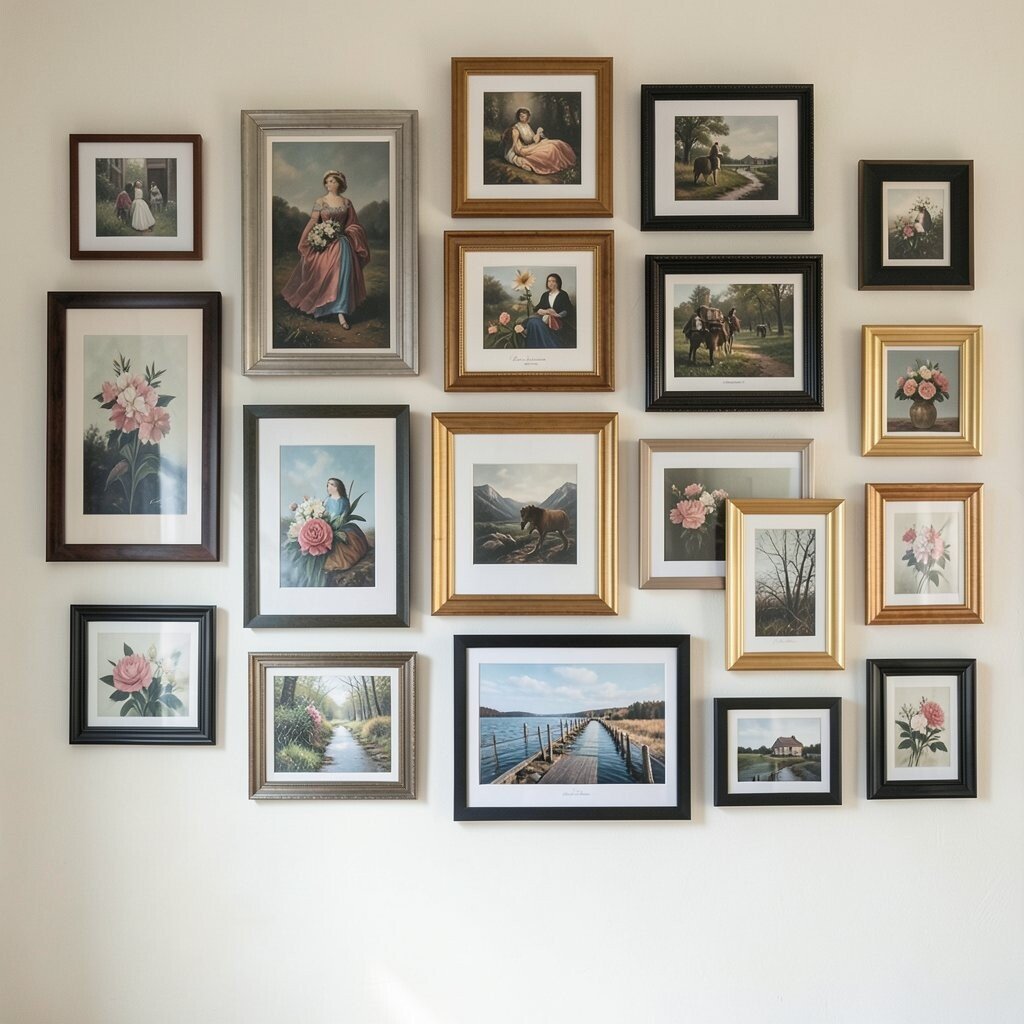
When every frame looks the same, the wall can feel flat and dull. Even beautiful art may lose its charm if the framing has no variety.
Mixing frame shapes, colors, and finishes can add life and depth. Try wood with metal, thin with chunky, or matte with glossy for a richer look. This mix can make a gallery wall feel collected over time, which is a big style trend right now.
Still, too much variety can look noisy, so keep one thing steady, like color or mat style. That balance gives your wall personality without chaos. If you are on a budget, use simple frames and add interest with different art sizes instead of buying fancy pieces all at once.
4. Skipping a Layout Plan
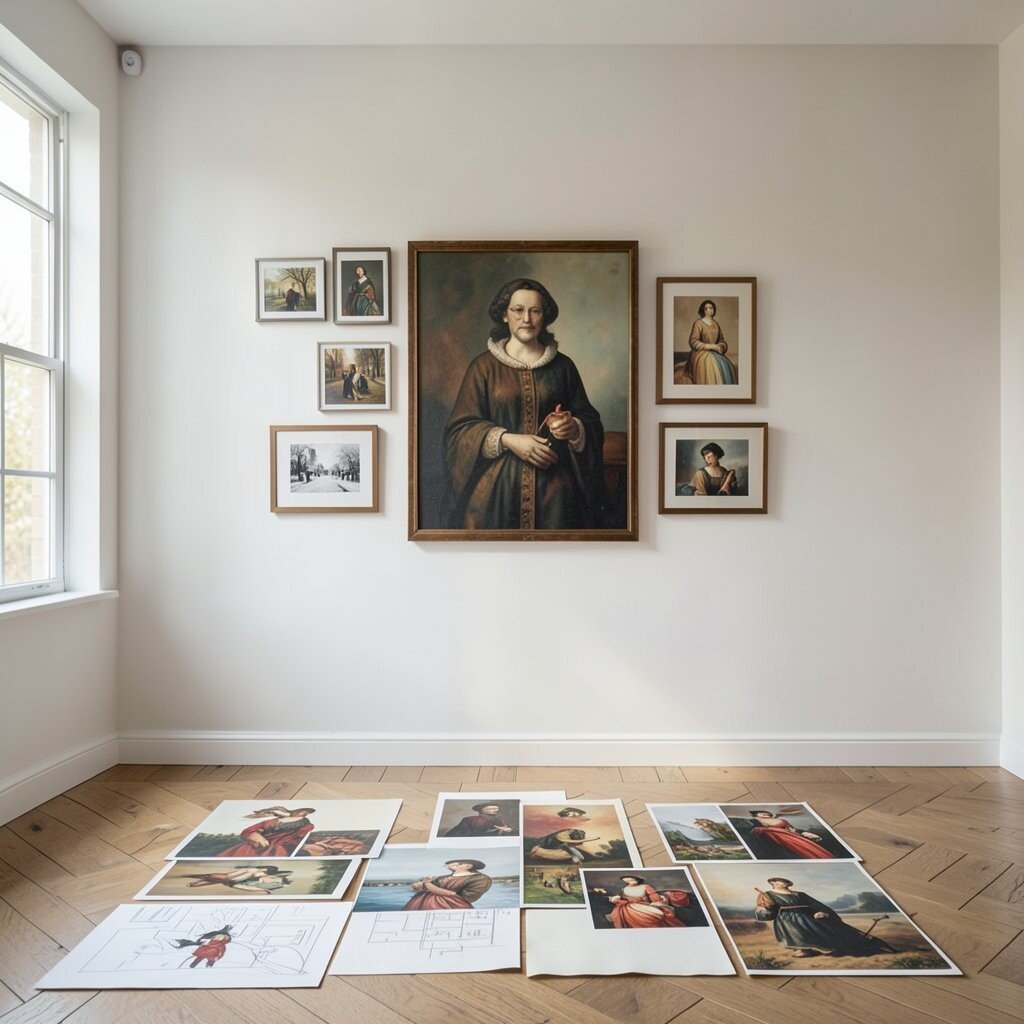
It is tempting to hang art one piece at a time and trust your eye. That often leads to awkward gaps, lopsided spacing, and extra holes in the wall.
Lay everything out on the floor or use paper templates on the wall before you start. This helps you see the full shape and make changes without stress. Planning also lets you test a style that feels unique to your space, like a neat grid or a loose salon wall.
A good layout saves time and money because you avoid patching mistakes later. It also makes the wall feel more polished and less random. If you want a current look, try uneven spacing with a strong center piece and smaller pieces around it.
5. Forgetting to Measure Spacing
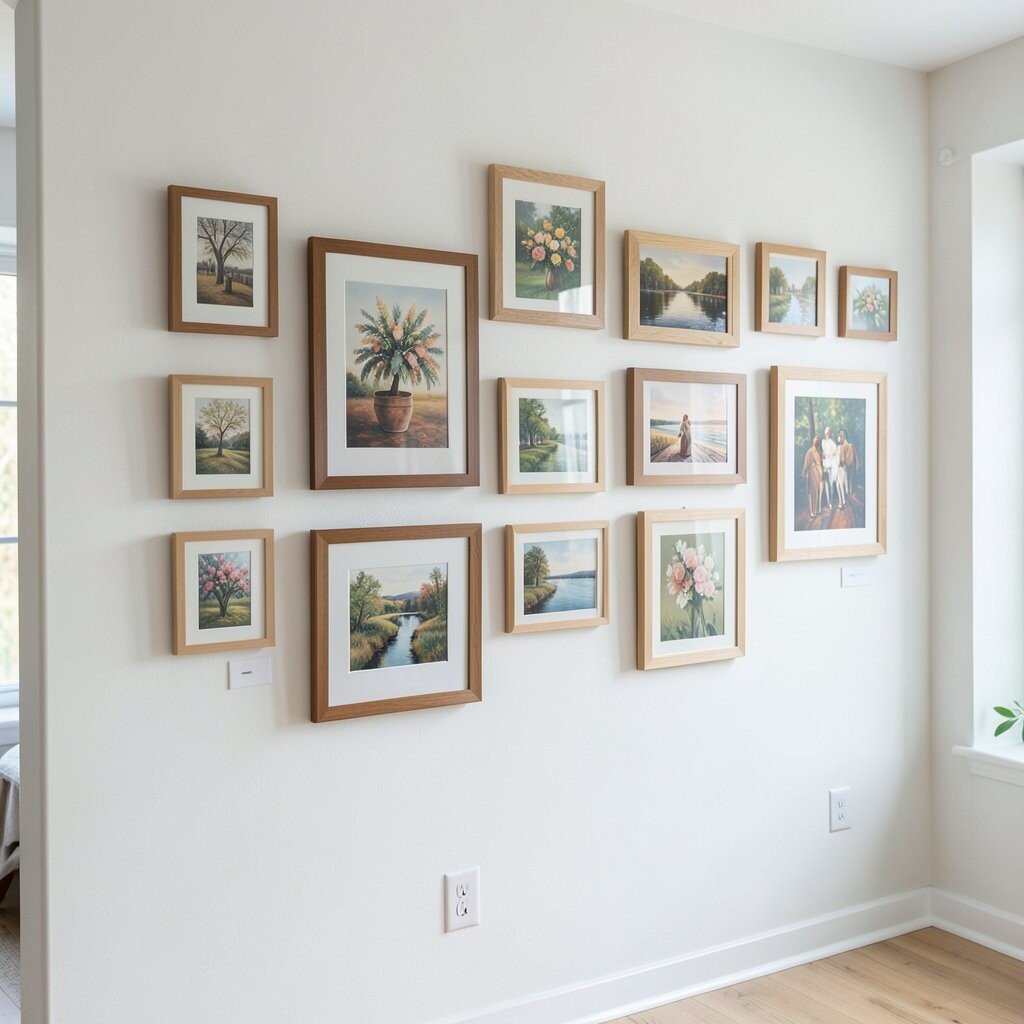
Uneven gaps can make even lovely art look off. One frame too close or too far from the others can break the whole rhythm.
Use the same spacing between pieces when possible so the wall feels calm and tidy. A small ruler or piece of painter’s tape can help you keep things even without much effort. Clean spacing gives the eye a place to rest and makes the collection feel more finished.
That said, some walls look best with a little playful variation. The key is to make the difference look planned, not accidental. If you are working with many small pieces, consistent spacing is especially helpful because it keeps the arrangement from feeling cluttered.
6. Choosing Art That Is Too Small
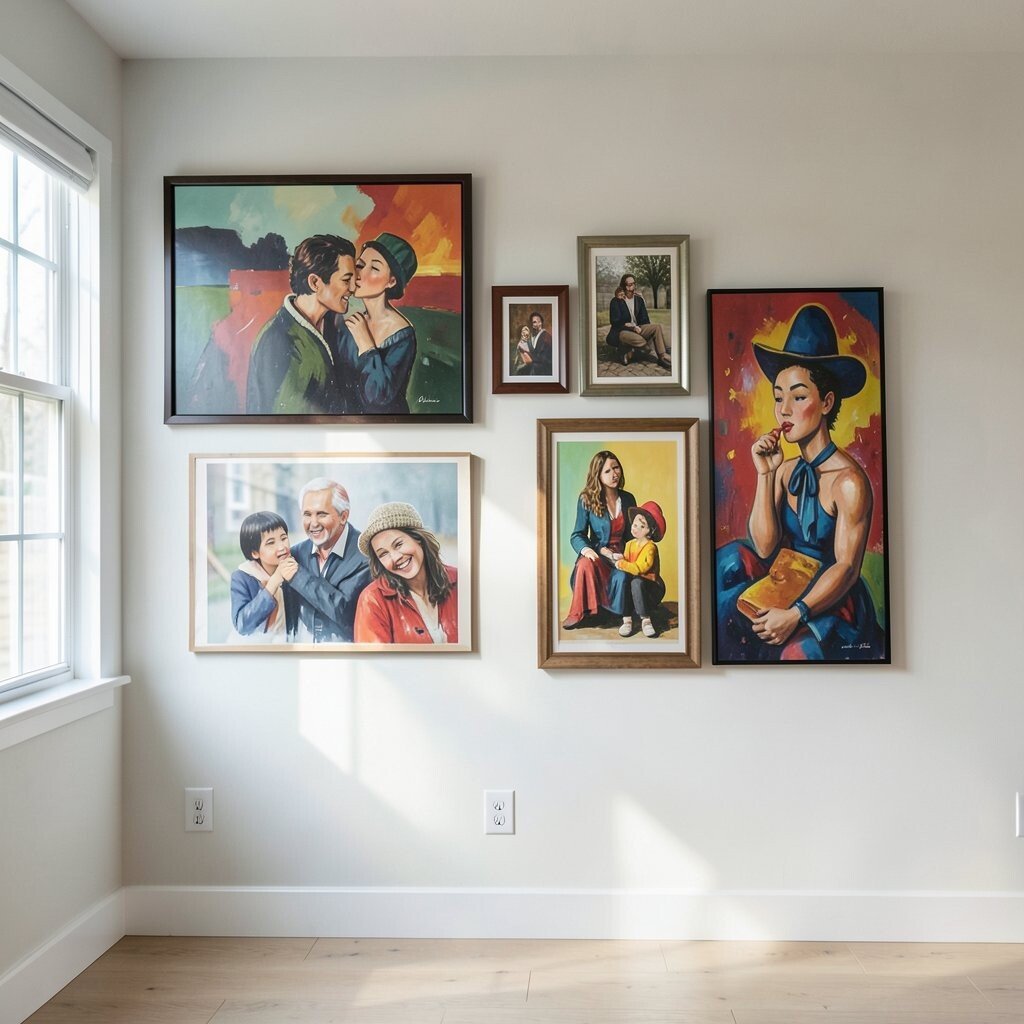
Small art can get lost on a big wall and leave the space feeling empty. The display may look timid instead of bold and welcoming.
Mix in larger pieces to anchor the wall and give it shape. Bigger art helps the whole arrangement feel stronger and more confident. It also makes your smaller prints look more special by giving them a clear stage.
If large art feels expensive, use poster-sized prints, thrifted frames, or personal photos enlarged at a copy shop. This can be a smart way to keep costs down while still making the wall feel full. A few oversized pieces can also follow today’s trend of cleaner, art-led rooms with less clutter.
7. Crowding the Wall With Too Many Pieces
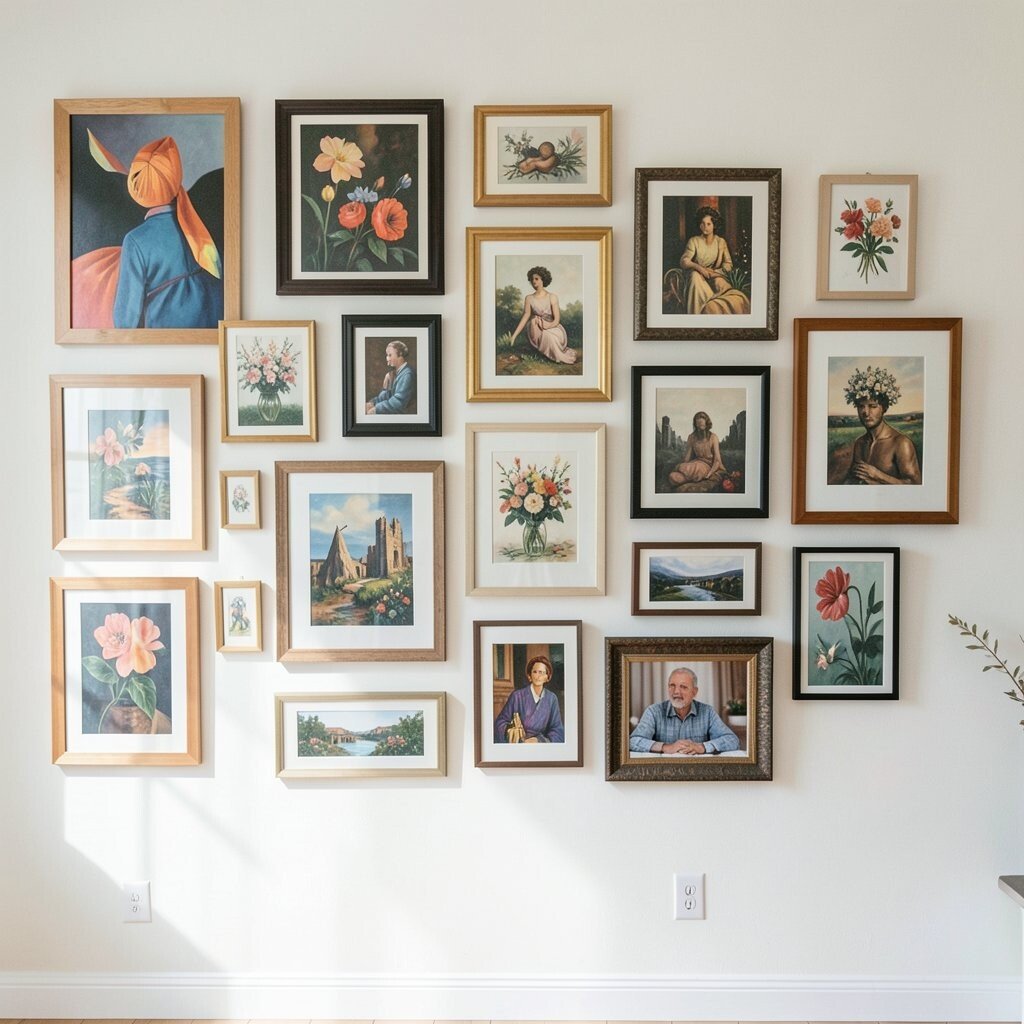
A packed wall can feel exciting at first, but it may quickly become hard to read. When every inch is covered, the eye has nowhere to land.
Leave a little breathing room so each piece can shine. Empty space can make the wall feel more elegant and help the art stand out. This is especially useful if you have a mix of bold colors, because the quiet areas soften the look.
A lighter arrangement is often easier to personalize later, too. You can add new pieces over time without tearing the whole wall apart. That slow-build style is friendly to budgets and works well with the current love for collected, lived-in spaces.
8. Ignoring the Room’s Colors
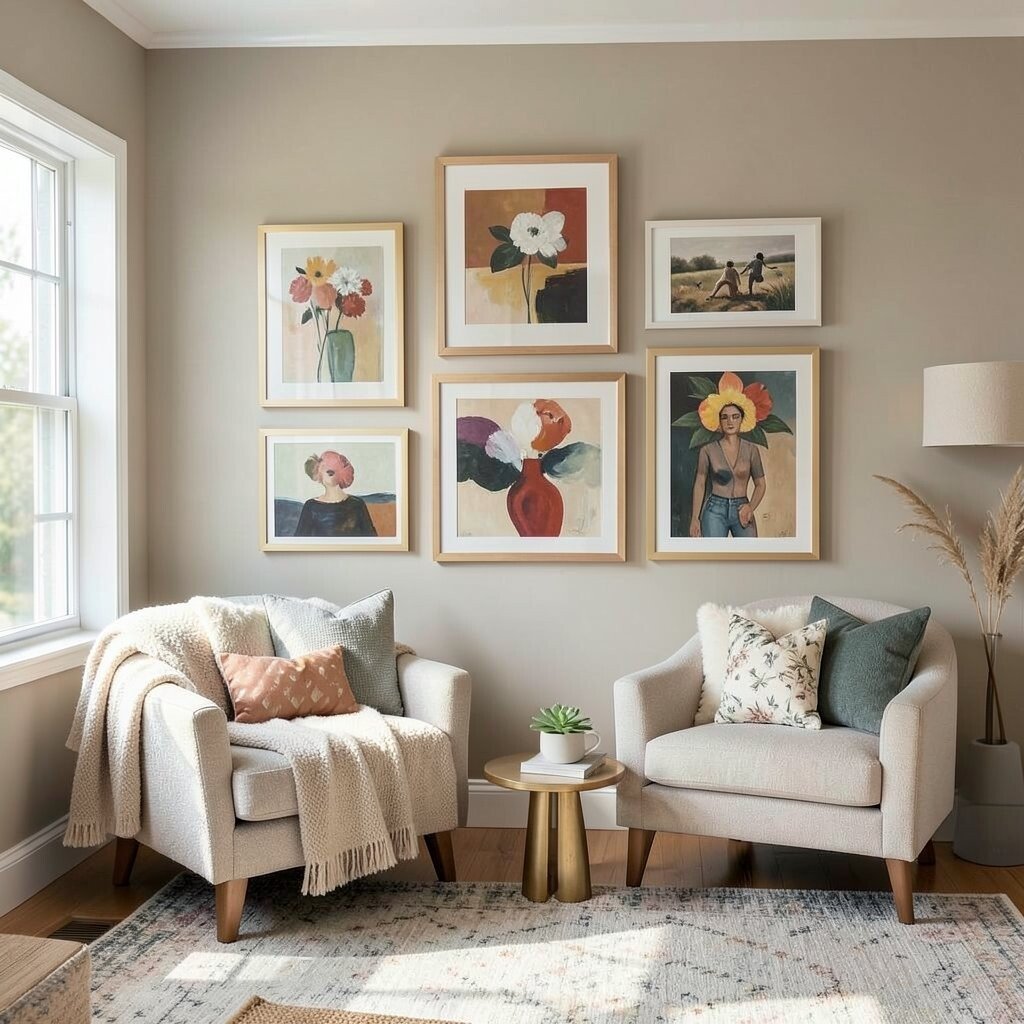
Art that fights with the room can make the whole space feel uneasy. Bright frames or busy prints may clash with rugs, pillows, or paint colors.
Choose a few colors from the room and repeat them in the wall display. That makes the art feel connected to the furniture and decor. It also helps the gallery wall support the room instead of competing with it.
You can still add surprise with one standout piece that has a fresh pop of color. That little spark gives the wall uniqueness and keeps it from feeling too safe. If you want a trendy touch, try earthy shades, soft neutrals, or muted jewel tones that work well in many homes.
9. Using Only One Art Style
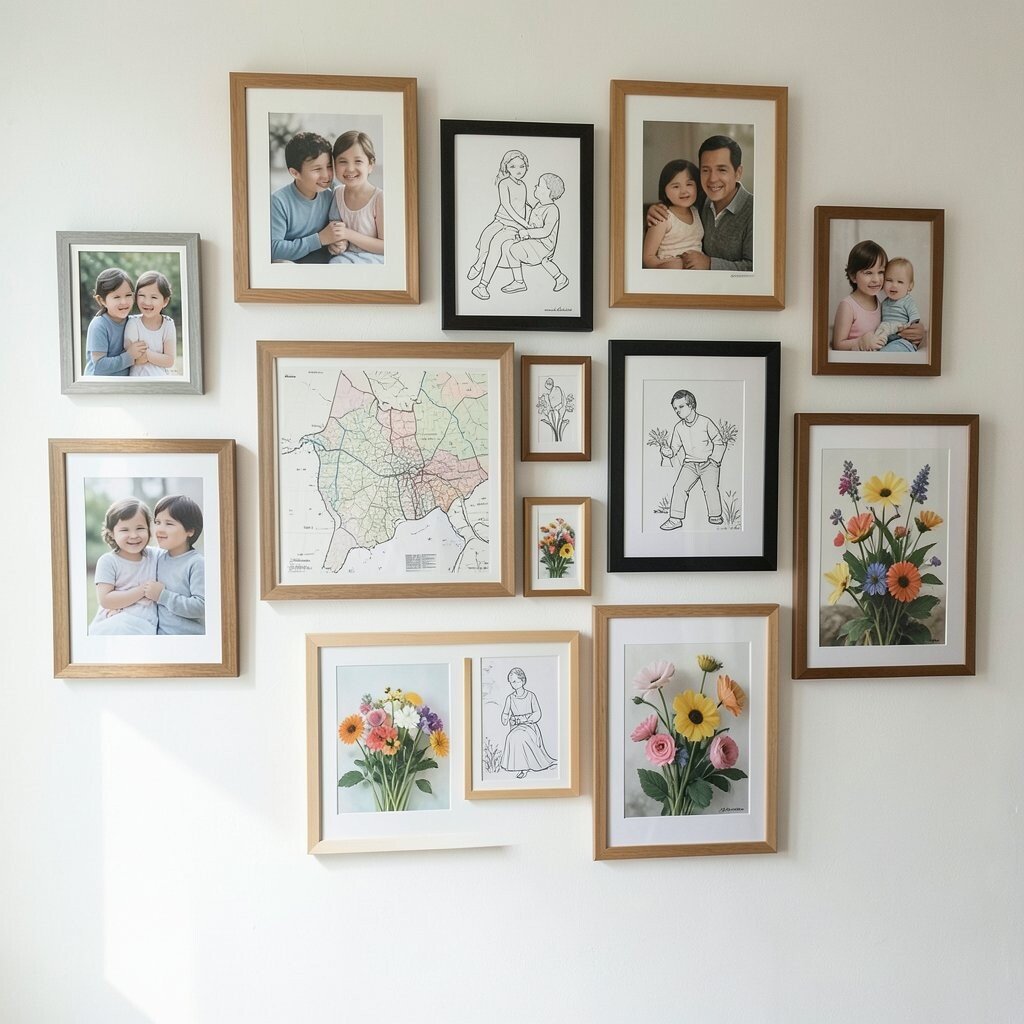
A wall made of only one type of image can feel flat and one-note. All photos, all prints, or all paintings may not create enough visual movement.
Mixing styles can make the wall much more interesting. Try pairing family photos with line art, maps, or pressed flowers for a layered look. The variety adds charm and helps the wall feel personal rather than copied from a catalog.
To keep the mix from feeling random, repeat one thing like frame color, mat style, or subject matter. That small thread ties everything together. It also gives you room to shop from different price ranges without losing the overall look.
10. Hanging Without Testing the Height in the Room
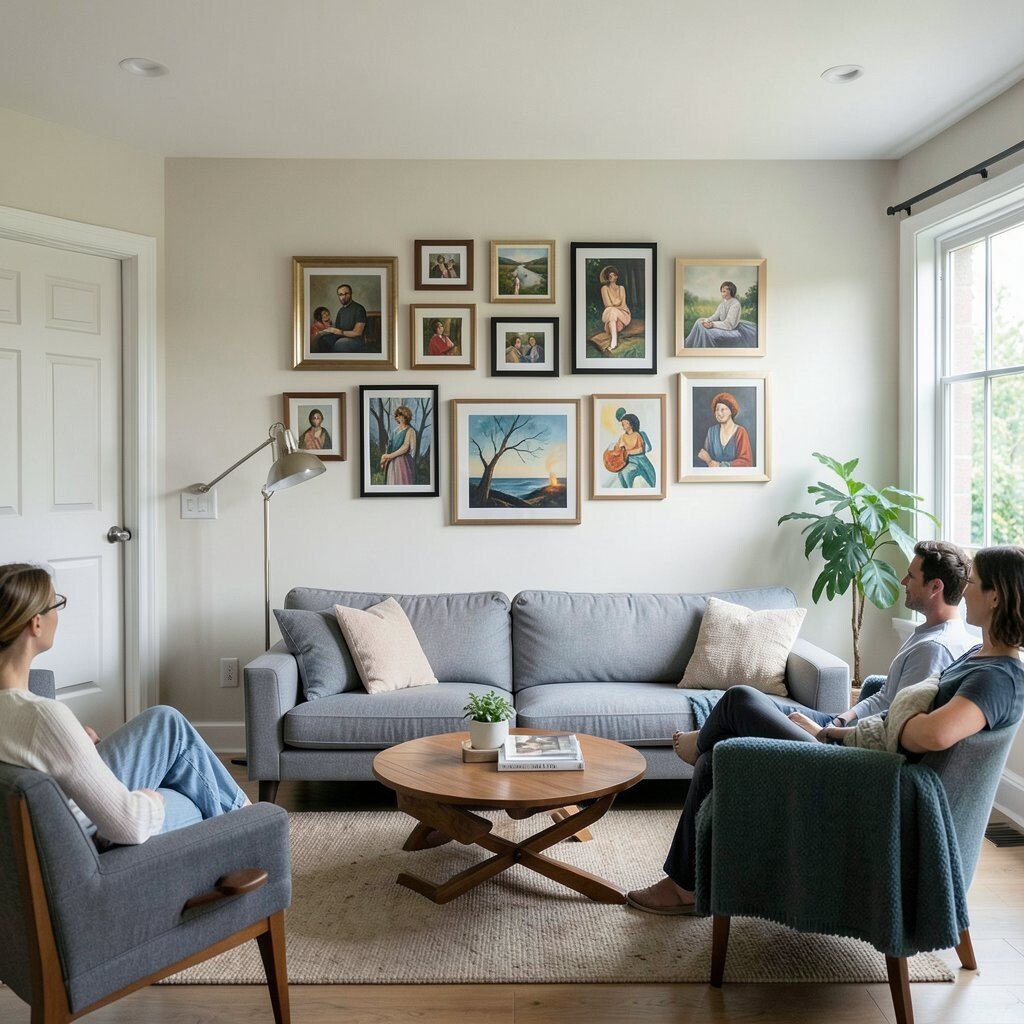
A wall can look perfect in your hands and wrong once it is on the wall. The mistake often comes from not checking how the art relates to furniture, doors, and windows.
Stand back and view the wall from where people actually sit, walk, or relax. This helps you place the pieces where they make the most sense in daily life. A gallery wall should feel like part of the room, not a decoration stuck on as an afterthought.
If the wall sits above a sofa or console, keep the bottom edge low enough to connect with the furniture. That creates a cozy, finished feel. It also helps the whole setup look more current, since many modern rooms favor art that feels grounded and easy to live with.
11. Buying Everything at Once
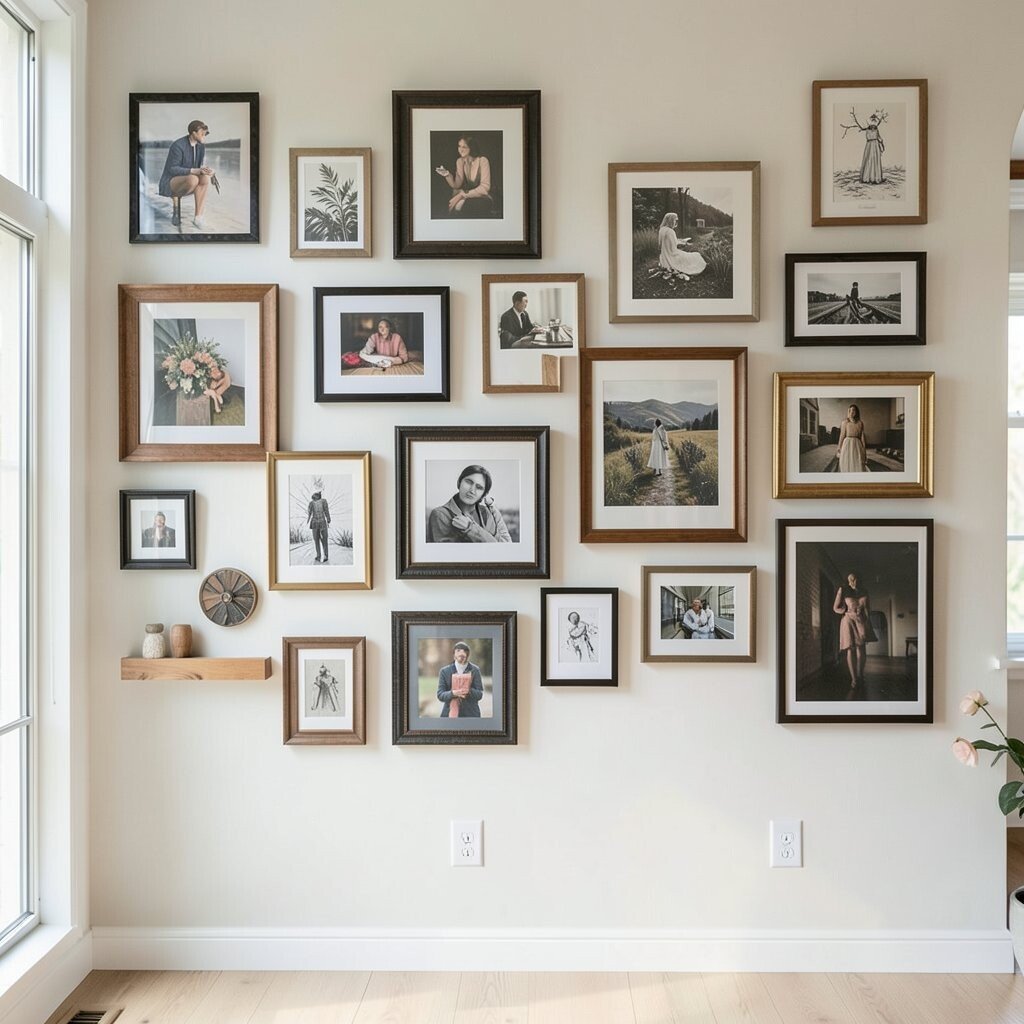
Rushing to fill the wall can lead to art that does not really fit your style. The display may look forced instead of collected with care.
It is often better to build the wall slowly and add pieces you truly love. This gives you time to find unique items from markets, online shops, or your own photo library. Slow collecting also makes the wall feel richer because each piece has a story.
Waiting can help your budget, too, since you can shop for sales and secondhand frames. That makes it easier to create a stylish wall without spending too much. It also leaves space for fresh trends, so your gallery wall can grow with your taste.
12. Forgetting About Frame Weight and Wall Type
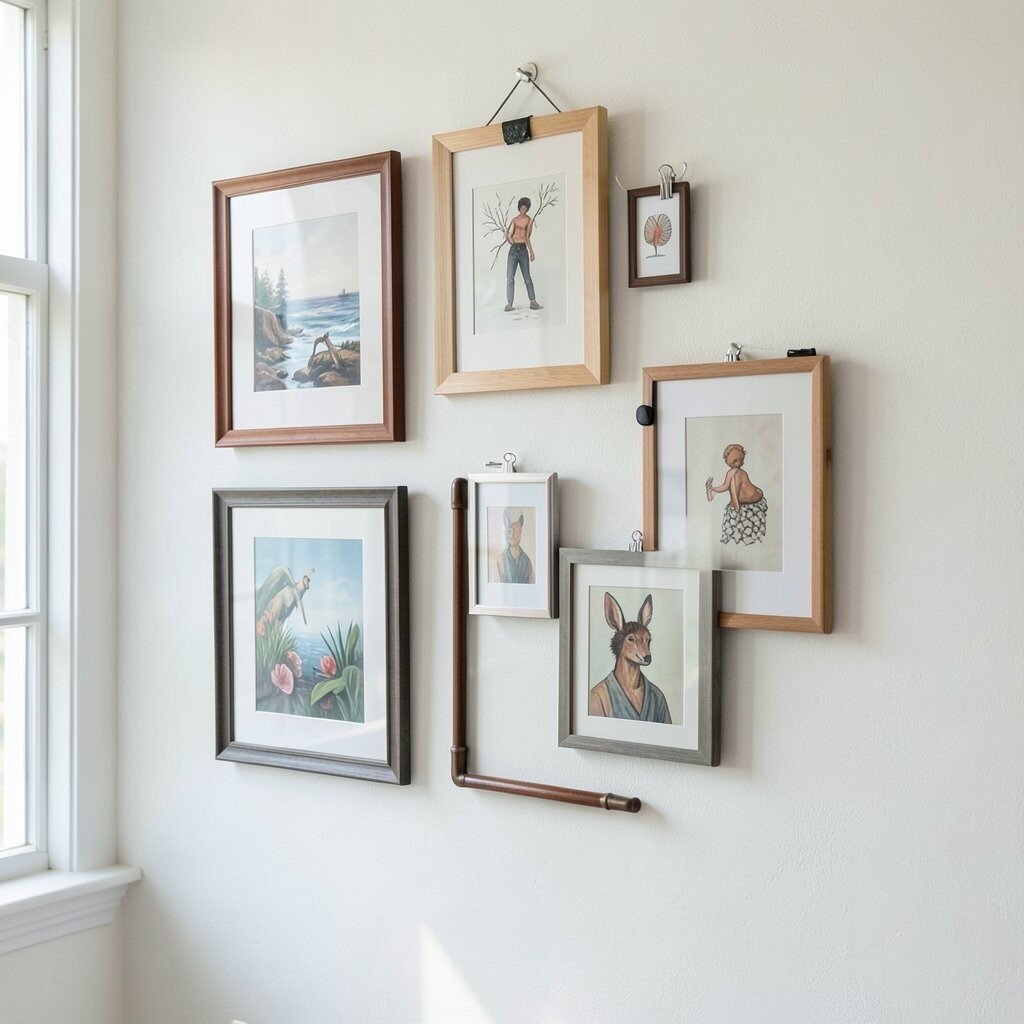
Heavy frames on weak hooks can cause trouble fast. A beautiful wall is no help if the pieces keep slipping or falling.
Match the hanging hardware to the wall type and the frame weight. Drywall, plaster, and brick each need different support, so this step matters more than it seems. Strong hardware protects your art and gives you peace of mind.
If you rent, use damage-friendly options when possible and choose lighter frames. That can keep costs down and make setup easier. It also opens the door to more playful personalization, like clip frames, leanable art, or removable hangers that let you change the wall often.
13. Making the Wall Too Perfect
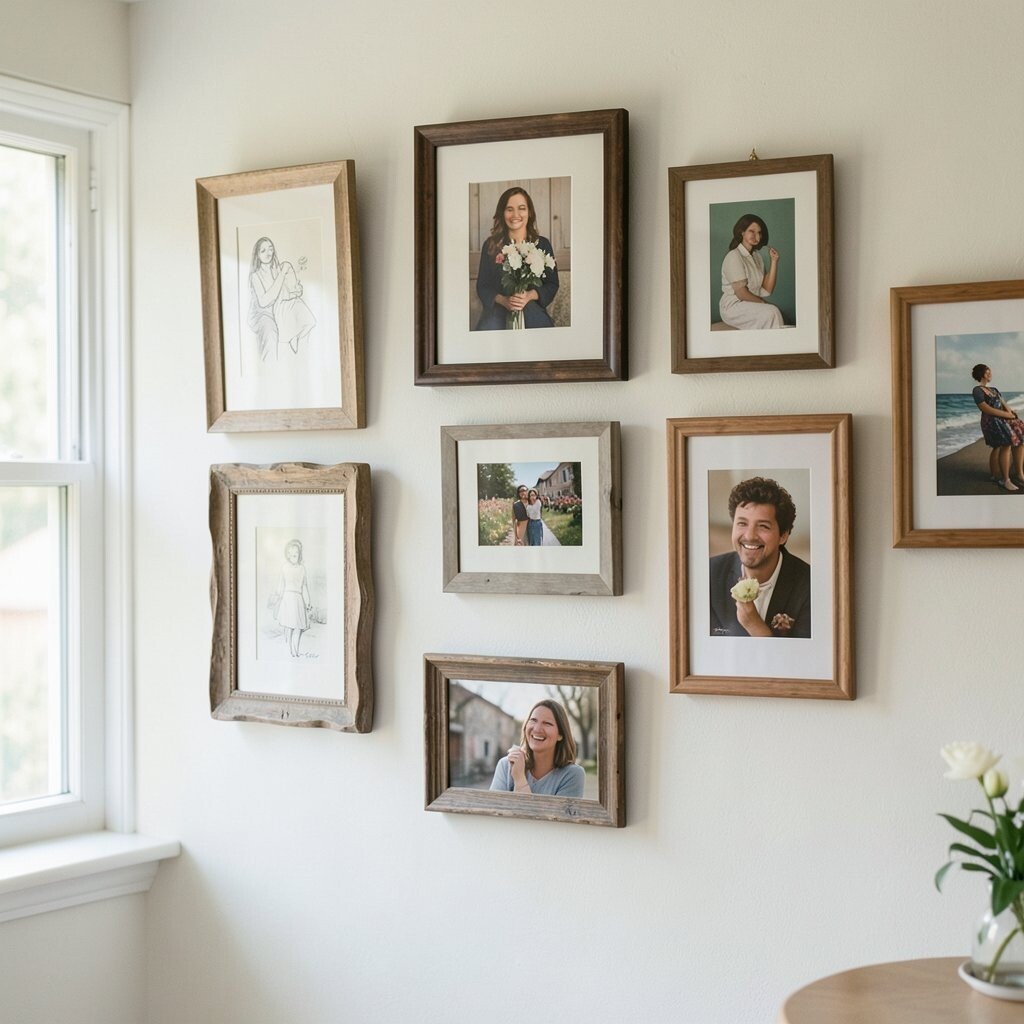
A gallery wall can lose its charm when every line feels stiff and every piece looks too matched. The display may seem cold instead of warm and lived-in.
Small surprises can make the wall more lovable. Try one odd-shaped frame, one tiny sketch, or one personal photo tucked into the mix. These touches add uniqueness and give the wall a human feel.
Perfection is not the goal in many homes right now. People love walls that feel collected, relaxed, and personal. Letting a little imperfection stay can make the whole arrangement feel more real and more inviting.
14. Not Giving the Wall a Personal Story
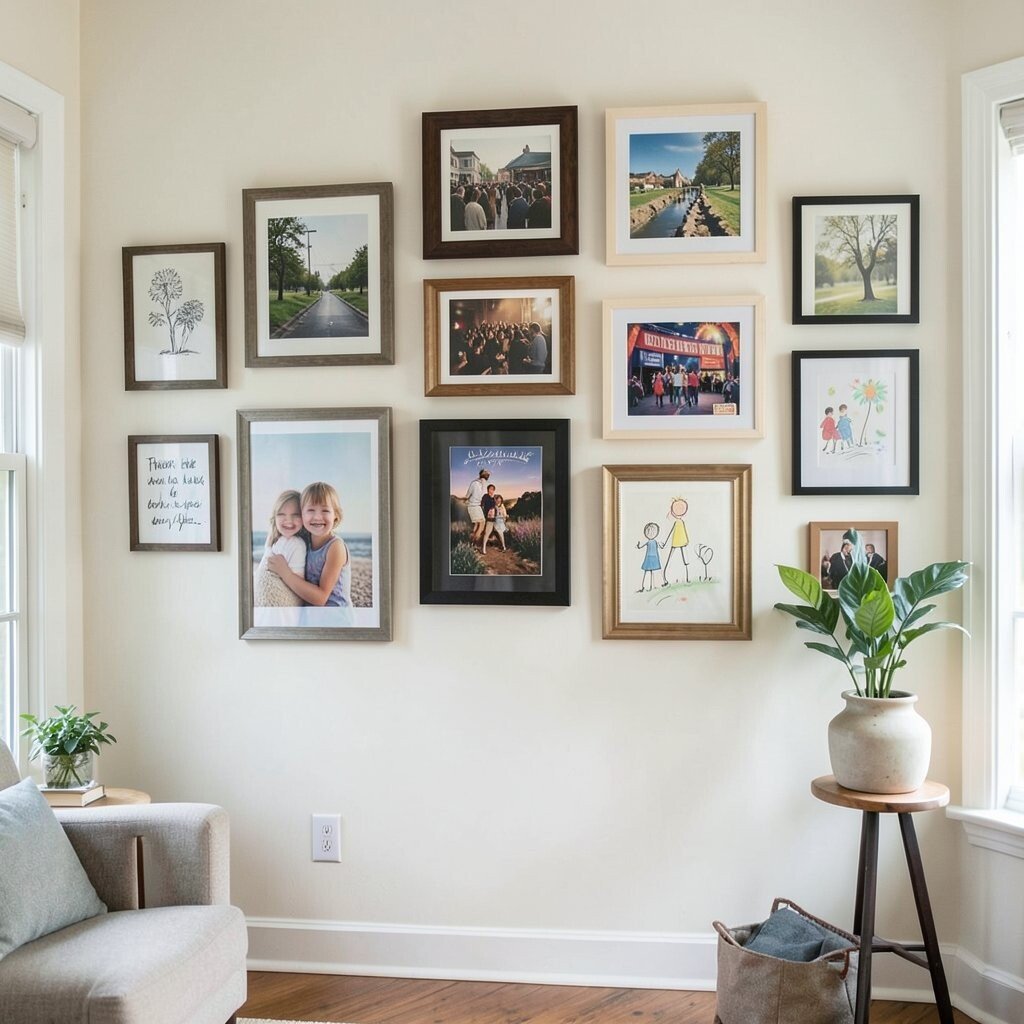
Pretty art is nice, but a gallery wall shines brightest when it says something about the people who live there. Without that personal touch, it can feel like a sample board.
Add pieces that mean something to you, such as travel snapshots, children’s drawings, concert tickets, or a print from a favorite place. These details make the wall warm and memorable. They also help the room feel like home in a way store-bought decor never quite can.
Personal pieces do not need to cost much, which is one reason they are so useful. A handwritten note in a frame or a scanned family photo can be just as meaningful as expensive art. When a wall tells your story, it becomes unique, stylish, and much easier to love every day.