Something simple can make a room feel instantly more organized. These cork board makeovers show how small choices create big momentum.
Pick the ideas that fit your space and your style, then borrow the techniques that make the board look intentional. Even if your cork board is bare, it can become a helpful display that feels good to use every day.
1. The Tiny Entryway Catchall That Finally Works

Before, the entryway was a blur of keys, mail, and lost little items. After adding a cork board above a console, everything started getting a home, and the area looked calmer right away.
The surface became a visual landing spot for incoming mail and daily reminders. Pin a small tray of sticky notes nearby and use washi tape to mark where letters go. A board this size also helps you spot patterns, like bills that always arrive on the same day.
2. The Classic Classroom Board With a Modern Color Shift

Before, the board looked like it belonged to a different decade, with generic pushpins and scattered papers. After, the same cork turned into a tidy classroom hub using coordinated colors and cleaner spacing.
Switch to a limited pin palette like muted brass, navy, and sage to make everything feel planned. Add a simple grid using thin tape lines so schedules and reading notes stay aligned. This kind of structure reduces clutter because papers don’t pile up in random corners.
To personalize, include student name tags or rotating “today’s focus” strips. For practical balance, choose lightweight labels so you can swap them quickly. The cost stays low because you can use what you already have, then add only a few matching pins and tapes.
3. The Cozy Home Office Wall That Started With One Board

Before, the office had a desk that was always busy and a wall that looked blank. After, a cork board anchored the space with a warm, grounded look that made planning feel more inviting.
Instead of pinning everything, the after setup used sections for goals, reference notes, and weekly tasks. Use binder clips on the edge for papers you change often, so your board stays neat. Add a small cork strip along the bottom for reminders, because horizontal space is great for short lists.
For uniqueness, pair the board with a simple frame style using craft wood strips painted to match your desk. A budget-friendly approach is to keep the board as-is and upgrade only the layout tools. This is also a current trend, since more people are mixing organization with soft textures.
When you work, your eyes need quick routes, and a cork board gives them. You’ll likely find yourself taking fewer “where did I put that?” moments, which saves time. The visual flow also makes your workspace feel calmer, not busier.
4. The Kitchen Command Center With a Menu Rhythm

Before, the kitchen had recipes tucked into drawers and a grocery list living on a sticky note that kept falling off. After, the cork board became the spot where meals and shopping stay visible.
Pin a weekly menu card and rotate it every few days, then keep a grocery card beside it. Use small containers or clip rings to hold coupons so they don’t turn into paper confetti. This helps families coordinate because everyone can see what’s happening without asking.
To personalize, add recipe cards in your favorite fonts, or print simple photo cards for meals. For cost, you can start with index cards and plain pins, then add decorative tape only where it matters. The trend right now is “gentle structure,” and a cork board does that without looking strict.
5. The Bedroom Vision Board That Uses Soft Boundaries

Before, your bedroom mood was set by random photos and notes on different surfaces. After, the cork board became a personal display that feels cohesive and soothing.
Instead of crowding it, leave breathing space and pin only the pieces that match the vibe. Use contrasting pin colors to guide the eye, like placing favorite quotes in one corner. This makes it easier to keep updated, since it won’t feel like you have to start from scratch.
Add uniqueness by mixing textures such as fabric ribbon, lightweight cardstock, and tiny polaroid-style prints. Keep personalization practical by setting a “replace after” rule, like swapping one item each season. Even with a limited budget, craft supplies and clear organization tools can make it look styled.
6. The Entryway Calendar Setup That Stops the Guessing

Before, important dates were remembered only for a day or two and then vanished into phone notifications. After, a cork board calendar made plans visible in the most eye-friendly spot.
Pin a monthly calendar print, then use different colored pins for family events, appointments, and reminders. Add a small strip of cork tape or a thin border tape to separate the calendar from daily notes. The benefit is instant clarity, since you don’t have to open apps to know what’s next.
7. The Budget-Friendly Beauty Board for Self-Care Planning

Before, self-care ideas lived in screenshots and half-written notes. After, the cork board turned those plans into a simple routine you can actually follow.
Pin a weekly check-in page and add small cards for skincare steps, hair appointments, and relaxation goals. Use clear pushpins with decorative heads so the board feels pretty without being fussy. When you can see your plan, you’re more likely to stick with it, which is the real win.
For personalization, include a “mood scent” card and rotate it with each week’s theme. To manage cost, reuse old picture frames for a border or make one with leftover wood craft pieces. This setup also matches a current trend of “habit stacking,” where routines get easier because they’re visually anchored.
Small details matter, like keeping cards the same size for a clean look. It’s also helpful to leave space for new notes, so the board stays flexible. That flexibility is what makes it feel like a living system rather than a decoration.
8. The Laundry Room Reminder Board That Tames the Mess

Before, laundry tasks were tracked mentally, and that led to missed steps and piles that grew too fast. After, a cork board in the laundry area kept the flow simple and steady.
Pin a “today’s steps” card and include quick reminders for settings, detergent notes, and when to switch loads. Add small clothespins attached to twine for storing loose lint bags or small tools. This kind of organization reduces chaos because you’re not guessing while hands are busy.
9. The Living Room Board With a Gallery-Style Layout
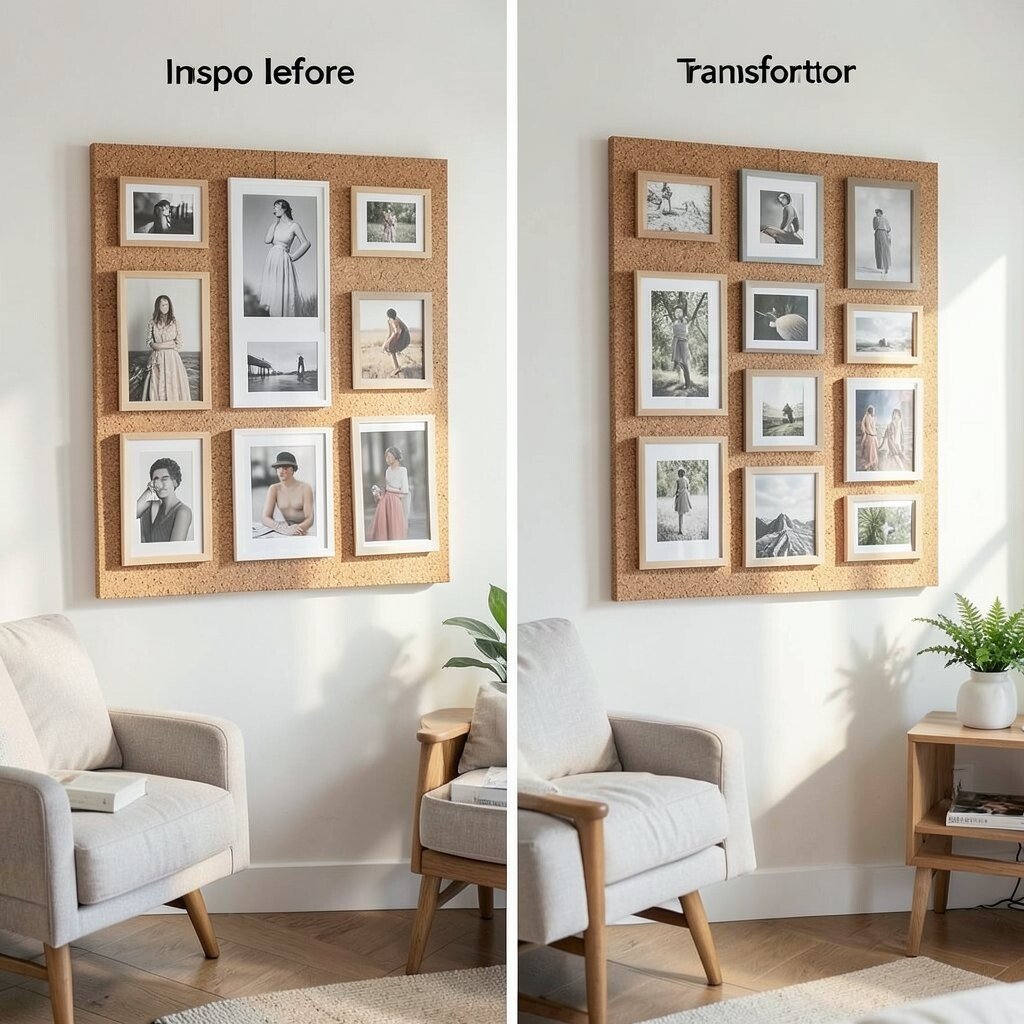
Before, the living room wall felt empty, and conversations kept turning into “we should remember that” moments. After, a cork board became part of the decor, styled like a mini gallery wall.
Choose larger photo cards and fewer papers, then pin them with spacing that looks intentional. Use a mix of pin types, like one row of round pins paired with a few longer pushpins, to add visual rhythm. The benefit is that you get organization without the look of a busy office board.
To keep it unique, match the cork board colors with pillow or art tones in the room. Personalize by adding a rotating “family highlights” card so it updates naturally. For cost, you can print photos from your phone and use leftover frames or card stock without buying new decor.
10. The Garage Workshop Board for Tools, Notes, and Wins

Before, workshop notes and measurements were scribbled on scraps and then lost under clutter. After, a cork board made project planning easier, right where you needed it.
Pin measurement cards, parts lists, and a simple checklist for each common project. Add a small label card for “current tools needed” so you don’t start hunting halfway through. This saves time and reduces waste because you’re less likely to forget steps.
For personalization, include a tiny “finish line” card that tracks goals like completed shelves or completed repairs. Keep uniqueness by adding paint-chip swatches or blueprint-style paper edges. The cost consideration is simple here: most of the magic is in layout and paper choices, not expensive upgrades.
11. The Nightstand Board That Makes Mornings Smoother

Before, mornings were rushed, and reminders were scattered between bedside notes and phone alarms. After, a cork board near the nightstand gathered everything into one calm spot.
Pin a “tomorrow essentials” card listing chargers, clothes picks, and any must-pack items. Use a small sticky pocket card for quick notes so you don’t have to reprint the whole list. The benefit is fewer last-minute checks, which helps you start the day with less stress.
To personalize, attach a small photo of your favorite place and a short quote card to make the routine feel comforting. For cost, use simple paper inserts and reuse old magnets to hold lightweight items near the board. This is popular because people want organization that feels gentle, not harsh.
12. The Dorm-Style Board With a Clean, Clip-First System

Before, your space used tape and pinning in ways that left holes and messy corners. After, the cork board used a clip-first approach that kept the look neat and damage minimal.
Use clip strips for posters and cards you swap often, so you don’t rely on dozens of pushpins. Keep a small section for “quick notes” and another for “long-term goals.” This approach improves usability because changing things becomes fast and easy.
For uniqueness, rotate mini prints in matching frames and keep color themes consistent across weeks. Personalize by adding your class schedule card and a “study soundtrack” sticker set. Budget-wise, the main investment is good clips, while the rest can come from paper you already own.
This style also fits current trends in small-space organization, where flexibility matters more than perfection. With clips, your board stays tidy even when you update it daily. That makes it feel less like a mess magnet and more like a helpful companion.
13. The Craft Room Board for Patterns, Pins, and Project Planning

Before, patterns lived in stacks and projects got delayed because you couldn’t see what was next. After, the cork board organized steps and materials so sewing felt smoother.
Pin pattern pieces outlines, then add notes for fabric types and measurements on small cards. Use a clear map of where to find supplies by pinning a “cutting layout” card. This reduces frustration because you can plan with your eyes instead of digging through folders.
To personalize, include a “progress” strip where you pin a photo or a small fabric swatch when a project completes. For cost considerations, use inexpensive cardstock templates and repurpose scrap paper for instructions. A current trend in creative spaces is “process display,” meaning the board shows your workflow, not just finished results.
The uniqueness also comes from texture, like pinning ribbon loops or thread color cards. It’s satisfying to glance over and instantly know what you need. That visual clarity makes the hobby feel more rewarding.
14. The Pet Owner Board With Helpful Schedules and Safety Notes

Before, feeding times and vet reminders were all mixed between texts and a calendar app. After, a cork board made pet care visible and easy for anyone in the home.
Pin a feeding schedule card and keep a vet info card in a clearly marked spot. Add a small medication checklist so it’s easy to see what’s done today. The benefit is peace of mind, since you’re less likely to forget key care tasks.
For personalization, include a “favorite treat” card and rotate it when you try something new. Keep the board unique by using paw print tape accents or cute photo cards. Cost stays reasonable because you can print schedules and use sturdy pins instead of buying complex organizers.
This also supports a current trend of shared household systems, where caregiving is made easy for everyone. When guests or family help out, they can follow the board without questions. That makes the routine smoother and safer.
15. The Minimal Entry Board That Looks Like Decor

Before, the cork board existed, but it mostly held random notes that made the whole area feel busy. After, the board became a clean, decorative display with intentional spacing and simple content.
Use only a few key items, like one weekly reminder card and one photo card, then let the cork texture show. Choose pins with similar finishes so the board looks consistent from a distance. The benefit is that it stays attractive while still being useful.
To personalize, pick a theme like travel, nature, or bookish quotes and keep your cards within that mood. For cost, create printables at home and avoid buying lots of extras. This design matches a trend toward “calm minimalism,” where fewer items feel more intentional.
You’ll notice the board becomes easier to maintain because you’re not constantly sorting. It’s also easier to update when you swap only a couple cards at a time. That maintenance factor is often what makes the difference.
16. The Stairwell or Hallway Board for Family Updates

Before, hallway notes were taped to doors and walls, and the messages never seemed to stick around. After, a cork board in the hallway turned updates into something everyone actually sees.
Pin a rotating “family news” card and a weekly chore note so the board becomes a central meeting point. Add a small slot for take-home papers and keep it consistent so it doesn’t overflow. This gives your home a simple communication hub without relying on constant reminders.
Uniqueness comes from layout, like using a top row for major events and a bottom row for quick notes. Personalize by adding family photos in small clusters so it feels warmer than a plain notice board. For cost, you can start with printed cards and a handful of pins, then upgrade later if you want.
17. The Outdoor Patio Board for Seasonal Reminders

Before, outdoor plans were scattered across chats and forgotten until the last minute. After, a cork board near the patio kept seasonal reminders and entertaining notes in one visible place.
Pin a weather-aware checklist and a “gather supplies” card for gatherings. Add a page for plant care notes, like watering days and simple maintenance reminders. This helps you enjoy the outdoors more, because you spend less time searching and more time using the space.
To personalize, include a small photo card of the patio setup you love, plus a theme like summer dinners or cozy movie nights. For practical tips, consider using protective measures if the board will face moisture, such as covering it with a clear outdoor-safe sheet. Cost considerations are manageable because you can reuse paper and simply replace cards as seasons change.
The trend here is “life-on-display,” where outdoor spaces get systems too. When the board is styled with matching colors to patio decor, it looks like part of the outdoor vibe. That makes it easier to keep using it instead of letting it fade into neglect.
18. The Aftermath Board That Rebuilds After a Move

Before, moving left your home full of boxes, and your reminders got lost in the chaos. After, a cork board became your recovery tool, helping you settle into each room with less stress.
Pin a simple “unpack next” list and a room-by-room priority card so you can keep momentum. Add a checklist for essentials like keys, chargers, and document locations so life feels organized faster. This helps because it turns vague stress into clear next steps you can see.
For personalization, add a small “new place” photo set or a welcome quote card to mark the fresh start. Keep uniqueness by using color-coded cards for each room so updates are quick. For cost, use index cards, leftover frames, and a limited pin set, then let the board evolve as your home comes together.
Current trends often highlight “reset routines,” and this fits perfectly. Once your board is in place, updates become a habit rather than a chore. The best part is that the cork surface can grow with you, even after the move excitement fades.