
The right craftsman touches make a small space feel warmly finished. Every corner can look intentional, even when the room is compact.
1. Warm Wood Trim That Guides the Eye
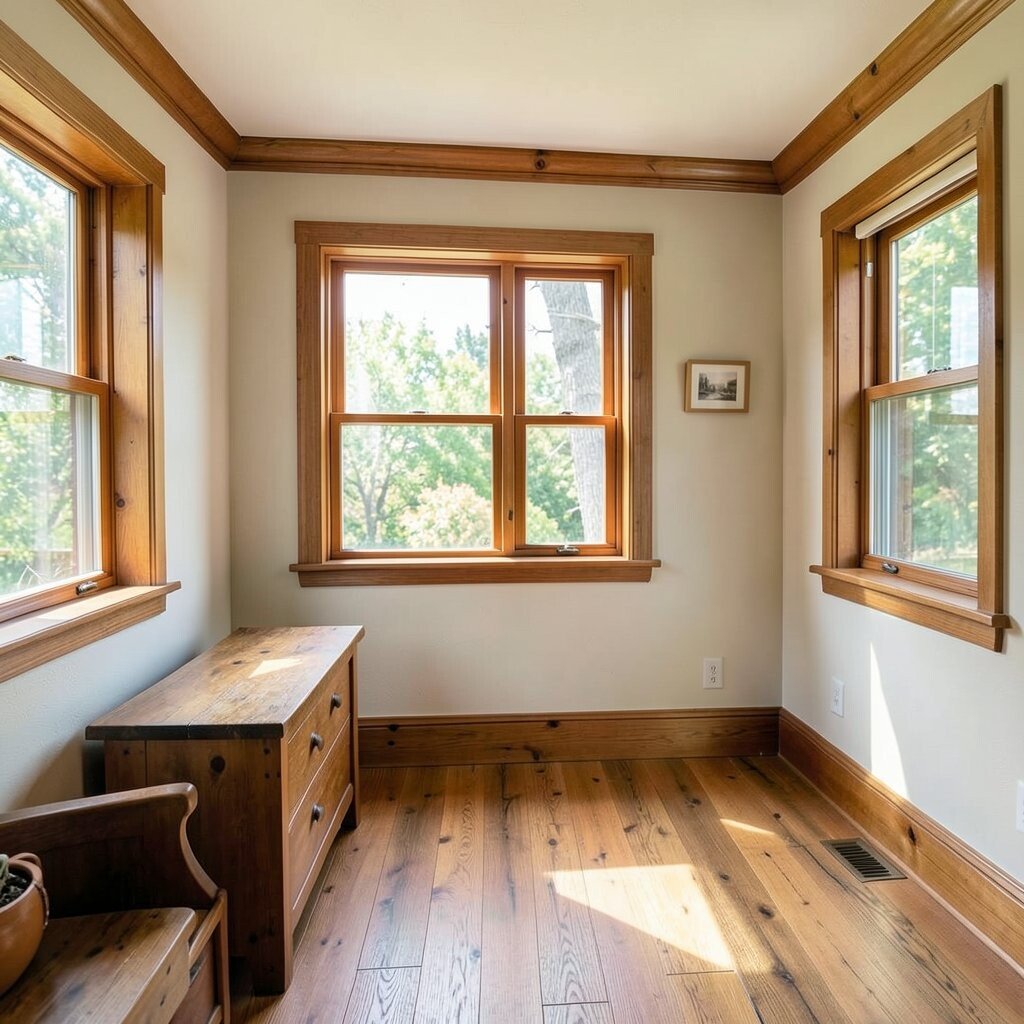
Think about how a smooth strip of wood trim can frame doorways and windows. When the trim repeats across the room, your eye moves easily and the space feels put together.
Choose a finish that matches your lifestyle, like a matte stain that hides small scuffs. Measure the width of your baseboards and pick a trim profile that looks neat without overpowering the walls. If you want a quick personalization, add a slightly darker stain just on the trim for subtle depth.
2. Built-In Bench Seating with Hidden Storage
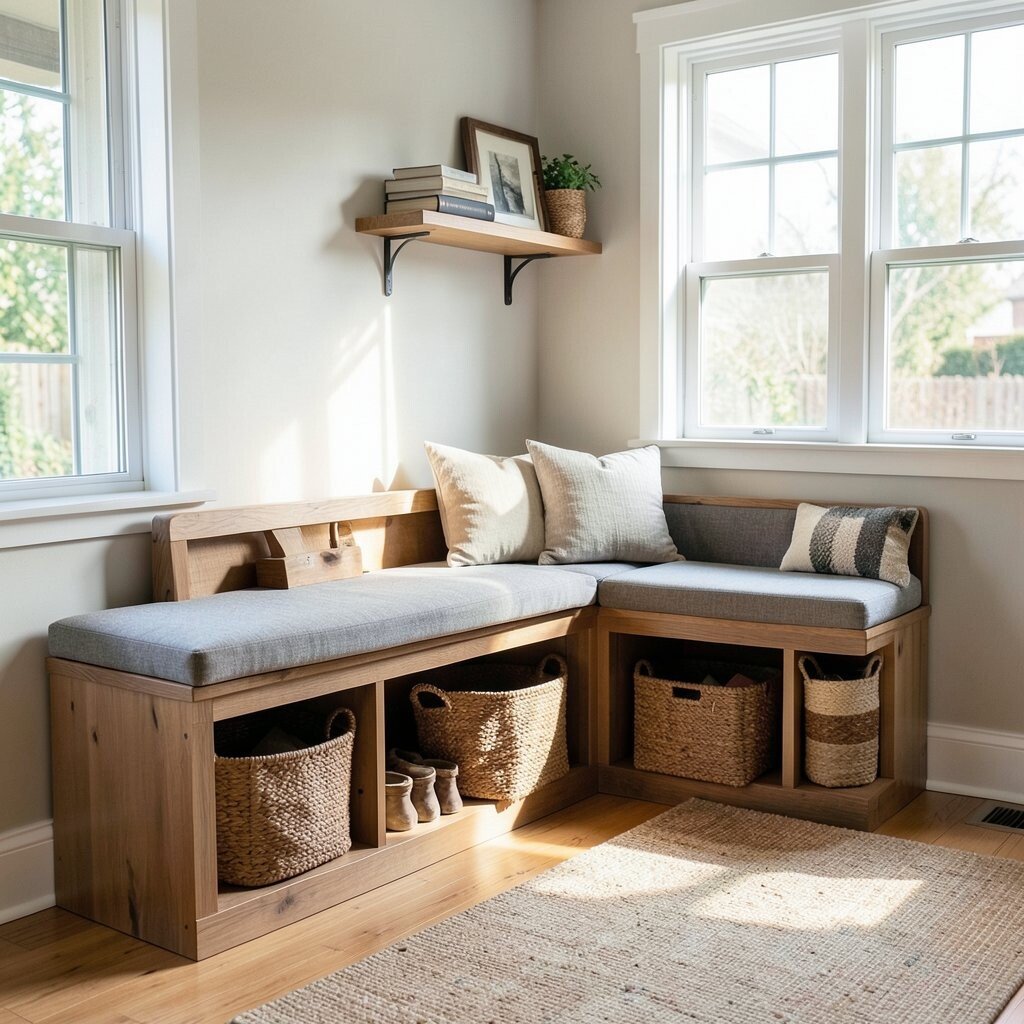
A built-in bench can change the whole feel of an entryway or dining nook. You get a solid seat, plus a place for shoes, bags, or board games.
Look for slimmer storage compartments so the bench doesn’t block walkways. Soft cushion fabric in a timeless color keeps it cozy, while the wood underneath keeps the craftsman look grounded. For current trends, pair bench upholstery with simple, low-contrast patterns rather than loud prints.
To keep the project practical, plan for what you store most and size the compartments to match. Costs vary based on whether you build from scratch or adapt a ready-made base and customize the face. You can save money by doing the finishing yourself and hiring only the install of the heavy wood frame.
3. Craftsman-Style Shiplap or Tongue-and-Groove Walls
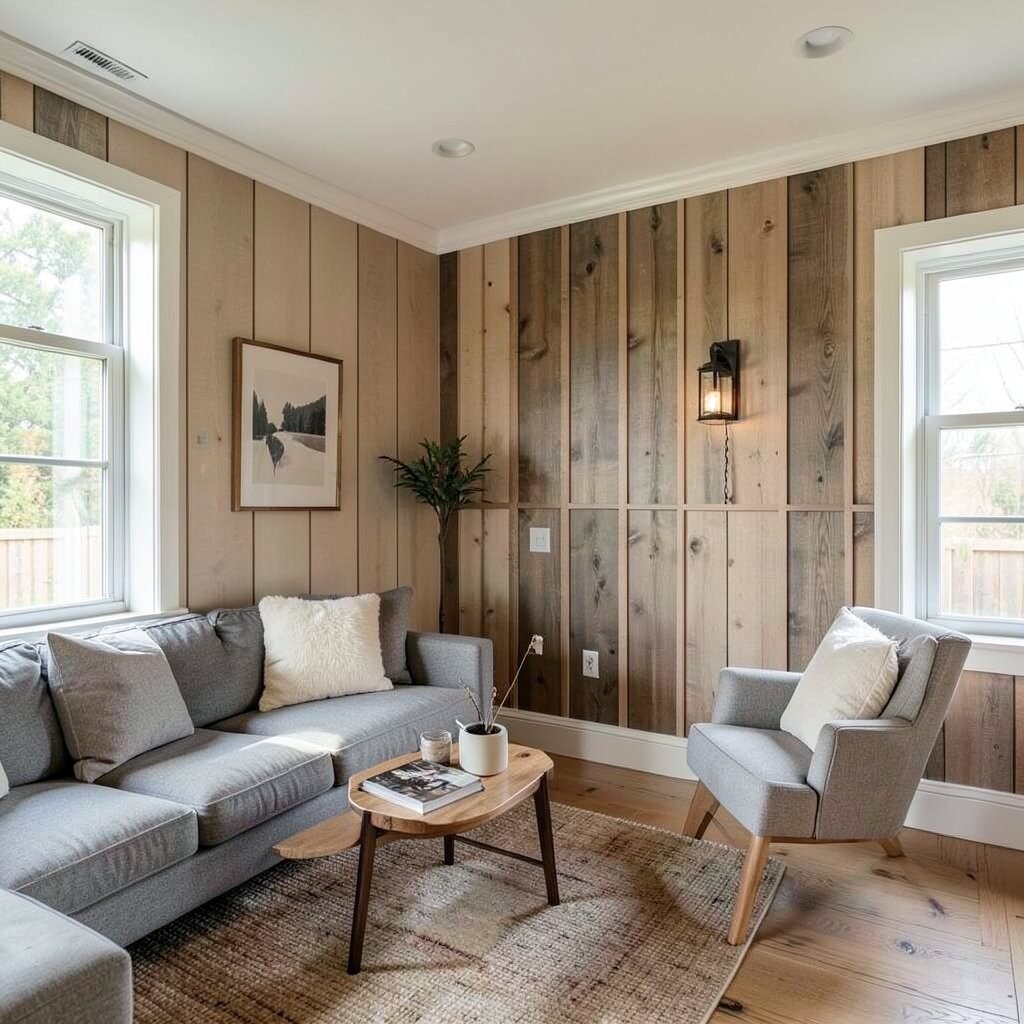
Textured wall paneling brings instant character, even in rooms that feel small. Tongue-and-groove or shiplap can create neat lines that make walls look taller.
Install it vertically for a soaring effect, or go horizontal to widen a room. Keep the panel color in warm neutrals so natural light bounces around instead of getting absorbed. If you want a distinctive touch, stain the paneling in one consistent tone and add matching trim to unify the space.
For practical planning, check wall flatness before you fasten anything and choose boards that match your room’s moisture level. A DIY approach can reduce labor costs, but careful measuring matters to avoid gaps. If buying pre-primed boards fits your budget, you’ll still get a clean craftsman finish after sanding and paint.
4. Sturdy Fireplace Surround with Simple Mantel Lines
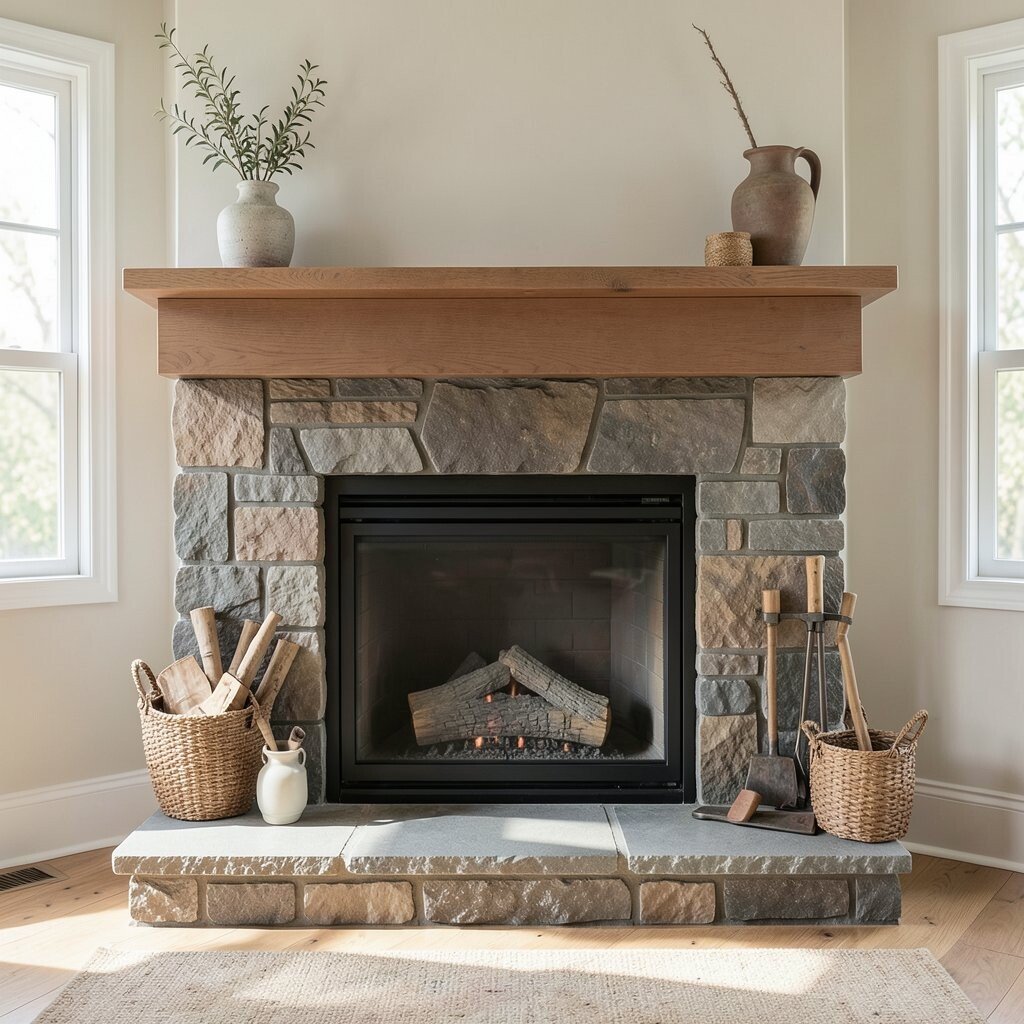
A fireplace surround can act like the heart of a craftsman interior. Even if your home has a smaller hearth, a mantel with clean edges makes the whole room feel anchored.
Go for thicker wood or stone with tidy grout lines, because crisp details read as high quality. Keep the mantel clutter-free and use a few natural elements like a ceramic vase or framed print to keep the look calm. If your room is tight, consider a mantel height that allows your artwork to sit neatly above seating.
5. Statement Ceiling Beams in a Small Room Scale
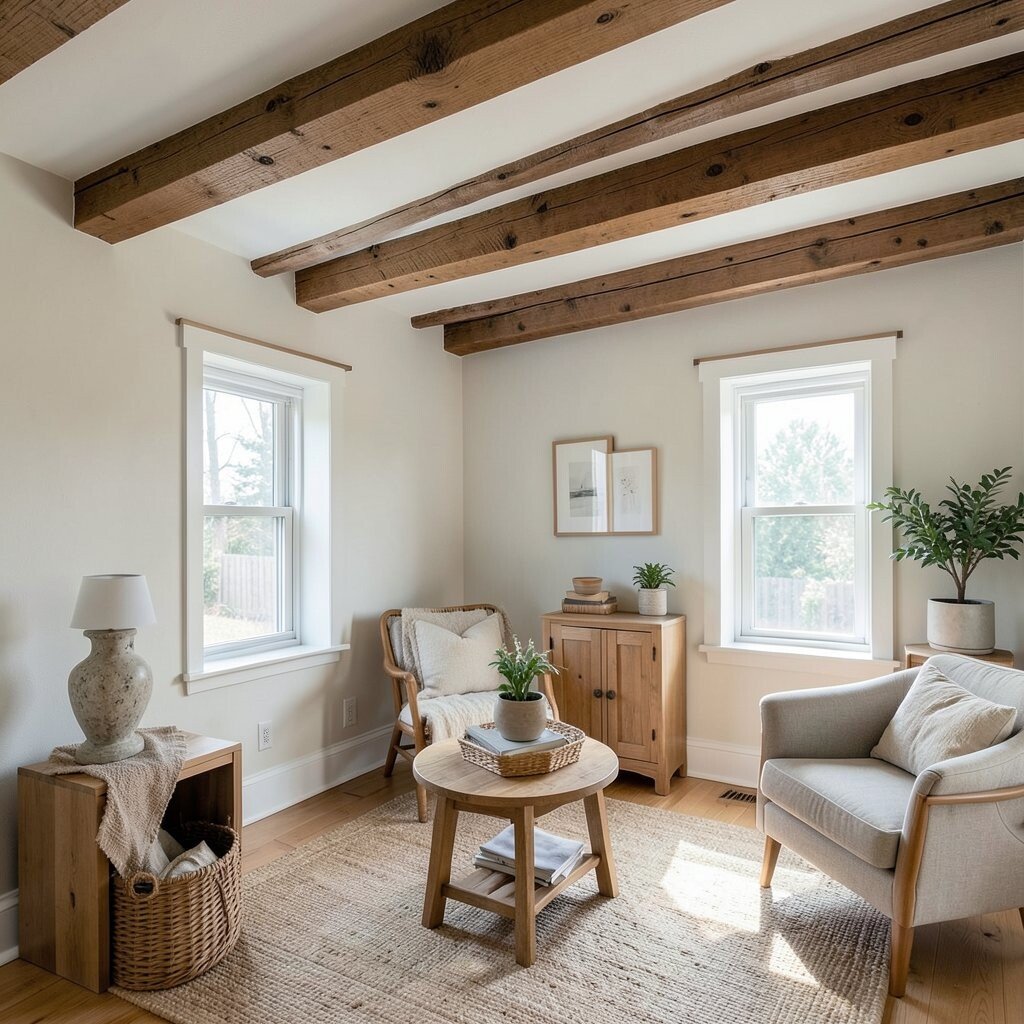
Ceiling beams can make a small living room feel like a real gathering space. With the right proportion, the beams add depth without making the room feel heavy.
Choose lighter stains and matte finishes so the ceiling stays bright and inviting. For a practical tip, confirm beam layout with room dimensions first, especially if you have ceiling vents or lighting. You can personalize the look by using beams in an accent color that matches your door trim.
Costs depend on whether you install real beams or use faux beam covers that attach over framing. Faux options can be a smart choice for renters or tight budgets, while real beams deliver extra authenticity. A current trend pairs beam accents with simple, solid-color walls for a clean, modern-craftsman blend.
6. Classic Window Trim and Perfectly Sized Blinds
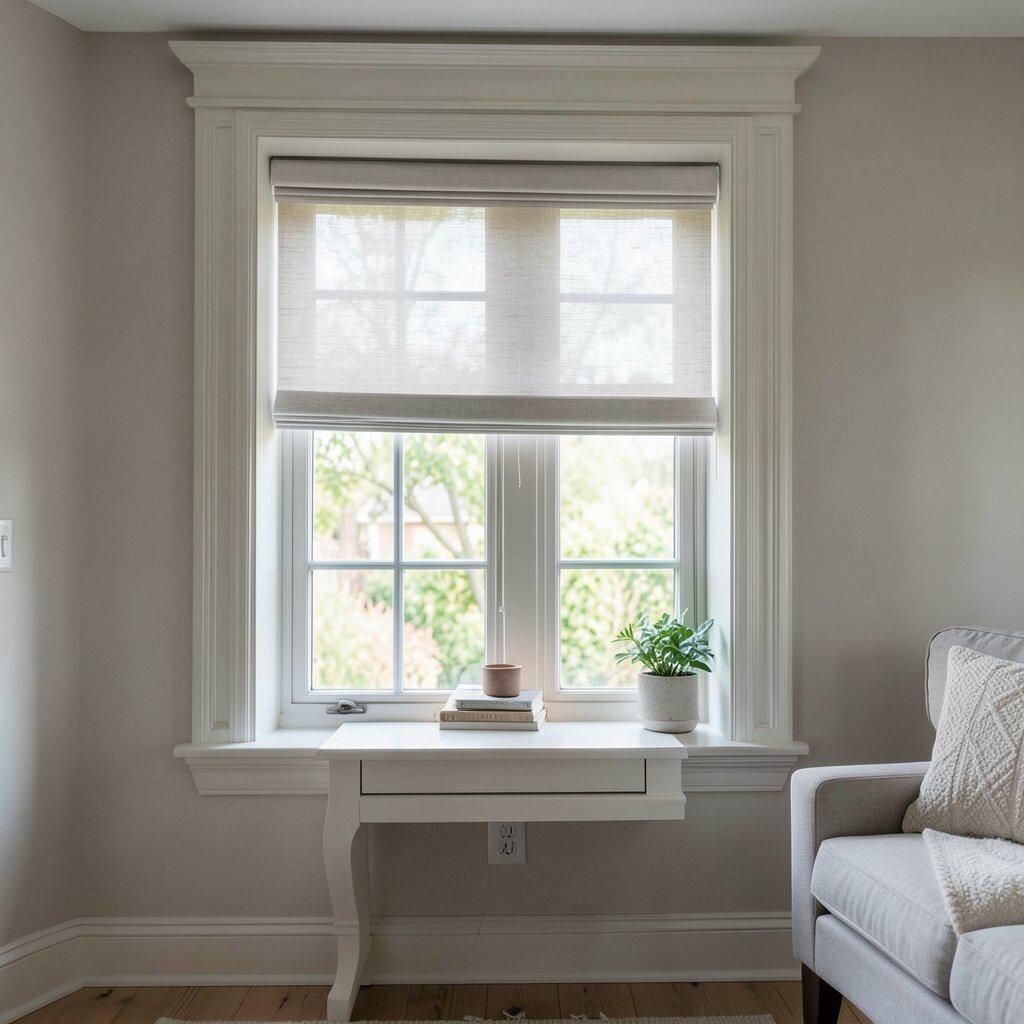
Window framing is where craftsman style shines, because details feel intentional. When trim is installed with care and blinds fit just right, the whole room looks finished.
Pick blinds that don’t sag or bunch, and aim for a fabric or slat look that matches the room’s rhythm. Measure your window and add trim so the blind sits comfortably inside the frame area. If you like personalization, choose a light-filtering option that softens daylight rather than blocking it harshly.
Since custom window treatments can add up, compare ready-made sizes and check if local alterations are affordable. Many people save money by choosing standard blinds and having a trim shop match the wood stain. The benefit is big too, because better fit usually means better light control and less daily fuss.
For a tiny room, keeping the window area uncluttered helps the space breathe. A simple valance or minimal curtain panel can add warmth without creating visual heaviness. Try coordinating the trim color with baseboards so the sightline stays consistent from room to room.
7. Built-In Bookshelves with Vertical Storage Rhythm
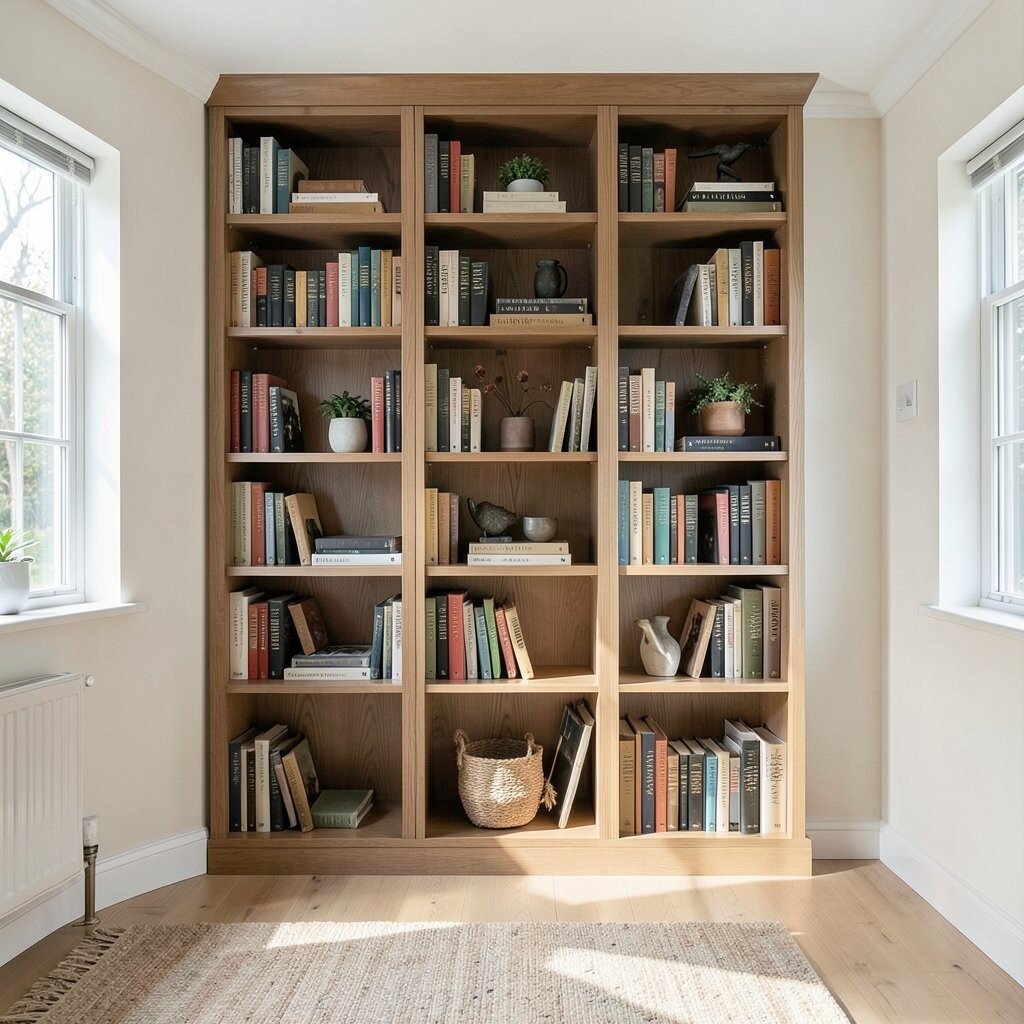
Bookshelves can help a small home feel organized without looking crowded. Craftsman shelves with solid rails and clean edges make books look stylish and purposeful.
Create visual rhythm by mixing book sizes with a few small bins and display objects. Keep the bottom shelf a little lower for everyday items like journals, while higher shelves can hold decor. If you want a unique touch, add a narrow section for framed photos and keep the rest for books.
For practical tips, anchor tall shelves and plan for how you will dust behind and under items. Costs vary based on whether you buy modular shelving or commission built-ins, so decide based on how permanent the layout feels. A smart budget move is to start with built-in-style store-bought units and then add trim pieces to match your craftsman look.
8. Textured Area Rugs with Handcrafted Feel
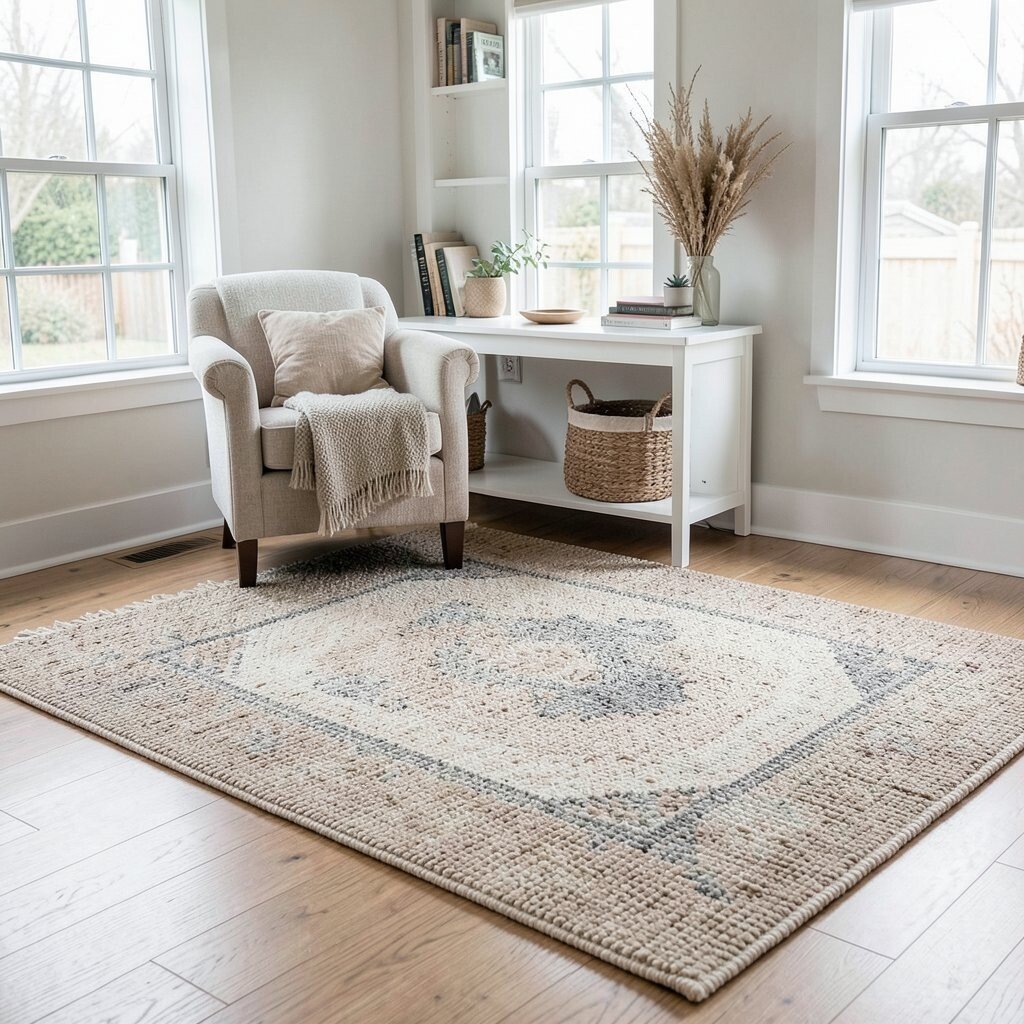
A rug is the quickest way to make a small room feel warmer. Craftsman interiors often look best with natural fibers and subtle patterns that don’t fight the wood tones.
Choose a rug with a grounded palette like oatmeal, rust, or deep green that harmonizes with your trim. If your room is narrow, pick a size that extends close to the walls so it visually expands the floor. For personalization, layer a smaller runner on top of a larger base rug in hallways for a tailored feel.
Rug placement can also help practical movement, especially in a home office corner. A rule of thumb is to keep the furniture legs on the rug so transitions feel stable. Costs can range widely, so compare prices by fiber type and check for easy cleaning options if you have pets or kids.
9. Pocket Doors or Sliding Barn-Style Panels
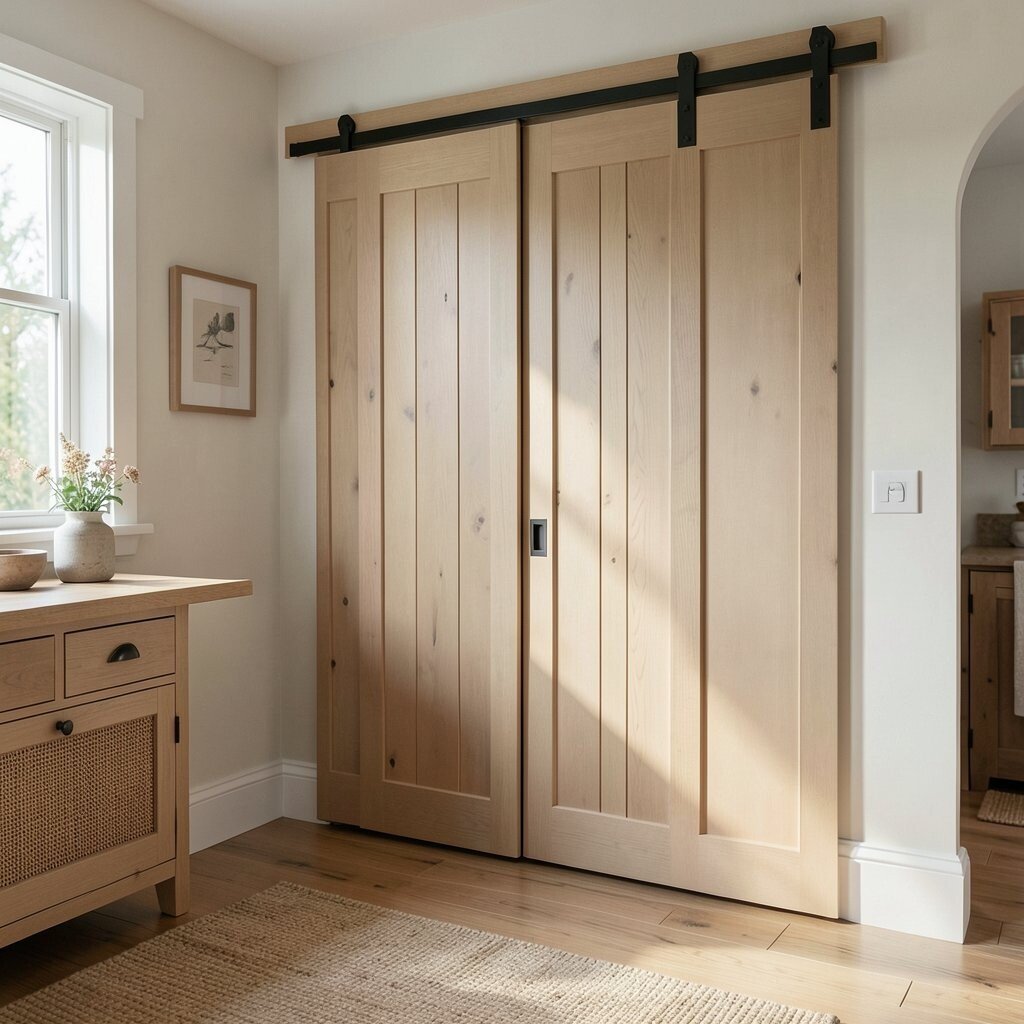
In small homes, door swings steal usable space. Pocket doors or sliding panels solve that problem while adding character to your interior.
A craftsman look works especially well with flat panel doors and solid wood hardware. Choose a track and handle finish that matches your light fixtures and cabinet pulls. If you want a personalized twist, add a small glass insert in one panel for gentle light while keeping privacy.
For practicality, confirm wall space for pocket doors before you commit, and plan the track position carefully. Costs can be higher than standard doors because of framing work, but the benefit is more room in daily life. If you’re on a budget, you can update hardware and paint an existing panel to get much of the look for less.
10. Micro-Dining Nook with Craftsman Paneling
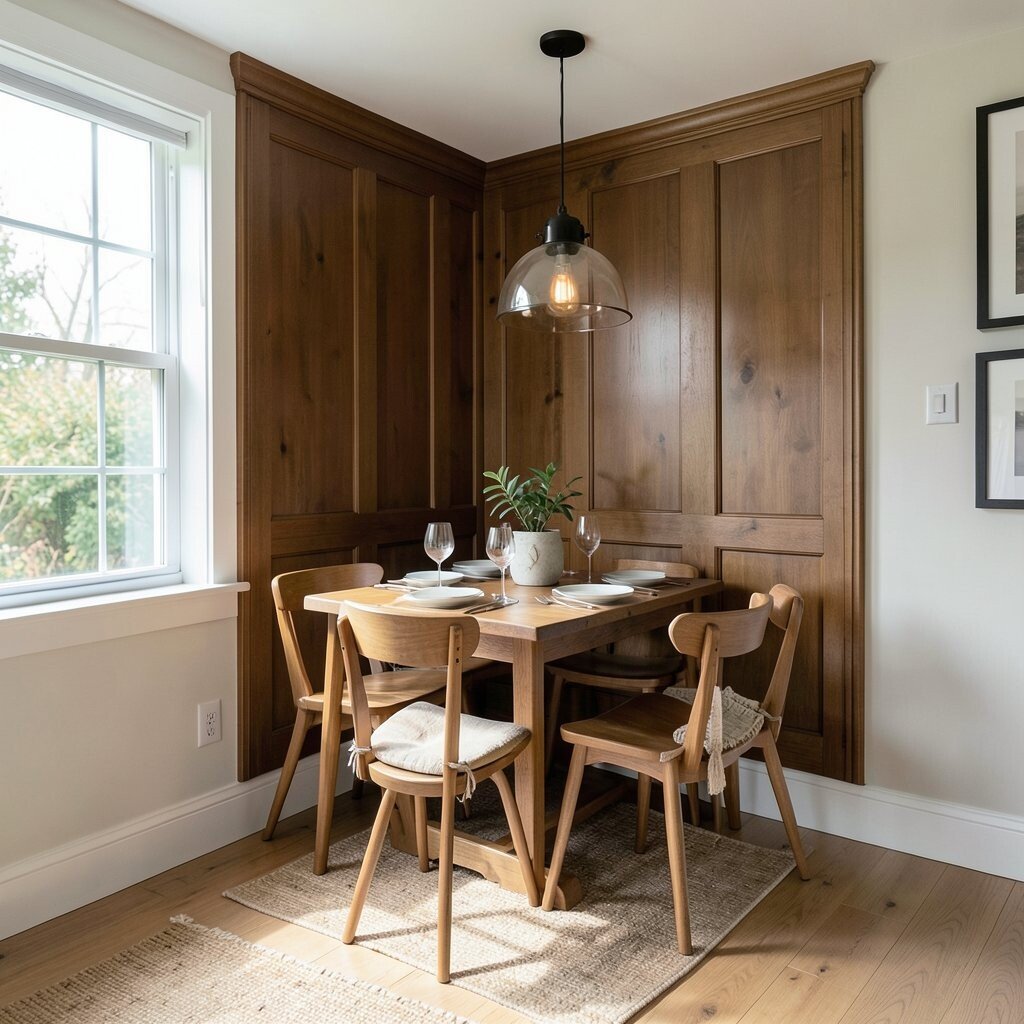
A dining nook can feel cozy instead of cramped when it’s designed like a mini room within the home. Adding craftsman paneling or chair rail along the wall gives the nook a finished personality.
Use a bench with a hinged cushion or a table with storage drawers to keep everyday items close at hand. In a small space, a round or narrow table can help people move without bumping into chairs. For personalization, pick upholstery with a warm texture like twill or tweed that pairs well with wood trim.
Costs depend on whether you buy a compact dining set or build your own bench and tabletop. You can save money by using off-the-shelf chair frames and reupholstering seats to match your style. A current trend is mixing craftsman wood with simple, modern table shapes, which keeps the nook fresh rather than old-fashioned.
11. Layered Lighting with Sconces and Warm Bulbs
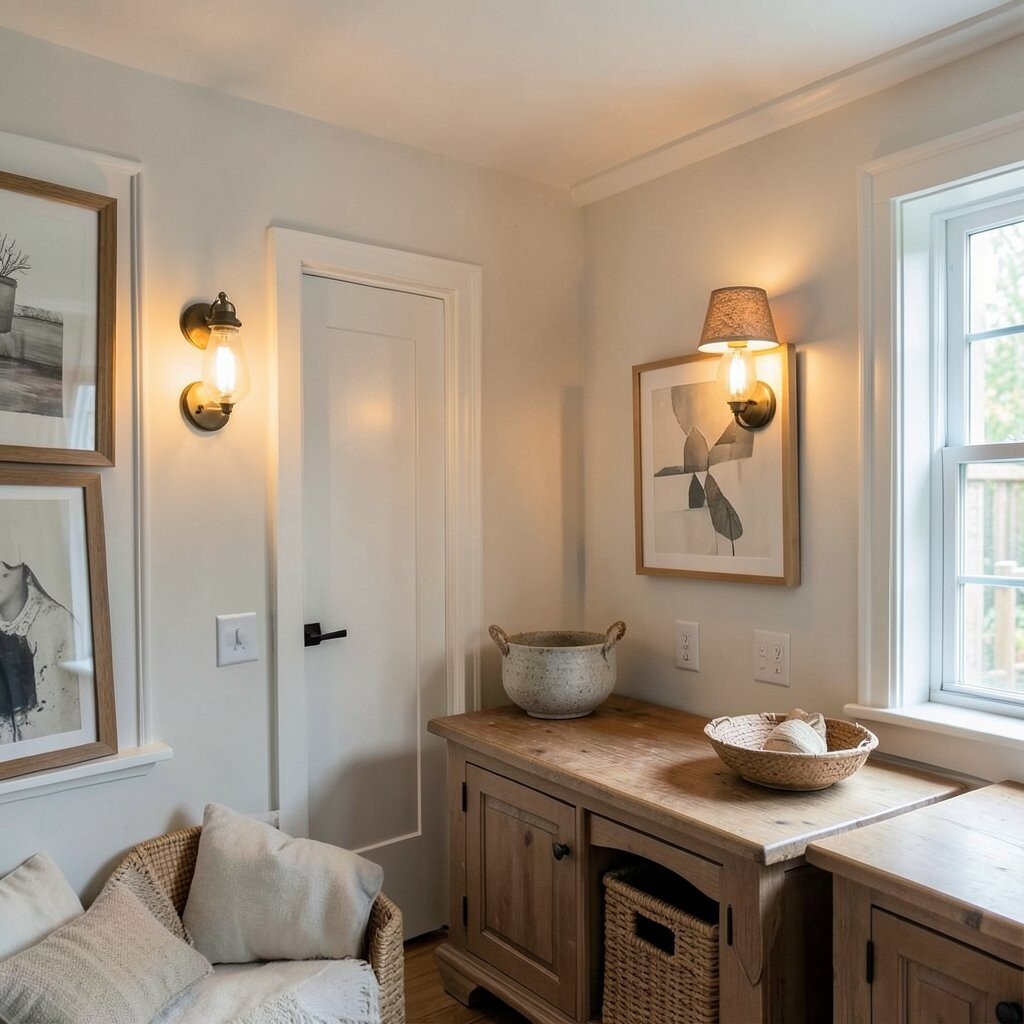
Lighting is one of the fastest ways to make a small home feel comfortable. Craftsman-style sconces and lamps add glow that makes wood tones look richer.
Choose fixtures with shades that soften light, and aim for warm bulbs that feel like late afternoon. Place a wall sconce near a reading chair or hallway corner so you get light without needing a tall floor lamp. For practical tips, use dimmers in the main living area so you can adjust for evenings and gatherings.
To personalize the look, select metal finishes that echo your hardware, like brushed brass or dark bronze. Costs vary, so start with one standout sconce and add more pieces over time. This approach follows a popular trend of building lighting in layers, which usually makes rooms look more expensive even on a moderate budget.
In a tight room, avoid harsh overhead light because it can create sharp shadows and make walls feel smaller. A warm glow helps your space feel calm and helps furniture and trim look balanced.
12. Gallery Wall with Dark Wood Frames and Built-In Levels
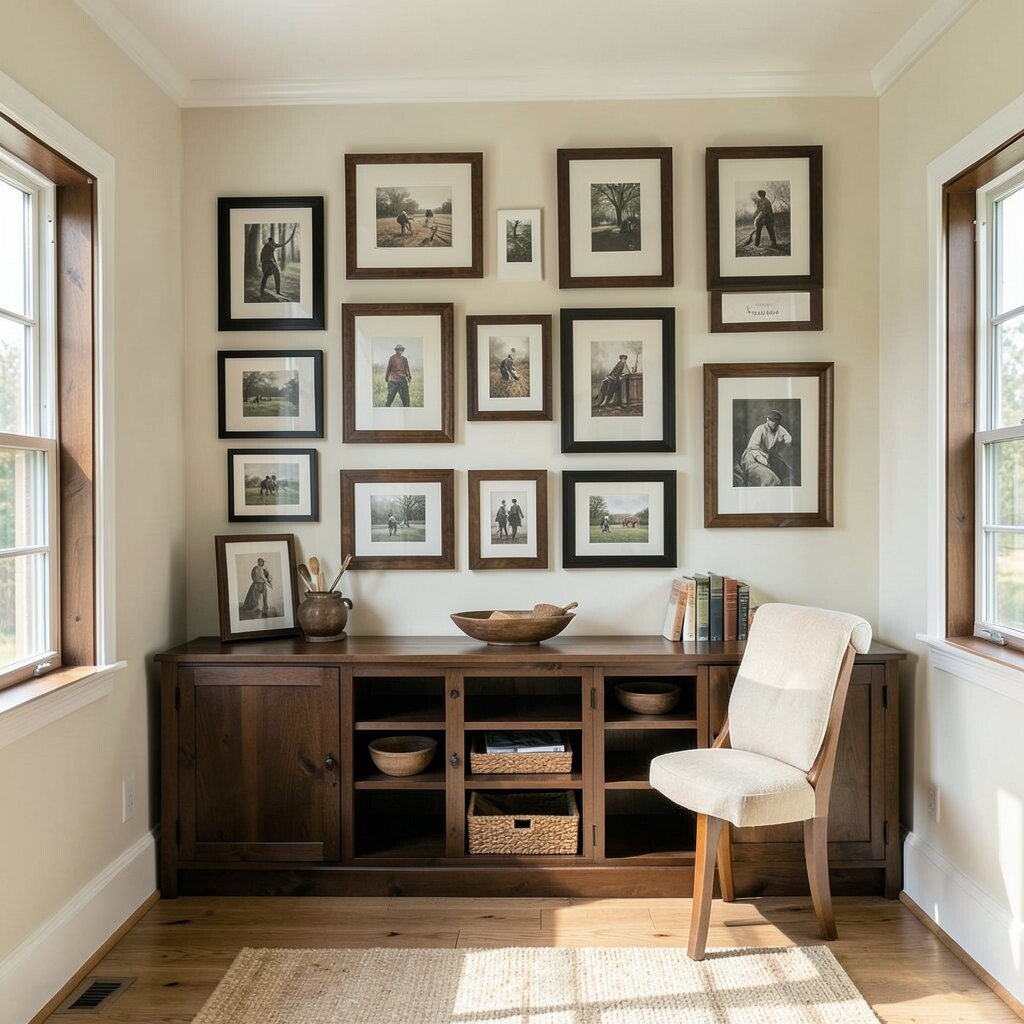
A gallery wall can make a hallway or small living room feel like a curated studio. Craftsman-style dark wood frames add structure and make the art feel more permanent.
Pick a consistent frame width so the wall looks intentional, then vary art sizes for a relaxed look. Keep the layout at eye level and consider using simple templates to avoid crooked hanging. If you want personalization, include a few pieces that reflect your hobbies, like sketches, travel photos, or family recipes displayed as prints.
For practical tips, measure the wall space carefully and keep heavier frames near studs. Costs can be controlled by buying affordable frames and upgrading only the matting for a polished effect. A current trend is mixing framed art with small shelves, but in a small home, you should keep the shelf items minimal so the wall stays tidy.
13. Cabinet Hardware, Rail Inserts, and Matching Details
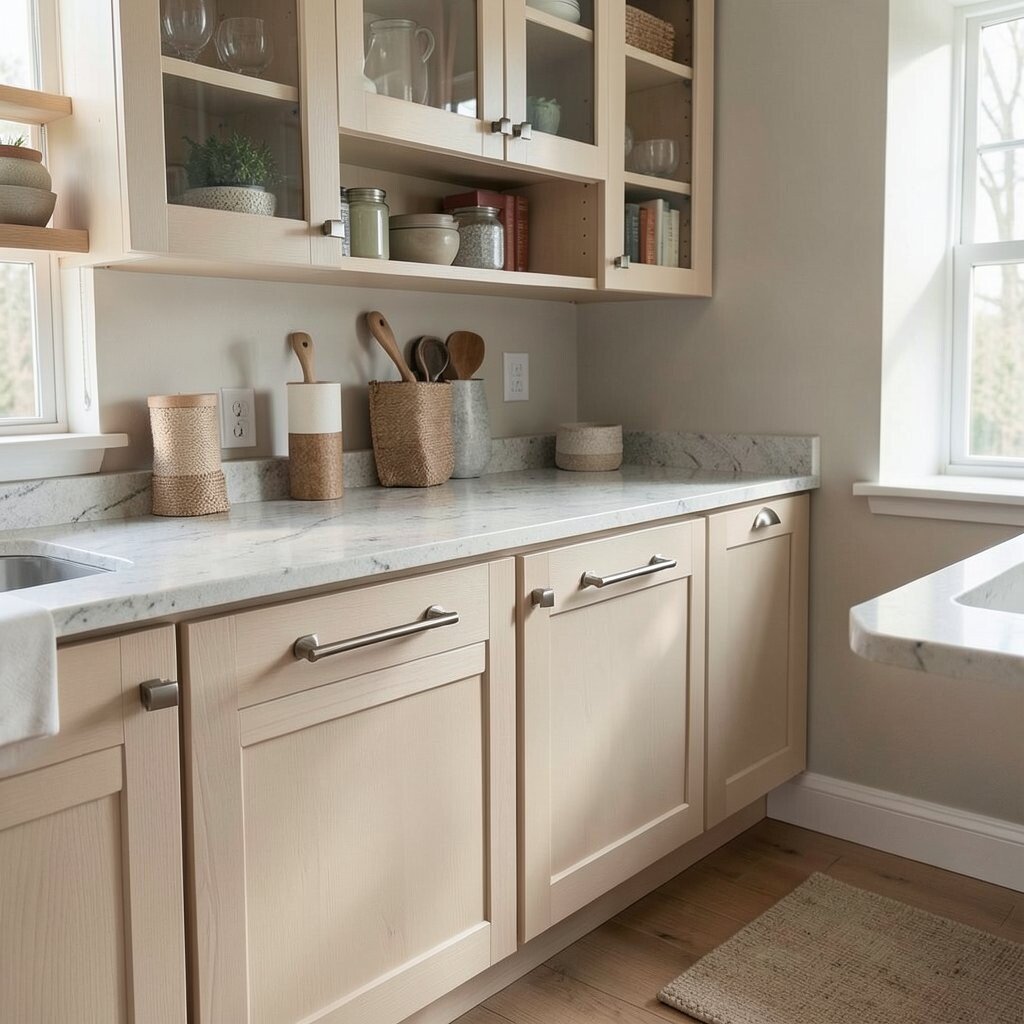
Small hardware choices can pull the entire craftsman look together. When cabinet pulls, drawer knobs, and hinges match, your kitchen and bath feel more cohesive.
Look for sturdy shapes with simple lines rather than overly decorative pieces. Choose finishes that repeat across the home, like matching light fixture metal and door handles, so everything feels connected. If you want a unique touch, add subtle contrast by pairing warm wood cabinetry with a darker metal finish.
Costs are usually manageable because hardware updates cover a lot of visual ground. Make a practical plan by measuring hole spacing so you don’t end up buying extra parts. If you have a tight budget, swap hardware first and then paint or refinish surfaces later as funds allow.
14. Gallery-Ready Shelving with Decorative Ledges
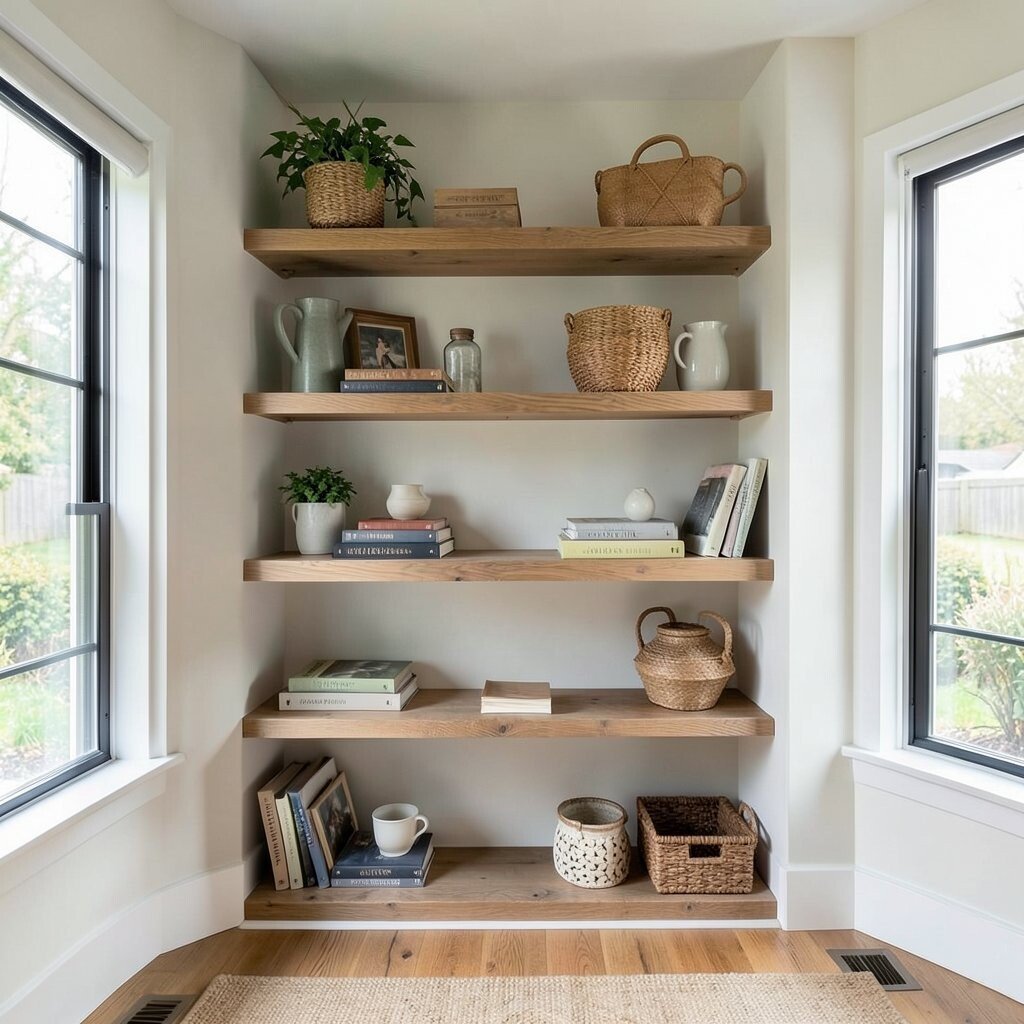
Decorative ledges can turn plain wall space into a display area. In a small home, they also create places to set everyday items so counters stay clear.
Use ledges with clean front edges and matching side returns for a true craftsman feel. Keep your display curated by choosing a few favorite textures, like ceramic, wood, and woven baskets. For personalization, rotate seasonal items such as small pumpkins in fall or fresh greenery in spring for a living-room-ready vibe.
For practical tips, install ledges on studs and leave enough space between shelves for books and taller decor. Costs can stay reasonable if you start with a few lengths of quality wood and paint or stain them to match your trim. A popular current trend is mixing craftsman shelves with simple, neutral decor that lets wood grain do the talking.
By grouping items in small clusters, you reduce visual clutter and make each shelf look intentional. This is especially helpful when your home has limited storage and every surface needs to work hard.