A gallery wall can feel like a warm conversation with your own style. When fabric and paint team up, the wall starts to look alive.
1. Soft Fabric Panels Over Painted Backdrops
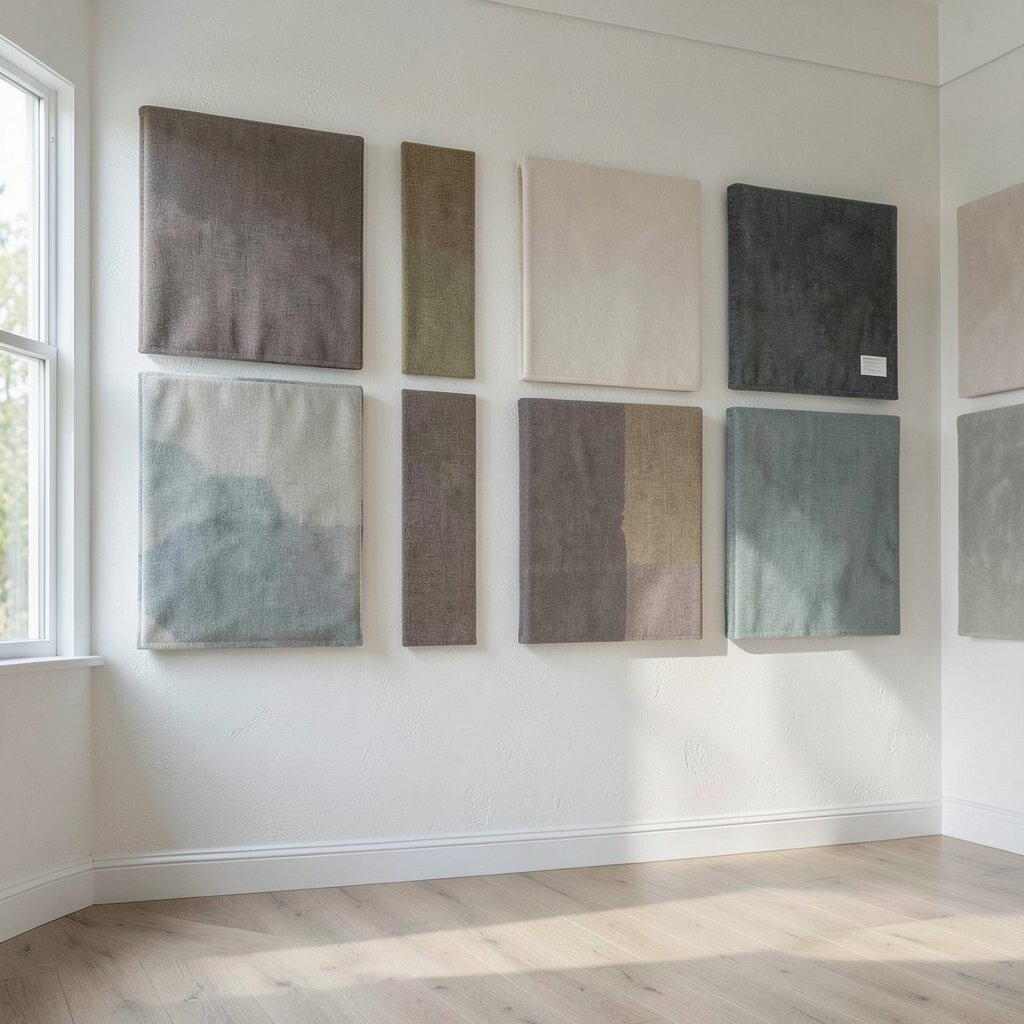
Imagine a wall where stretched fabric acts like gentle curtains for your art. A muted paint color behind it makes the fabric look deeper and more inviting.
Pick a paint shade that matches the mood you want, like creamy beige for calm or dusty rose for cozy warmth. Add fabric in a few sizes, keeping edges neat so the layout feels intentional. Use strong command strips or a staple-backed frame so the panels hang straight and stay secure.
2. Layered Textiles With Bold Color-Block Art
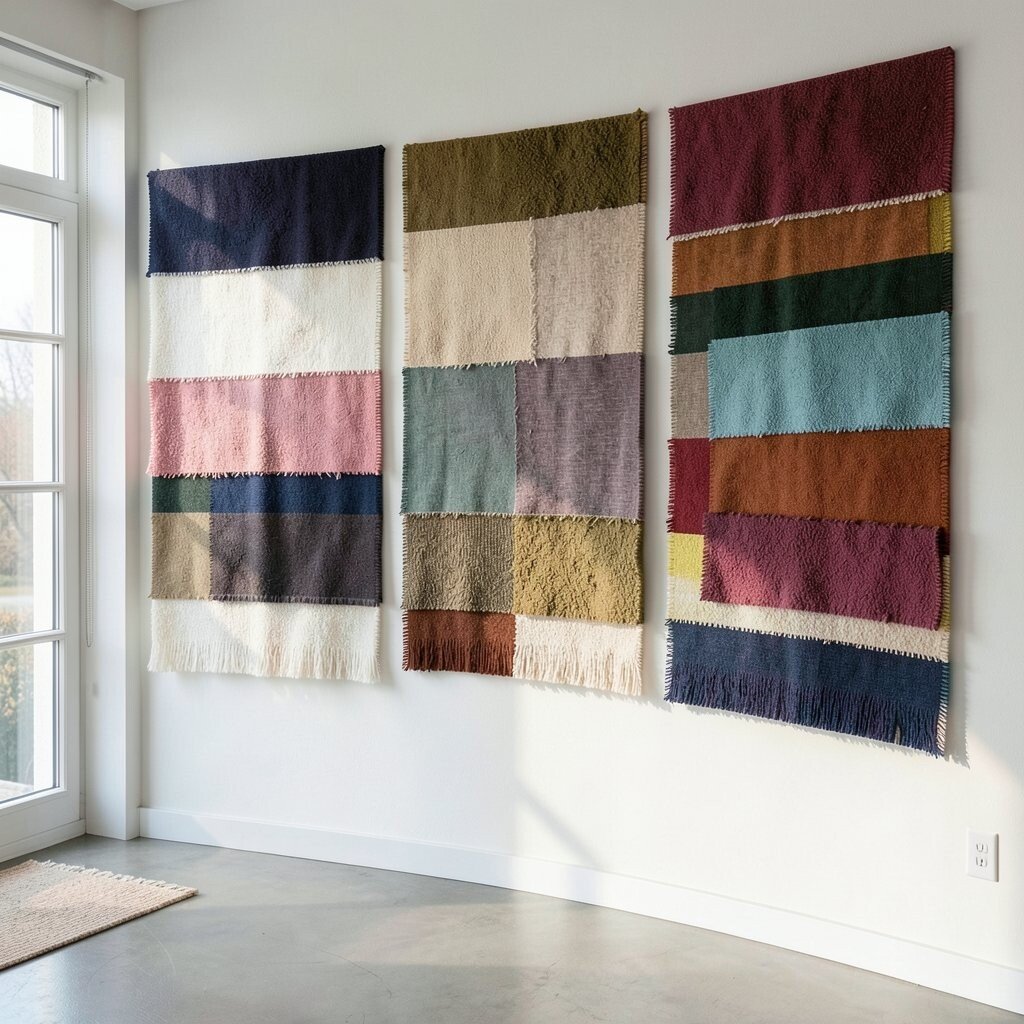
Start with a few color blocks painted directly on the wall. Then layer textiles on top like a quilt, mixing light and dark fabrics for contrast.
Use one dominant paint color and let the fabric pick up the rest through patterns. Arrange pieces by rhythm, not by perfection, so the wall looks collected over time. For practical durability, choose tightly woven fabrics and keep them away from direct sunlight.
To control cost, raid thrift stores for sheets, vintage scarves, and curtain remnants. If you want an upscale look, steam wrinkles before hanging so everything reads crisp. Finish with simple fabric adhesive hooks or picture ledges for flexibility if you like to change things later.
3. Gallery Frames With Fabric Borders And Painted Centers
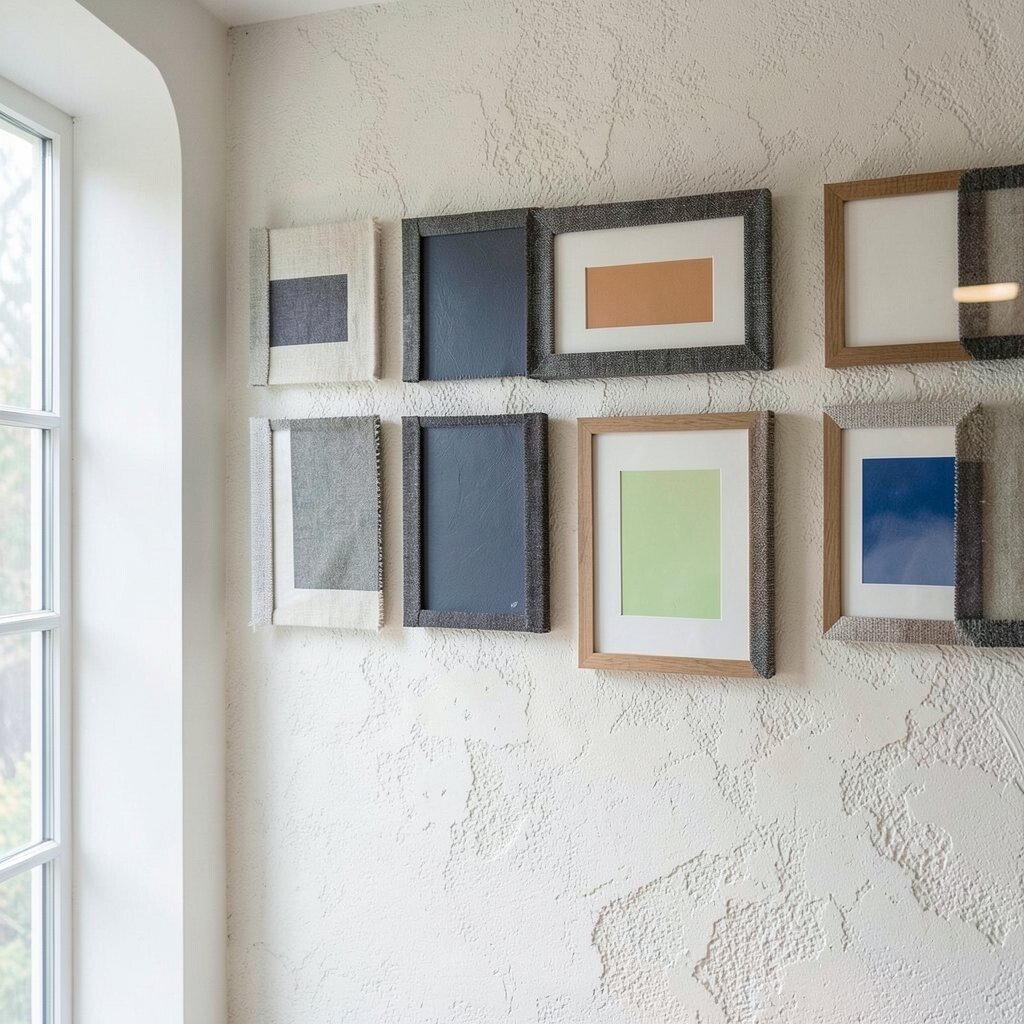
Think of each frame like a small window, but the view is fabric and paint. A solid fabric border can make even simple artwork feel more complete.
Choose frames in matching finishes, then line the inside edges with fabric strips that echo a color in your room. Paint the center area with a soft gradient or a clean geometric shape, then seal with an interior paint finish. This mix gives you both texture and clarity, so your eye knows where to rest.
For a personal touch, paint tiny motifs that repeat across the wall, like dots, waves, or little leaf shapes. Use painter’s tape to keep edges sharp and reduce cleanup. If you’re worried about cost, use thrifted frames and update them with spray paint in one tone.
4. Oversized Fabric Tapestry With Small Painted Accents

A big tapestry can set the tone instantly, like a sky made of fabric. When you add small painted accents around it, the wall feels styled instead of crowded.
Paint two or three simple shapes near the tapestry, such as circles, triangles, or a calm stripe. Keep the colors limited so the tapestry remains the hero. This approach is great for renters because you can change or replace the smaller pieces later.
5. Ombre Wall Paint With Hanging Fabric Squares
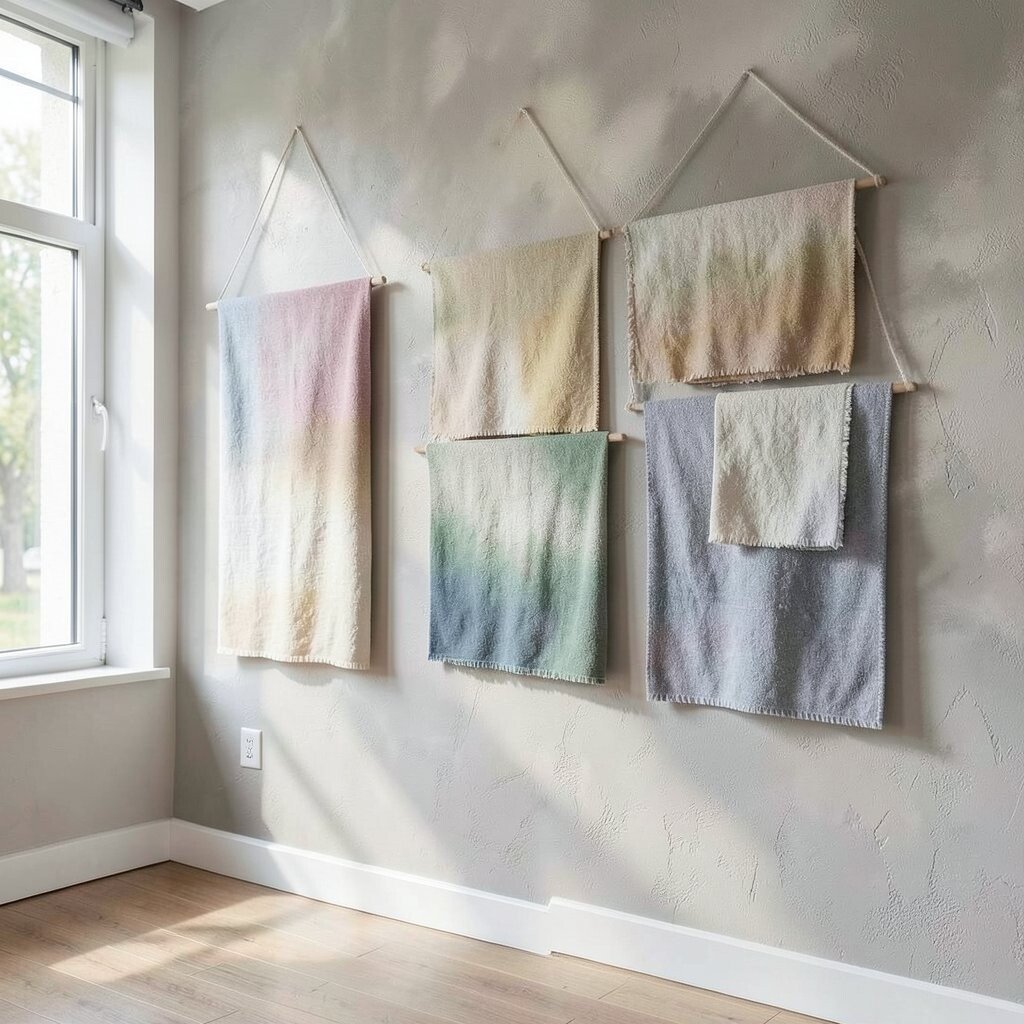
Ombre paint creates a smooth glow, and fabric squares add texture you can almost feel. The gradient gives your wall depth, while the hanging pieces bring movement.
Use an ombre technique from darker near the floor to lighter at eye level, then mix in fabric squares that share at least one common color. Keep the hanging heights slightly varied so the wall feels natural. When you choose fabrics, try cotton, linen, or even a lightweight upholstery fabric for a nice drape.
To keep it budget-friendly, sew no-fuss fabric covers for foam boards using old bed linens. Current styling trends often use soft neutrals and gentle contrasts, so stick to warm whites, taupes, and muted greens. If you want extra polish, align the edges of the squares with a light pencil grid before mounting.
6. Monochrome Fabric Gallery With Metallic Paint Highlights
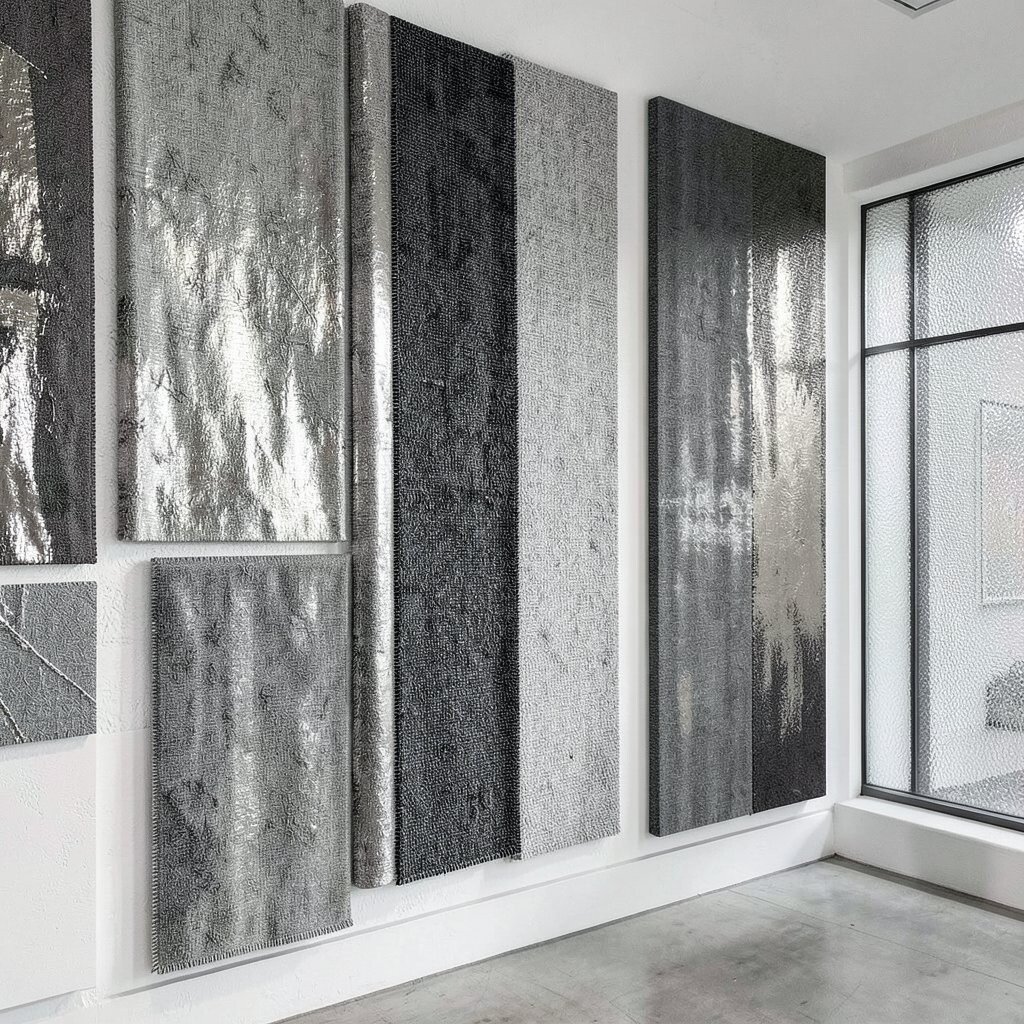
If you love a clean look, go monochrome with fabrics in the same color family. Then add metallic paint touches so the texture catches light.
Choose one shade, like charcoal or warm cream, and mix fabric weights for interest. Add metallic gold or silver dots, thin lines, or small hand-painted stamps to a few panels or the wall itself. This creates that “studio” feel without needing complicated artwork.
For practical tips, use fabric that won’t pill easily and avoid super shiny materials that show dust. A matte wall paint keeps the metallic details looking intentional instead of flashy. You can also save money by painting your own stencils onto inexpensive canvases or plain wood plaques.
7. Color-Drenched Wall With Patchwork Fabric Collage
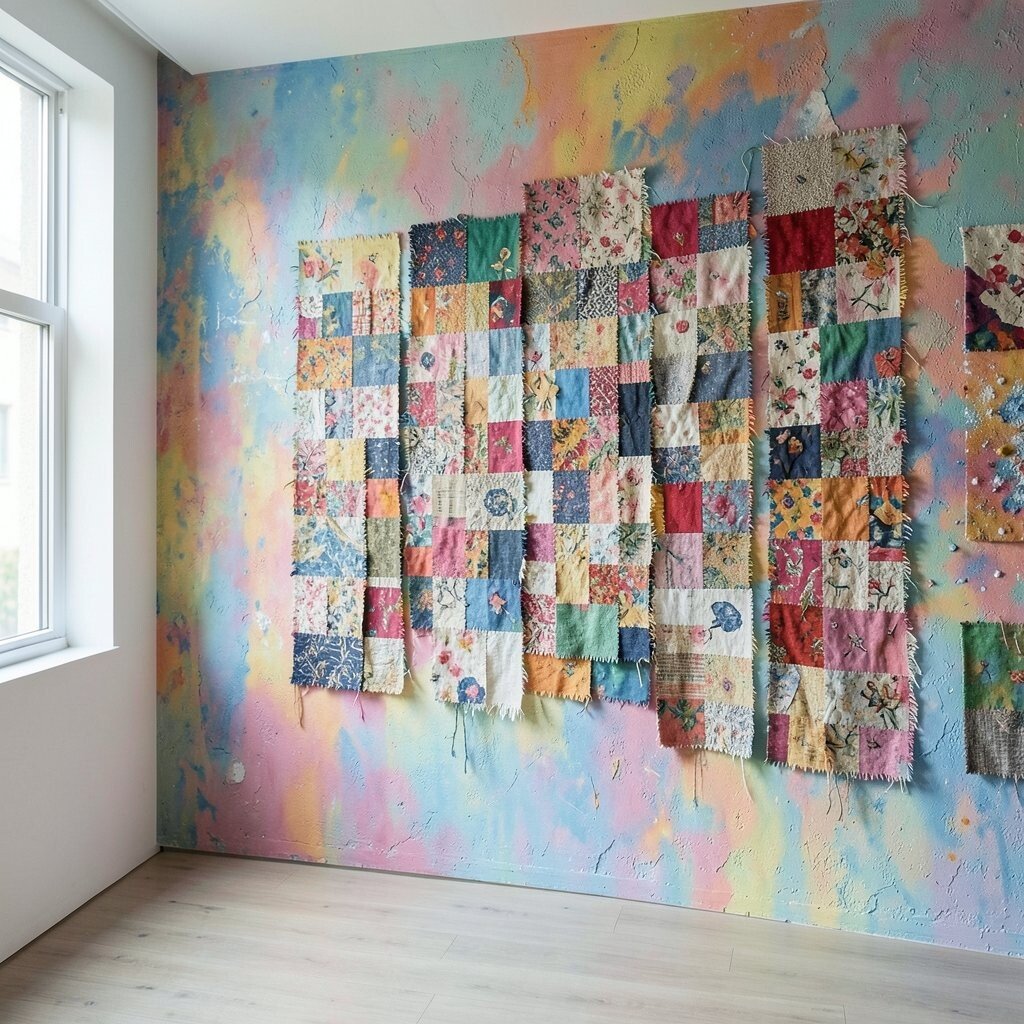
Picture a wall painted in one bold color, then softened with patchwork fabric. The result looks playful, like a handmade banner that grew into a gallery.
Paint a rich base, then add fabric patches in coordinated colors and patterns. Try combining solid panels with patterned scraps, but keep the patchwork scale consistent so it reads organized. Use lightweight backing boards if you want the pieces to look flat and even.
8. Textured Wallpaper Look With Paint-Rubbed Fabric Panels
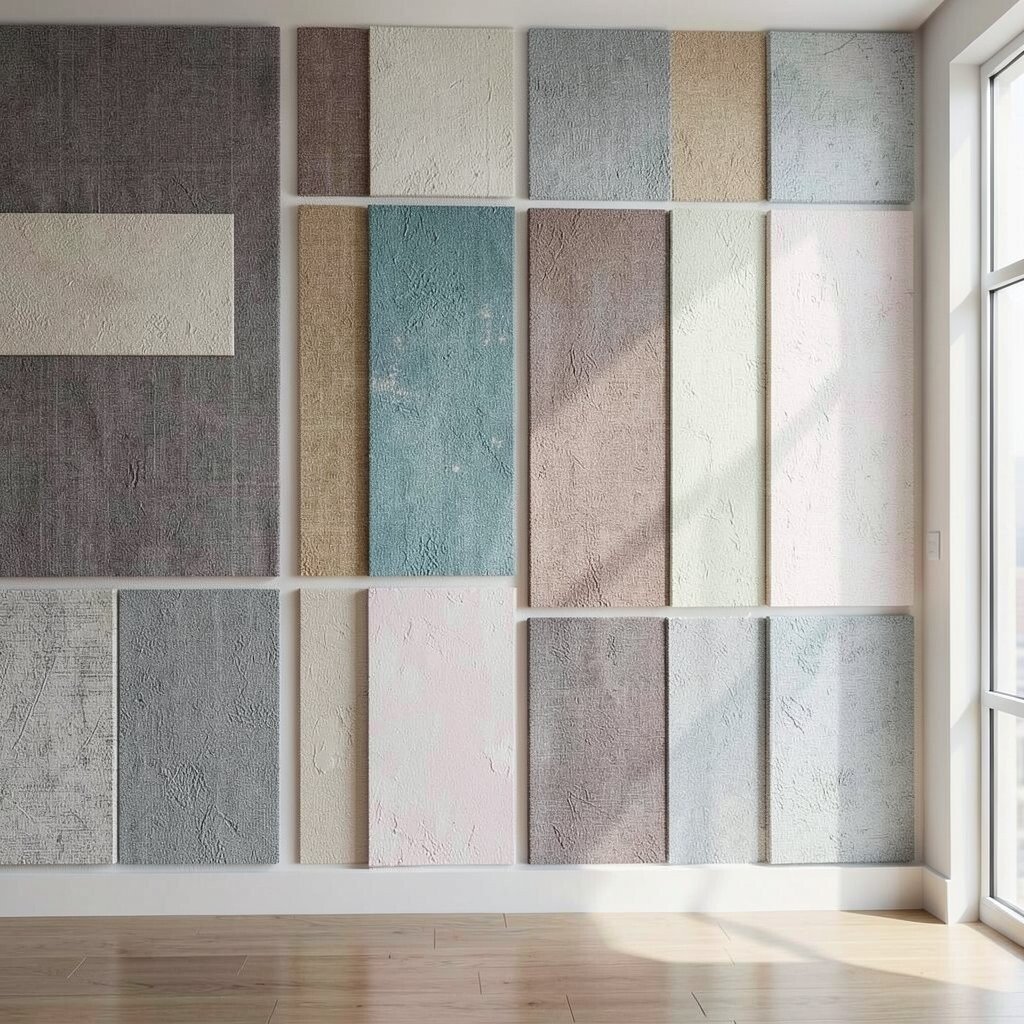
You can mimic a textured wallpaper vibe without using rolls of paper. Paint-rubbed fabric panels create a layered surface that feels rich and artsy.
Choose a canvas-like fabric or thick linen, then lightly brush paint on the fabric and rub gently with a cloth for an aged look. Mount the fabric on a frame or tension mount so it stays taut. This technique works well because the raised fibers catch shadows, giving your gallery wall depth.
For uniqueness, combine one fabric with a slightly different weave, like boucle or upholstery blend, to create subtle variation. Keep practical care in mind by testing paint on a hidden corner first. Many homeowners are leaning into tactile, “maker” finishes right now, and this style fits that trend beautifully.
9. Hand-Painted Fabric Banners Between Simple Artwork
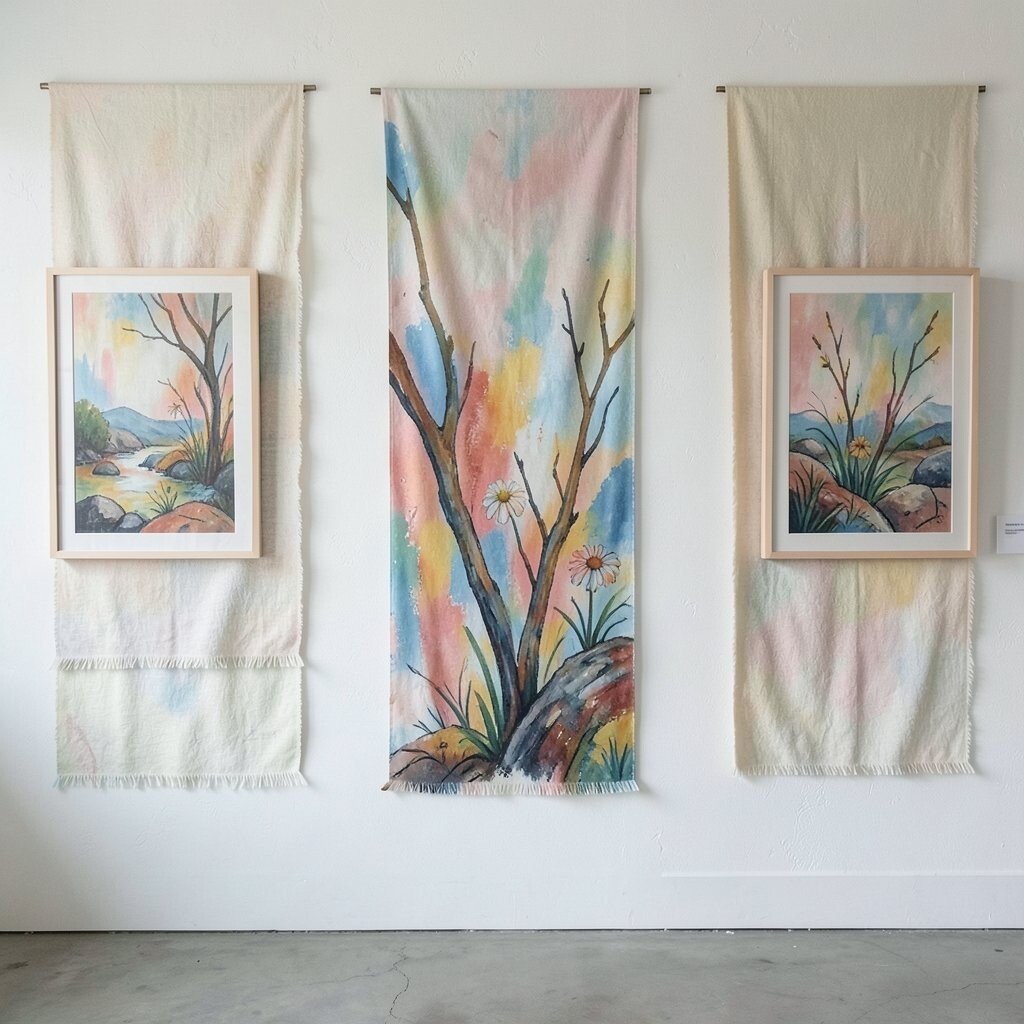
Instead of filling every space with frames, use fabric banners as vertical anchors. Between them, add small painted pieces to balance the layout.
Paint simple shapes onto fabric banners using fabric paint or acrylic sealed for fabric. Hang the banners from a rod or curtain hardware so they move slightly and soften the wall. This method is great when you want texture without building a huge collage.
10. Fringe And Tassel Wall With Muted Background Paint
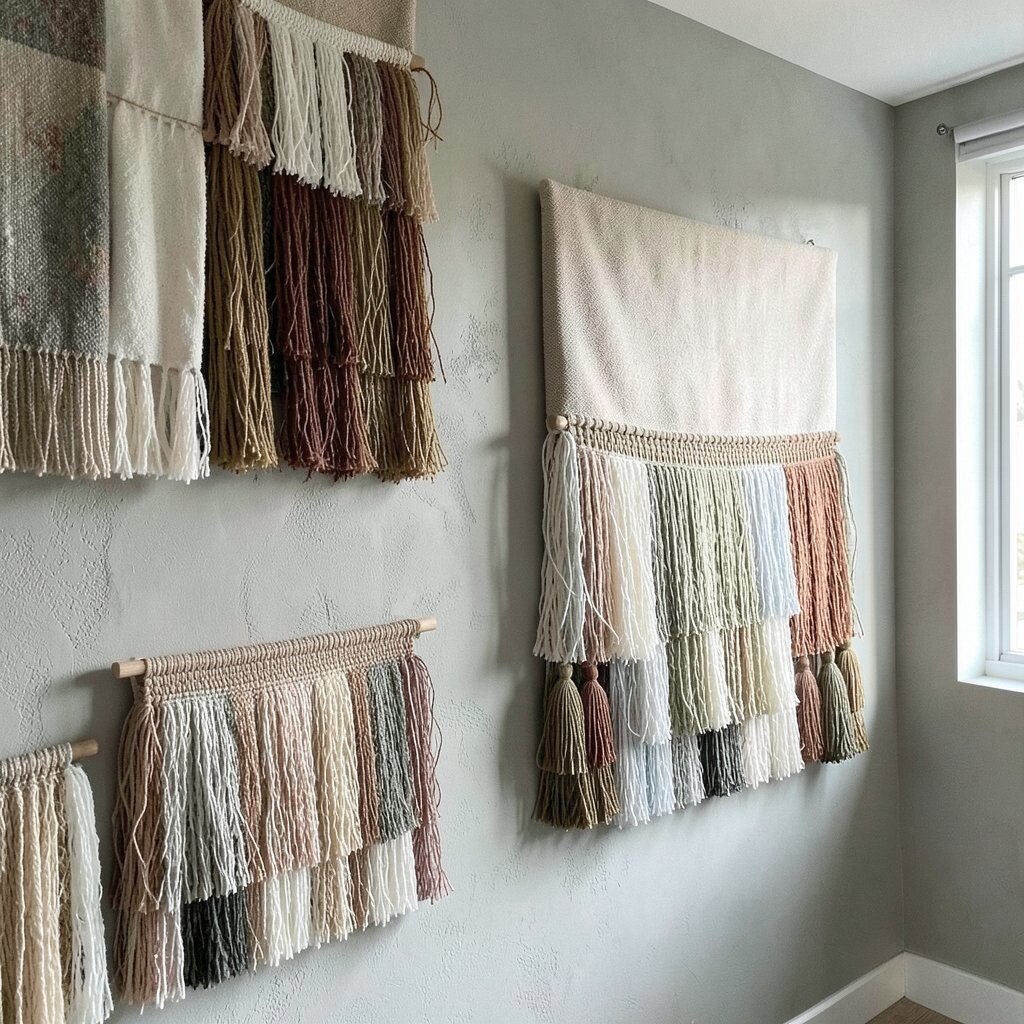
Fringe adds instant personality, like a festive accessory for your room. Pair it with a muted background paint so the texture stays the main focus.
Paint the wall in a soft neutral, then hang fabric pieces with tassels, fringe, or braided trim. Spread the pieces across the wall so the movement feels balanced, not random. If you want an easy upgrade, add one painted stripe that matches the fringe color for a tied-together look.
For cost control, trim old curtains or fabric napkins into banners with tassels you can buy by the yard. Current design trends often celebrate warm handmade details, and fringe is a simple way to match that vibe. To keep everything looking neat, trim uneven edges before hanging and secure the tops with sturdy clips or reinforced tape.
11. Stencil Painted Wall With Fabric Swatches As Texture Stops
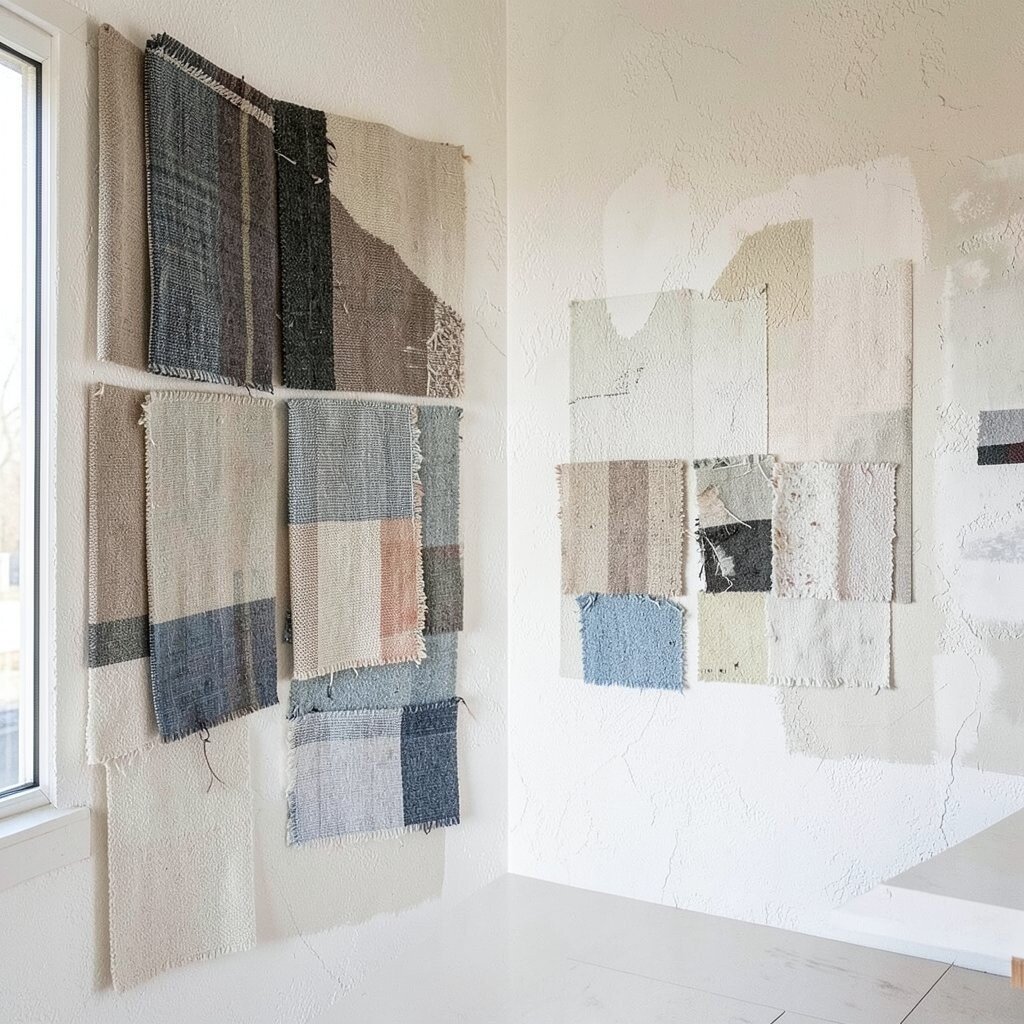
Stencils can give you a pattern that feels modern, and fabric swatches can soften it. Think of swatches as texture stops that break up the painted rhythm.
Stencil a repeating pattern onto the wall in two tones, then place fabric swatches over key sections like a design highlight. Choose swatches that share the stencil color so everything looks cohesive. This is practical if you want a theme but still want freedom to adjust placement later.
To personalize it, paint small custom shapes inside a few stencil openings and swap fabrics seasonally if you enjoy change. Using removable adhesive picture hangers keeps the wall renter-friendly while still holding fabric weight. If you’re mindful of cost, use leftover paint for the stencil and cut swatches from yardage remnants or thrifted textiles.
12. Floor-To-Ceiling Fabric Panels With Ombre Paint Borders
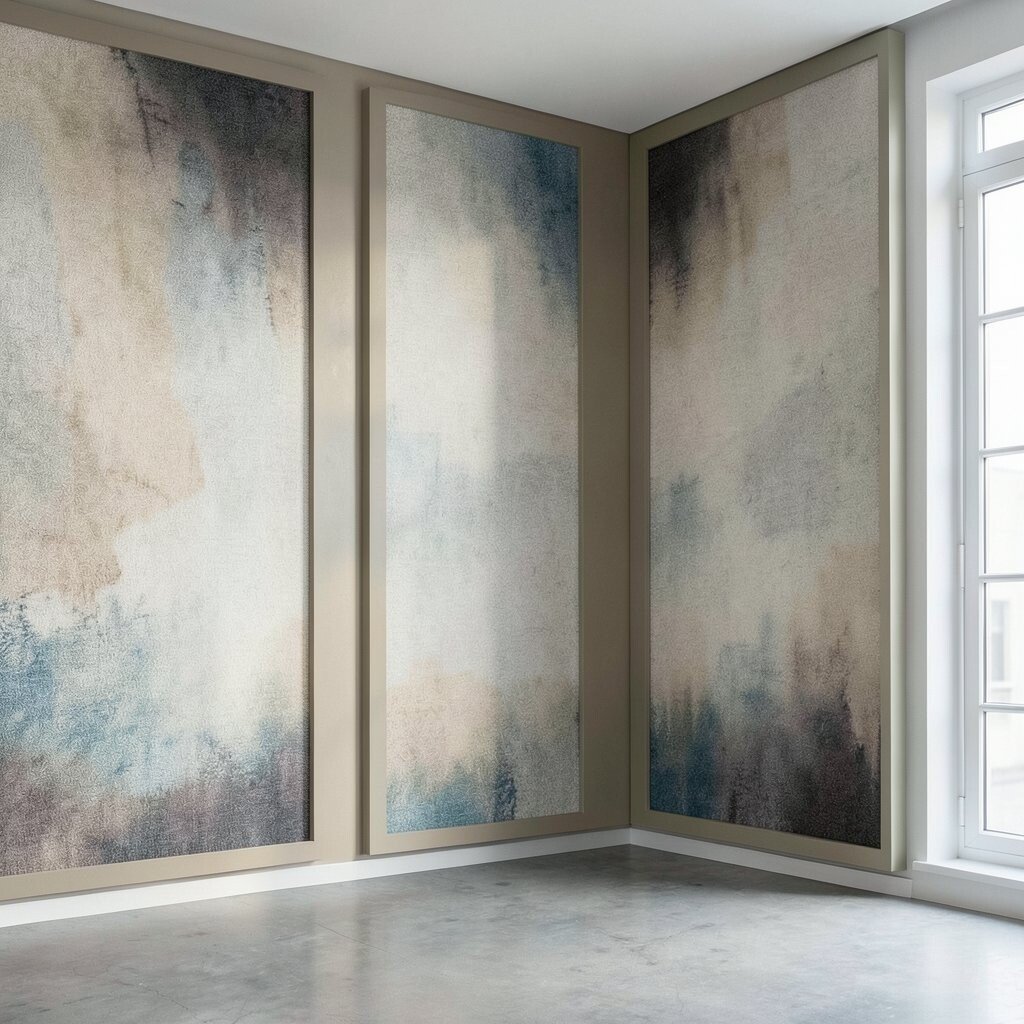
A floor-to-ceiling fabric wall feels grand, and it makes small rooms feel dressed up. Ombre paint borders around panels can add a “framed” effect without using more frames.
Mount large fabric panels vertically, then paint a gradient border along the edges where each panel meets the wall. Keep the ombre subtle so it looks like light spilling across the textiles. This combo is especially beautiful for living rooms and bedrooms because it adds softness while still looking structured.
For uniqueness, blend fabric types, like a heavier weave beside a lighter one, so the shadows vary. Consider cost by using wider thrifted fabric panels and adding simple trims instead of buying entirely new yardage. When you plan your layout, measure your ceiling height and keep panel widths consistent enough to look intentional.