
The sky turns into a slow-burning painting from the ridge. Pack a few smart pieces and your sunset hike can feel effortless and memorable.
Below are fifteen sunset mountain vista ideas, each paired with hiking gear thoughts you can use right away. You’ll find practical ways to tailor your kit, keep costs reasonable, and ride the latest comfort trends on the trail.
1. Ridge-Line Watch With a Lightweight Daypack
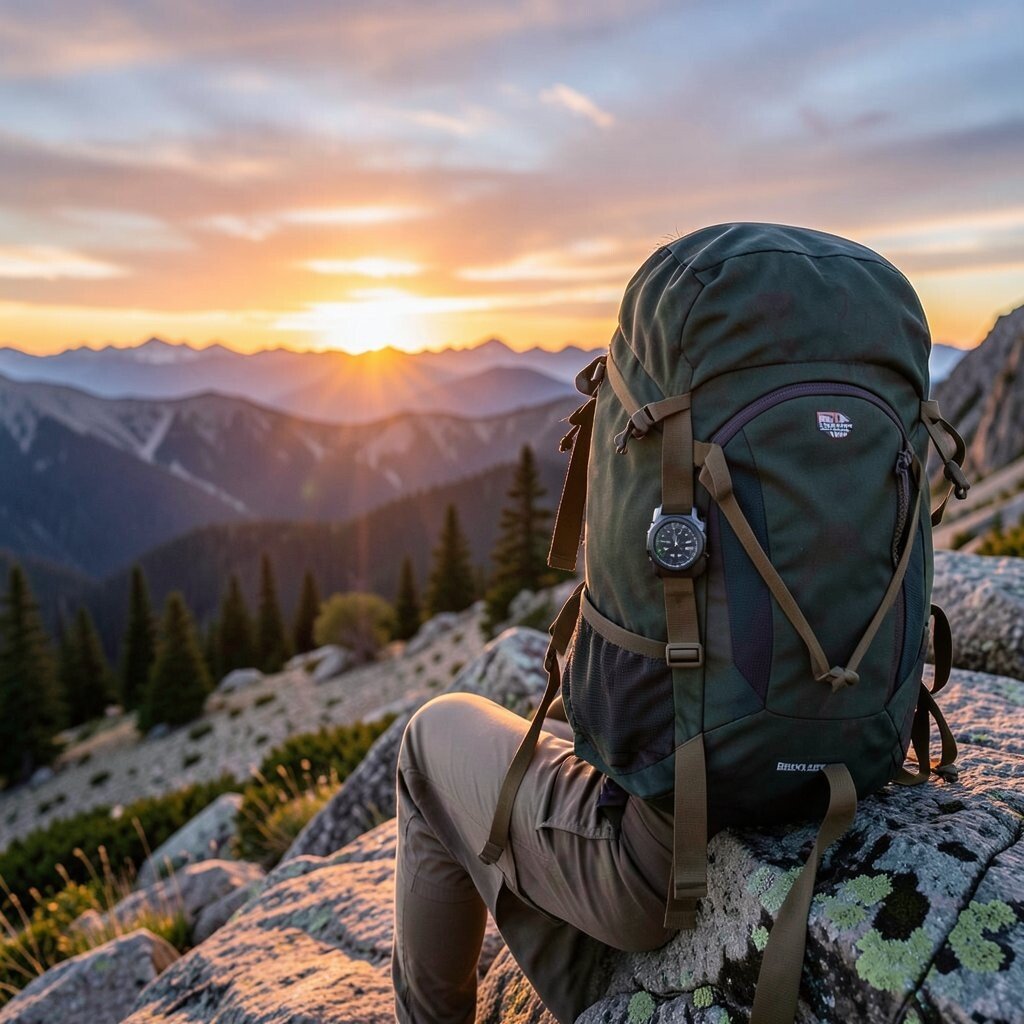
Picture yourself walking along an open ridge as the sun sinks behind the next peak. A gentle breeze cools your face, and the valley lights start to glow.
A lightweight daypack keeps your shoulders relaxed while still giving you room for water, layers, and snacks. Choose quick-access pockets so you can grab gloves or sunscreen without stopping your whole flow.
2. Golden Hour Lookout Through Pine Shadows
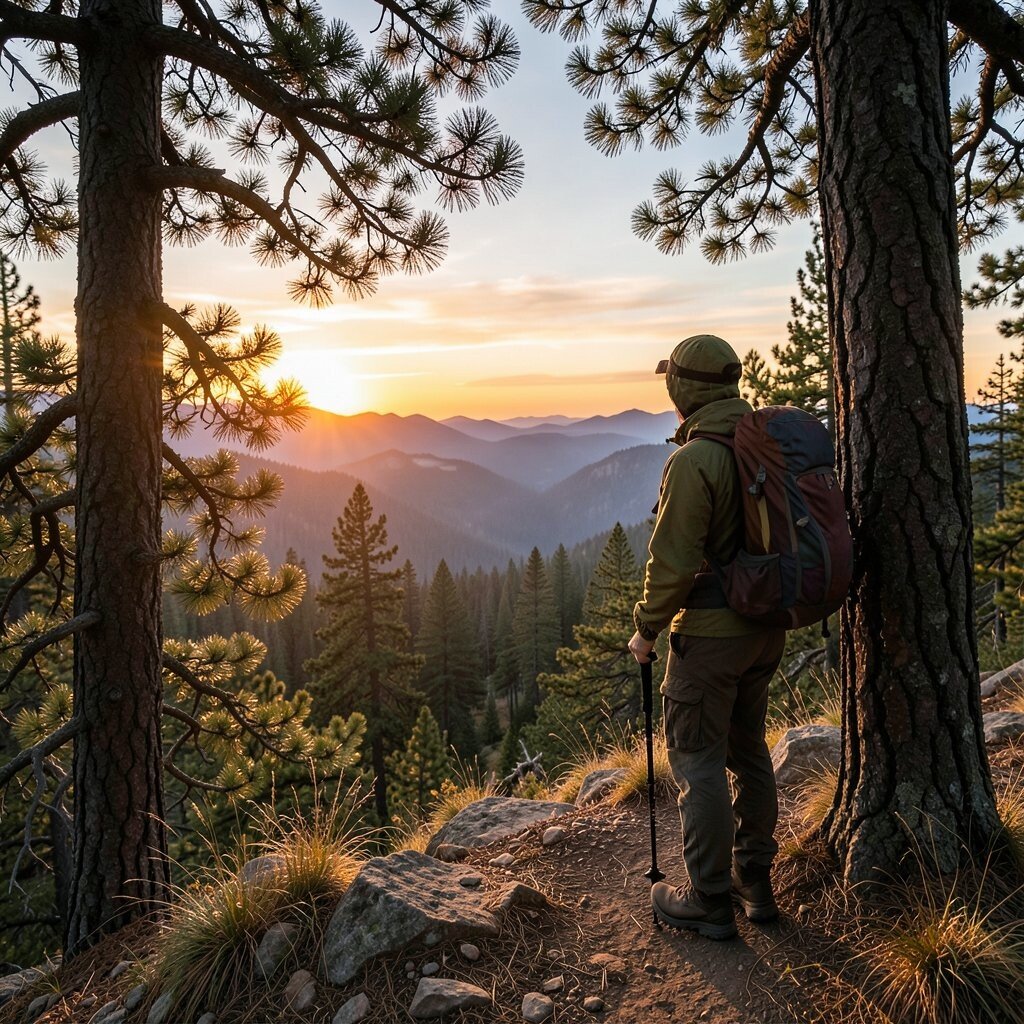
As you climb under tall pines, the light spills through the needles in warm streaks. When you reach the overlook, the whole horizon looks soft and honey-colored.
Bring a small insulated layer so you can stay comfortable when the air changes fast at sunset. A compact headlamp is also worth it even if you plan to return before dark.
For cost control, look for simple, packable fleece rather than expensive technical jackets. Many hikers now prefer breathable base layers that dry quickly, which helps when the forest air feels damp.
3. Waterfall Access for a Cool, Scenic Finish
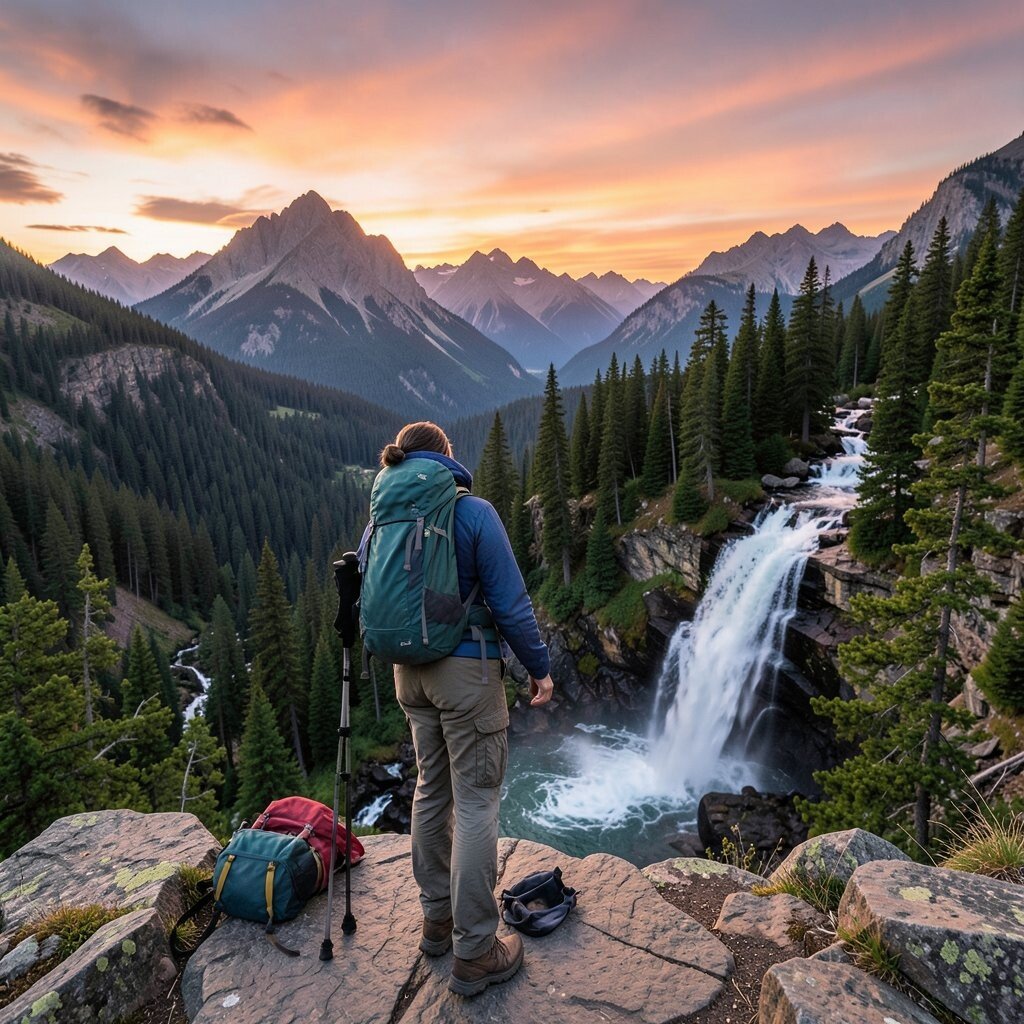
The trail hums with water sound as you near the falls. Mist hangs in the air, turning the last rays of sunlight into a sparkling curtain.
Wearing shoes with good grip matters here, because wet stones can feel slick even when they look steady. Consider bringing a dry bag or waterproof pouch so your phone stays safe during splashes.
If you want personalization, pack a small microfiber cloth to wipe condensation off your gear. Budget-wise, a basic rain cover for your pack often does the job better than replacing soaked clothes later.
Once the sun drops, the cooler air helps you slow down and enjoy the view without feeling overheated.
4. Sunset Switchbacks With Trekking Poles
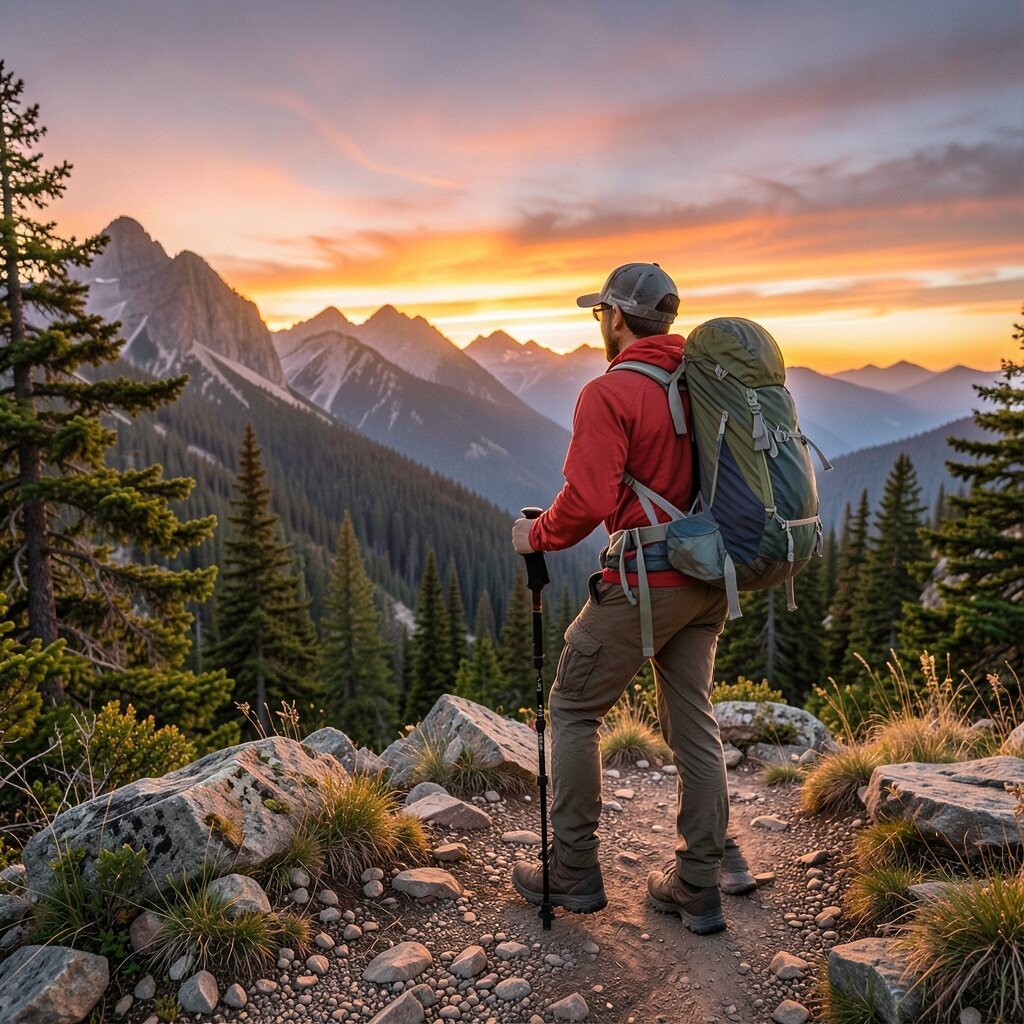
Switchbacks can feel like a friendly rhythm as the ground rises in steady steps. Each bend reveals a wider view, until the mountains line up like a layered mural.
Trekking poles reduce strain on knees and calves, especially during the descent. If you hike often, many modern poles have easy adjustments, which is handy for changing slopes.
5. Rock-Ledged Viewpoint With Slip-Resistant Footing
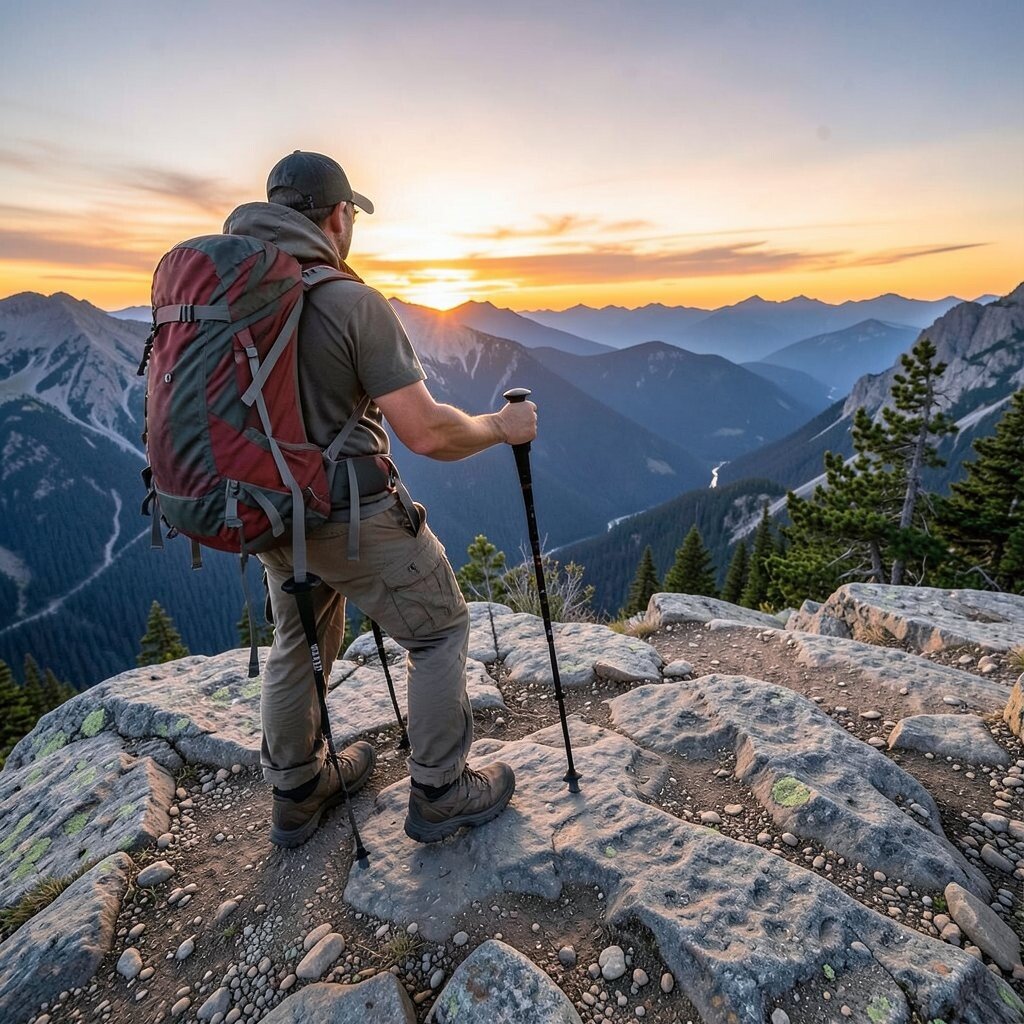
Stone ledges catch the sunset first, and they can glow brighter than the sky itself. From that spot, you may see distant ridges fade into a warm haze.
Choose footwear with traction designed for uneven rock, and break them in before your first big sunset outing. A gaiter can also help keep grit out of your shoes if you’re moving through dusty paths.
To personalize, add a spare pair of socks in a small bag so you can dry off if you cross wet areas. Cost-wise, buying quality socks and shoes together often feels smarter than relying on bargain gear that wears out quickly.
6. Alpine Meadow Sunset With a Packable Blanket
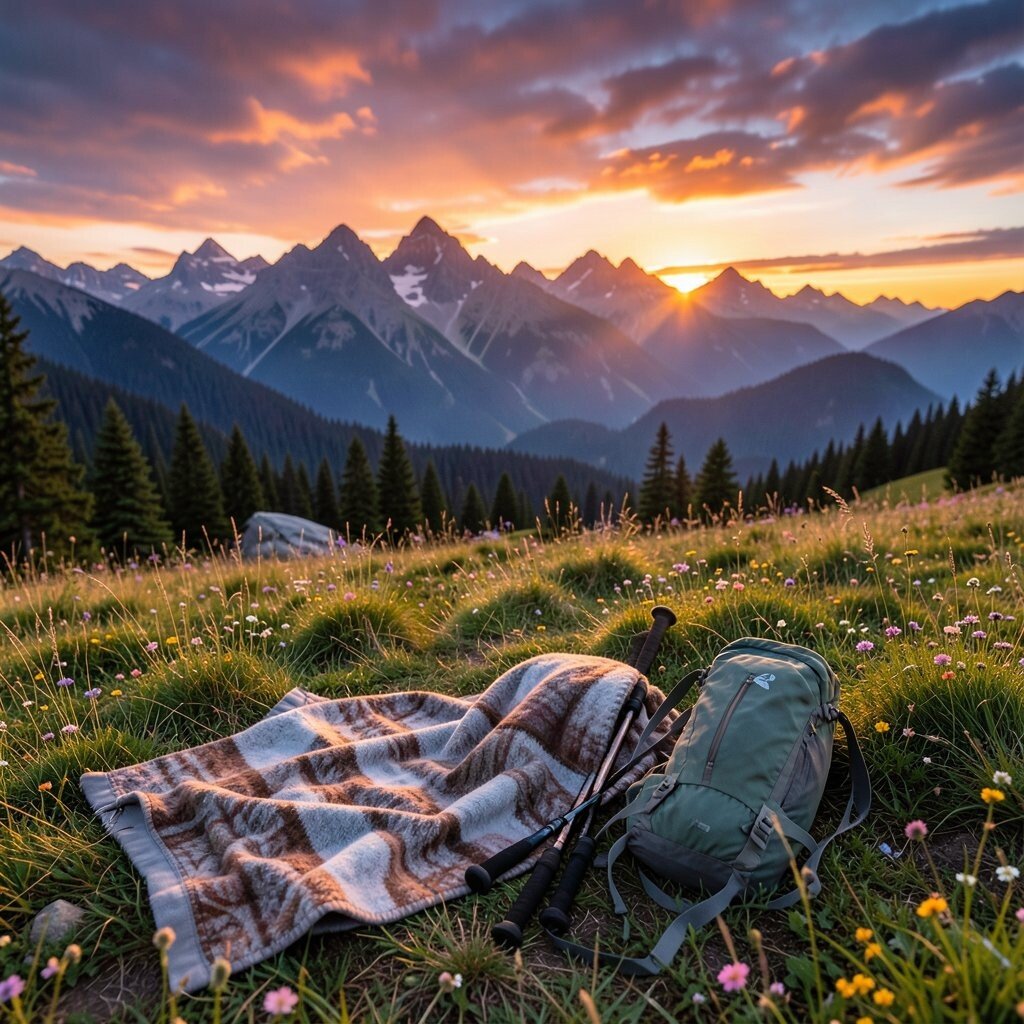
Wildflowers sway in a gentle breeze, and the meadow looks almost unreal at dusk. When the sun hits the grass, it turns golden and soft like a glowing photo.
A packable blanket or lightweight sit mat makes a big difference for comfort while you wait for color to peak. If you prefer to keep your gear minimal, choose a compact option that fits inside your daypack.
This kind of resting time is also a wellness win, because you can slow your breathing and enjoy the moment without rushing. Many hikers now carry a small hydration bladder cover or insulated bottle sleeve to keep drinks pleasant in cooler evenings.
7. Lakeside Trail for Reflections and Fresh Air
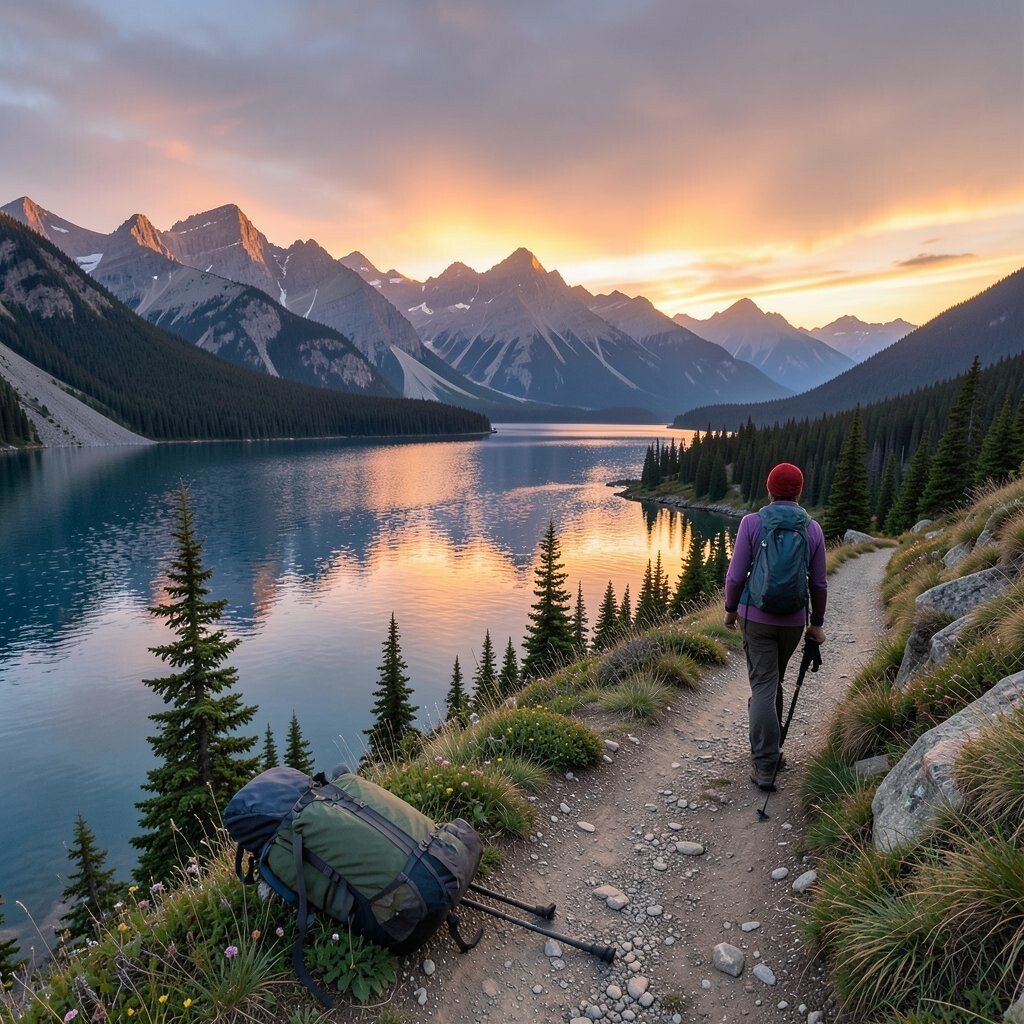
The water mirrors the sky, so each minute of sunset looks like a double show. Even on a calm evening, you can hear tiny ripples under the trees.
Pack a water-resistant jacket, since lake air can chill fast and damp up your clothes. A lightweight cap and sunglasses help when glare bounces off the surface.
If you’re planning for comfort, add a small trash bag to leave the shore cleaner than you found it. For a smart budget move, use a reusable bottle and bring extra electrolytes only if you’ll hike longer than you usually do.
Personalize the experience by choosing a route that gives you a wide view for photos without crowding other hikers.
8. Desert-Edge Vista With Sun Protection That Packs Small
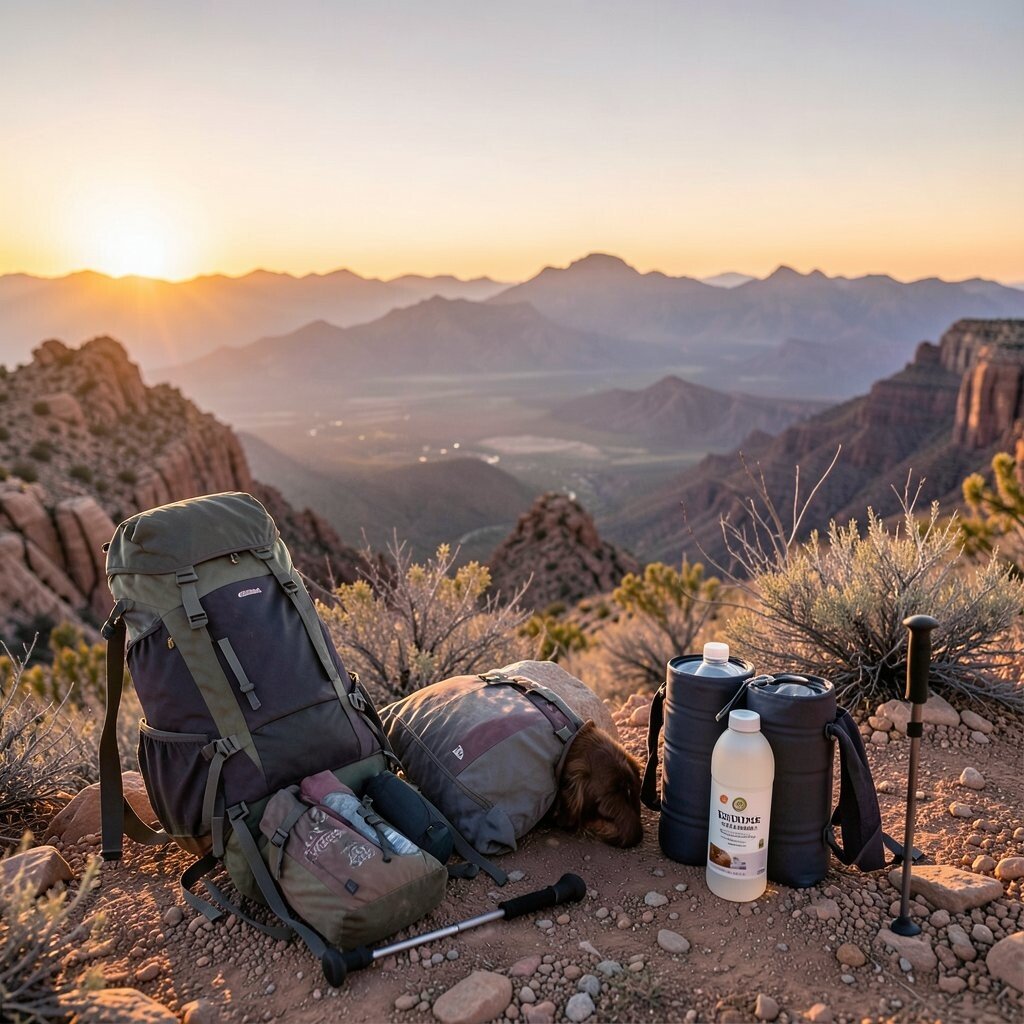
In the distance, rocks glow as if they’re warming from the inside. The wind can feel strong and dry, and the sky becomes a bold set of colors.
Sun protection is the main hero here, so bring a brimmed hat, sunscreen, and sunglasses with good coverage. A long-sleeve sun shirt is often cooler than you expect, and it reduces the need for constant reapplication.
For gear trends, many hikers are choosing lightweight, breathable sun gloves to protect hands during windy stretches. Keep costs down by focusing your spending on items you’ll use all season rather than a single specialty piece.
9. Lava-Field Hike With Durable Gloves and a First Aid Kit
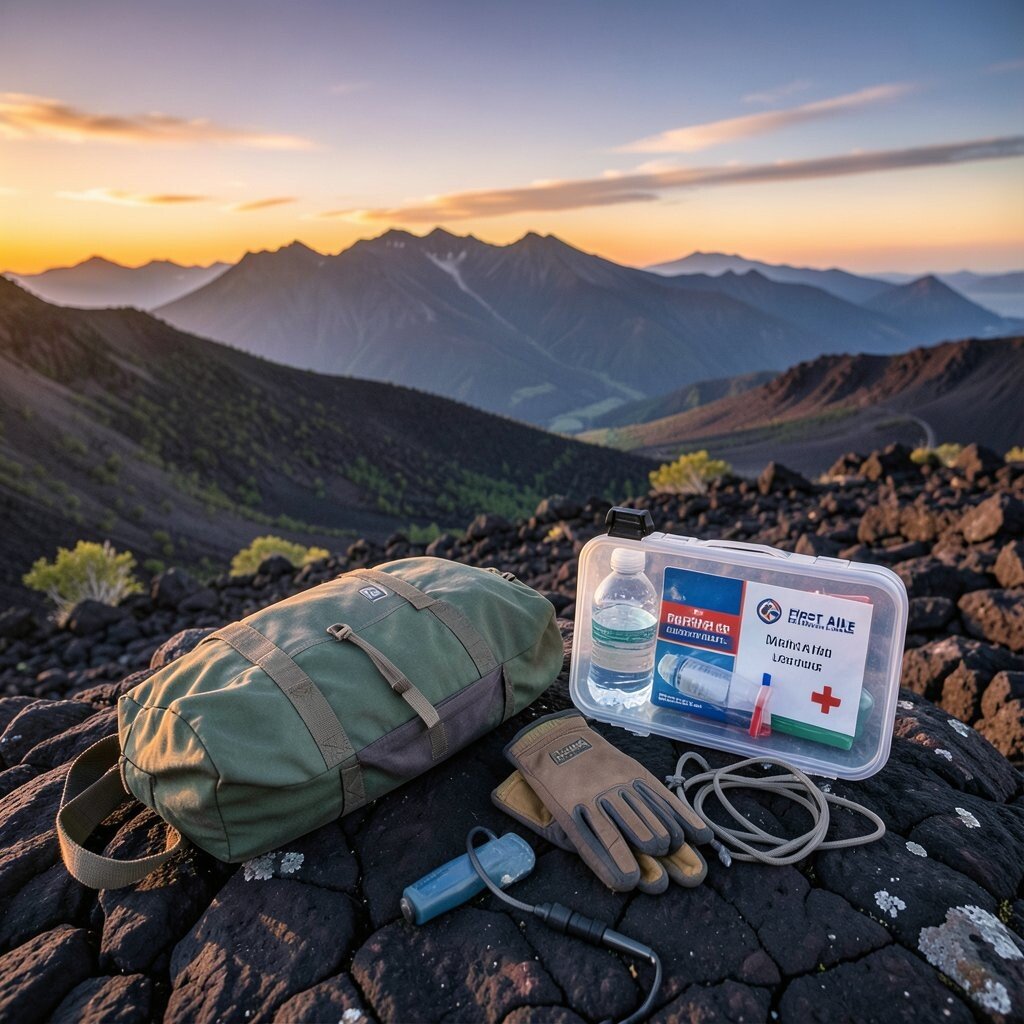
Dark terrain can make every movement feel dramatic, especially when the light turns orange. The ground texture stands out, and your steps create a quiet, gritty rhythm.
Durable gloves help with balance on rough surfaces and protect your hands if you steady yourself on uneven ground. A compact first aid kit is a practical must because cuts and scrapes happen more on rocky trails.
Personalize your kit by adding blister care that matches your foot type and past issues. Keeping it simple also saves money, since a small set of high-quality basics often beats carrying random supplies.
10. Valley Sunrise Tactics for Better Sunset Timing

Even if you’re chasing sunset, starting earlier can make the whole day calmer. You’ll have time to reach your viewpoint before it gets crowded, and you can enjoy the gradual color shift.
A flexible layering system helps you feel good all day, from warm morning air to cooler evening winds. Pack a breathable base layer plus a mid-layer you can quickly remove and reattach.
This approach also pairs well with modern tracking habits, like checking cloud cover and wind forecasts before you depart. If you’re cost-conscious, focus on planning and hydration rather than buying extra gear you may not need.
11. Old Forest Road to a Cliff Edge With a Compact Flashlight

The forest road feels steady under your feet, and the canopy filters the sunlight into soft patterns. Near the cliff edge, the open air suddenly hits you with a clean, crisp feeling.
A compact flashlight or headlamp is useful for the walk back, especially in areas where trails fade at dusk. Choose one with a comfortable strap so you can keep your hands free for adjusting straps or eating a snack.
For uniqueness, look for a viewpoint that faces west so you’re naturally lined up with the sunset. Personalize your setup by bringing a small trekking towel to wipe off moisture before you settle in.
Budget-wise, you can buy a reliable light secondhand if you test the battery life before leaving.
12. Meadow-to-Overlook Route With an Organized Snack Plan
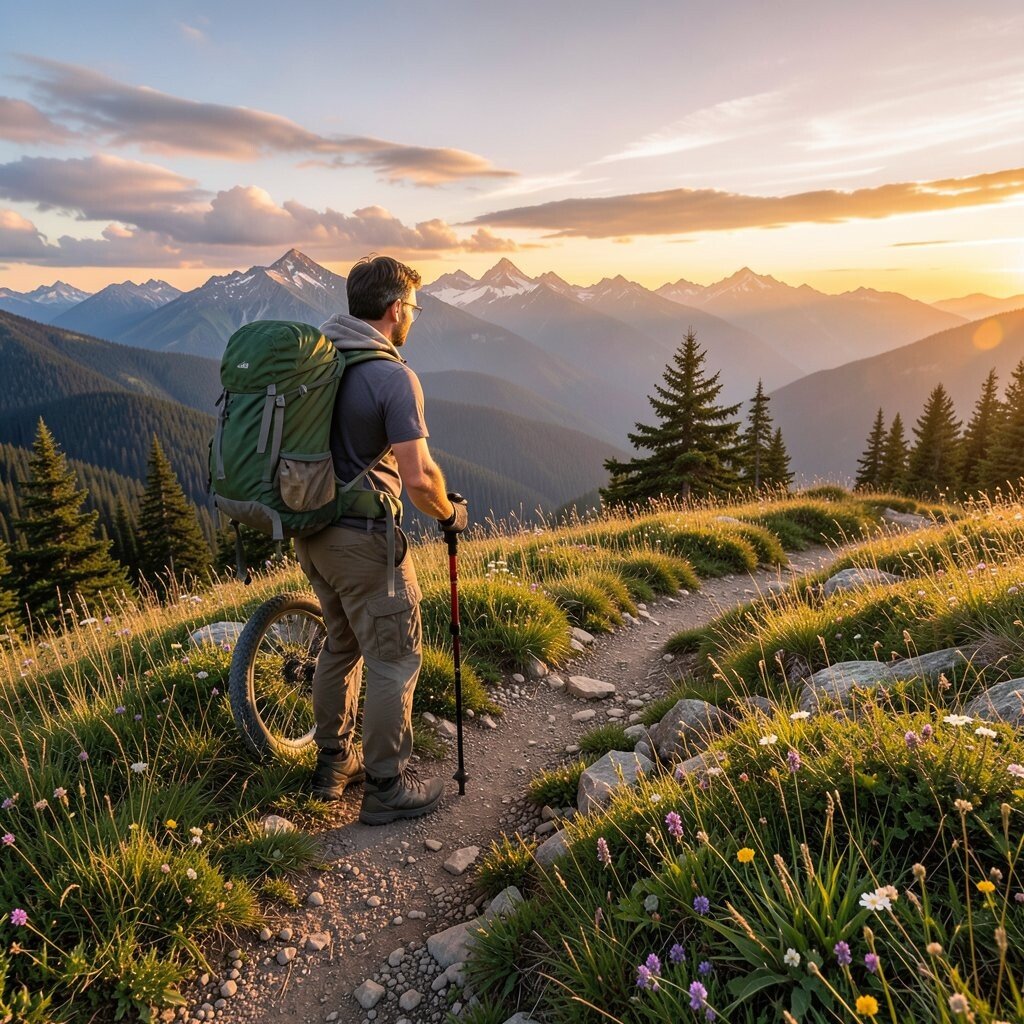
Your route opens gradually, and the view grows bigger with every step. When the sun starts lowering, the mountains feel closer and warmer, like you’re inside the scene.
Good snacking keeps you moving and helps you enjoy the view longer once you arrive. Use a small pouch for items like trail mix, fruit leather, and a salty bite so you’re not digging through your pack.
Personalize your snack plan with foods you actually love, not just what sounds healthy on paper. Many hikers now choose fewer, higher-calorie bites because it keeps energy steady without heavy meals.
13. Cloud-Magnet Lookout With a Weather-Ready Layer System
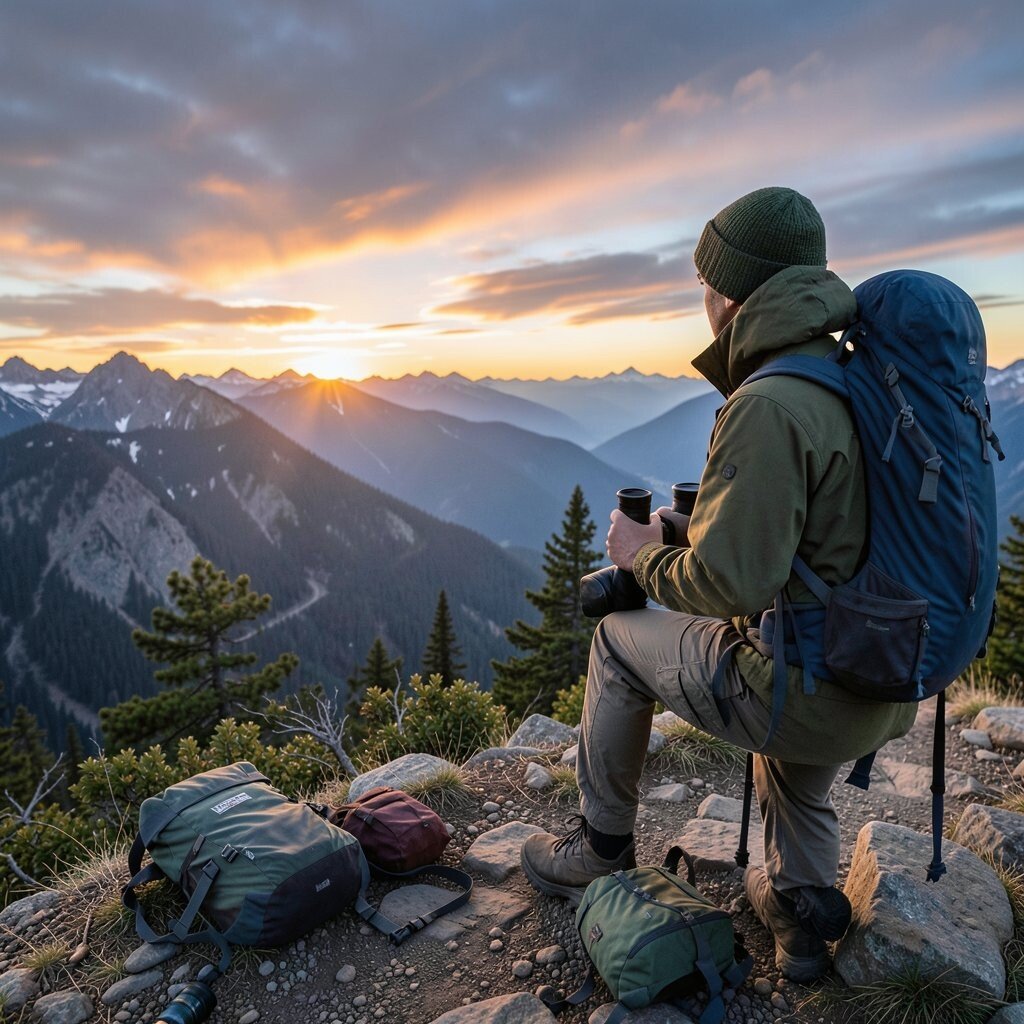
Clouds can roll in and out like slow waves, and you might catch the sun breaking through. From the right angle, the sky looks layered, with bright edges and soft shadows.
A weather-ready layer system helps you stay comfortable when conditions shift quickly. Look for a packable shell that blocks wind, plus a warm layer you can cinch easily around your torso.
Cost considerations matter here, so aim for one solid outer shell that you can use year-round rather than buying a separate piece for each outing. Trend-wise, many hikers are leaning toward breathable, lightweight rain protection that doesn’t feel bulky during warm moments.
To personalize, pack a small dry liner or extra socks so you can reset your comfort if you get wet on the way up.
14. Long, Scenic Switchback Into a Sunset Bowl
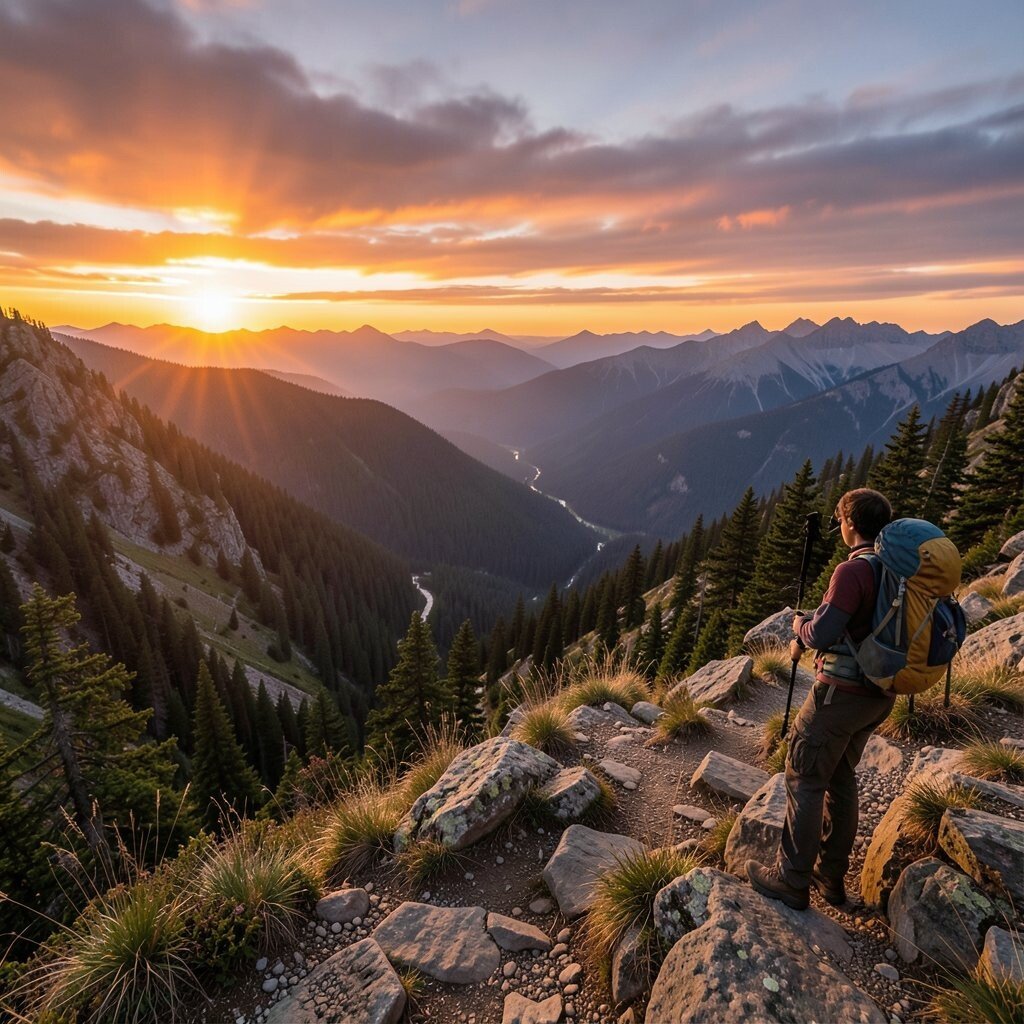
A sunset bowl feels like a natural amphitheater, holding light and color in a wide curve. As you near the top, the air cools and the horizon starts to glow brighter than you expect.
Bring a comfortable waist pack if you want quick access to water, snacks, and your phone. It also helps keep your daypack lighter, which can reduce fatigue on long switchbacks.
For practical tips, keep your water measured so you don’t carry more than you need. If your route runs longer than usual, add a small electrolyte packet and sip steadily rather than chugging at stops.
15. Summit Photo Stop With a Reusable Tripod and Power Bank
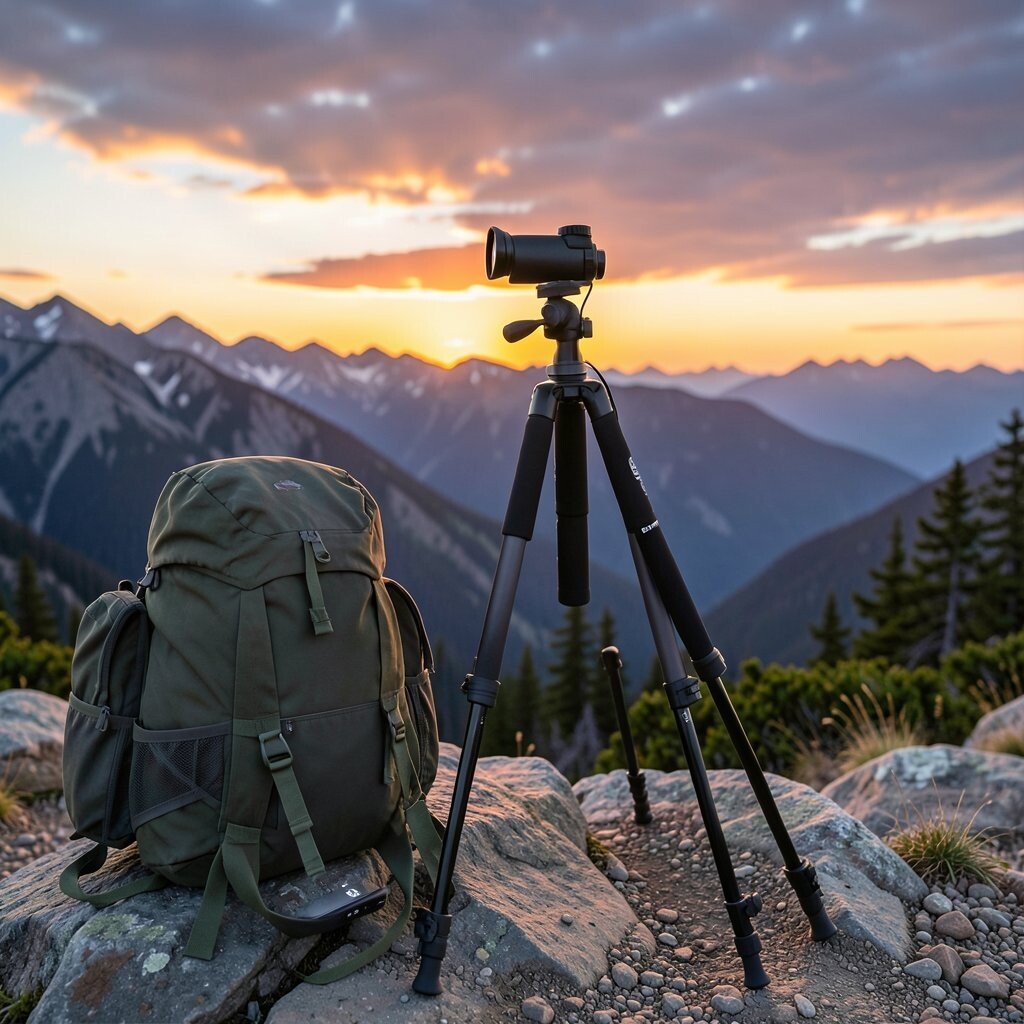
You stand at the highest point, and the sunset spreads out like a wide spotlight. Every direction offers a slightly different color mix, from pink edges to deep orange centers.
If you want memorable photos, a lightweight tripod or phone stabilizer helps you capture steady shots. Pair it with a compact power bank so your phone stays ready for timelapse or extra pictures.
Personalization is easy here: bring a small lens cloth for smudges and condensation, and set your camera or phone early so you’re not rushing when colors peak. On the cost side, consider borrowing a tripod first, because stability gear can vary a lot in price.
Current trends favor small, rechargeable accessories, like compact battery packs and multi-use charging cables, so you can keep your setup neat. When you’re done, pack everything away cleanly so the view stays beautiful for the next hiker.