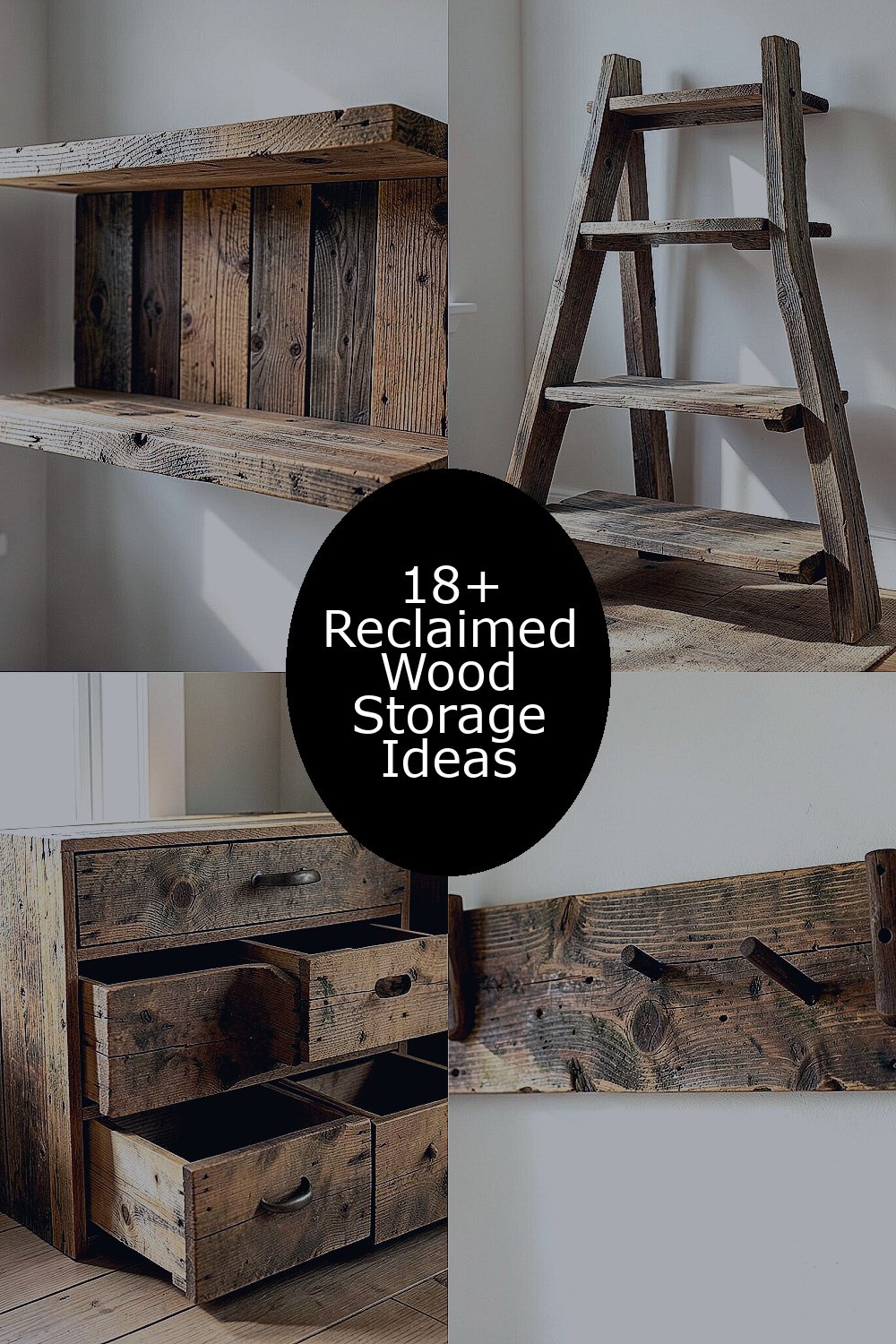
Clutter has a sneaky way of piling up, even when you keep meaning to organize. Reclaimed wood can bring warmth, character, and smart storage into the same space.
Here are practical ways to use it around your home, with ideas you can tailor to your own style and budget.
1. Floating Shelf With Salvaged Boards
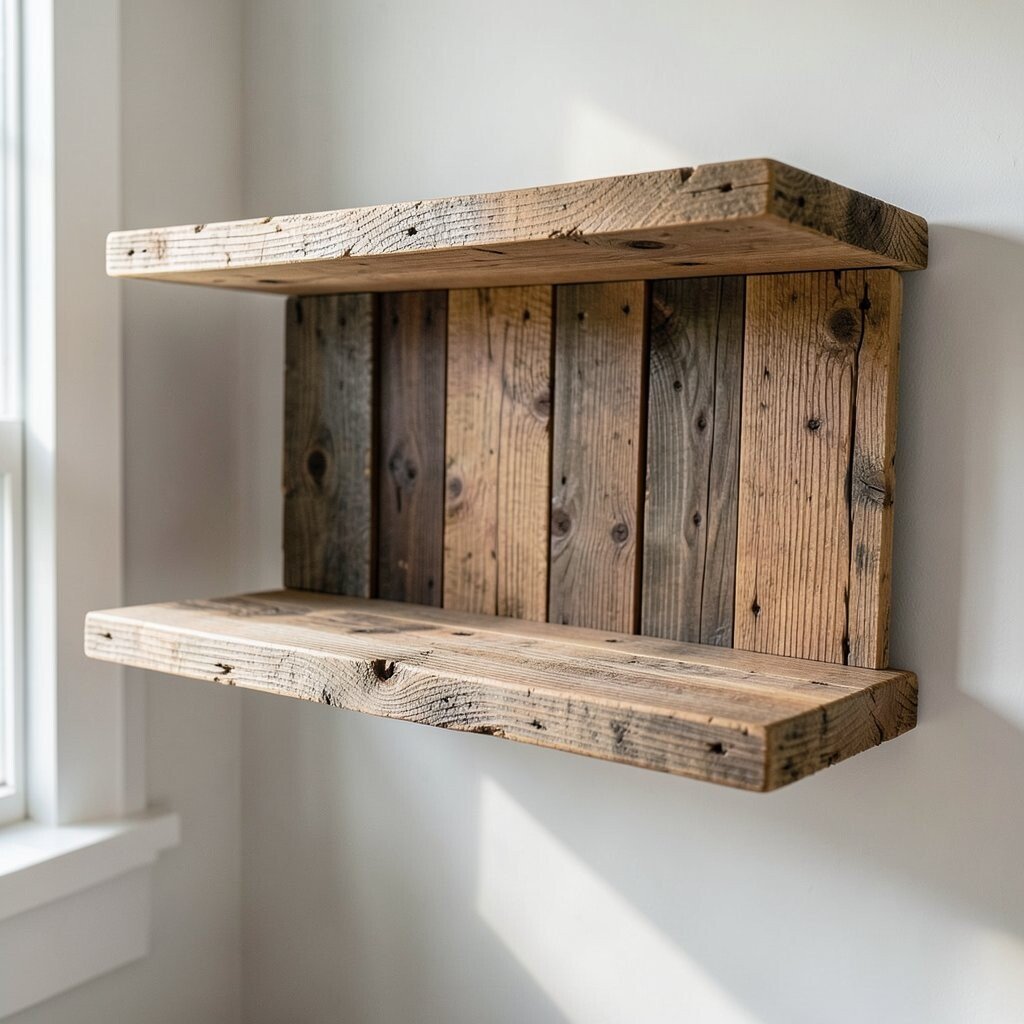
Picture a slim shelf made from weathered planks, with knots and tiny nail holes still visible. It brightens a wall while giving you a spot for books, photos, or everyday items.
Use flat brackets that match the look you want, from simple black to rustic iron. Keep heavy items near the wall studs, and line the shelf with a thin felt pad if you set down glass or delicate decor. Personalize it by staining the wood darker for a cozy vibe or leaving it natural for a lighter feel.
2. Ladder Shelf Made From Old Wood
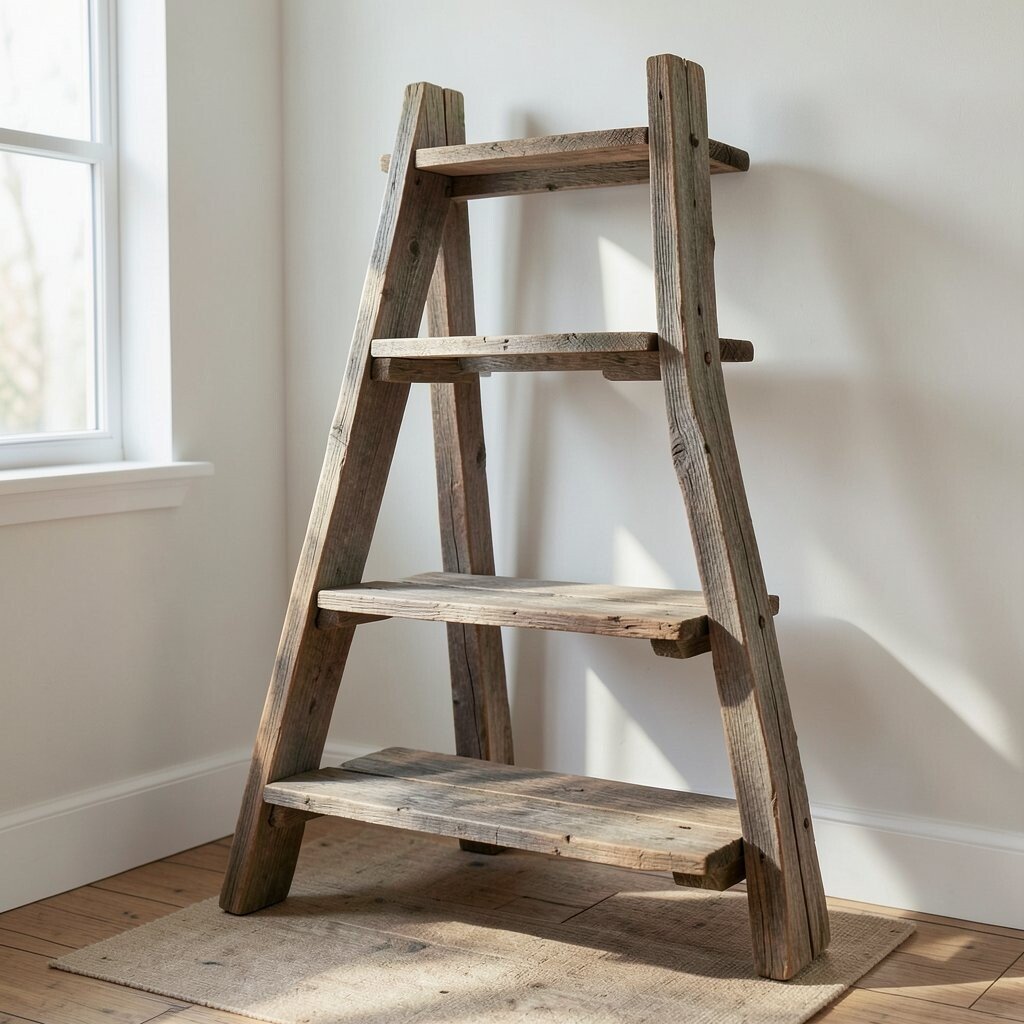
A reclaimed wood ladder shelf looks like it belongs in a farmhouse photo shoot. Each rung becomes a ledge for baskets, folded blankets, or small potted plants.
To make it stable, anchor the ladder rails into the wall or secure it to a sturdy base. Choose spaces that are easy to reach so you actually use it, like near an entryway for scarves and hats. For current trends, pair it with airy storage baskets in neutral tones and keep the top rungs for display rather than clutter.
Cost-wise, this often saves money because you can source lumber from salvage yards or reuse structural offcuts. If you want a clean finish, sand lightly to remove splinters but keep the character marks for charm.
3. Reclaimed Wood Crate Drawer Units
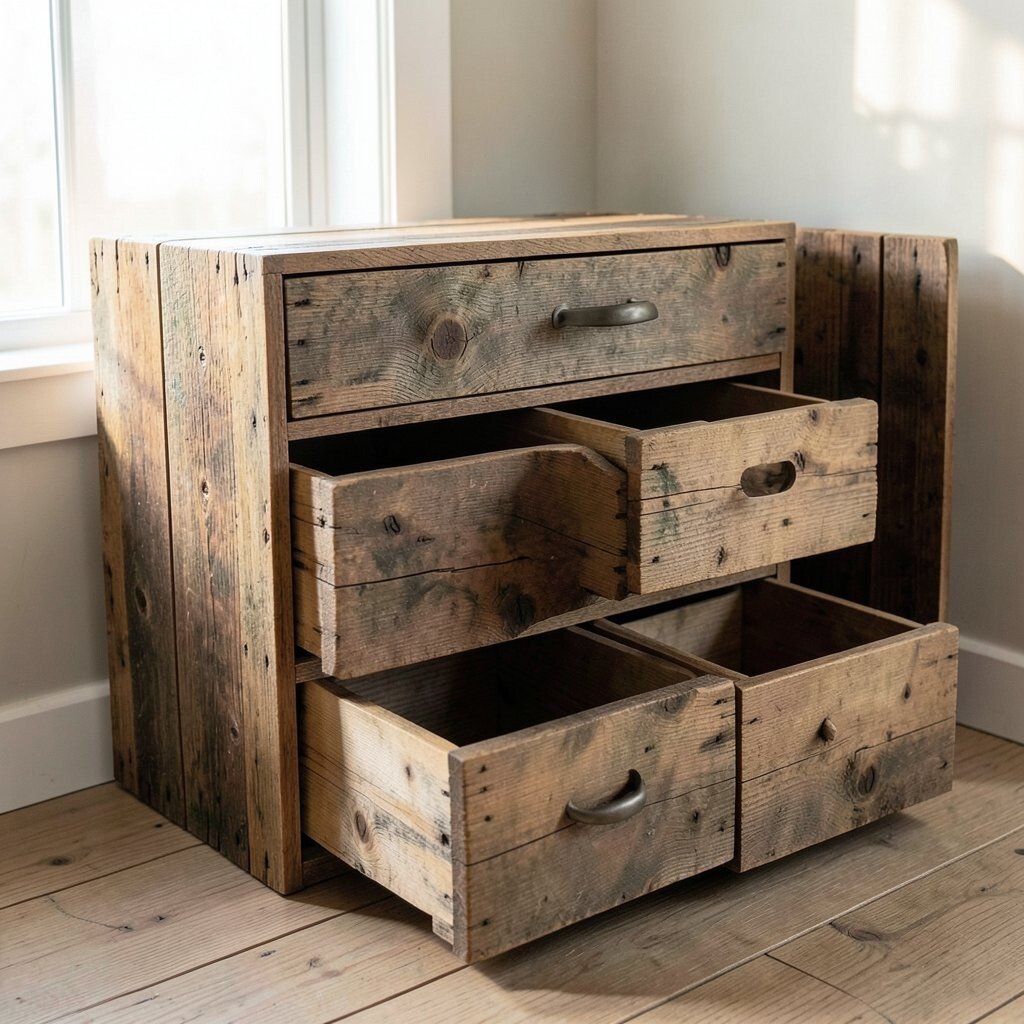
Think of stacking vintage crates into a tidy drawer system with wood front panels. The texture looks rich and imperfect, and it instantly makes shelves feel organized instead of random.
Start by selecting crates that are similar in height so the drawers line up nicely. Add simple drawer slides or use removable crate boxes that you can pull out for sorting. Put labels on the inside of the fronts using small wooden tags, and keep the outside clean for a calmer look.
You can personalize the layout for your space by mixing sizes, like a deeper drawer for linens and a shallow one for craft supplies. If you can’t find matching crates, choose a “rust and honey” color story so the variety still looks intentional.
4. Wall-Mounted Peg Rail With Reclaimed Backing
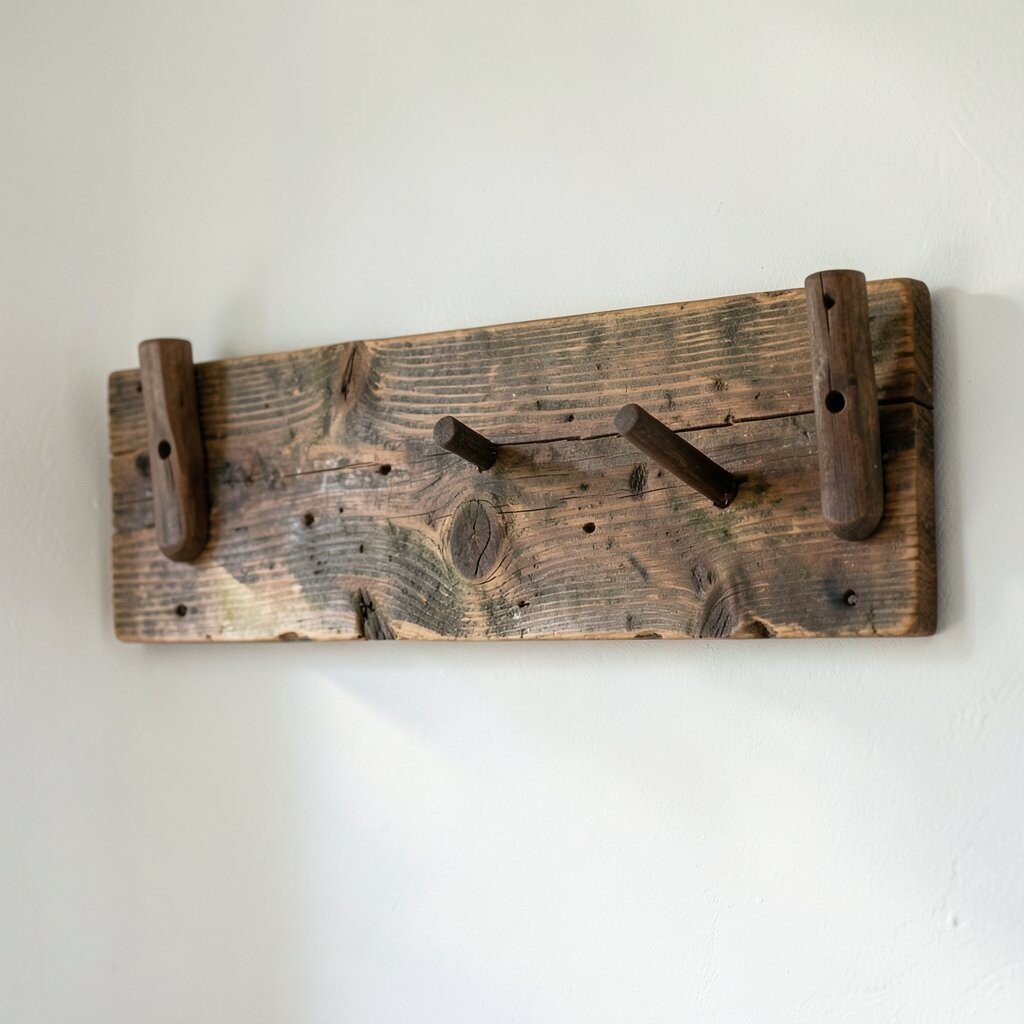
Imagine a wide plank wall piece with rows of pegs, where coats and bags hang neatly. The reclaimed backing adds warmth, and the pegs keep daily items visible and easy to grab.
Mount it at reachable height, then add a small tray shelf at the bottom for keys and wallets. This is a great decluttering move because you stop the “where did I put it” routine. For personalization, carve a simple pattern into the wood or paint the pegs a soft matte color that feels modern.
If you’re watching cost, thrift the backing board and buy only the hardware pieces. Sand the wood, then seal it with a low-sheen finish so it stays smooth to the touch.
5. Reclaimed Wood Storage Bench With Hidden Top
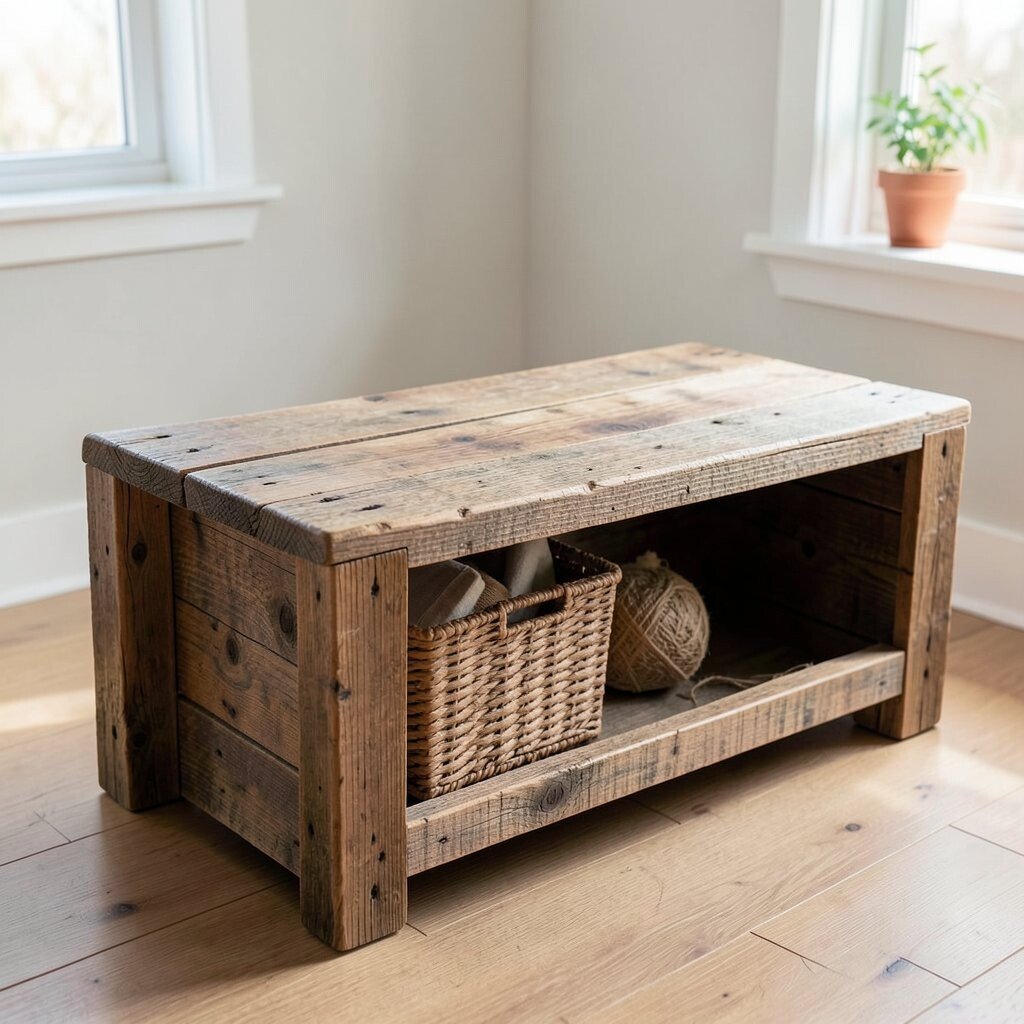
A bench with reclaimed wood slats can feel like a cozy seat and a secret storage box at the same time. When you lift the top, you reveal space for shoes, seasonal items, or board games.
Build the base sturdy, then use hinges and gas struts or simple support hinges for safe opening. Keep the inside neat with a divider made from thin plywood so small items don’t disappear. Add a cushion on top to make it comfortable, and consider stain-matching the cushion fabric so the whole bench looks pulled together.
Cost tends to be moderate because the most money goes into hardware and the cushion. You can lower the budget by using reclaimed legs or reusing sturdy frames from old furniture while keeping the wood slats reclaimed.
6. Pine-Board Pantry Shelf Brackets
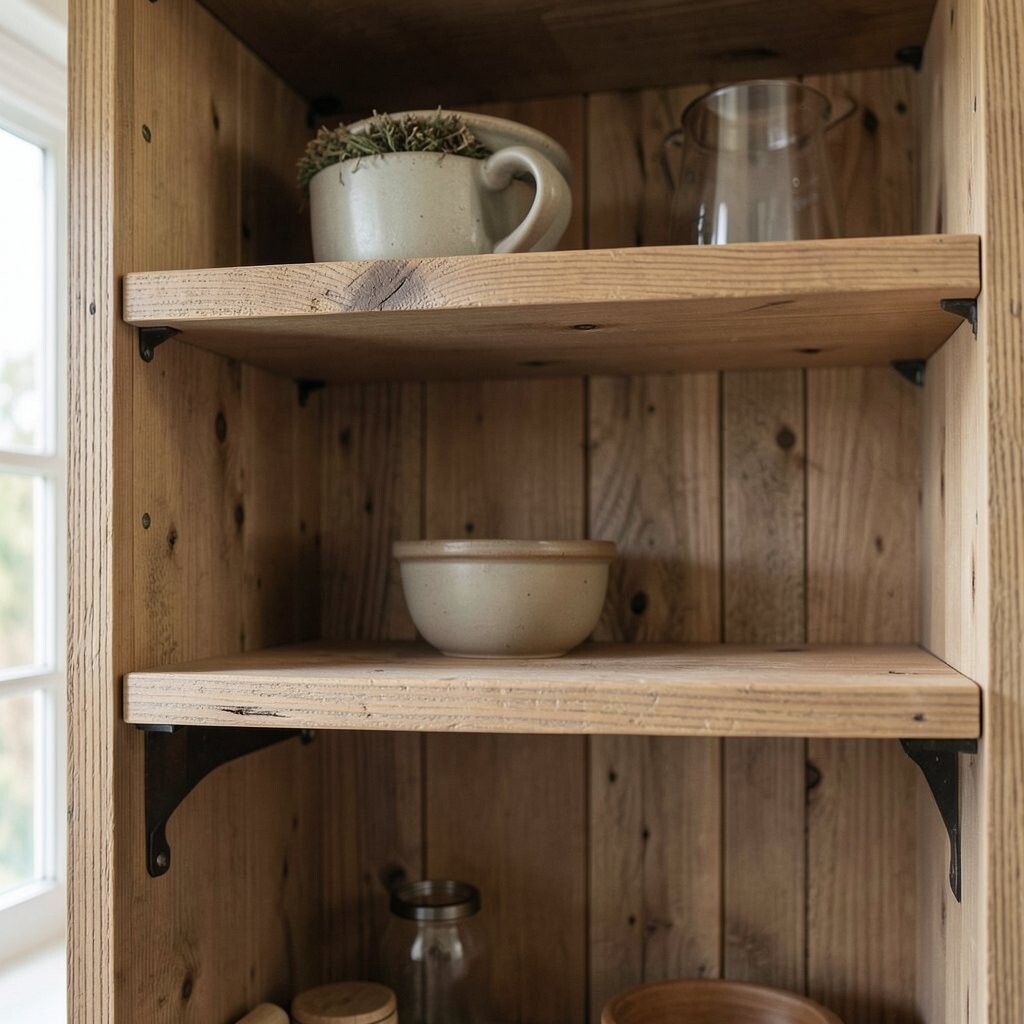
Picture your pantry walls with strong reclaimed wood shelves sitting on decorative brackets. Everything looks warmer than plain wire racks, and you can see what you have without digging.
Keep the shelves at heights that match how you actually shop, like putting the most-used jars at eye level. Add small bins to separate snacks, spices, or baking supplies so the wood doesn’t get crowded with loose items. For personalization, burnish a few letters into one board, like initials or a simple word, to make it feel like yours.
This solution fits a current trend toward “warm minimalism,” where open shelving is tidy and thoughtfully grouped. Seal the wood to handle spills, and you’ll avoid that rough, sticky feeling after a wipe-down.
7. Reclaimed Wood Magazine and Reading Nook Tower
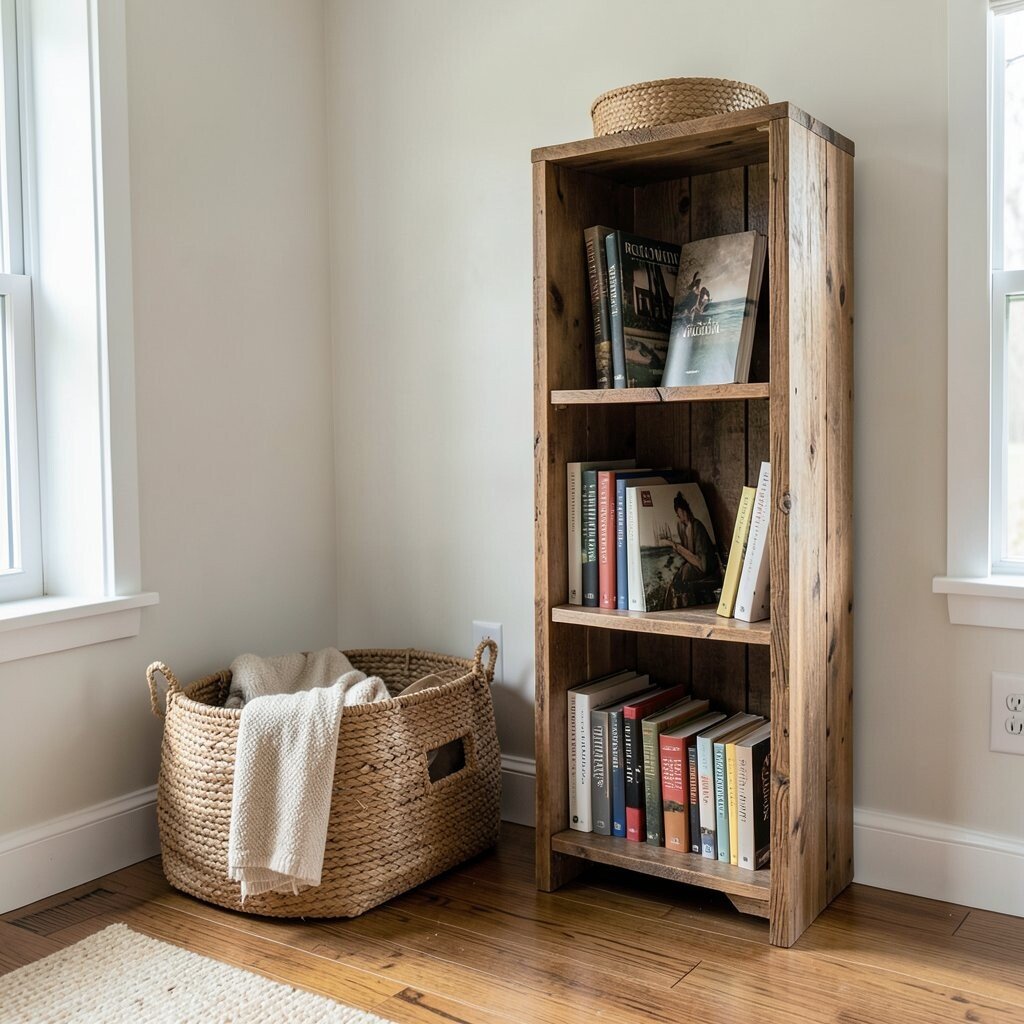
A vertical tower made from reclaimed wood can hold magazines, journals, and small books in a tidy column. The visible grain makes it feel like part of the decor rather than a storage afterthought.
Use angled dividers or slatted compartments so covers face outward and you can grab what you want quickly. Keep a small tray at the base for odds and ends like pens and bookmarks, which prevents that tabletop mess. Personalize by adding a removable panel that hides items you don’t want on display, such as extra chargers.
If you’re working with a tight budget, build it from one larger reclaimed sheet and smaller cutoffs for dividers. Sand well, because reclaimed boards sometimes have sharp edges from older nails.
8. Pallet-Style Shoe Storage With Easy Pull-Out Bins
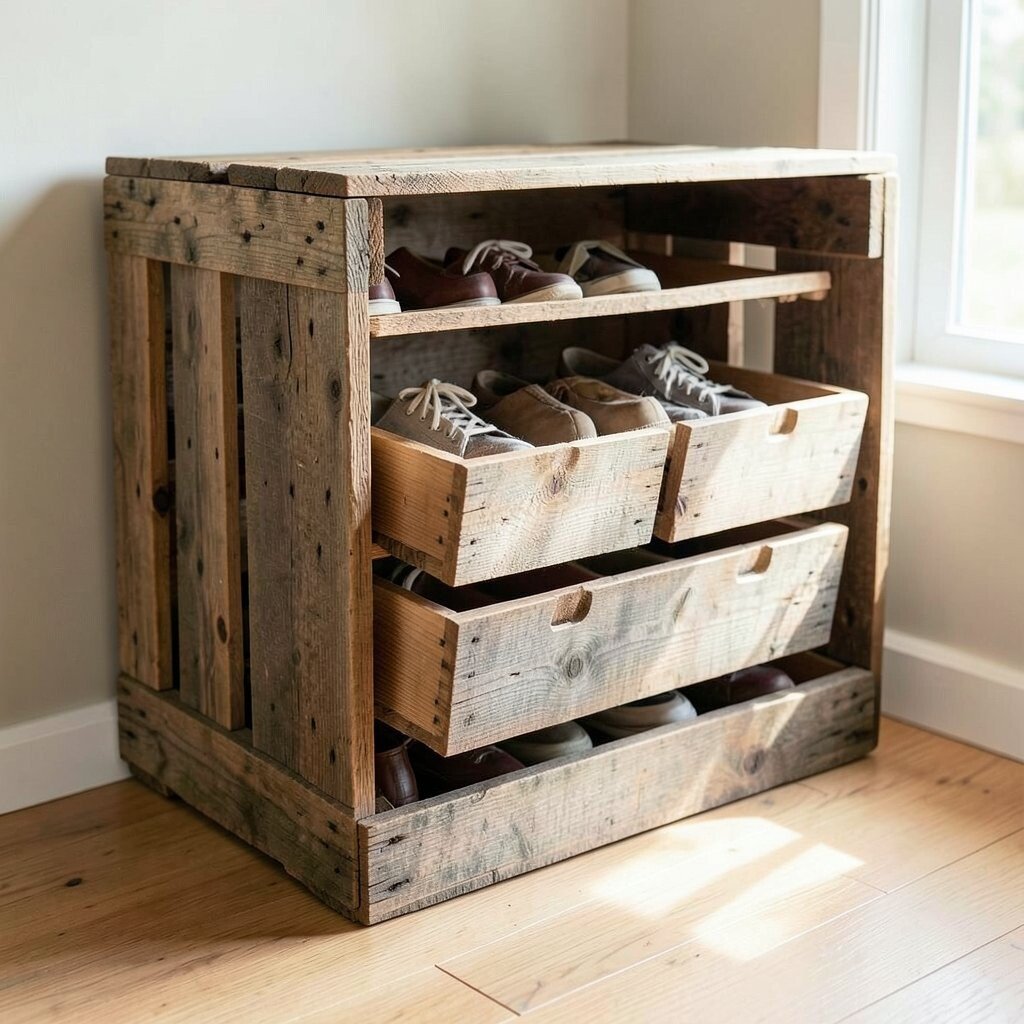
That pallet-like look feels instantly casual and welcoming, especially near the entryway. Use reclaimed slats to create a shoe rack, then add pull-out bins underneath for cleaning gear and seasonal items.
Measure your longest shoe first, then design the openings so your footwear slides in without forcing. Pull-out bins are a smart upgrade because they keep small items from turning the rack into a dumping spot. For personalization, paint the wood a soft cream while keeping the bin interiors neutral for a calm, modern feel.
Cost is often budget-friendly since pallets or pallet parts can be found cheaply. Just make sure the wood is safe and clean, and avoid pieces with heavy chemical staining when possible.
9. Reclaimed Wood Rail for Hanging Pots and Pans
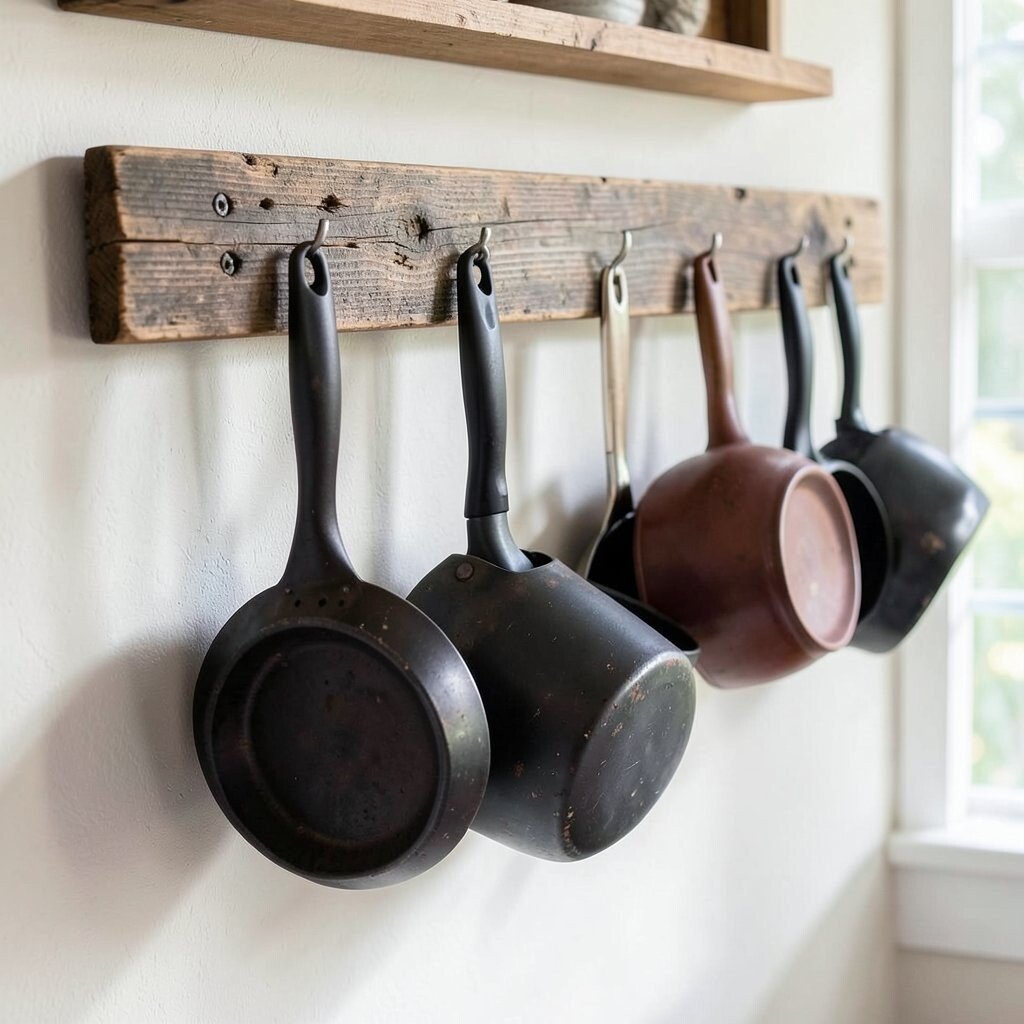
In the kitchen, a reclaimed wood rail can feel like a rustic art piece. Hanging pots and pans from strong hooks makes cooking tools easy to reach and reduces cabinet clutter.
Mount the rail into studs and check spacing so lids don’t crash into each other. Use hooks in different sizes to match everything from saucepans to your biggest skillet. A practical trick is to group items by how often you use them, keeping everyday pieces toward the front.
To match current home trends, choose a dark metal finish for hooks and keep the wood slightly sealed so it looks clean. If you want to save money, use a reclaimed beam and buy only the hardware and a few replacement hook anchors.
10. Reclaimed Wood Dowel Organizer for Cables
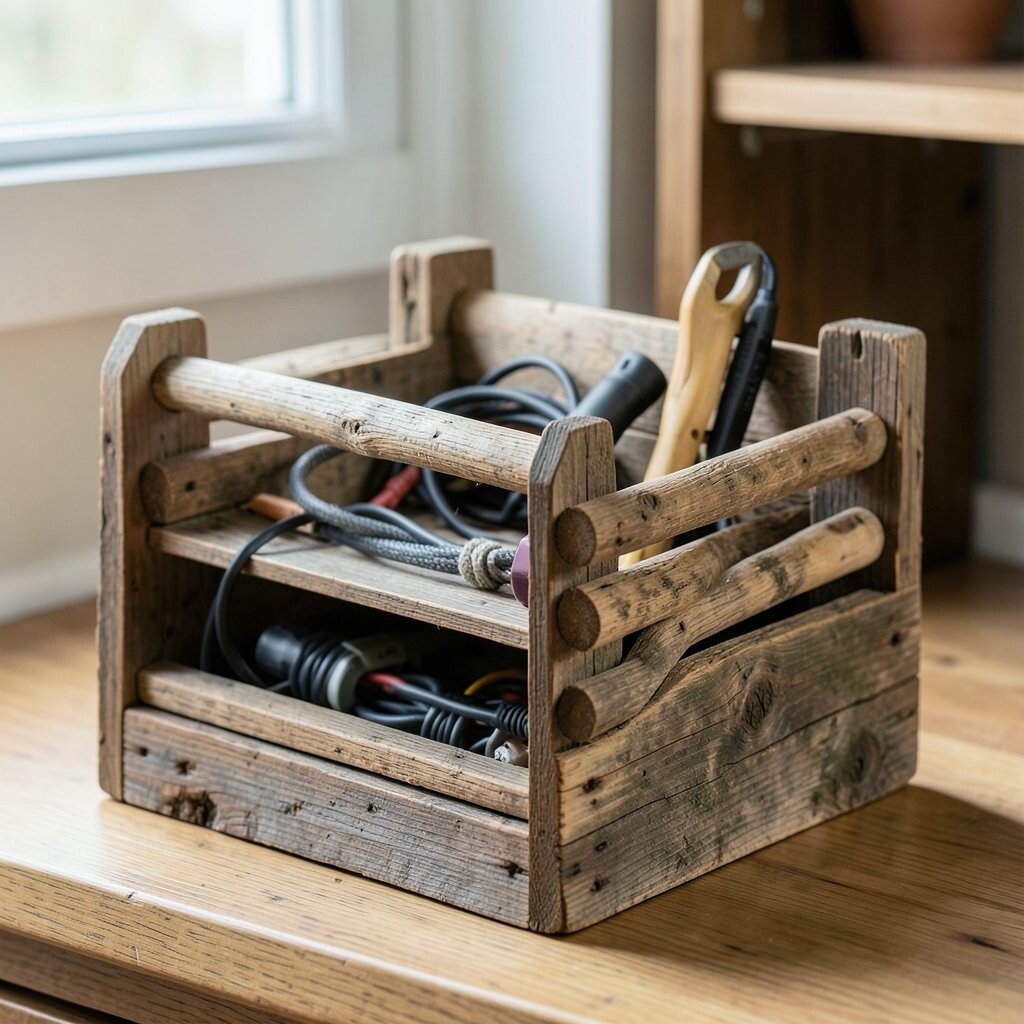
Close your eyes and picture a reclaimed board with evenly spaced dowels, holding cords like tidy little ribbons. It turns messy cable tangles into something that looks organized and intentional.
Run cables through clips or tie points so they don’t slide off the dowels. Keep the organizer near your charging area so cords always return to the same place. Personalize it by staining the board and adding a small chalk label on the underside for device names.
This decluttering solution fits modern habits because more people work from home and charge multiple devices at once. You can keep cost low by using leftover dowel rods from a hardware store and salvaging the main board.
11. Reclaimed Wood Desk Organizer With Lift-Out Tray
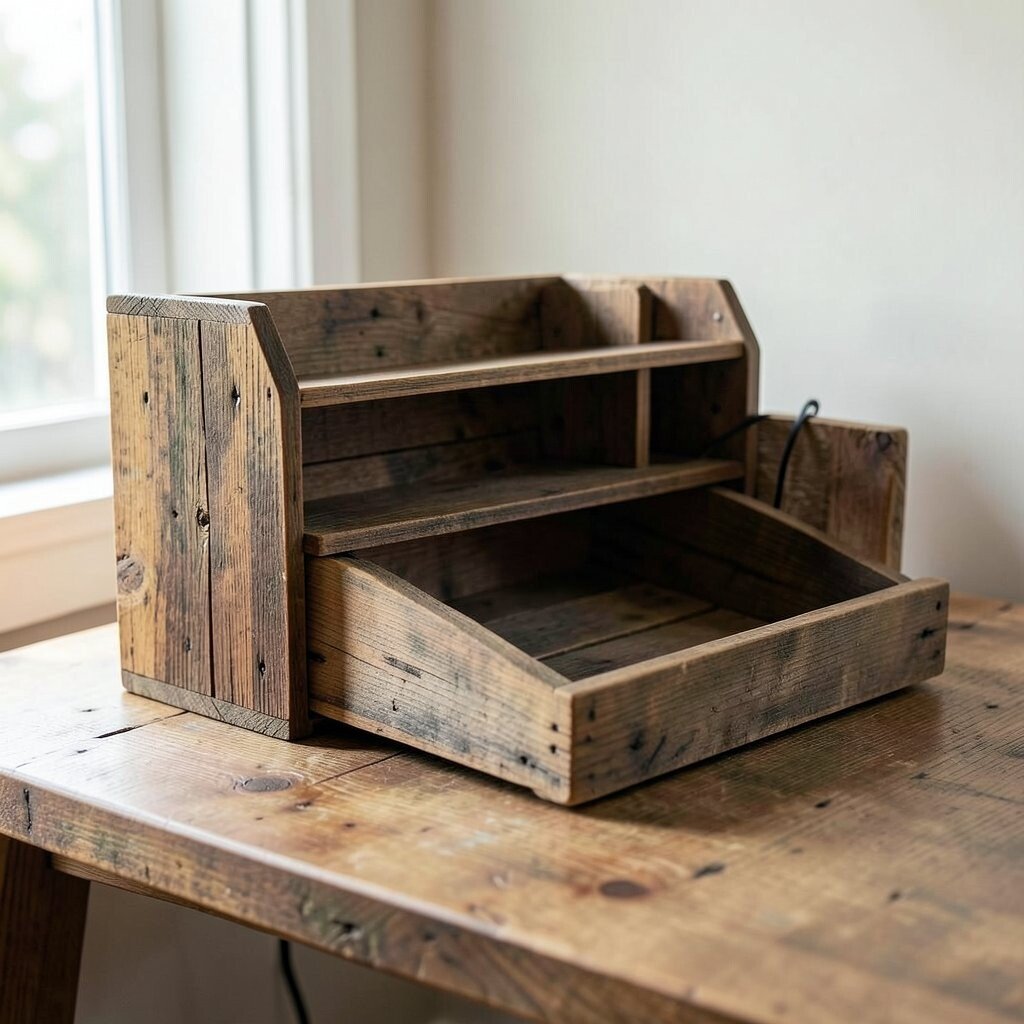
Imagine a desk top made calmer by a reclaimed wood organizer sitting right where you work. A lift-out tray gives you quick access to paper clips, batteries, or stamps without leaving everything visible.
Choose a tray design that slides smoothly so you can open it with one hand. Add compartments of different sizes so tiny things don’t float around and become distractions. If you like personalization, stamp a small pattern into the wood, or use a single contrasting accent strip of painted reclaimed slat.
12. Reclaimed Wood Shelf for Bathroom Linens
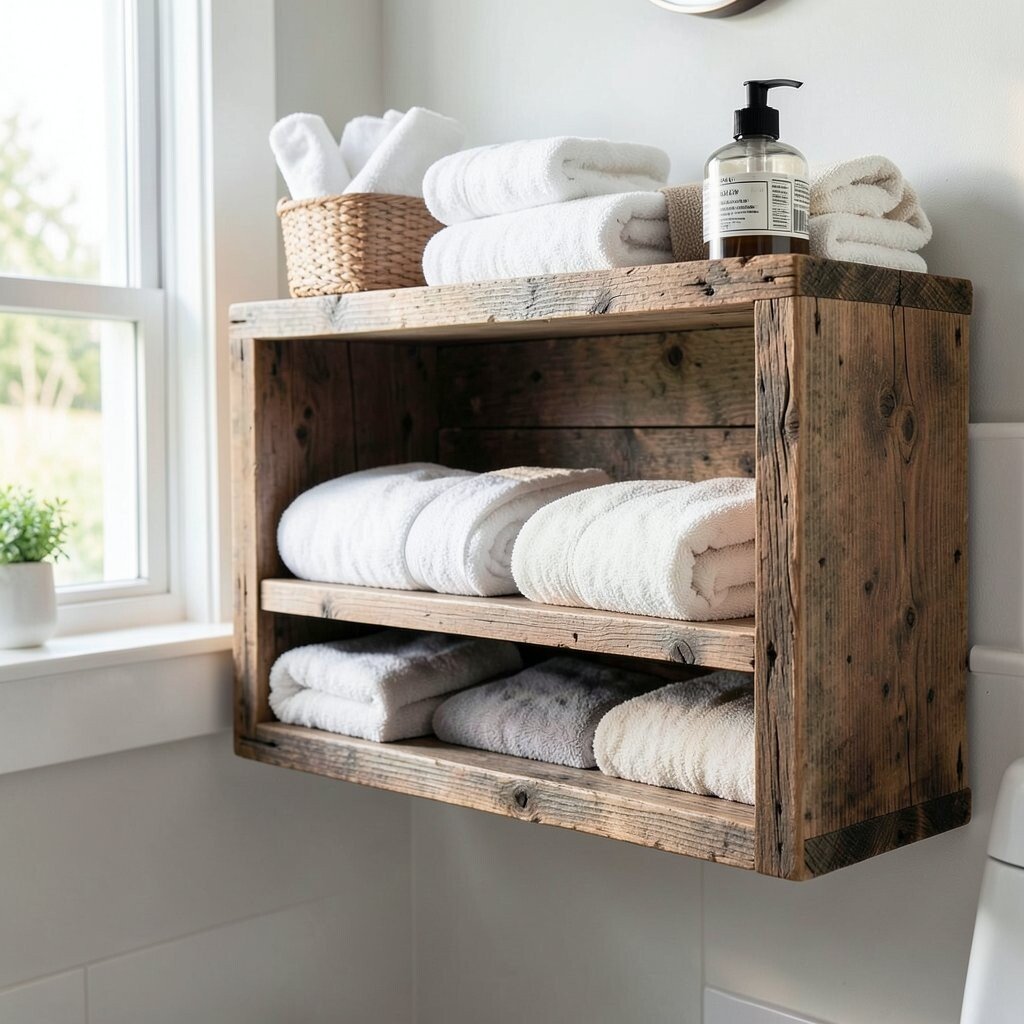
A reclaimed wood shelf in a bathroom can look spa-like, especially when it’s paired with smooth white towels. The wood grain adds comfort, and open storage helps you keep linens and extras under control.
Seal the wood well to handle steam and water splashes, then mount the shelf away from direct spray. Keep the items folded the same way so your shelf stays visually neat and easy to scan. Personalize by using woven baskets for lotions and cotton pads, which hides small clutter while keeping things accessible.
Cost-wise, you can often build this from one good salvage plank plus brackets. Look for wood with tight grain if you want it to resist moisture better over time.
13. Reclaimed Wood Spice Rack With Drawer Front Labels
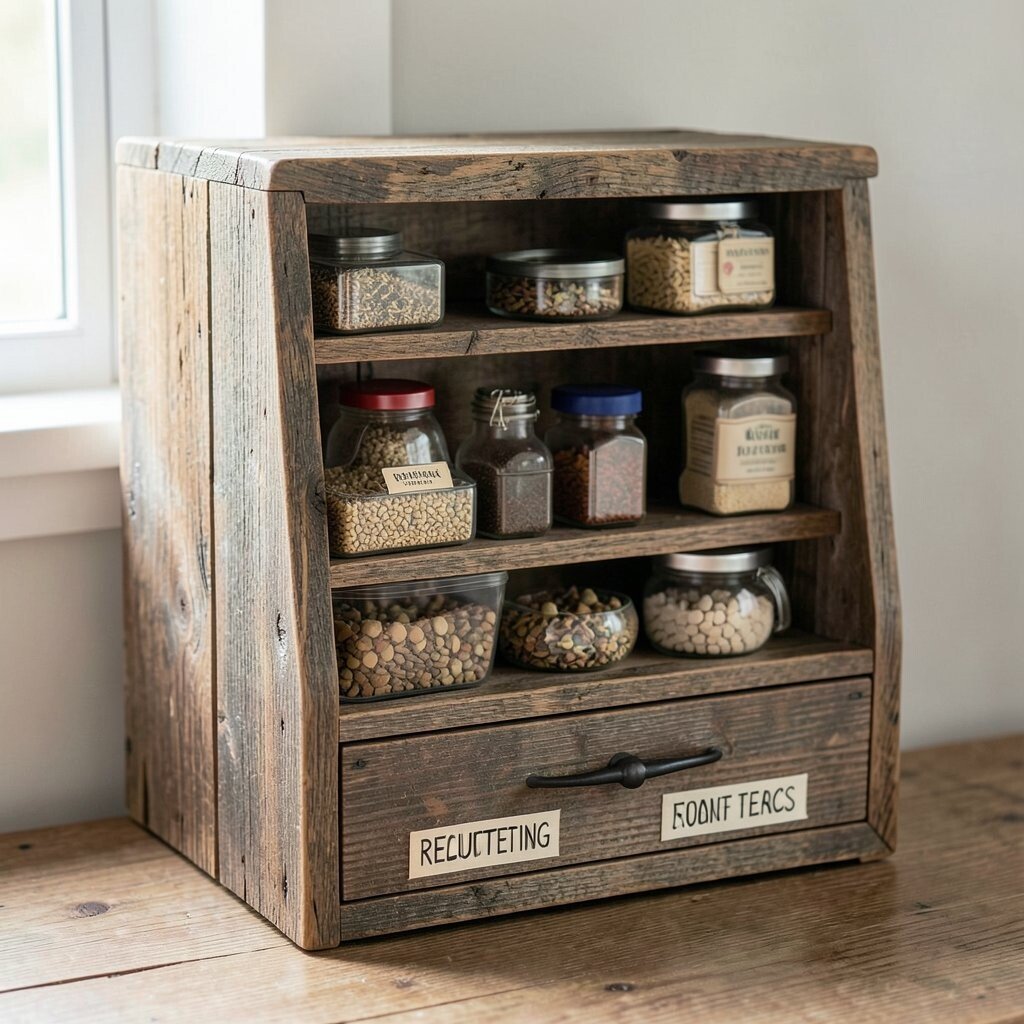
Picture small reclaimed compartments holding jars like a warm, organized gallery. Even when the kitchen is busy, a spice rack keeps ingredients from taking over counters.
Use a reclaimed back panel and lightweight dividers so you can fit standard jar sizes without wasting space. Add drawer-style fronts or a sliding top section for spices you don’t use daily. Keep a consistent jar style if you can, because matching shapes make the wood look even more polished.
For personalization, carve a small icon or simple number-free system into the wood so you can spot your most-used flavors quickly. Current trends favor tidy, open kitchen shelving with matching containers, so this idea fits right in.
14. Reclaimed Wood Storage Nook Above the Refrigerator
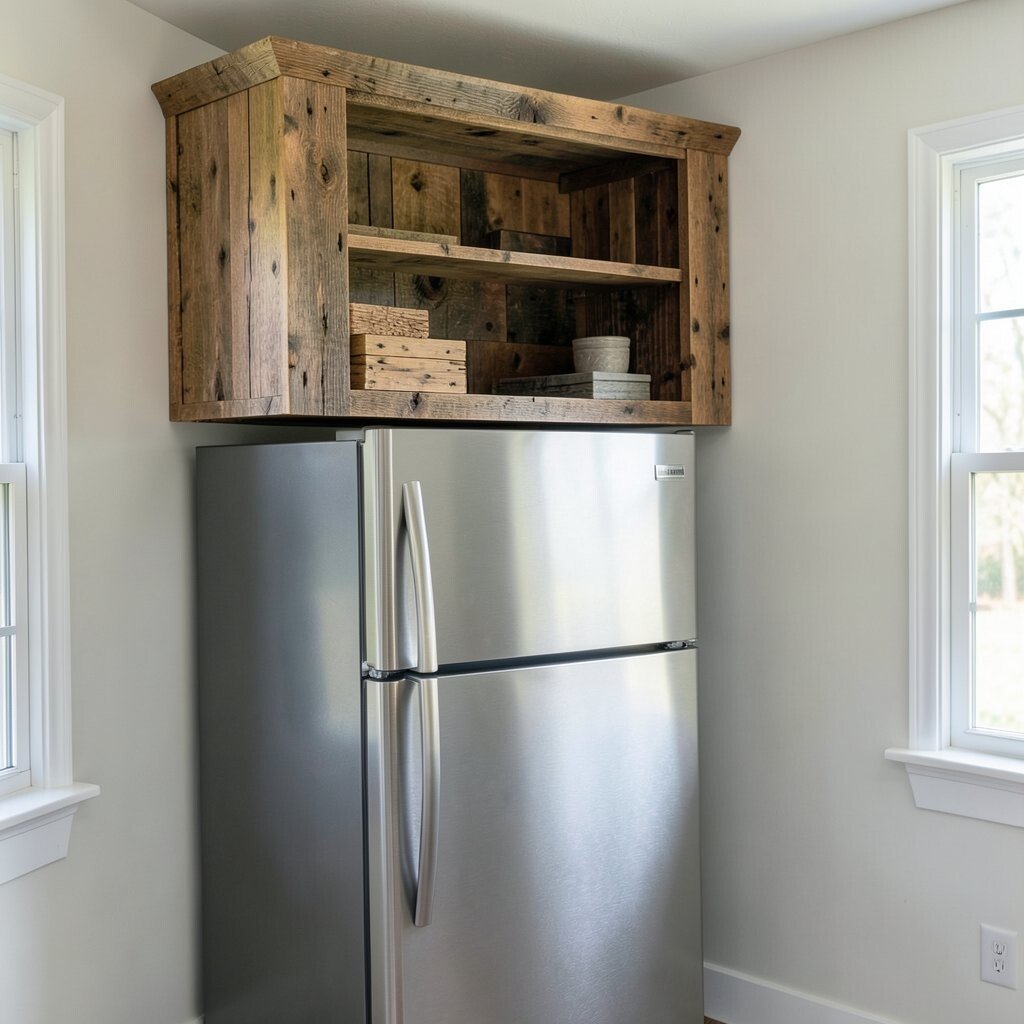
That awkward space above the fridge can become a clean storage nook instead of a dust catcher. Reclaimed wood panels create a warm “ceiling” look while you organize rarely used items below it.
Use a hinged door or a sliding cover so you can close it when guests visit. Store items in stackable bins so everything stays aligned, even if you forget for a day or two. Personalize by painting the interior in a soft neutral so the shelves feel brighter.
This idea is great for decluttering because it moves bulk storage off counters. If budget is tight, reuse existing cabinet hardware and just buy shelf brackets and weatherproof sealant.
15. Reclaimed Wood Bedside Table With Open Bottom Storage
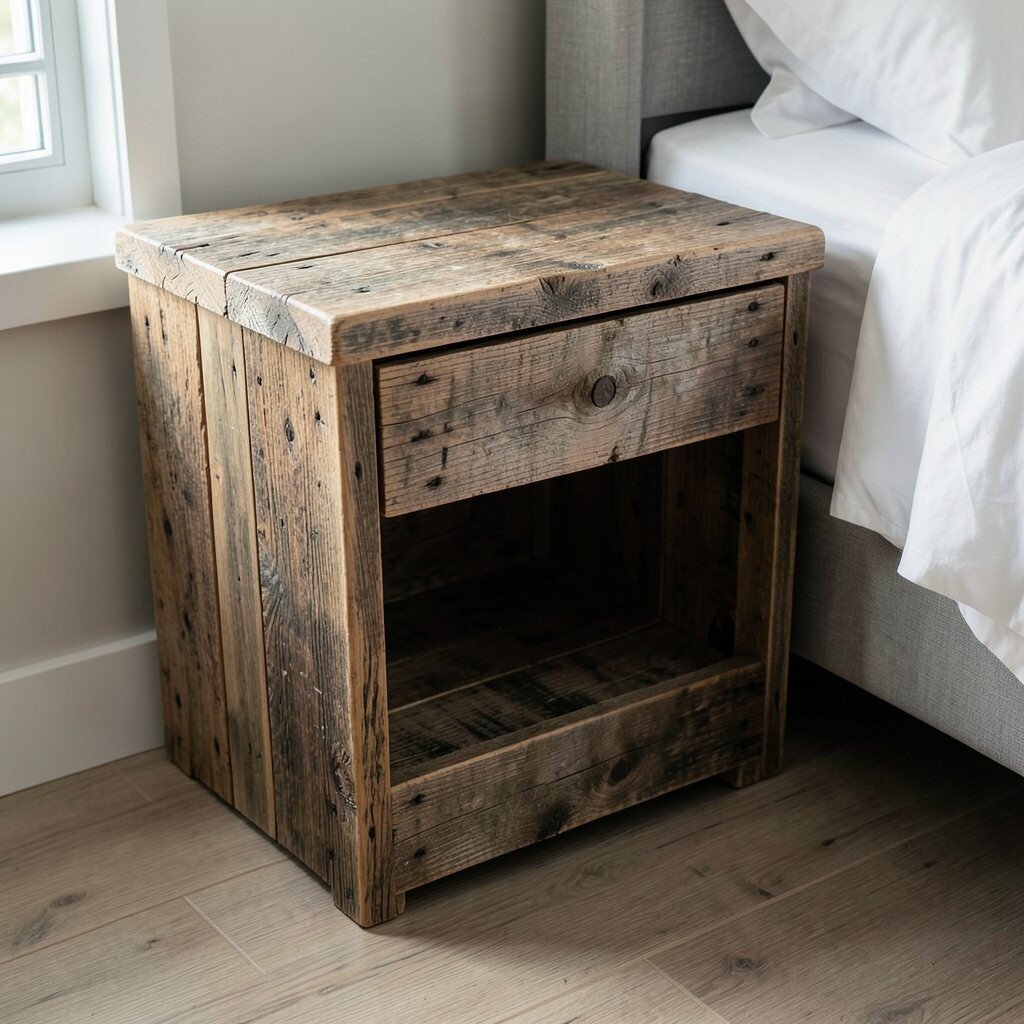
A reclaimed wood bedside table feels sturdy and comforting, especially when it has open storage underneath. The top gives you a landing spot for a lamp, and the bottom keeps books and spare chargers tucked in.
Choose an open design with a basket or two so smaller items stay contained. Keep frequently used items in the open section, while less-used supplies go in a lidded bin. Personalize the table legs with different stain tones or add a handle made from reclaimed metal for a subtle detail.
Cost can be managed by building a simple frame and using one or two reclaimed boards for the top. Current trends include warm wood tones and visible texture, so leaving the grain intact is a big win.
16. Reclaimed Wood Shelf and Basket Wall for Craft Supplies
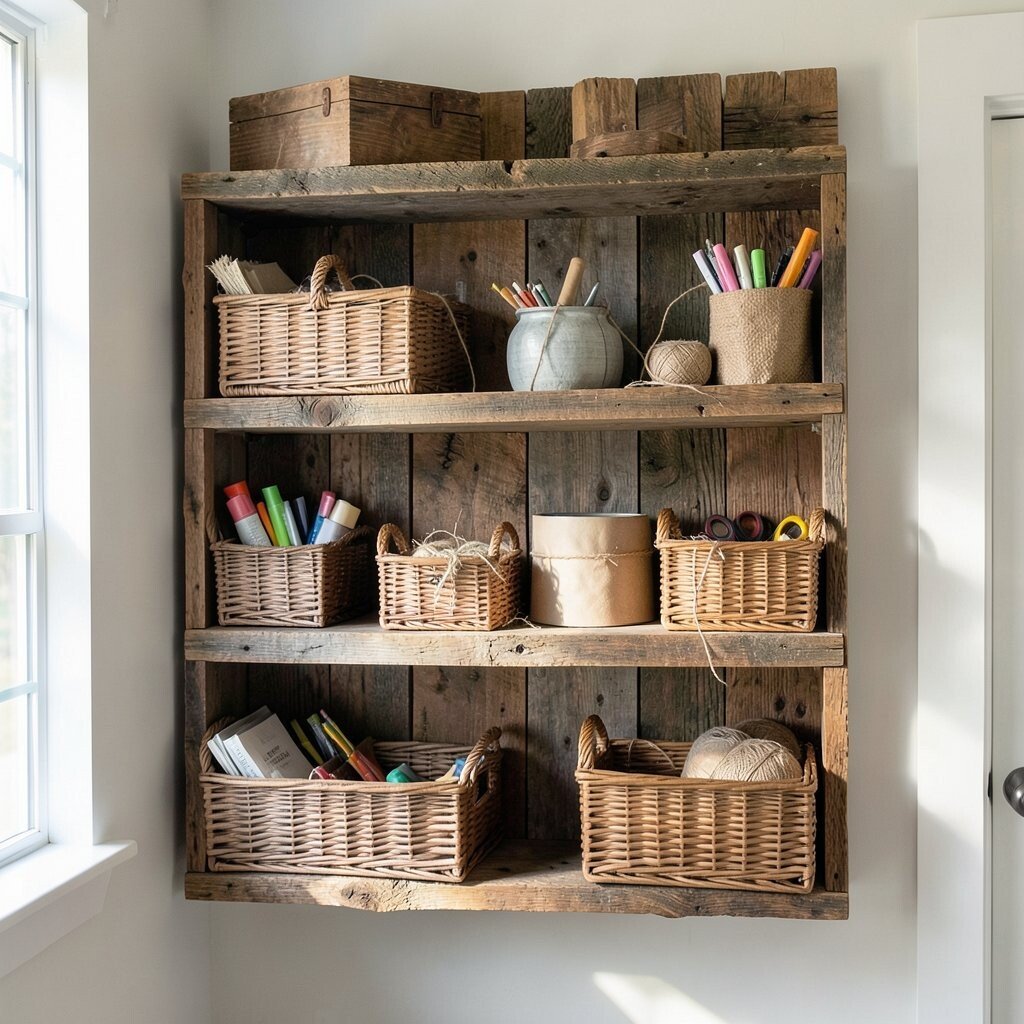
Craft rooms get messy fast, but reclaimed shelves can make supplies look organized and inviting. Use the shelves for larger materials and baskets for paper, ribbons, and tools you reach for often.
Sort by category and keep each category in one basket so you always know where things belong. Add a small drawer strip for scissors and adhesive so they don’t vanish into the bottom of a bin. Personalize by mixing basket colors with the same theme as your room, like natural woven textures and muted canvas.
For cost, start with one wall section and expand over time as your needs grow. Salvaged boards are often cheaper than new lumber, and you can add hardware only where it matters most.
17. Reclaimed Wood Entryway Shelf With Drop Zone Hooks
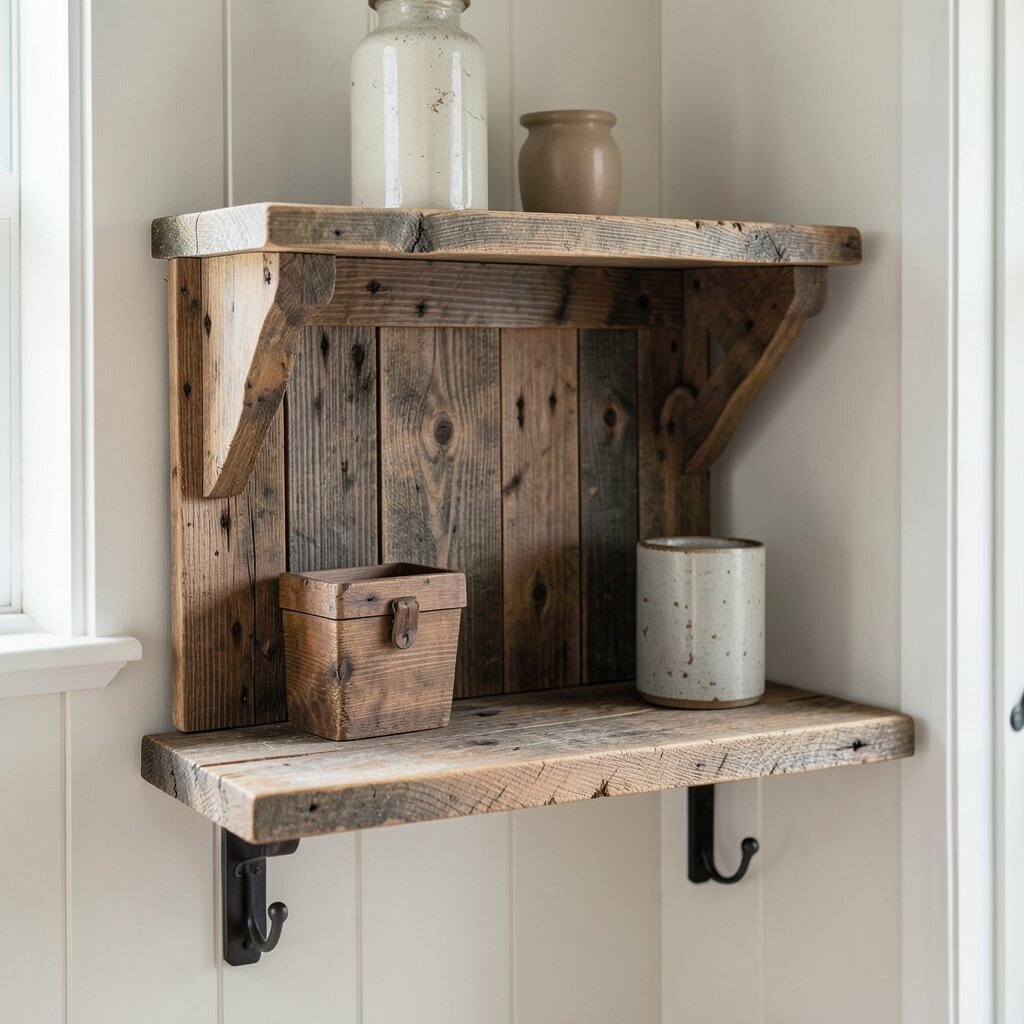
In a hallway entryway, a reclaimed wood shelf with hooks makes daily routines feel easier. Drop keys, sunglasses, and mail on top while coats hang in neat reach.
Use a small tray under the hooks for loose items so they don’t spill onto the floor. Install hooks at two heights, so adults and kids can hang items without fuss. Personalize it with a weathered finish and a small wood sign that reflects your family style.
This decluttering solution matches a current focus on “small zones” where each area handles one job. Cost is reasonable when you use one main board and buy only brackets, hooks, and a couple of storage trays.
18. Reclaimed Wood Bookshelf With Adjustable Crate Levels
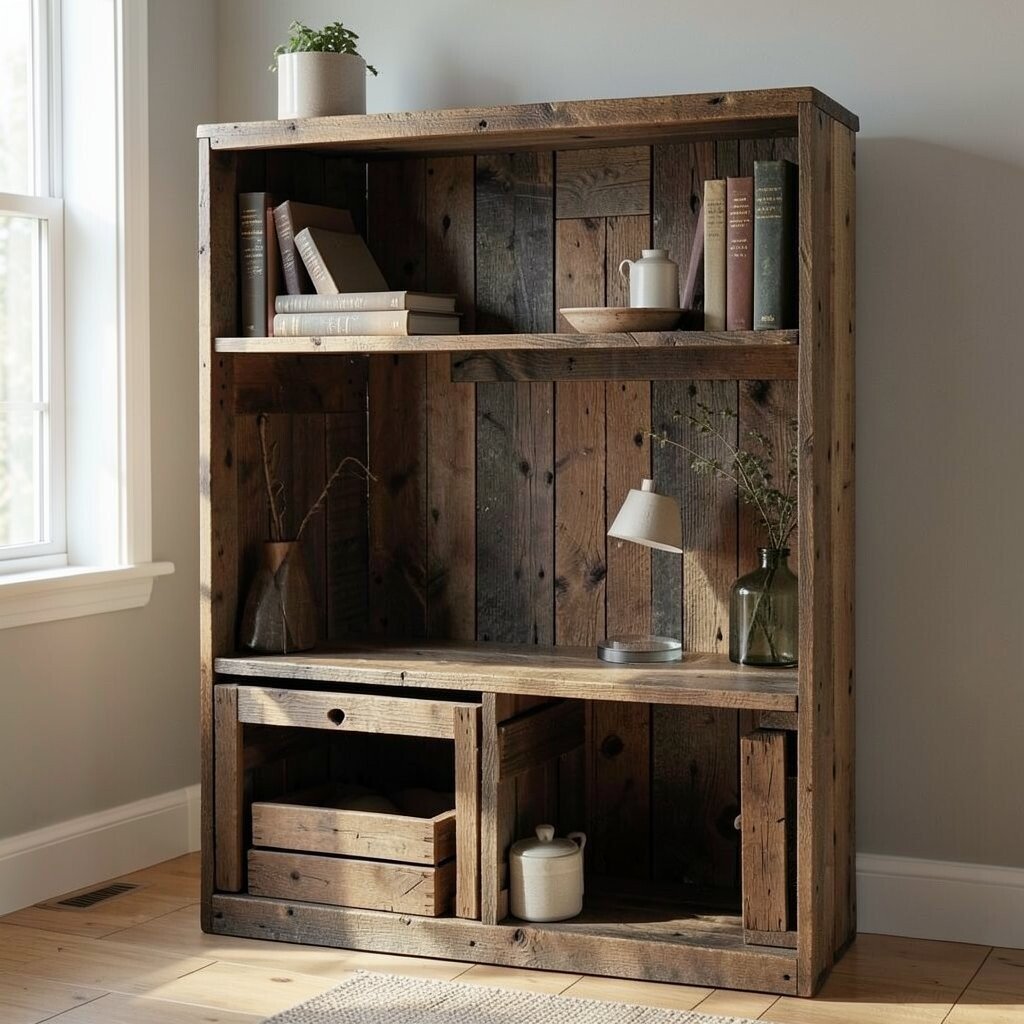
A bookshelf built from reclaimed wood looks like a strong, character-filled backbone for your room. By using crate-like shelves with adjustable levels, you can change the layout as your collection grows.
Build the unit so you can move support pegs or brackets, then set crates on top as book stops. Keep heavier books on lower sections for balance, and reserve higher spots for lighter decor. Personalize by mixing a few crate sizes so the shelf looks artsy instead of perfectly uniform.
This is a smart trend-driven choice because many people now want storage that adapts to life changes. Cost can be controlled by using salvaged wood for the frame while purchasing only the adjustable hardware and a few crates if needed.
19. Reclaimed Wood Wardrobe Rod With Folding Drawer Storage
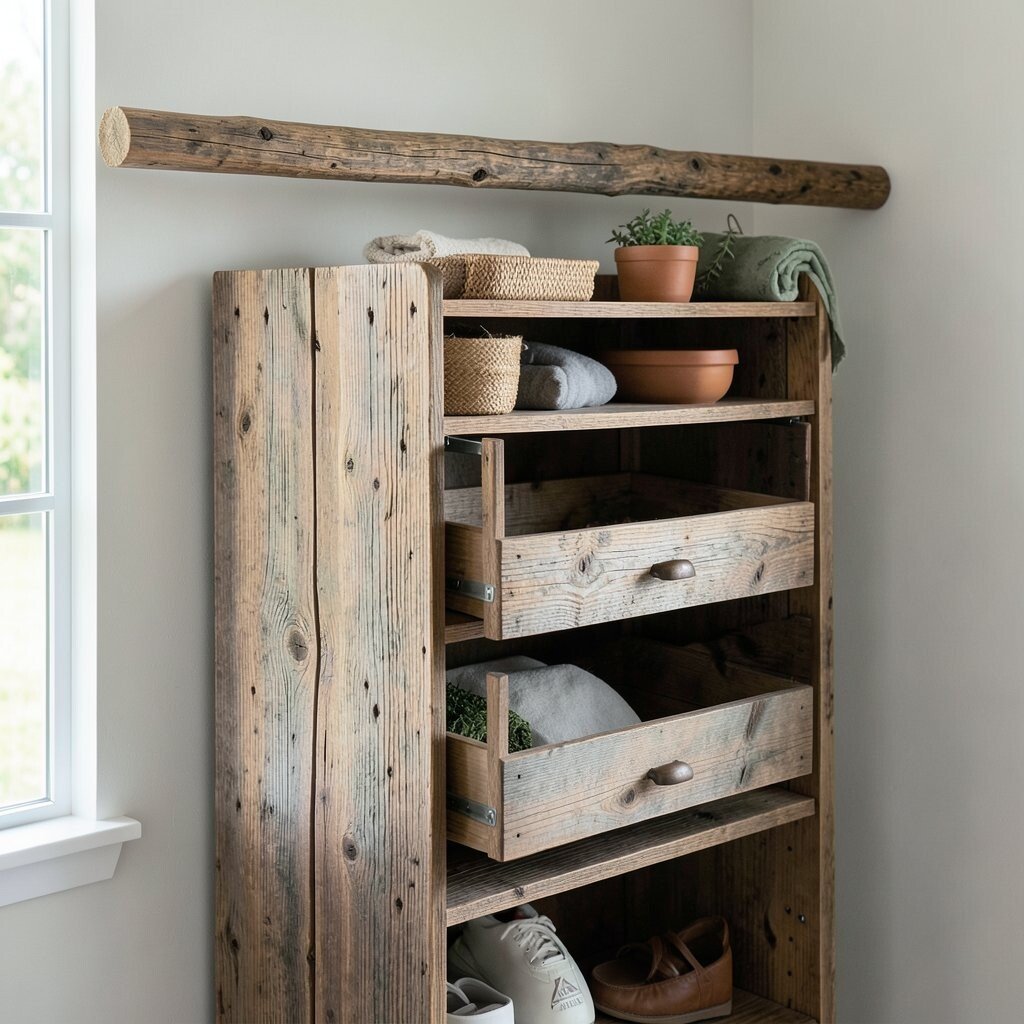
Imagine a reclaimed wood rail above a built-in area, like a wardrobe wall with a warm, rustic top. Under the rail, folding drawer spaces hold socks, scarves, and folded shirts in a neat stack.
To make it practical, measure your closet depth and build drawers that slide smoothly without jamming. Use breathable drawer liners so fabrics stay fresh, and keep the top shelf for seasonal items you don’t need daily. Personalize by distressing the wood lightly for character, then sealing it so it stays clean and easy to wipe.
Considering cost, you can reuse an old rod and focus your budget on drawers, slides, and wood sealant. This setup helps decluttering because it keeps “almost-ready” items off chairs and floors, where clutter loves to build.