Walls are like pages, and art turns them into stories. When you choose local work, every glance feels personal.
1. Start With a Community Map Accent
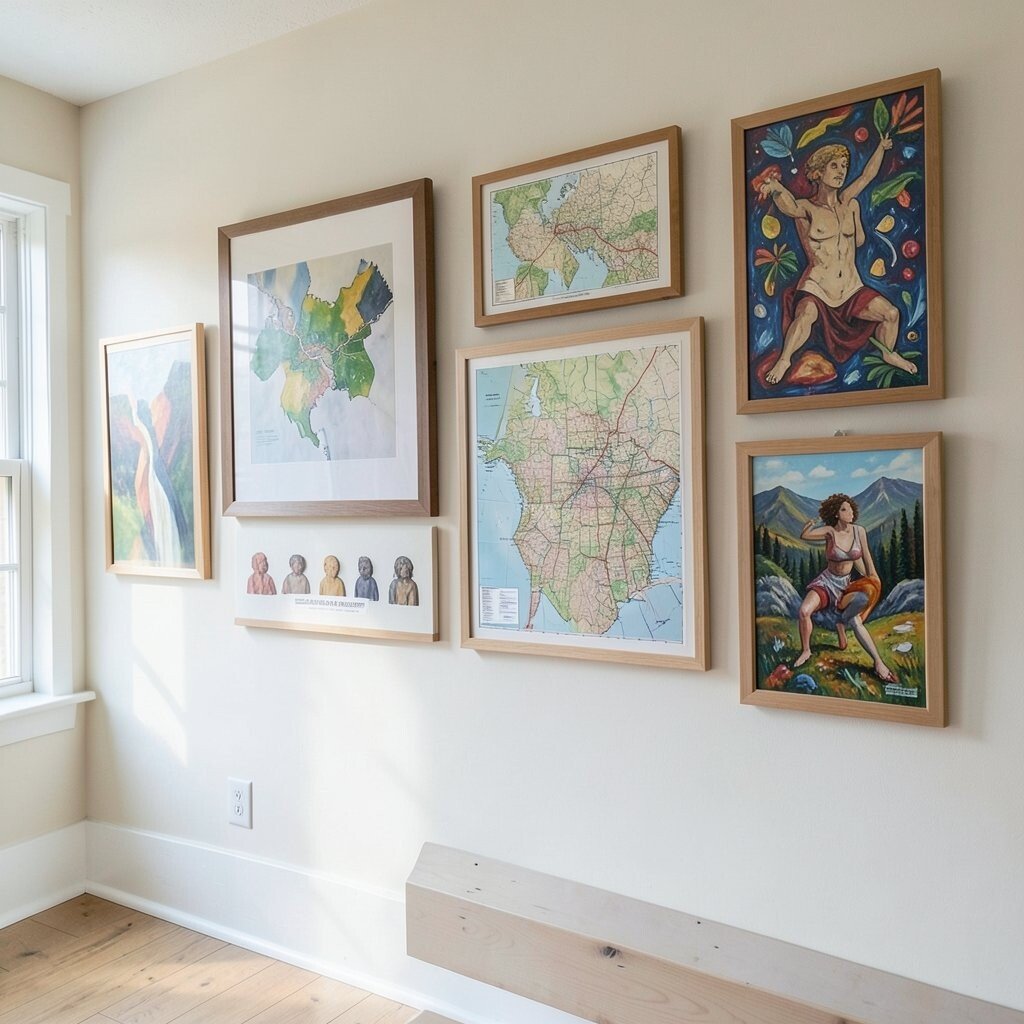
Pick a small wall area and anchor the layout with a visual map theme. You can frame local artist prints that relate to nearby neighborhoods, landmarks, or street corners.
Arrange the map images in the center, then build outward with portraits, landscapes, or abstract pieces. This setup feels cohesive because the theme guides the eye, and it also makes your wall a conversation starter. Use easy measures, like painter’s tape, so spacing stays neat while you swap frame sizes.
2. Mix Sizes With a Loose Spiral
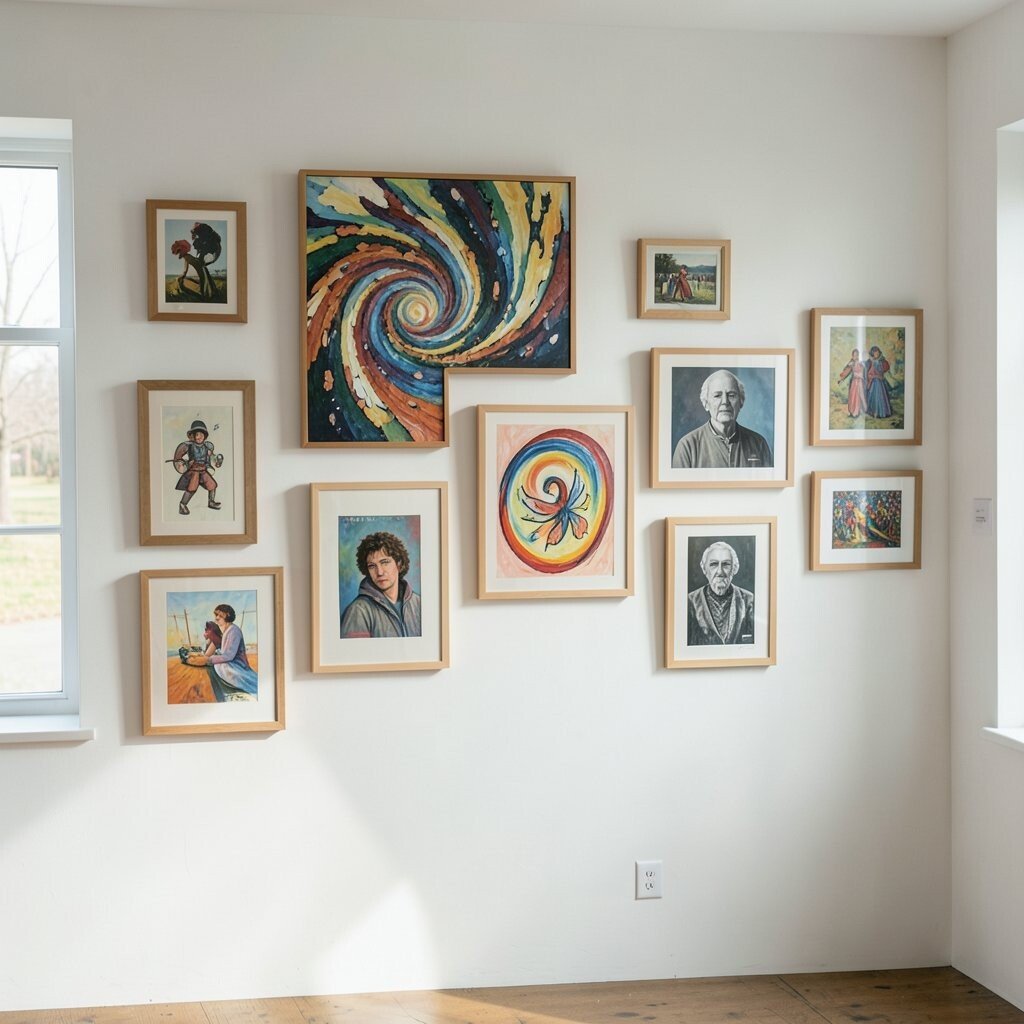
Choose one larger artwork as the “center,” then let the rest curve around it in a relaxed spiral. A gallery wall like this can highlight both bold and delicate work without making the display look crowded.
Keep the frames varied but aligned on a single baseline for tidy balance. Local artists often have different canvas or print proportions, and a spiral layout helps them look intentionally paired. Try using matte black frames for a modern vibe, or go warm with wood so the pieces feel inviting.
Before you hang anything, lay frames on the floor and measure the distances between edges. Aim for comfortable viewing heights so most people naturally look at the art rather than the floor. This approach also lets you add future finds without needing a full redo, which is great for cost control.
3. Use One Color Story for Instant Harmony
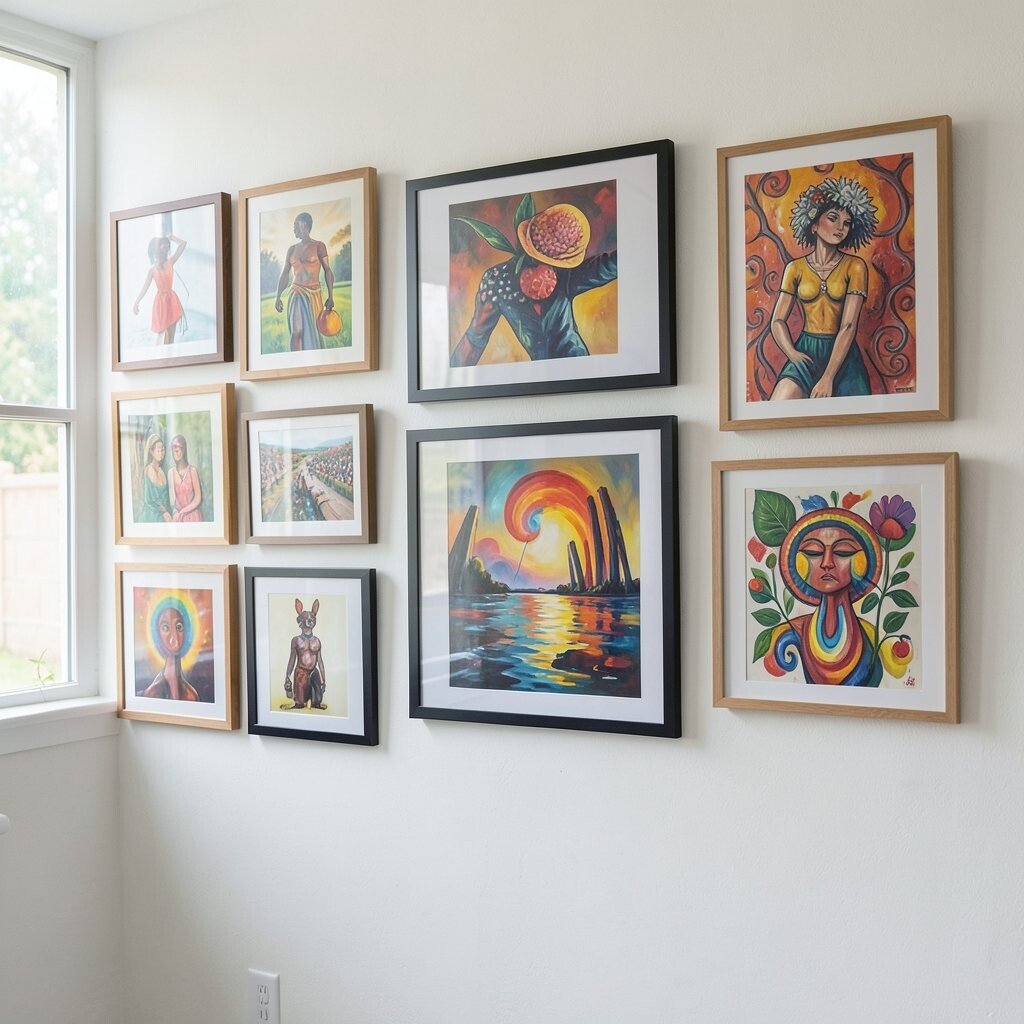
Pick a color you love, then choose local pieces that share it in different ways. For example, you might collect artworks that feature indigo, sage, or warm terracotta tones.
When the colors echo each other, the wall looks calm even if the artists use different styles. This kind of harmony makes each piece stand out because the whole arrangement feels connected. Try placing the most colorful work near eye level so the palette feels like a deliberate spotlight.
To personalize the look, add one small framed detail that matches the room, like a photo of a street festival or a sketch of a local plant. If you are budget-aware, swap new frames for thrifted ones and refinish them with paint. Keep the artwork protected with light-safe glass or acrylic for long-lasting color.
4. Create a Vertical Line for Tall Rooms
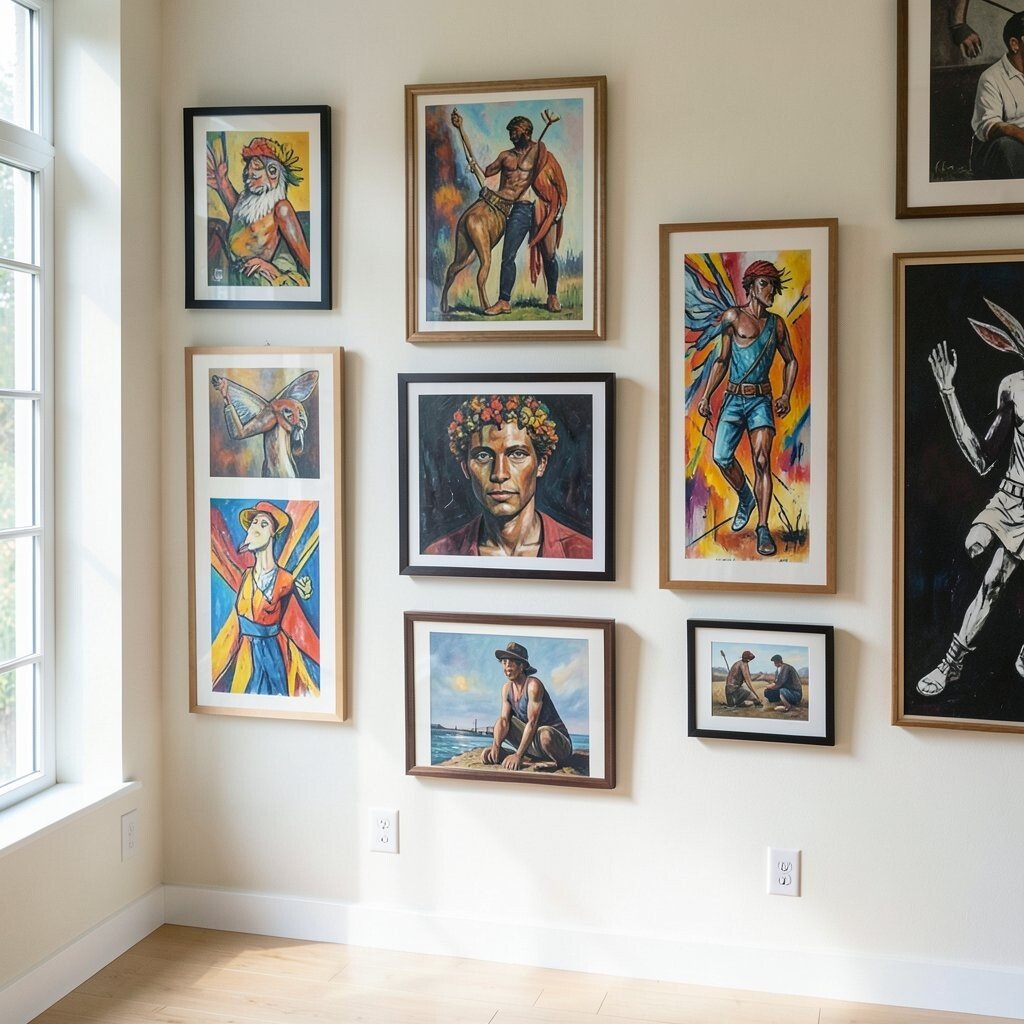
If your space has high ceilings, use a vertical gallery wall that climbs upward. Long-format prints or slim canvases from local creators can create a “light ladder” effect.
Choose frames with consistent widths so the vertical path feels smooth. This layout is helpful in hallways and entryways because people can follow the art as they walk. Measure the top and bottom spacing first, then use a level line to keep each piece from drifting.
5. Pair Art With Local Photography

Combine paintings with photography from local studios to add variety. You might place a portrait series next to a scenic photo, using matching frame colors to hold everything together.
This blend adds texture because prints feel crisp while paintings feel rich and layered. It also helps you showcase more artists from your community without making the wall look too busy. Choose one shared element, like “gold hour” lighting or a repeated subject, so the pairing feels intentional.
To keep things practical, use simple poster frames for photos and standard frames for paintings. When cost matters, start with prints from smaller artists and upgrade frames later if you want. Add a small caption card for each photographer if you want extra meaning without clutter.
6. Build a “Salon” Grid With Gentle Gaps
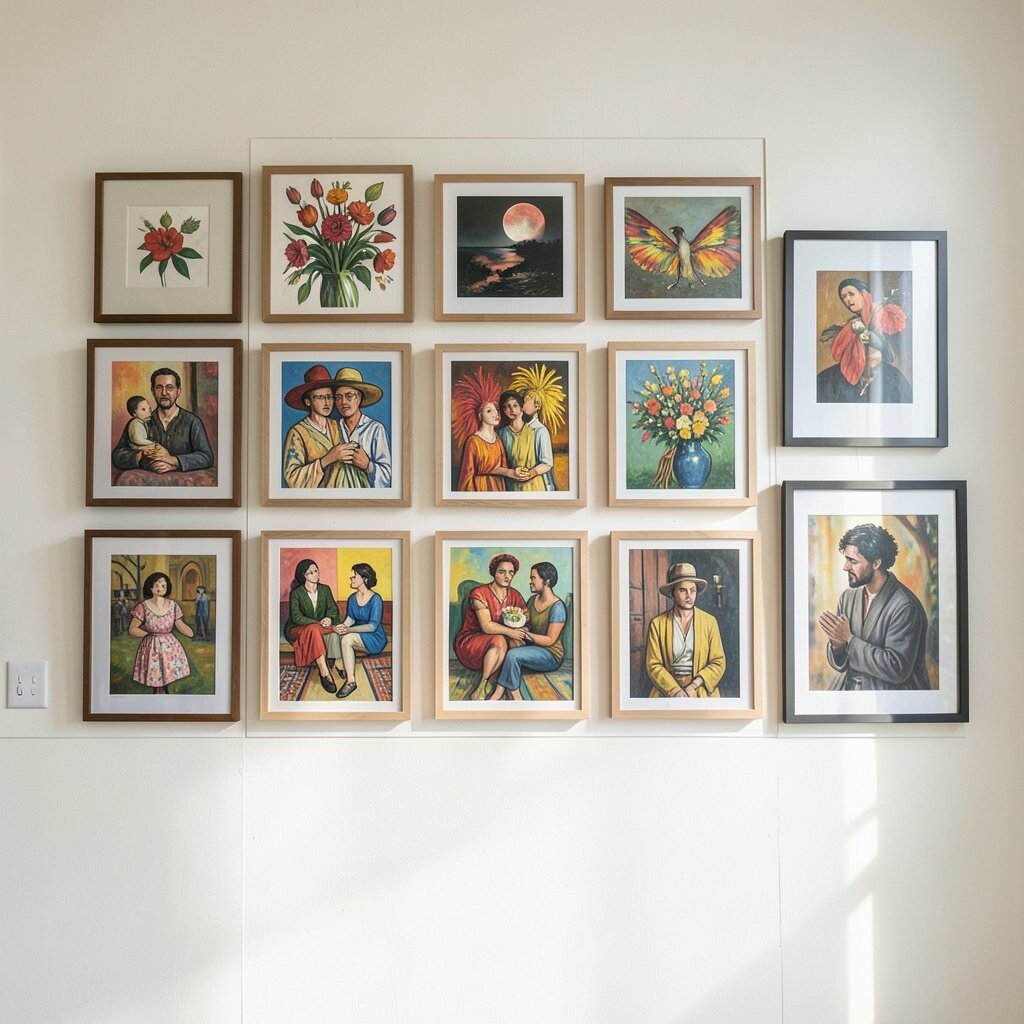
A classic salon-style grid looks elegant while still letting local art shine. Use multiple frames of different sizes, then keep the gaps small and even.
Gentle gaps make the wall feel airy, which is a current trend in many modern interiors. Choose one consistent mat color so every piece feels like part of the same collection. This layout works especially well for local portrait artists because faces look beautiful when arranged with rhythm.
7. Frame Letters, Poems, or Signs From Neighborhood Artists

Some local creators make typography art, hand-lettered lyrics, or neighborhood-inspired signs. Framing these pieces adds warmth because they feel like the voice of your community.
Place letter art near places where you pause, like by a couch or dining area. The benefit is emotional, since words can make a home feel lived in and thoughtful. Keep spacing generous so the text is easy to read from a normal standing distance.
To personalize, mix one letter piece with one visual piece so the wall doesn’t feel too theme-heavy. If you are watching your budget, request small works on paper rather than large canvases. Use archival-quality mats and UV-protective covers if the art will get strong daylight.
8. Try a “Floating Frame” Look With Mirrored Spacers
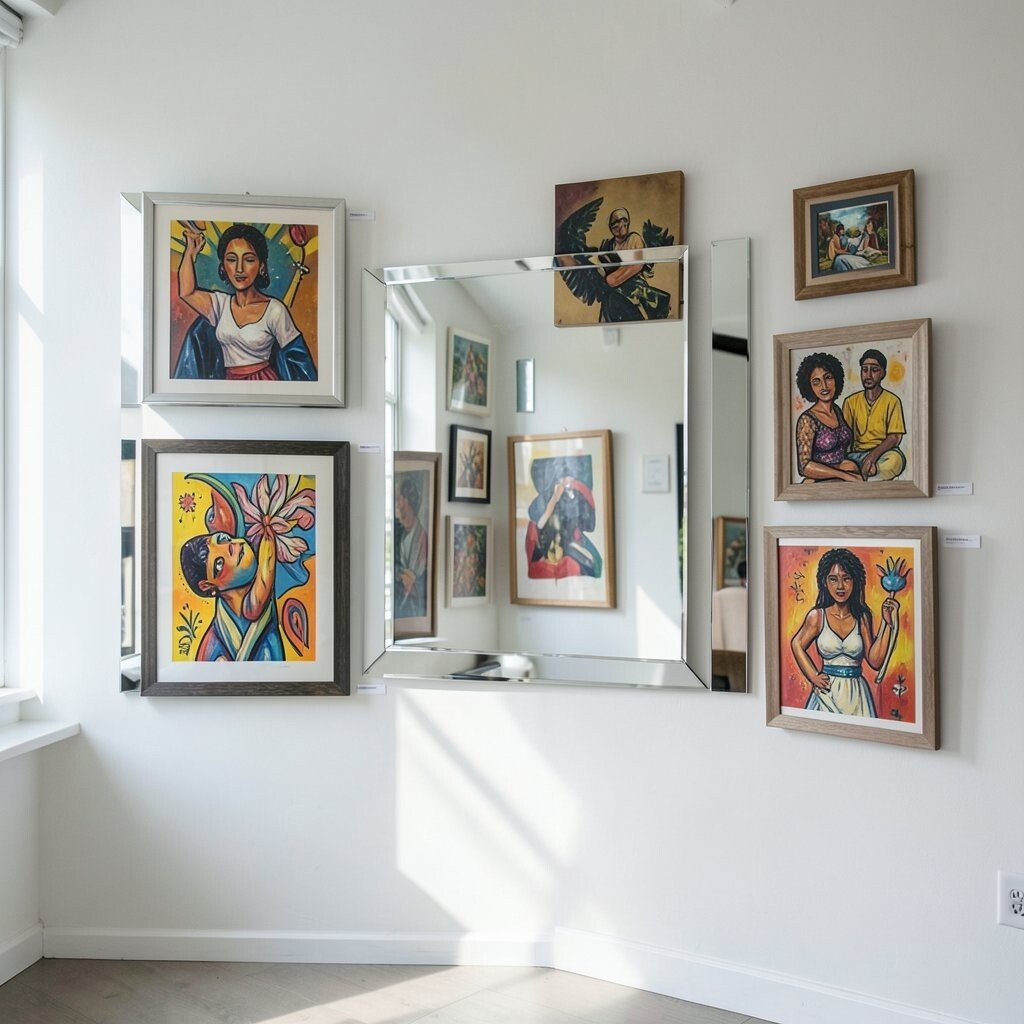
A floating effect can make artworks feel like they hover in space. Use spacers between frames or choose shadowbox frames that add depth.
This style is great for local collage artists, metalwork creators, and mixed-media makers. The benefit is that you catch more detail, like layered paper edges or textured brushwork. Use consistent hardware and check alignment so the wall still feels tidy even with added depth.
9. Highlight One Artist in a Rotating Mini Collection

Pick one local artist you love and build a smaller gallery wall that celebrates their range. You can include different works that match a theme, like seasonal landscapes or a recurring character.
This approach makes your display feel like a personal exhibit. It also helps you keep cost down because you can buy one piece at a time and swap them in over months. Use removable hanging hooks so you can change the layout without damaging walls.
To personalize, add one frame that holds a small studio photo or sketch made by the artist. If you want a fresh look, rearrange the order slightly each time you add a new work. Guests will notice the care you put into curating rather than just collecting.
10. Make a Themed Row for a Bathroom or Kitchen
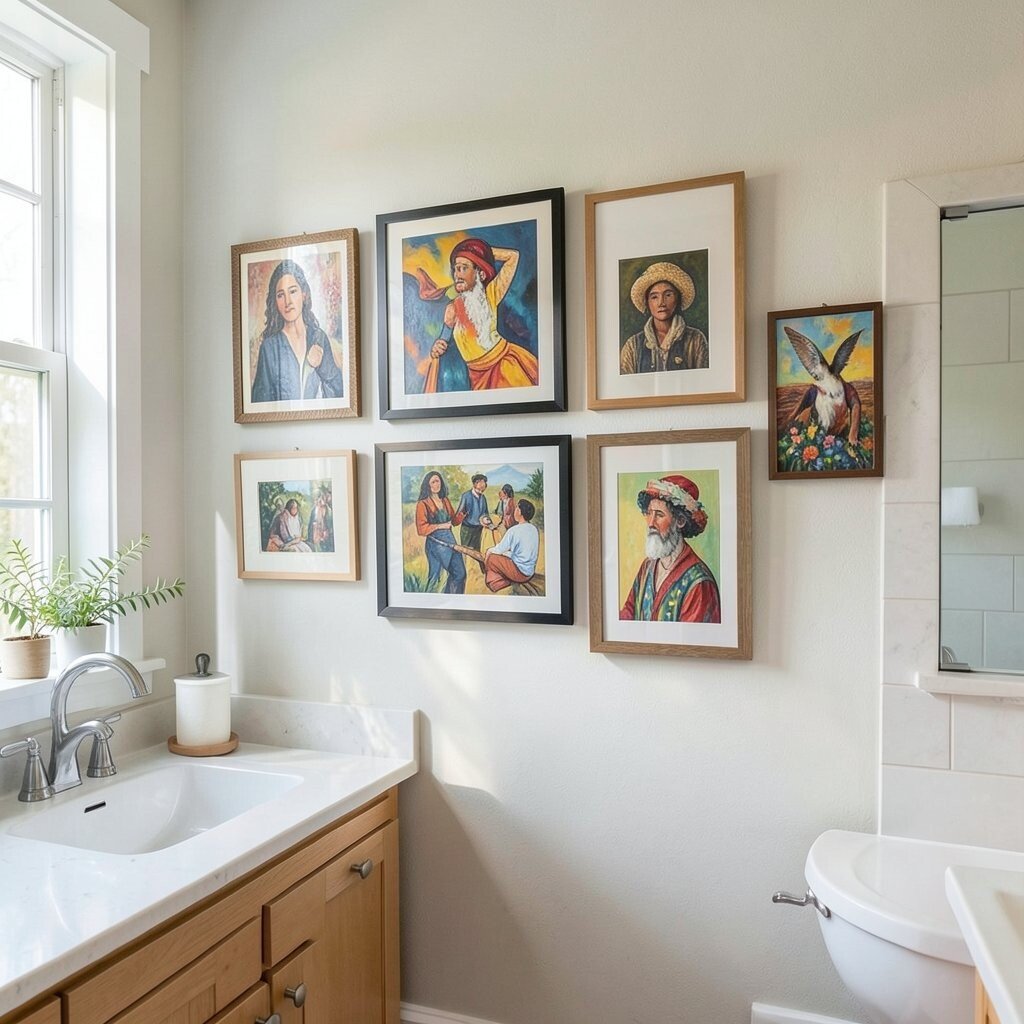
Even small rooms can host art without feeling heavy. A themed row works well in a kitchen or bathroom, using framed local prints that match the room’s vibe.
Look for pieces that feature plants, coastal scenes, or bold patterns that add energy. The benefit is that these areas often need color and personality, and art is an easy upgrade. Keep frames thin and sealed if the room gets lots of steam so the display stays crisp.
11. Use Black-and-White Photography for a Clean, Modern Look
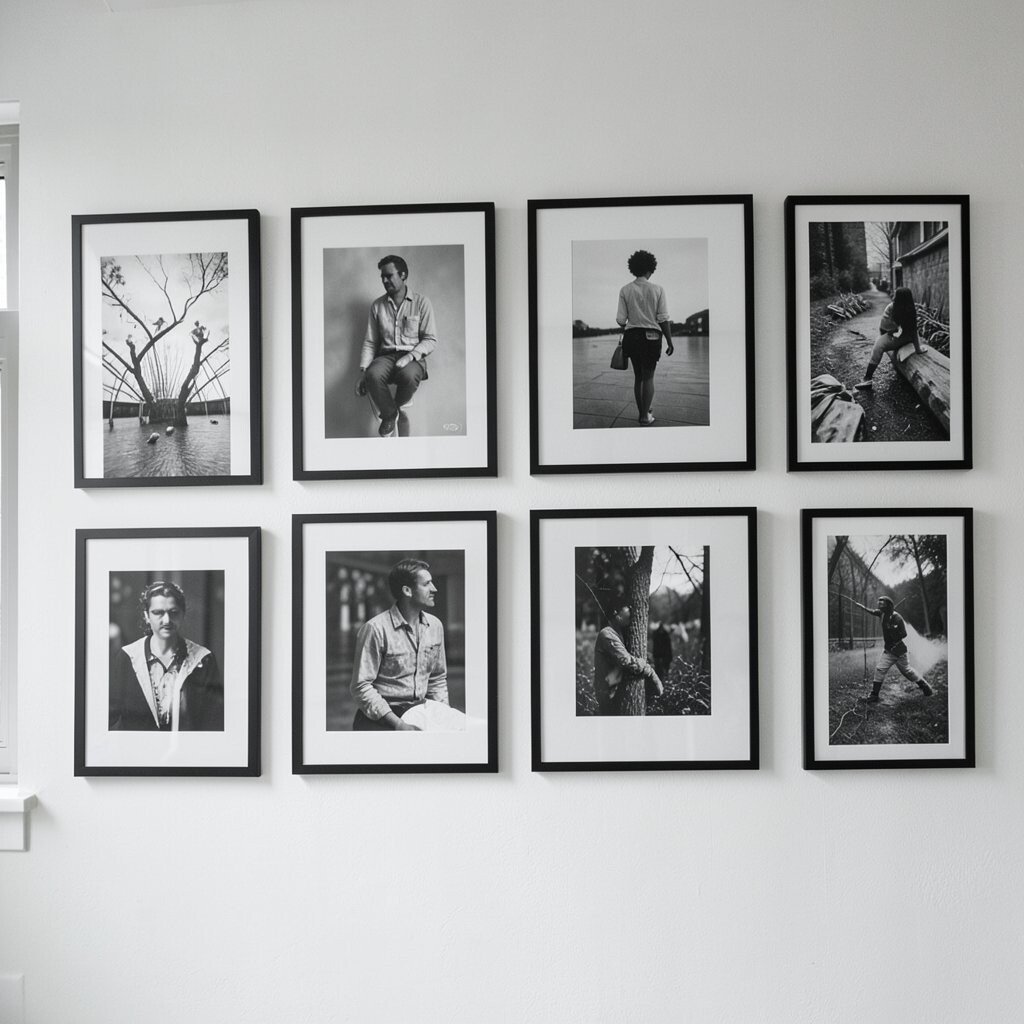
Black-and-white work from local photographers adds instant style. The contrast can make a gallery wall look sharp even when you use many different frame sizes.
This theme is popular because it feels timeless and it works with most interior colors. It also makes it easier to mix artists since the shared palette reduces visual noise. For practical planning, keep the mat color consistent and choose a uniform frame finish, like matte or satin.
Personalize by selecting one photograph that matches a cherished memory, such as a festival or street mural you love. If cost is a concern, start with smaller prints or zines that photographers sell at affordable sizes. Protect the art with glass that blocks UV light to keep details crisp over time.
12. Arrange Works Around a Mirror as a Style Hub

A mirror can act like a quiet curator, doubling the art’s presence. Hang a medium mirror in the center, then frame local artworks around it in a balanced pattern.
This creates a benefit beyond looks, because mirrors bounce light and can make rooms feel brighter. It also gives you flexible placement, since the mirror sets a natural focal point. Choose local pieces that complement the mirror style, like sleek frames for modern work or ornate frames for vintage art.
13. Create a “Seasonal Swap” Wall With Velcro Hanging Strips
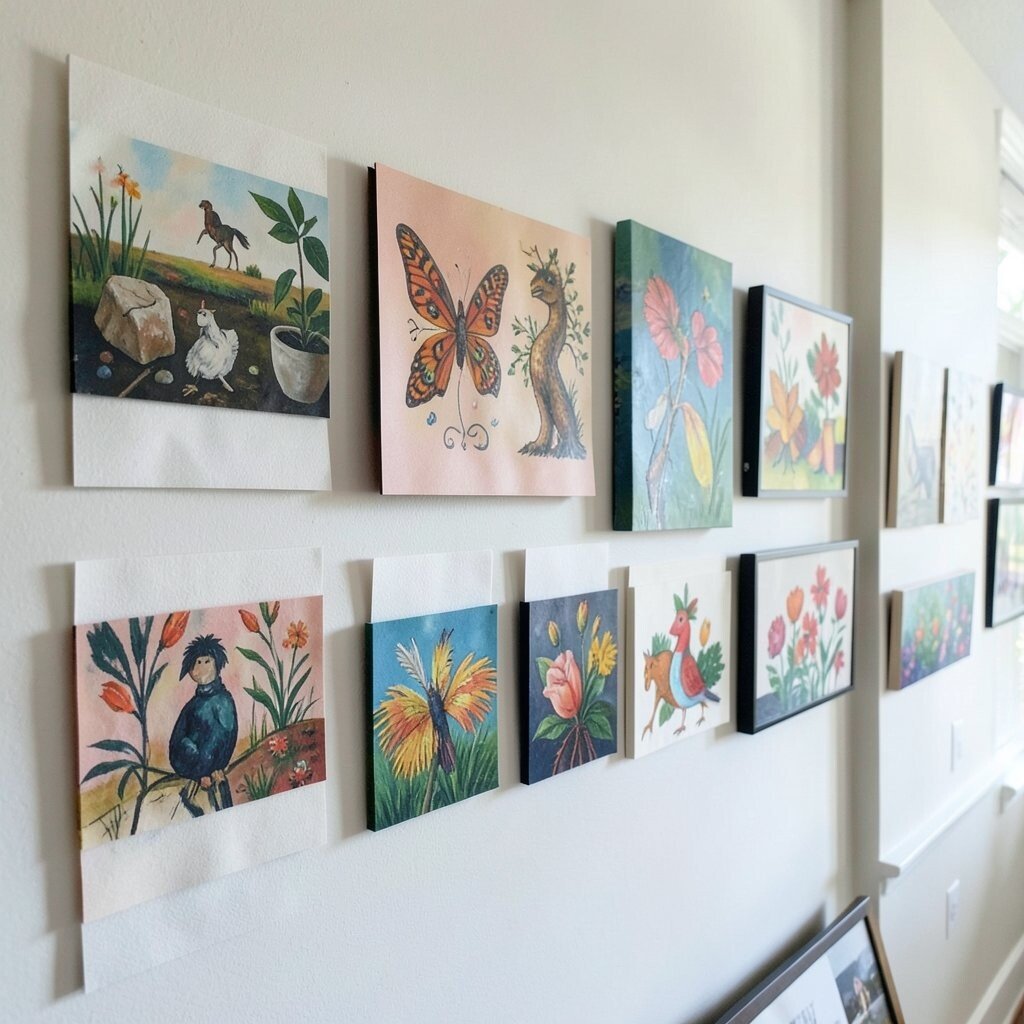
Set up a wall with frames that are easy to change, so you can rotate local art by season. Use hanging strips designed for quick swap setups, and keep your frames lightweight if you can.
This idea is great for people who love variety but do not want to buy all at once. The benefit is that your wall stays fresh, and local artists get continued visibility. Choose a consistent frame style, then swap the artwork whenever an artist you love drops a new series.
To personalize, keep a “signature” look by using the same mat color and spacing every time you rotate. If you are mindful about cost, buy one frame set and reuse it, even if the artwork changes often. Add a small reminder card near the wall so you remember dates, artists, and themes.
14. Use a Limited Palette of Materials Like Wood, Linen, and Metal

Instead of matching only colors, match materials across the frame choices. Combine light wood frames, linen mats, and a few small metal accents for a cohesive feel.
This trend toward natural materials makes local art feel grounded and warm. It also offers practical benefits because similar materials wear in similar ways over time, so the wall stays consistent. Search for local frame makers or restoration services if you want a more personal connection.
Personalize by selecting artwork that shares the room’s material vibe, like earthy landscapes with wood frames or crisp graphic prints with linen mats. For cost considerations, thrift frames can be a win, especially if you plan to sand and paint them. Keep the artwork from sticking to the glass by using spacers or proper hanging methods.
15. Try a Story Wall With Artwork That Follows a Timeline
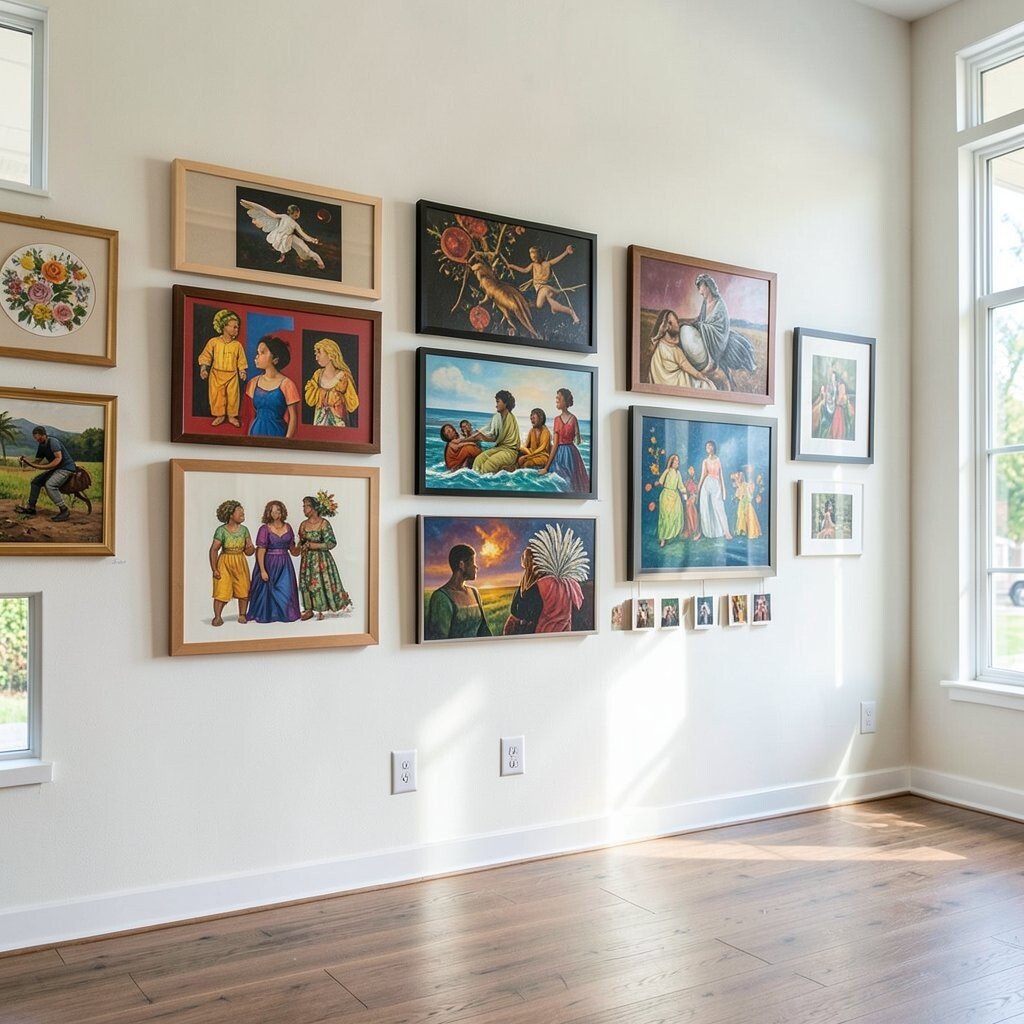
Build a gallery wall that tells a story, using local works that reflect a shared journey. You might use early sketches, finished pieces, and even process photos if artists offer them.
This setup gives your wall meaning, not just decoration. Guests will linger longer because they can sense a path through the pieces rather than a random scatter. Start with works that show the earliest mood, then move toward more detailed or bold work as your timeline progresses.
To make it practical, use consistent frame sizes for the “chapters” and vary only the artwork. If cost is tight, focus on works on paper and collectible editions that artists sell in smaller batches. Ask the artists if they have stories behind each piece, then you can include a short note on the back if you do not want labels on the wall.
16. Add Texture With Shadowbox Frames for Mixed Media
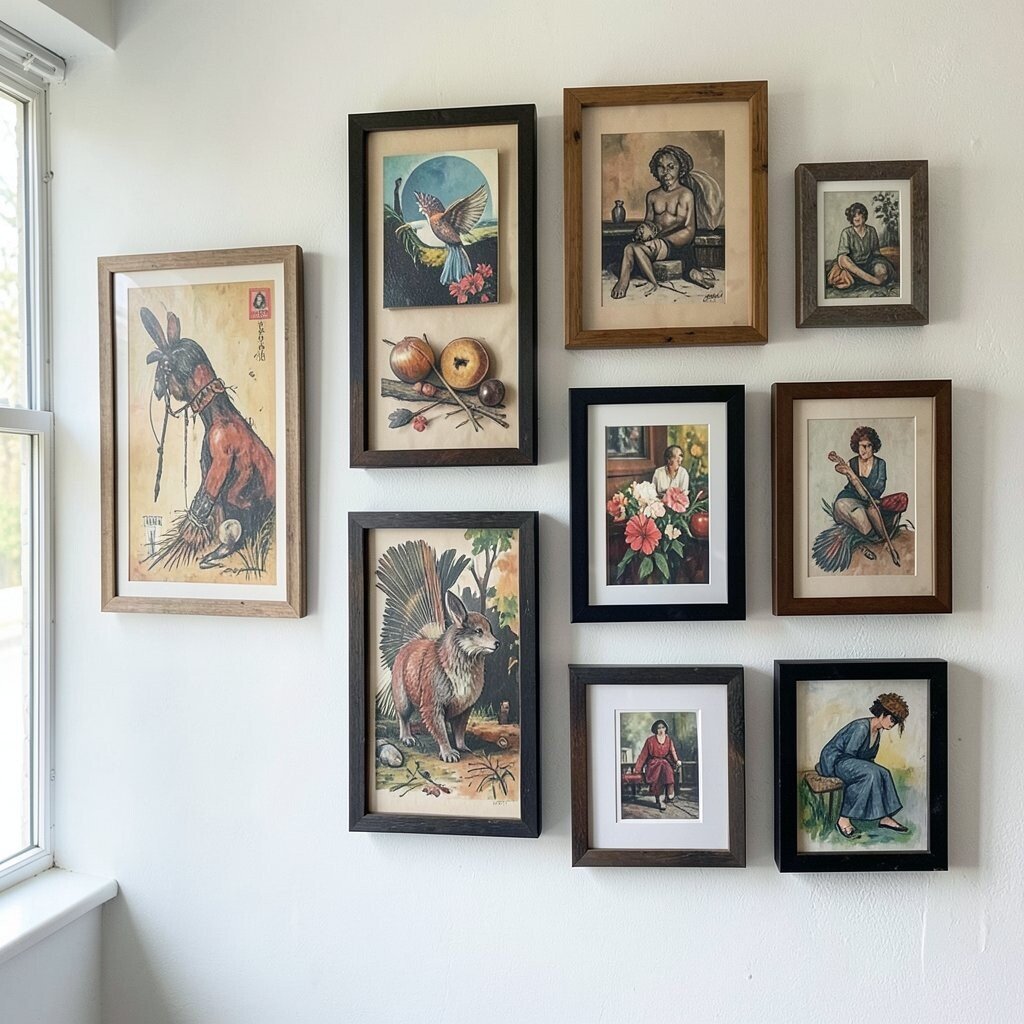
Shadowbox frames are perfect for local mixed-media art with objects, layers, or raised details. Think layered collage, tiny fabric pieces, or art that includes found elements.
The visual description is the best part, because you can see depth and shadow lines that standard frames hide. This creates a benefit for viewers too, since the wall feels more interactive and closer to the artist’s process. Use clean spacing and make sure the shadowbox depth matches what the art needs so nothing looks crushed.
17. Create a “Corner Gallery” That Softens the Room
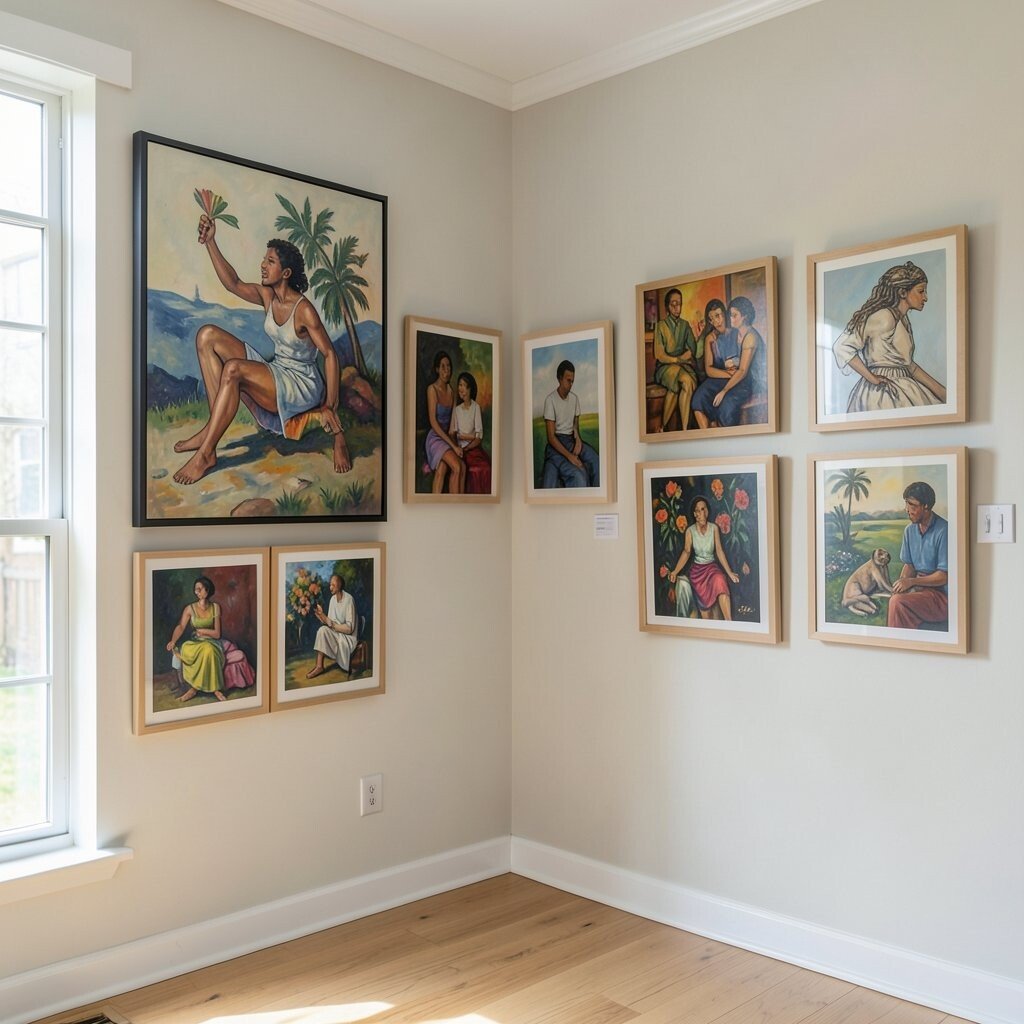
Corners can feel harsh, but a gallery wall there can make them cozy. Place frames along the edges of the corner so the artworks wrap gently into the room.
This idea works well for local painters who use big shapes, because corner placement highlights bold composition. The benefit is that the art becomes a soft visual boundary, especially in open floor plans. Use a consistent measurement from the corner seam, and dry-fit the frames with tape before you drill holes.
To personalize, choose artworks that mirror the room’s lighting, like warm-toned pieces near sunny windows and cooler tones near shaded areas. If cost considerations matter, start with a small set on one wall, then expand once you find new local work. Keep the frames parallel to the floor for a neat look from different angles.
18. Frame Artist Proofs and Limited Editions for a Unique Collecting Angle
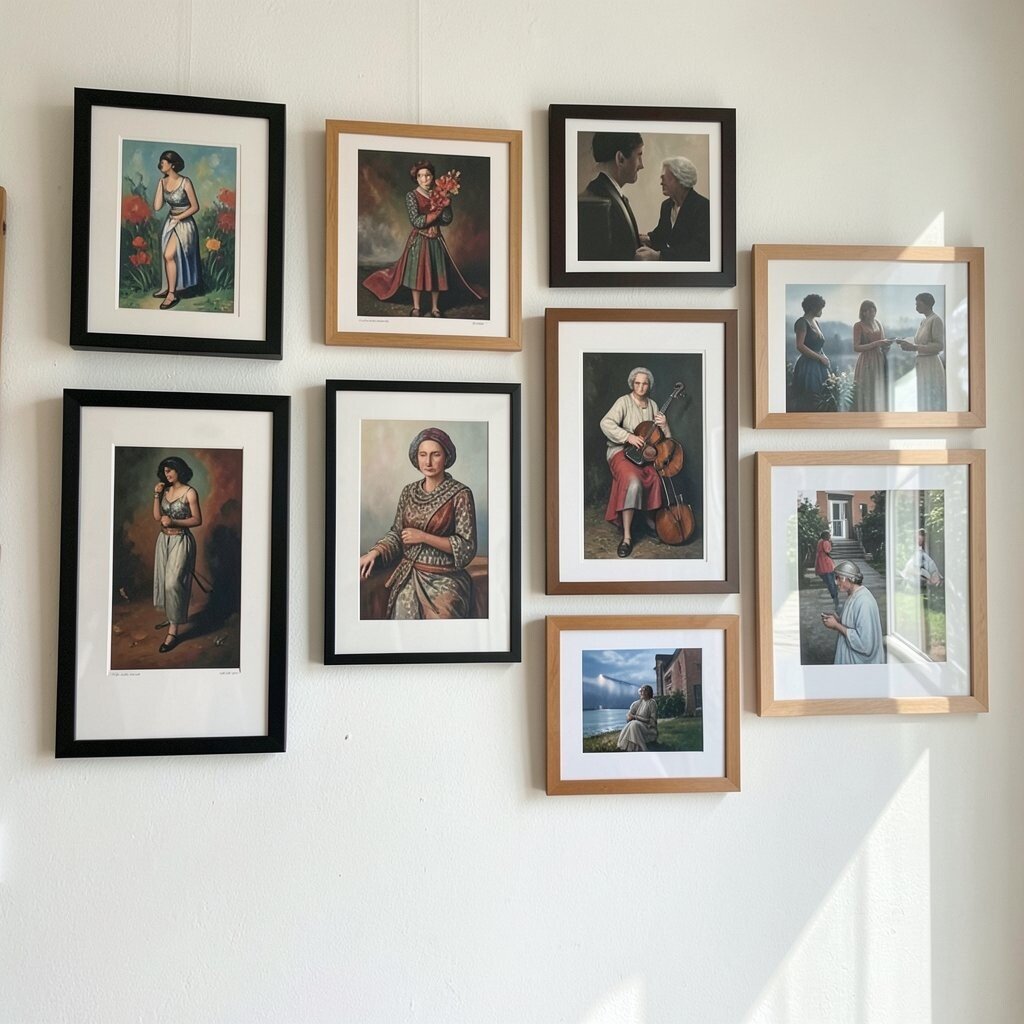
Many local printmakers sell artist proofs, limited editions, and small batch prints. These pieces feel special because they are tied to a process and a specific moment in the studio.
This is a uniqueness booster, since you can build a collection that is more personal than mass-produced decor. The benefit is that limited works often come in affordable sizes, making it easier to collect responsibly. Look for high-quality paper, and keep them away from direct harsh sunlight.
Personalize the wall by mixing edition prints with a single larger master print that acts as the focal anchor. Use consistent mat colors to unify the set, while varying frame widths to keep it playful. For cost control, buy the prints first and upgrade framing later if needed, since good matting can happen in stages.
19. Use a Centered Cluster Over Seating for Instant Focus

Hang a cluster of artworks above a sofa, bench, or dining chair so the seating area feels complete. Choose a mix of local pieces that share a mood, then center the cluster for a strong focal point.
This arrangement is great because it makes the room feel intentional without needing extra decor. The benefit is comfort, since your eyes land on the art while you relax or eat. Measure the width of the seating piece, then match the cluster width so it does not feel too small or too wide.
To personalize, include one artwork from a visiting local exhibit and one from an artist you met. If cost matters, start with fewer pieces but larger frames for bold impact. Consider using a secure hanging system, especially for heavier canvases, so the cluster stays safe and level.
20. Pair Local Art With Your Own Objects for a Curated Look
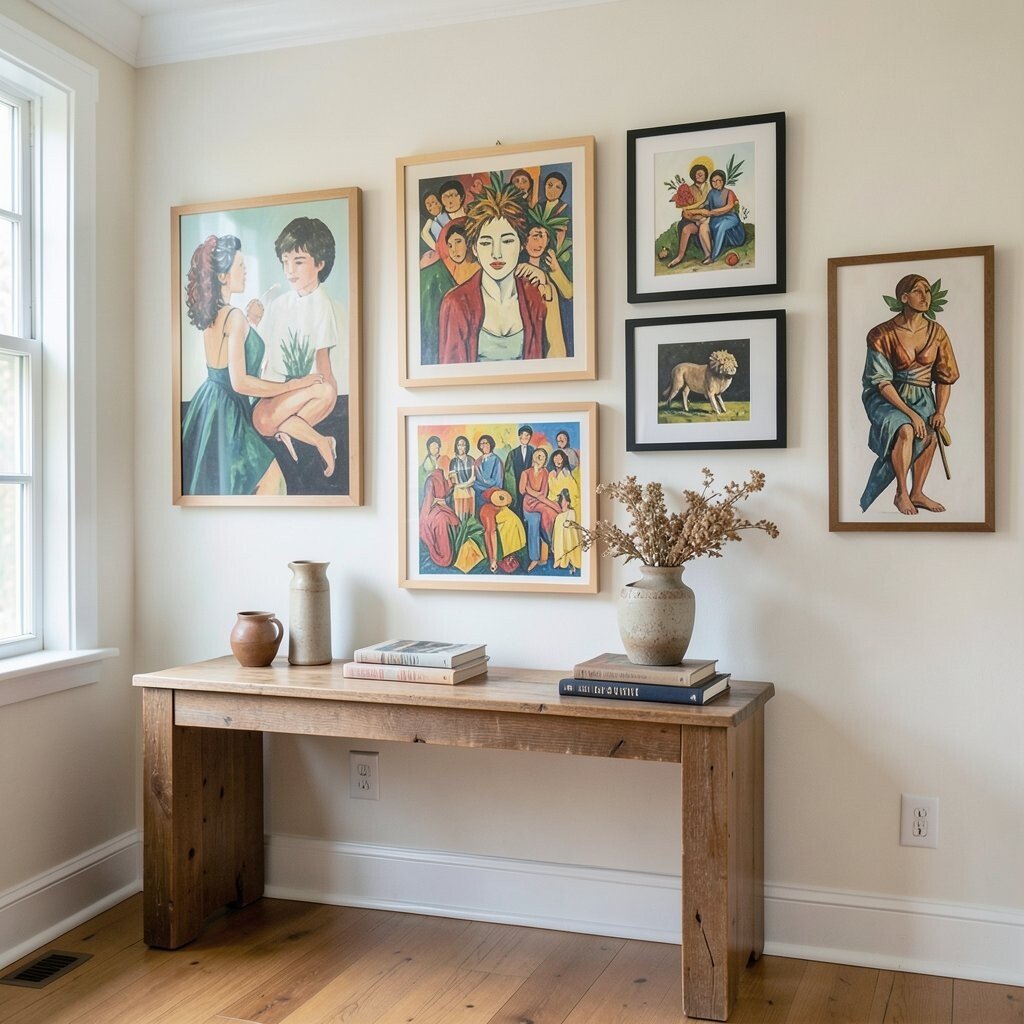
Turn your gallery wall into a curated mini-world by adding a few non-art objects alongside local pieces. You can include small ceramics, handmade plates, or a local artisan’s weaving in a frame-adjacent spot.
This creates a uniqueness factor because the wall becomes layered like a shelf, but still feels neat. The benefit is that it shows you connect with makers beyond just buying prints. Keep object sizes small and spaced so the wall does not become cluttered, and use frames to maintain visual structure.
Personalize by selecting items that relate to the artwork themes, like coastal ceramics next to seascape prints. For cost considerations, use what you already own and only add one or two new pieces if needed. Current trends favor lived-in styling, so mixing art and maker objects can feel modern while still warm and friendly.