
The attic can feel like wasted space until you learn how to work with what you already have. Small choices here can make the whole room calmer, brighter, and easier to live with.
Because attics come with tricky angles and uneven airflow, the best storage ideas often look a little unexpected. With the right tweaks, your attic can start doing real work for you instead of just collecting clutter.
1. Use the “Hidden Corner” Under the Eave Like It’s Prime Real Estate

You probably notice the slanted roof right away, but it can also be your best helper. A narrow nook under the eave can hold bins, baskets, or shallow drawers that slide in and out easily.
Visually, it turns that awkward shadowed area into a tidy line of storage that looks intentional. You get more space without blocking the walkway, which makes day-to-day organization feel effortless.
2. Add Clear Bins That Match the Way You Actually Search
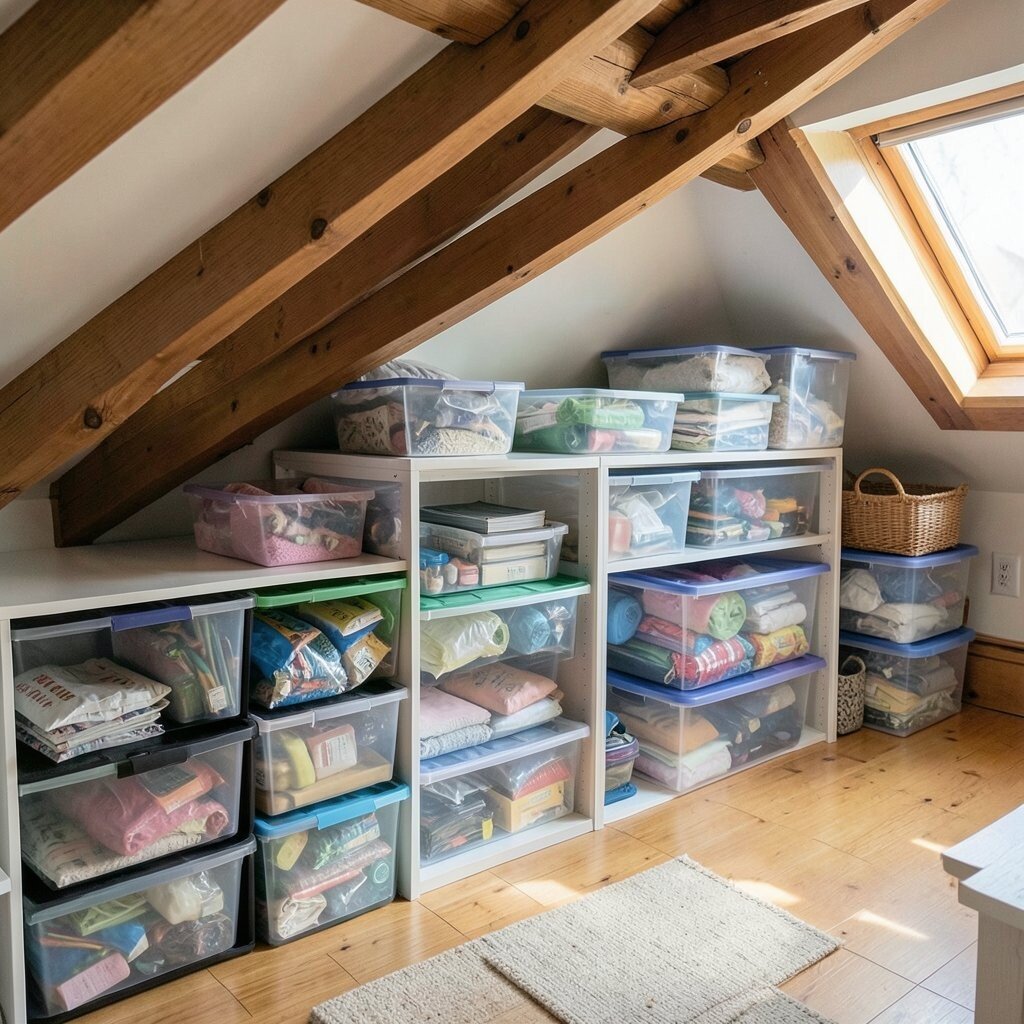
When storage is dark, you forget what you own and you end up buying duplicates. Clear bins let you spot what you need in seconds, even when you’re standing in a hurry.
Stacking works best when labels are simple and color choices are consistent across the room. You can keep seasonal items grouped together so the attic stays usable all year.
For personalization, choose bin colors that match your attic decor so the storage feels like part of the design. Many clear bin systems are affordable, and you can start small by sorting only one category first.
3. Turn Old Suitcases Into Stackable Storage Without Anyone Noticing

Vintage suitcases can look charming, especially when you use them with a little planning. Picture a row of suitcases on a bench or shelf, each one holding specific items like linens, craft paper, or holiday extras.
This kind of storage feels unique because it blends style with function instead of looking like plain organization gear. You also get flexible access, since you can pull one suitcase down without disturbing the rest.
Look for sturdier suitcases with intact handles so they don’t tip. If the cost of buying new is high, search thrift stores or use what you already own, then refresh with fabric liners.
To keep things neat, wrap smaller items in matching cloth pouches that fit inside each suitcase. It’s a small personalization step that makes the attic feel cared for.
4. Create a “Walkway-First” Plan Before You Buy Anything
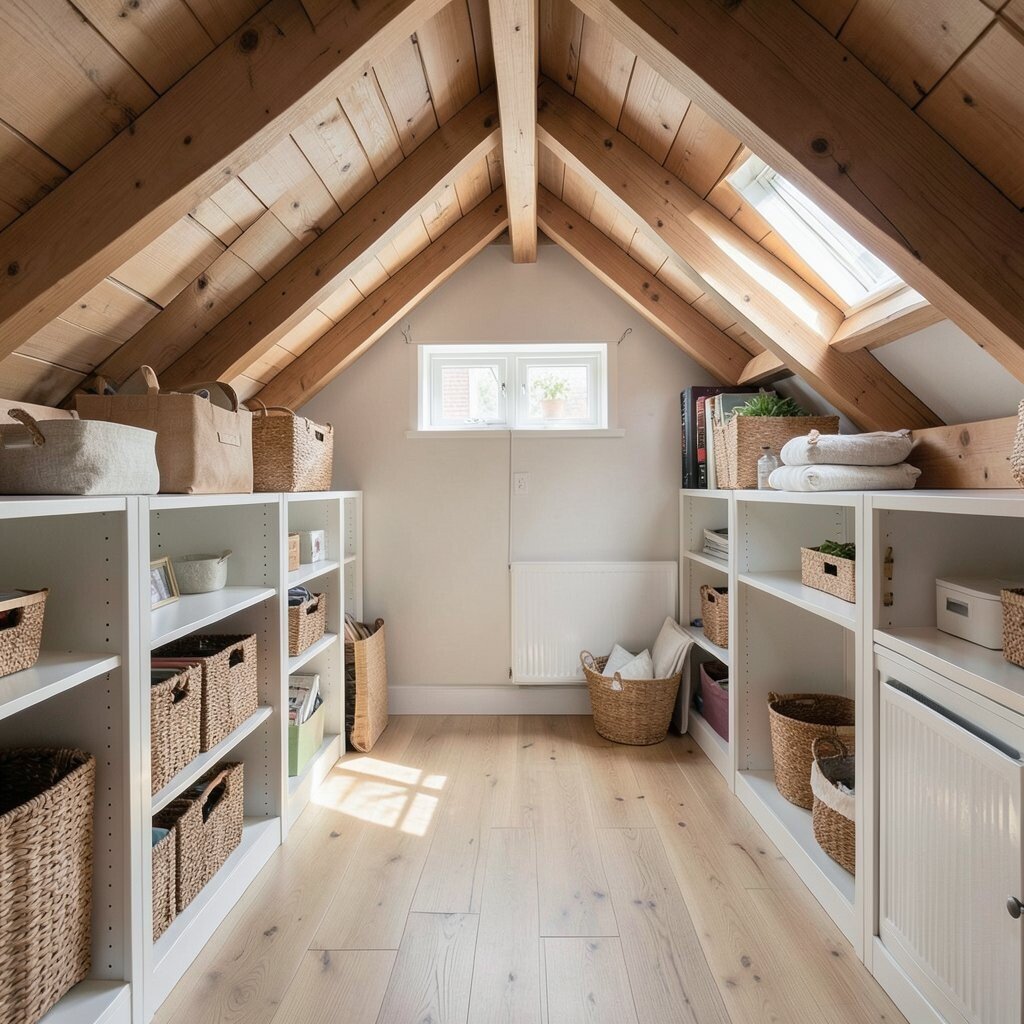
Attic storage fails when furniture blocks the path you need to move safely. Before adding anything, stand where you walk and mark where your feet and shoulders naturally go.
Once you see the real walkway area, you can plan shelves and bins that stay out of the way. This keeps the room comfortable and makes it easier to keep organized, because you’re not fighting your layout every day.
5. Install Sliding Shelves for Knee-Knock Spaces
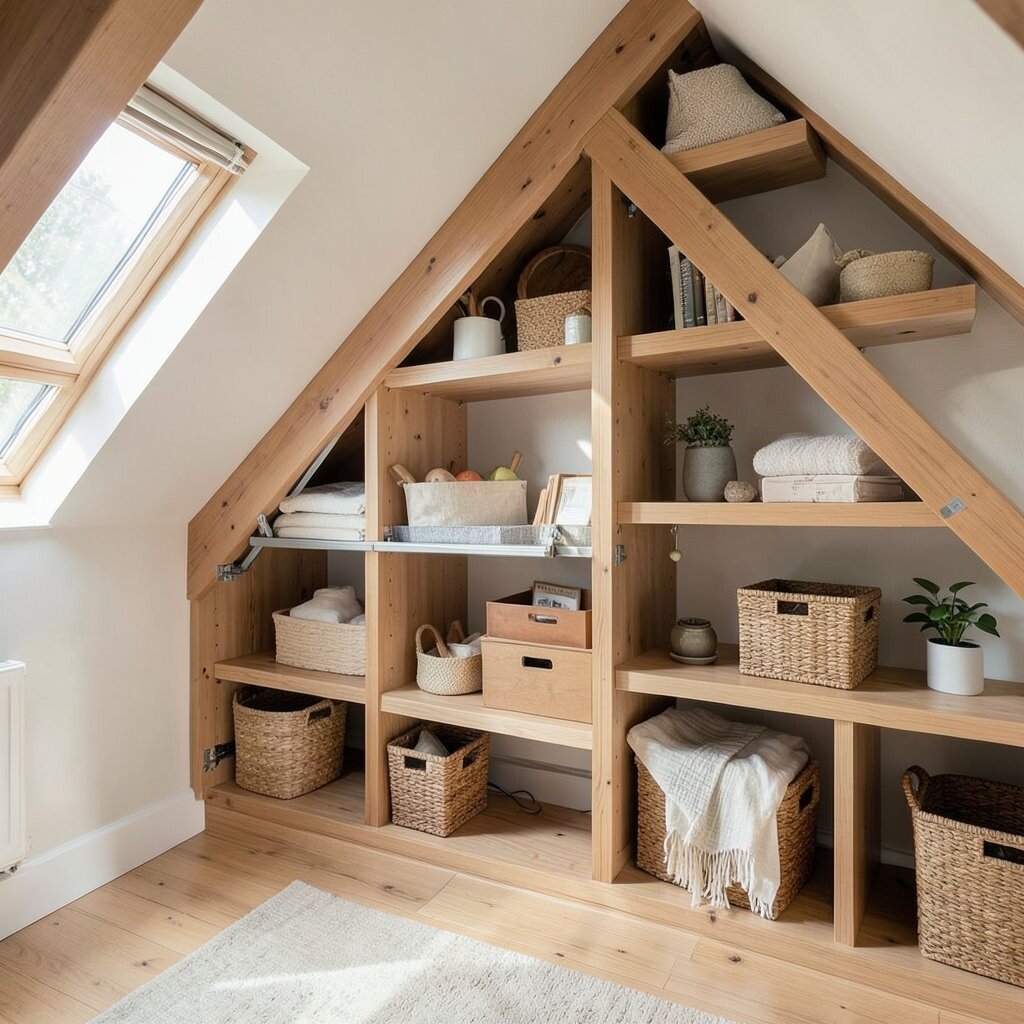
Some attic corners sit right where your knees want to bump into things, so open shelves can be a hassle. Sliding shelves pull forward when you need them, so you avoid the awkward reach and the constant bumping.
Imagine shallow shelves with smooth rails, gliding out under the slope like secret storage drawers. It’s a practical trick that turns a problem spot into a smooth, quiet system.
If you’re handy, you can build simple versions, but ready-made systems are often easier and still not too pricey. Pick durable rails so they keep moving well even with regular use.
6. Use Fabric Dressers or Rolling Carts for Easy Seasonal Swaps

Hard storage is great until you need to change seasons fast. Fabric dressers and rolling carts let you move items around without heavy lifting or complicated rearranging.
Visually, they soften the attic look, especially against wood beams and warm tones. The benefit is huge during spring cleaning because you can swap categories quickly and keep your space feeling fresh.
Choose carts with wheels that lock, so items stay steady when you stop. If you want personalization, match fabric colors to your bedding or curtains so storage feels like decor.
Rolling options also help with cost because you can start with one cart and expand later without redoing the whole setup.
7. Store Lightweight Items Higher and Heavier Items Lower
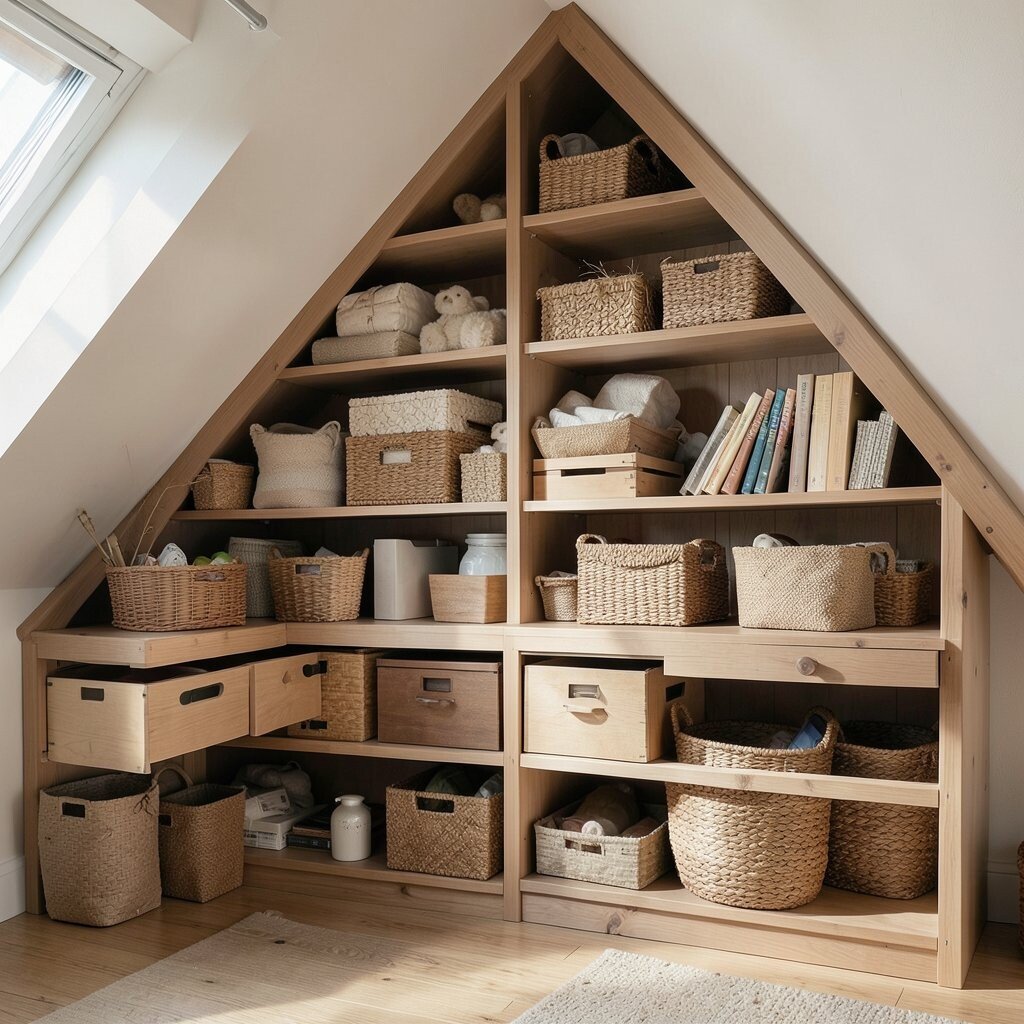
Gravity is real, and attics can get warm in the summer. Keeping heavier items lower helps reduce strain and makes shelves feel safer.
You’ll notice the difference right away when you reach for something and it feels stable. This also helps you avoid the frustration of digging through a top shelf full of dense boxes.
Try grouping by weight and use sturdy bins for heavier things like books or small tools. Lighter items like scarves, decor, and craft supplies can go higher, which frees up the best reach zones.
8. Use Vertical Rope or Peg Strips for Hangable Storage
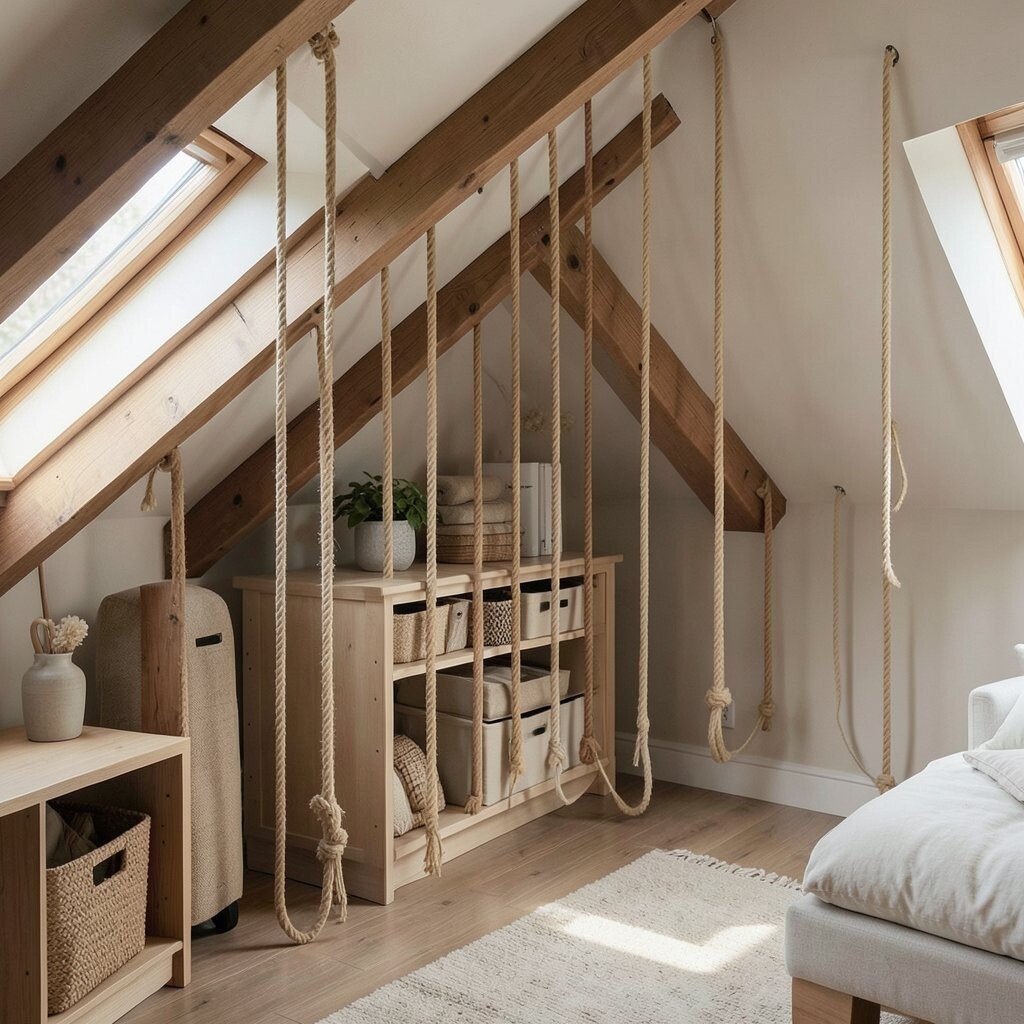
Sometimes the best storage is the kind you don’t have to stack. Peg strips, hooks, or even strong rope systems can hang bags, small tools, and accessories along a wall.
Picture a neat line of hooks under a beam, with labeled fabric organizers clipped on and off as needed. The benefit is quick access, and the uniqueness comes from using the attic’s shape instead of fighting it.
9. Keep “Decision Boxes” Near the Door to Reduce Clutter

Attics often become catch-all zones because bringing items up there feels easy. A decision box helps you sort things immediately instead of letting them pile up.
Think of a small bin or labeled drawer space that holds items awaiting a final home. When you can see what’s waiting, you’re more likely to finish the job.
For personalization, make the decision boxes look intentional with matching color labels. This can be inexpensive and it keeps the attic from turning into a long-term dumping ground.
When you schedule quick reviews, even once in a while, the attic stays calmer and easier to use.
10. Turn the Floor Into Storage With Lift-Up Platforms

If your attic floor is sturdy, a lift-up platform can create hidden storage that doesn’t steal wall space. You can store seasonal bedding, board games, or extra winter gear beneath a hinged top.
Visually, it keeps everything neat because the storage disappears when the lid is down. The practical benefit is that the attic looks like a living space, not a storage closet.
Consider the cost based on the materials you use and whether you can build it yourself. Many people start with a simple framed base and plywood top, then refine the look with paint or stain.
Personalize by adding a fabric cushion on top so it becomes a comfy spot to sit while you fold clothes or tie shoes.
11. Match Bins to Your Lighting for Better Visibility

Attics can have dim corners, especially near the slope. Even clear bins can look messy if lighting is weak, so adjust the way you see your storage.
Place a small, bright light near storage zones or add a warm bulb so colors read clearly. The benefit is simple, you can find what you need without digging.
It’s also a uniqueness boost because lighting makes your storage feel like a designed feature. If you want a low-cost upgrade, try clip-on lights or slim LED strips powered by a simple setup.
12. Label With Stories Instead of Just Names

Labels are helpful, but plain text can be boring and easy to ignore. If you add a tiny detail about when you use the item, you’ll remember faster.
For example, instead of only writing what the item is, describe the moment you reach for it. Visually, labels become small notes that guide you instead of clutter your space.
This personalization idea helps you store and retrieve without overthinking. It also costs almost nothing, since paper, tape, and simple handwriting work great.
13. Use Thin Storage Drawers That Fit Between Beams

Attic beams can feel like obstacles, but they also act like built-in measuring guides. Thin drawers that fit between beams make use of space you usually leave empty.
Imagine a tidy row of narrow drawers, each one holding socks, cables, or small tools. It keeps items organized while staying low profile under the ceiling line.
The practical tip is to measure twice and consider drawer depth based on how far you can reach comfortably. For cost, prefabricated drawer organizers are often cheaper than custom carpentry, and they still look neat.
If you enjoy design, paint drawer fronts in a color that matches your attic accents so the storage feels intentional.
14. Add a Shoe Zone With a Door-Hugging Rack
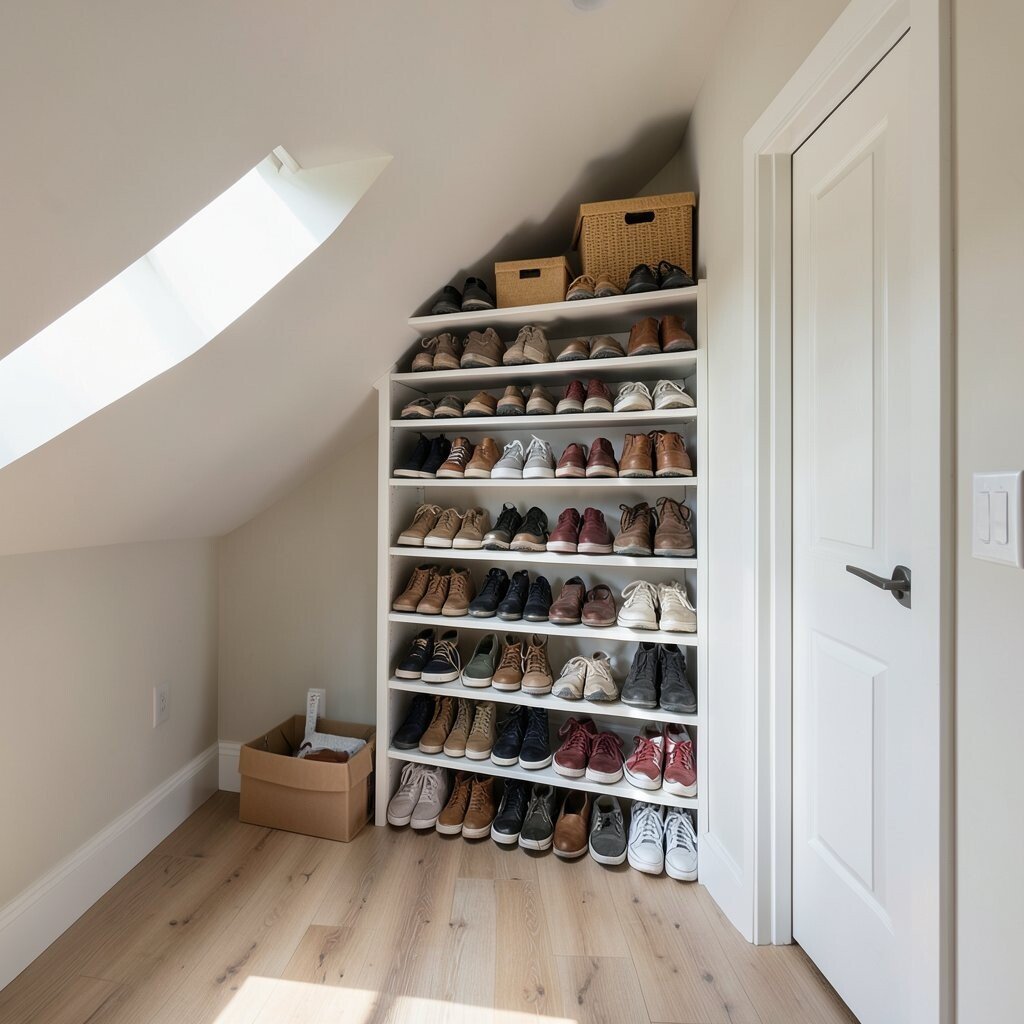
Shoes are one of those things that multiply without warning, and attics are no exception. A door-hugging rack keeps them contained and makes the attic feel more like a usable room.
Visually, a slim shoe shelf near the entry creates a clean first impression. You also protect floors from scuffs and keep dust from settling in piles.
15. Store Clothing on Lightweight Hangers, Not Stiff Boxes
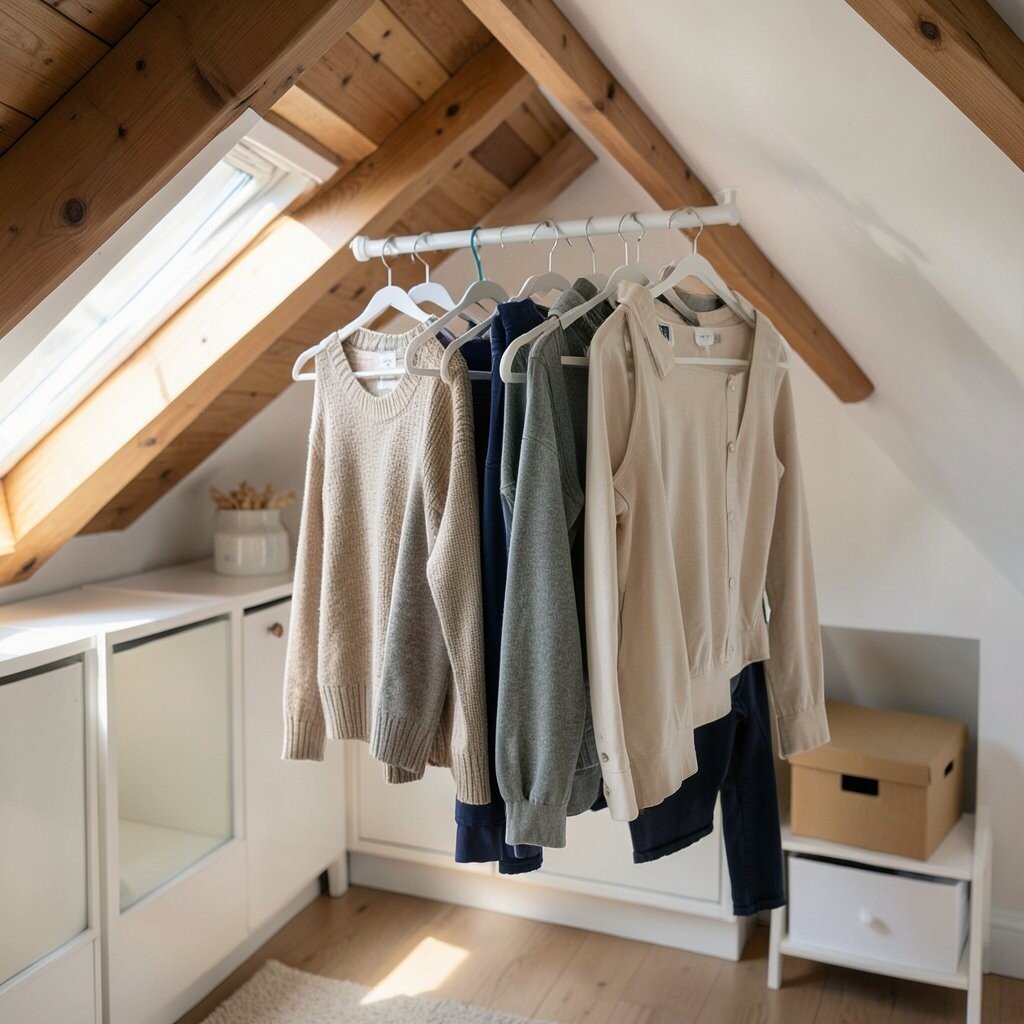
Boxes are great for some items, but clothing often gets wrinkled or forgotten when it sits packed too tightly. Hanger storage helps you see everything and pull it out without wrestling with taped lids.
Picture a small clothing rail running along a wall section that stays level, with a few garment bags for extra protection. This makes the storage feel personal and ready to use.
For practical tips, choose breathable garment bags for seasonal pieces and keep them away from moisture-prone spots. Costs vary, but you can start with a basic rail and a couple of bags before upgrading.
16. Use Magnetic Strips for Metal Tools and Craft Supplies

Metal items can be awkward to store in bins because they slide and get lost. A magnetic strip can hold scissors, small tools, and even craft accessories so they stay easy to grab.
Visually, it looks sleek and orderly, especially against wood or painted walls. The benefit is less rummaging, which saves time and keeps your attic from filling up with scattered bits.
To personalize, use small magnets and color-coded holders for different categories. It’s often a low-cost upgrade, and it makes small storage problems feel solved quickly.
Just make sure you mount it securely so it can handle daily use without shifting.
17. Keep a Small Repair and Cleaning Kit in Its Own Attic Pocket
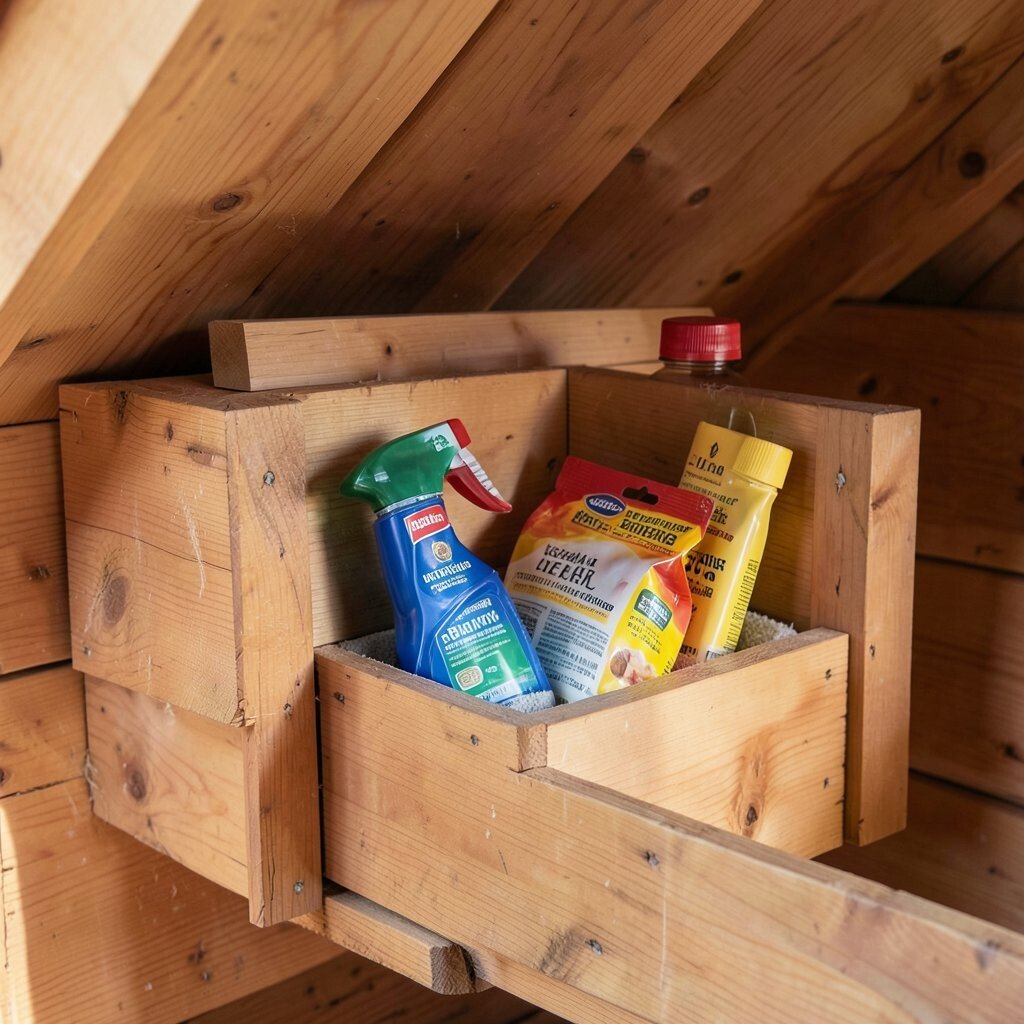
Attics need occasional care, like dusting vents or fixing a loose shelf. When the supplies are buried in random boxes, those tasks never happen on time.
Make one dedicated pocket for a small repair kit, measuring tape, gloves, and a basic duster. The unique part is that it supports the whole storage system, not just the contents inside it.
For practical tips, keep it near where you’d naturally start work, like close to the ladder access. Cost stays reasonable because a kit can be small, and you can build it over time.
Personalize the kit with your favorite cleaning cloth style so you enjoy using it instead of avoiding it.
18. Don’t Ignore Airflow With Sealed Storage for Certain Items

Attics can be dry one day and surprisingly humid the next. If you store things that are sensitive to moisture, you’ll want protection that still lets you manage the contents.
Use sealed containers for items like fabric, papers, or important keepsakes, and keep them grouped so you can check them easily. The benefit is peace of mind, because you can prevent damage without constant reorganization.
It’s also a smart uniqueness move, since many attics are “stored blindly,” and yours can be handled with care. Costs can be managed by sealing only the top-priority items first.
19. Build a Roll-Out “Gallery Wall” for Decor That Changes
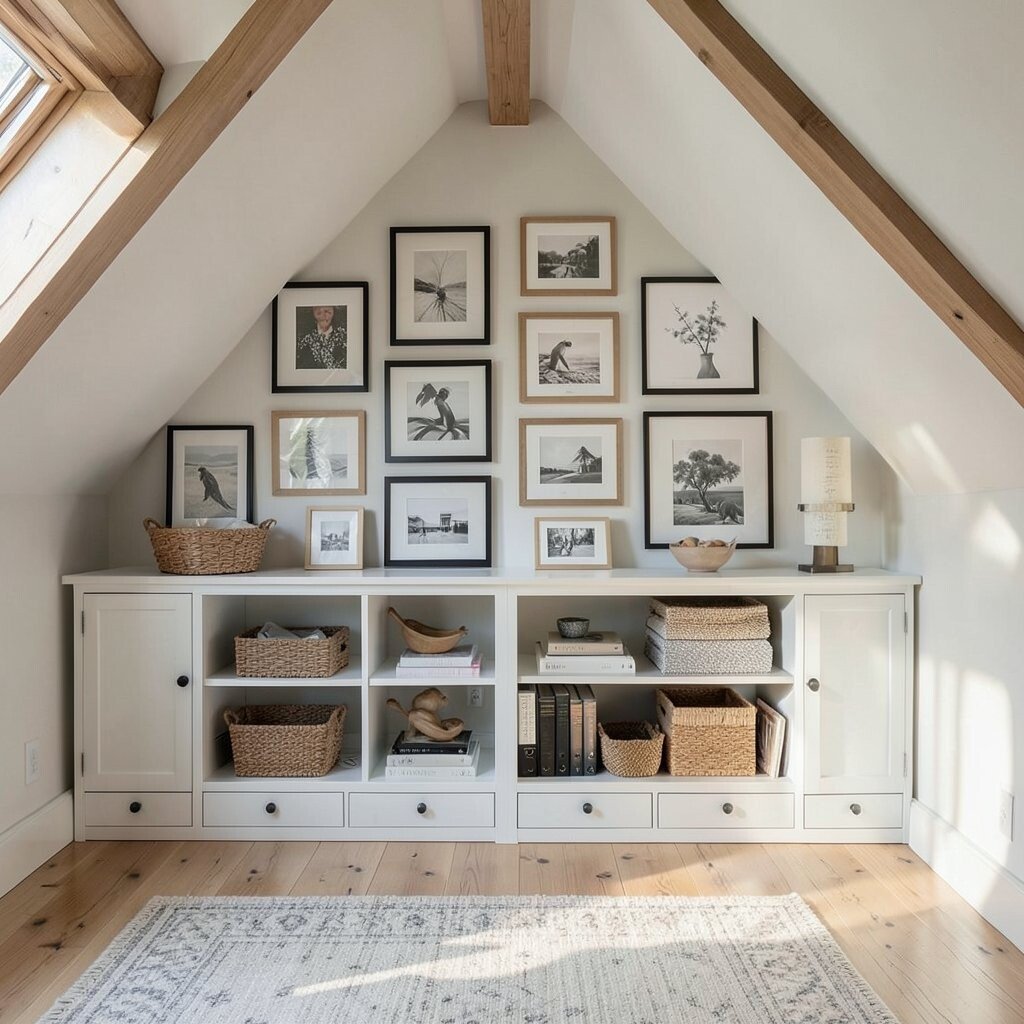
Decor storage often becomes a mess because items are odd-shaped and fragile. A roll-out system or foldable display rail can hold framed art, wall hangings, or seasonal decor so it stays ready.
Imagine a narrow roll-out rack tucked near the storage zone, with frames resting safely instead of stacked and bumped. This creates a clean look and makes switching themes feel exciting rather than stressful.
Practical tips include adding protective corners and using straps to keep frames secure while rolled. If you’re working on a budget, start with a single category, like holiday wreath storage, and upgrade when it proves helpful.
For personalization, coordinate the protected decor with your room style so every seasonal change feels like a fresh design moment.
20. Use a “One Storage Style” Rule So the Room Looks Cohesive

Attics can look chaotic when storage items feel random. Picking one style for storage bins, baskets, and labels helps the whole room read as calm and intentional.
Visually, matching colors, similar materials, and consistent shapes create a smooth rhythm under those angled walls. The benefit is not just beauty, it also helps you maintain the system because everything belongs to the same logic.
Try a cost-friendly approach by reusing containers you already have and gradually replacing the mismatched ones. For personalization, decide on a theme like warm wood tones, soft fabric textures, or modern matte colors, then stick to it.
When you follow that rule, your attic stops feeling like storage and starts feeling like a real room you actually enjoy using.