Mid-century modern kitchens have a way of making everyday chores feel a bit more special. Cabinet styles from that era mix warm materials with clean lines and smart storage.
Below are cabinet ideas that feel timeless, while still fitting the way people cook and store things today. Each style includes practical ways to make it work in a real kitchen, plus notes on cost and personalization.
1. Walnut Slab Doors With Slim Pulls
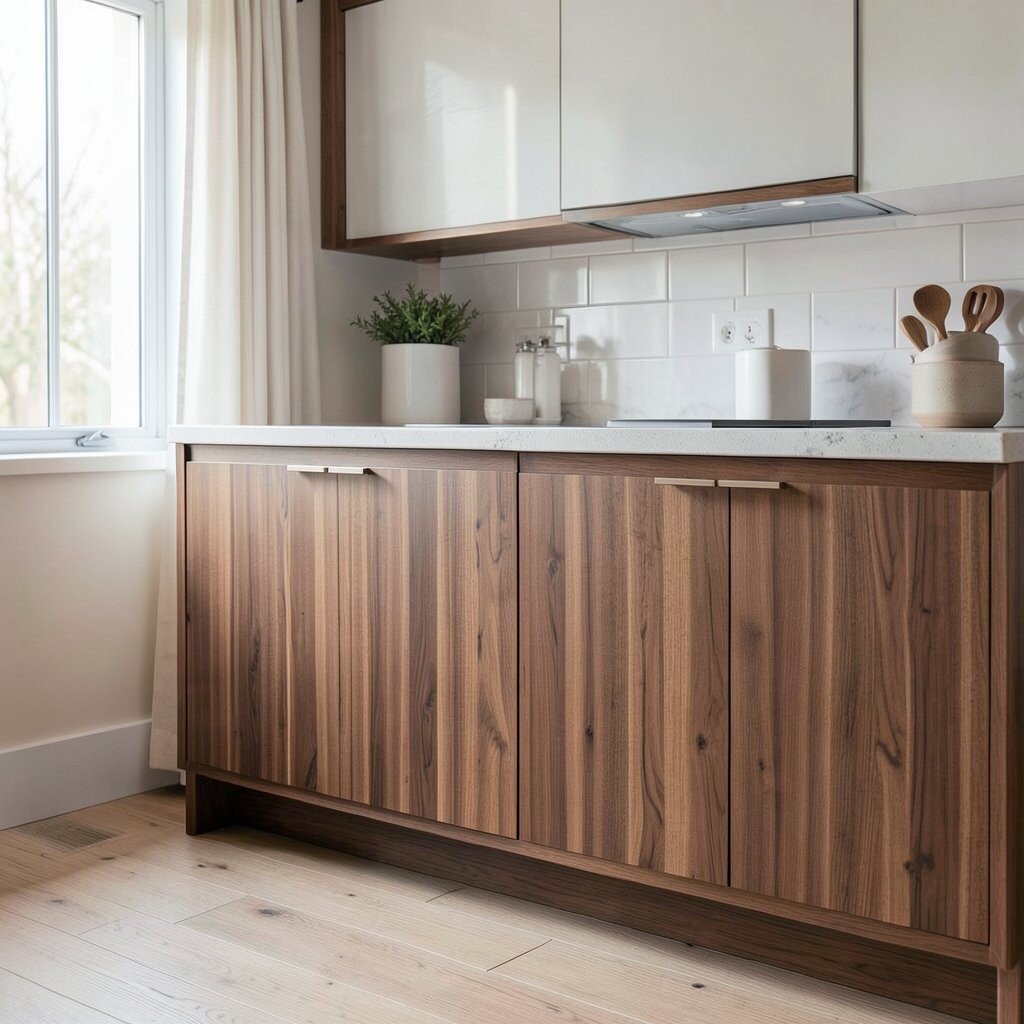
Walnut slab doors give your kitchen a calm, rich look that feels instantly inviting. The smooth, flat faces and narrow hardware create a neat, modern silhouette.
Choose a satin or low-sheen finish so the wood grain stays visible but not too shiny. For everyday use, soft-close hinges are a big win because they reduce noise and protect doors. If you want it to feel current, pair the warm wood with light stone counters and a simple faucet in brushed metal.
2. Teak Frame Cabinets With Glass Inserts
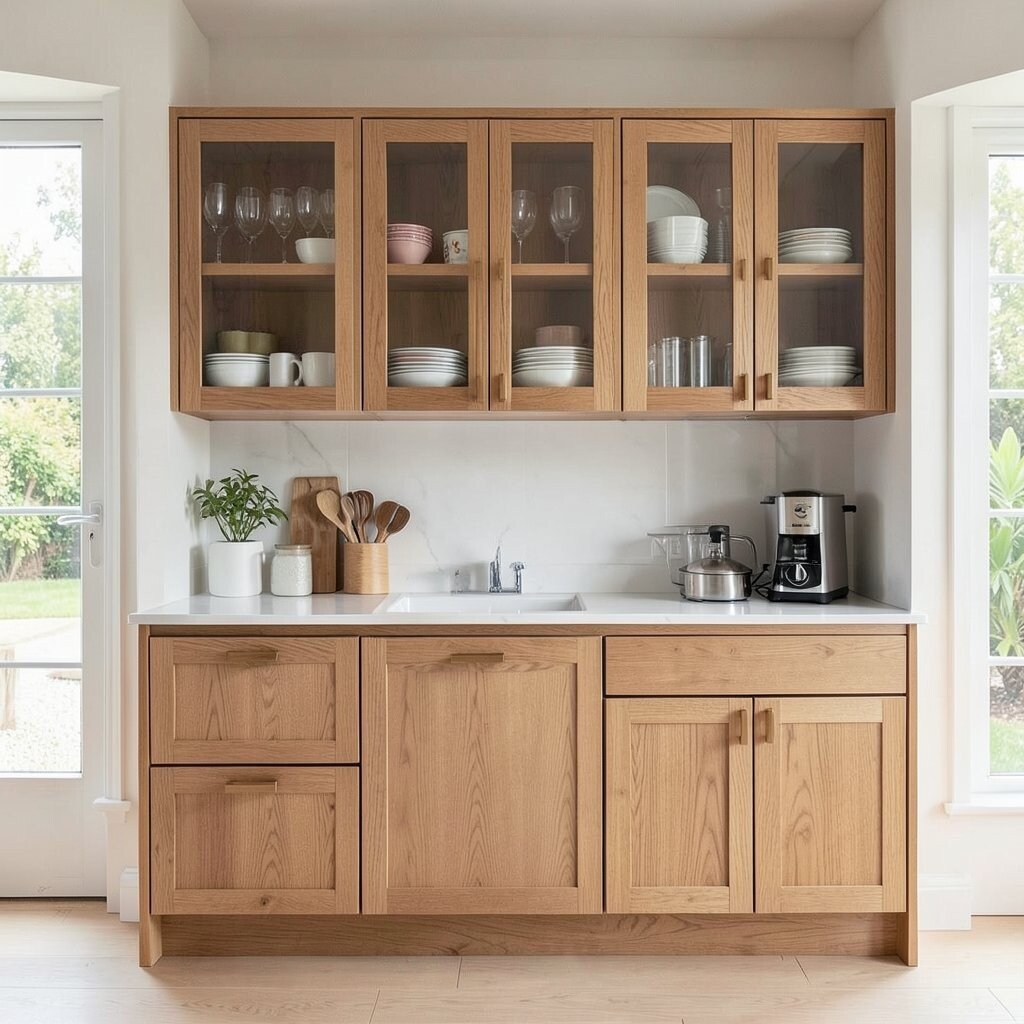
Teak-framed cabinets bring a golden glow that looks great in both bright and cozy kitchens. Glass inserts add a light, airy feel while still showing off your favorite dishes.
Use clear glass for a crisp look or opt for textured glass if you want a softer, more private vibe. Add adjustable shelves so you can fit taller glassware, bowls, or mugs without forcing everything into place. This style is unique because it blends display storage with practical organization, especially when you line the shelves with matching paper.
As for cost, teak and custom glass inserts can run higher, but you can lower the price by using a teak-look veneer and standard-size inserts. To personalize, mix glass heights across the cabinet run so the layout looks intentional, not uniform.
3. White Oak Raised Panels With a Simple Reveal
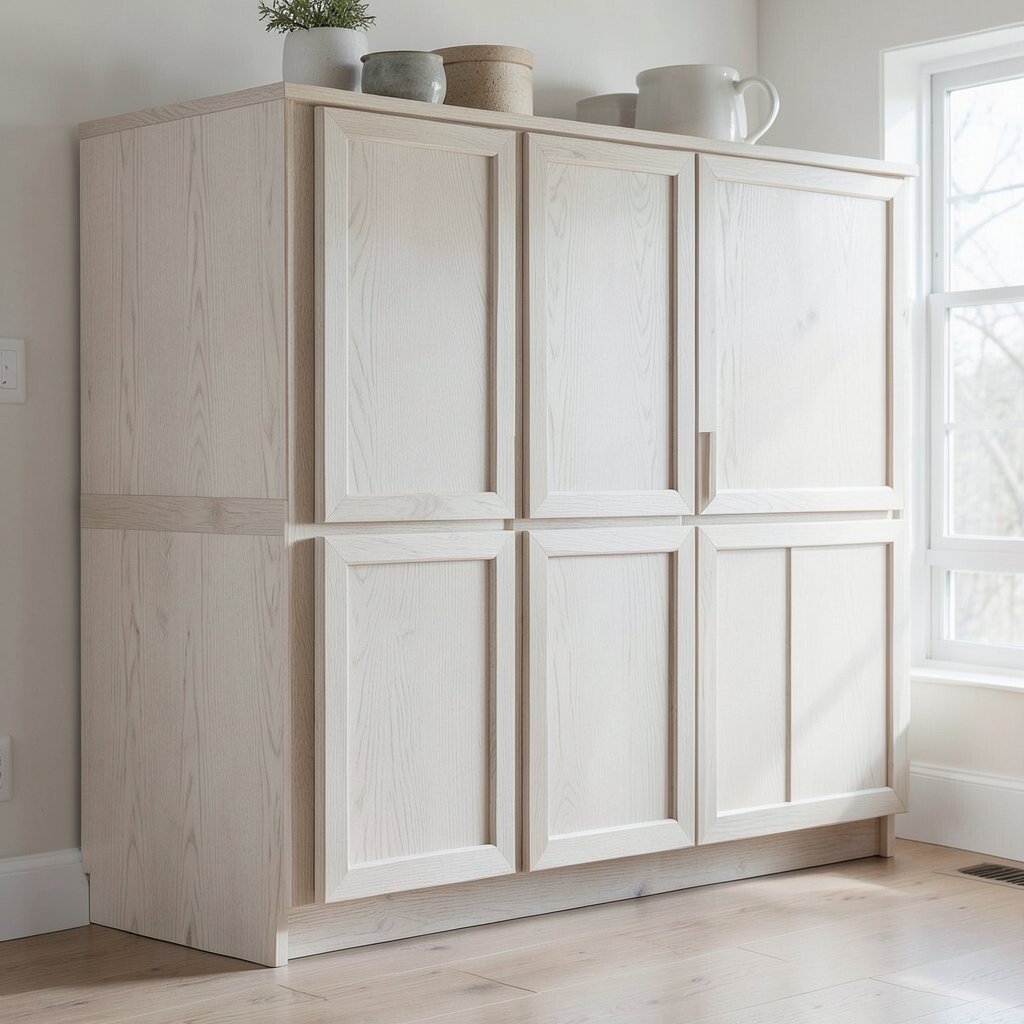
Raised panels give mid-century cabinets a gentle structure without feeling heavy. White oak adds warmth, and the subtle reveal around each door keeps the lines crisp.
This look works well if you want something classic but still clean. Consider matching the cabinet stain direction with the grain pattern on your floor or countertop for a smoother flow. You can also paint the interior shelves a matching light tone so everything looks fresh when doors open.
In cost terms, oak tends to sit in the mid range, and standard door styles are usually cheaper than fully custom designs. To make it feel personal, add a bold backsplash color so the cabinet style becomes the quiet anchor, not the loudest element.
For practical tips, plan for dish and pantry items early by measuring your tallest containers and adjusting shelf heights before installation. When the hardware stays slim and consistent, the whole kitchen feels more cohesive.
4. Low-Slung Credenza Style Base Cabinets
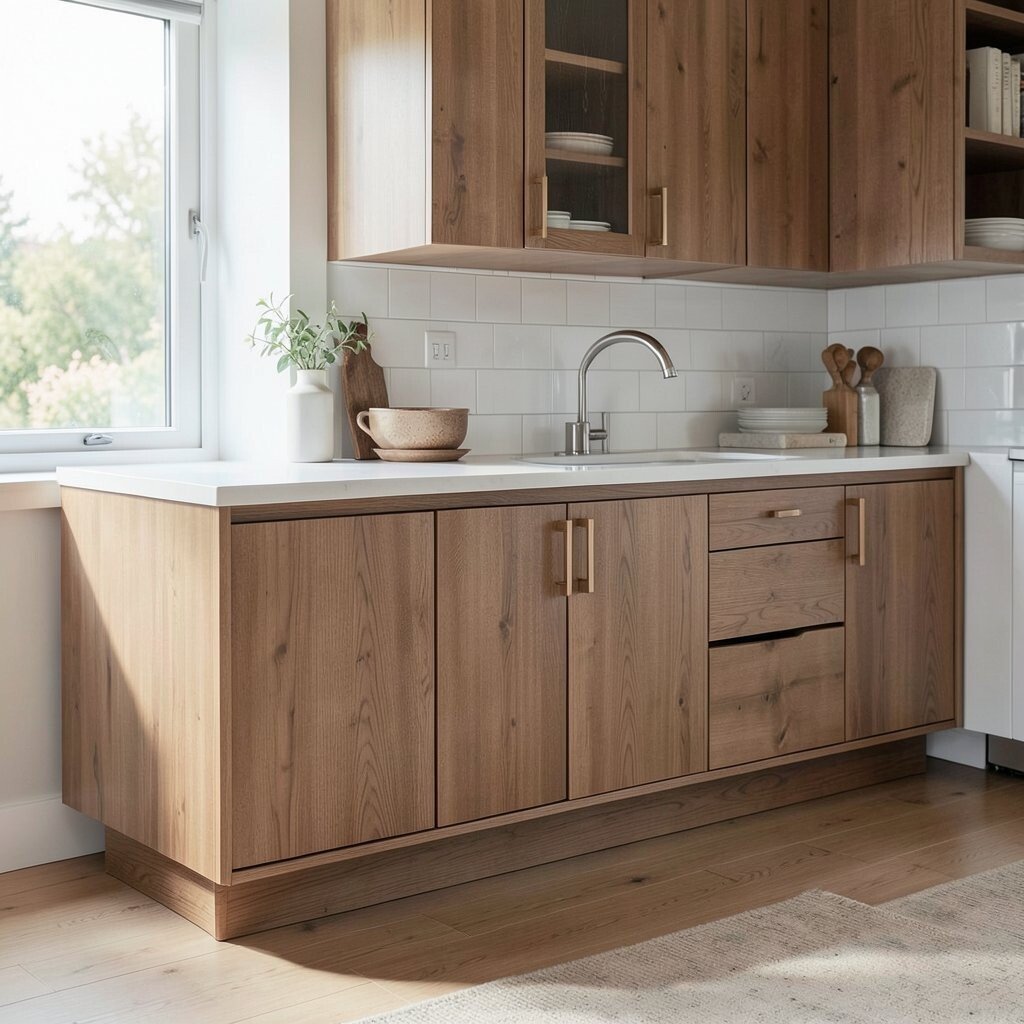
Low-slung base cabinets mimic the look of a classic credenza, with horizontal lines that feel grounded. You can almost picture the cabinets as built-in furniture, not just storage.
To make this style work, keep the toe-kick minimal and use straight hardware that tracks cleanly along the doors. Pairing the bases with taller pantry cabinets creates a nice contrast and helps your layout feel intentional. If you love a tidy kitchen, choose fewer, larger cabinet sections so you can keep items organized in clear zones.
5. Accent Wood Trim Around Painted Doors
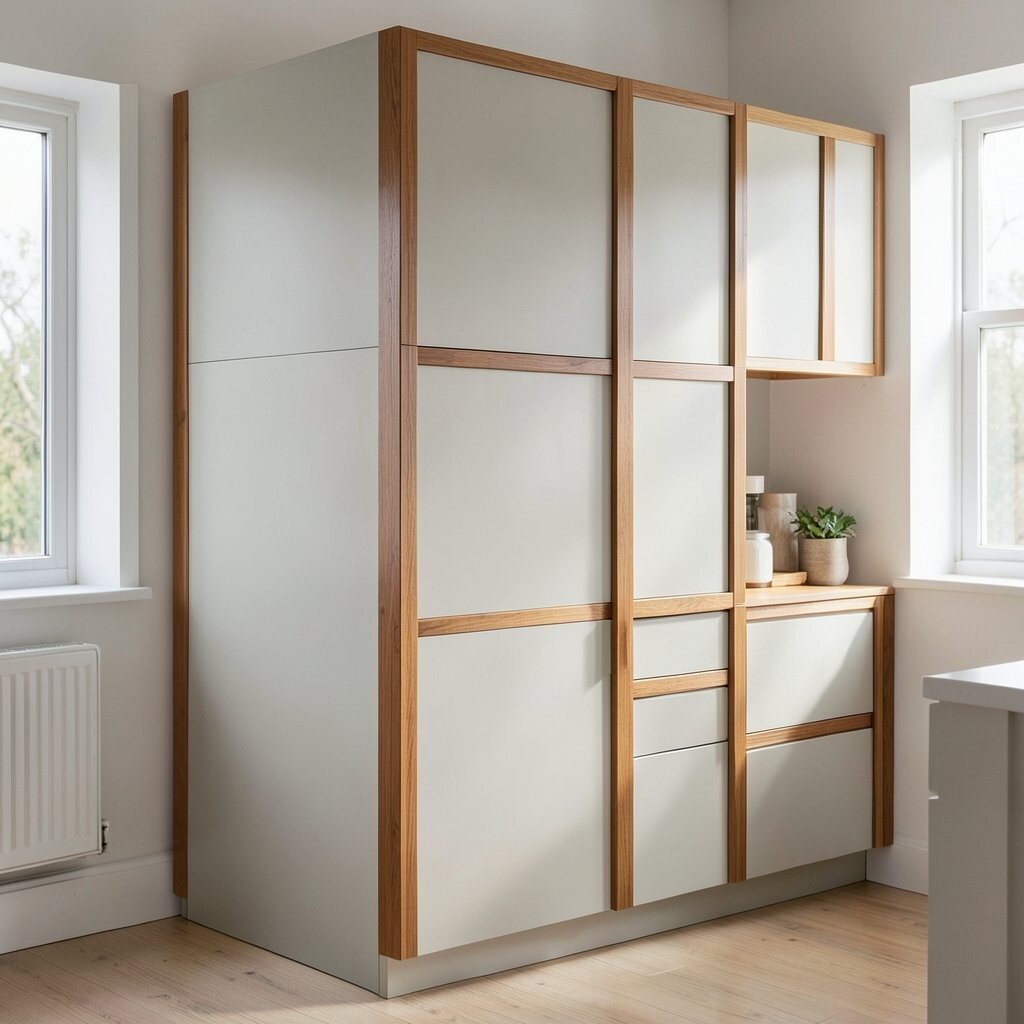
Painted cabinet doors with wood trim look playful and polished at the same time. The trim acts like a picture frame, adding depth without making the kitchen busy.
Pick a warm white, soft cream, or muted sage paint, then use walnut or natural oak trim to anchor the design. This style is unique because it blends two finishes in a way that still feels mid-century, especially when the trim follows the door’s shape. For a practical twist, use durable cabinet paint and consider a professional finish if you want extra smooth edges.
Cost can be reasonable if you choose off-the-shelf painted doors and upgrade only the trim. To personalize, vary the trim width slightly on upper cabinets so the visual rhythm matches the room’s lighting.
6. Slatted Cabinet Doors for a Breezy Pantry Look
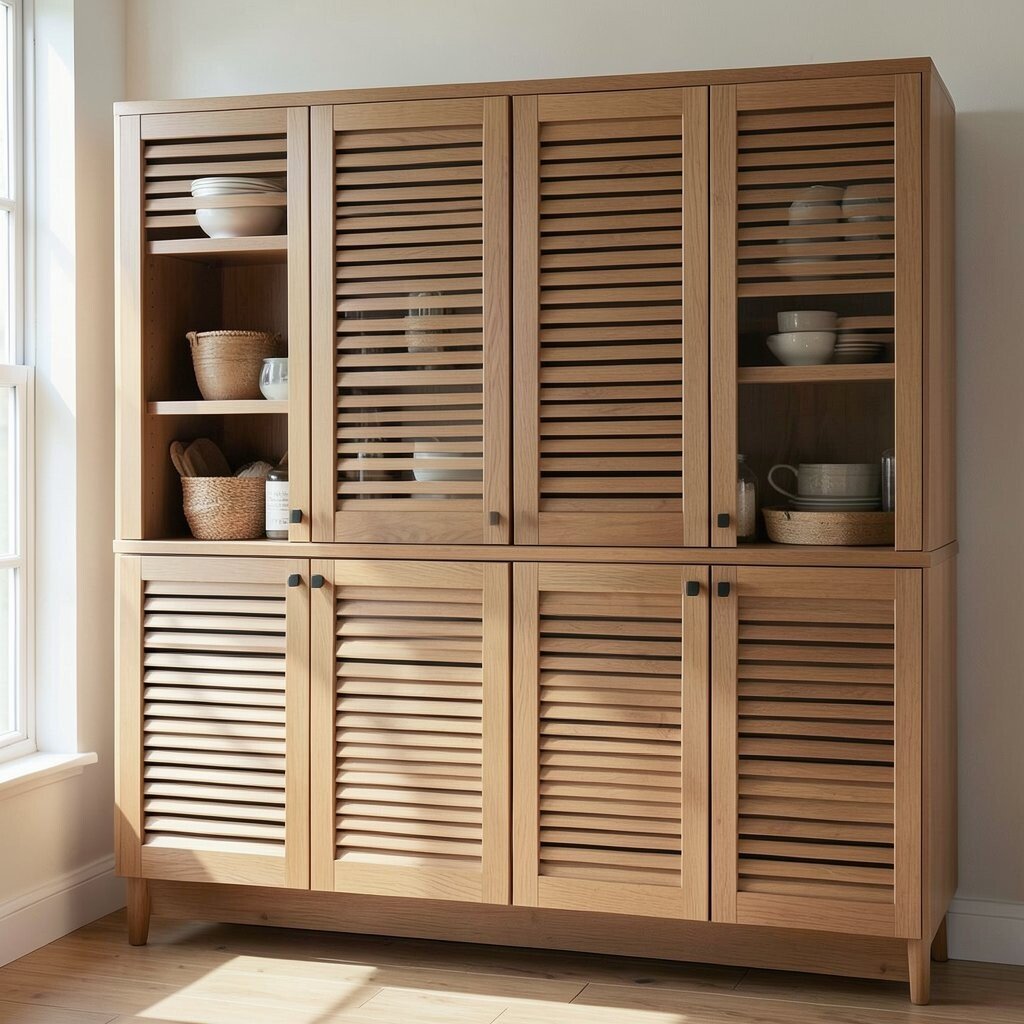
Slatted cabinet doors add texture that feels light and modern. Even when they’re closed, you can sense the airflow and relaxed vibe they bring to a kitchen.
Use slats on select areas like a pantry wall or a cabinet dedicated to glasses. It’s beneficial because it reduces the “boxed-in” feeling in smaller kitchens, and it makes items easier to spot without fully opening everything. If you worry about dust, choose tighter slat spacing and wipeable finishes.
For uniqueness, mix slatted doors with solid slab doors so the kitchen has variety but stays balanced. Keep hardware simple, like discreet bar pulls, so the slats remain the star.
7. Rounded Corners With Gentle Hardware Curves
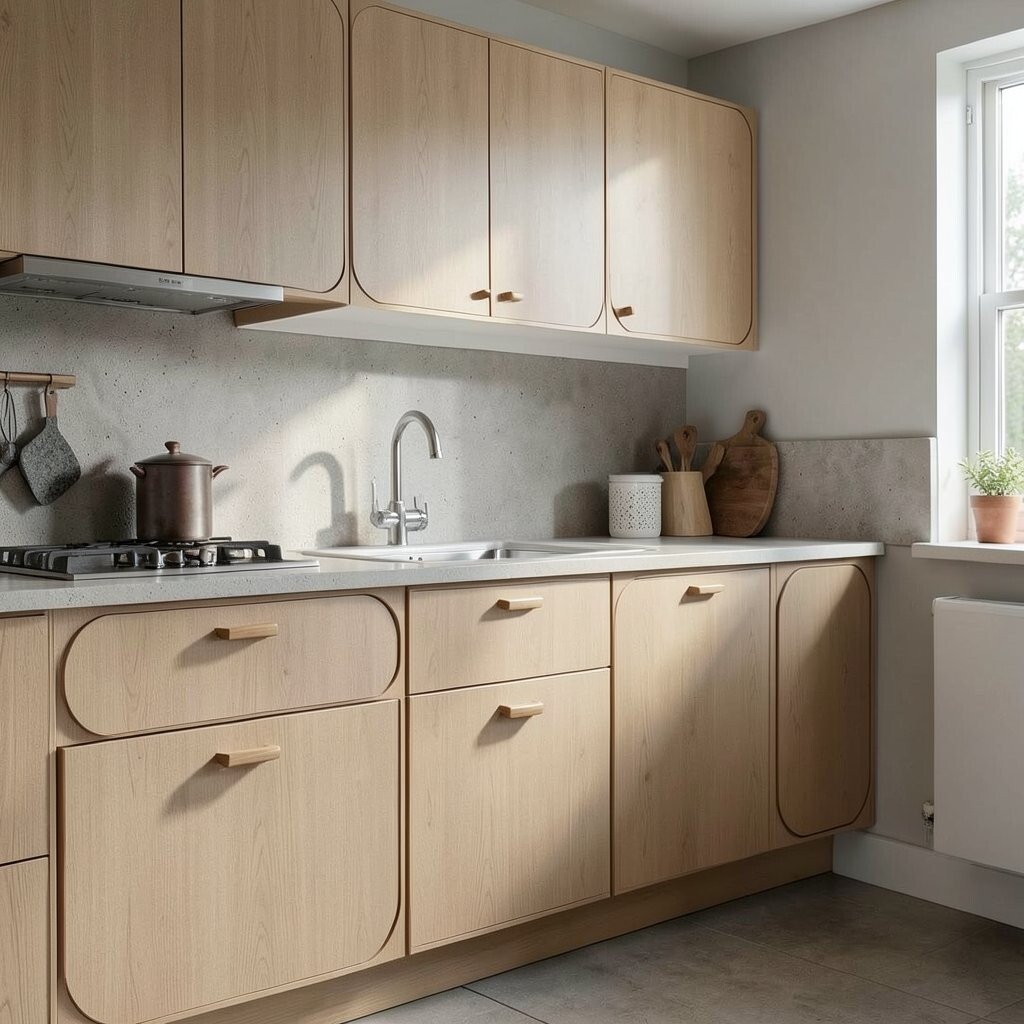
Cabinets with rounded corners soften the whole kitchen and make it feel more welcoming. When the pulls have gentle curves too, the design looks coordinated from cabinet to cabinet.
This style can be especially charming in homes that use warm woods, soft lighting, and rounded shapes in stools or table legs. From a practical standpoint, rounded edges are nicer to use around busy cooking spaces because they reduce sharp contact points. Choose a durable finish and keep the sheen moderate so fingerprints don’t stand out too much.
If you want to stay on budget, look for semi-custom hardware and standard cabinet boxes. You can personalize by matching the pull color to your faucet and lighting for a clean, modern match.
8. Tall Pantry Cabinets With Floor-to-Ceiling Lines
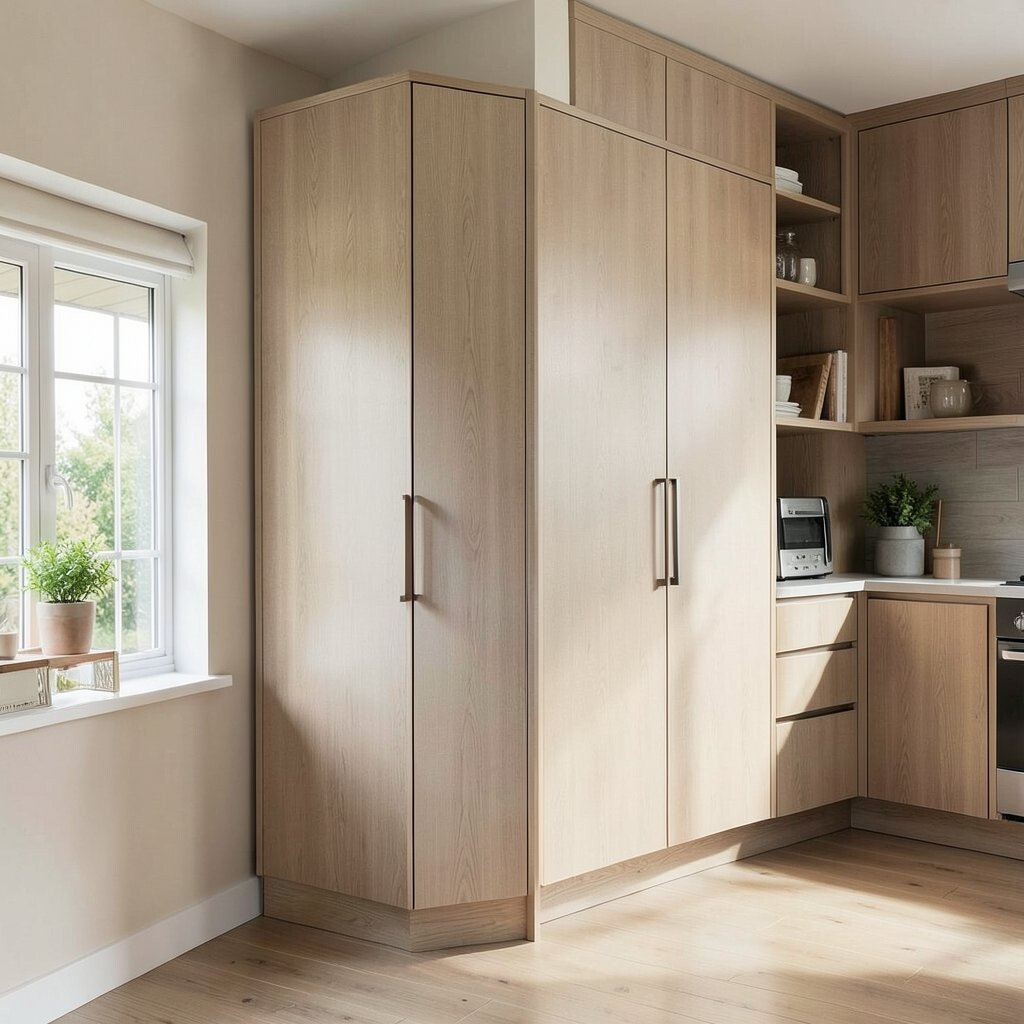
Floor-to-ceiling pantry cabinets make a kitchen feel taller and more organized. The long vertical lines echo classic mid-century design and help your storage keep up with real life.
For benefits, you get fewer gaps where clutter collects, and you can dedicate zones for dry goods, baking supplies, and cookware. Use adjustable shelves so you can change the layout when your storage needs change over time. Add a pull-out drawer for oils and small items so you don’t have to dig through deep shelves.
9. Laminated Formica-Look Cabinets With Bold Colors
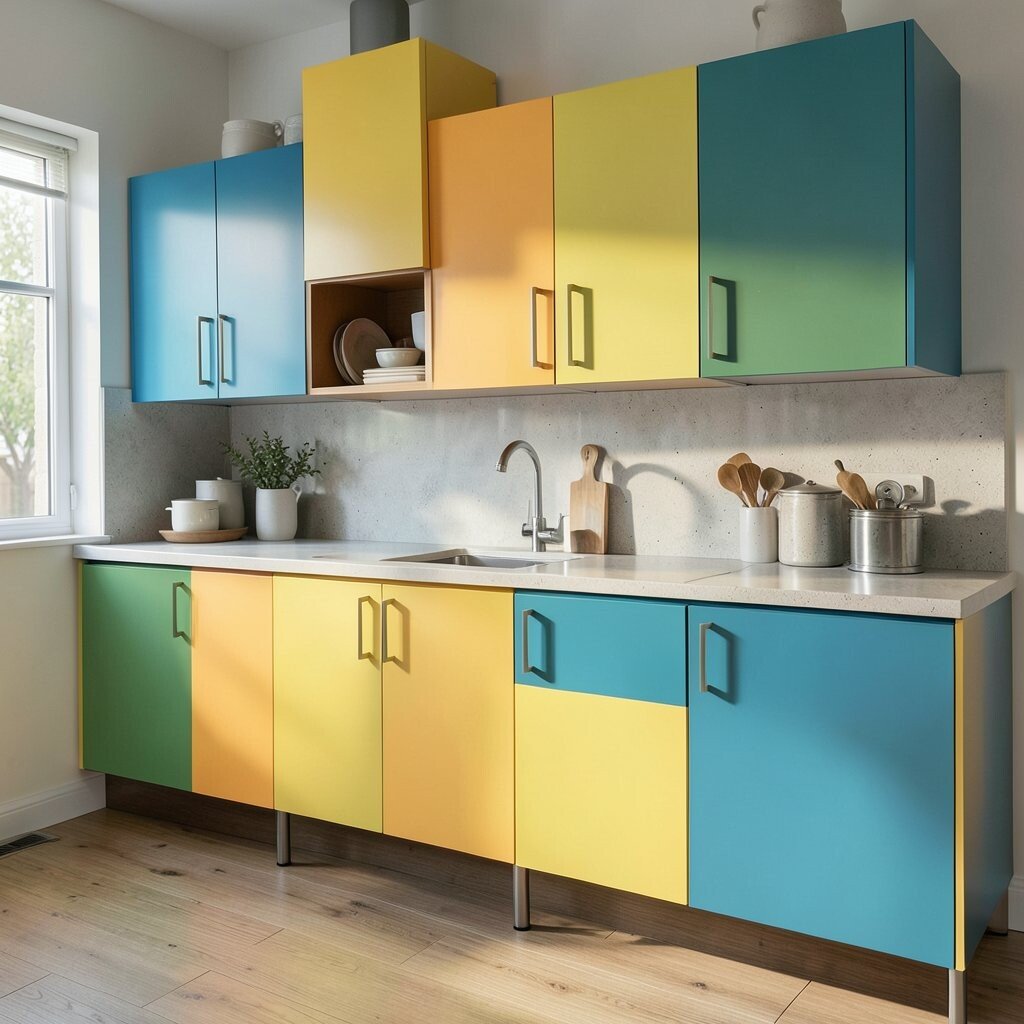
Bold mid-century color cabinets can bring energy to a kitchen without needing a full renovation. A formica-like finish can look smooth, playful, and true to the era.
Try colors like avocado green, buttery yellow, or a soft coral tone paired with lighter countertops. The uniqueness here comes from the retro vibe, but you can still keep it practical by using modern hinges and easy-clean finishes. Choose neutral hardware so the color stays the focus, not the hardware.
Cost can vary, but using laminated finishes can be more budget-friendly than solid wood builds. To personalize, consider adding one or two color blocks in upper cabinets while keeping the rest in a calm neutral for balance.
For current trends, many kitchens are leaning into “warm retro” color accents rather than full rooms of bright paint, so a focused cabinet run can feel fresh and not overwhelming.
10. Black Stained Cabinets With Warm Brushed Metal
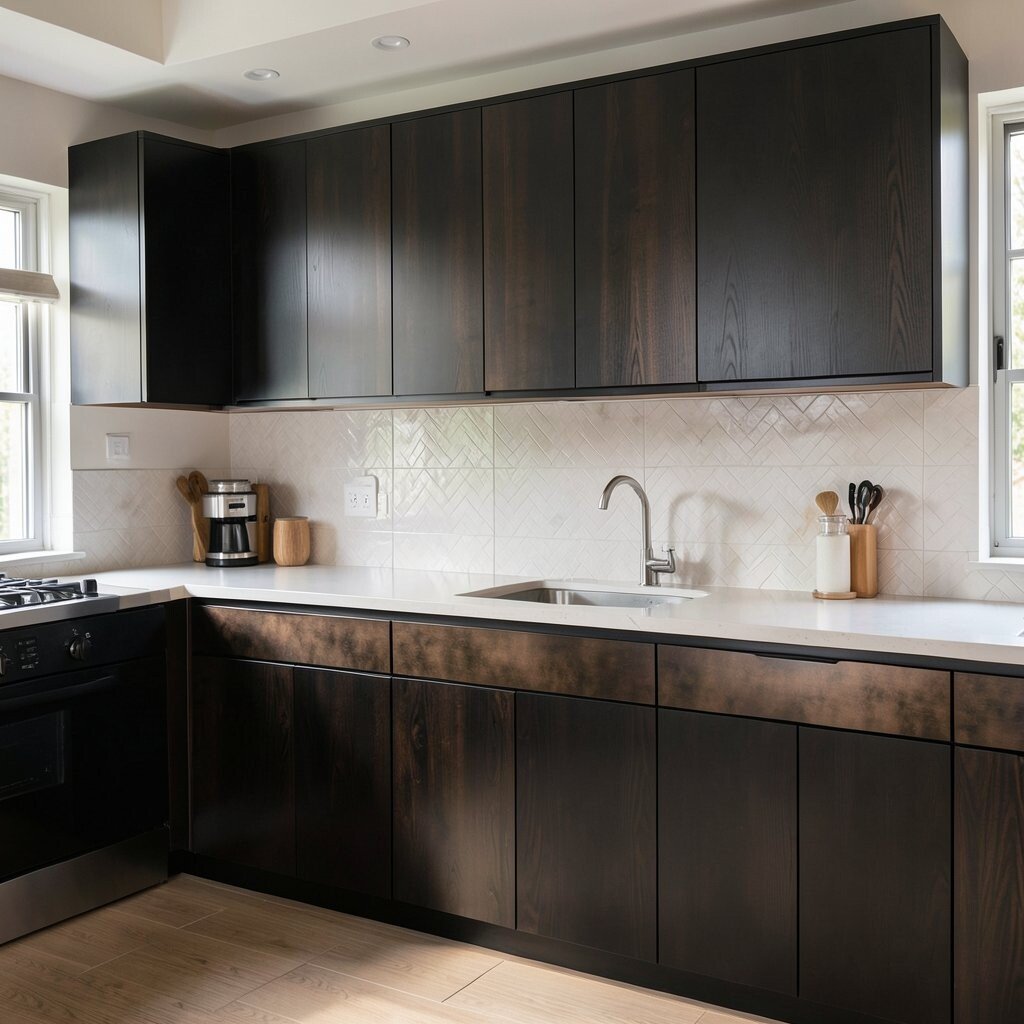
Black stained cabinets create a strong, sleek look that still feels inviting when paired with warm metal. Think brushed brass or copper pulls that glow subtly against the dark finish.
This style benefits from high contrast, which makes countertops and backsplash stand out in a good way. It also hides minor wear better than high-gloss white finishes, especially if you choose a matte or satin black. Make it practical by planning for strong lighting inside glass-front cabinets or open shelving areas.
To keep the look mid-century and not too industrial, choose cabinet door profiles that are simple and slightly tapered rather than boxy. Cost-wise, black stains on real wood can fall in a mid range depending on the species, and it’s often less expensive than elaborate glazing techniques. Personalize with a mix of hardware finishes across the kitchen for a collected, curated feel.
11. Cabinet Doors With Tapered Legs and Kickplate Detail
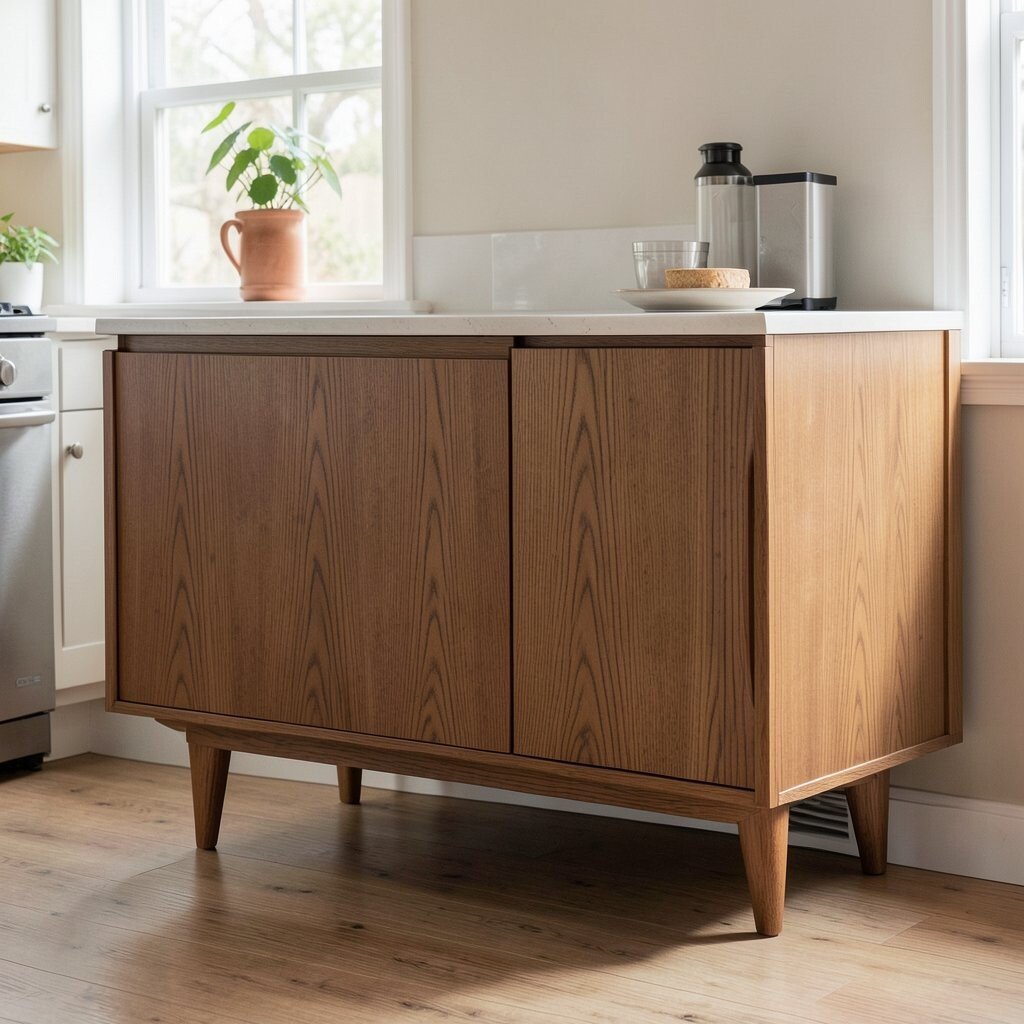
Some mid-century designs borrow the look of furniture legs, using a raised base and a kickplate detail. When done well, it makes your cabinets feel like tailored built-ins.
Choose a small gap between the cabinet bottom and the floor to make cleaning easier and to prevent grime from building up. This is a real practical advantage because you can sweep or vacuum under the cabinets without awkward angles. For benefits, the raised base can also create a lighter visual footprint in compact kitchens.
Personalization is easy here: decide how prominent you want the kickplate to be and match the hardware to it. For cost considerations, this style can be similar to standard cabinets, but any custom cabinet height adjustments may add a bit to the price.
12. Checkerboard Accent Panels on Select Doors
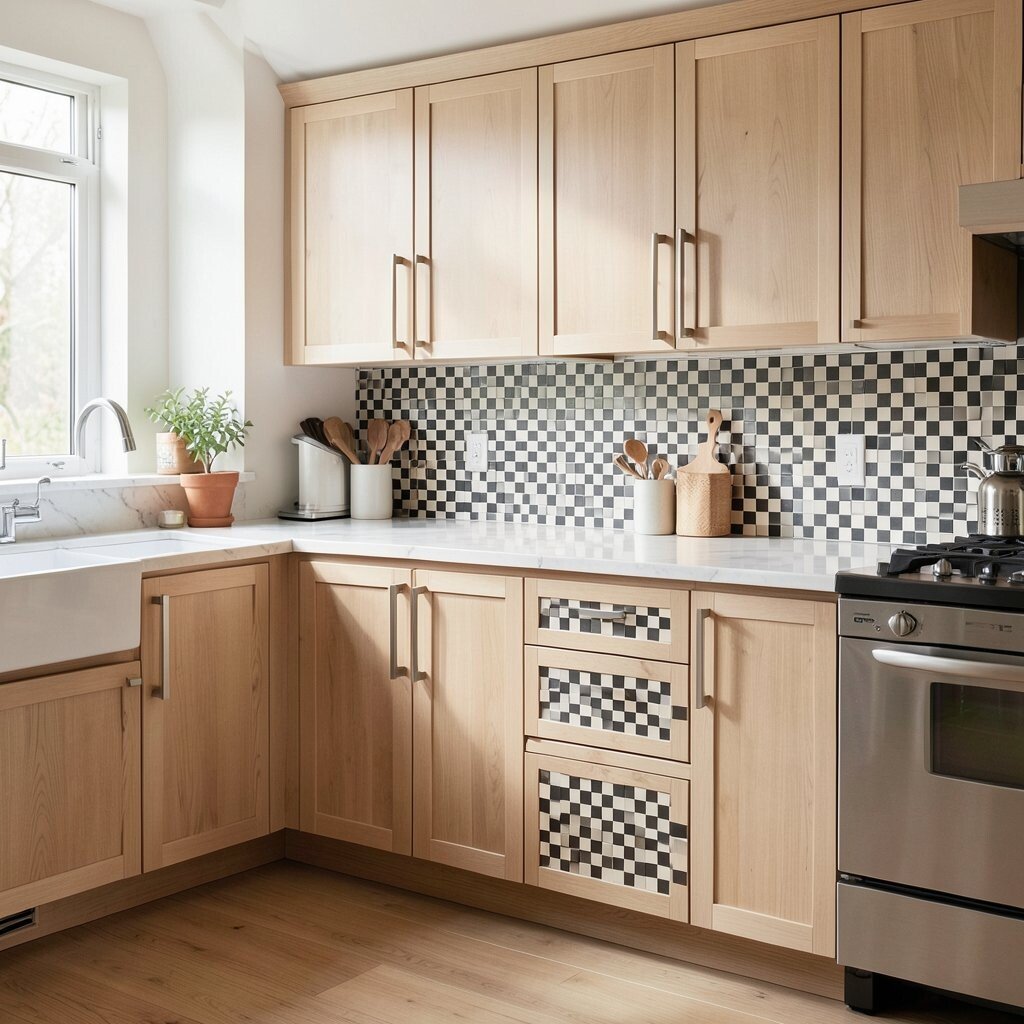
A checkerboard accent panel is a fun way to bring mid-century personality into one kitchen corner. Used sparingly, it looks clever and stylish rather than overwhelming.
Pick a pattern that matches your kitchen’s color palette, like warm walnut and light maple, or even a painted two-tone option. This uniqueness works especially well on a few upper doors or a breakfast bar cabinet so the whole room has a “surprise detail.” For practical tips, keep the pattern on doors that open less often so it stays protected from daily wear.
Cost can be higher if the pattern is custom, but you can control spending by limiting the design to a small number of doors. Personalize by adding matching accents in your hardware or by choosing a backsplash that echoes one of the pattern colors.
13. Mid-Century Corner Cabinets With Rotating Organizers
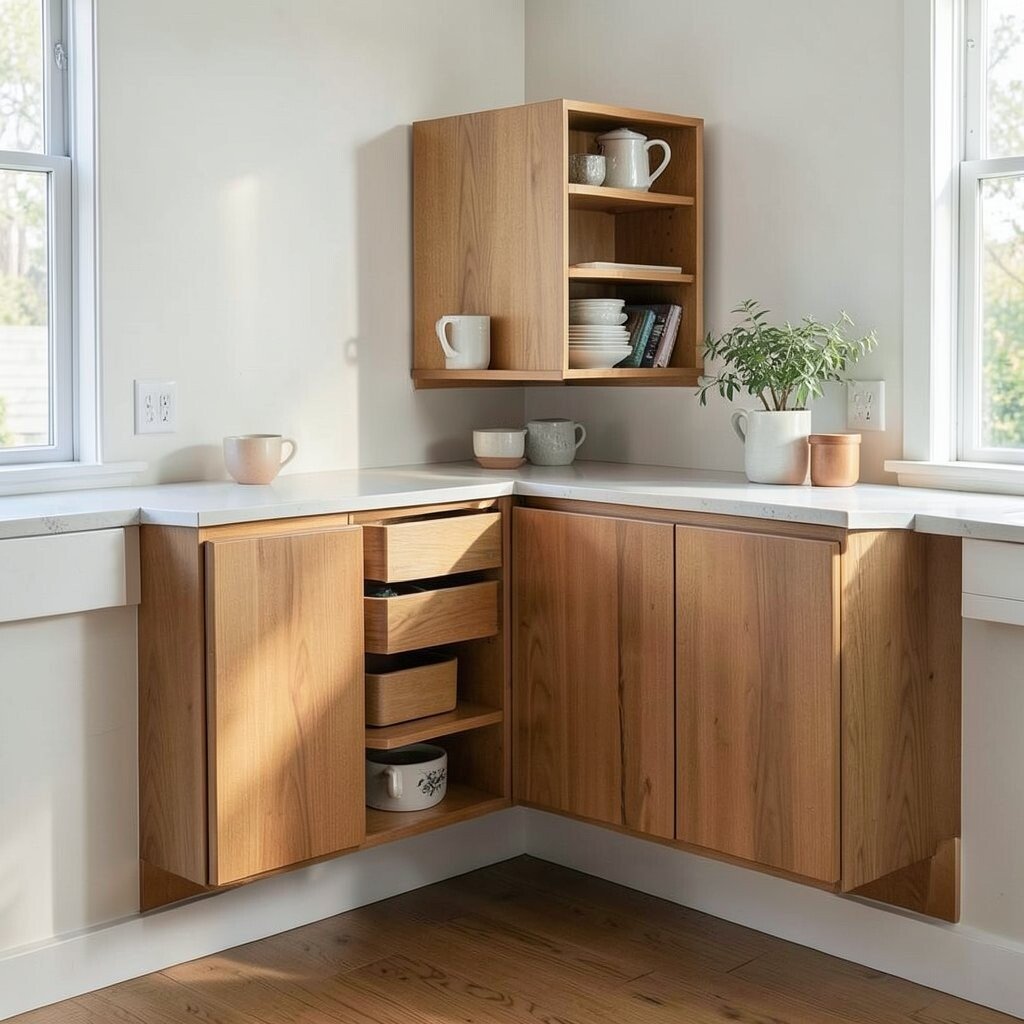
Corner cabinets are tricky, but mid-century kitchens can make them practical with clever rotating organizers. This approach keeps the clean lines while solving the “dead space” problem.
The benefit is simple: you get smooth access to pots, pans, or pantry items without awkward reaching. Choose a rotating tray or turntable insert that fits your cabinet size and has sturdy bearings for daily use. For personalization, assign the corner cabinet a clear purpose, like a cookware zone, so it’s easier to keep organized.
Cost considerations matter here, because specialty inserts can add to installation. Still, the payoff is big since it makes the kitchen more functional every single day.
14. Glass-Front Upper Cabinets With Wood Mullions
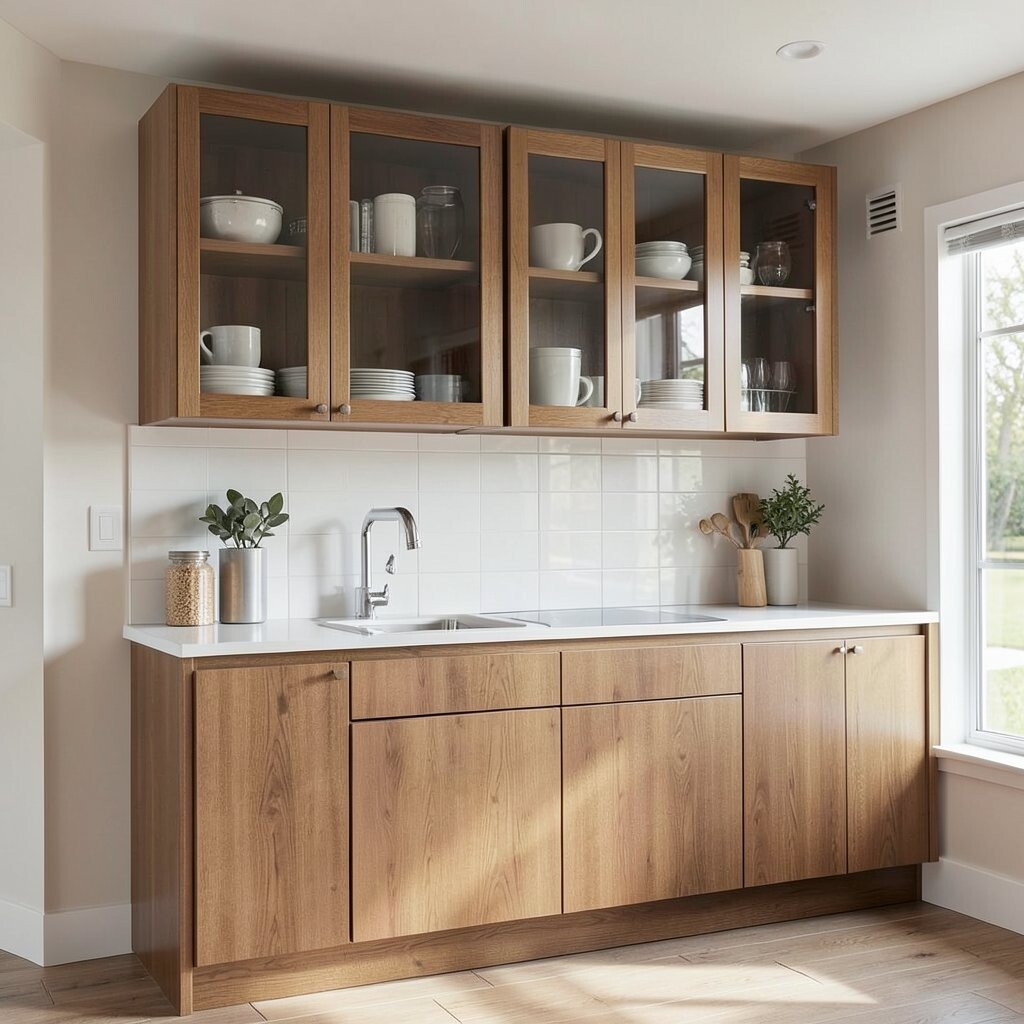
Glass-front upper cabinets with wood mullions bring a classic mid-century look that feels both elegant and cozy. The mullions create a structured frame, while the glass keeps the kitchen visually light.
This style is great when you want storage that feels intentional, especially for dishware, mugs, or decorative serving pieces. Add adjustable lighting under or inside the cabinet for a warm glow during evening cooking. For practical tips, use sliding shelf risers or shallow bins so smaller items don’t disappear behind taller plates.
In cost terms, glass and specialty frames can raise the price, but you can reduce cost by using glass only on upper cabinets and keeping lower cabinets solid. Personalize with a mix of dish patterns or coordinating colors, and choose glass that matches your vibe, from clear to tinted.
15. Modular Shaker-Style Meets Mid-Century Slabs
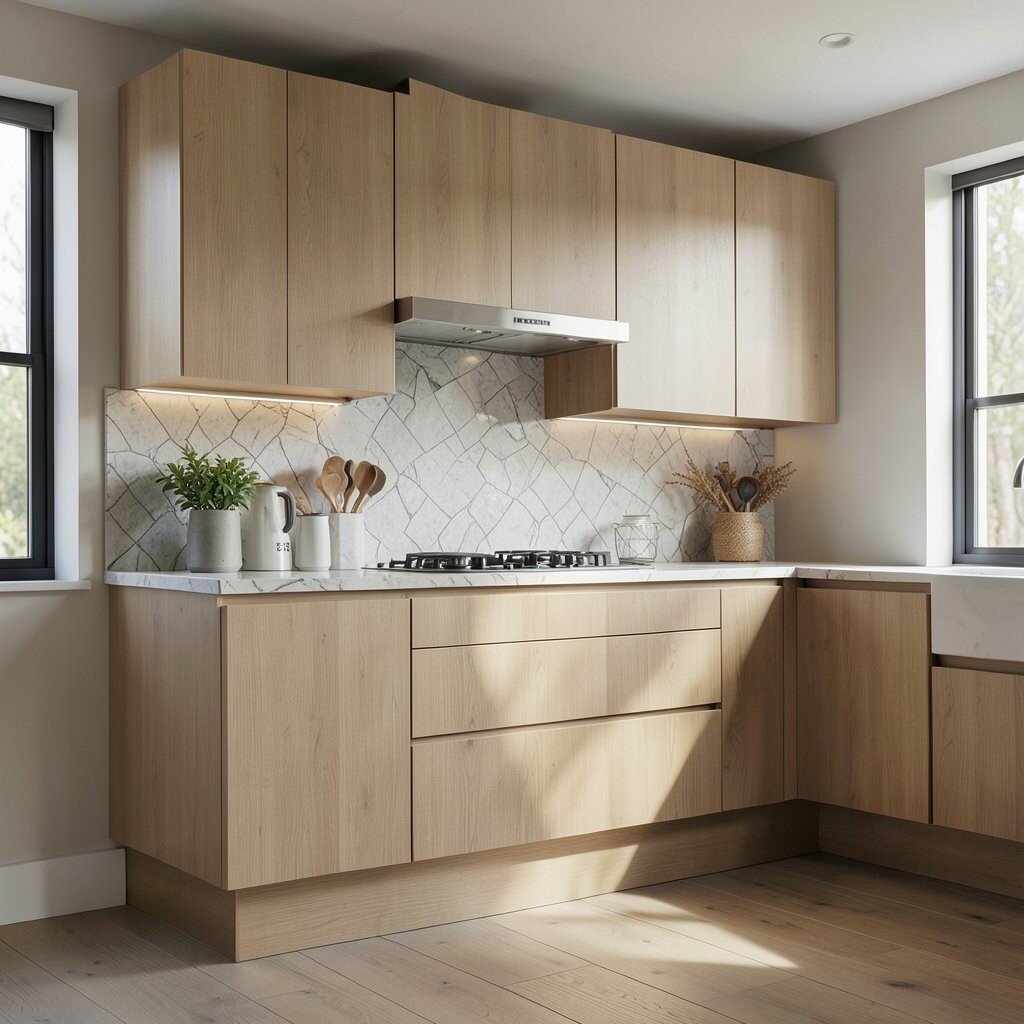
If you love the tidy look of Shaker doors but want a mid-century feel, combine modular Shaker-style frames with slab-style accents. The result looks familiar yet fresh, with a balanced mix of structure and smooth surfaces.
You can place slab doors on drawers and lower cabinets, then use Shaker frames on select upper cabinets for contrast. This design is unique because it bridges eras without looking random, especially when the color and hardware stay consistent. For practical tips, keep drawer fronts aligned and use organizers inside drawers so the clean look also works well for daily tasks.
Cost considerations are usually manageable because you can stick with standard cabinet configurations and upgrade only door fronts. Personalize by selecting a warm neutral paint or stain, then add hardware in a finish that matches your lighting fixtures.
To keep things current, consider pairing this cabinet mix with a simple, modern backsplash and a countertop material that feels natural, like light stone or a warm quartz.