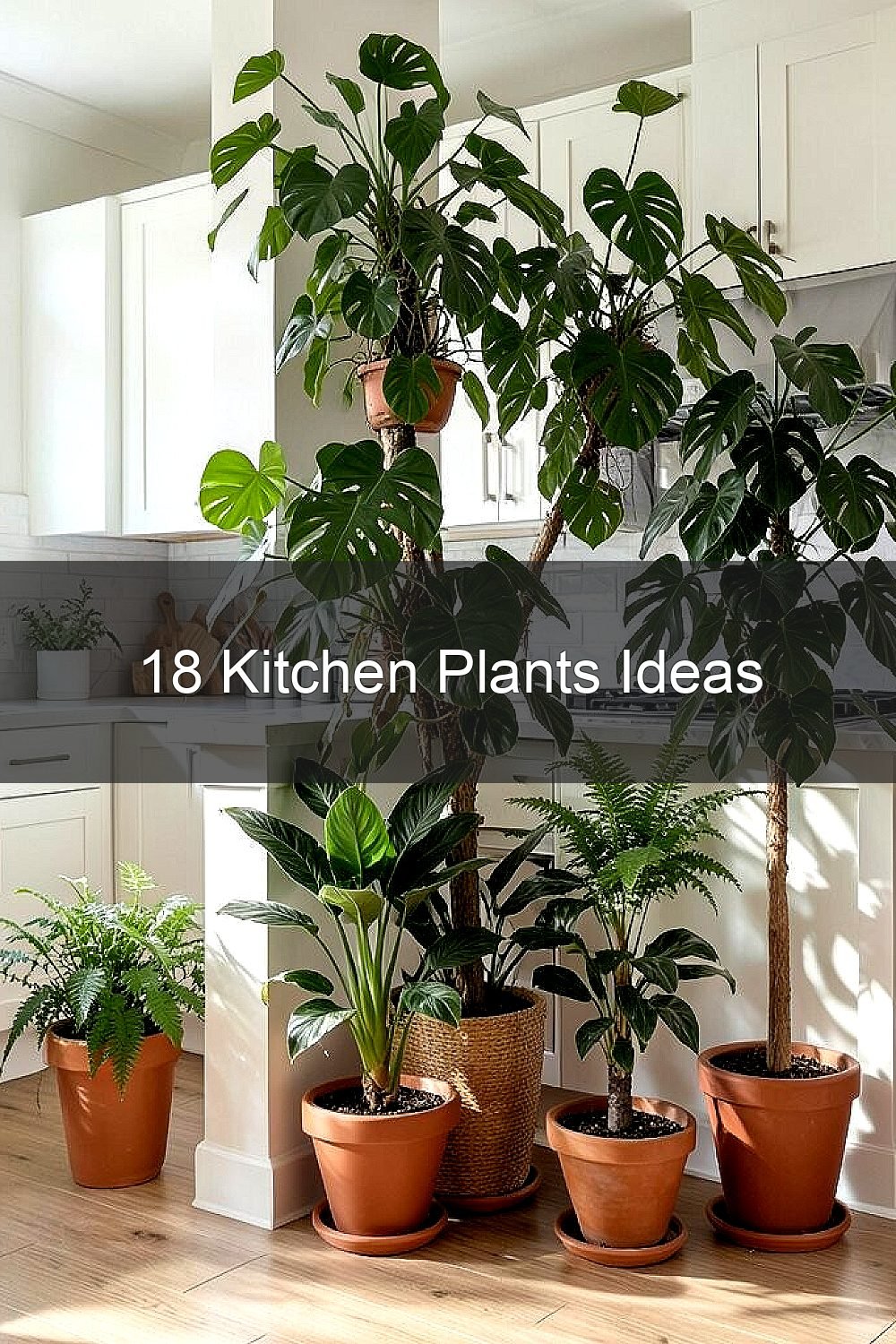
The kitchen can feel brand-new with a little living greenery. Add plants and you get warmth, color, and a calmer mood.
You can keep it simple or go bold, and every style can fit a plant choice.
1. Window-Sill Herbs That Smell Like Home

Fresh herbs along a sunny sill look like small green art pieces. Imagine snipping basil or mint right before cooking and feeling that instant “fresh” vibe.
Choose hardy herbs like rosemary, thyme, chives, and mint, then group them in matching planters for a neat look. Use a pot with drainage and place a saucer underneath to protect your cabinet base. Rotate the pots weekly so each side gets light, and keep leaves dry to reduce problems. Personalize the containers with colors that match your backsplash or switch to terracotta for a classic feel.
2. Tall Floor Plants for Vertical Drama
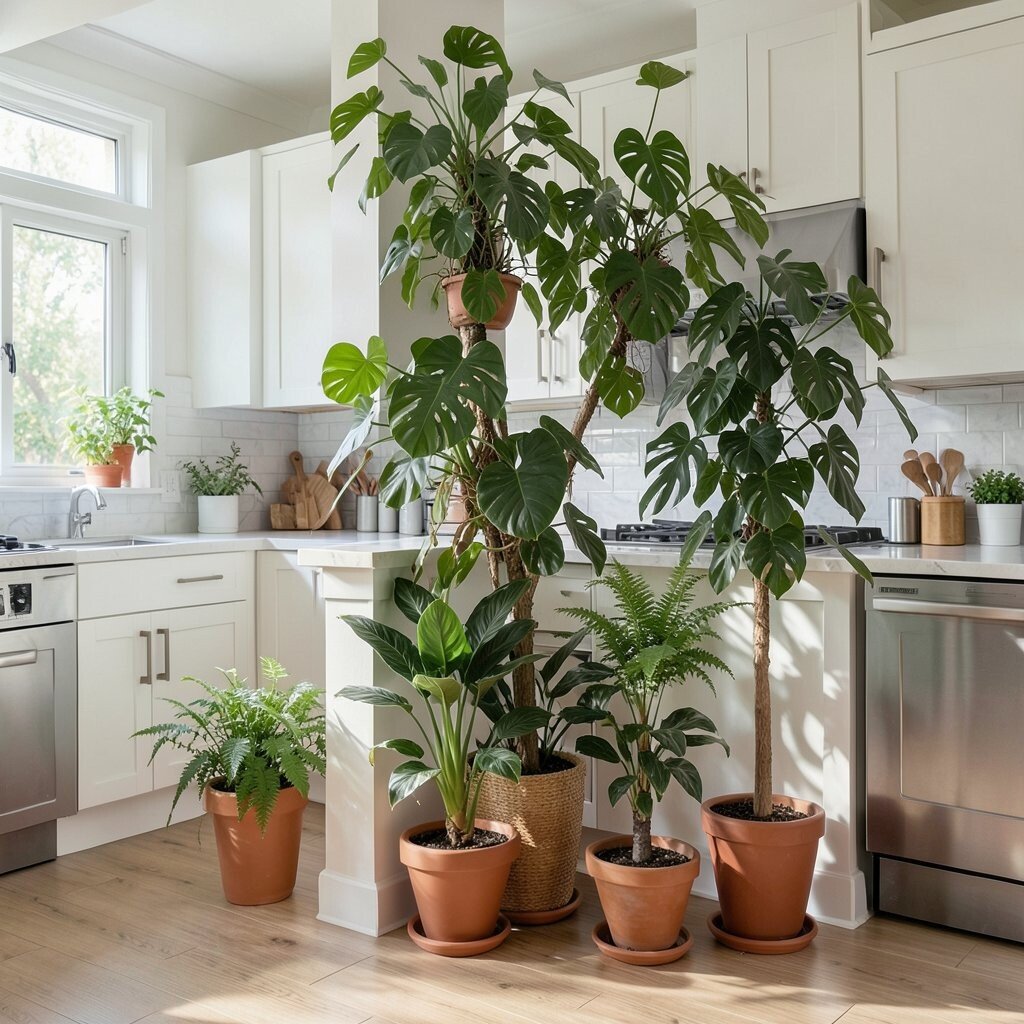
A floor plant near the fridge or beside a pantry door adds height and makes the whole room feel styled. When the leaves catch the light, the kitchen looks more lively, even on quiet days.
Pick plants that handle indoor conditions well, like a fiddle-leaf fig, a rubber plant, or a dwarf palm. Give them bright, indirect light and rotate them so the shape stays balanced. For practical care, wipe dusty leaves with a soft damp cloth and check soil moisture before watering. If you want a budget-friendly start, use a larger pot with a low, decorative filler layer and choose a smaller plant to grow into the space.
To personalize, match the pot color to your cabinet hardware or add a textured planter for extra depth. If your kitchen has pets, choose pet-safe options and keep the plant out of reach. You’ll also find that tall plants help visually separate kitchen zones, like dining corners or open shelving areas.
3. Hanging Herb Planters Above the Counter
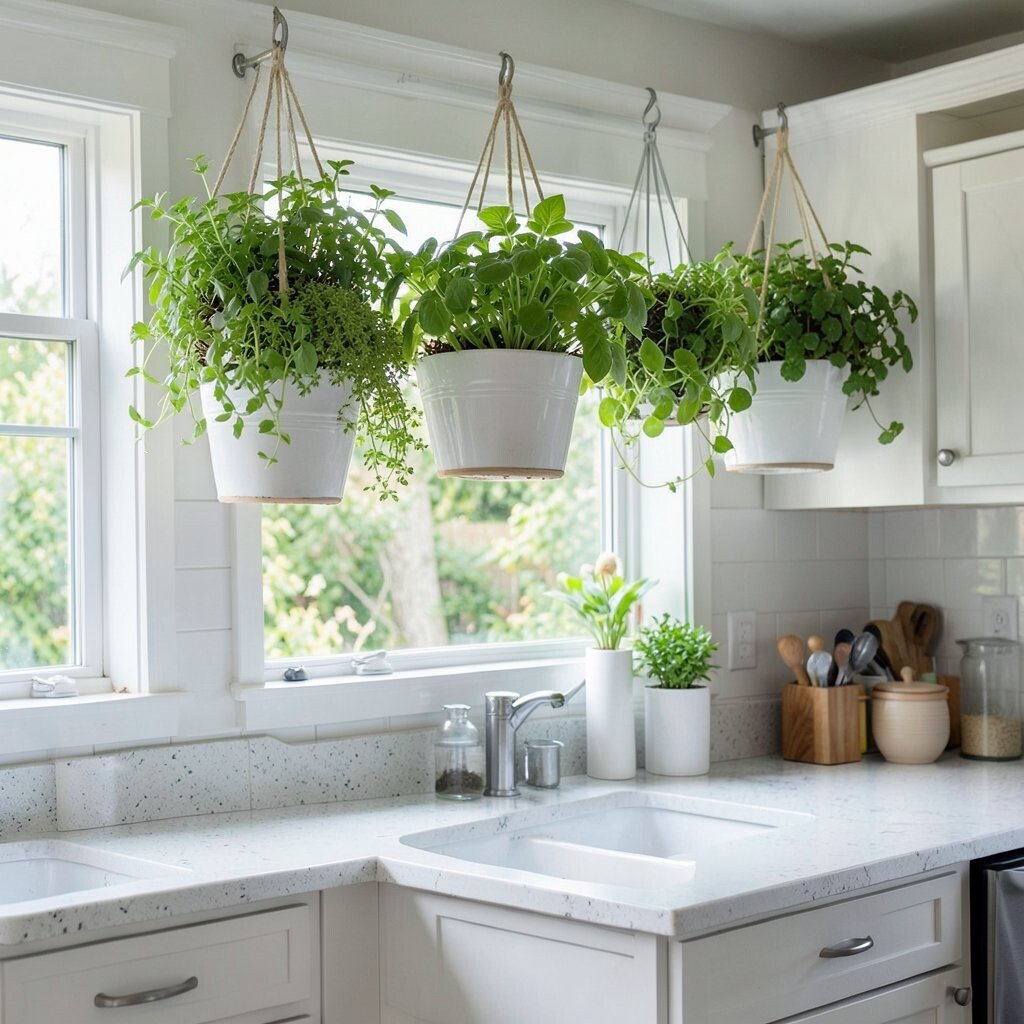
Hanging greenery turns unused space into a fresh, flowing feature. It also keeps plants close to cooking, so you naturally reach for herbs while you cook.
Use a rail system, macramé hangers, or wall-mounted hooks to create a tidy row above the counter. Go for easy winners like trailing pothos, basil varieties that do well indoors, or small leafy greens. Ensure the watering plan is practical by using lightweight pots and placing a drip tray or absorbent mat below. Keep the leaves away from direct flame from the stove and use heat-safe placement.
For uniqueness, mix planter shapes, such as a round ceramic pot with a matte black container. You can also use plant shelves that hang like frames, giving a gallery feel. This style works great for small kitchens because it adds life without taking floor area.
Consider using a simple schedule, checking soil every couple of days until you learn the routine. If you travel or forget care, choose plants that tolerate slight drying between waterings. Adding hanging plants also looks current because layered vertical styling is trending in modern kitchens.
4. Repurpose Mason Jars for a Cozy Rustic Shelf
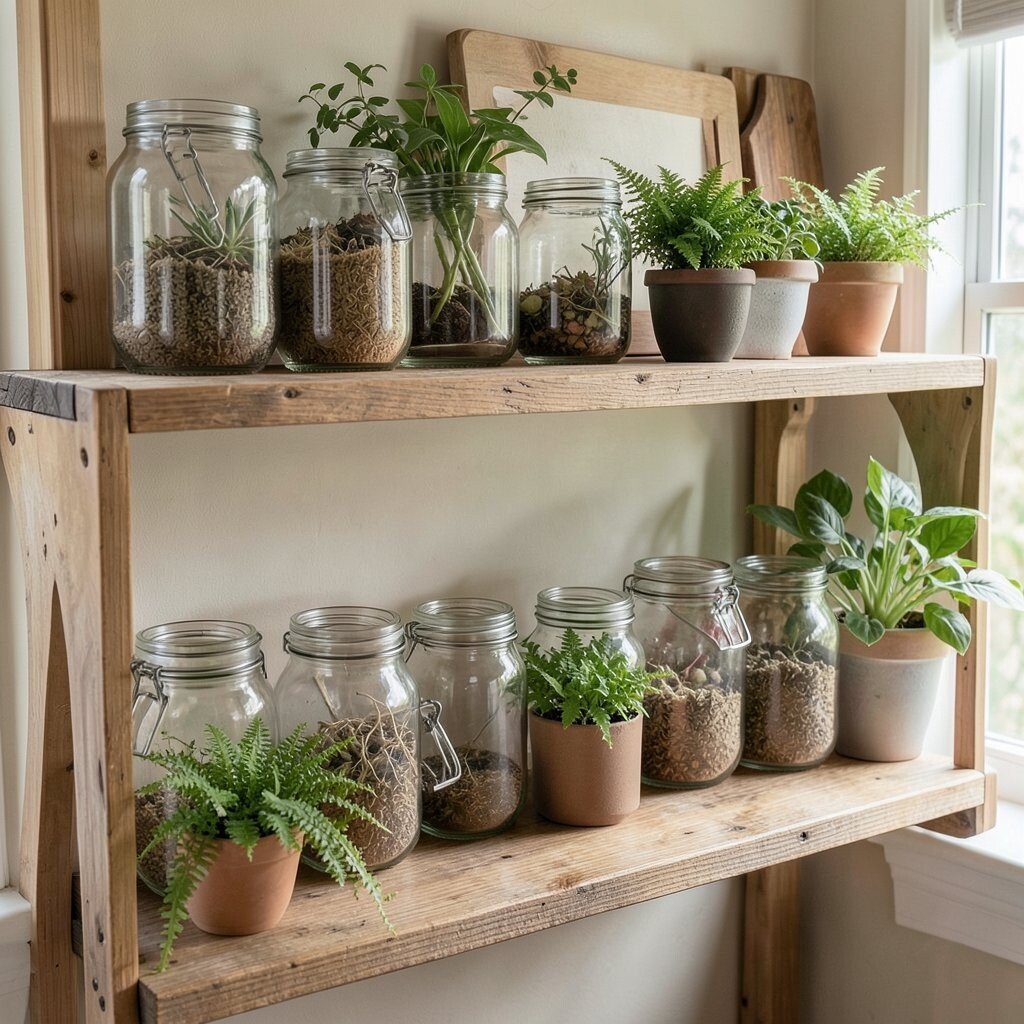
Mason jars filled with herbs or small cuttings make the kitchen feel warm and familiar. They look charming on open shelves, window ledges, or even above a coffee station.
Pair jars of different heights for a natural look, or keep them matching for a cleaner vibe. Fill jars with water for cuttings like green onions, mint, or basil, then change the water regularly to keep things fresh. You can also place soil into larger jars if you prefer potted herbs that grow longer. For practical tips, use a tray under jars to catch drips and keep surfaces safe from moisture.
This idea is budget-friendly, since jars are easy to find and herbs can be started from kitchen scraps. Personalize by adding twine labels, painting lids to match your decor, or using consistent jar color to echo your pantry containers. Rustic styling stays popular, and these jars give that lived-in feeling without clutter.
5. Choose a Statement Monstera for Big Leaf Energy

Few plants bring instant “wow” like monstera with its iconic leaf shapes. In a kitchen, the bold leaves add texture, shade, and a modern, artsy mood.
Place it where it gets bright, indirect light, such as near a window with a sheer curtain. Water when the top inch of soil feels dry, and avoid soggy roots. Use a sturdy pot and add a small saucer so watering stays tidy. If you want a personalization touch, rotate the plant to face the room and keep leaves oriented like a display.
This plant is unique because it blends well with both modern and boho kitchens. Pair it with a woven basket planter cover or a sleek ceramic pot depending on your style. Cost-wise, a mature plant can be pricier, but starter sizes often catch up quickly with steady light.
6. Use a Corner Plant Stand for Balanced Layouts
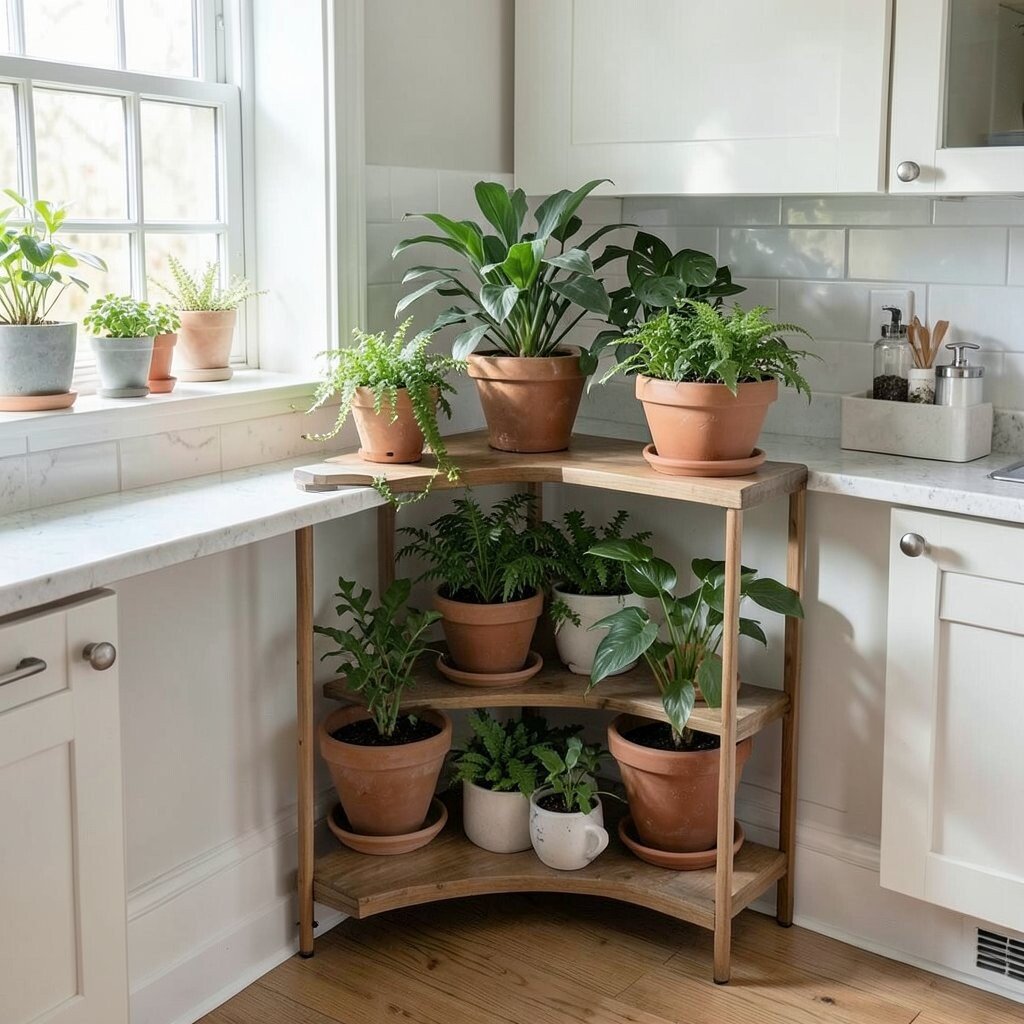
A corner plant stand makes greenery look intentional, not accidental. It also helps your kitchen layout feel more balanced, especially when corners feel empty or dark.
Choose a stand with enough height to show leaves clearly, then place a plant that fits your light level. Great options include snake plants for lower light, peace lilies for humid spots, or leafy plants for brighter areas. Keep the stand stable and use a liner tray so water doesn’t stain the floor. For practical care, check the plant’s needs based on the pot size, because smaller pots dry faster on higher stands.
7. Create a Fresh Herb Wall on Open Shelving

An herb wall turns shelving into a living display that looks both functional and pretty. It gives your kitchen a curated feel while also making cooking feel smoother.
Pick shelves that match your cabinet style, then use matching planters or a consistent pot color to keep the look tidy. Choose herbs that are comfortable indoors, like oregano, parsley, cilantro, and basil. Rotate planters often and trim herbs regularly so they stay full and healthy. If you want a cost-smart route, start with smaller seedlings and add more containers over time.
For personalization, you can group plants by color, such as deep green with lighter mint tones. Make it practical by placing the most-used herbs near your prep area and the decorative ones on the far shelf. This is a unique twist on open shelving that aligns with the current trend of mixing functional decor with everyday use.
One more simple tip is to use drip-catching mats behind shelves if water spills while you water. You’ll keep everything neat while enjoying the fresh look every day.
8. Try a Compact Plant Near the Sink for Everyday Calm

Putting a small plant near the sink makes the kitchen feel soothing and lived-in. It’s also a smart spot since you’ll naturally remember to care for it while doing daily tasks.
Look for plants that enjoy regular humidity, such as pothos, philodendron, or a small fern. Keep it away from direct blasts of hot air from vents, and watch for water splashes. Use a pot with drainage and a saucer to protect the countertop. If you want it to feel extra designed, choose a planter that matches your soap dispenser color or the finish on your faucet.
9. Add a Tabletop Plant for Instant Color at Meal Time
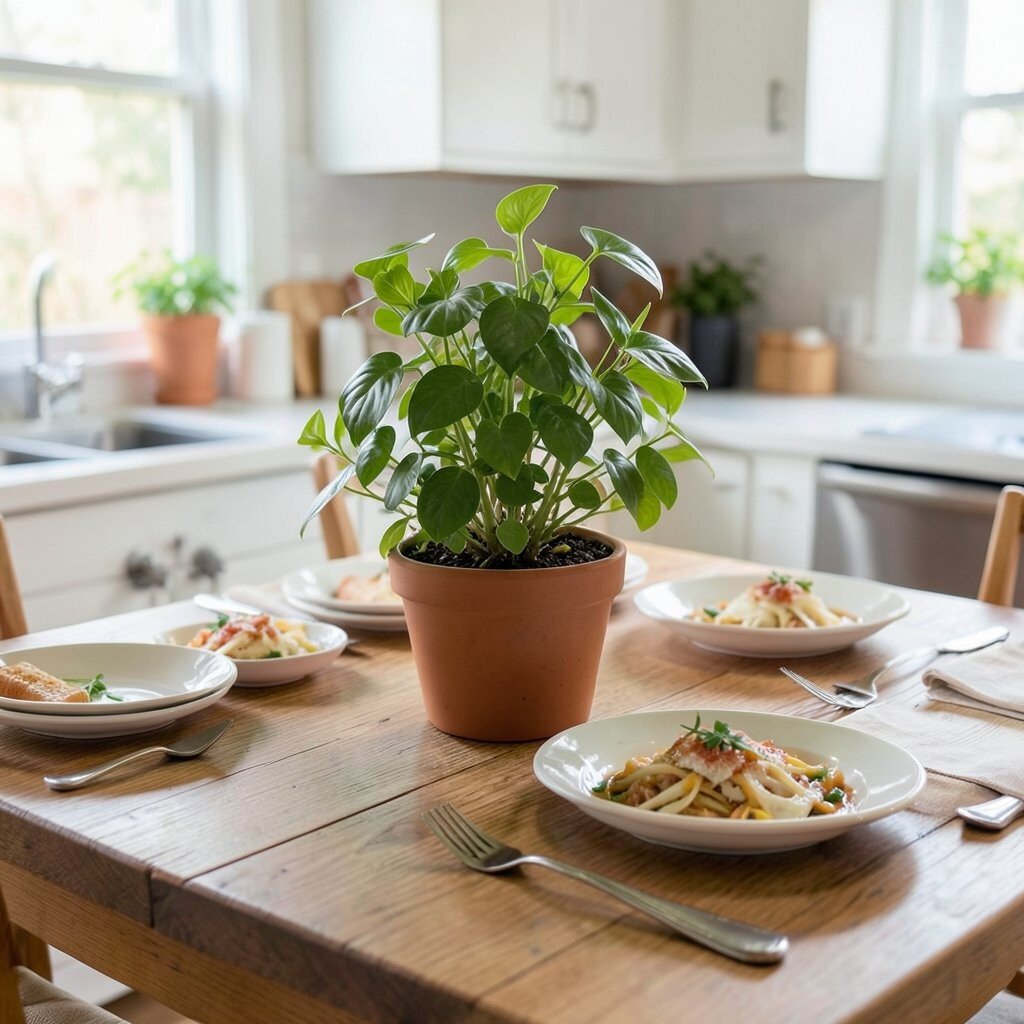
A tabletop plant makes dining moments feel fresher and more inviting. Even a small plant can brighten the room and add a pop of green on busy days.
Use a compact option like a small citrus tree, a tiny olive plant, or a neat succulent cluster. Keep it on a tray so water doesn’t reach the table and so it’s easy to move. Rotate it so it stays even, and avoid placing it where sunlight hits too strongly for long hours. For practical care, check soil moisture gently with your finger instead of guessing by weight.
To personalize, place small decorative stones on top of the soil or use a planter that matches your kitchen colors. This is also a cost-friendly approach since small plants are easier to start with than large specimens.
10. Choose a Self-Watering Planter for Low-Stress Care

Self-watering planters help you keep plants looking great with less worry. They’re especially useful in kitchens where your schedule can change day to day.
Look for a planter with a reservoir and a clear indicator if possible, so you can see when it needs a refill. Pair it with plants like pothos, snake plant, or peace lily depending on your light. Practical care becomes easier because the plant draws water gradually and you reduce mistakes. For personalization, you can choose modern shapes that match your kitchen style, like slim cylinders or geometric pots.
11. Add a Curated Plant Cluster on the Breakfast Nook

A cluster of plants creates a mini “green corner” that feels stylish and relaxing. Instead of one plant, several different textures make the nook look designed.
Mix plants with different leaf shapes, like a trailing pothos, a medium leafy plant, and a small spiky plant for contrast. Use planters of similar tones, such as cream, terracotta, or matte black, so the grouping still looks cohesive. Keep the cluster near natural light and water based on each plant’s needs rather than a single schedule. If you want to control cost, begin with one or two plants and add more as your budget allows.
Uniqueness comes from choosing plants that fit your personality, maybe a plant with big dramatic leaves or a variety with delicate foliage. This trend of “plant styling” shows up in many modern home photos because it feels intentional and cozy.
12. Use a Decorative Pot Cover That Matches Your Kitchen Textures
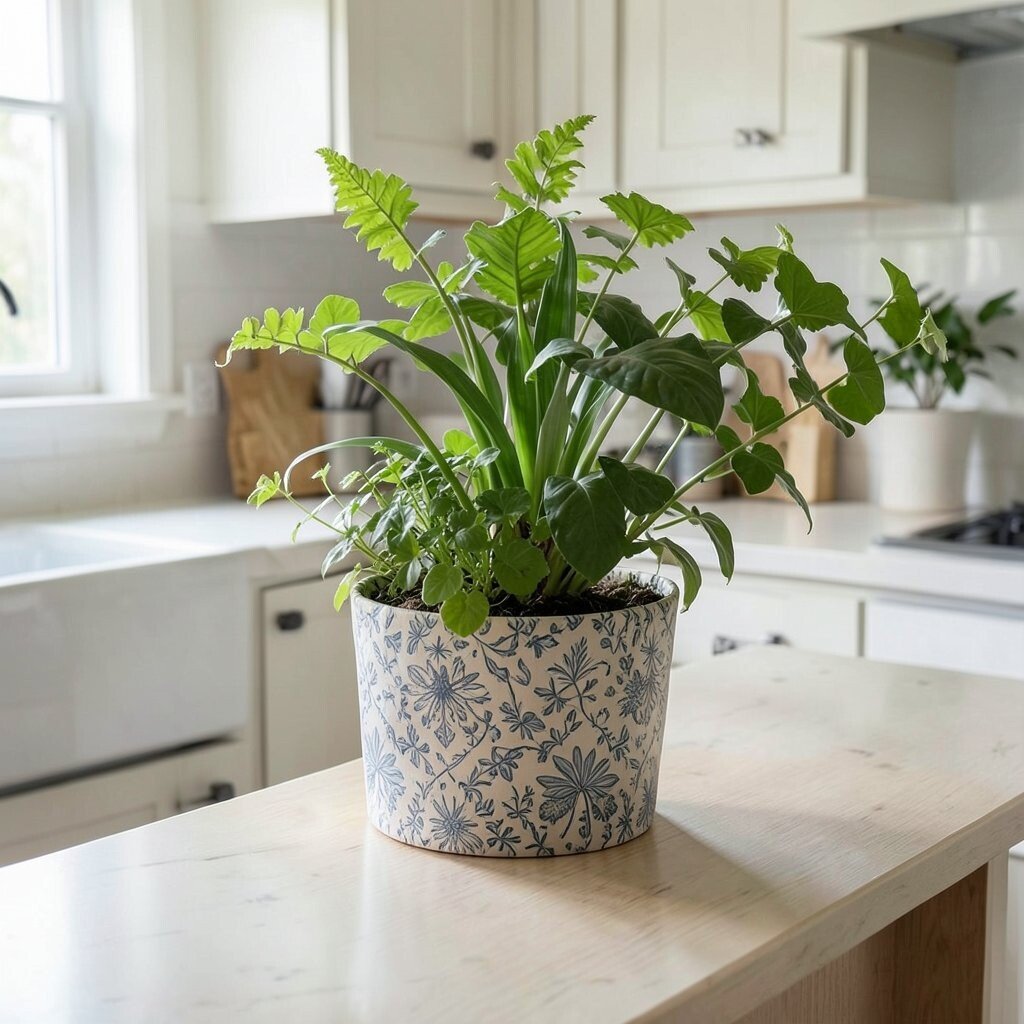
A plant looks twice as nice when the pot matches your kitchen’s textures. Pot covers can tie the greenery into your decor instead of letting it look random.
Choose woven covers for a warm vibe, glossy ceramic covers for a sleek look, or wood stands for a natural feel. Keep inner and outer pots aligned so the plant doesn’t sit too low and cause water to pool. For practical tips, lift the inner pot occasionally to check drainage and clean any residue. Personalize by matching your cover to items you already love, like a basket for produce or a wooden cutting board.
Cost varies, but you can find affordable covers and upgrade gradually. This idea feels unique because it focuses on styling details, not just plant species.
13. Grow a Small Indoor Citrus Tree in a Bright Spot

Watching an indoor citrus tree grow can make your kitchen feel magical. The shiny leaves plus the chance of blossoms and fruit give the space a special energy.
Place it in the sunniest window you have, and expect it to need more light than herbs. Water consistently, but don’t overdo it, since soggy soil can hurt the roots. Use a bigger pot as it grows so it doesn’t become root-bound too quickly. For personalization, pick a pot color that feels like a celebration, such as sunny yellow or deep navy, depending on your kitchen palette.
This option can cost more upfront because healthy fruiting plants often cost extra. Still, it’s unique and memorable, and you’ll enjoy it for a long time if you care for it steadily.
If your home air is dry, mist lightly or use a pebble tray nearby to support humidity. Citrus trees are also a great conversation starter when guests visit.
14. Create a Living Window Box for Light and Privacy

A window box full of greenery makes the kitchen feel fresh and welcoming. It also brings a soft, natural frame around a busy window.
Use a sturdy window planter and choose plants that do well with steady light, such as rosemary, dwarf basil, or ornamental grasses in some climates. Make sure the box has drainage, and use a drip tray if it sits close to the window frame. Practical care means checking soil moisture more often because window boxes can dry faster. Personalize by selecting plants with different leaf colors, like silver-green herbs alongside deep green foliage.
15. Keep Succulents for a Sleek, Modern Look

Succulents bring a clean, modern vibe with their tidy shapes and thick leaves. They look especially good when you want greenery without high maintenance.
Arrange a few varieties in a shallow dish or a set of small pots for an organized look. Place them where they get bright light and rotate as needed so they don’t stretch. Water sparingly, and let soil dry fully between waterings to avoid root rot. For personalization, use pebbles in different colors or a minimalist planter that matches your countertops.
Cost can be low since many succulents propagate easily from cuttings. This makes them a unique choice for anyone who likes plants but wants simple routines.
16. Add a Fern for Soft, Lacy Texture

Ferns add delicate, feathery texture that feels calm and gentle in the kitchen. The fronds look gorgeous near sinks, windows, or shelves with natural light.
Choose a fern variety that fits your home humidity, then keep it consistently moist but not soaking. Place it out of direct sun, since too much light can scorch the fronds. A practical trick is to use a humid spot like near the stove only if it doesn’t get too hot, or near a humidifier if you have one. Personalize with a ceramic pot in a soft color and add a small stand to lift it to eye level.
Ferns can be a bit more demanding than hardy herbs, but the look is worth it. If you want a cost-smart approach, start with one plant and see how your kitchen’s humidity performs.
17. Style a Plant Next to Artwork or a Chalkboard Area
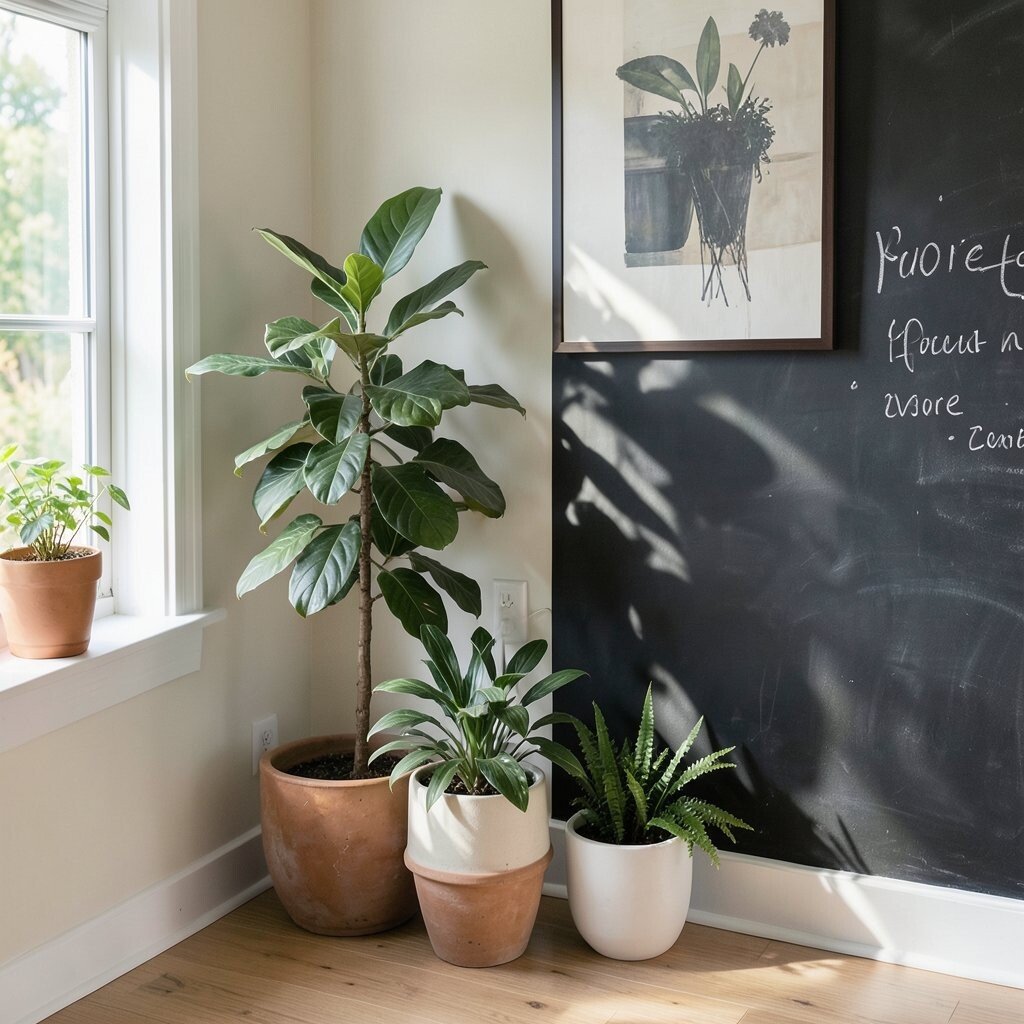
Pairing a plant with kitchen decor makes the whole wall feel curated. It gives your eyes something living to focus on while also blending with your style theme.
Place a medium plant next to artwork, a chalkboard menu, or a set of framed photos. Choose plants with leaves that complement your decor colors, like deep green for warm wood tones or brighter chartreuse for modern neutral kitchens. Keep lighting in mind, because even decorative placement can affect how well the plant thrives. Practical care includes checking leaf dust and wiping gently so the display stays crisp.
This idea feels unique because it treats plants like part of your decor, not just a living object. If you enjoy switching seasonal themes, swap planters or add small seasonal cuttings to keep the display fresh.
Cost is flexible too since you can start with a medium plant and change pot covers over time for a new look.
18. Mix Plants with Smart Lighting for Evening Charm

Adding plant-friendly lighting makes your greenery look beautiful even after sunset. It also helps plants stay healthier when your kitchen doesn’t get enough natural sun.
Use a small grow light on a shelf or near a window to support plants like pothos, herbs, and leafy greens. Keep the light positioned so leaves get even coverage, and follow the recommended timing based on the plant type. For a practical, good-looking setup, choose warm, stylish fixtures that blend with your kitchen. Personalize by using a light stand that matches your hardware finish so it looks like intentional decor.
This trend is growing because more homes are using lighting to make plants look amazing year-round. While grow lights can add cost upfront, they often reduce stress and plant loss, which saves money over time. The result is a kitchen that feels vibrant, cozy, and cared for every day, not only in daylight.
To keep it simple, start with one well-placed plant and one light, then adjust as you learn. Once you see the effect at night, it’s hard to go back to plain shelves.