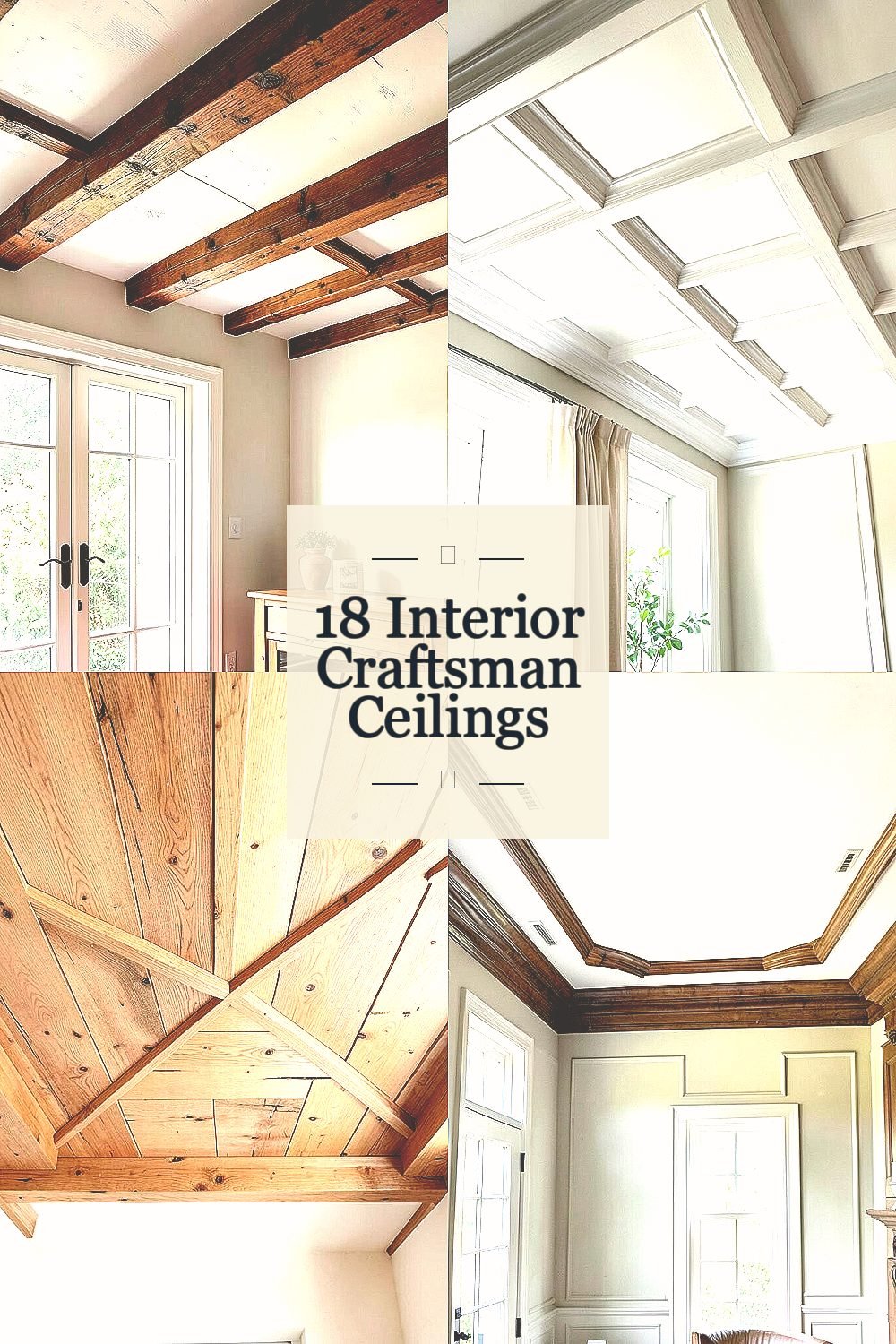
A Craftsman ceiling can make a room feel warm, steady, and full of character. When the details are right, the whole space starts to feel intentional.
From beams to decorative panels, these ideas show how classic style can work with today’s everyday life.
1. Exposed Beam Accents in Warm Stain
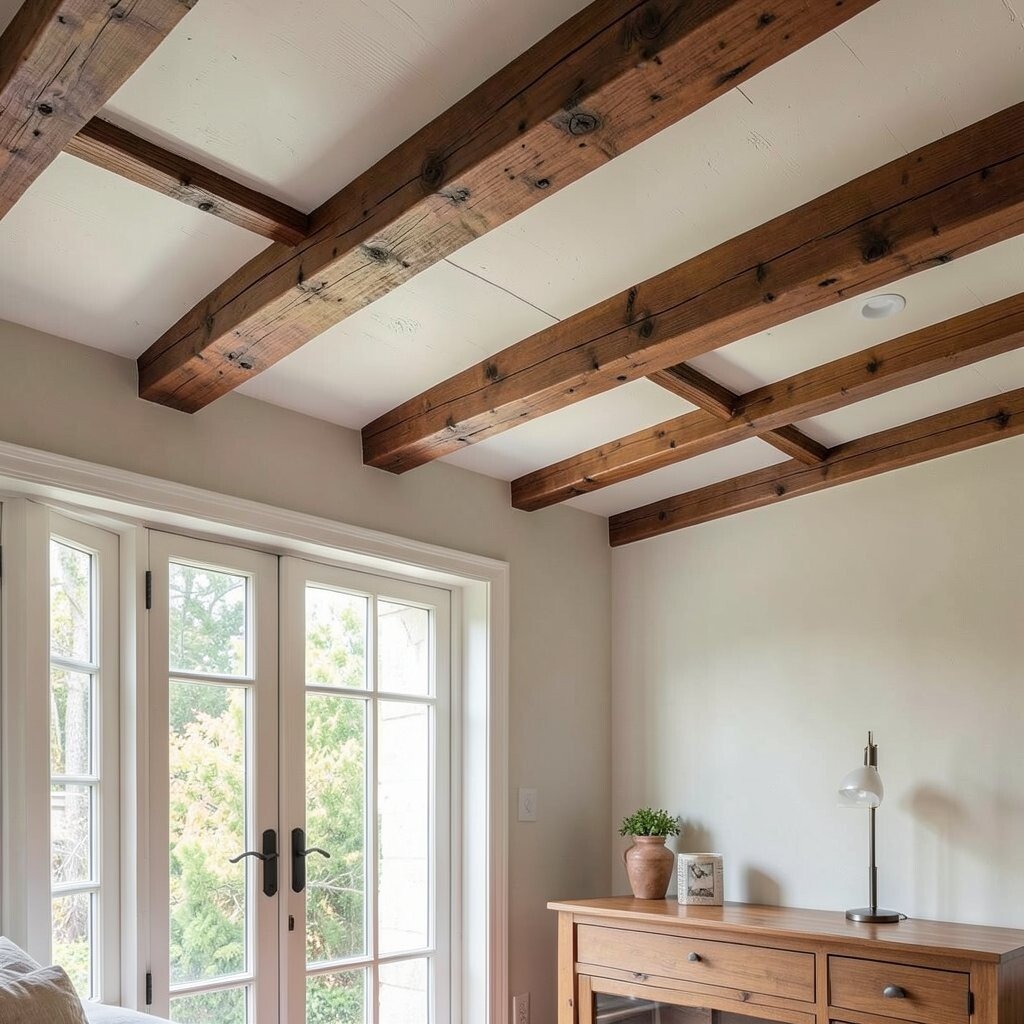
You can create instant Craftsman charm with exposed beams finished in a warm stain. The look makes even a plain ceiling feel richer, like the room has good bones.
Choose beams that match the scale of your space so they feel balanced, not crowded. A medium-to-dark stain hides everyday marks, which is great for busy homes. If you want personalization, vary the beam spacing slightly by room so the ceiling feels custom.
2. Coffered Panels with Gentle Depth
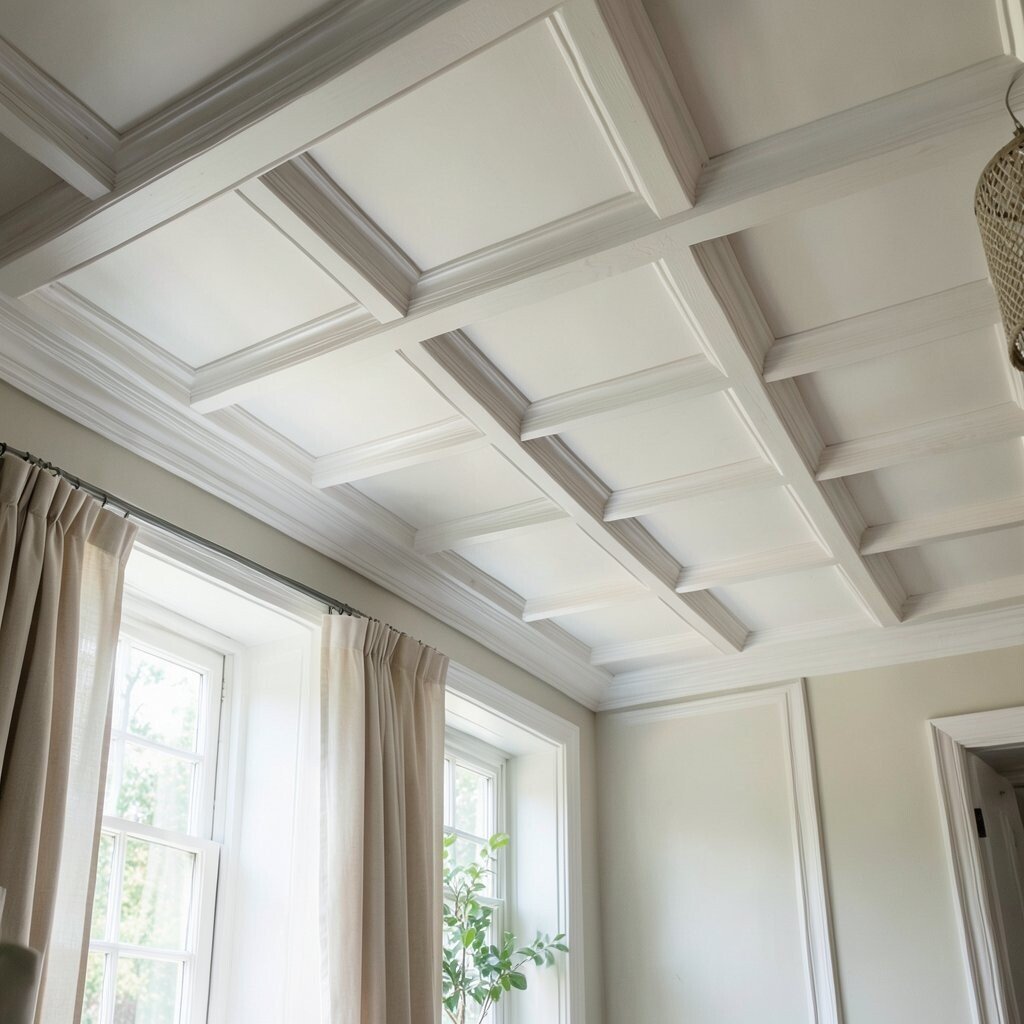
Coffered ceilings bring tidy structure and a calm, tailored feel. Light fills the recessed sections and gives the ceiling a soft, architectural rhythm.
To keep it practical, use panels that are sized for your ceiling and install them with clean, consistent spacing. This style can work with both classic wood tones and paint-friendly finishes. For cost control, consider using lightweight faux panels if the ceiling height is low or access is limited.
If you like current trends, pair coffered details with a warm white ceiling color and deeper wood outlines. That contrast looks fresh and still reads as Craftsman. You’ll also find it easier to change accessories later since the ceiling stays neutral.
3. Natural Wood Planks with Matching V-Groove Lines
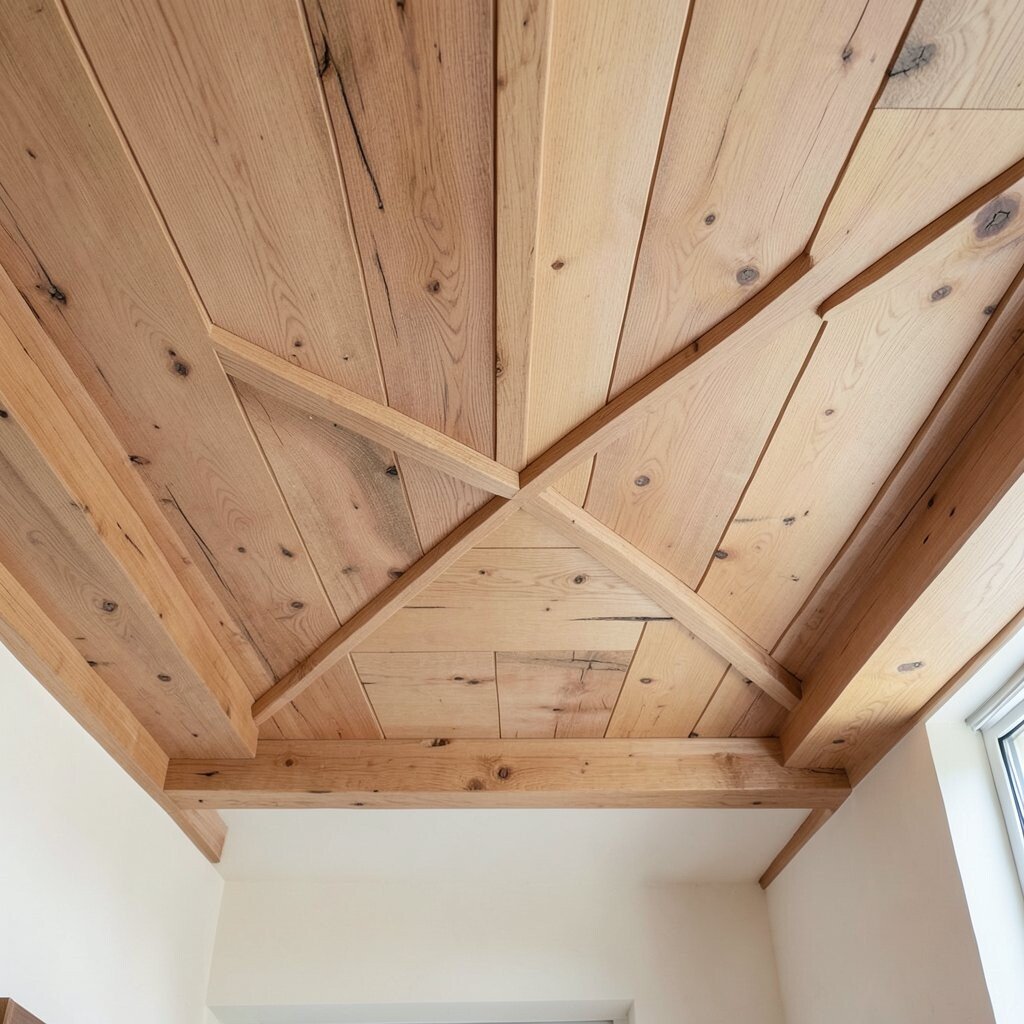
Wood plank ceilings feel grounded and inviting, especially when the planks share a matching grain direction. V-groove lines create a subtle texture that catches light without looking busy.
This option looks unique because your ceiling becomes a showcase of real material character. For a smooth finish, use planks that are carefully sanded and then sealed for everyday durability. Install with a reliable pattern so seams look straight from any corner.
If you’re thinking about personalization, mix a darker plank accent strip across the center for a focal point. It also helps define the room without adding heavy decor. Budget-friendly tips include sourcing pre-finished planks and planning cuts to reduce waste.
When trends shift toward warmer neutrals, wood ceilings fit right in and stay timeless. Pair the ceiling with simple trim and let the texture do the talking.
4. Picture Frame Trim for Classic Craftsman Order
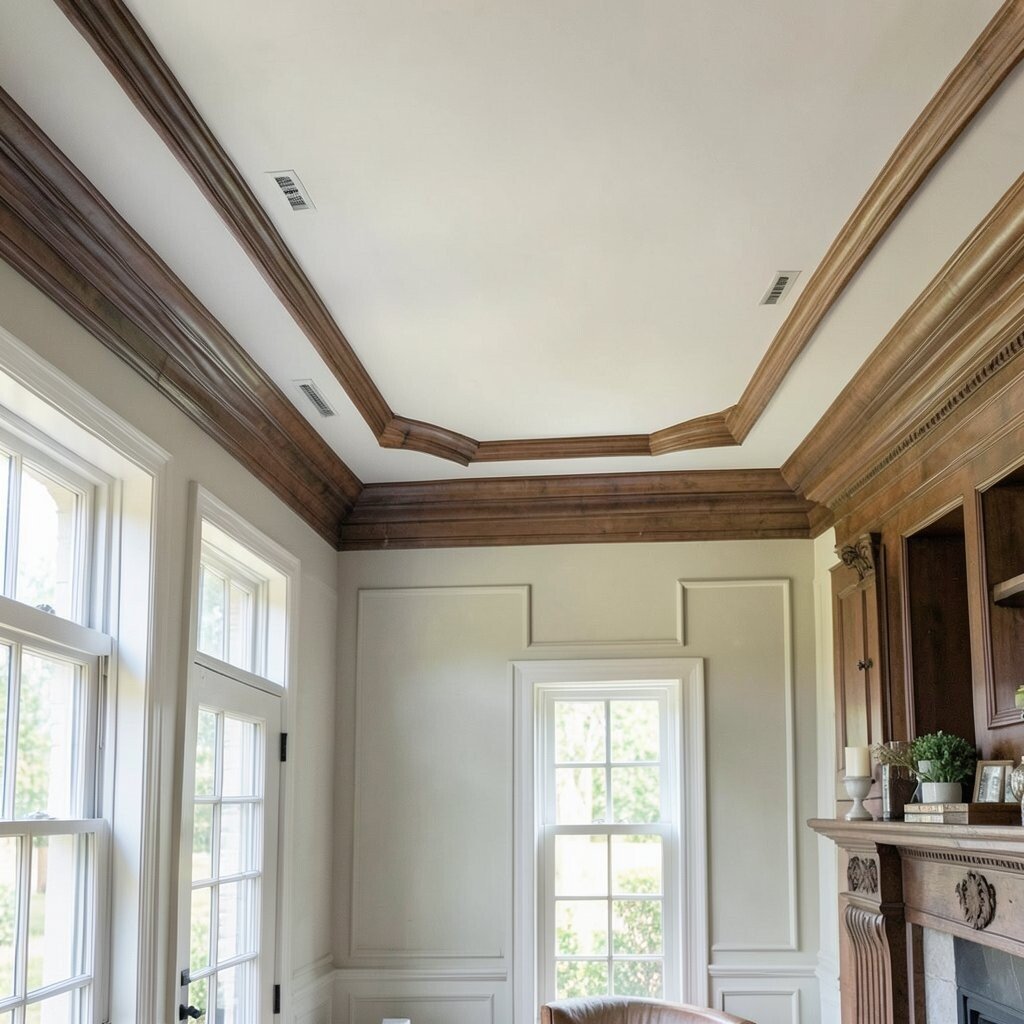
Picture frame trim adds neat borders that make the ceiling feel well designed. The grid effect can make a small room feel more organized and a big room feel less empty.
Use lightweight trim boards and install them with steady spacing so the corners look crisp. This style benefits you by creating visual structure without blocking airflow or lighting. For a cost-friendly approach, paint the trim a warm off-white while keeping the ceiling paint smooth and clean.
To personalize, change the frame thickness in one section above the main seating area. That small twist creates a custom look that still feels classic. Current styling often favors simple lines, so this idea stays relevant year after year.
If you want extra function, add recessed lighting centered within the frame lines so the glow looks intentional.
5. Beam and Mantel-Inspired Ceiling Details
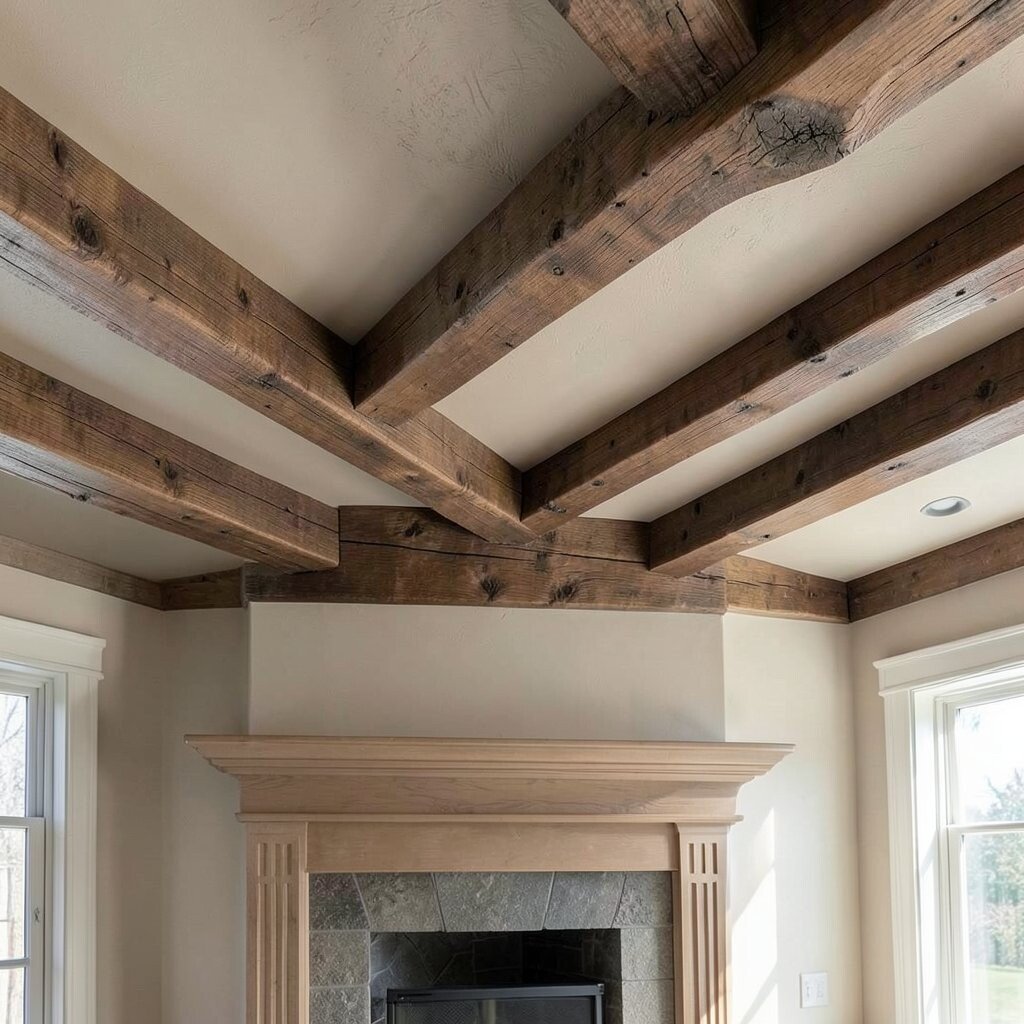
Some ceilings look like they borrowed charm from a fireplace mantel. Thick beams and thoughtful trim create a bold, cozy feeling overhead.
This idea is unique because it creates a matching story across the room, especially if you already have mantel trim. Choose a finish that connects the ceiling to your cabinets, flooring, or wall paneling so everything feels coordinated. For practical results, plan for safe clearances around vents and fixtures.
You can keep costs under control by focusing detail only where it matters, such as the center span or the area above a dining table. Personalization is easy by adjusting beam width and adding small casing around the ceiling line. If you love today’s trend toward warm woods and earthy palettes, this ceiling idea fits right in.
6. Tongue-and-Groove Ceiling with a Matte Finish
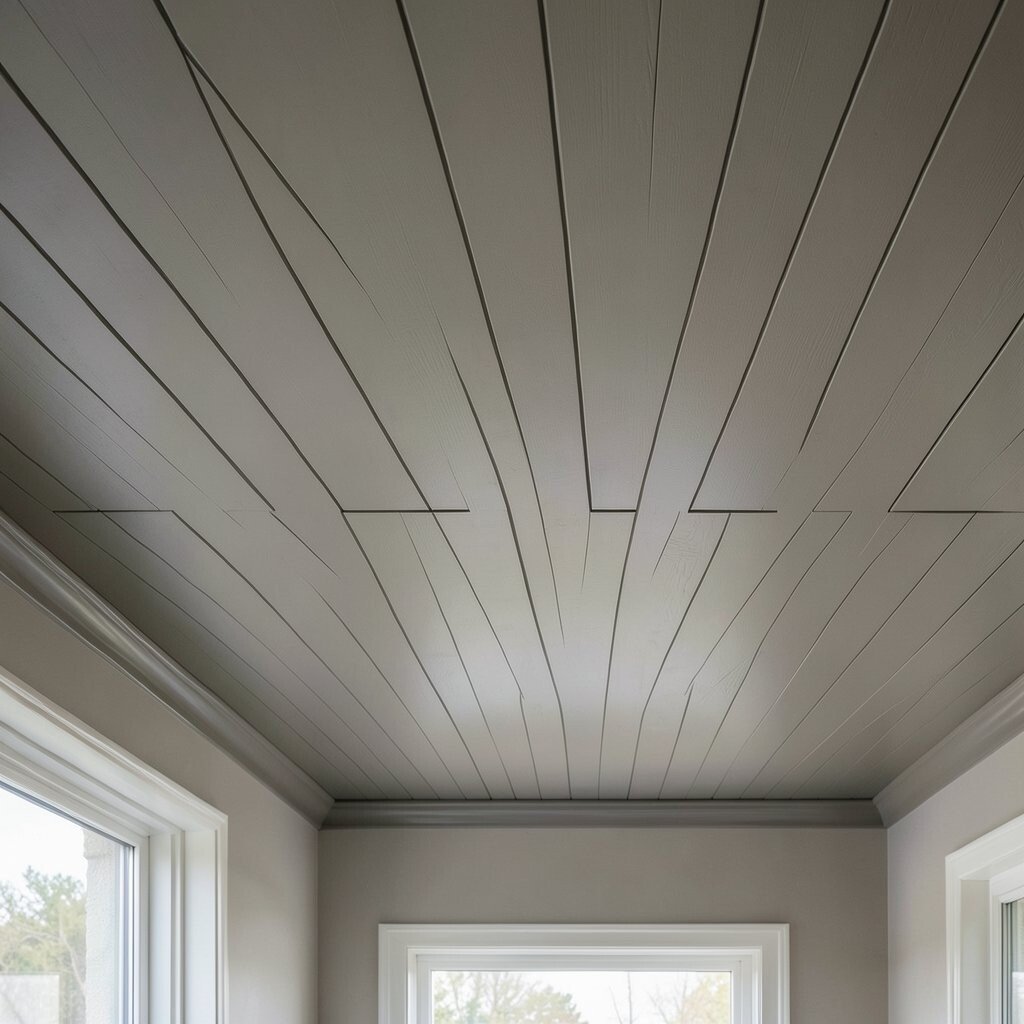
Tongue-and-groove ceilings deliver a traditional Craftsman vibe with clean, continuous lines. The matte finish helps the ceiling look soft instead of shiny, which feels cozy.
This design benefits you by hiding minor bumps since the system covers uneven edges. For installation tips, seal the boards well and check for level before fixing panels in place. When you personalize, choose a stain that matches your trim and floor warmth so the room feels cohesive.
If you’re watching costs, consider painting over tongue-and-groove instead of staining every board. Painted ceilings can be refreshed later without stripping, which saves time and money. The trend toward calm, quiet textures makes matte finishes especially popular.
When lights hit the ceiling at an angle, you’ll see gentle shadows that add depth without needing extra decoration.
7. Rustic Brackets Under Slim Beams
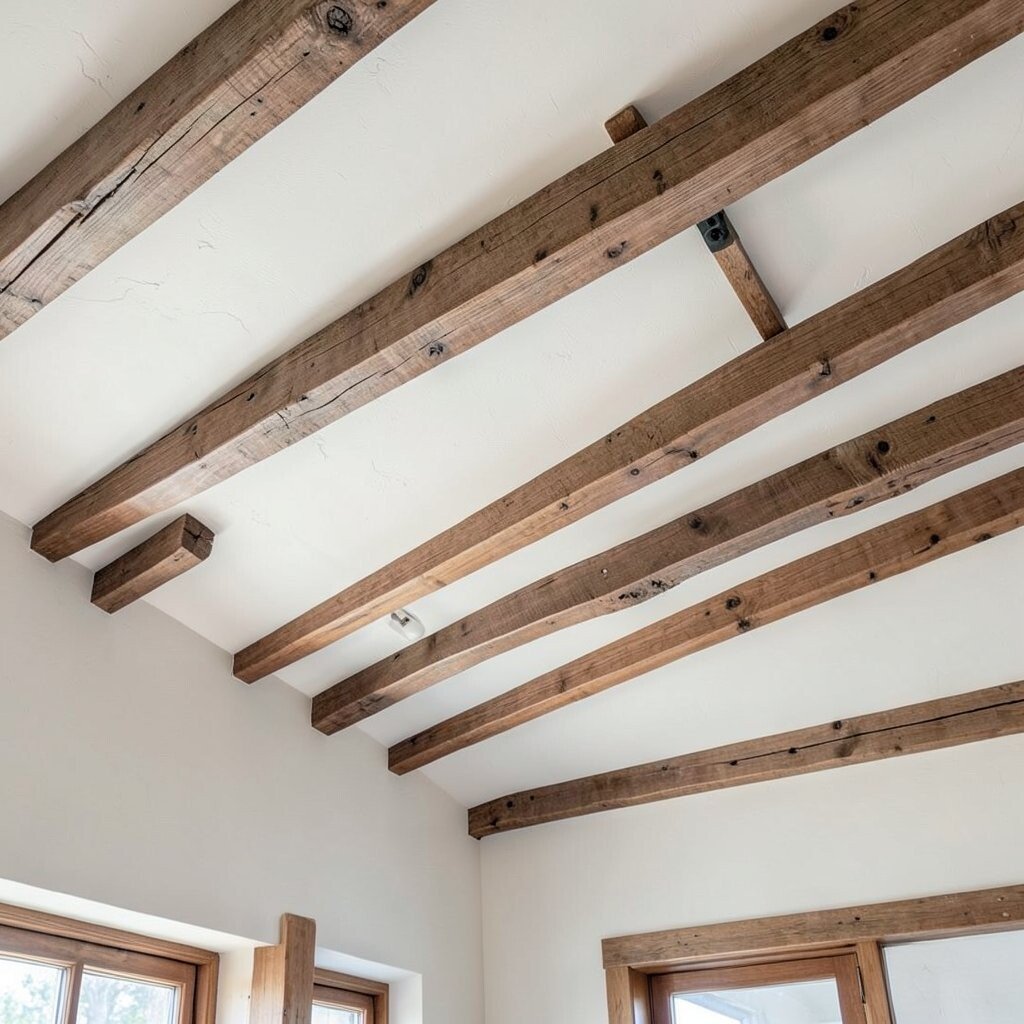
Cradling beams with rustic brackets brings a workshop-like charm to your ceiling. The little supports look detailed and sturdy, even from a distance.
This ceiling style feels unique because the bracket shapes create their own character in every room. Use consistent metal tones or wood-toned brackets so it looks intentional. A practical approach is to select brackets that are easy to mount and strong enough for the beams or trim you plan to support.
For personalization, pick brackets with a pattern that matches your hardware style on doors and cabinets. If you want to manage costs, use brackets on only the main beam runs rather than the entire ceiling. Current trends lean into mixed materials, so combining wood beams with metal bracket accents looks fresh.
Keep the rest of the decor simple so the ceiling becomes the star, and the room stays comfortable and tidy.
8. Shiplap Ceiling with Painted Color Blocking
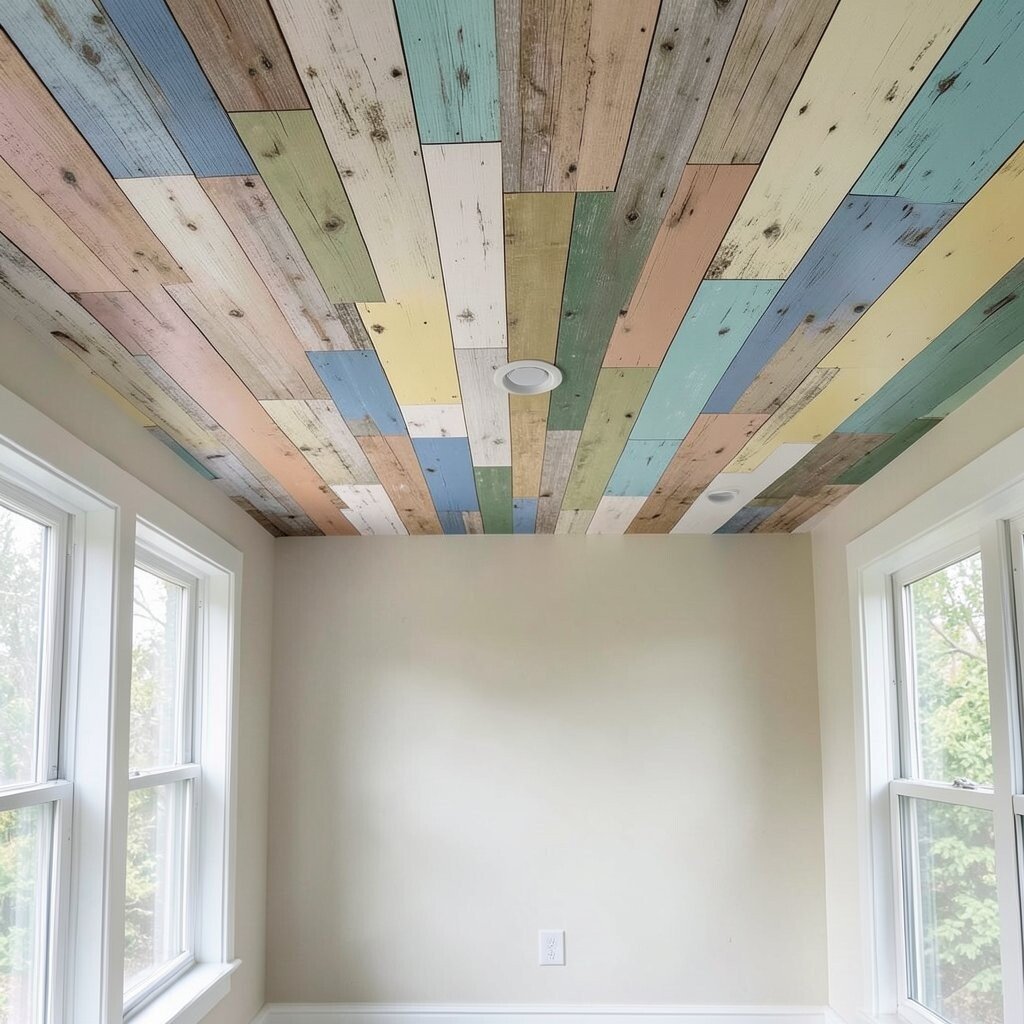
Shiplap ceilings add casual character and make a room feel relaxed right away. Color blocking on the ceiling turns that casual look into something bold and current.
This is a smart way to personalize while keeping the ceiling practical. Use a durable ceiling paint and tape off clean lines for crisp sections. If you’re aiming for a budget win, paint existing ceiling boards if they can be repaired, or choose thinner shiplap planks that cost less.
For visual balance, choose a main neutral color and one complementary accent shade. That approach helps the ceiling feel designed but still easy to match with furniture. Today’s homes often mix warm neutrals with small pops of color, and this idea fits that style.
The texture of shiplap keeps the ceiling from looking flat, even when the room lighting changes throughout the day.
9. Vaulted Craftsman Ceiling with Beam Framing
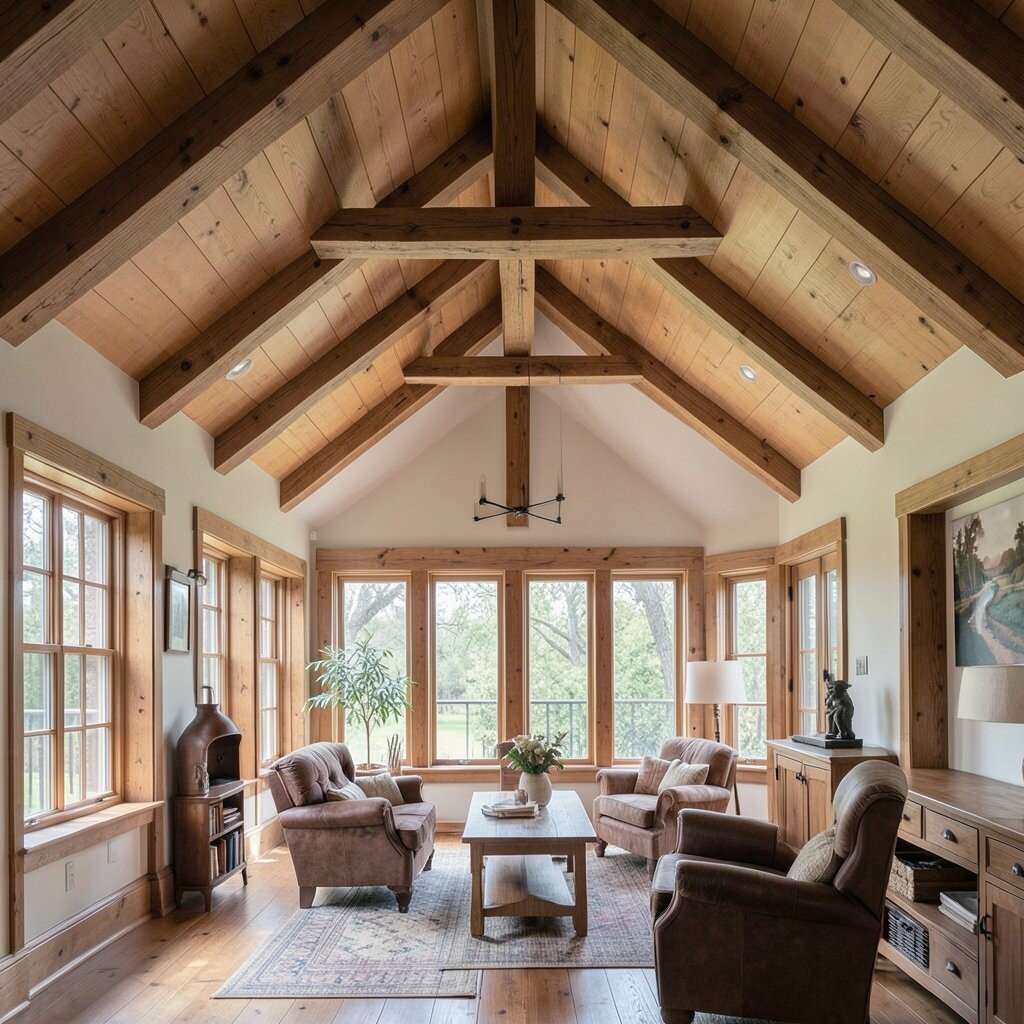
A vaulted ceiling already has drama, and beam framing makes it feel truly Craftsman. The angled surfaces create a grand look without needing bulky wall decor.
This design benefits you by turning height into warmth instead of emptiness. Plan the beam direction carefully so the lines lead the eye toward your focal point, like a hearth or dining area. For practical tips, coordinate beam placement with lighting and ceiling fans so everything fits comfortably.
Personalization can be as simple as adding a wood-framed panel at the highest point. If you want cost control, use fewer, thicker beams rather than many thin ones. Current trends favor statement ceilings, and vaulted framing stays popular because it looks custom-built.
When you choose finishes, match the wood tones across railings, trim, and built-ins so the ceiling feels part of the whole home.
10. Drop Ceiling with Faux Craftsman Beams
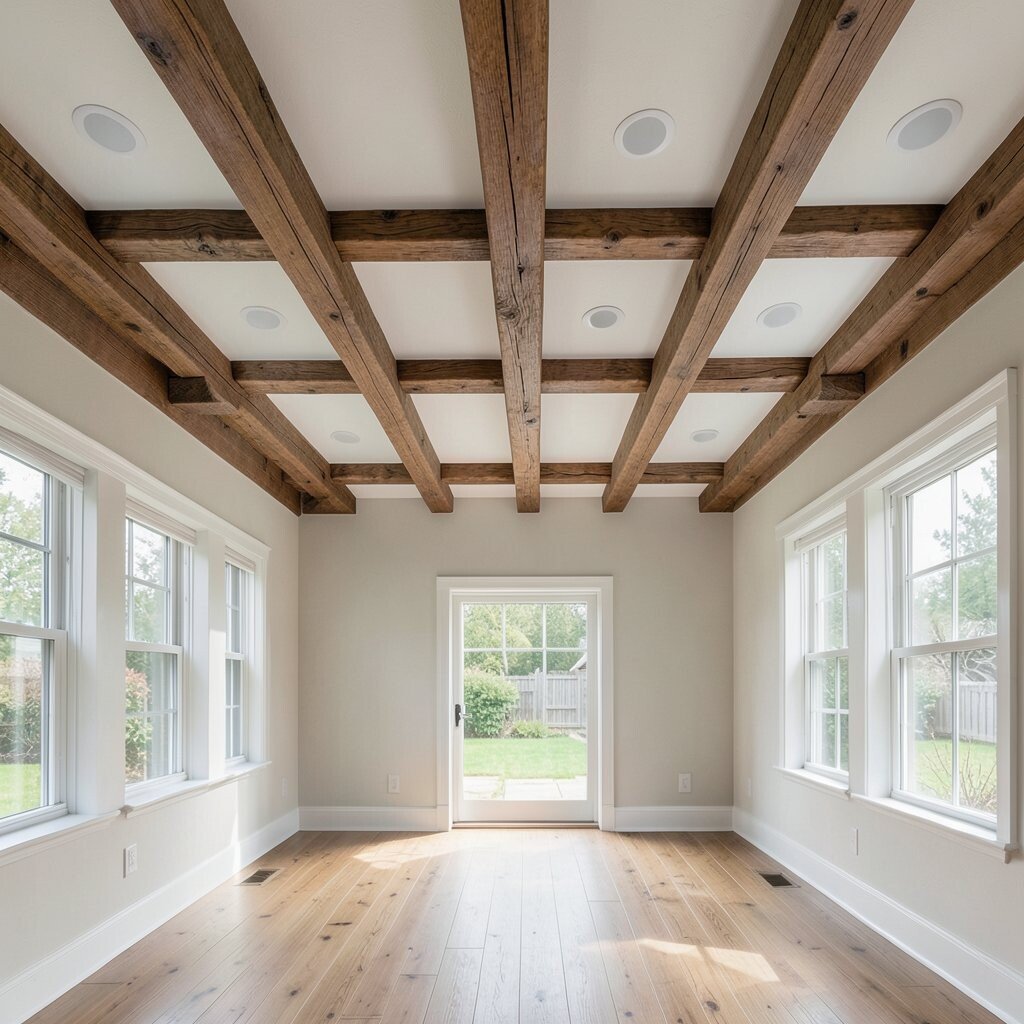
If your home has a drop ceiling, you can still get Craftsman charm without a major tear-out. Faux beams can sit above grid lines and create a richer ceiling presence.
This approach is unique because it upgrades the look while keeping your existing infrastructure accessible. It benefits you by allowing access to wiring, vents, and plumbing if needed later. For practical planning, measure carefully and confirm your beam depth won’t clash with lighting or sprinkler systems.
To personalize, choose beam widths and a paint color that matches your trim. Many people like a stained faux beam look paired with a clean painted ceiling background. Cost considerations often favor this idea because installation is usually faster than rebuilding the entire ceiling.
This style also fits current trends toward clever upgrades that look high-end but stay manageable for real budgets.
11. Ceiling Medallion with Wood Framing Around Lights
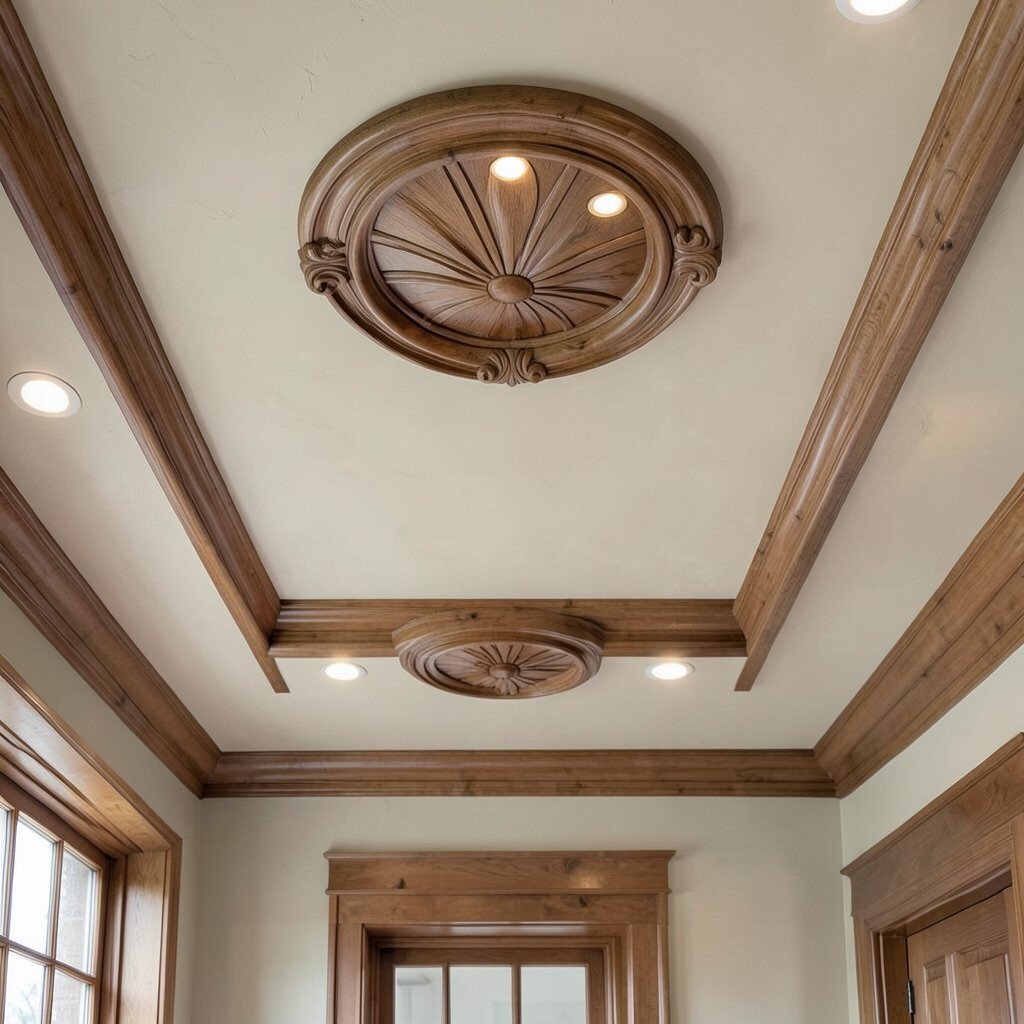
A centered medallion turns overhead lighting into a real focal point. When framed with Craftsman-style trim, the ceiling feels like it has a signature detail.
This idea is especially unique if you choose a medallion pattern inspired by classic woodworking motifs. It benefits you by making the lighting look intentional and grounded, not random. For a practical tip, ensure the medallion fits the fixture size so it doesn’t overpower the room.
Personalization can be simple, such as painting the medallion the same warm tone as your beams. Cost-wise, you can often choose smaller medallions with a thin wood frame for a similar effect. Current trends still embrace statement lighting, and a framed medallion keeps that trend tied to Craftsman roots.
When you choose the right finish, the ceiling detail helps the entire room feel more polished.
12. Craftsman Ceiling in Two-Tone Washes
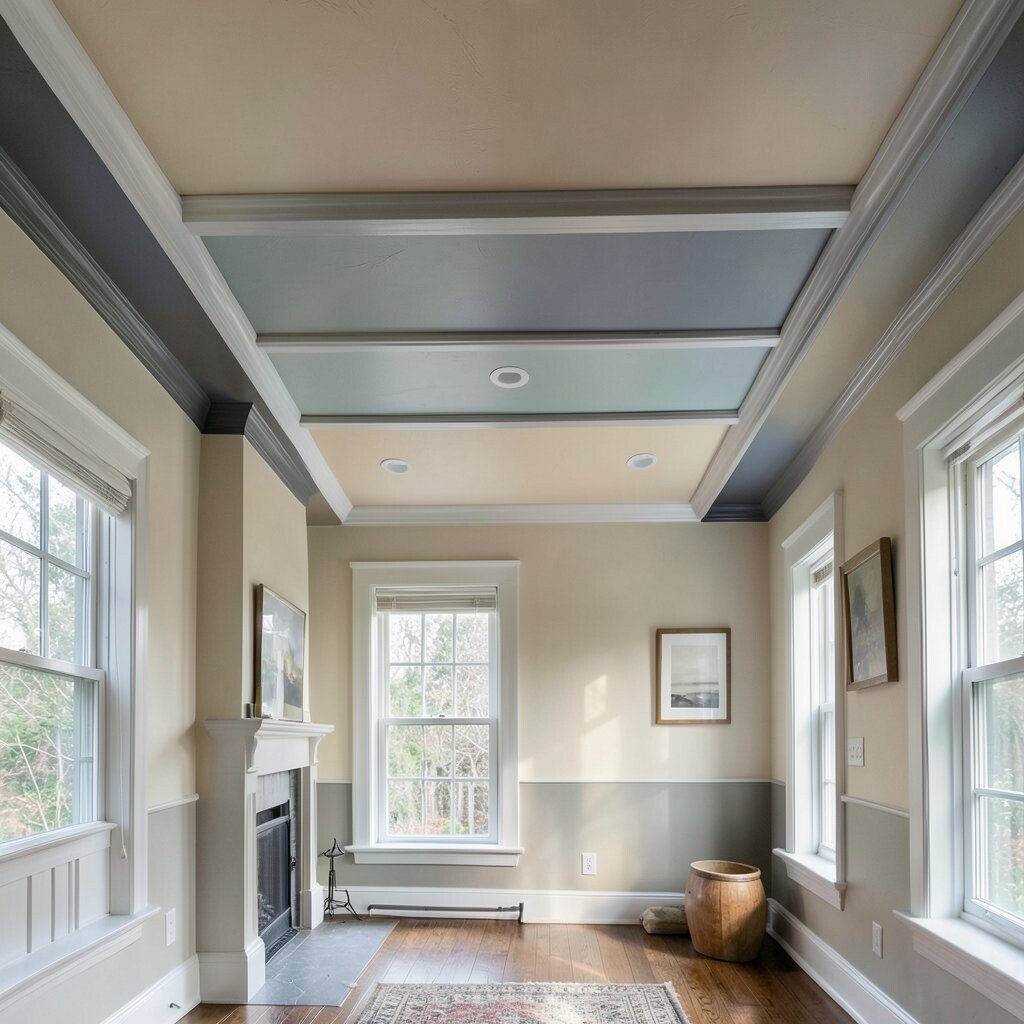
Two-tone ceilings add a modern softness to a classic Craftsman look. By using a darker color in recessed areas and a lighter shade on the main plane, you create natural dimension.
This benefits you because it hides uneven spots and makes the ceiling look more even. For practical tips, use painter’s tape and test colors on a small section since ceilings reflect light differently than walls. Personalization is easy by matching the tones to your wall color scheme or flooring warmth.
If you’re thinking about cost, paint upgrades are usually more affordable than installing new trim. This ceiling style is also on trend since many homes today favor warm neutrals with subtle contrast. The visual result feels custom without the heavy price tag.
To keep it cohesive, repeat one of the tones in trim work, furniture accents, or window frames.
13. Low-Profile Cove Molding for Soft Transition
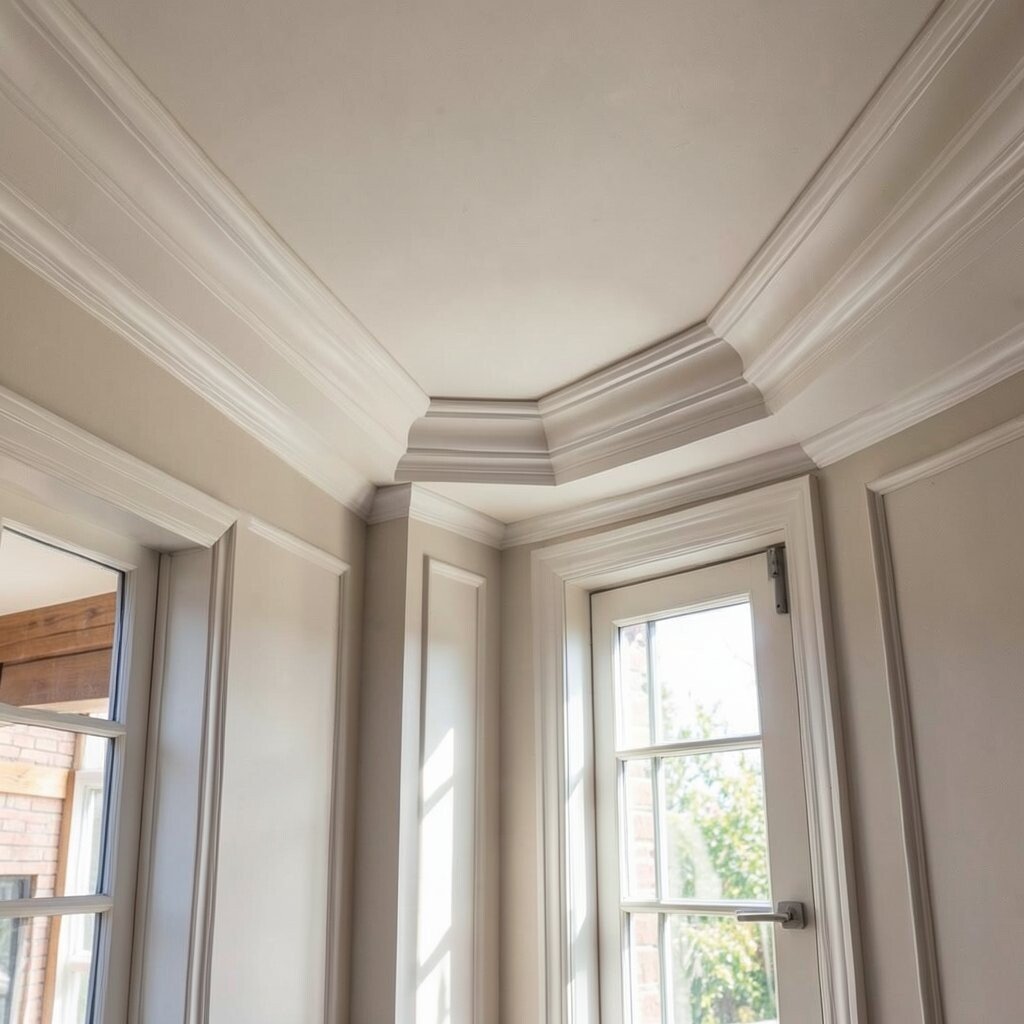
Low-profile cove molding creates a gentle transition between walls and ceiling. It makes rooms feel smoother and more relaxed, which is great for everyday comfort.
This style is unique because it adds Craftsman character without strong beams or heavy texture. It benefits you by covering small gaps and imperfections at the top of the wall line. A practical approach is to choose a flexible or lightweight molding so installation is easier in older homes.
Personalization can come from painting the cove a slightly different warm white than the ceiling plane. That subtle shift adds depth without looking loud. Cost considerations are favorable since molding is often less expensive than rebuilding ceiling sections.
Right now, many people love calming, clean finishes, and cove molding fits that trend while keeping the room classic.
14. Geometric Panel Ceiling with Craftsman Lines
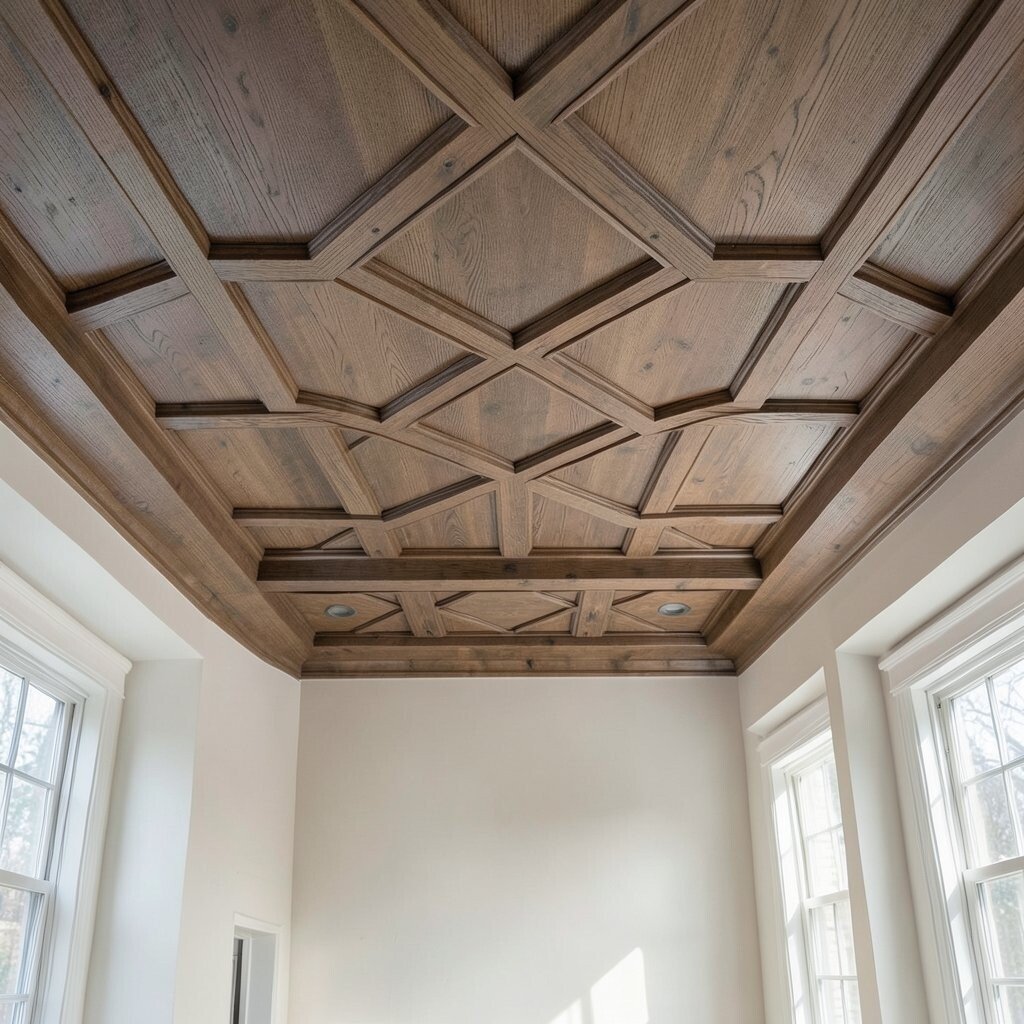
Geometric panel ceilings feel creative and can still stay true to Craftsman style. Straight lines and repeated shapes create a pattern that looks structured rather than playful.
This idea is unique because it turns the ceiling into a design canvas, especially when you use wood tones and painted backgrounds together. It benefits you by adding visual interest without cluttering the room. For practical tips, map the grid before installation so every section looks even across the ceiling.
Personalization can be done with scale, such as larger panels in dining rooms and smaller ones in hallways. Cost-wise, plan material for the biggest wall area first since the rest can follow a repeating pattern. Current trends show more homeowners adding custom geometry to make spaces feel designed.
When you coordinate lighting, the angles cast crisp shadows that make the pattern look even more refined.
15. Curved Craftsman Ceiling Ridges with Wood Inlays
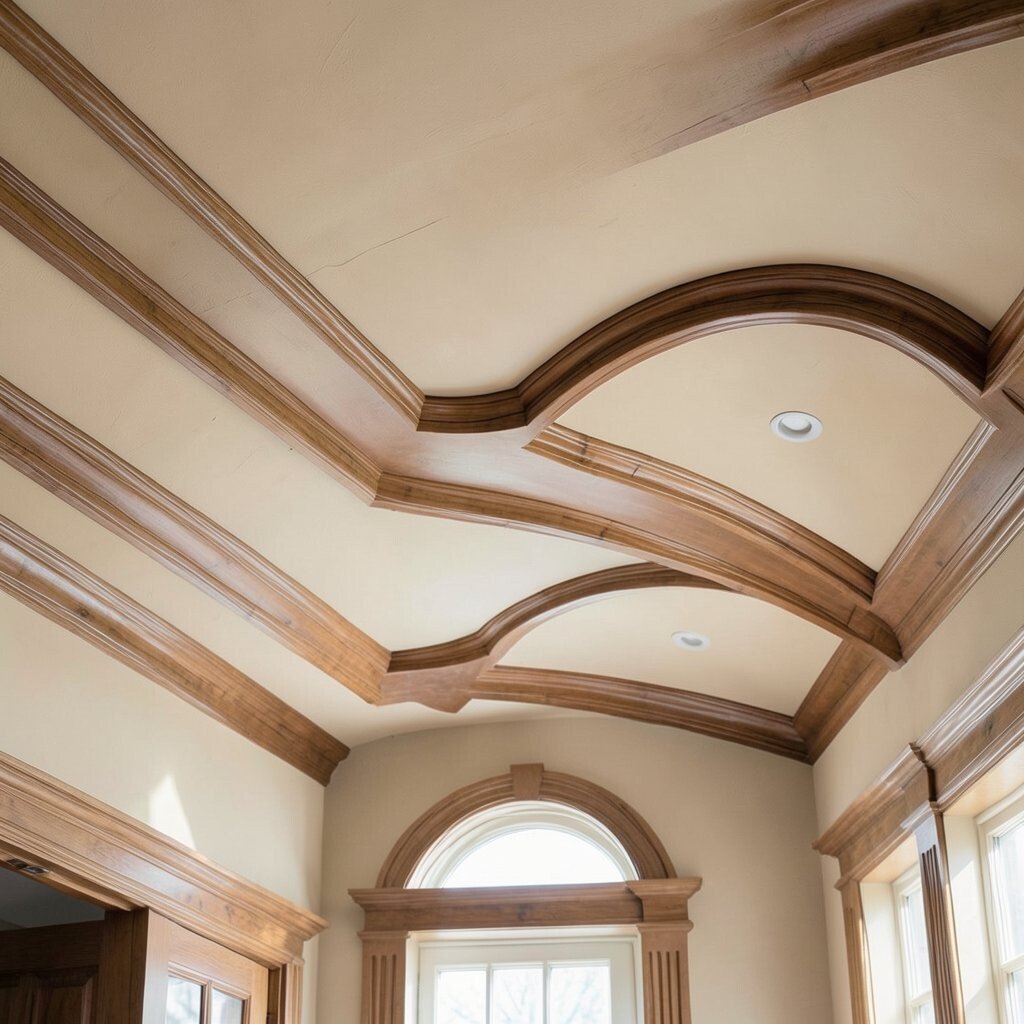
Curved ridges can soften Craftsman style and add a gentle, flowing look. When paired with wood inlays, the ceiling feels both artistic and grounded.
This approach is unique because it brings an almost handmade quality overhead. It benefits you by adding movement, which can make a room feel more welcoming and less boxy. For practical installation, use flexible trim pieces or consult a measured plan so curves stay smooth.
Personalization is where this idea shines, since you can tailor the curve direction to match your room layout. Want a cost-friendly way to start? Choose one main ridge line and keep the rest of the ceiling clean. Current trends toward softer shapes and warmer textures make this ceiling choice feel current.
Use matching wood inlays to tie the ceiling to doors, shelves, or built-ins so it doesn’t feel random.
16. Rustic Plank Ceiling with Small Hardware-Style Details
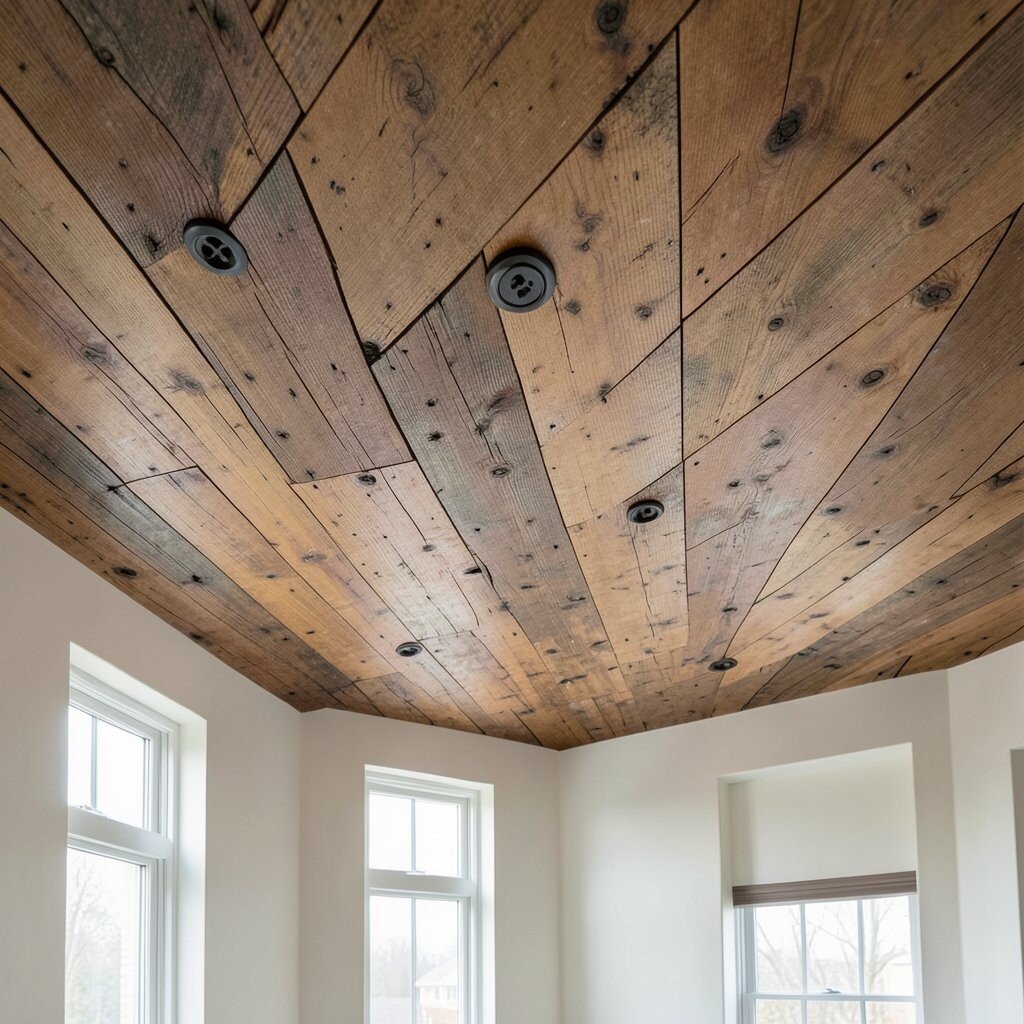
A rustic plank ceiling looks like it belongs in a cozy Craftsman cabin. Small hardware-style details, like metal nail heads or brackets, add a subtle, authentic touch.
This idea is unique because the ceiling reads like a crafted surface, not just a painted finish. It benefits you since plank textures hide minor ceiling imperfections and help the space feel visually warm. For practical tips, seal everything well so the hardware stays clean and the wood won’t snag dust.
Personalization can be as simple as choosing nail head spacing that matches your wall trim rhythm. Cost considerations depend on material choices, but you can keep the budget steady by limiting decorative hardware to key plank lines. Current trends lean into tactile finishes, and this ceiling definitely delivers.
If you have a dining area, the rustic ceiling works beautifully with warm bulbs and textured fabrics.
17. Ceiling Beadboard with Light Rail and Stain Accents
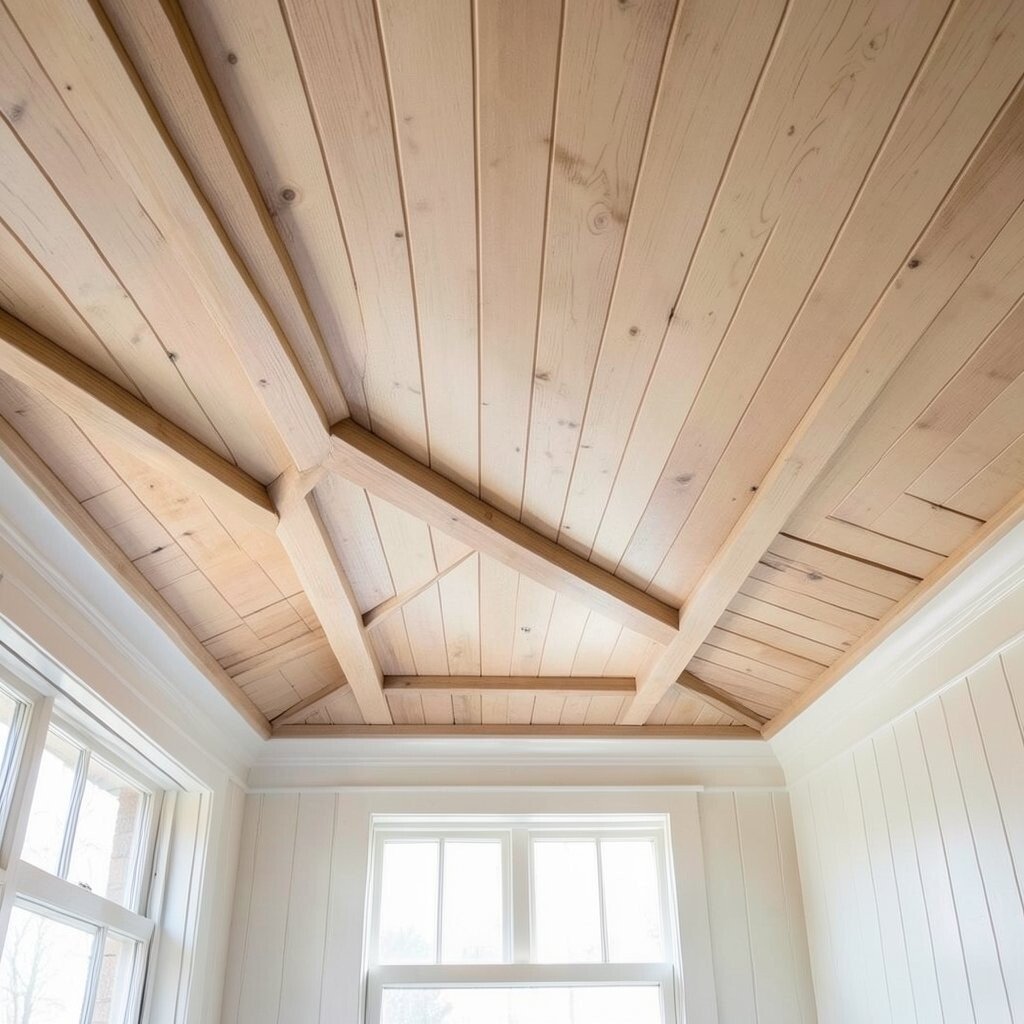
Beadboard ceilings bring cottage comfort and a tidy Craftsman influence. Adding a light rail detail gives the ceiling a structured edge that looks polished.
This style is unique because it blends small-scale texture with clean trim lines. It benefits you by working well in hallways, bedrooms, and even kitchens without feeling too heavy. For practical tips, install beadboard with careful alignment so the beads form a neat visual row across the ceiling.
Personalization can come from staining only the trim rail and keeping the beadboard a lighter finish. That contrast makes the ceiling feel dimensional and fresh. Cost-wise, beadboard is often more manageable than full custom millwork, and it’s easier to refresh later with paint.
When trends move toward cozy, quiet textures, beadboard remains a favorite because it never goes out of style.
18. Statement Central Panel with Surrounding Trim
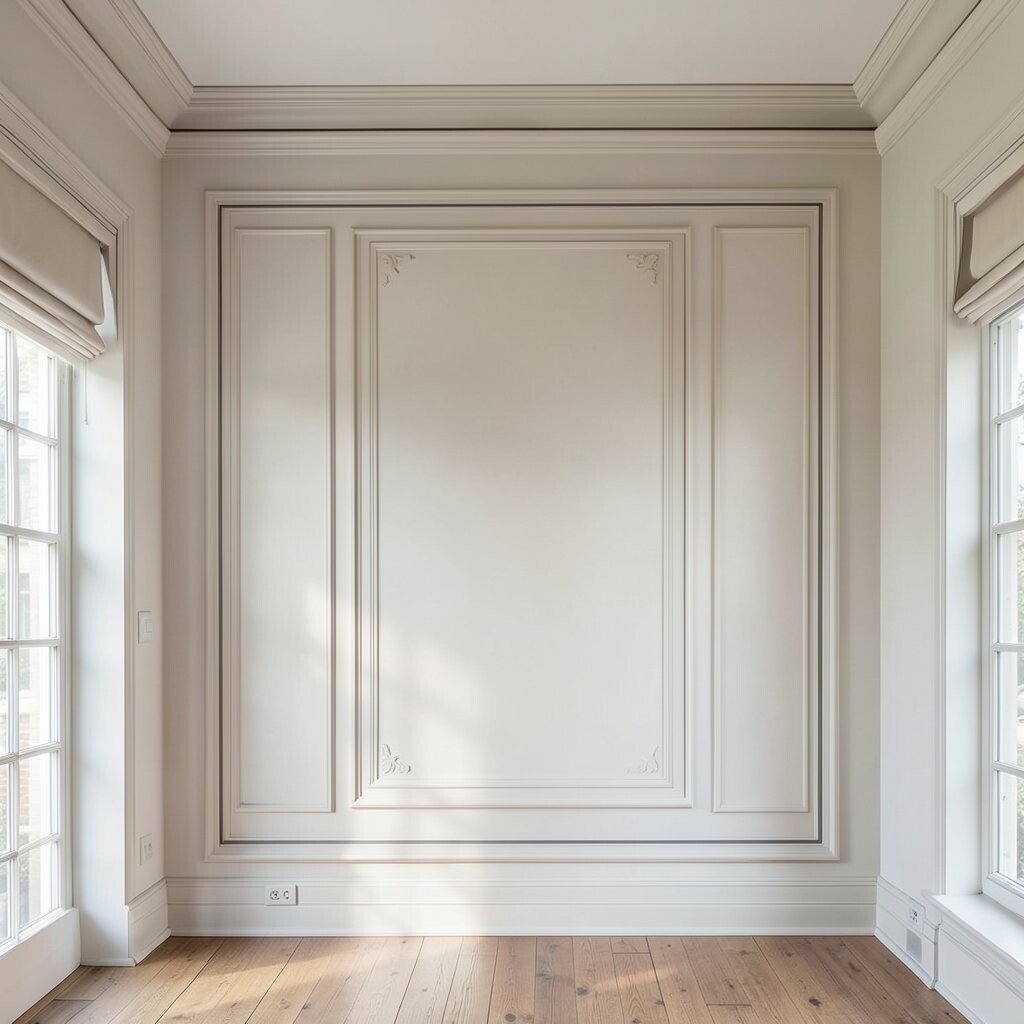
A statement central panel makes the ceiling feel like it has a purpose. By framing a medallion-like center area with Craftsman trim, the room gains a natural focal point.
This idea is unique because it gives you a clear design center without covering the whole ceiling in complex detail. It benefits you by focusing attention where you want it, such as above a dining table or seating area. For practical tips, measure the ceiling carefully and choose panel dimensions that keep the trim evenly spaced.
Personalization is easy by selecting a pattern inside the panel, such as simple raised sections or a wood-toned inset. Cost considerations can be smart here since a single statement area uses fewer materials than full-ceiling molding. Current trends favor one strong architectural moment, and this approach delivers that look.
When you coordinate the finish with your cabinetry or flooring, the ceiling becomes a cohesive part of your home’s style.