Blue walls can feel calm, bold, and full of personality at the same time. When you choose the right elements, the whole room starts to “look” on purpose.
Now you can make your blue wall the star, not just the background. These ideas are practical, budget-smart, and easy to personalize.
1. Choose the Right Shade of Blue for Your Mood
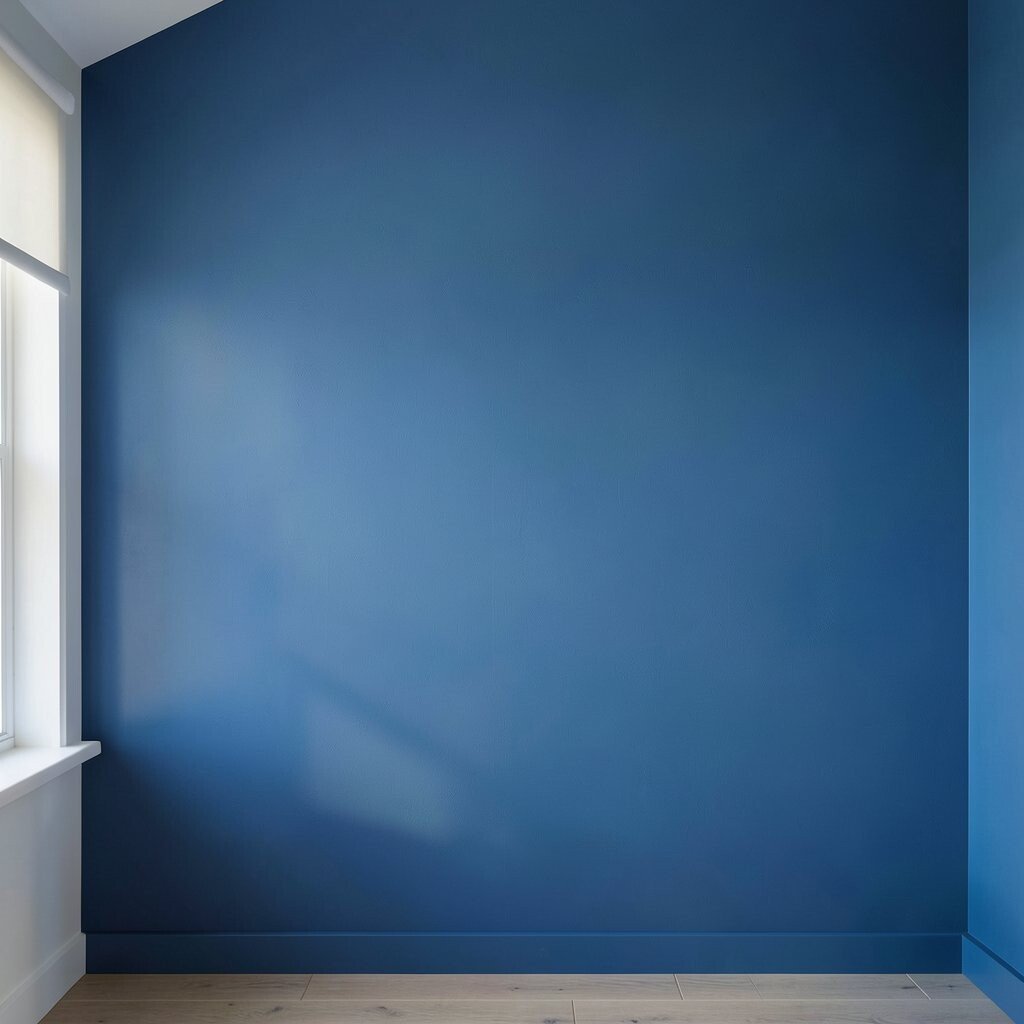
A deep navy wall pulls you in and makes everything feel more grounded. A soft sky blue gives you an airy look and makes the space feel lighter.
To create a focal point, pick the blue tone that matches the mood you want first, then build around it. Test paint samples on different parts of the wall so the lighting shows its real color.
If you are unsure, think about how your room is used most. Morning light tends to make blues feel brighter, while evening light can make them feel richer and moodier.
2. Frame the Wall with a Symmetry Moment
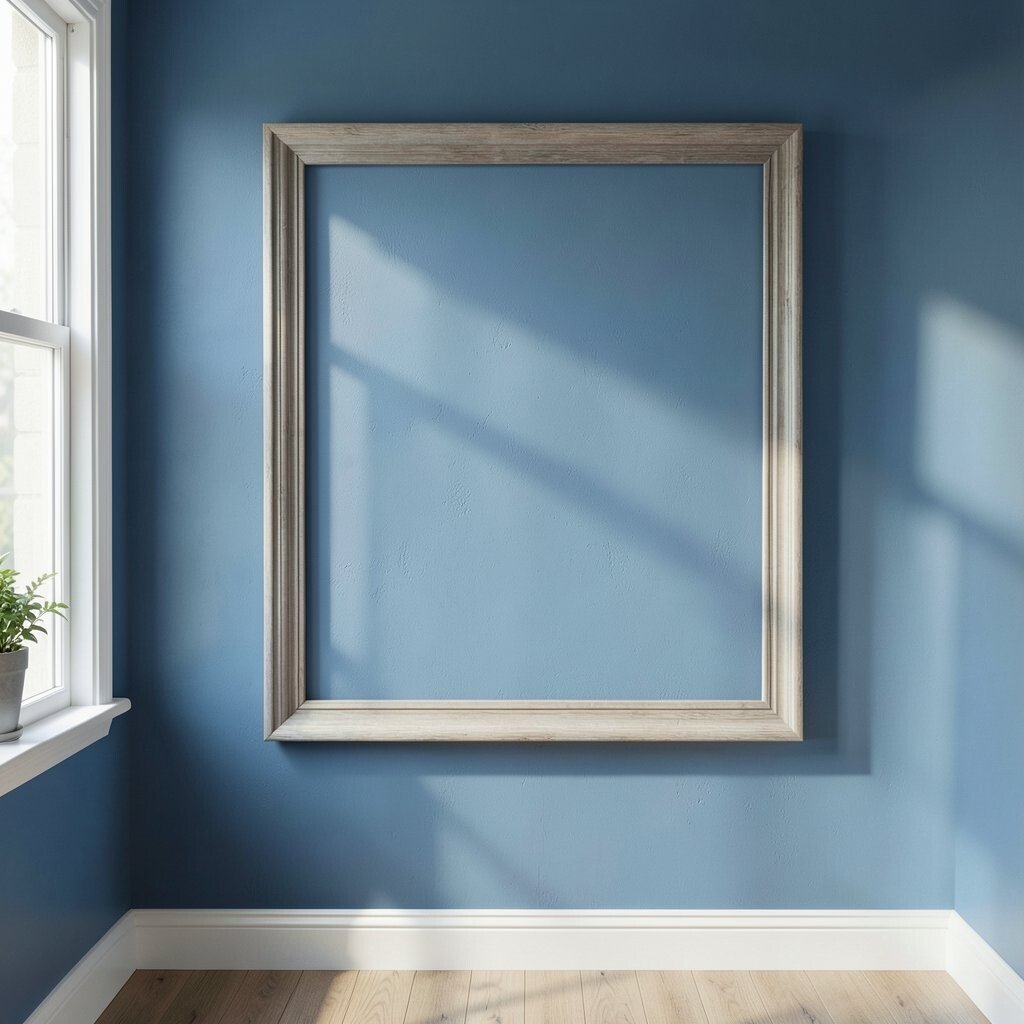
Place two matching items on either side of the focal area to create instant order. Think of two wall sconces, matching framed prints, or a pair of shelves that mirror each other.
When the layout feels balanced, your blue wall becomes the center stage. It also helps your eyes land exactly where you want them to look.
For a simple start, use the same color palette inside the frames so everything feels connected. Black, white, and warm wood tones pair especially well with many shades of blue.
You can also use curtain panels or a wide picture ledge as a visual frame. Even small symmetry touches make the wall feel intentional.
3. Hang a Large Artwork That Feels Like a Window
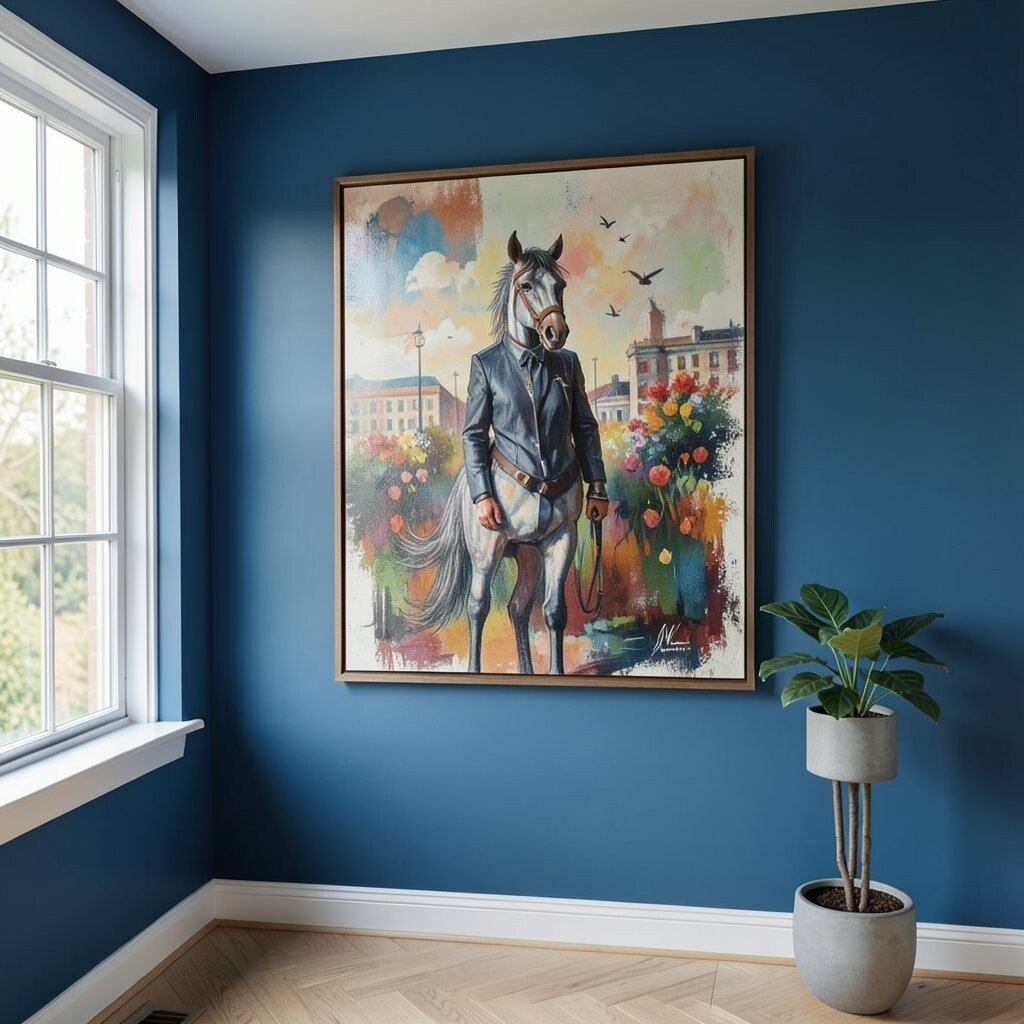
A single oversized piece can turn a whole blue wall into a visual story. Choose art with warm colors like rust, terracotta, gold, or creamy neutrals to pop against blue.
Look for a canvas, a framed print, or a tapestry with layered shapes. Big artwork makes the focal point strong even when your room is busy with furniture.
Measure the wall and keep the artwork proportionate to the space. A good rule is to aim for a piece that takes up a noticeable chunk of the wall so it does not feel lost.
You can personalize by adding your own photos in a gallery style around the big piece. A custom print with your favorite quote, favorite place, or family artwork makes it feel truly yours.
4. Use a Statement Mirror to Bounce Light

A mirror on a blue wall feels both decorative and useful. It reflects the room’s light, so the wall looks brighter and the space feels larger.
Choose a mirror with a bold frame, like dark bronze, gold, or matte black. The frame color becomes a highlight, and the glass turns the blue into a soft glow.
For practical placement, hang it where you can see it when you enter the room. That gives you an immediate focal point that still feels functional.
Mirrors can fit different budgets too. Thrifted frames look great with a quick coat of paint, and you can often swap the glass if needed.
5. Add Floating Shelves for a Curated Color Story
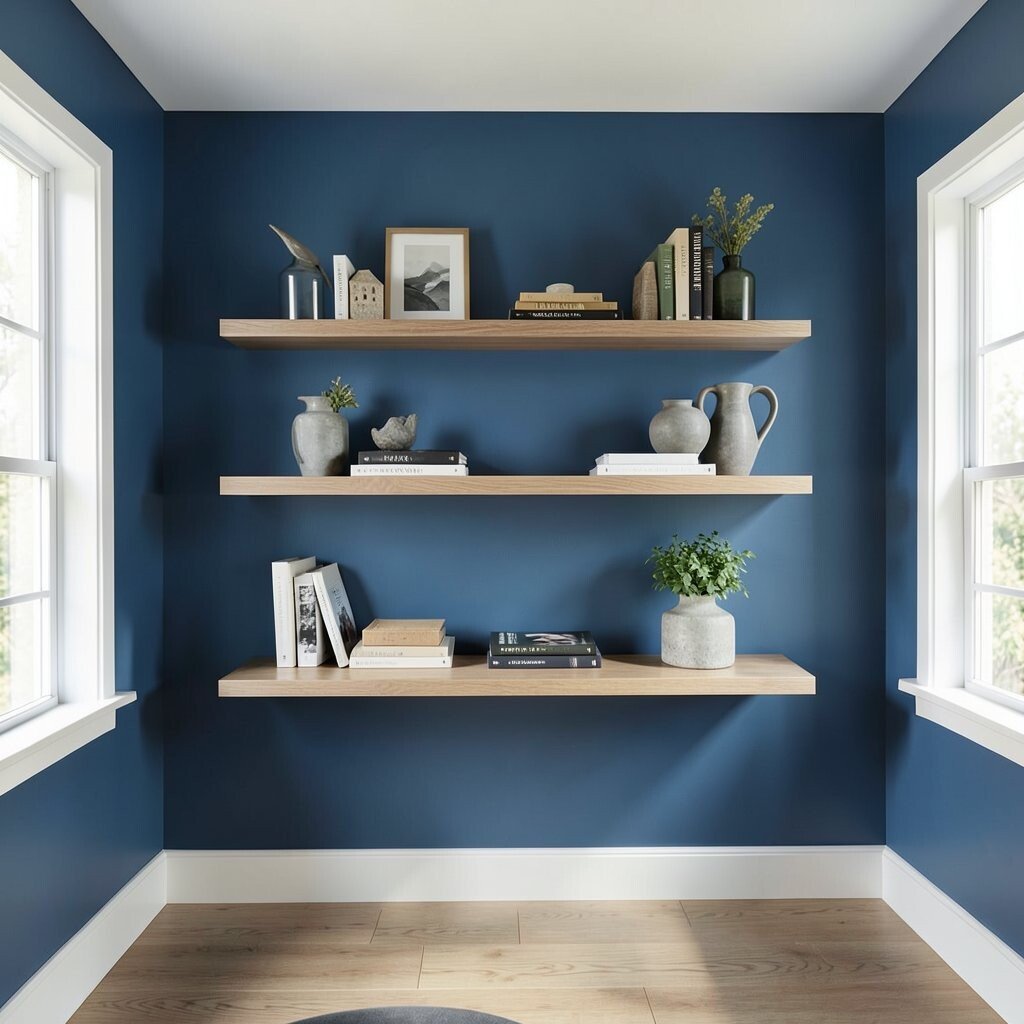
Floating shelves make your blue wall feel designed, not plain. They give you a place to show things that match your style and interests.
Style the shelves with a mix of textures so the eye stays interested. Use ceramics, books, small plants, and a tray to keep it tidy.
To keep the focal point clean, leave some empty space between objects. Negative space helps the blue wall breathe and makes each item stand out.
If you want an easy personalization, display meaningful travel mugs, framed tickets, or a small collection of blue-toned glass. That turns your shelves into a small personal museum.
6. Paint One Accent Panel for a Clean, Modern Focal Area
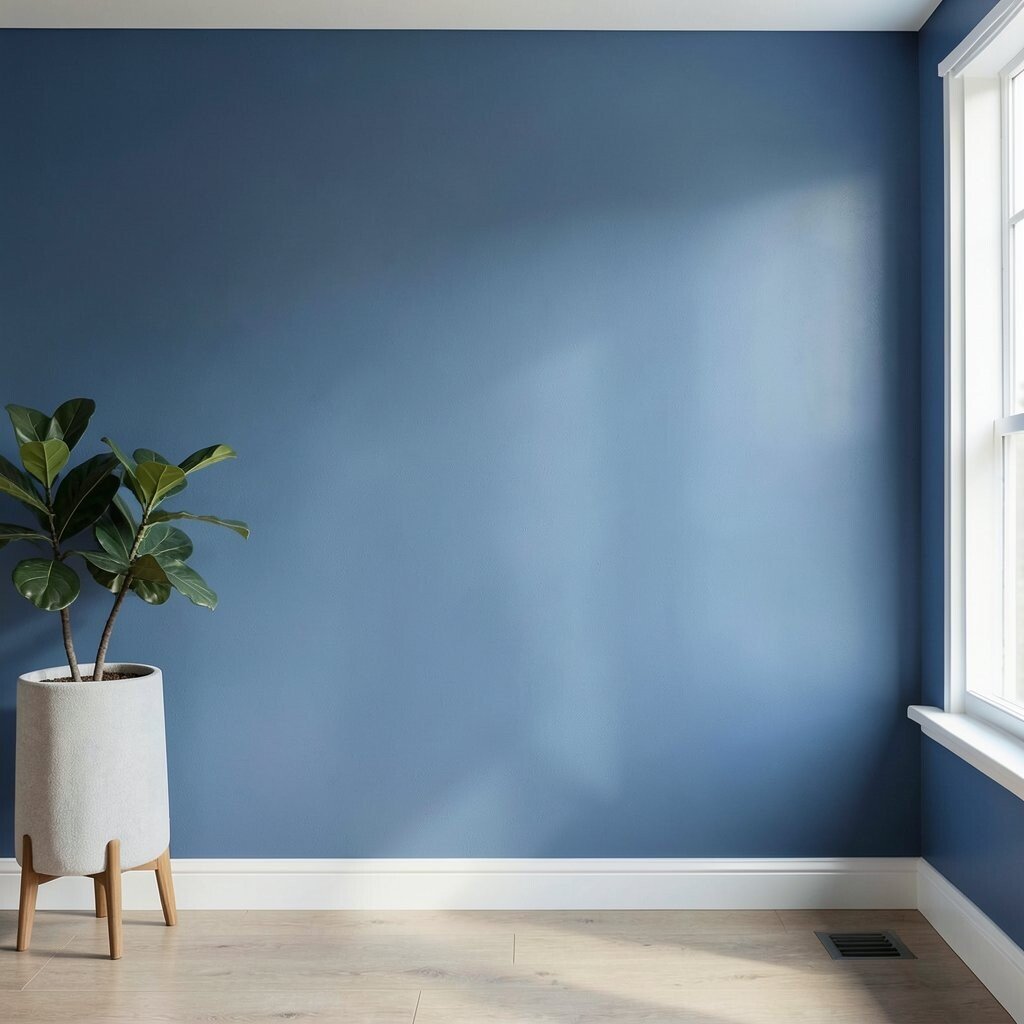
Instead of making the entire wall one color, you can highlight a section. An accent panel, like a tall rectangle behind a chair or console, draws attention and adds structure.
A two-tone look feels current and can still be simple to maintain. You can paint a smooth panel finish with painter’s tape for crisp edges that look like custom built-ins.
7. Create an Oversized Wall Clock or Sculptural Time Piece

A large clock can act like art while also serving a daily purpose. When it sits on a blue wall, the contrast makes it pop and gives the room a clear focal point.
Try a clock with simple lines, such as black metal or natural wood. If your room has warm lighting, a wood-toned clock will feel cozy and inviting.
This idea works well in kitchens, entryways, and living rooms. Even if you are not into clocks, a sculptural design makes the wall feel intentional.
8. Install Textured Wall Panels for Depth and Drama
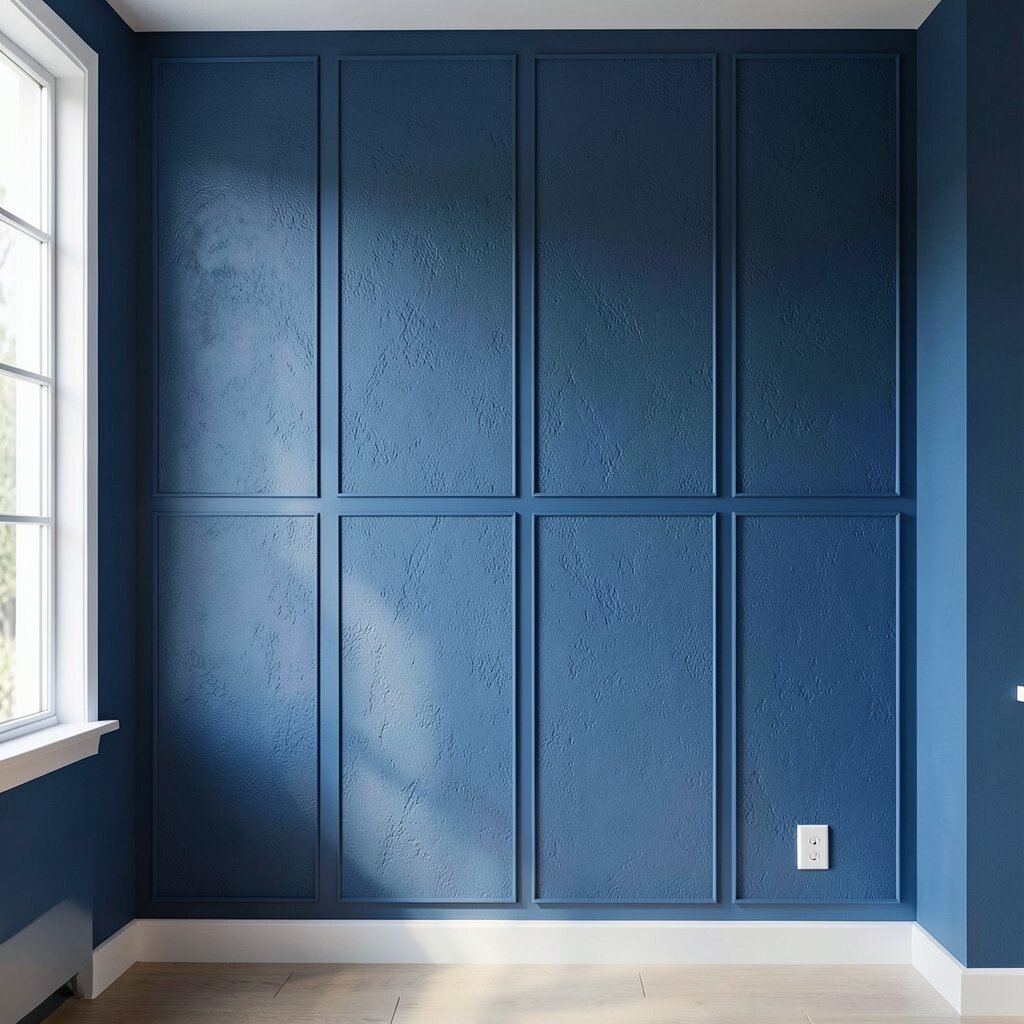
Texture changes everything about a blue wall, especially when the light hits it. Consider adding subtle wall panels, like modern slats or gentle geometric shapes.
The depth makes the blue feel richer and more dimensional. It also gives you a focal point even without large decor cluttering the wall.
For a budget-friendly approach, use peel-and-stick wall panels made for interior walls. They can look surprisingly real, and they are easy to remove later.
Personalize by painting the textured area in a slightly different blue tone. A lighter or darker version can make the pattern feel like a feature, not a cover.
9. Layer a Rug or Wall Textile for Soft Contrast
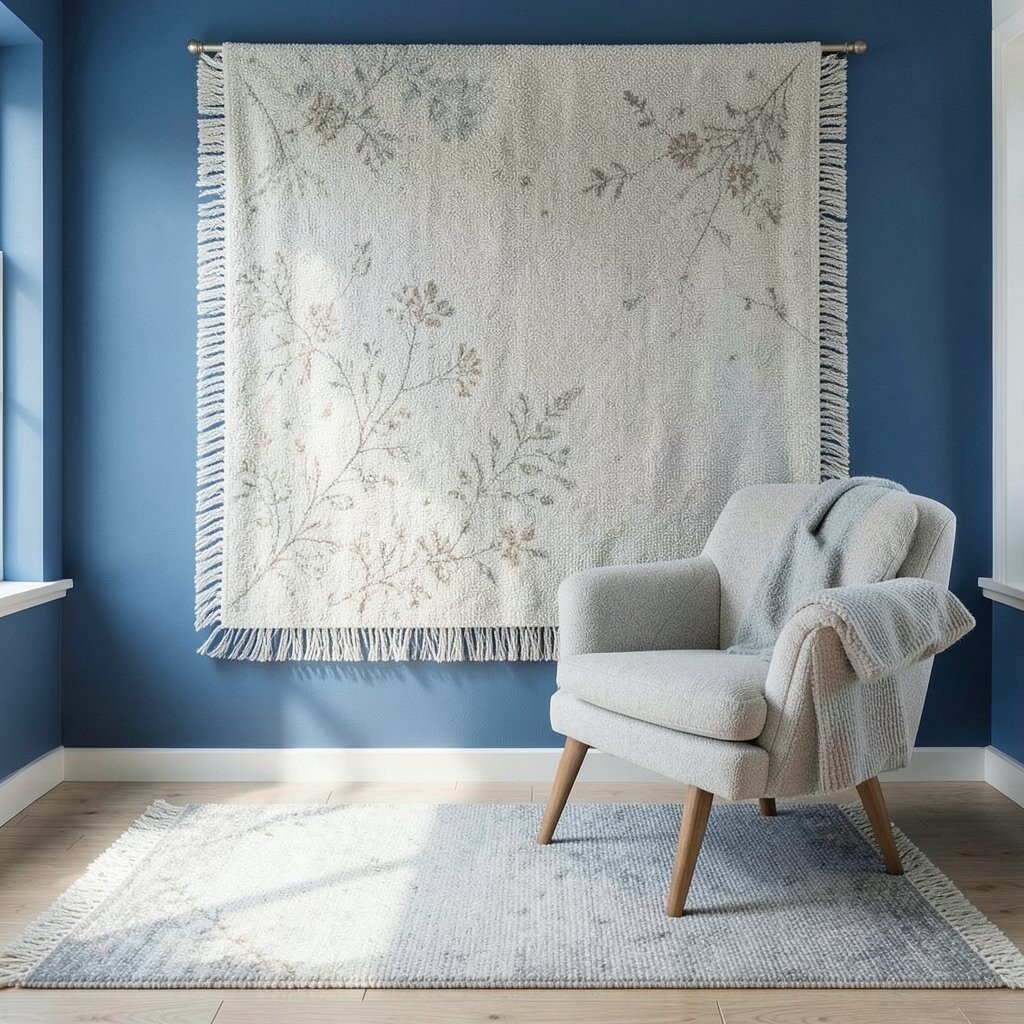
Hanging a textile on a blue wall adds softness and warmth. A woven piece, a macramé wall hanging, or a patterned rug can create a cozy focal moment.
Blue walls and warm textures go together well. Look for cream, tan, mustard, or deep green fibers to balance the cool color.
For practical tips, choose a textile with a solid top edge so it hangs straight. You can use a decorative rod or even a simple curtain-style tension rod for easy mounting.
If you like change, switch the textile with the seasons. That gives your room a fresh look without repainting.
10. Add Bold Lighting with a Floor or Wall Sconce

Lighting is one of the fastest ways to make a focal point feel real. A wall sconce aimed toward the center of the blue wall creates a spotlight effect.
Try warm bulbs for a cozy glow and avoid overly cool lighting that can flatten the blue. When the light grazes textured areas or artwork, the wall becomes more vibrant.
Choose a fixture that matches your style. Modern rooms often look great with sleek black metal, while traditional spaces shine with brass or fabric shades.
11. Create a Picture-Led Wall Gallery Centered on the Blue

A gallery wall can feel overwhelming, but the trick is to keep it centered and intentional. Place your frames in a clear shape, like a large rectangle or tidy grid, right on the blue wall.
To make it cohesive, keep frame colors consistent and vary only the art sizes a little. Black frames, white frames, and warm wood frames all look great with blue.
Use visual variety without chaos by mixing prints, photos, and one or two small pieces of art with texture. That helps your focal point stay interesting from multiple angles.
12. Style a Console Table Against the Wall for Everyday Impact
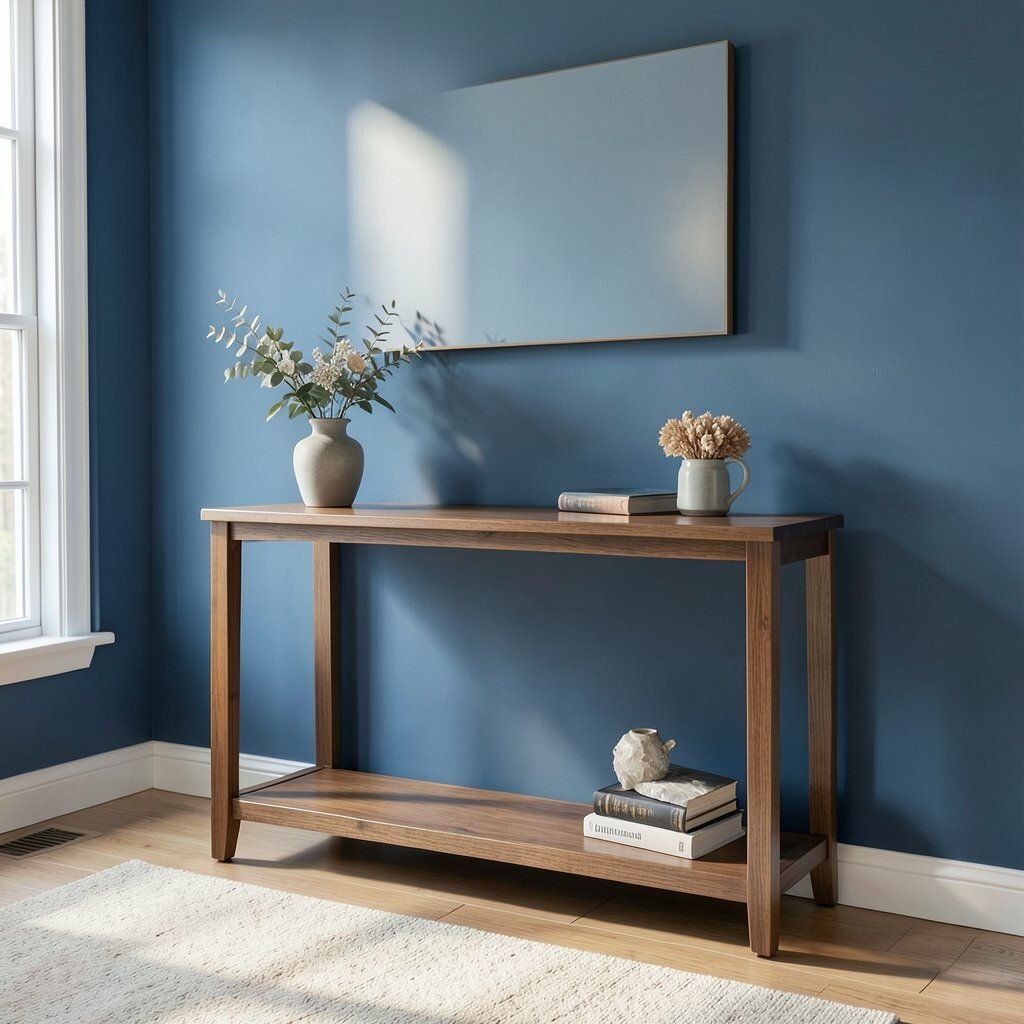
A console table makes the blue wall feel like it has a “purpose zone.” Place the table a few inches from the wall, then add decor that reflects your everyday life.
Try a tall lamp, a large tray, and a mix of candles or small vases. The height variation makes your focal point feel layered and designed.
For cost considerations, you can refresh an existing table with sanding and paint. A new finish in oak, walnut tone, or matte black can upgrade the whole look quickly.
13. Use Statement Wallpaper or a Blue Panel Behind Decor

Wallpaper works best when you use it like a spotlight. Even a small section behind art, shelves, or a reading nook can frame the focal point beautifully.
If you already have a blue wall, choose wallpaper with subtle patterns that match the blue’s undertone. That way, everything feels coordinated instead of competing.
Current trends often lean toward botanical motifs, soft damask, and modern geometric lines. If you keep the pattern moderate, it stays stylish without feeling loud.
14. Add a Floating Bench or Accent Seating for a Blue Wall Moment

When you add seating near the blue wall, the wall becomes the backdrop to real life. A slim bench, accent chair, or window seat makes the room feel like a designed corner.
Match the blue wall with textiles that bring warmth, like striped cushions or solid fabrics in cream and rust. This contrast makes the focal point feel welcoming, not formal.
For personalization, add a throw blanket you already love and keep pillows simple. A couple of well-chosen pieces look better than too many.
Seating upgrades do not have to be expensive. You can reupholster with fabric panels or add slipcovers if you want a quick refresh.
15. Paint a Bold Mural Accent Around Your Focal Object
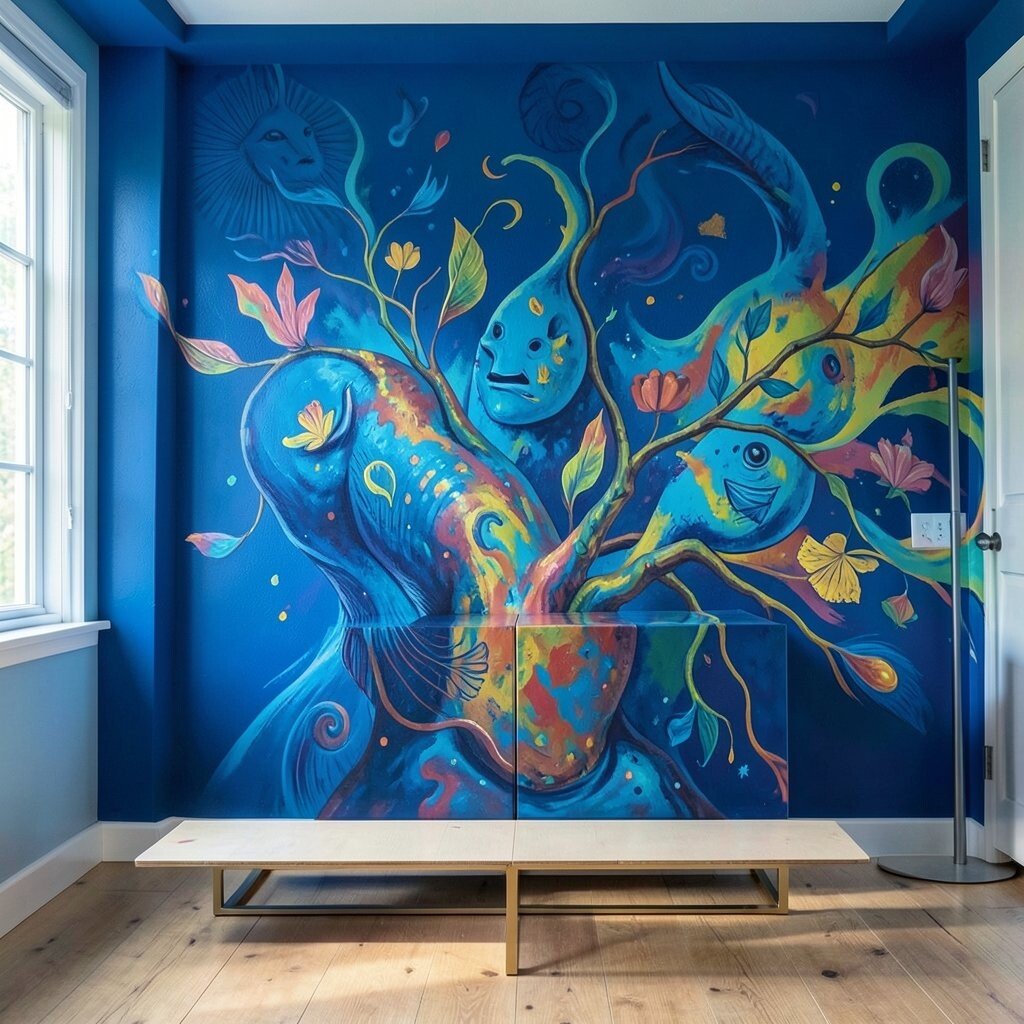
A mural can sound fancy, but it can also be simple and small. You can paint a gradient curve, a soft wave, or a botanical outline around your main artwork or mirror.
Blue walls are perfect for mural accents because they already provide color depth. Use lighter blue, white, or metallic paint to make the mural feel bright and airy.
If you want an easier route, use removable wall decals made for interior use. They are great for renters and for anyone who likes switching decor often.
16. Choose Curtains and Drapes That Connect to the Blue
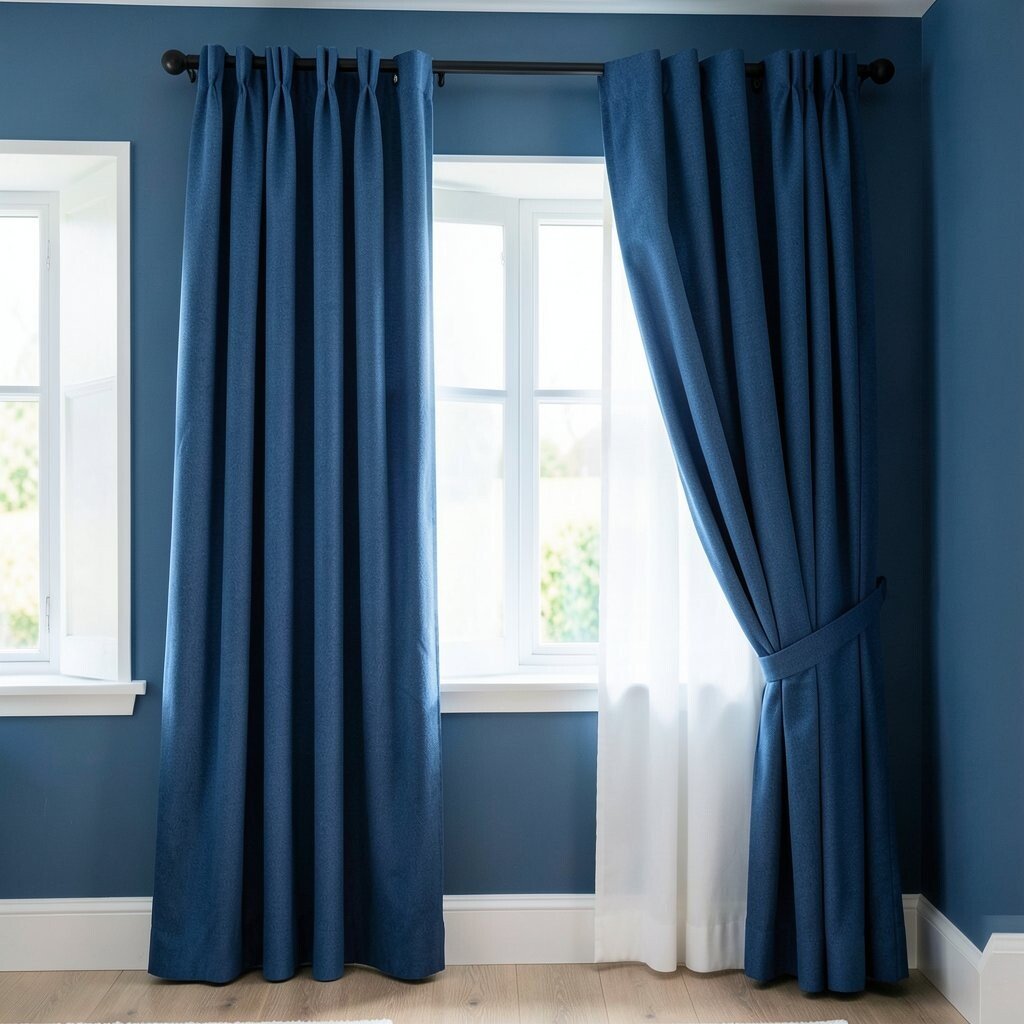
Window treatments can help your blue wall feel finished. When your curtains match the undertone of the blue, the focal point feels smooth and cohesive.
Try linen-look curtains in cream or sand for a calm contrast. If you want drama, use deep blue curtains with a slightly different tone than the wall so it still feels layered.
Current trends favor soft, relaxed drape rather than stiff panels. Sheer layering can also create a gentle glow that makes the blue feel dreamy.
For practical choices, measure your rod height and keep the curtain length slightly above the floor for a tailored look. That simple adjustment can make the whole room look more polished.
17. Build a Blue-Then-Neutral Palette with One Warm Highlight Color
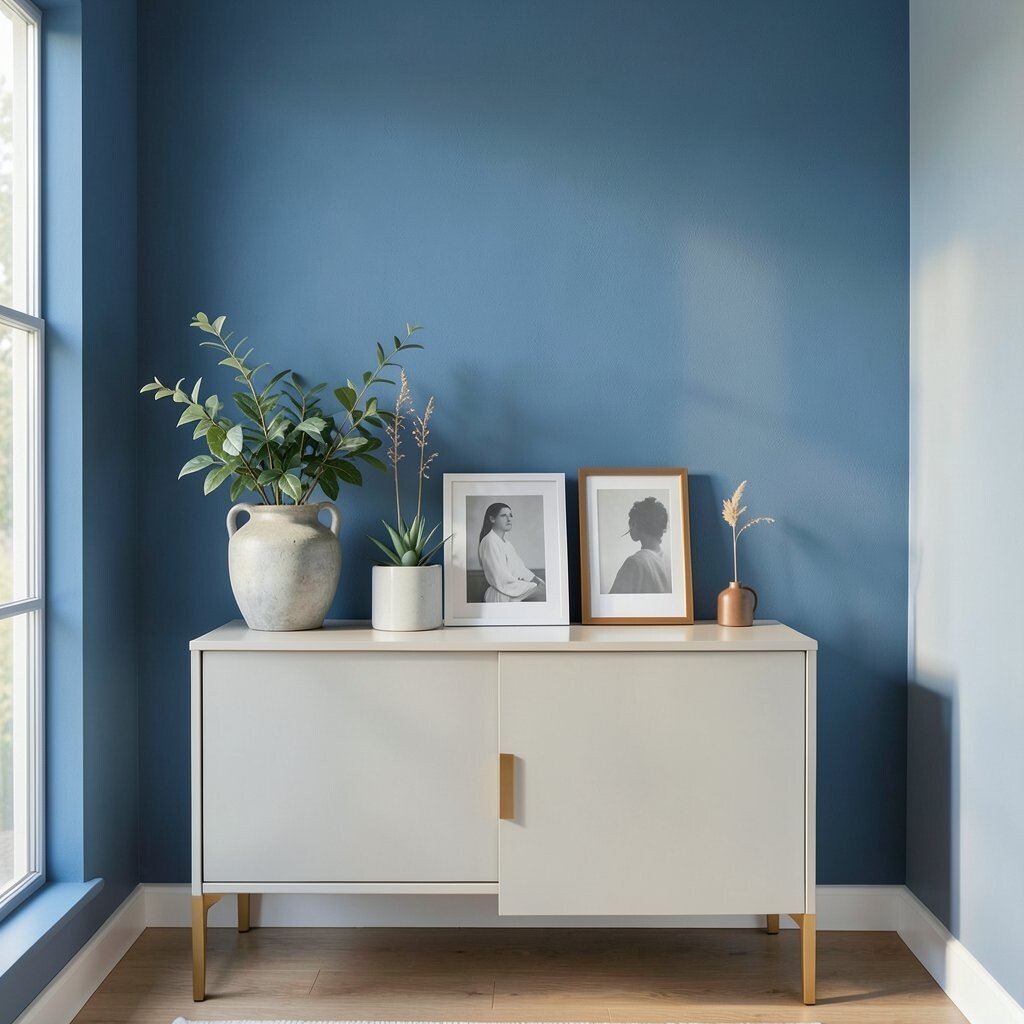
A focal point needs support from the rest of the room. If your blue wall is the main feature, keep furniture and decor mostly neutral, then add one warm accent color to “pull” attention.
Think of warm highlights like terracotta vases, amber lamps, mustard cushions, or honey wood frames. That one warm color creates a visual bridge between your wall and your room’s everyday elements.
To personalize, choose a warm accent that matches your favorite item. Maybe it is a favorite mug color, a book cover you love, or a small piece of art with the perfect tone.
18. Anchor the Wall with a Gallery Shelf and a Signature Object

A gallery shelf is a practical way to create a focal point while keeping the wall functional. Put a slim ledge above eye level, then place a single signature object in the center.
Your signature object could be a tall vase, a sculpture, a framed family portrait, or a small collection you cannot stop adding to. When it is centered, it guides the eye and makes the blue wall feel curated.
Style around it with supporting items like books, a small plant, and a decorative tray to catch and reflect light. This keeps everything neat while still looking personal.
For cost considerations, consider using wood offcuts for shelves and finishing them with stain or paint. Even a simple shelf upgrade can make your blue wall feel like a high-end feature.