
Soft curves can make a room feel instantly warmer. With the right cove, even a plain ceiling looks like it belongs in a magazine.
1. Shadow-Box Cove With Warm LED Glow
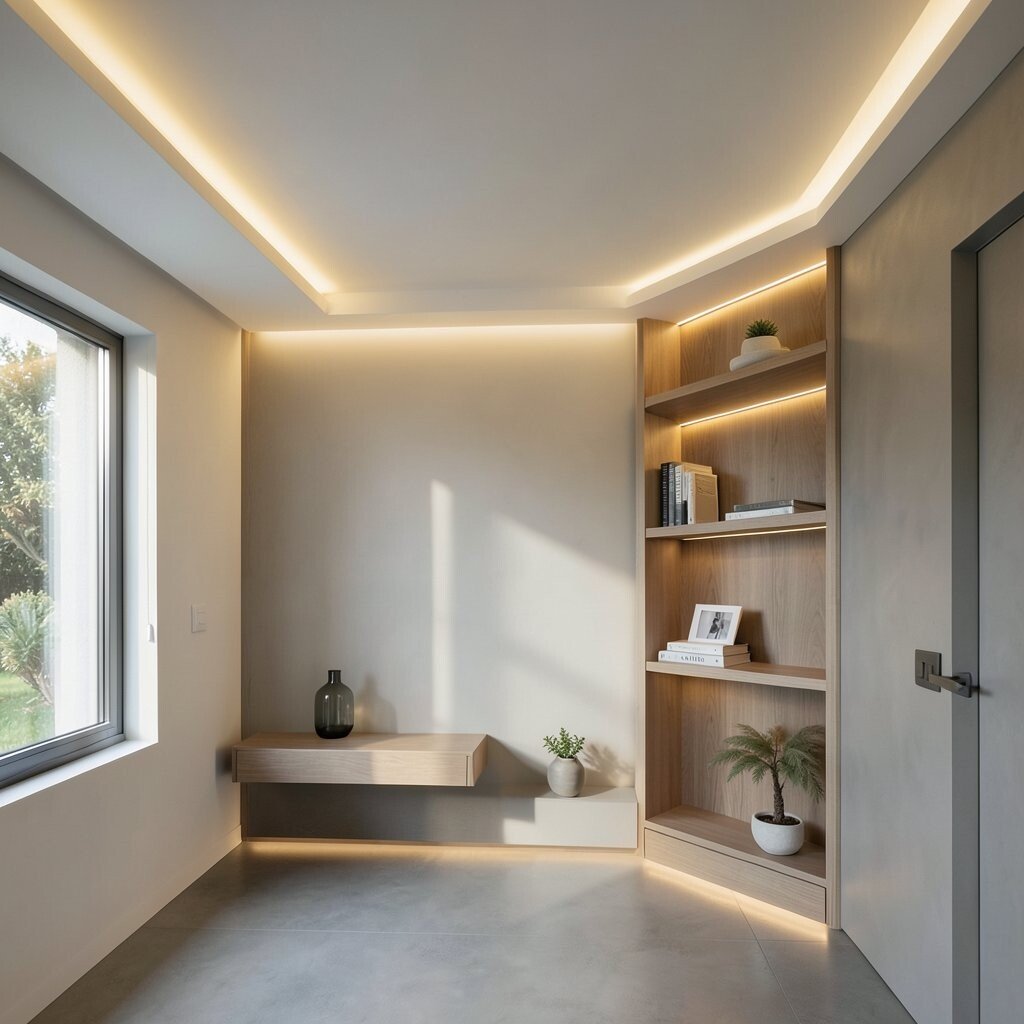
A gentle cove creates a clean line of light that feels cozy. It frames the ceiling like a picture border, making walls look taller and calmer.
Choose a warm white LED tone so the glow looks inviting, not harsh. Keep the cove depth modest, then hide the light behind a lip for a smooth “no visible bulb” effect. If you paint the soffit a slightly deeper neutral than the ceiling, the shadow edge will feel crisp and tailored.
2. Double-Step Cove for High-End Depth
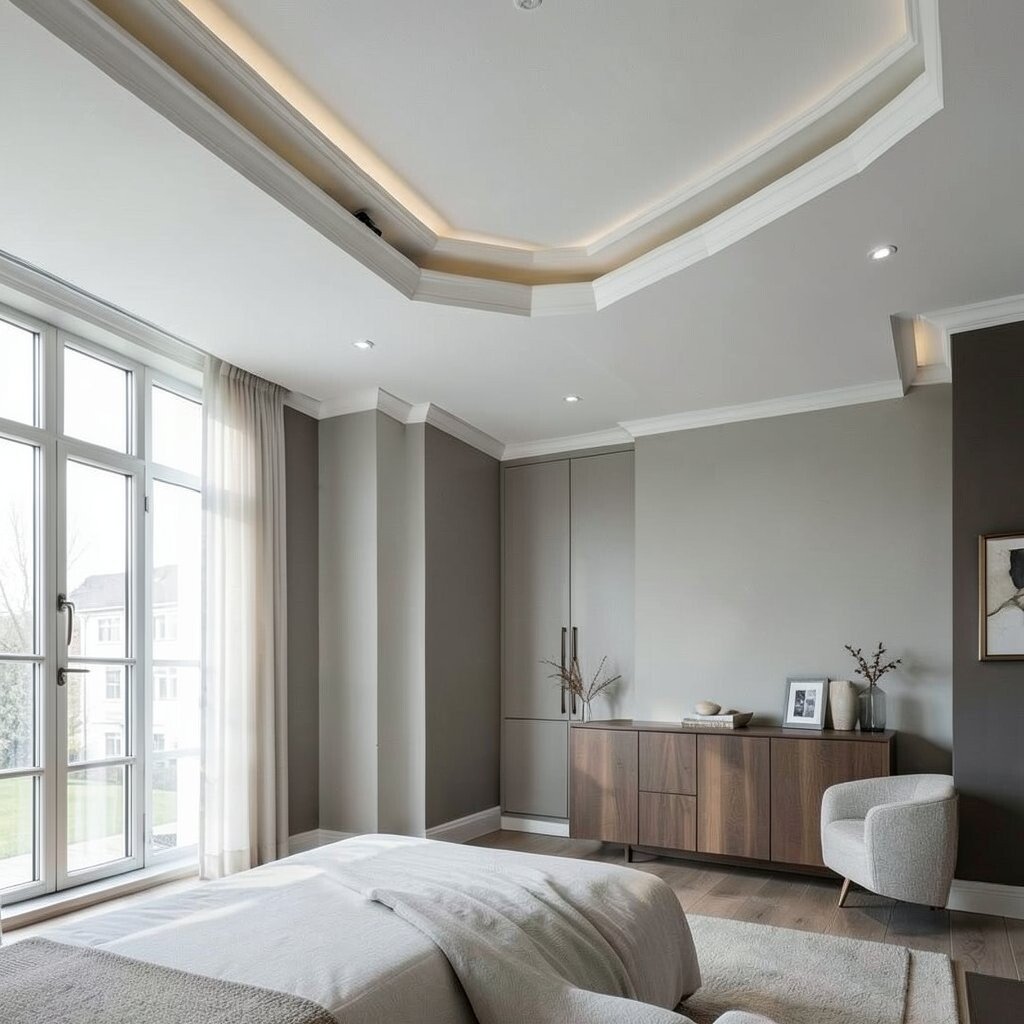
When you add a second step, the ceiling gains real depth without needing bold colors. You get layered shadows that look dramatic from across the room.
Install the first step closer to the outer edge and the second step as a narrower inner channel. This lets you place lighting on one or both tiers, so you can control how bright the room feels. For a smooth finish, use flexible joint compound at the curves and sand gently for a uniform surface.
For cost planning, expect more material and more labor than a single cove because there are extra edges. If you want the look with less expense, use the second step only at the perimeter and keep it simple near doors and hallways. Pair the layered cove with matte ceiling paint to keep the lighting soft and elegant.
3. Cove Ceiling With Centered Medallion Accent
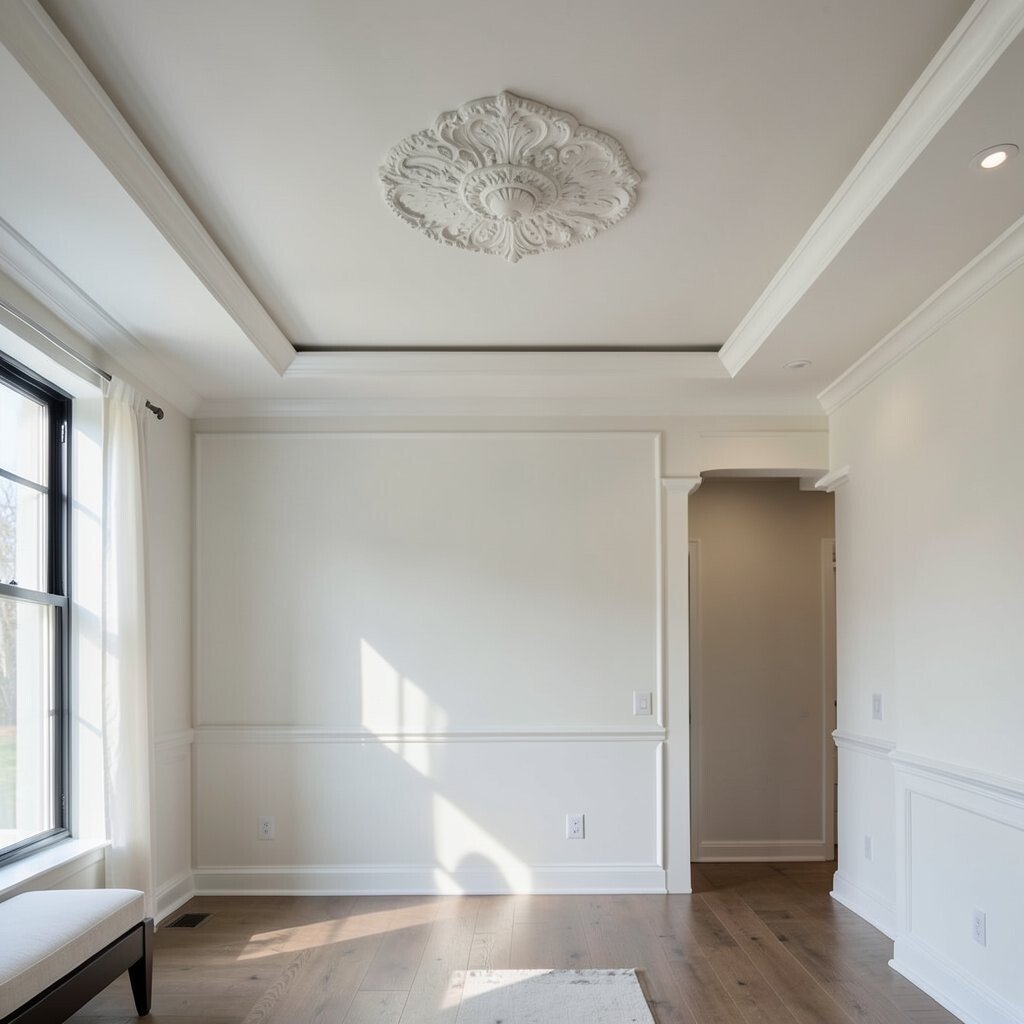
A cove ring around the perimeter can make a centered light feel extra special. Even if your chandelier stays simple, the ceiling design will carry the wow factor.
Position a subtle medallion or ceiling rosette right at the center, then let the cove shadows guide the eye upward. This combination works beautifully in dining rooms because it makes the table area feel framed and intentional. Keep the medallion style consistent with your fixtures, such as modern if your light has straight lines.
To personalize it, choose a texture for the medallion like light plaster or a raised pattern. The uniqueness will come from the contrast between the smooth cove and the slightly detailed centerpiece. If you want to save money, buy a premade medallion and focus your effort on getting the cove lines perfectly straight.
4. Recessed Cove With Indirect Lighting Behind Trim
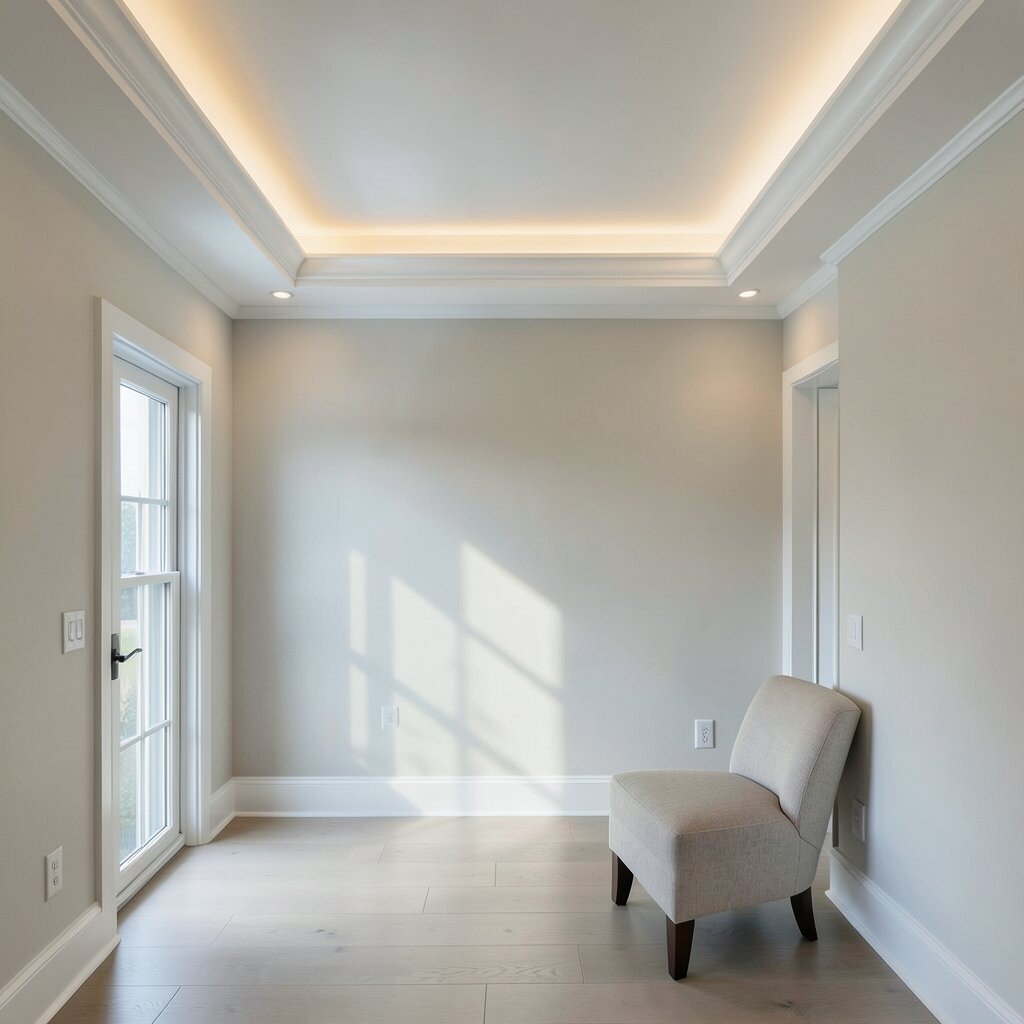
This style hides the light so your eyes only catch the glow. The ceiling looks cleaner because the light source disappears into a recessed pocket.
Use trim pieces or a slim LED channel behind a lip so the beam washes softly across the ceiling. For a practical build, measure carefully around corners and plan wiring access before drywall goes up. If you’re renovating, this option can be easier when you already have a ceiling cavity for running low-voltage wiring.
5. Cove Ceiling in Matte Color-Blocking Panels
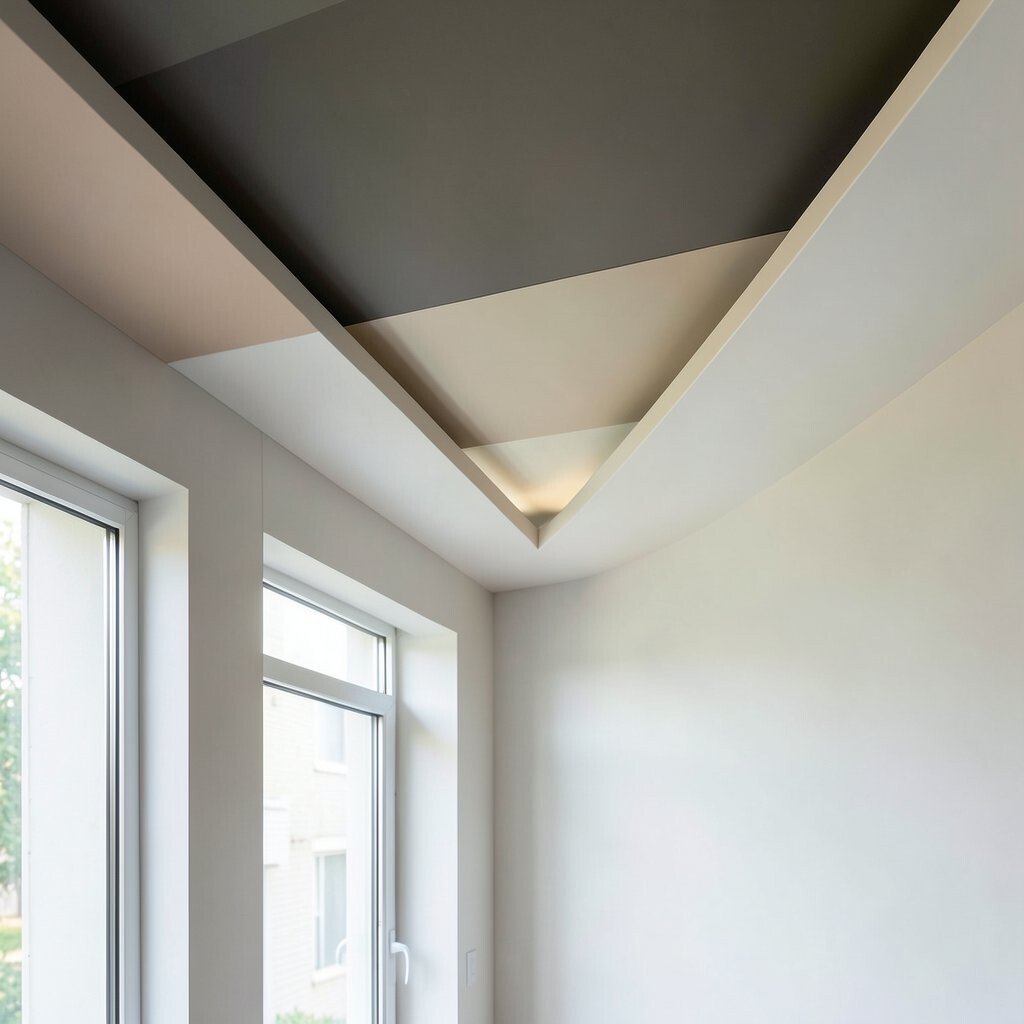
Color-blocked coves can look playful and designer, especially when you choose calm shades. Think soft sage, warm greige, or muted blue that still feels airy.
Paint the ceiling a light base and use the cove area for a deeper tone so the shadow line becomes a built-in divider. Keep the edges sharp by using painter’s tape and removing it while the paint is slightly tacky. To personalize, add a matching accent on a nearby wall so the colors feel intentional, not random.
Cost-wise, you’ll likely spend more on paint and time than on carpentry, which can fit many budgets. Current trend energy favors muted, earthy colors over bright primaries, so this look feels fresh without feeling loud. Add a dimmer switch for flexible moods, from daytime calm to evening cozy.
6. Textured Cove Ceiling for a Boutique Feel
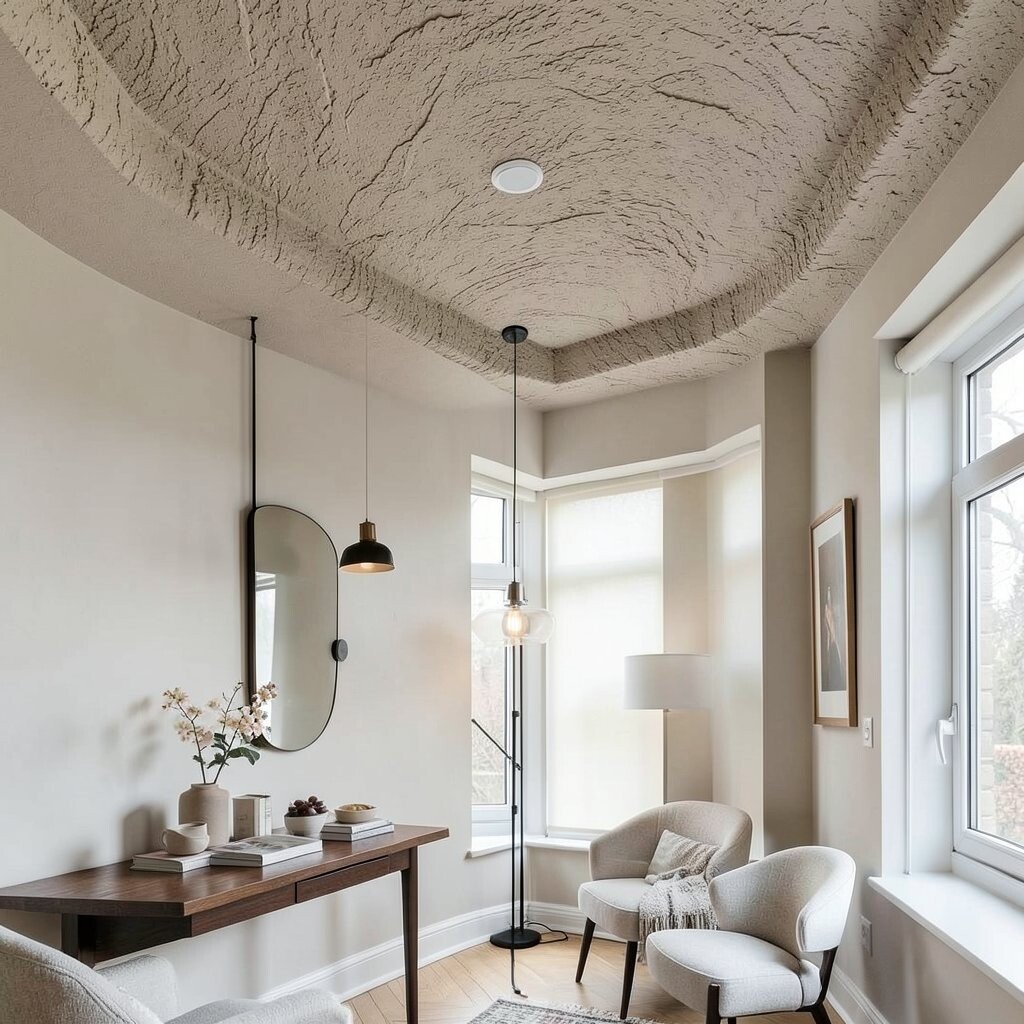
Texture turns a basic cove into something that looks rich and custom. From a distance it reads as soft dimension, and up close it feels like a crafted surface.
Consider applying a fine knockdown texture or a smooth plaster finish inside the cove area. Pair the textured surface with clean, painted trim so the overall look stays neat. This works especially well in living rooms where you want the ceiling to feel like a design feature.
To keep maintenance easy, use a finish that holds up to gentle dusting. If you’re hiring help, ask whether the texture is sprayed or rolled because that affects cost. A textured cove can be a uniqueness win when you want depth without adding extra steps.
7. Minimal Cove With Thin LED Channel for Modern Rooms
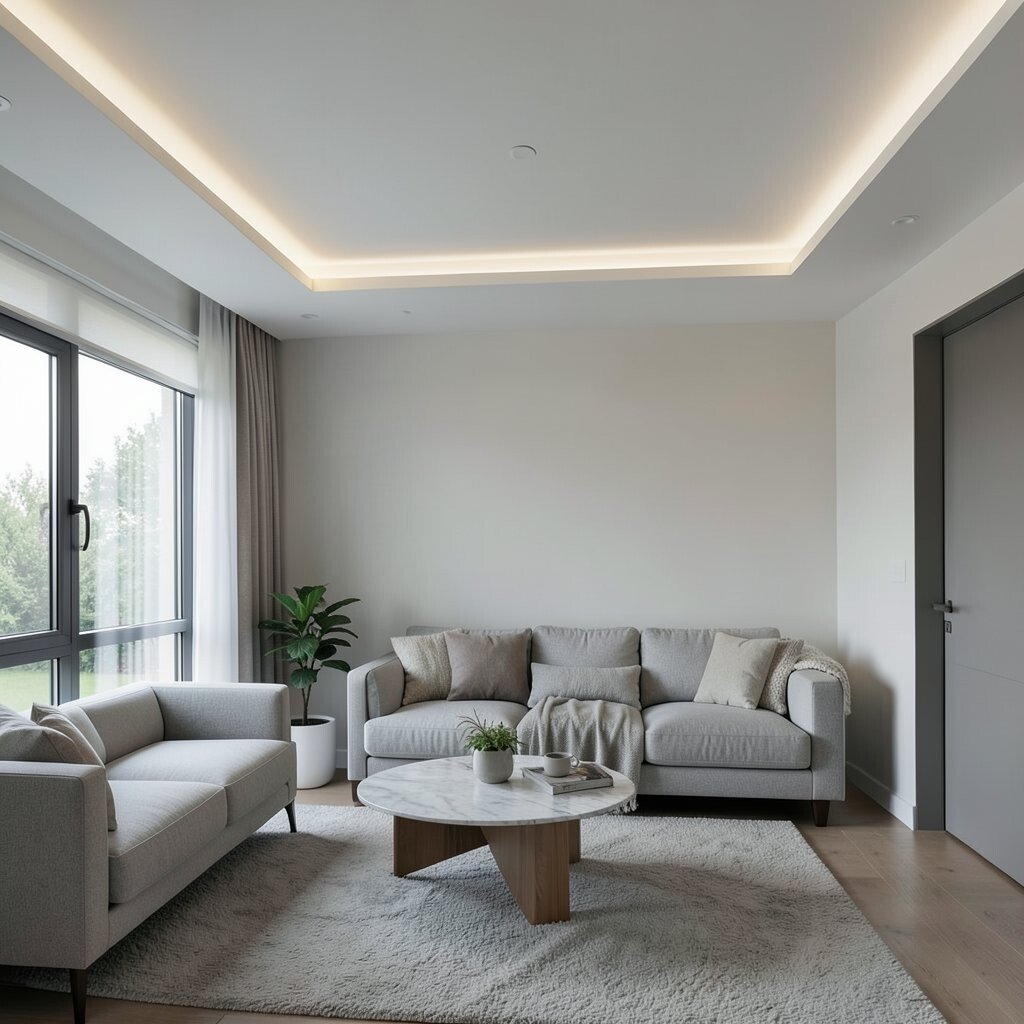
For a crisp, modern look, go with a slim cove and a thin LED channel. The result is sleek lighting that doesn’t steal attention from furniture.
Keep the cove line straight and narrow, then choose neutral wall colors so the ceiling glow looks balanced. Select a diffuser strip so the light spreads evenly along the perimeter. If your room has low ceilings, this option keeps things visually light and avoids bulky profiles.
8. Cove Ceiling With Floating Look Using Off-Center Lighting
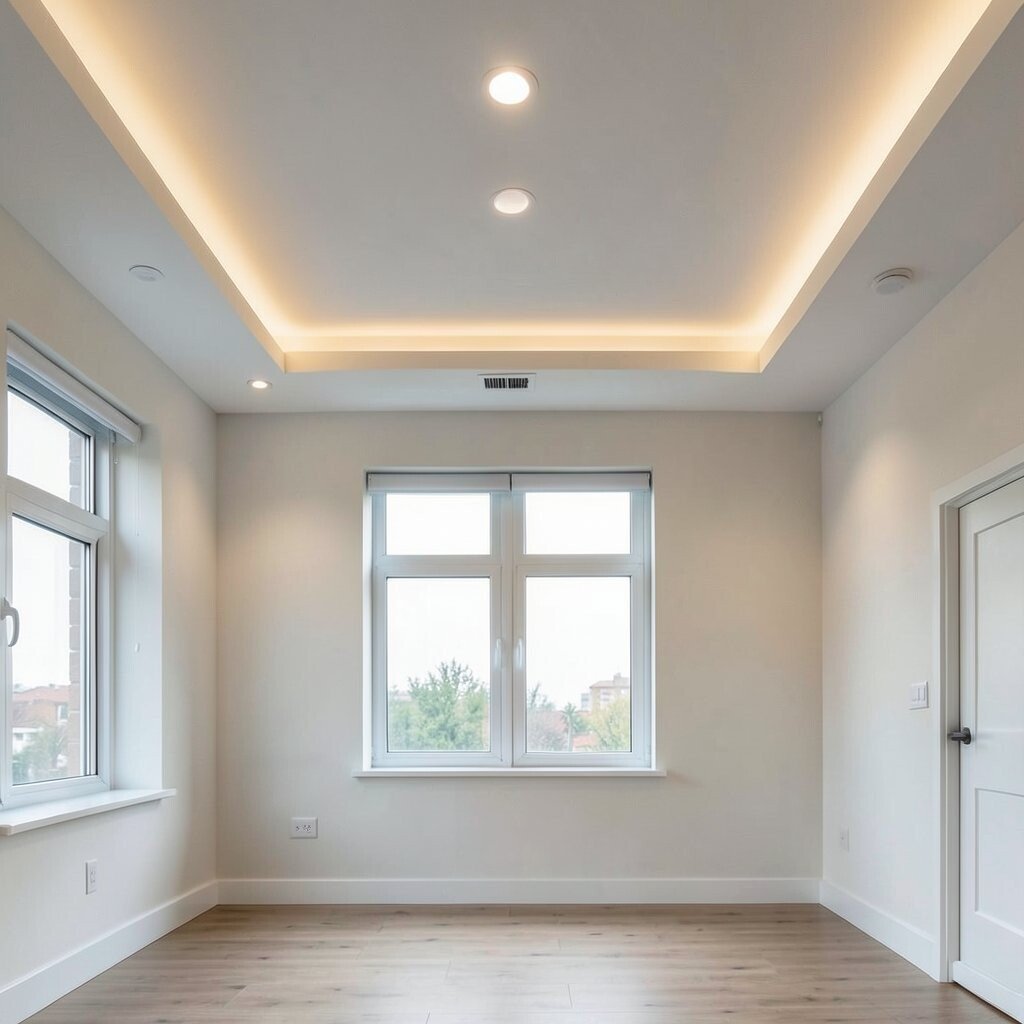
This design gives the illusion that your ceiling is hovering. By positioning the light slightly off-center within the cove, shadows shift in a way that feels airy and modern.
Place the LED channel toward the inner edge of the cove so it creates a halo effect. For personalization, match the lighting color to your room’s vibe, such as warm for cozy spaces or cooler for a sharper feel. If you want to avoid glare, add a high-quality diffuser and test the brightness before fully sealing the channel.
Cost can be mid-range because the channel location and diffuser choice matter for the final look. It’s also a great option when you want uniqueness without heavy decorative trim. A dimmer is worth it here since the floating effect becomes even more dramatic when lighting is lower.
9. Cove Ceiling With Paneled Cornice and Warm Shadows
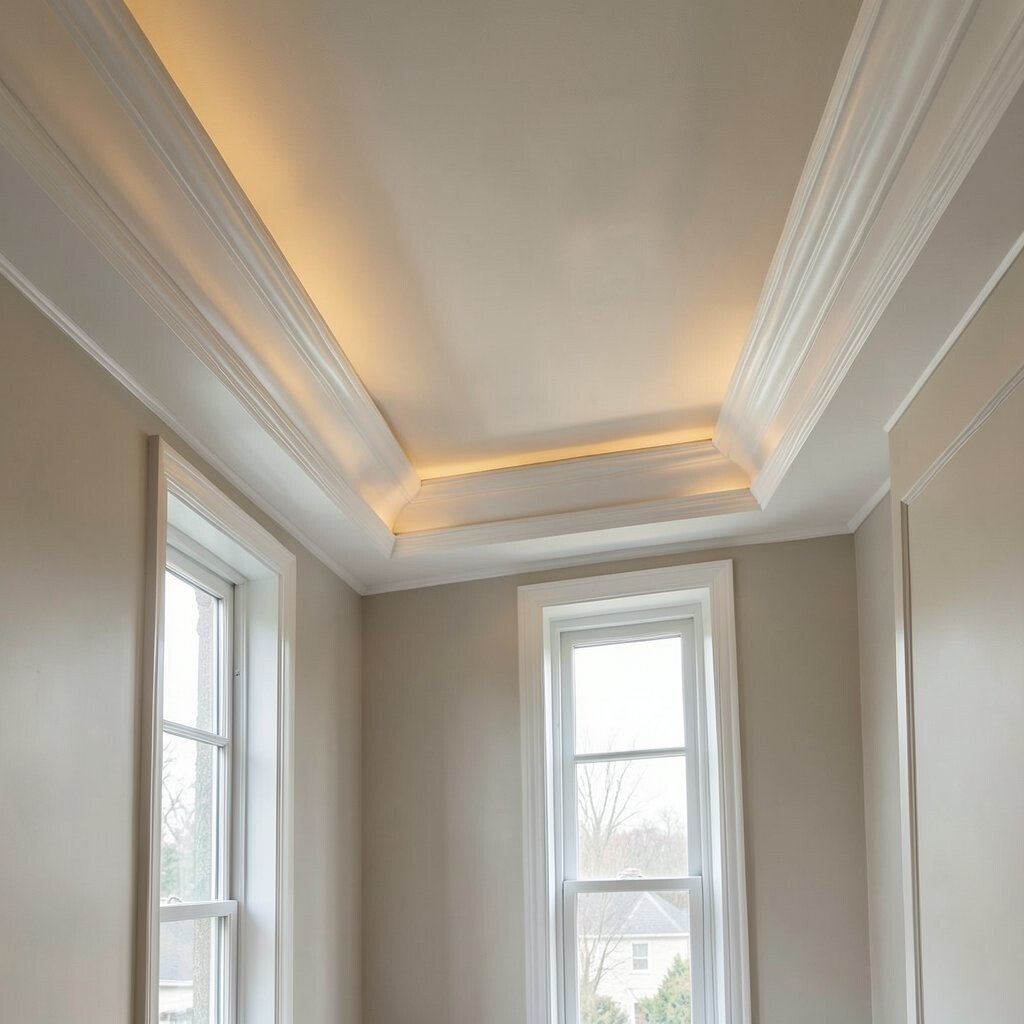
Paneled cornice cove ceilings bring a gentle, classic rhythm to contemporary spaces. The small lines and shadow gaps give the ceiling a “finished” feeling that never looks plain.
Use simple molding panels around the cove, keeping the spacing consistent so the design stays tidy. Paint the panels in the same color as the cove for a soft tonal look, or slightly contrast for more definition. This style pairs well with traditional fixtures, but it can also work in modern rooms if you keep the panel shapes clean.
For practical tips, plan the molding lengths carefully at corners so seams don’t stand out. If you want cost control, use pre-primed trim and do the paint yourself. The uniqueness comes from the repeating pattern, which adds interest without needing bold colors.
10. Cove Ceiling With Rustic Plaster Finish and Sconces
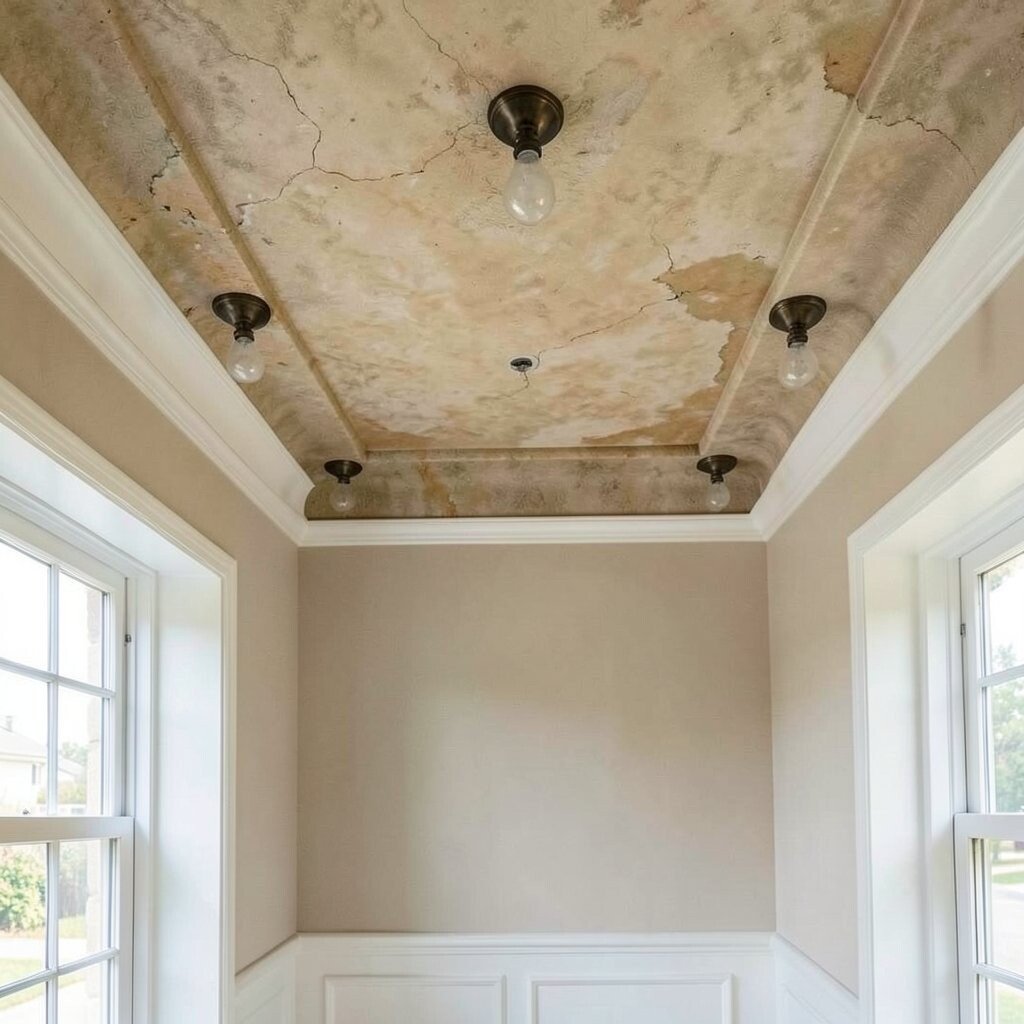
If you love a cozy, lived-in vibe, combine a cove with a rustic plaster finish. The ceiling feels warm and artistic, especially when paired with soft wall lighting.
Apply a textured plaster or lime-wash style coating inside the cove area, then keep the rest of the ceiling smooth for contrast. Add discreet sconces or small wall uplights so the glow meets the cove light and creates a layered ambience. This is a great option for bedrooms and reading nooks where comfort matters.
When budgeting, textured finishes can cost more than simple paint, but they deliver a standout look. To personalize, match the plaster tone to your wood floors or furniture, such as honey oak, walnut, or painted white. Current trend choices often blend modern lighting with older-feeling textures, so this style feels current.
11. Cove Ceiling With Waterfall Drop at the Entry
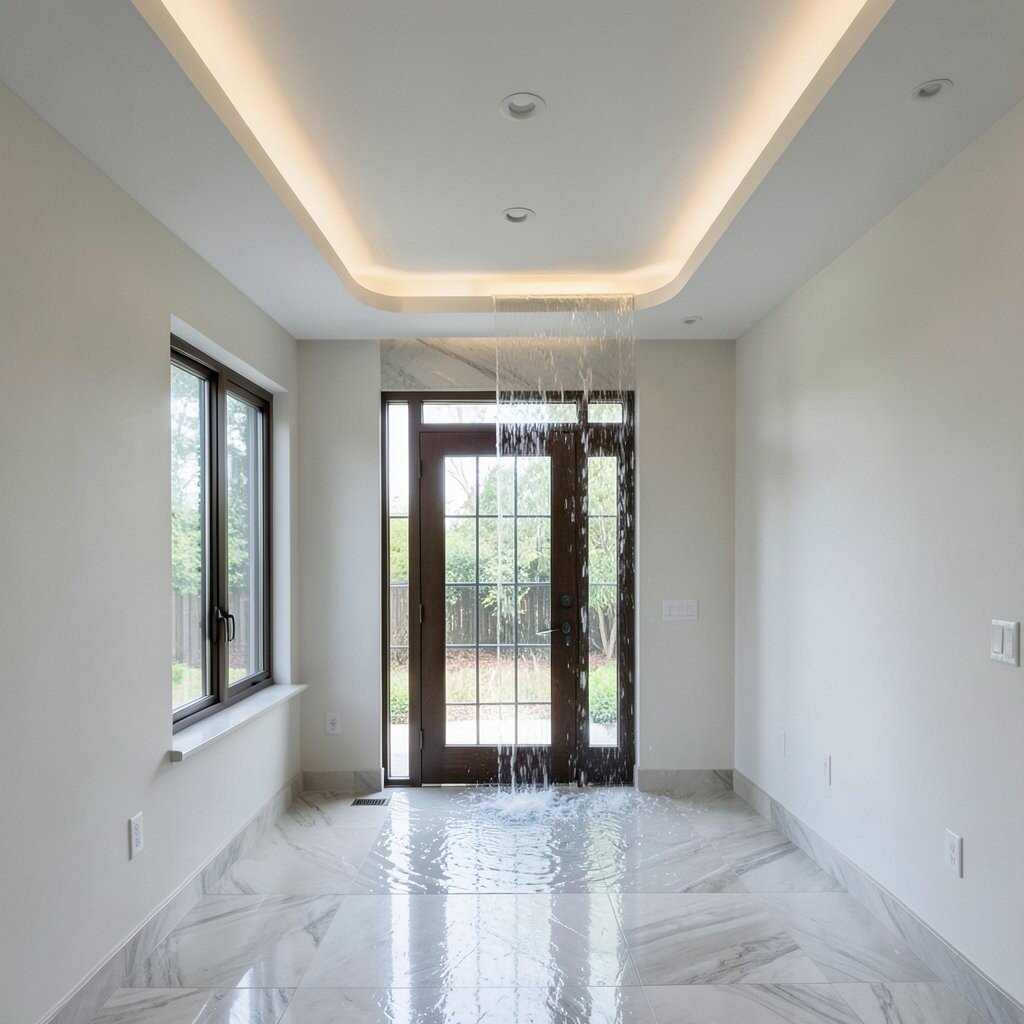
A cove can do more than sit at the perimeter. With a waterfall drop, it creates a dramatic entrance that feels welcoming the moment you step inside.
Run the main cove along the ceiling edges, then add a graceful center drop that guides light toward the hallway. Keep the lighting indirect so the drop looks like a gentle curtain of glow, not a bright strip. This works best when your entry has a clear sight line, so the effect lands instantly.
For practical planning, make sure the drop doesn’t interfere with doors and pathways. Cost considerations are usually higher here because the shape is more complex and needs careful framing. If you want a similar vibe for less, choose a shorter waterfall section and limit it to the ceiling closest to the entry chandelier or fixture.
12. Cove Ceiling With Beam-Like Accents for Coastal Style
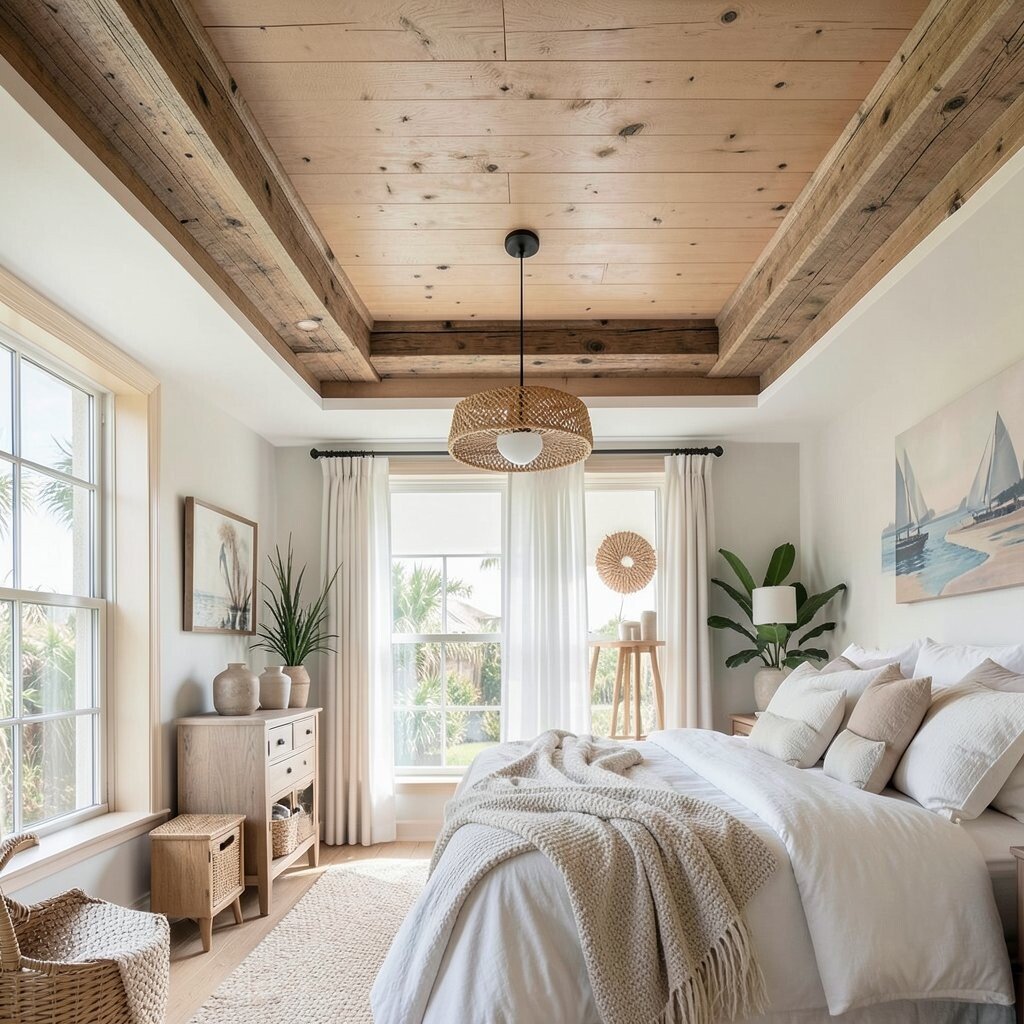
Coastal style often feels relaxed, but it can still look polished when the ceiling has structure. Beam-like cove accents add that airy character while keeping the lighting cozy.
Install narrow beam strips or faux beams along the cove line, then keep the LED glow soft behind the edges. Choose light colors such as warm white, driftwood gray, or pale sandy tones to keep the room feeling open. This design looks amazing with natural textures like rattan, linen curtains, or light wood furniture.
To personalize, vary the beam spacing slightly so it feels organic rather than factory-perfect. Cost can rise if you use real wood beams, but lightweight faux materials can mimic the look for less. The uniqueness shows up in the mix of simple lighting and structured accents that feel both casual and intentional.
13. Cove Ceiling With Built-In Shelf for Decor Lighting
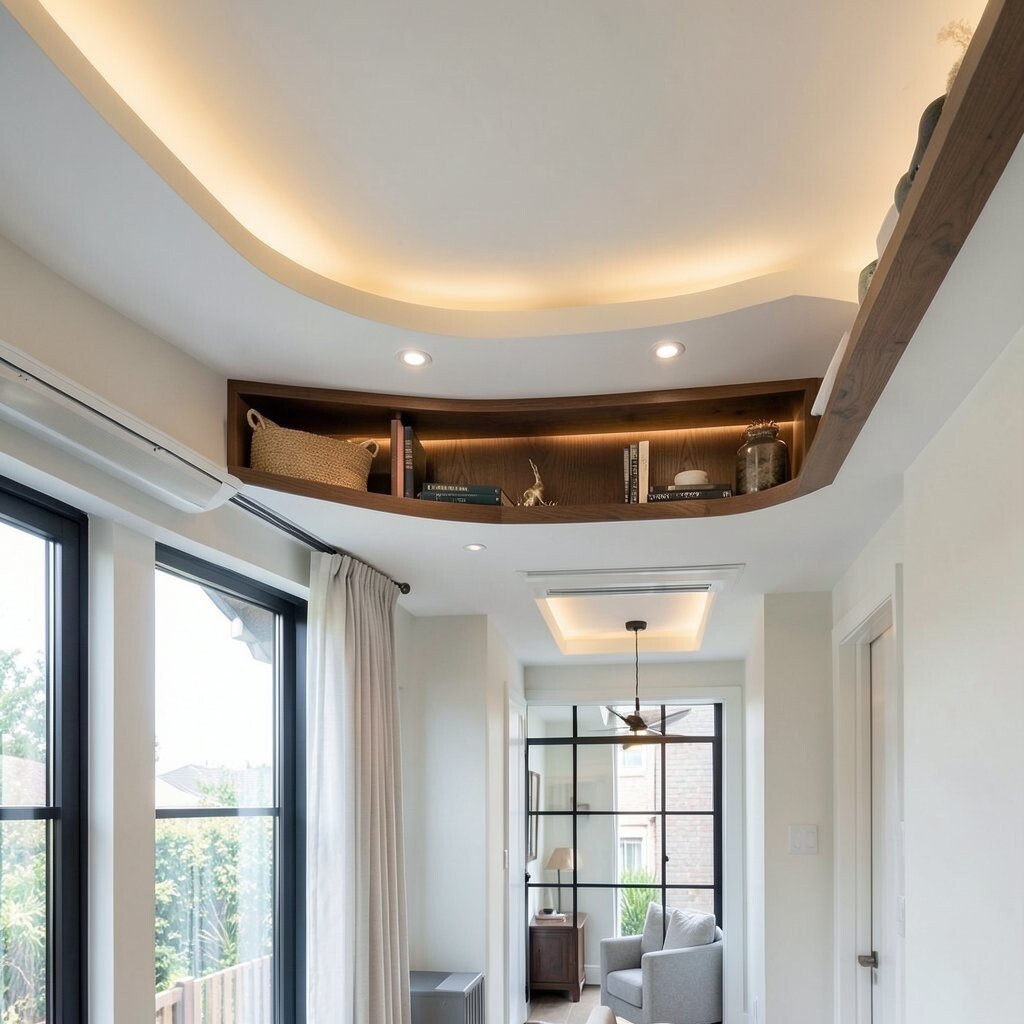
When a cove includes a built-in shelf, your ceiling becomes functional. You can display small decor and still enjoy the soft halo of light.
Create a shallow ledge within the cove area and place indirect LEDs beneath it so the shelf items glow gently. This works great for framed photos, small plants, or decorative vases in a living room. For practical results, choose a narrow shelf depth so the ceiling stays visually light and doesn’t feel heavy.
Budget-wise, shelves add framing work, but the payoff is a design feature you can use every day. Personalize the look by styling the shelf with items that match your room theme, like coastal shells or minimal ceramics. Current styling trends favor fewer, well-chosen objects, so keep the display curated rather than packed.
14. Cove Ceiling With Large-Scale Geometric Framing
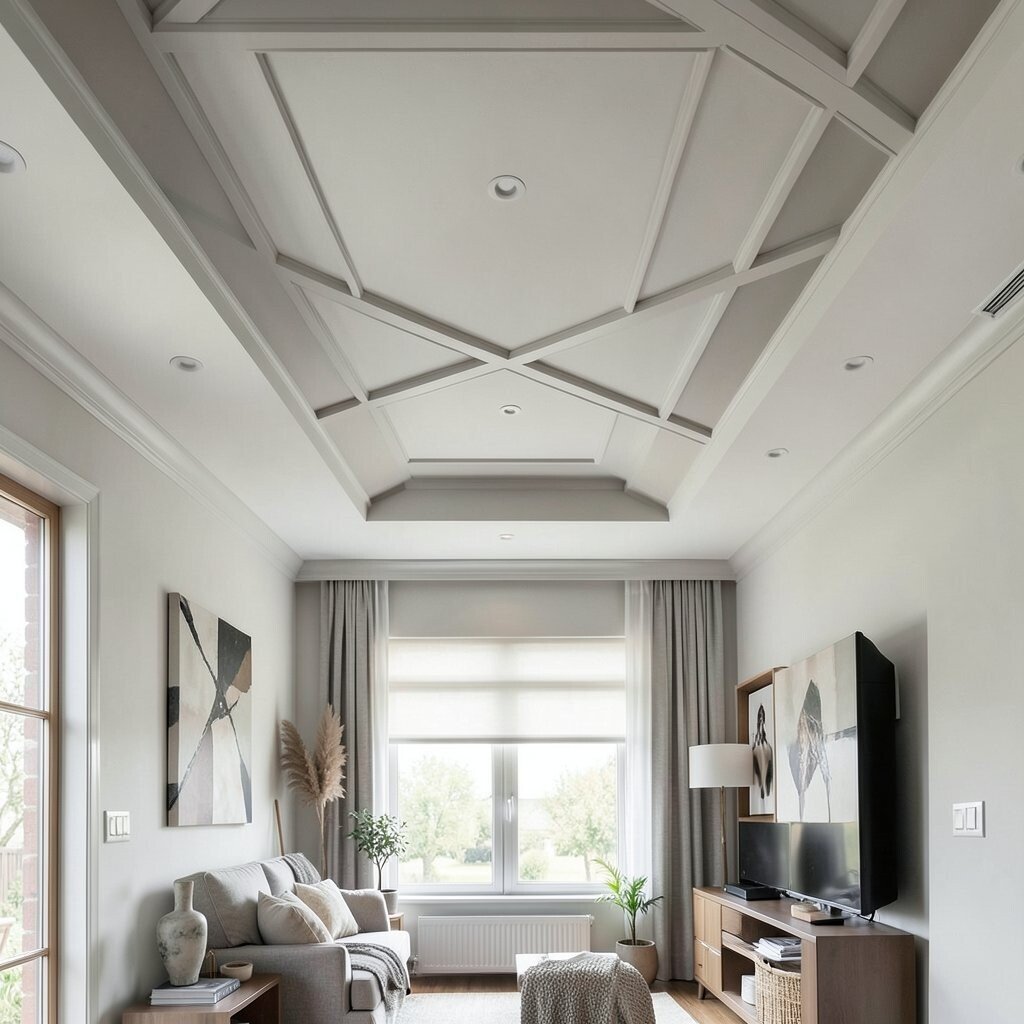
Geometric cove ceilings bring a bold layout without needing loud colors. The ceiling can look like a modern art piece while still feeling welcoming.
Frame the cove perimeter with geometric shapes such as rectangles, subtle arches, or angled segments. Add lighting inside the shapes so shadows make the pattern come alive. Keep the shapes consistent across rooms if you have an open-plan area, so the design feels cohesive.
Cost considerations depend on how complex the layout is, since more custom framing means more labor. If you want to manage expenses, limit the geometry to one main room and keep other areas simpler. This design is especially trending in modern homes because it adds structure and personality overhead.
15. Cove Ceiling With Repeating Circular Niches
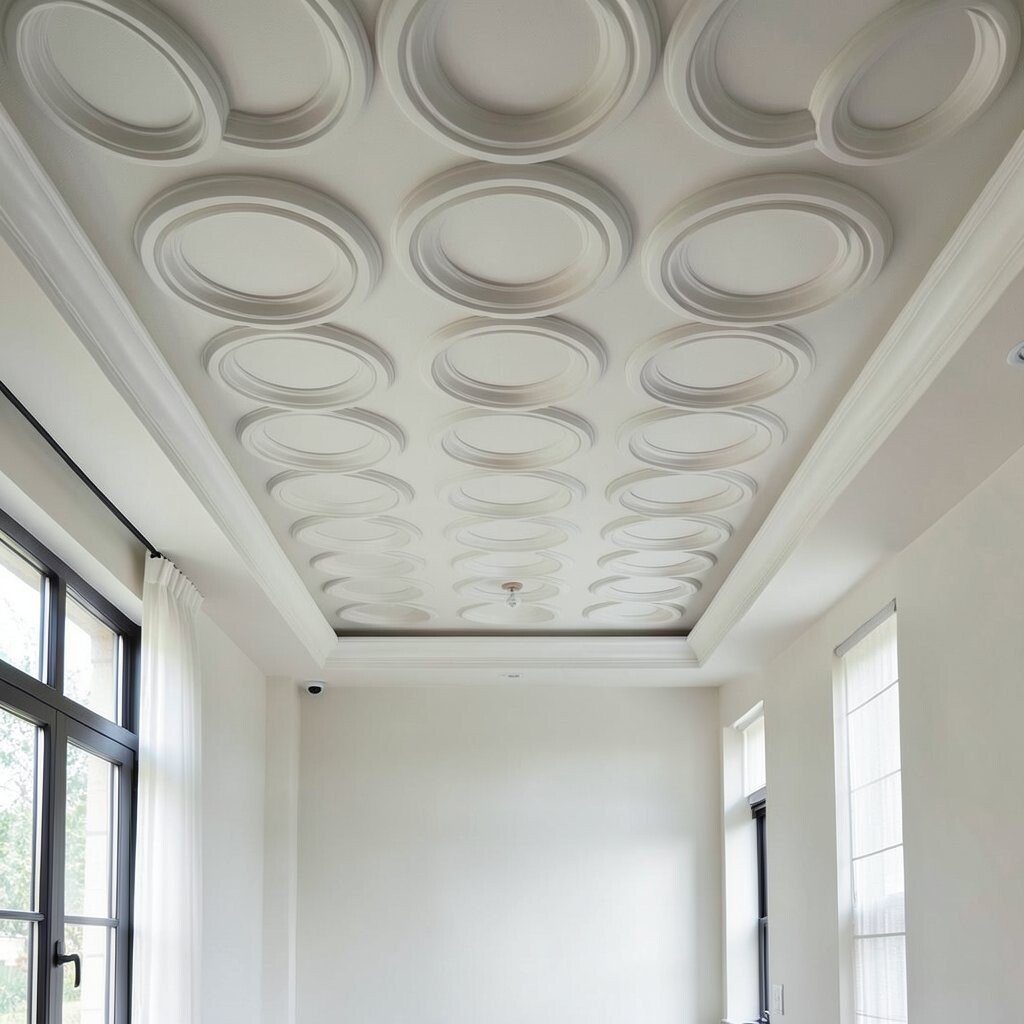
Circular niches in a cove can look playful, like soft bubbles floating above. The visual rhythm makes the ceiling feel lively while the lighting keeps it calm.
Cut shallow circular recesses into the cove perimeter and place a tiny LED behind each niche for gentle sparkle. Choose a consistent circle size for a clean pattern, or vary slightly for a more organic feel. This style works beautifully in kitchens, hallways, or kids’ spaces where you want a cheerful design.
For practicality, plan wiring and access points so you can maintain LEDs if needed. Costs can be moderate because there’s extra cutting and finishing work, but materials stay similar to other cove builds. Personalize the look by matching circle spacing to your wall layout, such as aligning with artwork or light switches below.
16. Cove Ceiling With Thermally Safe Vent Integration for Comfort
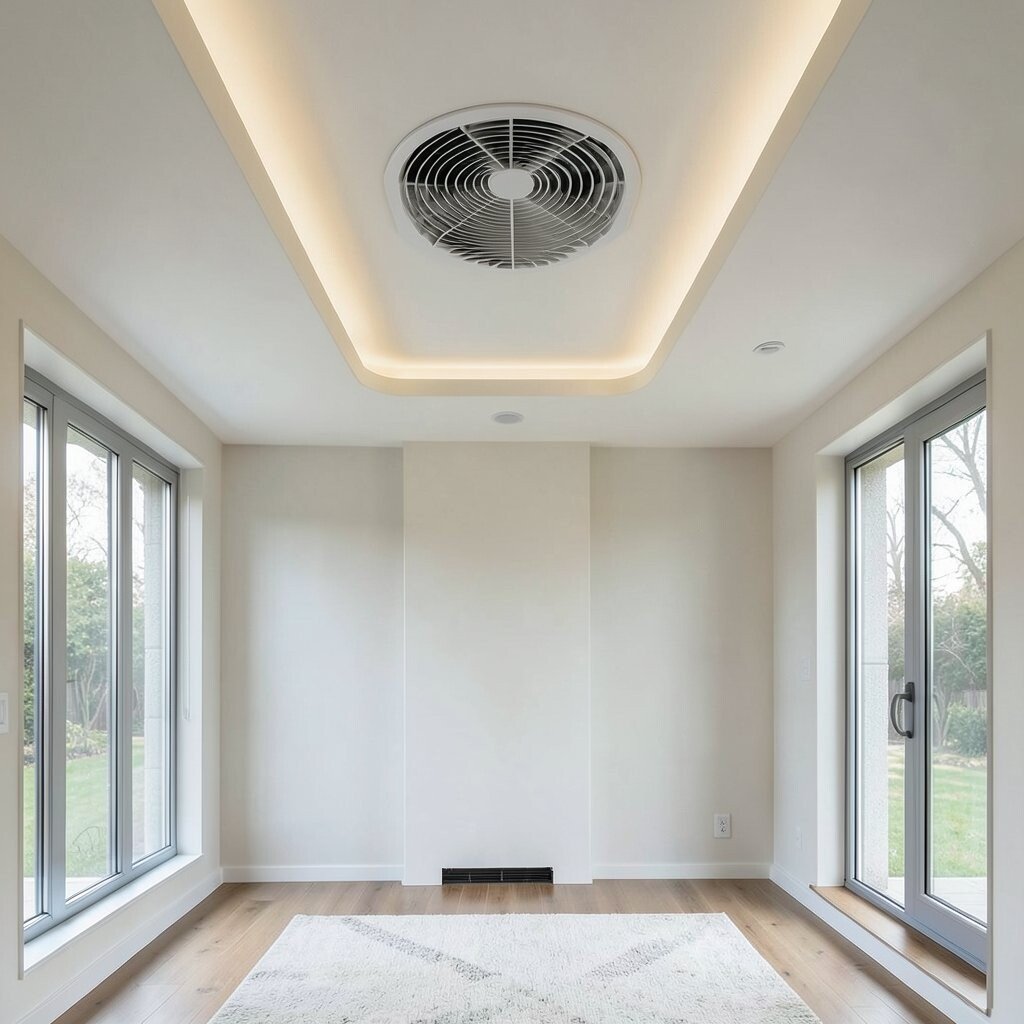
Some cove designs look stunning and also help the room feel better. If you integrate vents into the cove, you keep airflow working while the ceiling stays stylish.
Work with an HVAC installer to place vents so they sit behind the cove line where they’re less noticeable. Use grilles that blend with the finish, such as painted metal grilles matching your ceiling tone. This approach is practical for bedrooms and living rooms where comfort matters every day.
Cost considerations are tied to HVAC adjustments, but many homeowners find it’s worth doing during renovation. Personalize the look by painting the vent area to match the cove and keeping the lighting glow soft around it. The uniqueness here is functional beauty, a design choice that stays useful long after the first wow moment.