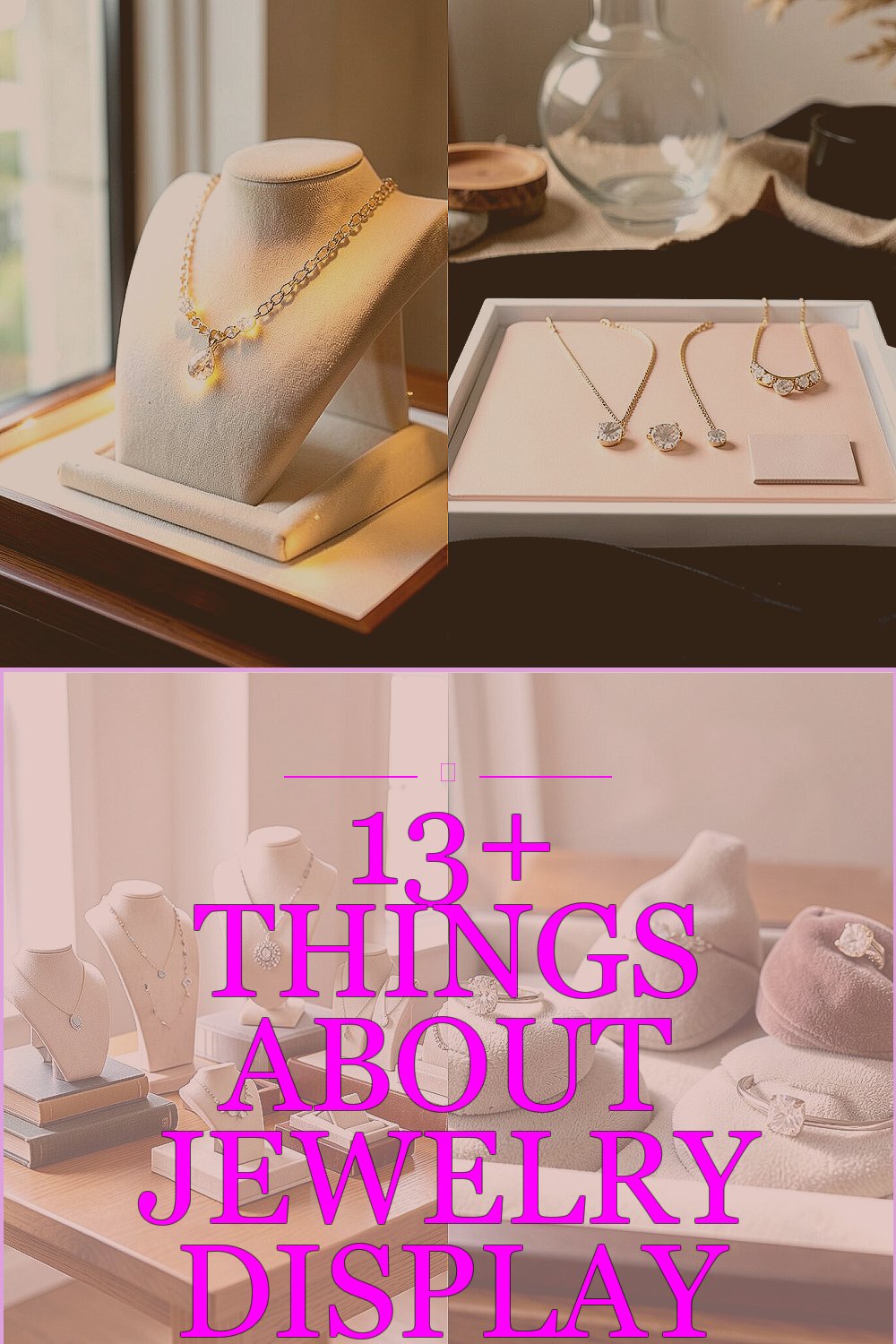
Jewelry can look magical before anyone even touches it. The way you show it matters more than most people think.
1. Lighting Can Make or Break the Shine

Soft light can make a necklace glow like it belongs in a glass case. Harsh light can wash out color and hide the tiny details that make a piece special.
Many people think any bright lamp will do, but the best display light feels warm and clean. Try placing pieces near a window, then add a small LED light for extra sparkle. This can help you save money while making even simple items look rich.
2. The Background Changes the Whole Mood

A plain white tray feels fresh and neat, while dark velvet feels rich and dramatic. The background tells people what kind of story your jewelry is trying to tell.
That is why handmade brands often mix wood, stone, linen, and glass. You can match the background to your style, your brand colors, or the season. A soft blush mat can feel sweet, while black acrylic can feel bold and modern.
Try a few samples before buying a full set of props. Some backgrounds look great in person but too busy in photos, so test them first. If you sell online, a clean background can also help shoppers focus on the jewelry, not the setting.
3. Height Gives Simple Displays a Big Lift

Flat displays can look tidy, but they may also feel a little boring. Using stands, risers, and layered trays adds depth and makes the table feel alive.
This trick helps the eye move around the display in a nice way. It also makes it easier to show different pieces without crowding them. You do not need expensive tools, since stacked books or small boxes can work well at first.
Many shops now use mixed heights to create a boutique look. You can place the tallest items in back and the smallest ones in front. That simple setup can make a small table look much more polished.
4. Too Much Clutter Hides the Best Pieces

It is tempting to show every item at once, but a crowded display can feel noisy. When the eye has too many places to land, the jewelry loses its charm.
Leaving space around each piece gives it room to breathe. That empty space can make a ring, bracelet, or pair of earrings seem more special. It also helps shoppers notice quality details like clasps, stones, and texture.
If you are using a small budget, a neat layout can be better than buying more props. Group pieces by color, shape, or style so the display feels clear. A calm setup often looks more expensive than a messy one.
5. Mannequins and Busts Add a Human Touch

Necklaces often look flat when they are lying down. A bust or mannequin gives them shape and helps people imagine how they will look on a real person.
This is especially useful for layered chains and bold pendants. It can also help you show length without needing a ruler in the shot. Some sellers use fabric-covered forms for a soft, elegant feel.
You can personalize the look by choosing forms in different colors or textures. Black, cream, and gray are popular because they stay out of the way. If you want a more current style, try simple matte finishes instead of shiny plastic.
6. Color Choices Can Attract the Right Shopper
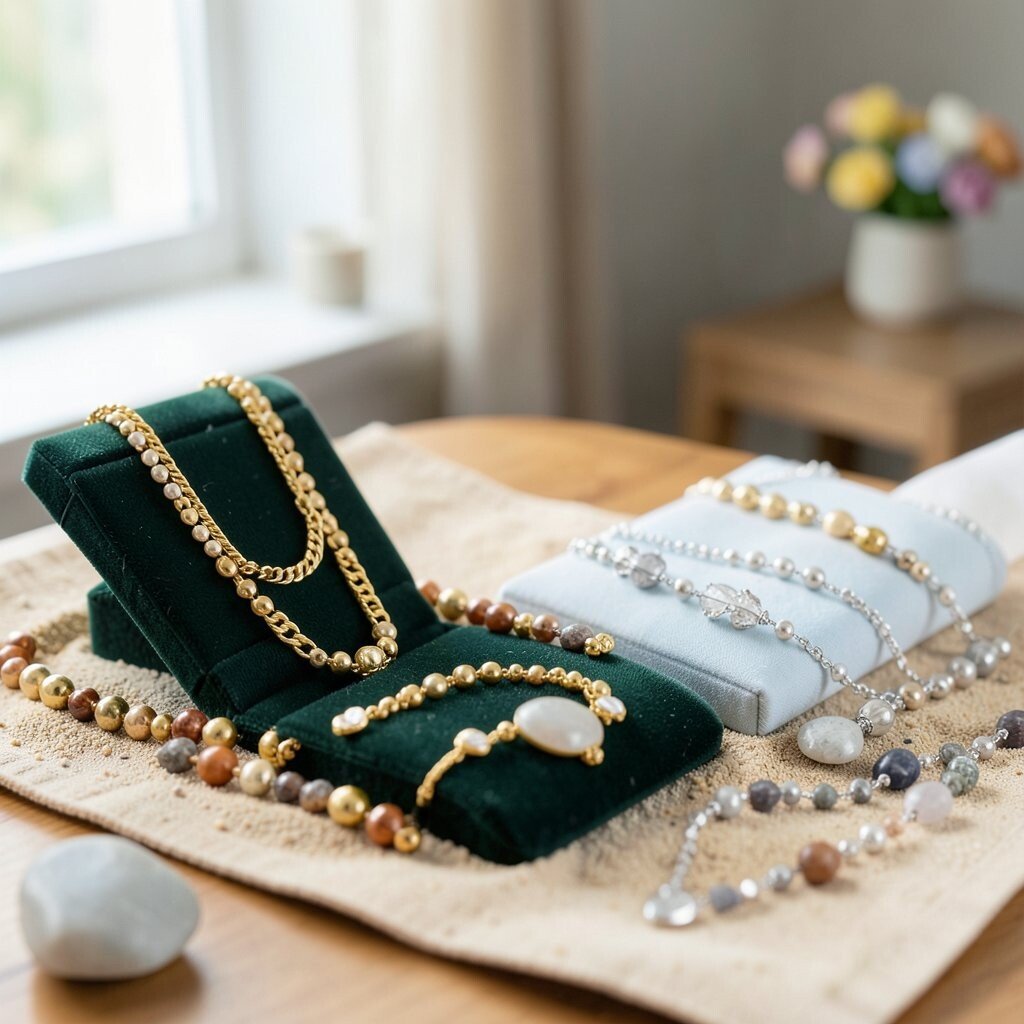
Color does more than decorate a table. It can tell shoppers if your jewelry feels playful, fancy, earthy, or modern.
Gold pieces often shine against deep green, navy, or black. Silver can look crisp on white, pale blue, or cool gray. Warm beads and natural stones may stand out best on sand, tan, or soft beige.
Think about the people you want to reach when picking your palette. A teen market may enjoy bright, trendy colors, while a gift shop may need softer tones. Matching the display colors to your audience can make the whole setup feel more personal.
7. Every Material Sends a Message

Wood feels warm, metal feels sleek, and glass feels clean. Even if shoppers do not say it out loud, they notice those little clues right away.
That is why a display made from rough wood can make handmade jewelry feel earthy and honest. A mirrored tray can make crystal pieces feel more fancy and bright. Your materials should support the jewelry instead of fighting it.
Cost matters here, too, because some materials are much cheaper than they look. Foam board, cardboard, and fabric can stand in for pricier props if you use them well. The trick is to keep the setup neat so the low cost does not show.
8. Security Still Has to Look Pretty

Jewelry displays need to be safe, not just beautiful. Tiny pieces can walk away fast if they are left open and easy to grab.
Cases with locks, covered trays, and hidden anchors can protect your stock. At the same time, they should still let shoppers see the details clearly. Clear lids and smart spacing can give you both safety and style.
For craft fairs and pop-ups, think about how fast you can pack up if needed. Lightweight display pieces are easier to move and less stressful to manage. That can save time, lower damage, and help you feel more calm during busy events.
9. Signs and Labels Help More Than You Think

People often want to know the price, material, and size right away. A small label can answer questions before they are even asked.
Clear signs also make your display feel more organized and trusted. They can point out special details like handmade work, local materials, or care tips. This helps shoppers feel more sure about buying.
You can keep the style personal by using hand-lettered cards or printed tags in your brand colors. Some sellers even use tiny story cards to explain where the design came from. That small touch can make a simple piece feel meaningful and unique.
10. Movement Can Bring a Display to Life

Jewelry does not have to sit still in straight rows all the time. A little movement in the setup can make the whole table feel fresh and lively.
Dangling earrings on a gentle stand can sway a bit and catch the light. Layered chains can create soft lines that lead the eye from one piece to the next. Even a small fan nearby can make ribbons or hanging tags move in a pleasing way.
Current display trends often lean toward natural motion and relaxed styling. Instead of stiff symmetry, many shops use loose groupings that feel easy and human. This can make the jewelry look less like stock and more like a real style choice.
11. Mirrors Can Help Shoppers Imagine the Look

A mirror near the display gives people a quick way to picture the jewelry on themselves. That simple step can make buying feel easier and more fun.
Small hand mirrors work well for rings, earrings, and necklaces. Full mirrors are great at markets because shoppers can step back and see the whole effect. This can help turn interest into sales without any hard selling.
You can pick mirror frames that match your brand, from rustic wood to shiny gold. If you want a modern feel, a frameless mirror looks clean and bright. Mirrors do not cost much, but they can make a big difference in how polished your setup feels.
12. Handmade Touches Make the Display Feel Special

Shoppers love a display that feels personal and not copied from a big store. Small handmade details can make your jewelry booth feel warm and memorable.
Think about painted signs, stitched fabric, pressed flowers, or custom cards. These little touches can tell people you care about the whole experience, not just the sale. They also help your booth stand out in a row of similar tables.
If you are on a tight budget, handmade decor can be a smart choice. You can reuse jars, boxes, and cloth from home and give them new life. The result can look charming, creative, and full of character.
13. The Best Display Fits the Jewelry Type
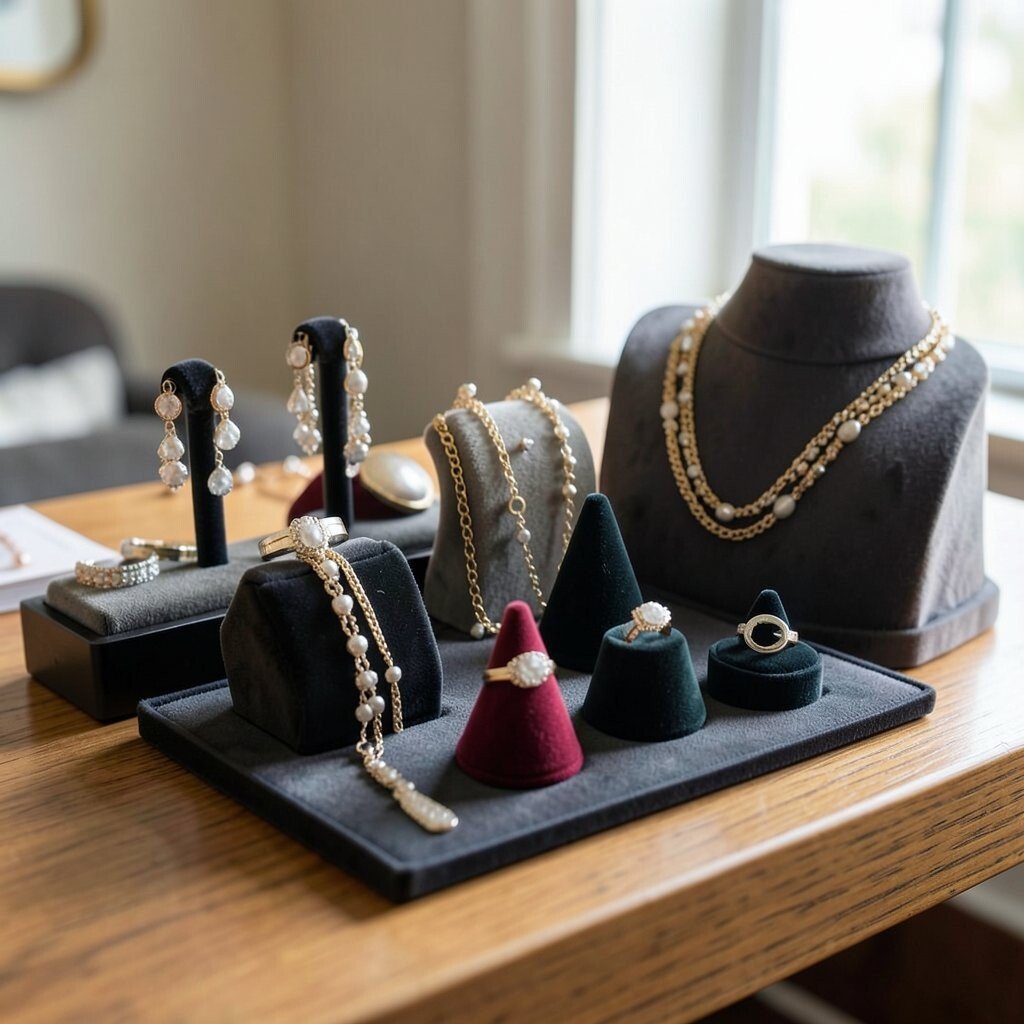
Not every piece needs the same kind of stand or tray. Rings, earrings, bracelets, and necklaces each have their own best way to be shown.
Stud earrings may look neat on cards, while long earrings may need vertical holders. Bracelets often shine on curved forms, and rings can look sweet on small cones or velvet pads. When the display fits the item, the whole piece feels easier to understand.
It helps to sort your collection before you buy supplies. That way, you spend money only on the tools you really need. A smart match between jewelry and display can also keep your table from looking random.
14. Small Changes Can Refresh the Whole Booth
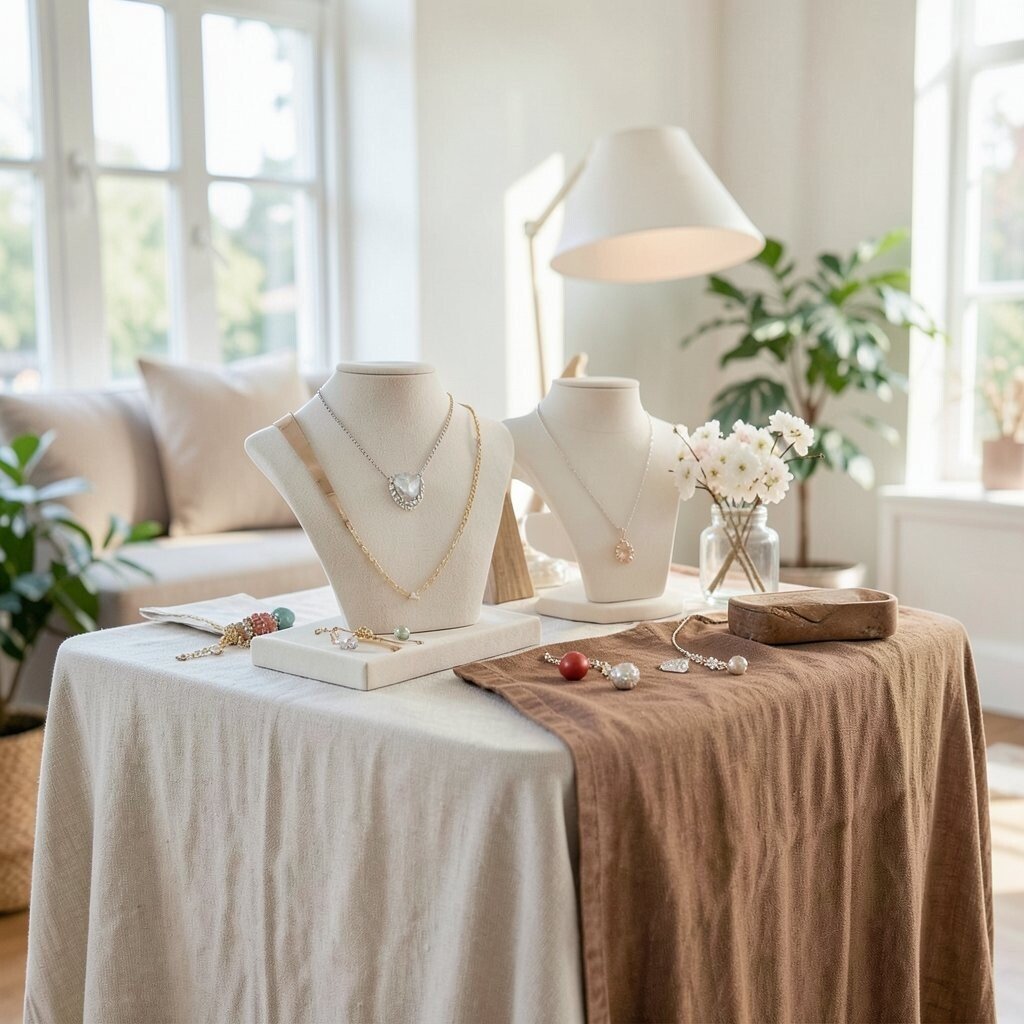
You do not need a full redesign to make your display feel new. Sometimes a different cloth, a new prop, or a fresh layout is enough.
Seasonal updates keep regular shoppers interested and give your booth a current feel. Spring might call for soft pastels, while fall may look better with warm earth tones. Even a tiny swap can make the space feel alive again.
Try changing one part at a time so you can see what works best. This helps you avoid wasting money on things you do not need. It also gives you room to build a style that feels like you, piece by piece.