The right booth can stop people in their tracks. Small changes can make shoppers stay longer and buy more.
1. Start With a Clean, Clear Layout
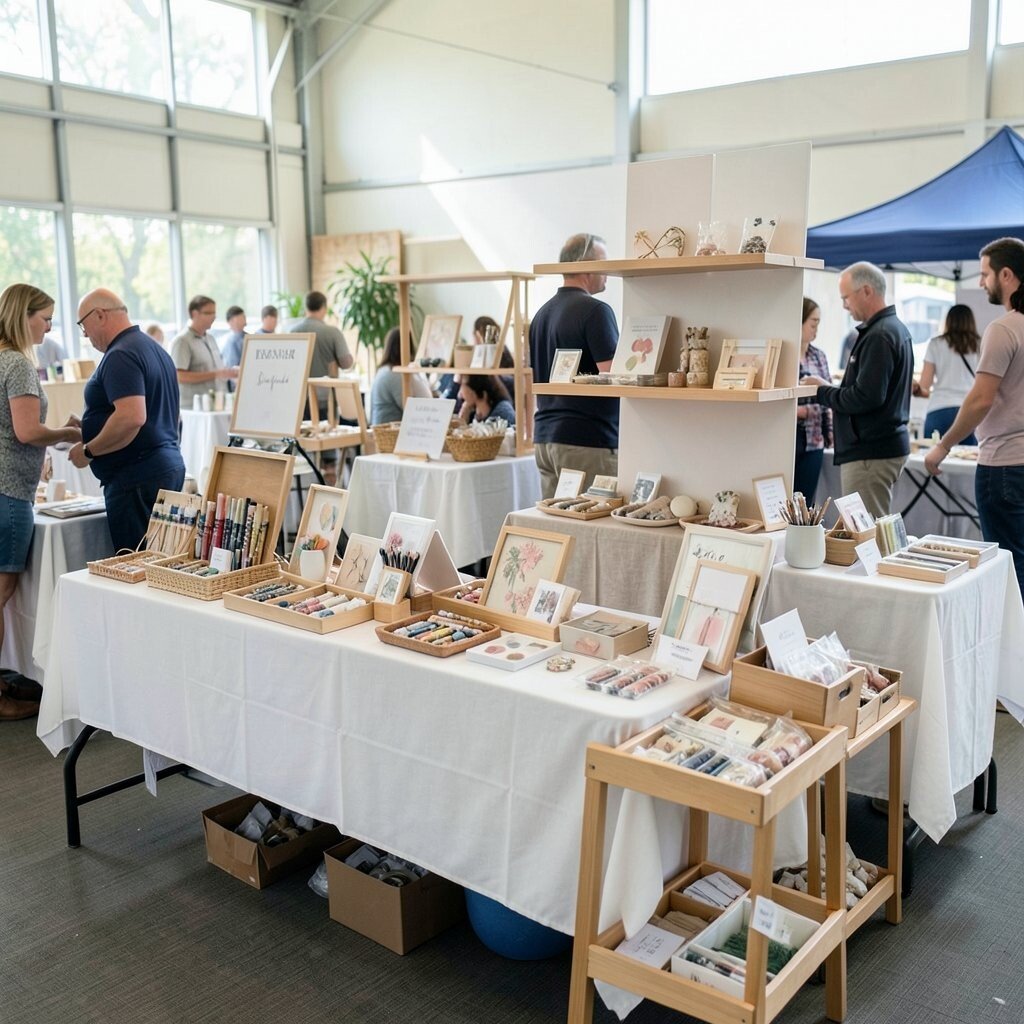
A tidy booth feels friendly right away. People can see your work without feeling crowded.
Use tables, shelves, or risers so items sit at different heights. This gives your display depth and helps each piece stand out. A clean layout also makes it easier for shoppers to browse and for you to restock during busy times.
2. Choose a Strong Color Story

Colors can pull eyes to your booth from far away. A simple color story makes your display look planned and polished.
Pick shades that match your brand and your products. Soft neutrals feel calm, while bright colors feel bold and fun.
If your crafts are already colorful, keep the booth backdrop simple. That way your items stay the star, and shoppers do not feel overwhelmed.
3. Make Your Sign Easy to Read
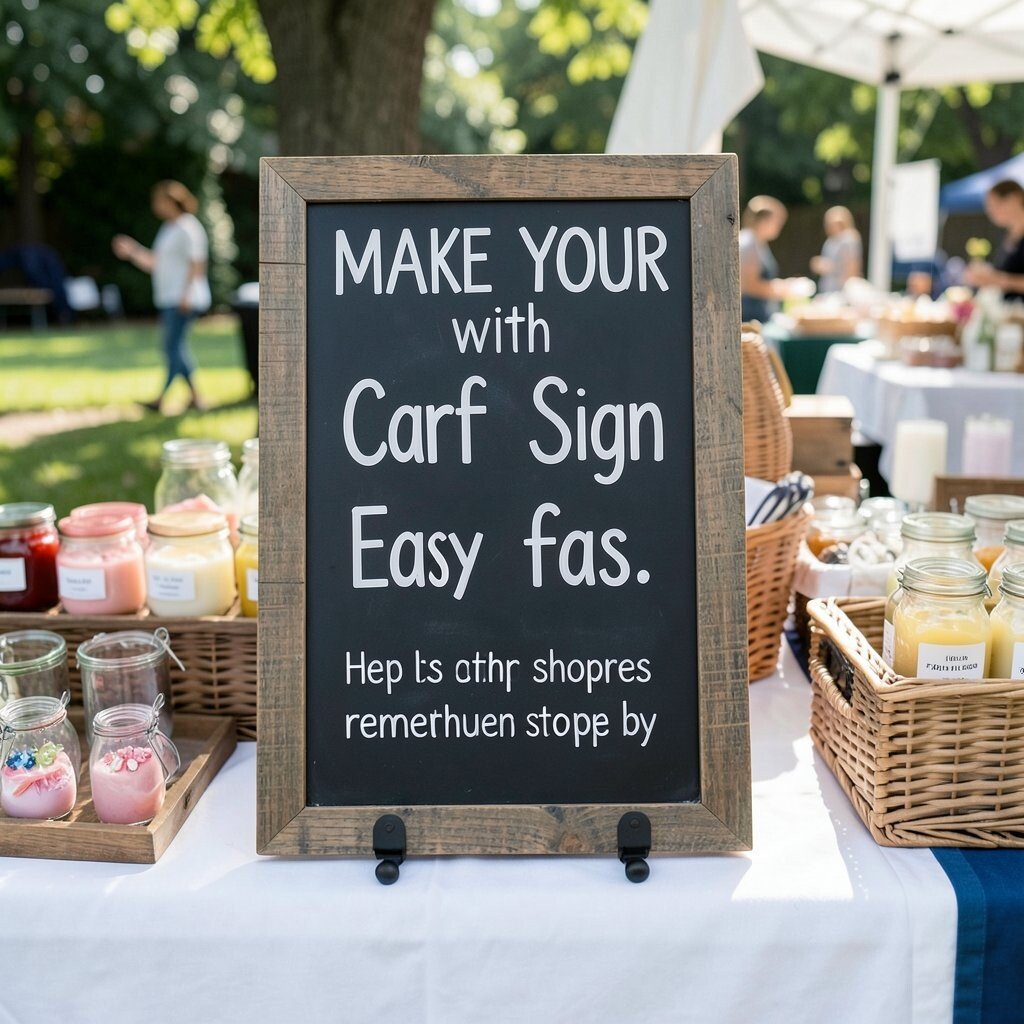
Your sign should tell people who you are fast. A clear name and short message help shoppers remember your booth.
Use large letters and strong contrast so the sign can be seen from a distance. A handmade wood sign, chalkboard, or printed banner can all work well.
Keep the wording short and friendly. If you make candles, earrings, or pet gifts, say that clearly so the right shoppers stop by.
This is also a place to show your style. A playful font can fit a whimsical brand, while a neat clean font suits modern products.
4. Raise Products Off the Table
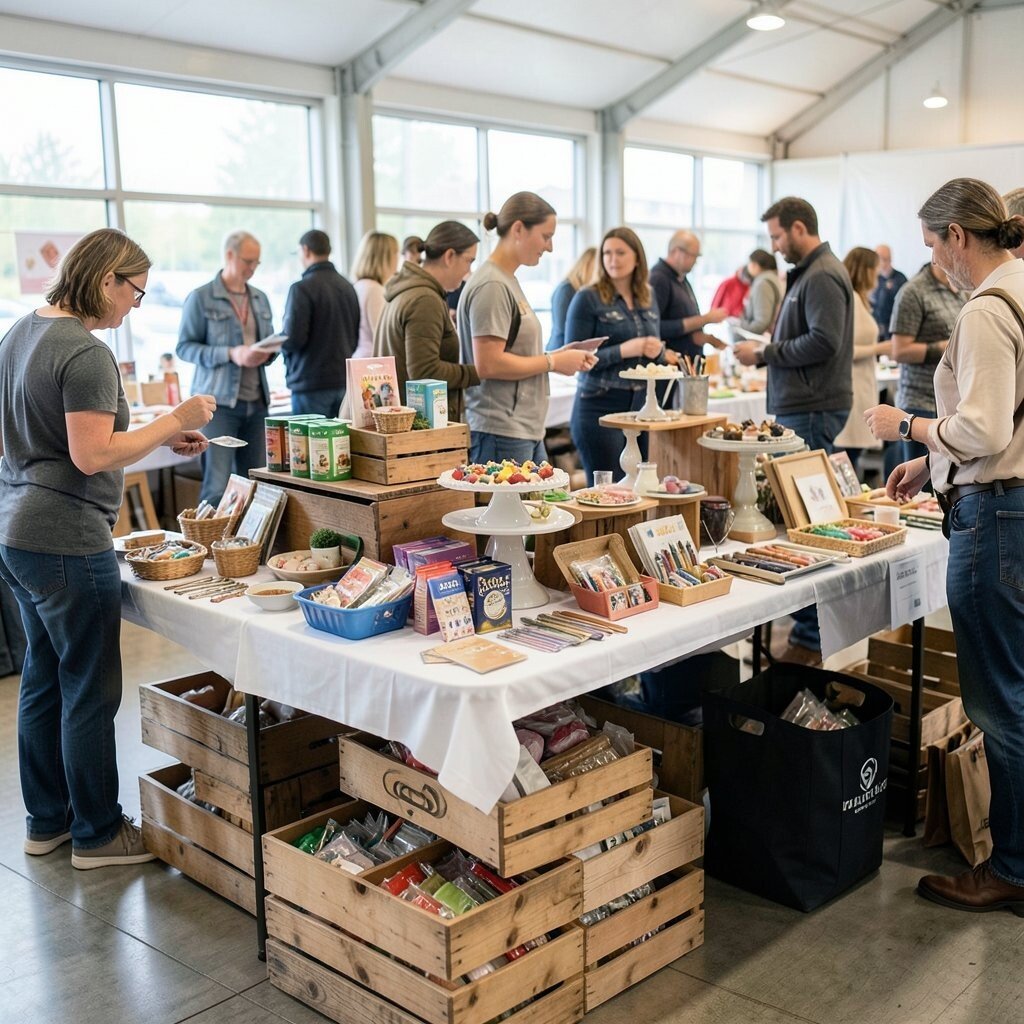
Flat tables can make a booth look dull. Height adds movement and helps your crafts feel special.
Use crates, boxes, cake stands, small shelves, or sturdy risers to create layers. These pieces do not need to be expensive, and many sellers use items from home.
Different heights also let shoppers see more at once. When eyes move up and down, the booth feels fuller and more exciting.
5. Group Items by Type or Use
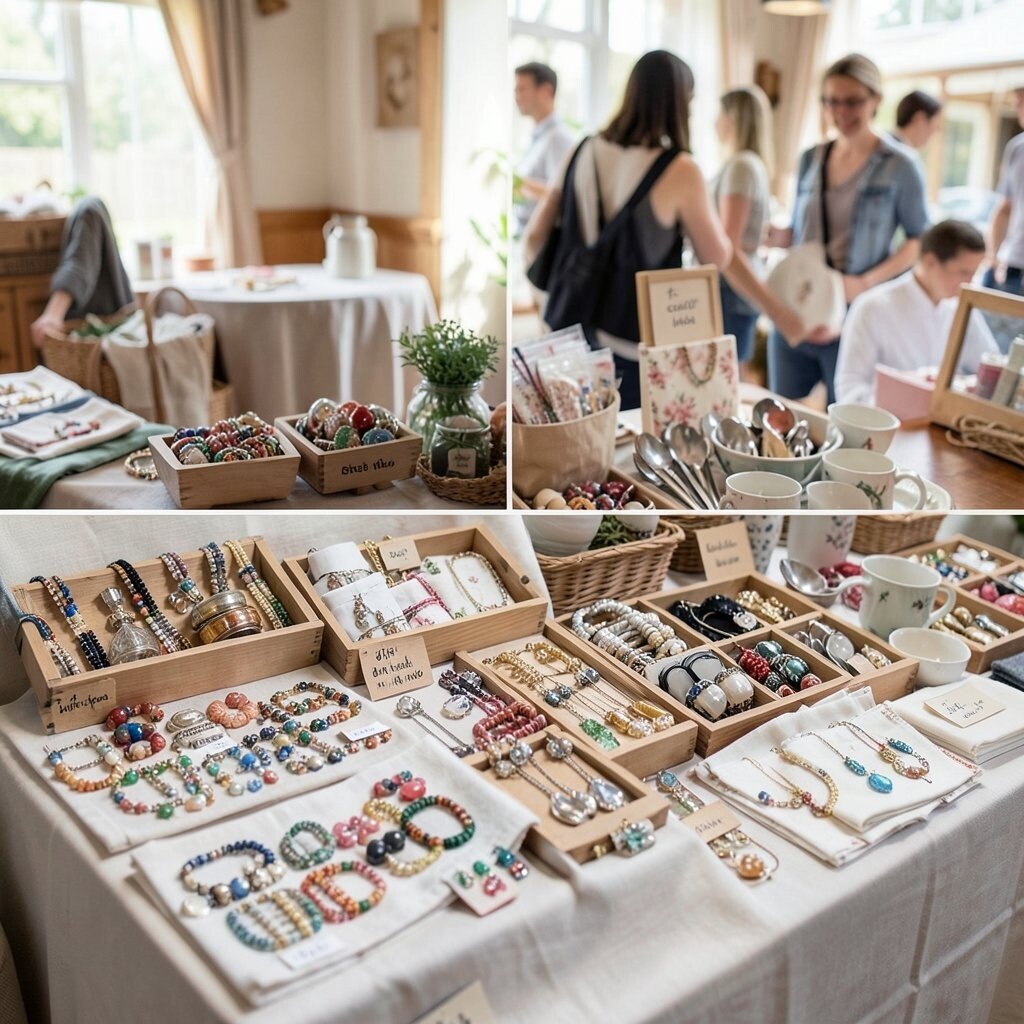
Shoppers like to find things fast. Sorting items into neat groups makes shopping simple and smooth.
Keep similar pieces together, such as bracelets in one area and necklaces in another. If you sell kitchen goods, group tea towels, spoons, and mugs by use.
This kind of setup helps buyers compare choices easily. It can also lead to more sales because a shopper may grab one item after noticing a matching set.
For a more personal touch, add small labels like “for cozy nights” or “gift-ready favorites.” These little notes make your display feel warm and memorable.
6. Add a Few Lifestyle Photos
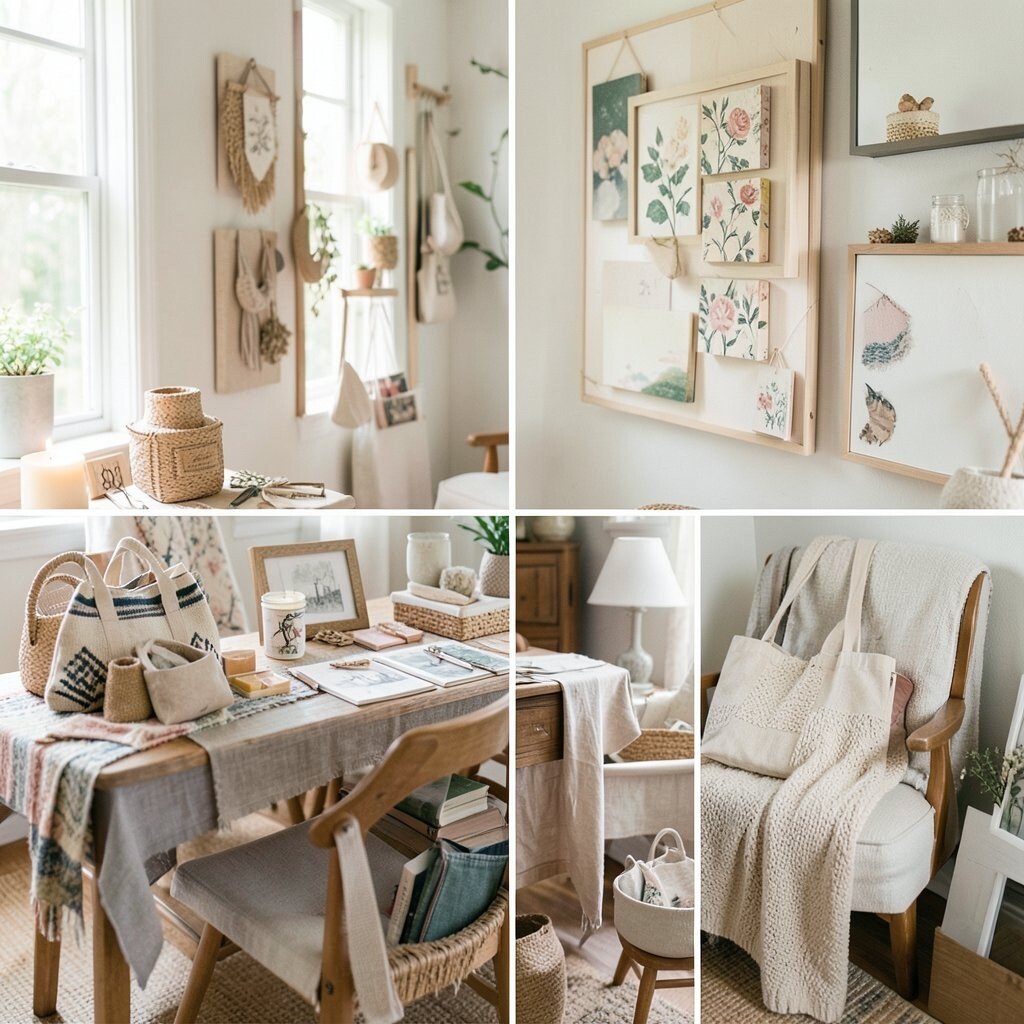
Photos help shoppers picture your crafts in real life. That makes your booth feel more useful and more inviting.
Show your items being worn, used, or displayed at home. A candle next to a book, a tote on a chair, or art on a wall can spark ideas fast.
Printed photos are low-cost and easy to pack. They also help when some products are hard to hold or test, such as wall art, soaps, or handmade decor.
Choose images that match the same style as your booth. Soft, bright, rustic, or modern photos should all fit the look you want to build.
7. Use Good Lighting
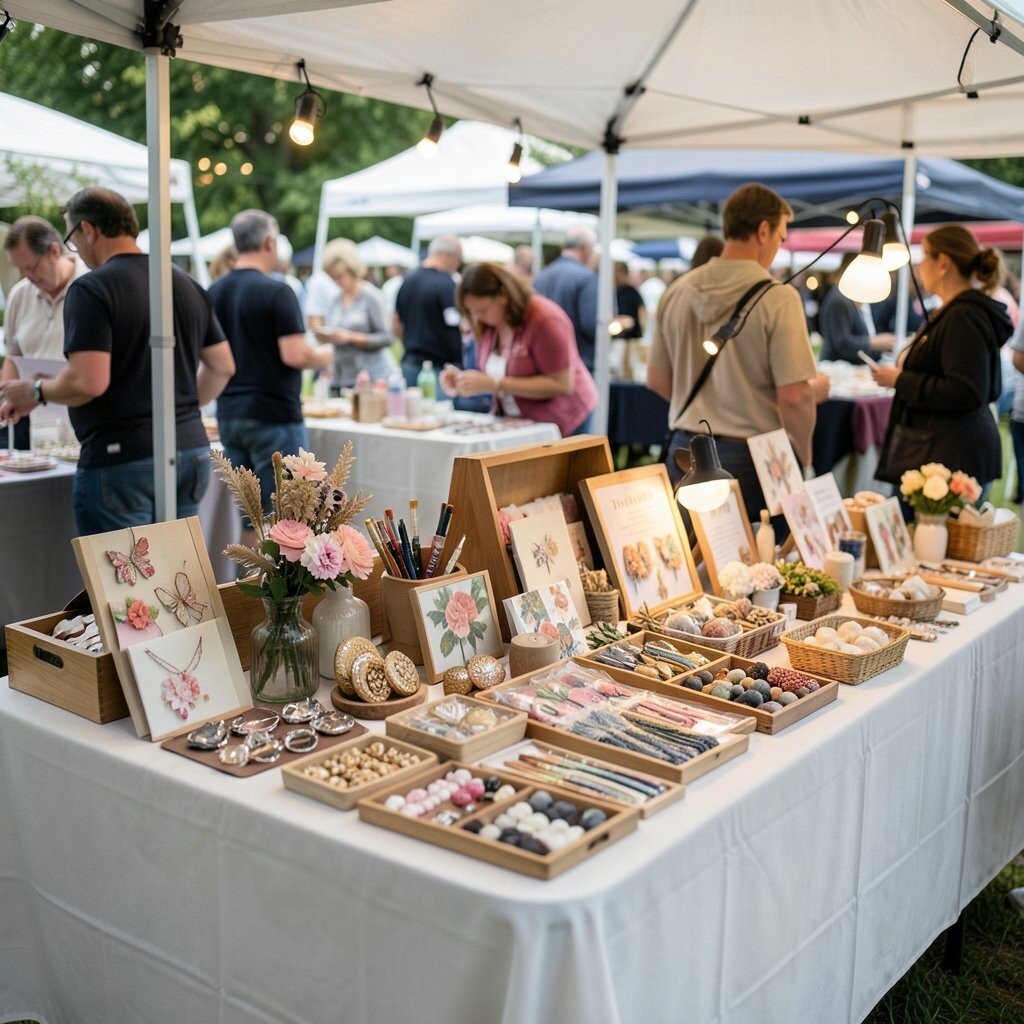
Good light can make your products shine. It also makes colors look true and details easier to see.
If the fair is indoors, add small clip lights or battery lamps. Outdoor events may need shade canopies or light-colored table covers to keep glare down.
Bright but gentle lighting works best for most displays. It helps shiny items sparkle and makes handmade textures stand out without feeling harsh.
Lighting can cost a little extra, but it often pays off in more attention and more sales. Shoppers are more likely to stop when they can clearly see your work.
8. Keep Prices Easy to Spot
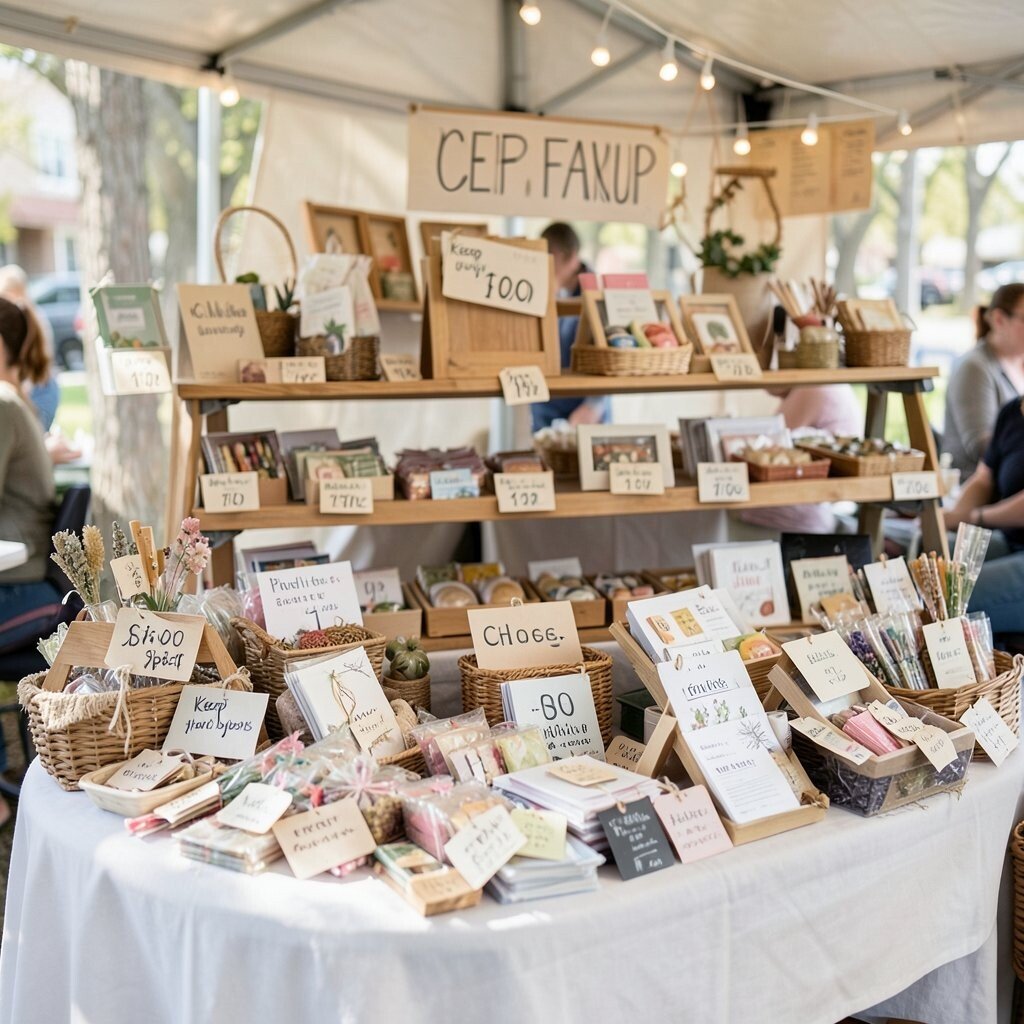
Price confusion can scare buyers away. Clear pricing makes the booth feel open and honest.
Use tags, small signs, or shelf labels so people do not have to ask every time. If many items share the same price, a single sign can save you time.
Think about simple price points that fit your market. A mix of lower and higher prices gives shoppers choices, which is helpful for gift buyers and impulse buyers alike.
Handwritten tags can add charm, while printed tags feel neat and modern. Pick one style and keep it consistent so the booth looks put together.
9. Create a Strong First View
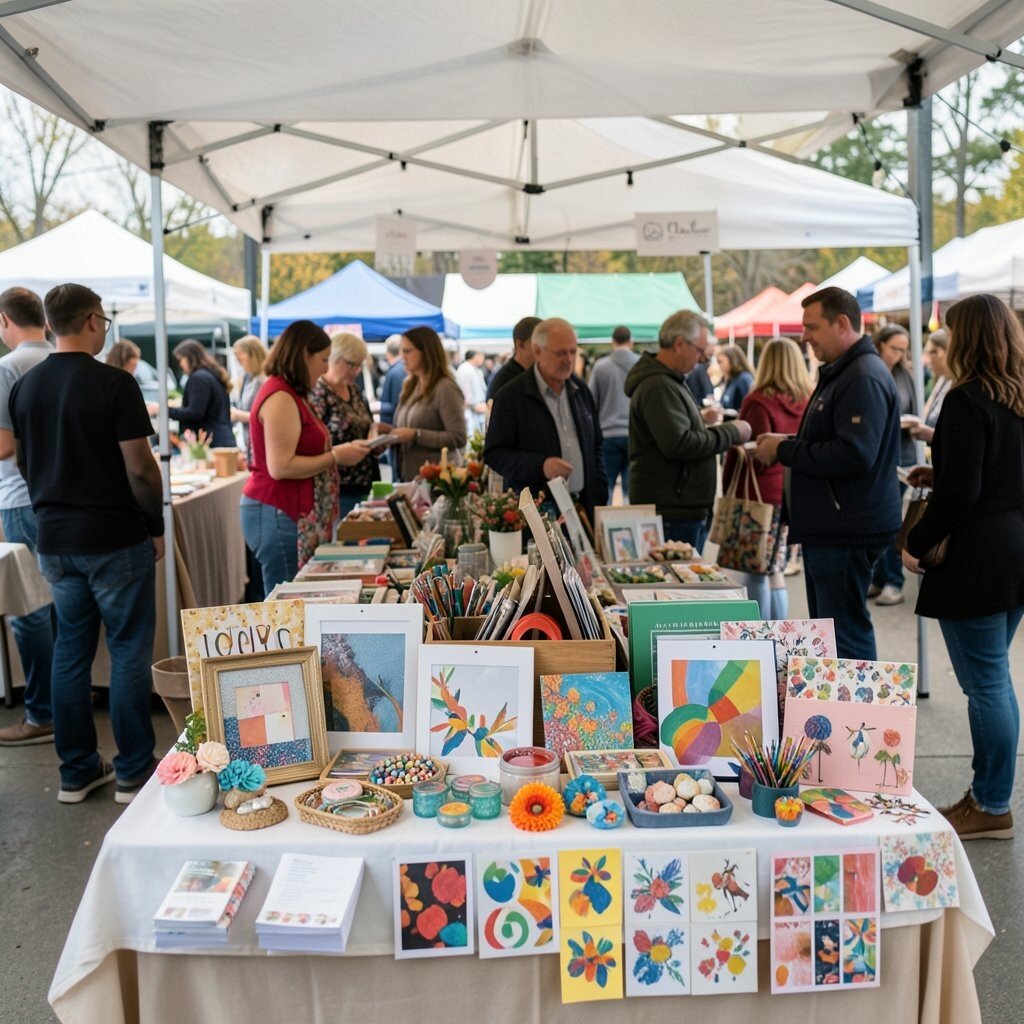
The front of your booth should make people want to step closer. That first view can decide if they stop or keep walking.
Place your best sellers near the front where they can catch the eye right away. Use your most eye-catching colors, textures, or shapes in that area.
A strong front view works like a friendly hello. It tells shoppers your booth is worth their time and makes your space feel lively.
10. Make Your Display Feel Like Your Brand
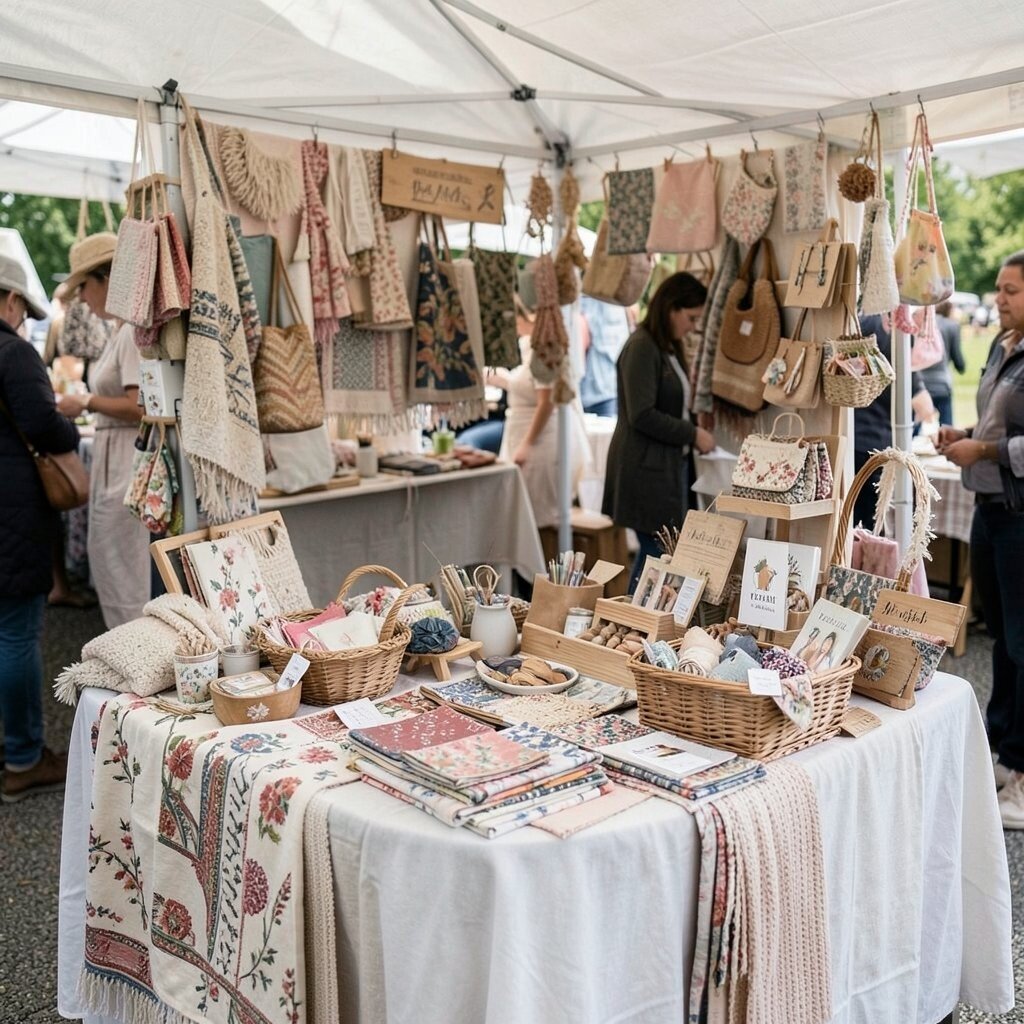
Your booth should feel like you. When your style shows through, shoppers remember your work better.
Think about your brand mood, such as cozy, playful, earthy, vintage, or sleek. Then use fabrics, props, and signs that match that feeling.
Personal touches can be simple and low-cost. A favorite fabric, a family heirloom basket, or a hand-painted sign can make your booth feel one of a kind.
Brand harmony also builds trust. If your products and display match, buyers often feel more confident about the care you put into your craft.
11. Leave Room for People to Move
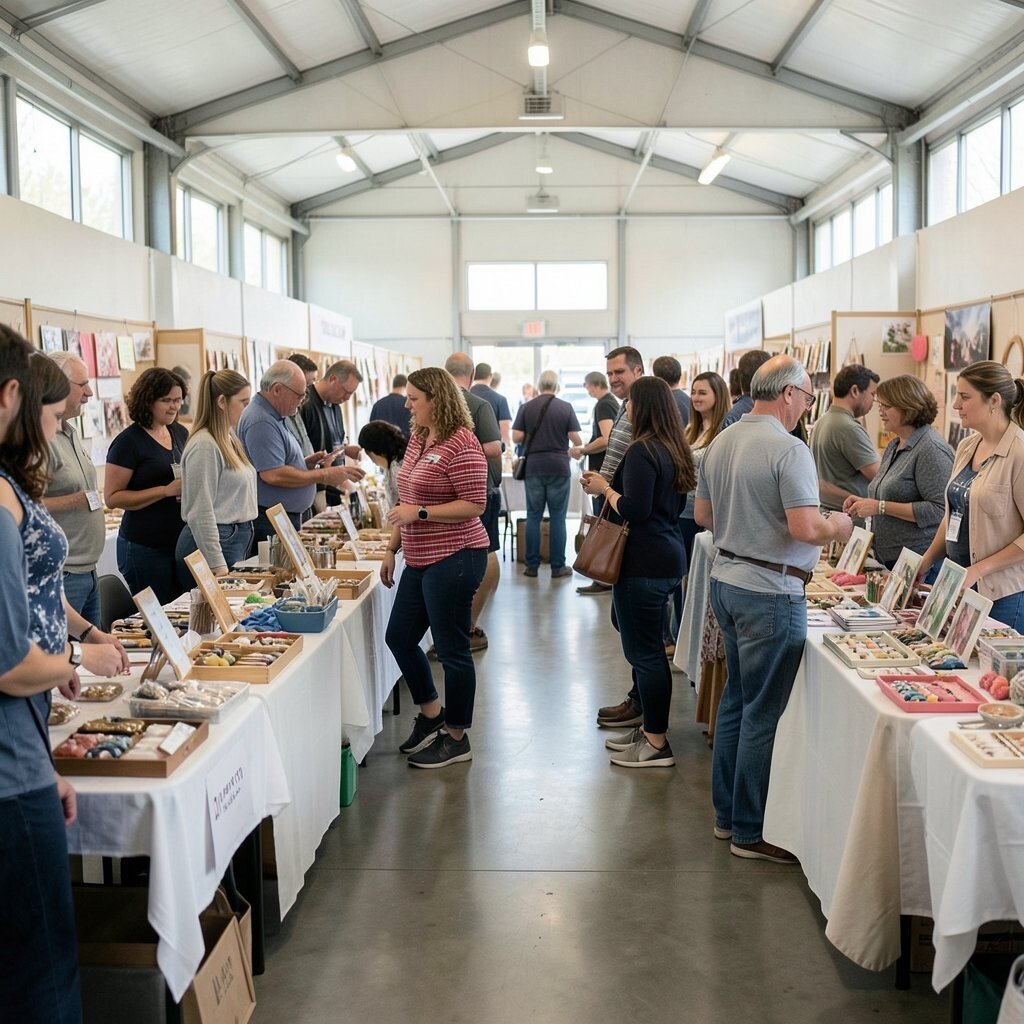
A crowded booth can push shoppers away. People like space where they can look around without bumping elbows.
Arrange tables so guests can step in and out with ease. Keep walkways open, and avoid placing too many items near the edge.
This also helps with longer visits. When shoppers feel comfortable, they are more likely to pick things up, ask questions, and make a purchase.
12. Show Variety Without Making It Messy

Too much sameness can make a booth feel flat. Too much variety can make it feel noisy.
Offer a mix of sizes, colors, or styles, but keep them tied together by a common theme. For example, one line of jewelry might share the same metal finish even if the shapes change.
This gives buyers more choices while still keeping the display neat. A balanced mix also supports different budgets, since shoppers may choose a small item or a larger gift.
Try arranging items in a pattern that repeats. Repetition helps the eye relax and makes the whole booth feel more thoughtful.
13. Use Props That Support the Product
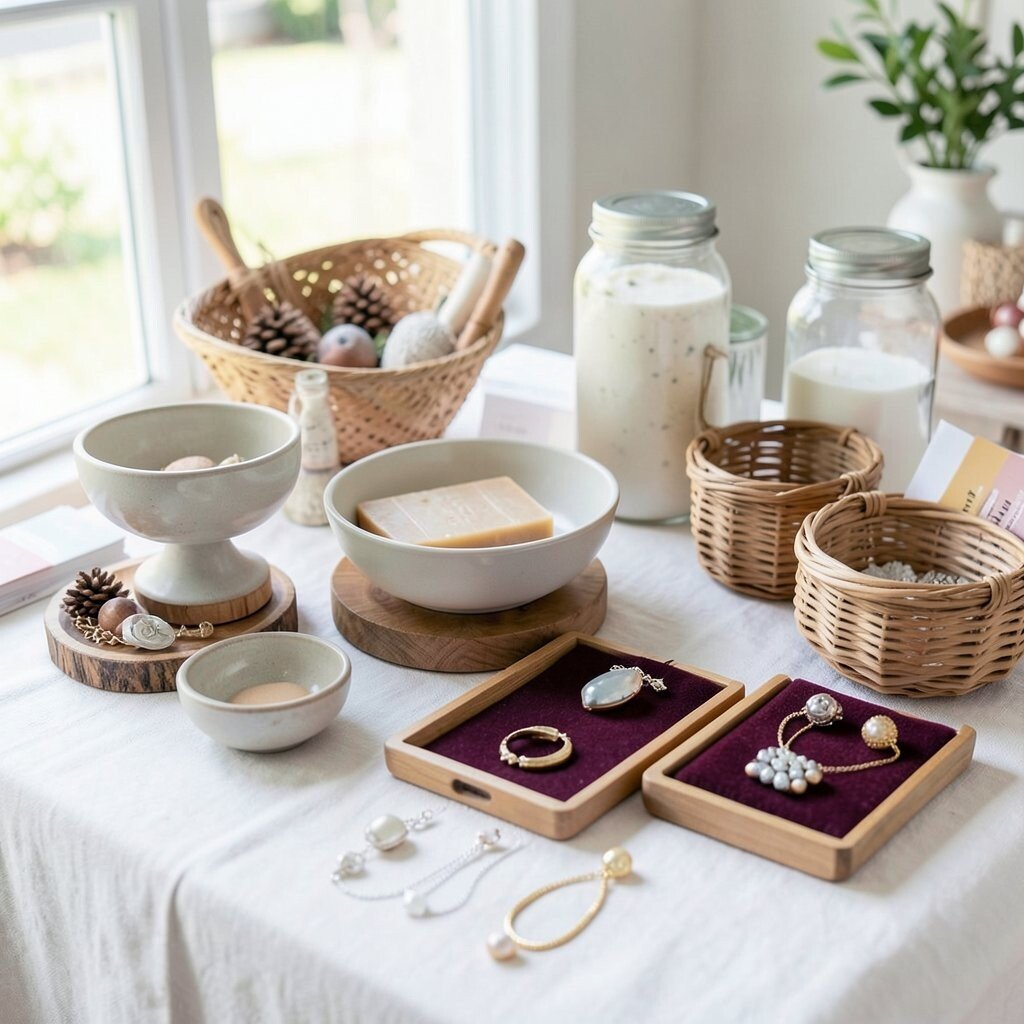
Props should help your crafts, not steal attention from them. The best props make the product easier to understand.
Use bowls, trays, jars, baskets, and stands that fit the size and style of what you sell. A handmade soap bar looks lovely in a small wooden tray, while jewelry may shine on velvet cards.
Trendy props can be fun, but choose ones that fit your brand instead of copying every popular idea. Simple items often last longer and cost less, which is smart for small businesses.
If a prop does not help sell the item, leave it out. Every piece in the booth should earn its place.
14. Add Small Story Signs
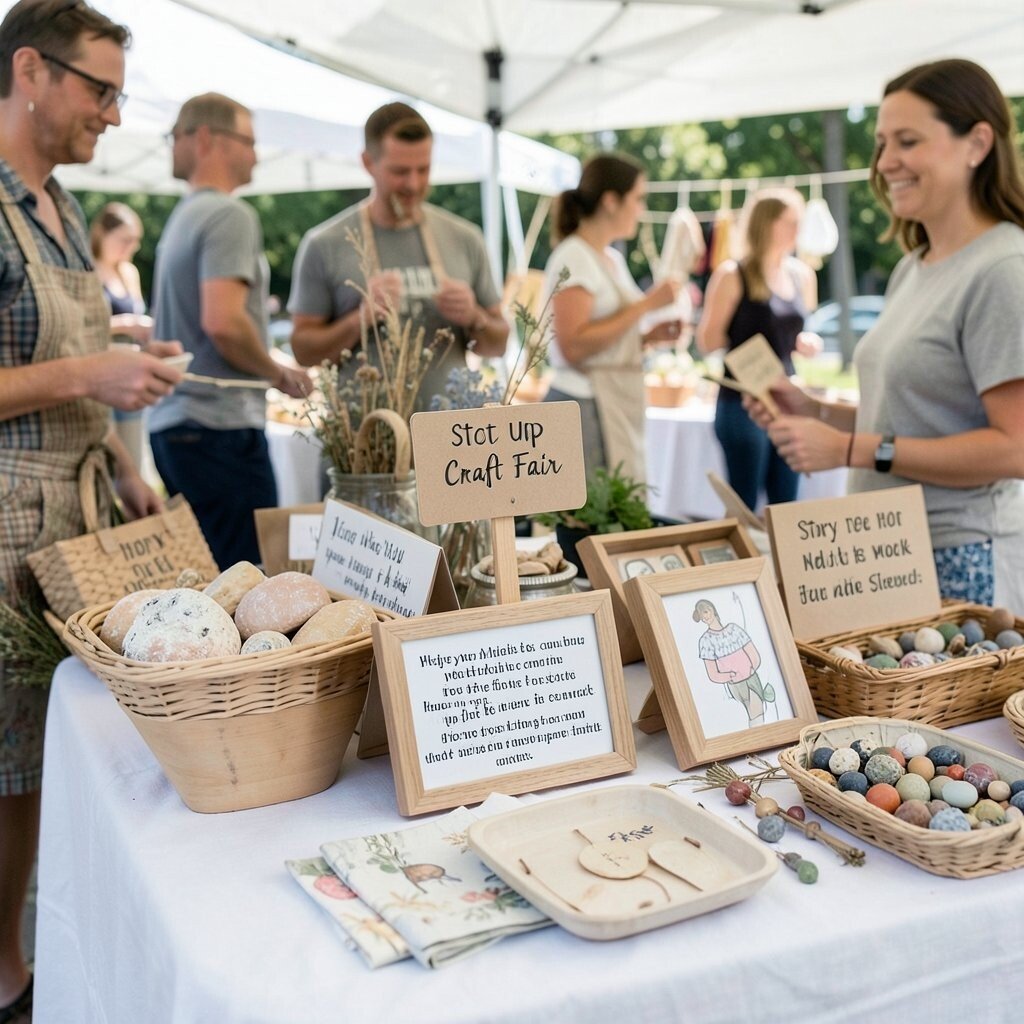
People love knowing the story behind handmade goods. A short sign can make a product feel warm and meaningful.
Share where the materials come from, how the item is made, or what inspired it. Keep the text short so shoppers can read it fast while browsing.
Story signs help you stand out from mass-made products. They remind buyers that your work has care, time, and heart behind it.
These signs do not need fancy printing. Cardstock, a marker, and a small frame can do the job well and keep costs low.
15. Plan for Easy Shopping and Fast Checkout
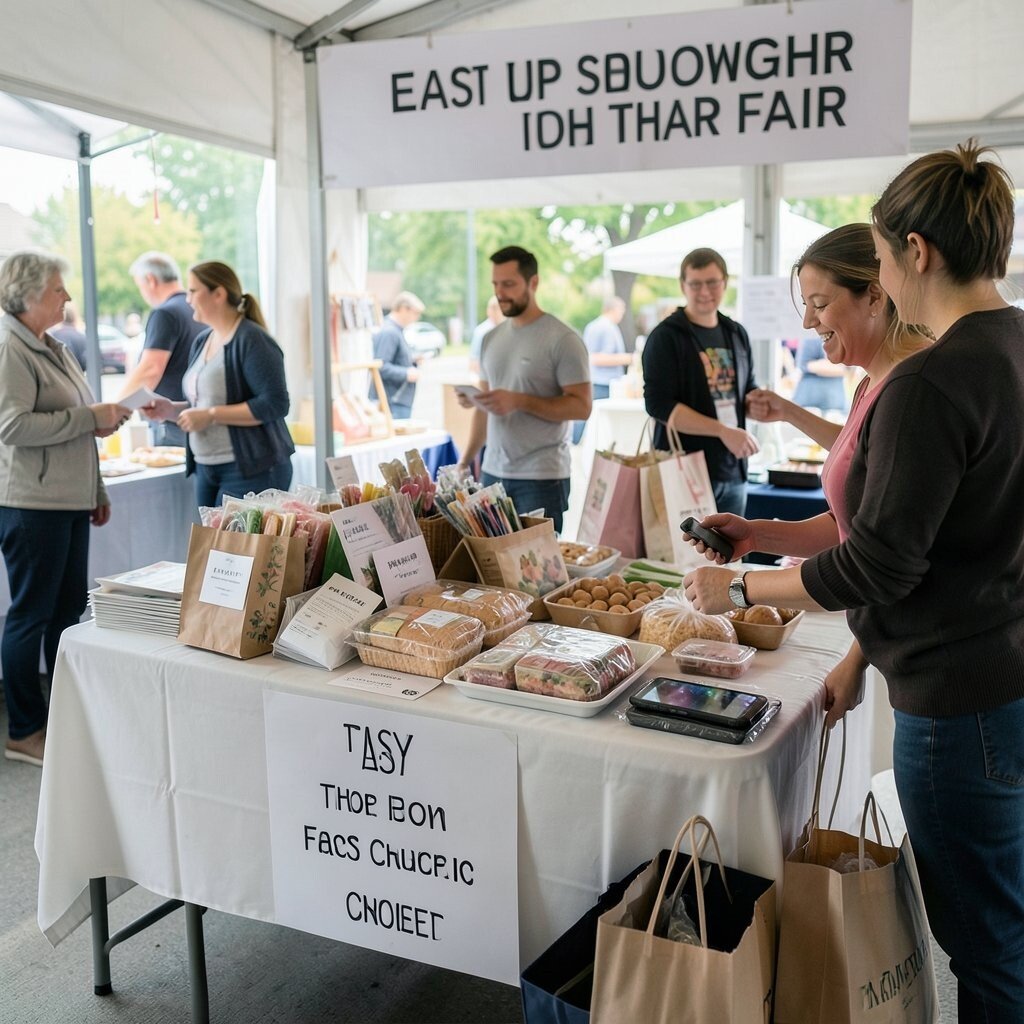
A smooth checkout can turn interest into a sale. If paying feels easy, more shoppers will follow through.
Keep change ready, use a clear payment setup, and have bags or wrapping within reach. If you take digital payments, make sure your device is charged and your signal plan is ready.
Place sold items in one spot so your table stays neat. This helps the booth keep its shape and tells other shoppers what is moving well.
Think about the full buying experience, from first look to final handoff. A friendly thank-you, quick packing, and tidy display can leave a strong memory that brings people back next time.