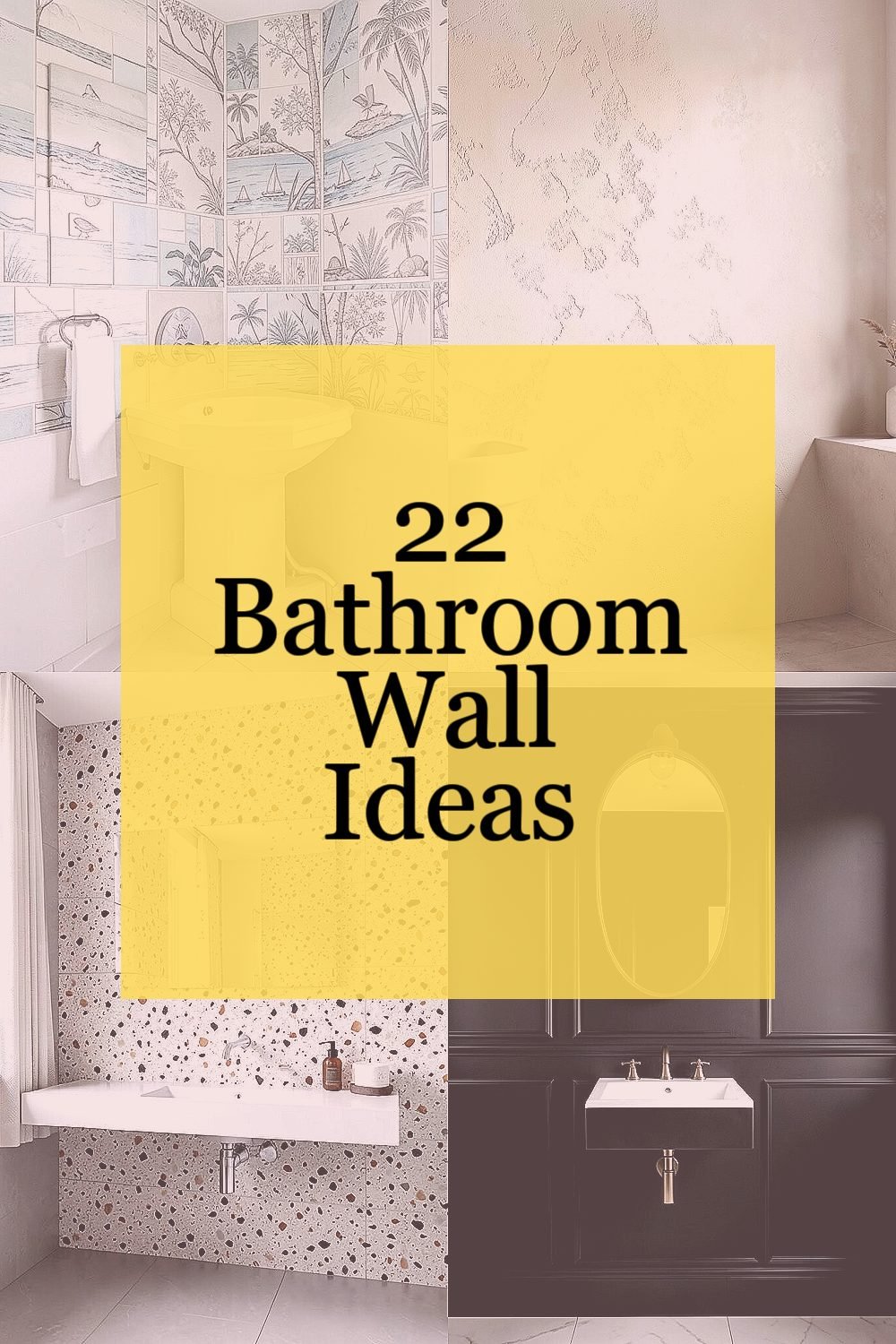
Bathrooms deserve design that feels good every day. The walls can do most of the heavy lifting, even on a budget.
1. Coastal-Inspired Accent Panels
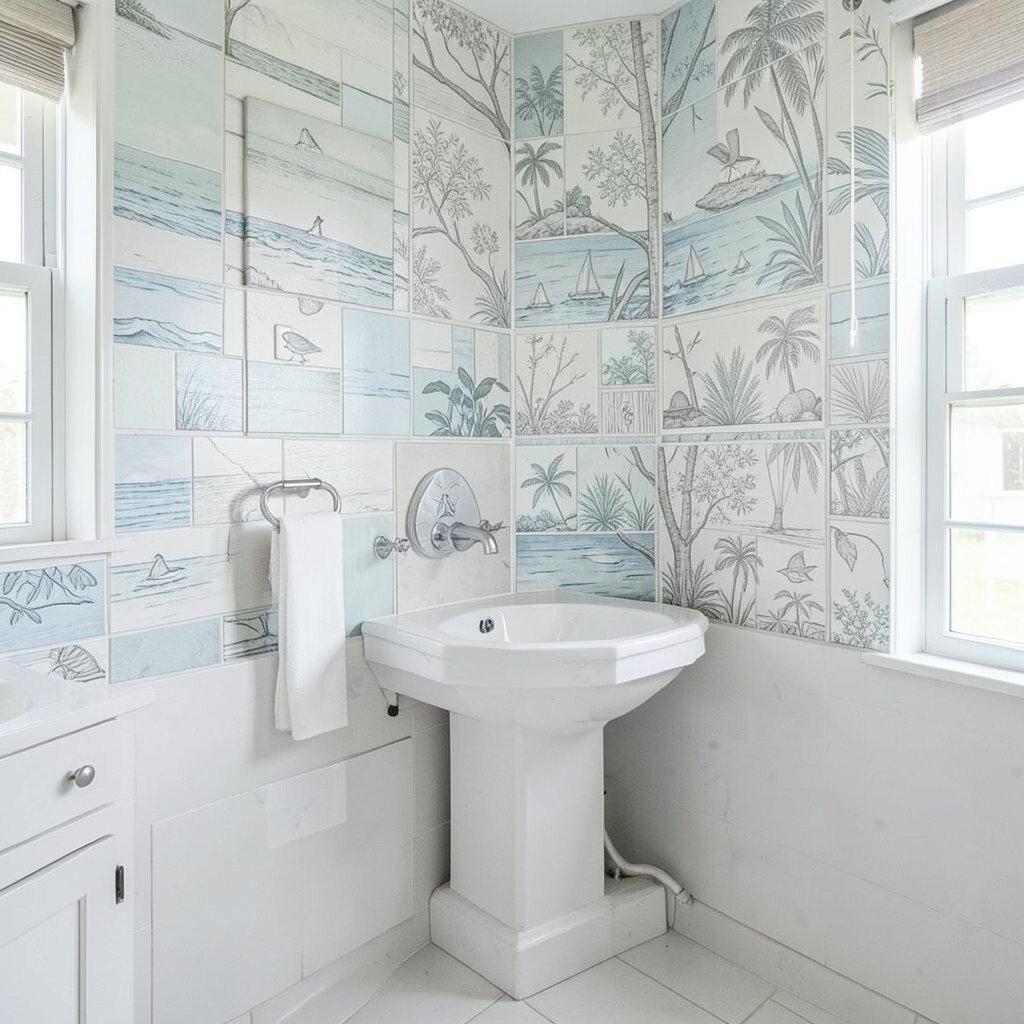
Picture soft wave textures in pale sand tones, like a gentle breeze caught on the wall. When you add accent panels, the room instantly feels calmer and more intentional.
Choose panel materials that handle moisture well, such as PVC or waterproof wall cladding. Keep the colors light to make the space feel brighter, and frame the panels near the vanity for a clean focal point. For personalization, match the panel finish to your mirror frame so everything looks like it belongs together.
Start with one wall if you want easy wins and less mess. Measure carefully and plan your seams so the pattern lines up at eye level. If you love a low-cost approach, consider peel-and-stick waterproof cladding made for bathrooms and use a good edge sealant.
2. Textured Limewash for Soft Color Depth
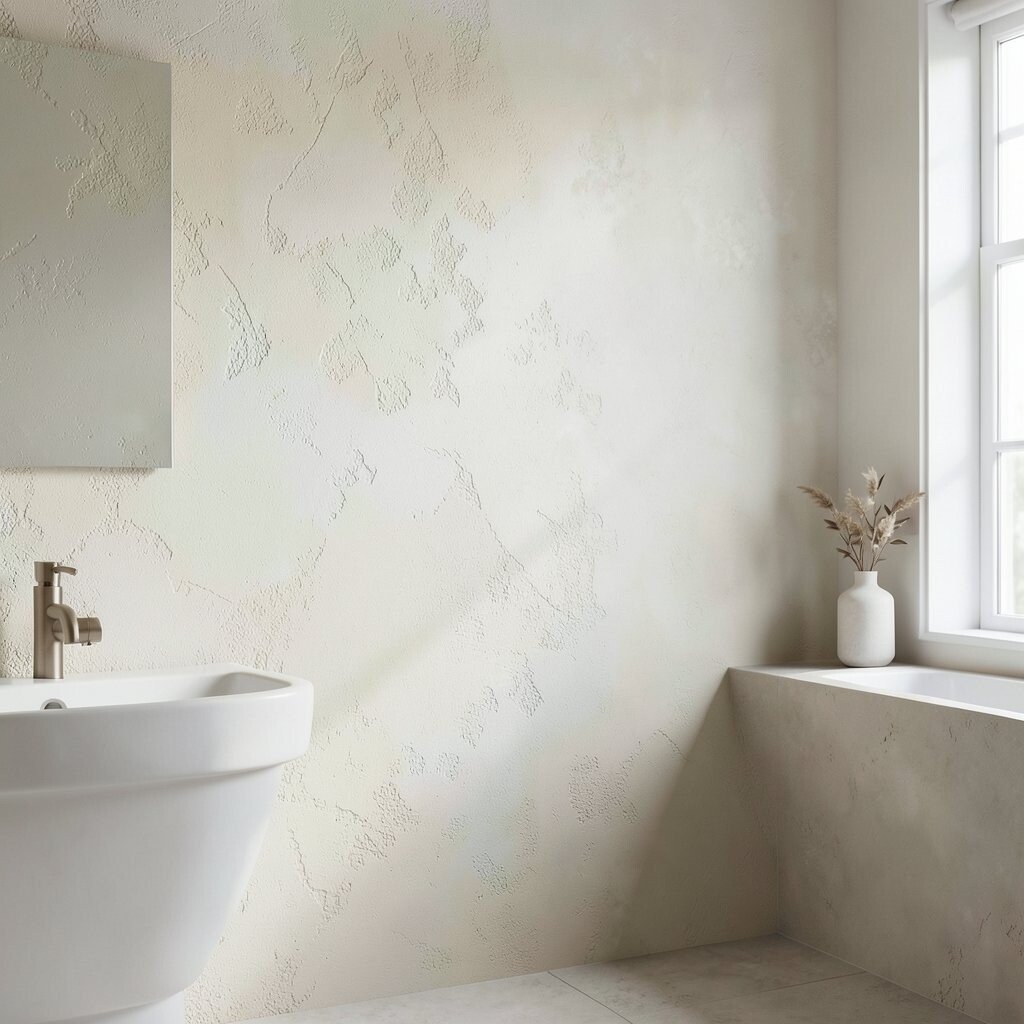
Limewash gives walls a lived-in look with subtle color movement, almost like clouds drifting across plaster. It feels warm and artsy, and it makes even a small bathroom look styled.
Go with a mildew-resistant limewash or a bathroom-friendly faux finish designed for wet spaces. Test the tone on a hidden patch so the final shade matches your lighting, because cool bulbs and warm bulbs can change the mood. Pair it with brushed metal fixtures for a modern coastal vibe, or add wood accents for a more organic feel.
3. Bold Terrazzo Look with Waterproof Finishes
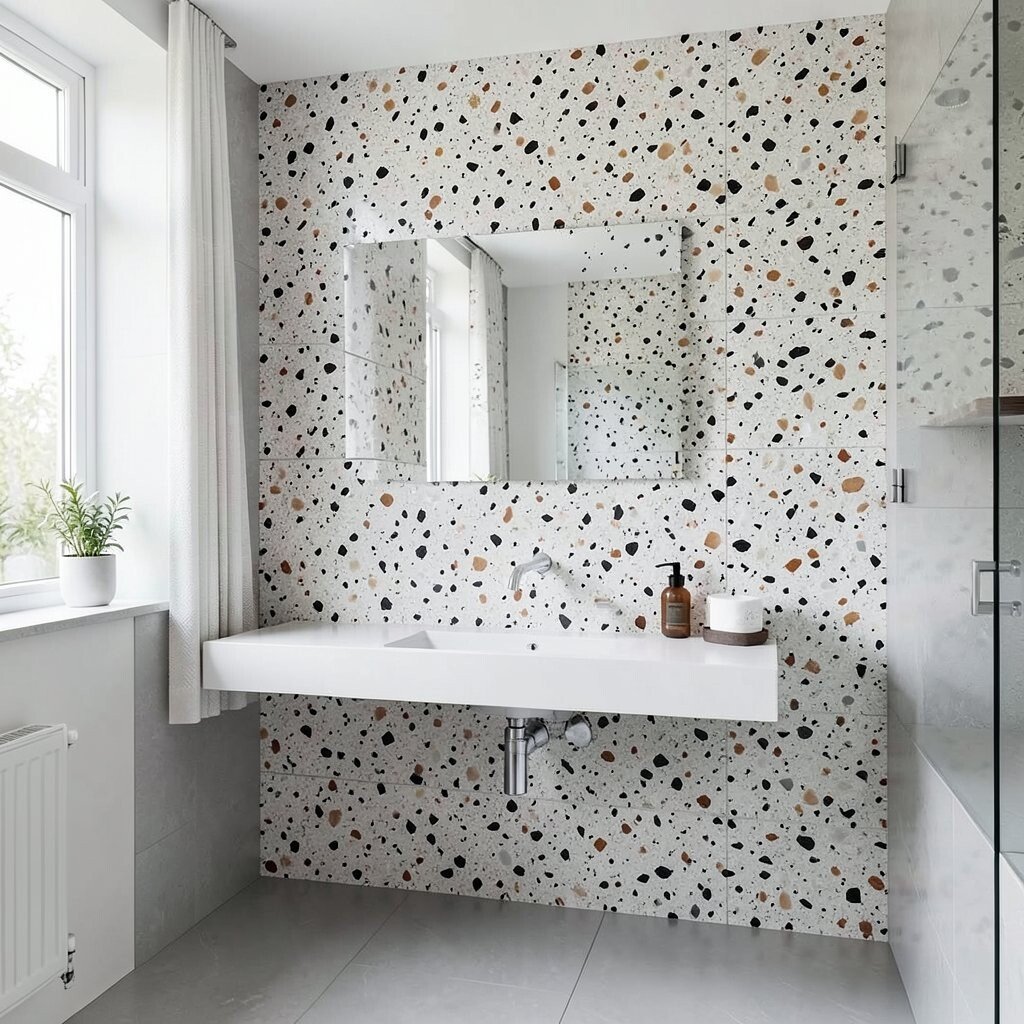
Terrazzo-style walls bring tiny specks of color that look playful and elevated at the same time. You can go full coverage or just line the shower zone for a statement that still feels practical.
Pick a waterproof wall system or vinyl sheet designed for bathrooms so it holds up to splashes. Use the terrazzo look to hide minor scuffs and marks, which is great for busy households. Match the dominant speck color to towels or artwork so the whole room looks planned, not random.
Install carefully around outlets and trim, and consider a thin backsplash line at the countertop edge. If budget is a concern, focus the look where it will be most visible, such as behind the sink mirror. A small upgrade like this can feel fancy without the bigger price tag of full stone.
4. Matte Black Wainscoting for Classic Cool
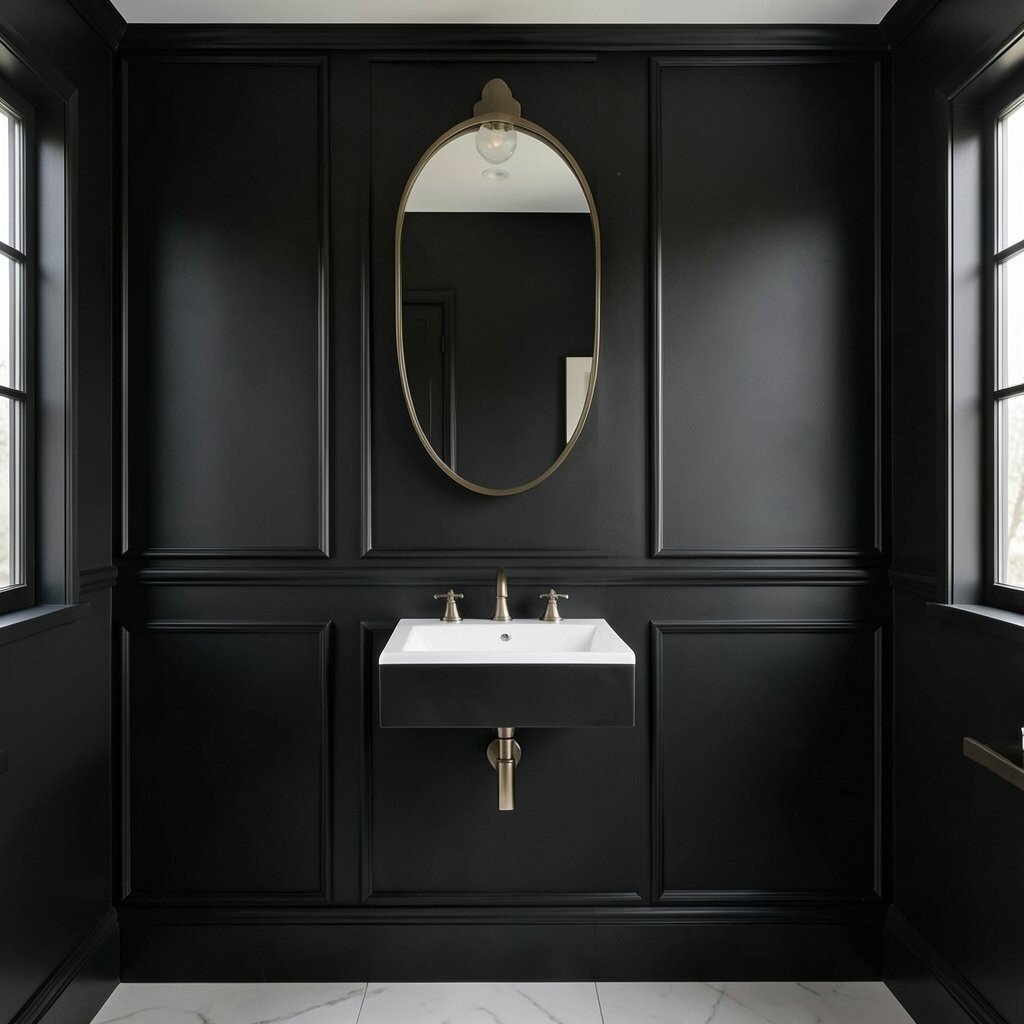
Wainscoting in matte black creates a bold, tailored frame for the room. It looks crisp, like a modern makeover, and it makes the bathroom feel taller.
Use moisture-safe paint and seal the edges where panels meet trim. Add a lighter top coat or white tile behind it if you want extra brightness and a balanced contrast. For practical upkeep, matte finishes can hide fingerprints better than shiny paint, which is a real everyday benefit.
5. Hand-Painted Geometric Tile Borders
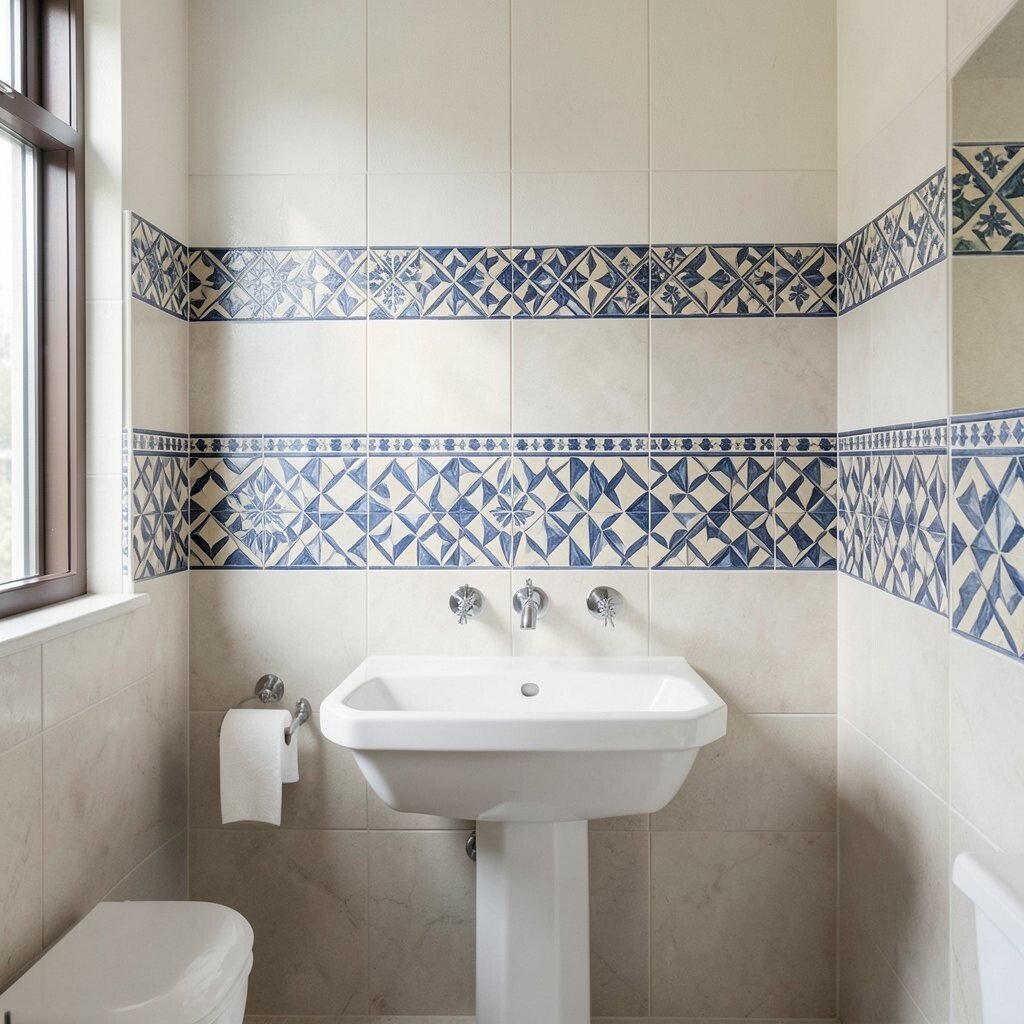
Geometric borders can make your walls feel custom, like a boutique hotel bathroom. Even a simple repeating pattern adds rhythm where plain tile would feel flat.
Choose waterproof tile paint or pre-made border tiles meant for wet areas. Keep the design narrow around the mirror or along the top of the vanity wall so it stays classy. For personalization, select colors that match your hardware, such as warm bronze, cool chrome, or soft brushed nickel.
Plan spacing before you stick anything down, because straight lines matter in the bathroom. If you are working on a budget, use border tile over existing paint or tile where you can, and avoid redoing everything at once. This is a smart way to get a big look without a big demolition day.
6. Warm Wood Slat Wall with Water-Resistant Sealer
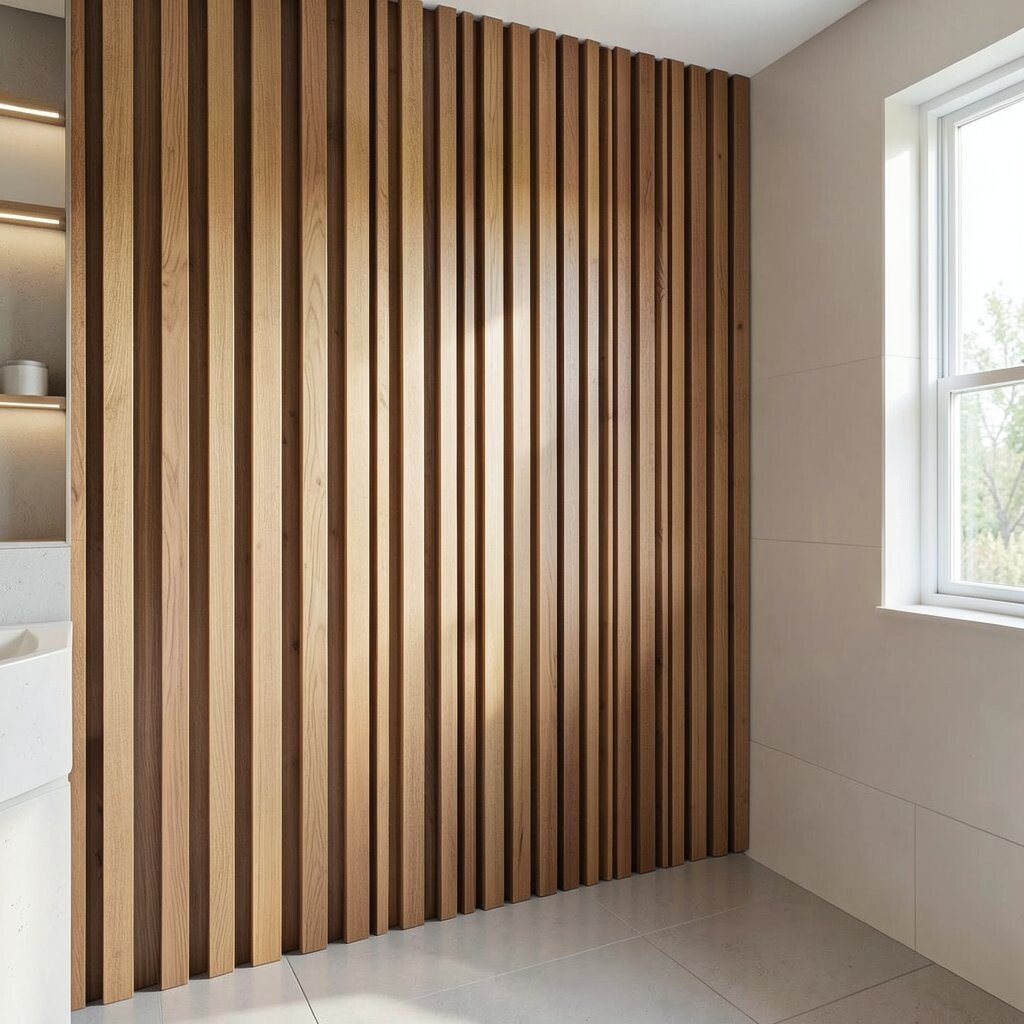
Vertical wood slats add cozy style and a spa-like feel that softens hard bathroom surfaces. They also create visual height, which can be helpful in tight layouts.
Use kiln-dried wood and apply a marine-grade water-resistant sealer, then maintain it by reapplying as the manufacturer recommends. Install slats with a gap to allow air circulation, which helps prevent moisture buildup. Match the stain to your vanity or flooring so the room looks cohesive, not like two styles collided.
7. Florals That Feel Fresh, Not Busy
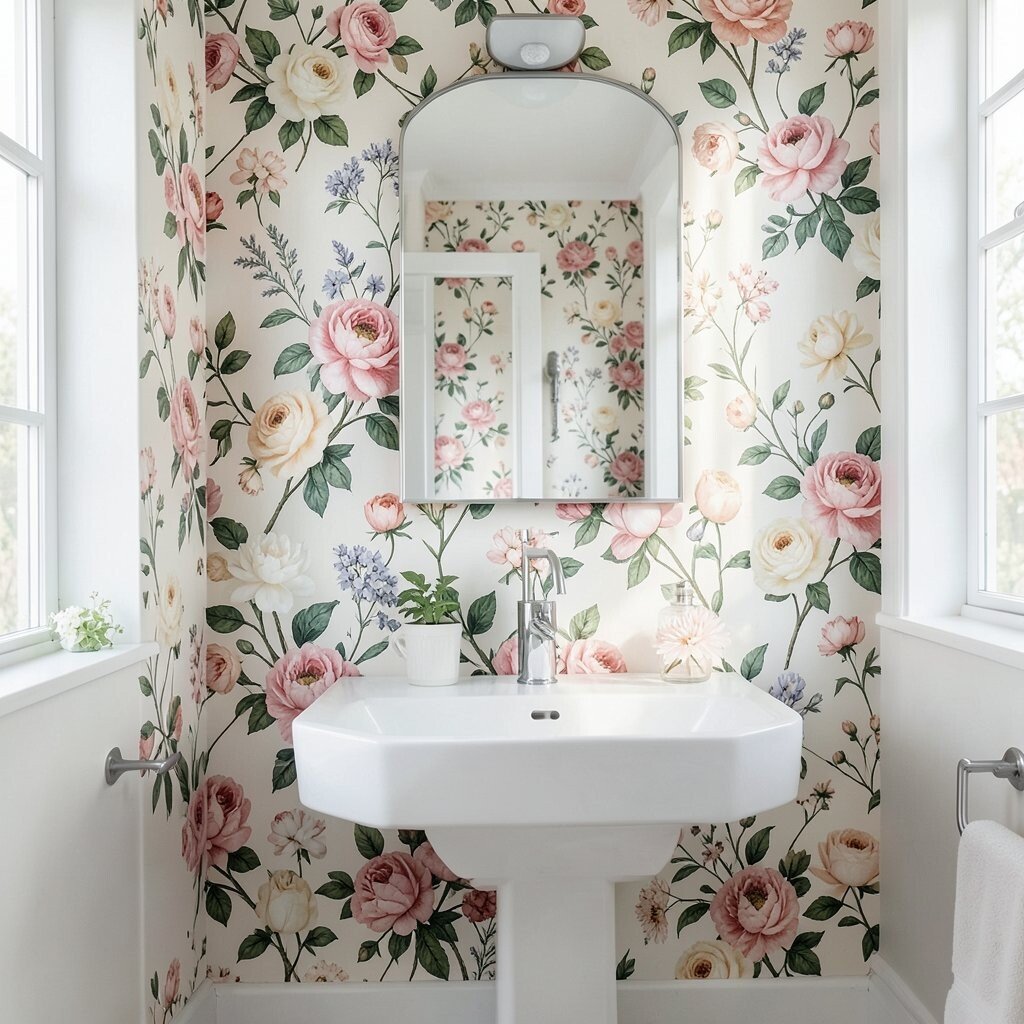
Soft floral wallpaper can make the bathroom feel like a garden room, especially when the print is airy. Choose designs with larger blossoms and gentle colors so the pattern looks calm.
Look for peel-and-stick wallpaper rated for bathrooms, and seal edges around corners for extra protection. Pair the floral wall with simple white grout or neutral tile so the rest of the room doesn’t fight for attention. For personalization, repeat one flower color in accessories like soap dispensers, towel rings, or a mat.
8. Oversized Mirror Framed by Color Wash
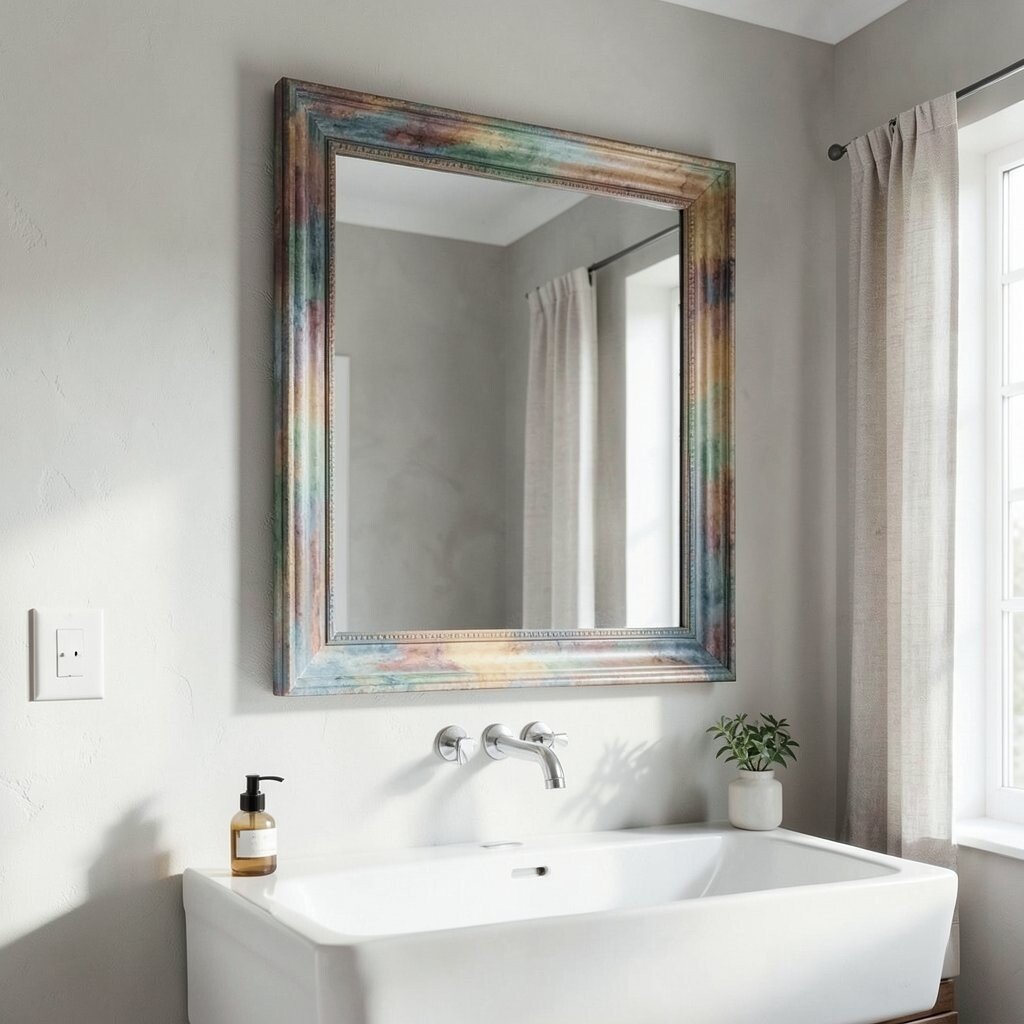
A mirror framed by color wash turns a practical item into a design anchor. When the wall behind it has a soft tint, the room looks styled without clutter.
Paint a rectangle or gentle halo shape behind the mirror using a water-resistant bathroom paint. Keep the color close to your towel shade for a cohesive look, and use a crisp finish around the edges for a polished feel. This approach is budget-friendly because you focus color where your eye naturally lands.
9. Color-Blocked Walls for a Playful Layout
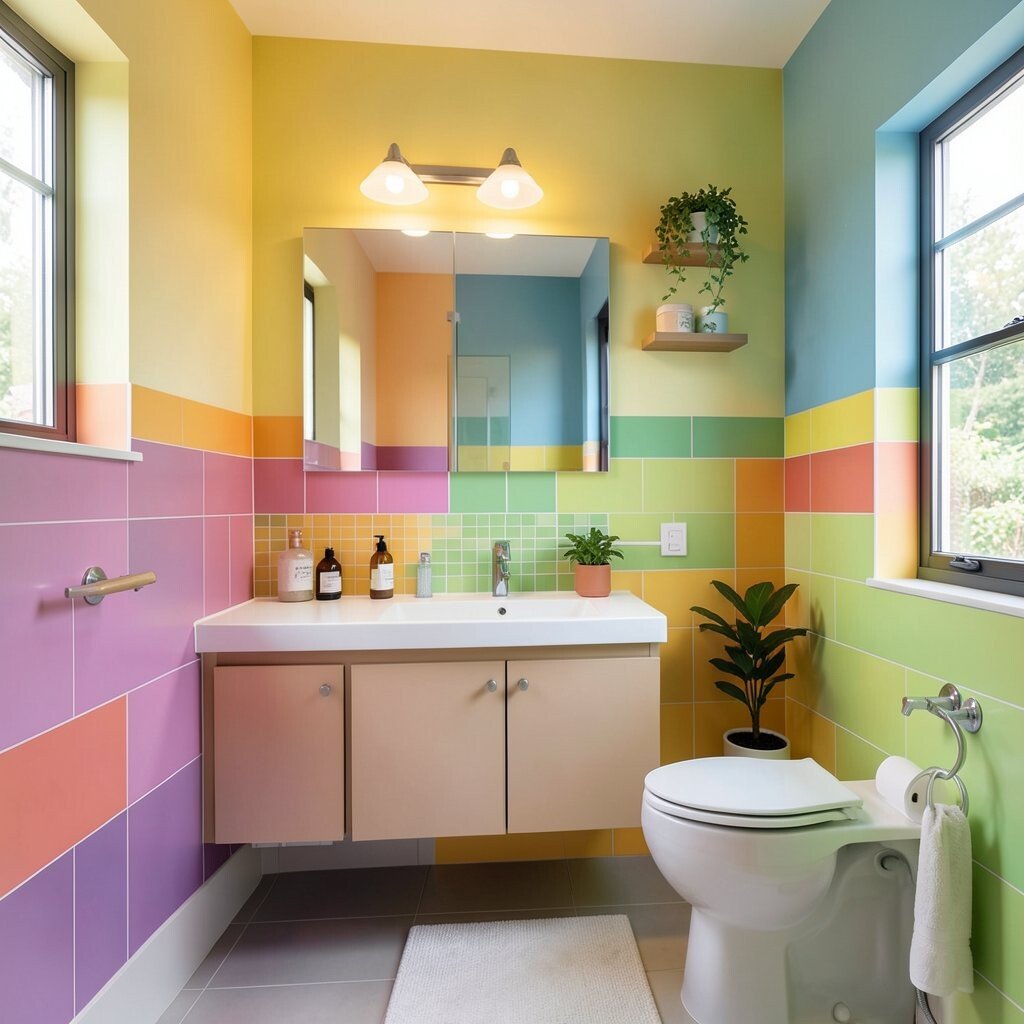
Color blocking makes bathroom walls feel bold and modern, like a fresh pair of sneakers for your space. It works especially well in bathrooms with clean lines and simple fixtures.
Choose two to three bathroom-safe paints and tape off crisp lines for straight edges. Keep wet zones in mind, using tile or waterproof coating where water hits, and use paint on the drier side. For personalization, borrow colors from your shower curtain or artwork so everything looks coordinated.
Try a vertical strip behind the sink to make the area feel taller, or a horizontal band near the countertop to add visual stability. If you are cost-conscious, repainting is usually cheaper than tile replacement, and you can update again later when your tastes shift.
10. High-Gloss Accent Behind the Vanity
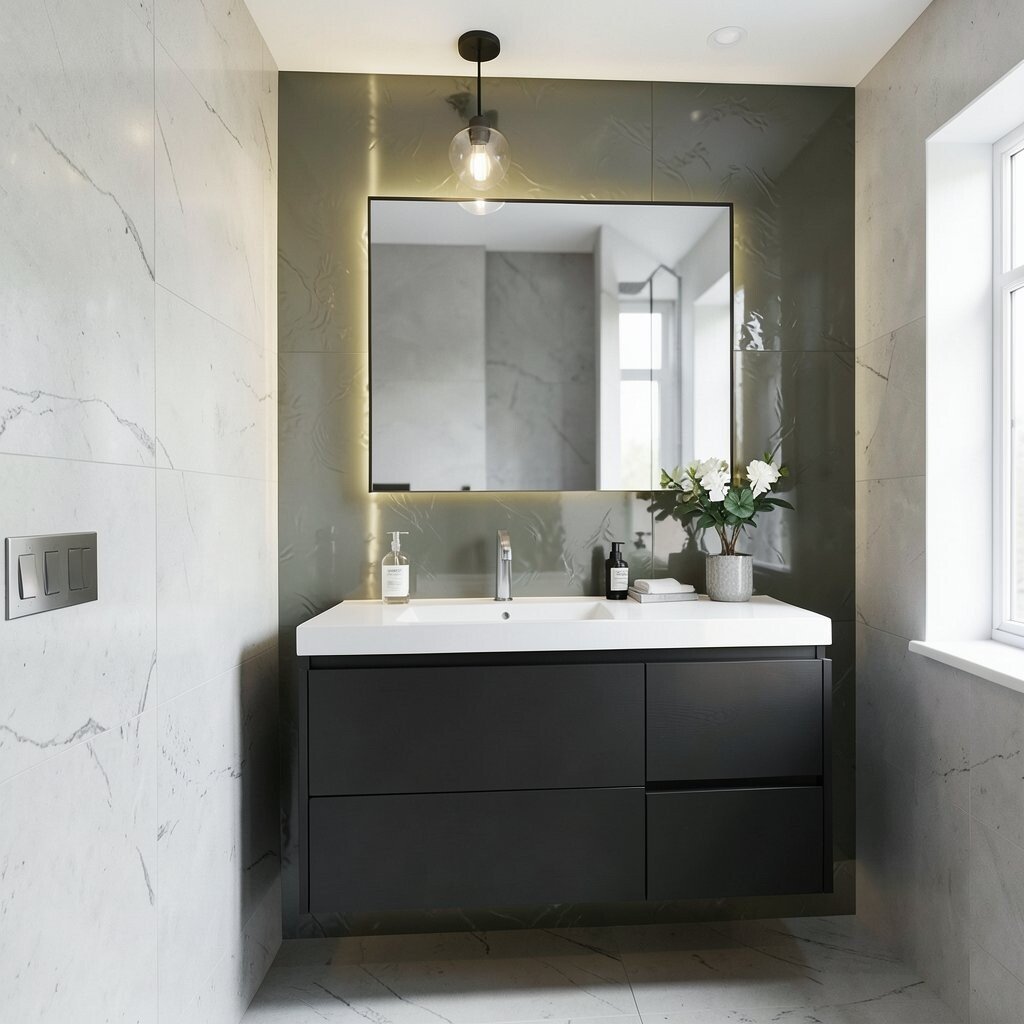
A high-gloss accent wall makes reflections sharper, which can make your bathroom feel brighter. It also gives a sleek, modern finish that looks extra clean.
Pick a moisture-rated glossy paint or a gloss wall coating made for bathrooms. Use it only on one wall or behind the vanity so it doesn’t overwhelm the room. To keep it looking good, wipe it gently after splashes because glossy surfaces can show water spots.
11. Spa-Style Slab Look with Large-Format Panels
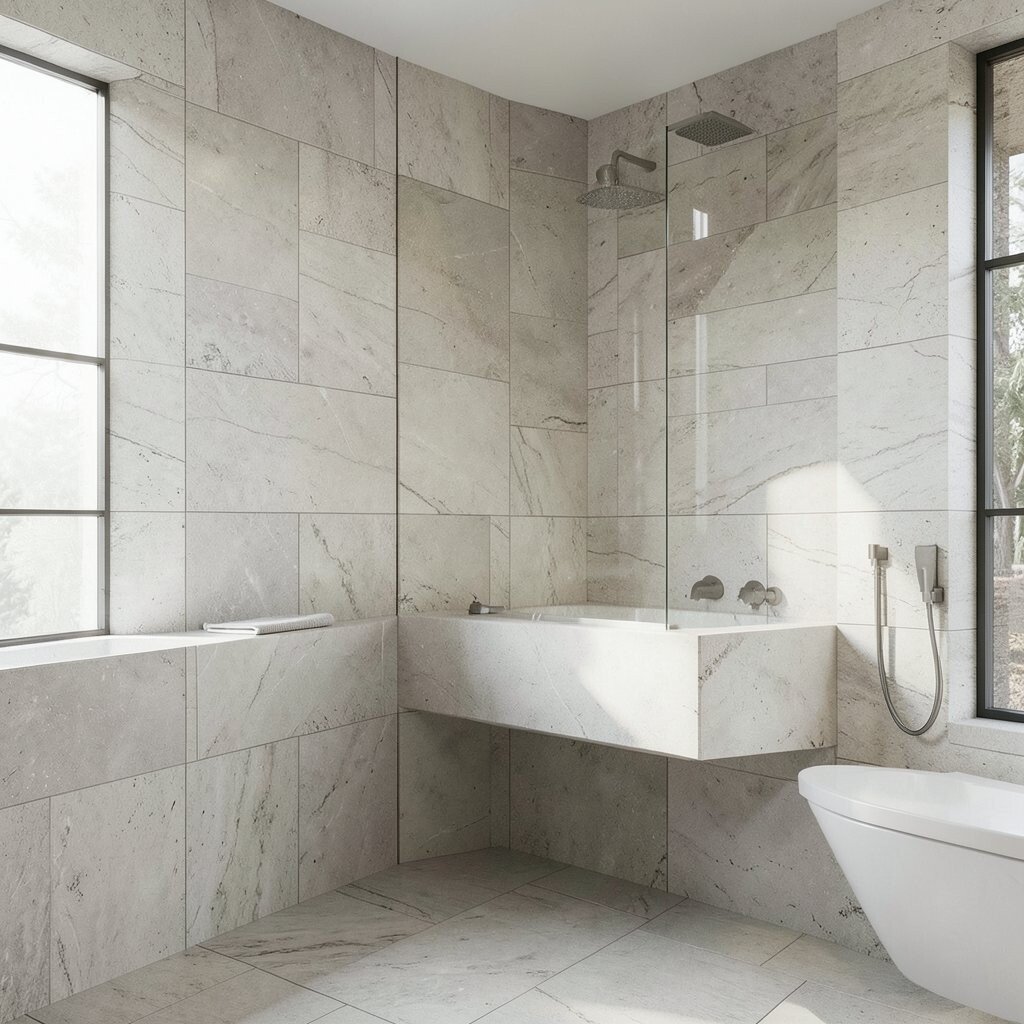
Large-format wall panels mimic the look of expensive stone without the heavy upkeep. They create fewer seams, which makes cleaning easier and the whole wall feel calmer.
Opt for waterproof panels designed for bathrooms, and align them so the pattern and seams stay minimal. This is a great benefit for busy mornings because you spend less time scrubbing grout. For personalization, choose a stone tone that matches your countertop, or pick a warmer undertone if your lighting is cool.
If you want a cost advantage, use panels only on the most visible wall areas, like the wall behind the mirror and part of the shower surround. That way, you get most of the look with less material. Measure carefully to avoid costly rework at corners and niches.
12. Vintage Wallpaper Roll in a Half-Wall Style
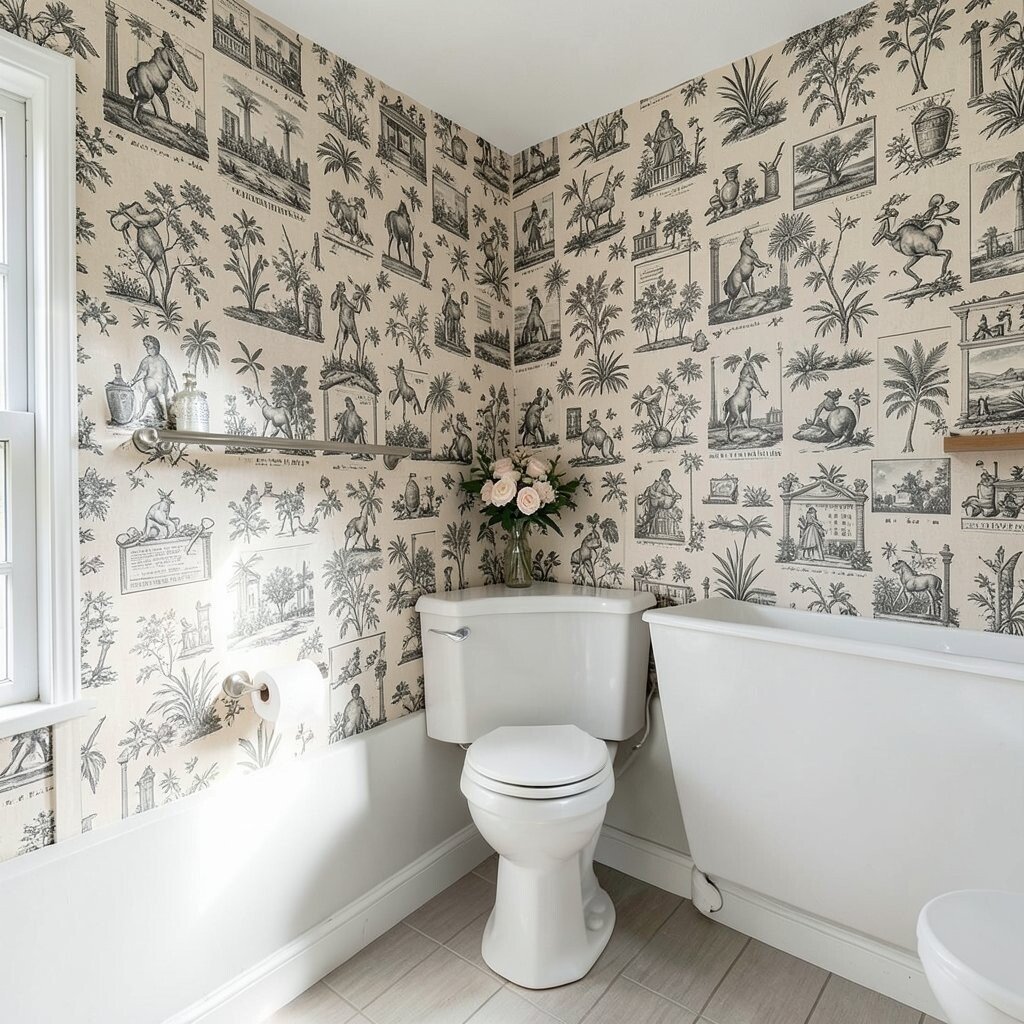
Using vintage wallpaper on a half-wall creates charm while keeping the most splash-prone areas protected. It feels like a clever mix of old-world style and modern practicality.
Install wallpaper above a tile or wainscot base so daily water exposure stays lower. Use a high-quality vinyl or coated wallpaper that can handle occasional steam and humidity. Personalize it by choosing a pattern scale that fits your wall size, so the design doesn’t look too tiny or too loud.
13. Subway Tile with a Hidden Color Twist
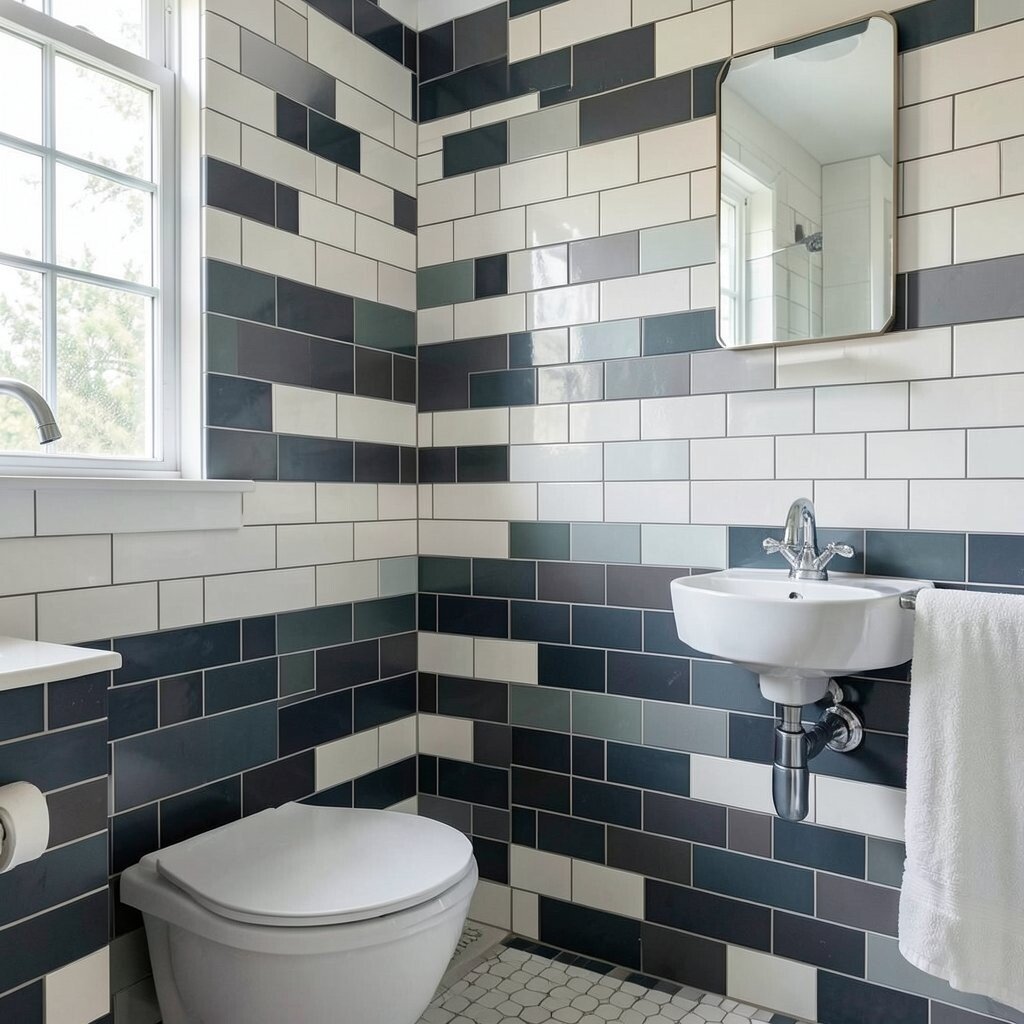
Subway tile is classic, but a hidden color twist makes it feel new. Think of colored grout or a subtle accent rail that peeks out every time you look at the mirror.
Use a mold-resistant grout and consider a grout shade that flatters your hardware, such as warm gray, creamy white, or a soft greige. If you want a stylish trend move, go for matte tile and a slightly warmer grout tone for a cozy look. Keep corners sealed well so the finish stays neat longer.
This idea works great for personalization because you can change grout color without changing the tile. Budget-wise, adjusting grout is often far cheaper than full tile replacement. Choose a simple pattern so the room stays timeless even as trends shift.
14. Color-Matched Towel Bar Wall Accent
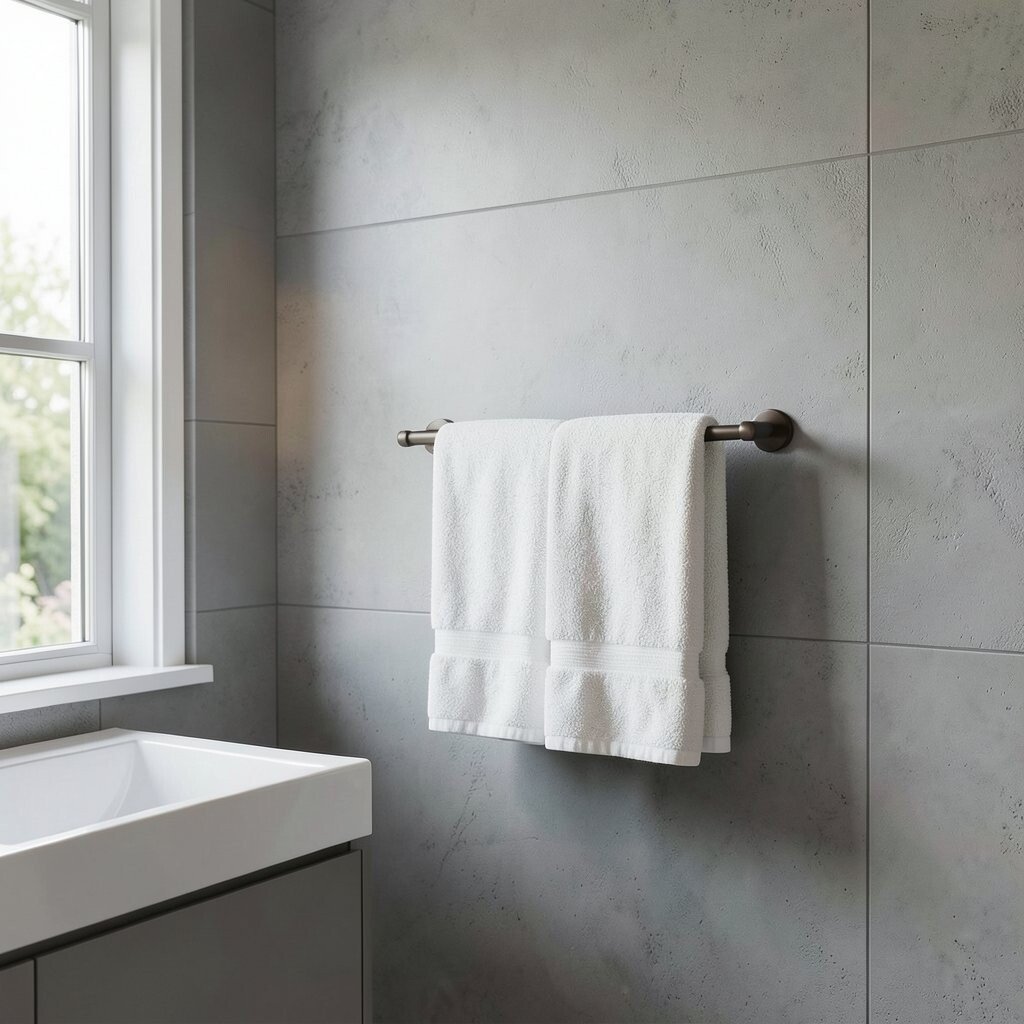
When your towel bar wall matches the rest of your design, the whole bathroom looks coordinated. A color-matched accent zone makes the fixtures feel built-in, not added later.
Paint or tile a narrow section where the towel bars and hooks will sit, and then use the same color on a small detail like the vanity legs or a tray. This approach adds visual order, which helps small bathrooms feel less busy. For a practical tip, mount bars securely into studs and add a sealant line where hardware meets tile.
15. Pastel Ombre Paint Near the Ceiling
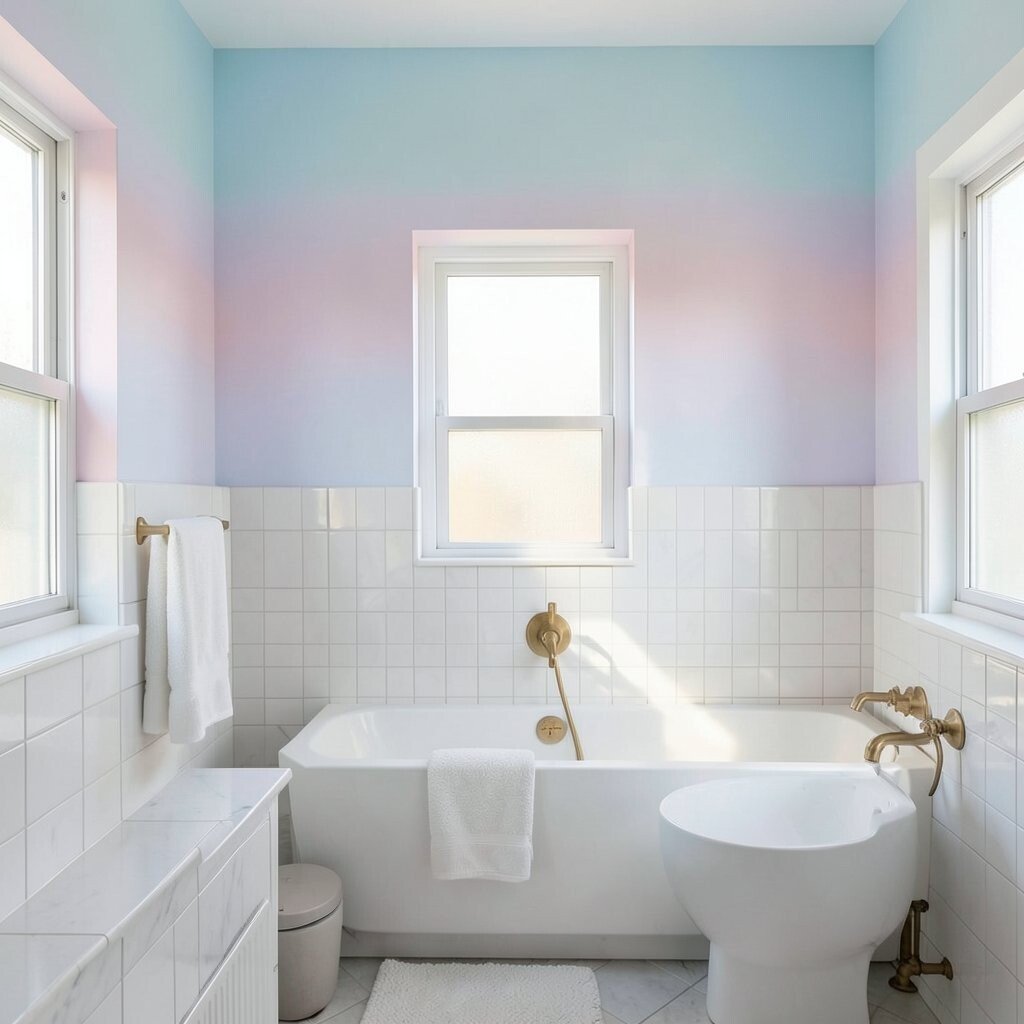
Pastel ombre creates a dreamy gradient that makes the ceiling feel taller. It adds softness to hard surfaces and looks especially pretty under warm lighting.
Use a bathroom-safe paint and apply the gradient with a sponge or roller blending technique. Keep the ombre area away from heavy splashes, and rely on tile or a protective finish near the sink if needed. Personalize the color direction by choosing a tint that matches your decor, like a sage-to-cream fade for calm mornings.
16. Statement Wallpaper on the Shower Side
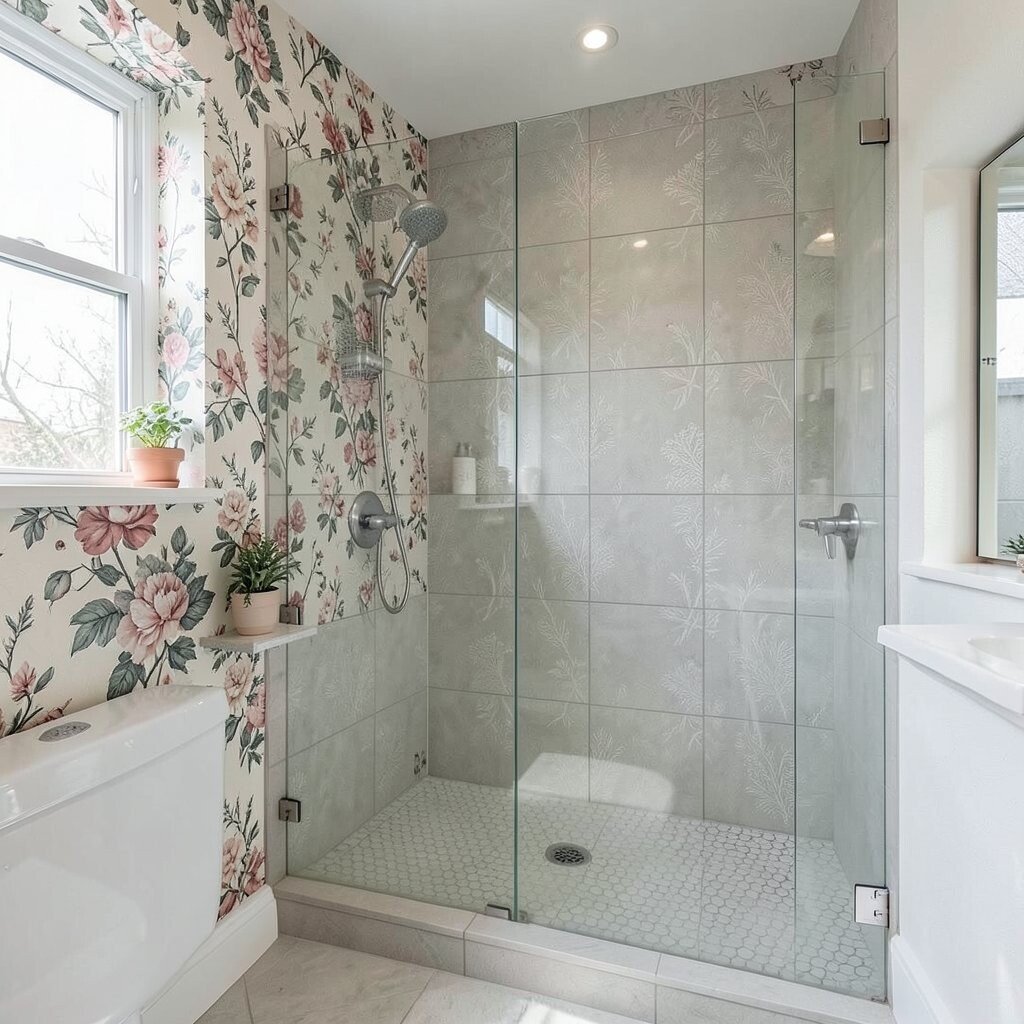
Wallpaper on the shower side sounds bold, and it can look stunning when done carefully. It creates a rich backdrop for steam, light, and daily routines.
Choose steam-resistant wallpaper or apply a waterproof clear coating over a compatible pattern. Keep it limited to a dry zone near the edges, or use it on the wall outside the direct spray line. This keeps the look fresh while protecting your investment.
For uniqueness, pick a pattern with movement, such as subtle palm leaves or artistic line work. If you worry about maintenance, select a removable wallpaper type so you can update later without stress. Budget-wise, this can be a faster refresh than changing tile.
17. Monochrome Marble-Style with Soft Veining
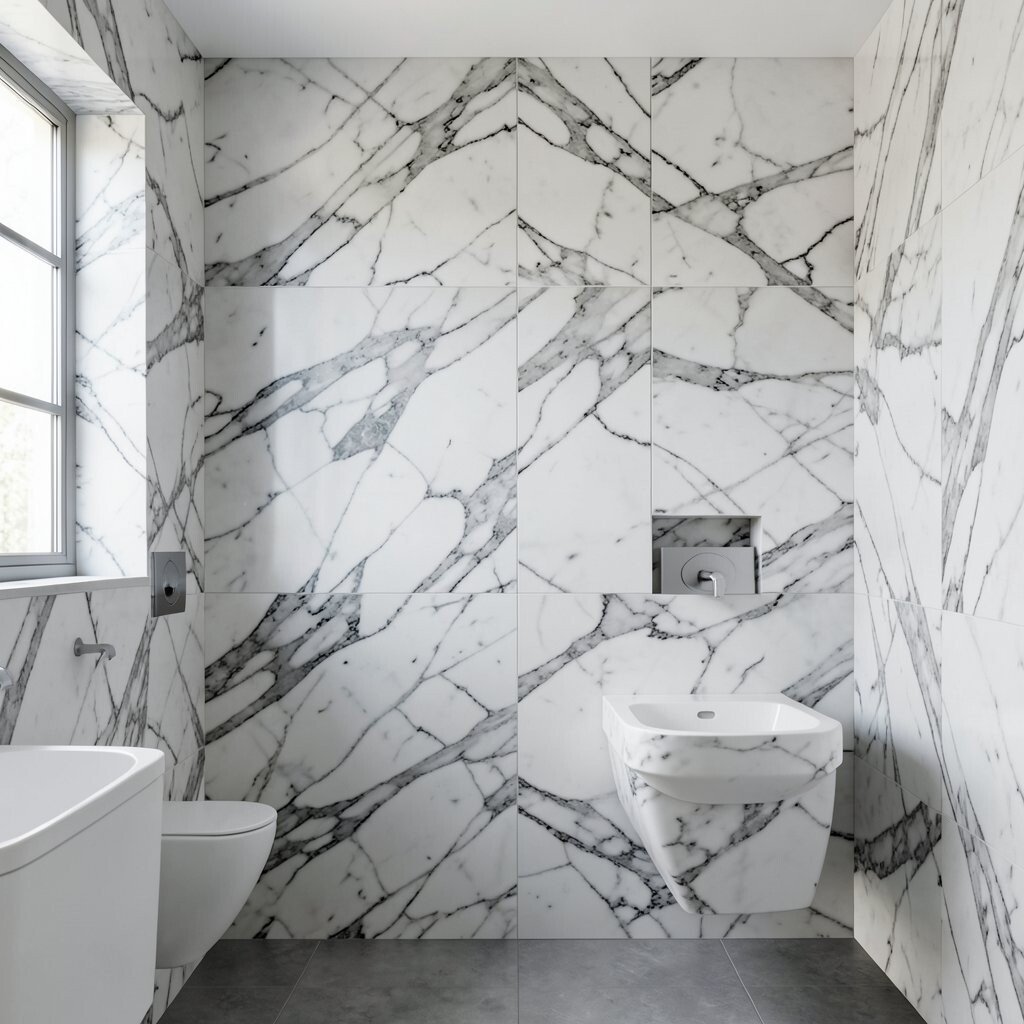
Marble-style walls make bathrooms feel elegant and expensive, even when you use a smart alternative. Soft veining looks timeless and pairs easily with nearly any fixture finish.
Use a waterproof marble-look panel or tile with low-contrast veining for a calm look. Keep the grout and trim colors neutral so the veining stays the main star. A practical benefit is that fewer high-contrast details can hide tiny imperfections, which matters in real life.
Personalize by pairing cooler marble tones with warm accents, like wood or brass, to balance the room. If budget is tight, do marble-look on the feature wall behind the mirror first, then expand later if you love it. Planning in stages keeps costs steady while still giving you that wow feeling.
18. Matte Ceramic Accent Blocks Behind the Sink
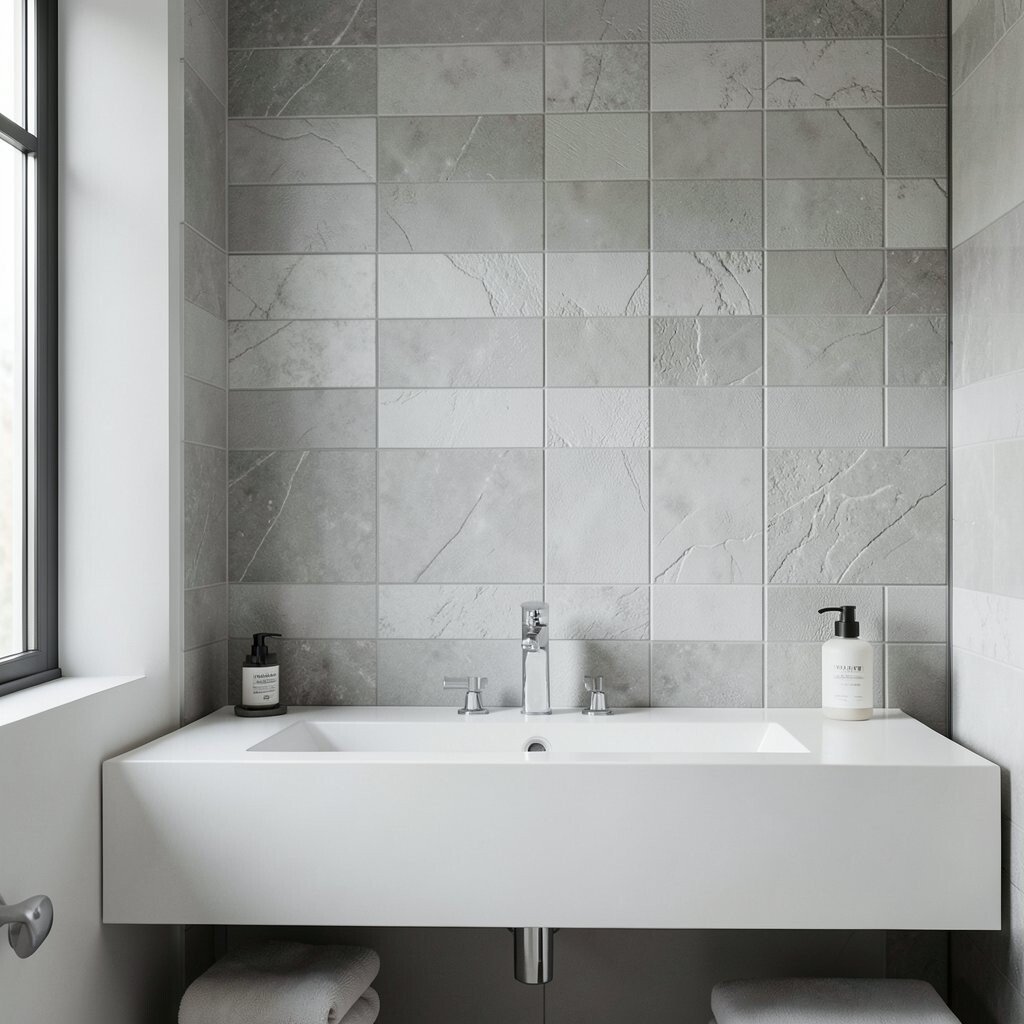
Accent blocks behind the sink add texture without needing full wall coverage. They create a tidy grid that looks modern and organized.
Choose matte ceramic tiles or waterproof 3D wall tiles meant for bathroom use. Keep the rest of the walls simple so the texture stands out, and use a coordinating caulk line at edges for a clean finish. For personalization, pick a color from your vanity hardware or choose a slightly darker shade to add depth.
19. Mirrored Wall Panel for Instant Brightness
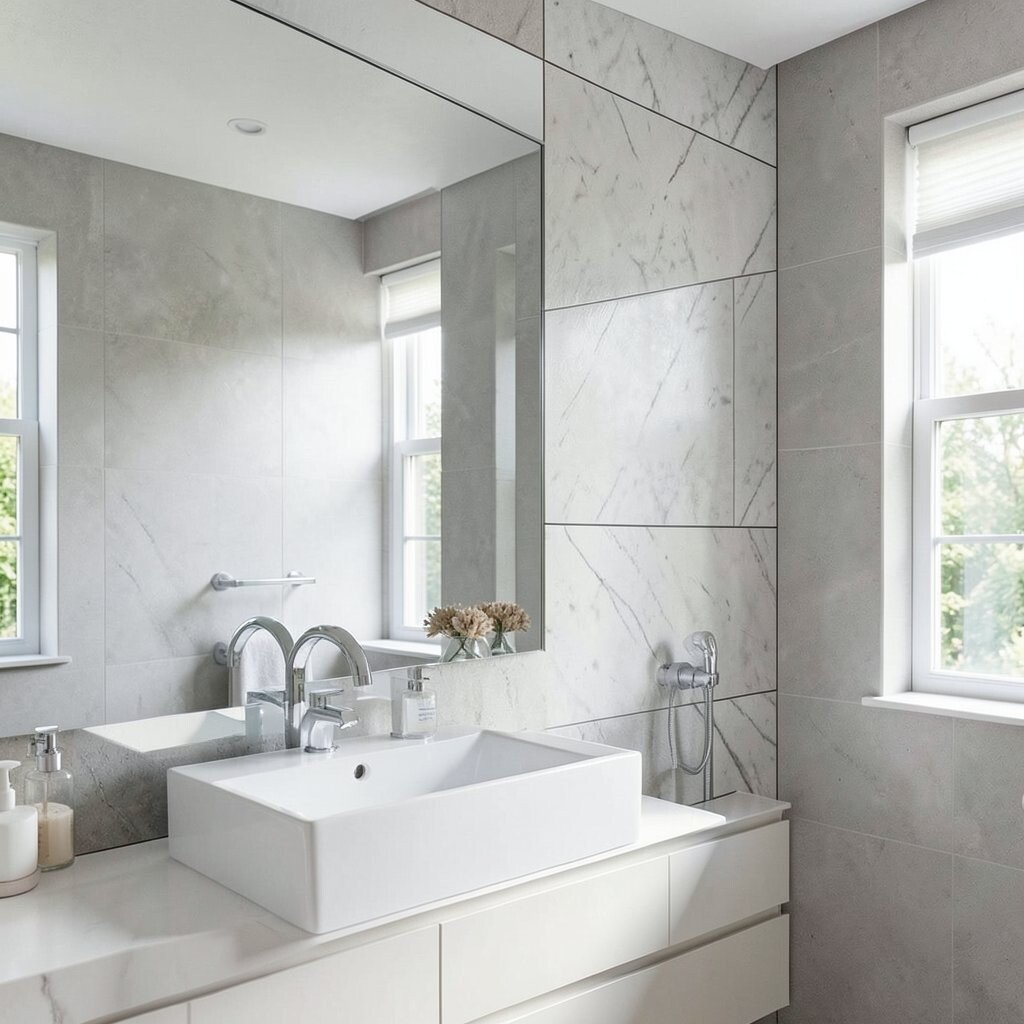
A mirrored wall panel can make your bathroom feel larger and brighter in seconds. It bounces light around and makes the room feel airy even when storage is limited.
Use shatter-resistant mirrored panels and ensure proper mounting for safety. This design is a great benefit for small bathrooms because it reduces the visual weight of walls. Personalize it by adding a slim decorative frame or choosing a mirror finish that matches your faucet and mirror hardware.
For cost considerations, mirrored panels can be less expensive than you’d expect compared with full tile renovations. Start with a focused area, like the wall behind the vanity, and keep the rest neutral. Clean it regularly with a streak-free cleaner so the mirror stays crisp and beautiful.
20. Raised Plaster Look for an Artistic Dimension
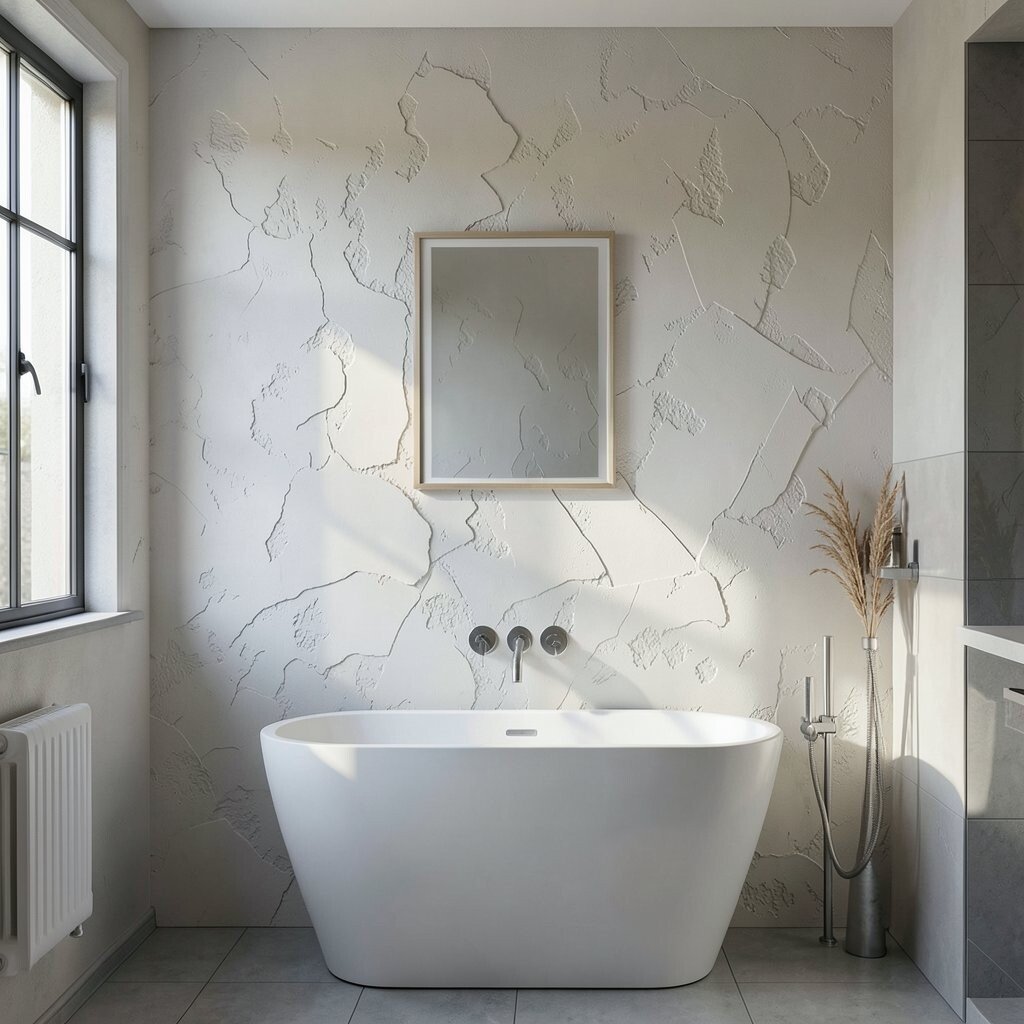
A raised plaster look adds sculptural depth without needing heavy materials. The shadows it creates make your walls feel rich, even in a simple palette.
Use a plaster-style coating made for interior and damp spaces, and seal it properly after curing. This trend is popular because it feels high-end while still being customizable with color and texture intensity. Personalize by choosing a gentle tone that matches your towels, or go slightly darker for a moody, gallery feel.
To keep upkeep easy, avoid placing textured coating right where water splashes hard. If you want a practical win, apply it behind the vanity or near the doorway instead of inside the shower. Budget-wise, plaster-style finishes can be a smart alternative to extensive tiling work.
21. Curved Corner Tile for a Softer Look
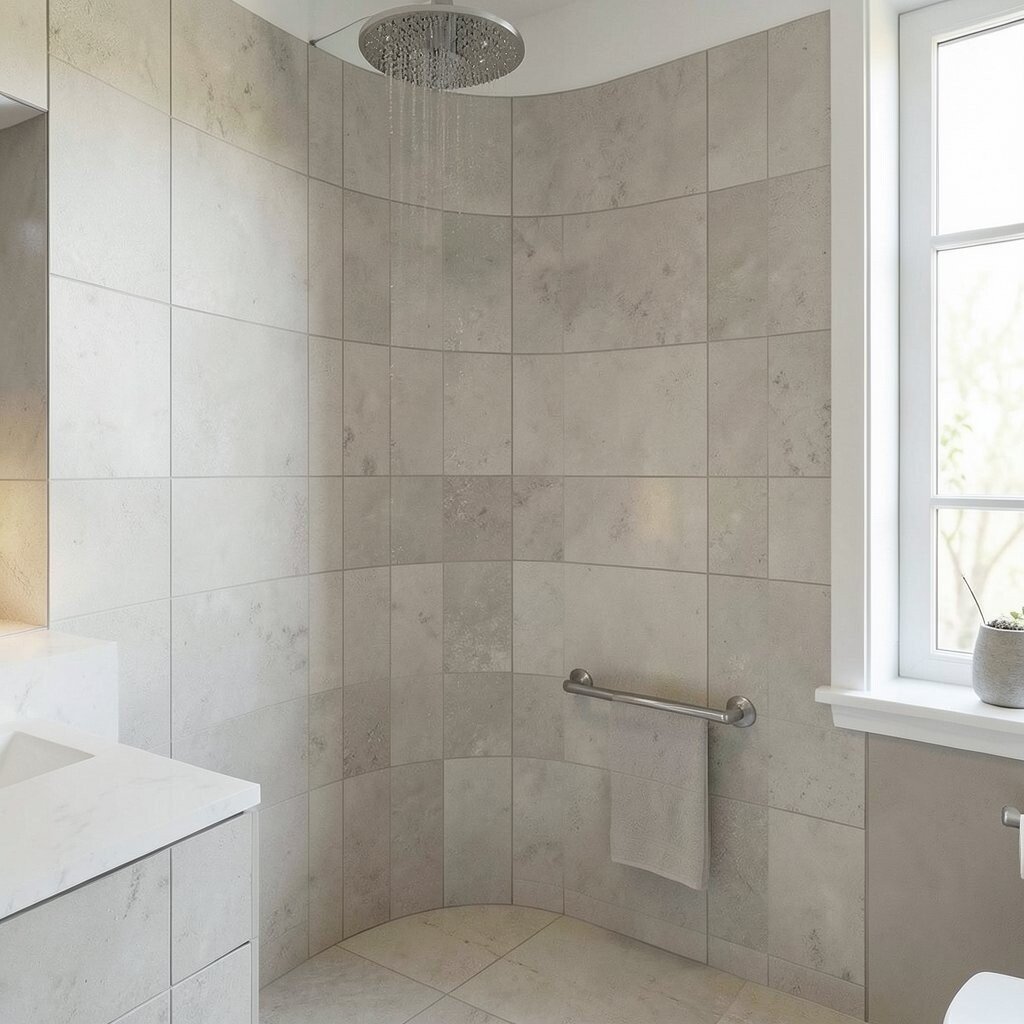
Curved corner tile adds softness and reduces the harsh feeling of sharp lines. It also helps your bathroom feel more welcoming and rounded.
Look for corner pieces and curved edge trims made for wet areas. This makes installation easier and helps maintain a neat seal at the edges. For personalization, choose a tile finish that matches your overall style, like matte for calm or glossy for extra light bounce.
Cost considerations are manageable because corner tiles are a targeted upgrade rather than a full overhaul. Keep your main field tiles simple, then let the corners provide the unique detail. The result feels designed and intentional without draining your budget.
22. Color-Shift Paint for a Subtle Mood Change
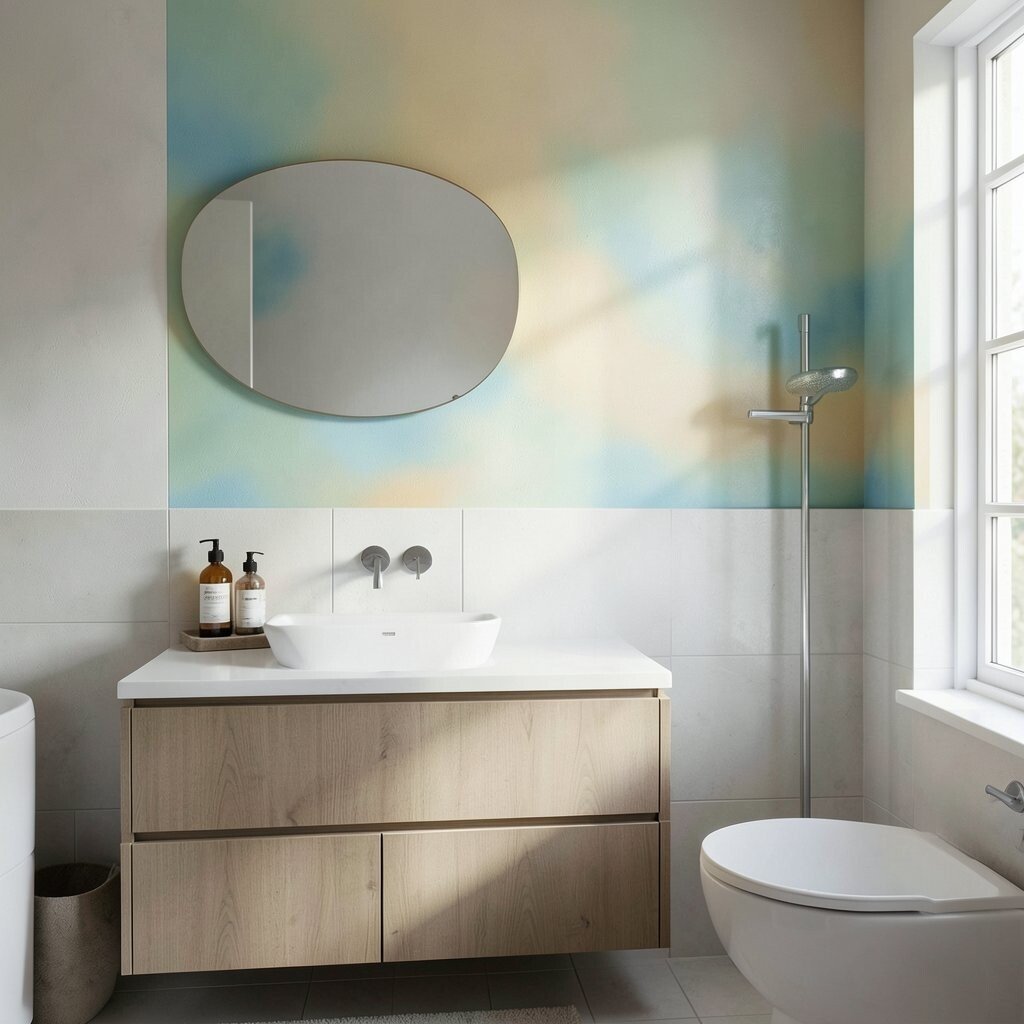
Color-shift paint can look different as the light changes, giving your bathroom a magical, boutique vibe. It’s subtle, but it feels special every time you enter.
Use a bathroom-rated color-shift finish and apply it in controlled areas where it won’t get heavy direct splashes. Pair it with neutral tile and fixtures so the effect stays elegant instead of overwhelming. Personalize the mood by choosing a shift that moves between two flattering shades, like sea glass to soft gray.
For a practical tip, test a small sample panel first because the final look depends on your lighting. If budget is a factor, cover only one accent wall and let the rest stay simple. This is a stylish way to refresh your space without committing to a full renovation.