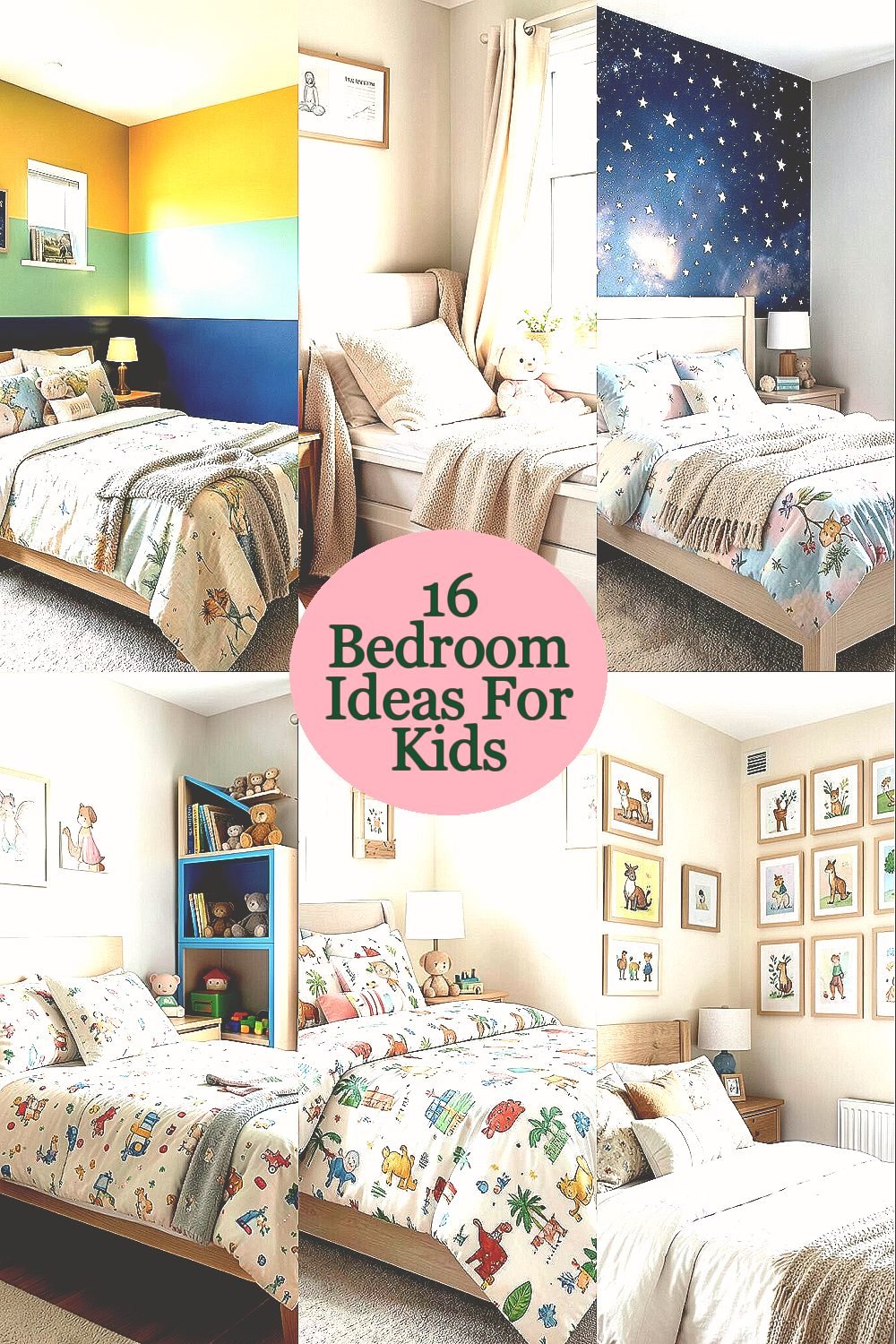
Kids’ bedrooms should feel like their favorite storybook page. When the room fits their world, play happens naturally.
Here are creative ideas that make bedrooms brighter, cozier, and easier to live in.
1. Color-Blocked Adventure Walls
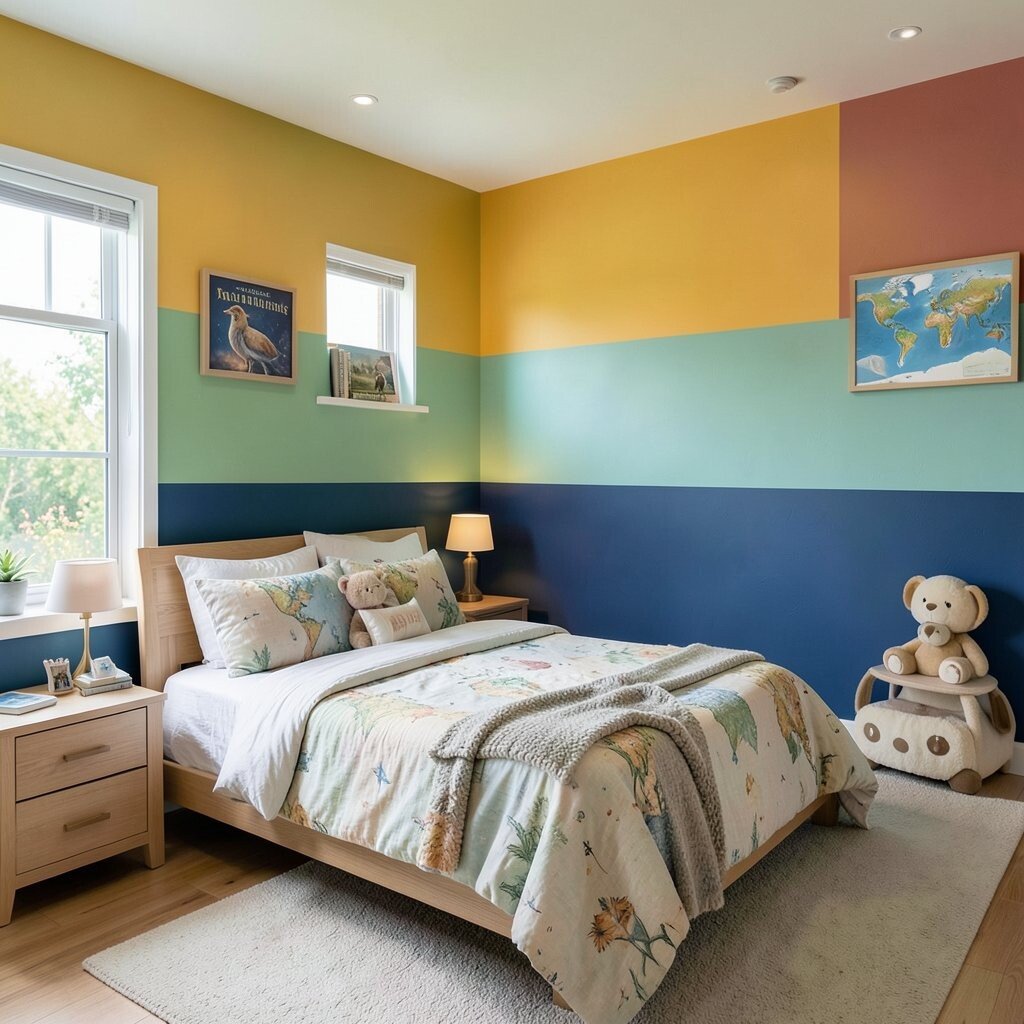
A bedroom can feel instantly lively with bold color blocks on just one wall. Paint in chunky shapes like rounded hills, big stars, or simple stripes that match your child’s favorite colors.
Use painter’s tape to plan the edges so the results look neat, not messy. This adds visual fun without filling the whole room with clutter, and it also helps kids feel ownership. Keep the palette age-friendly by choosing one main color, one accent, and a soft neutral to calm the space.
2. Cozy Reading Nook Under a Window
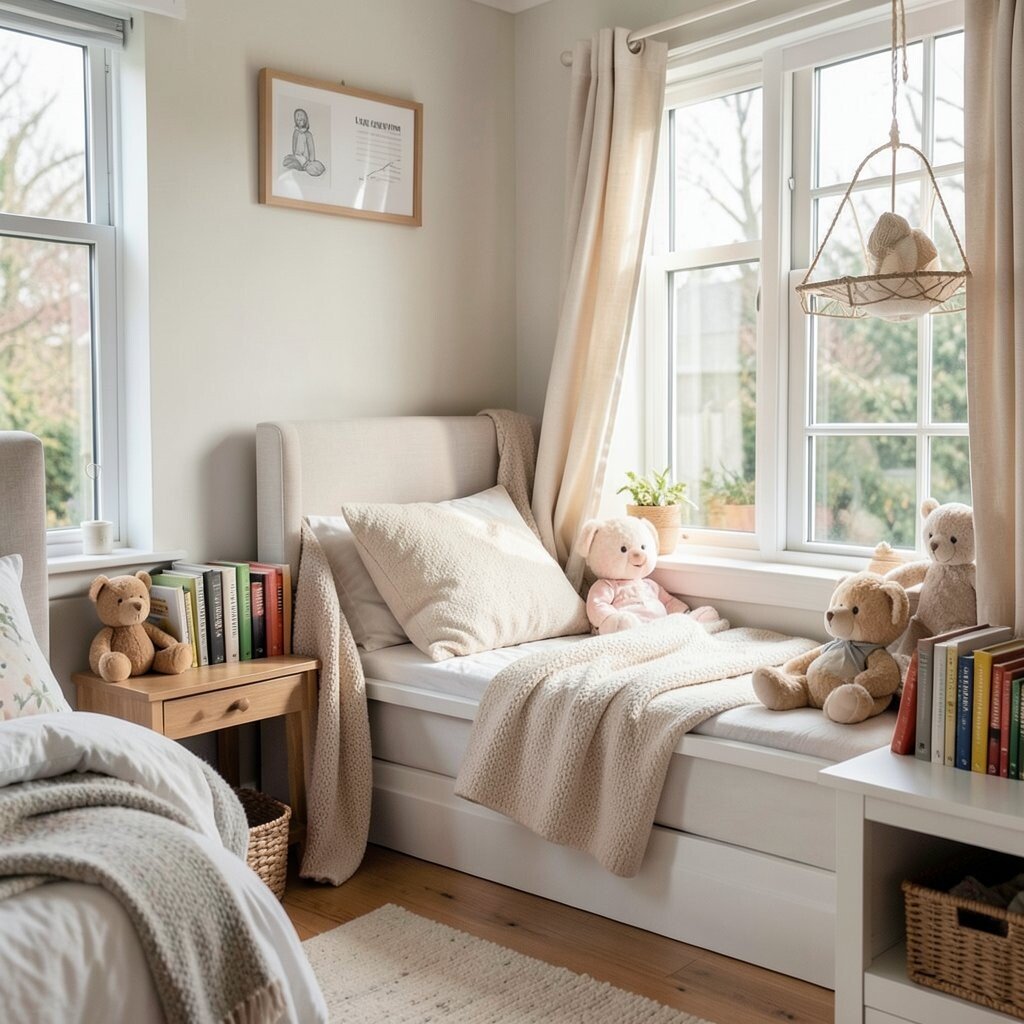
A window seat can turn quiet time into something kids look forward to. Add a cushion with removable covers so it stays fresh, and throw pillows in fun patterns for instant comfort.
Place a small bookshelf nearby so story time feels easy to start. Choose lightweight curtains to brighten the nook during the day, and consider a warm, indirect lamp for evenings. This trend of “small zones” helps kids know where reading happens, which can reduce bedtime battles.
If you’re budget-minded, use thrifted cushions and re-cover them with simple fabric you can wash. Personalize with a name plaque or a tiny gallery of favorite book covers arranged like a mini poster wall. For practical upkeep, keep a small basket for bookmarks, glasses, and reading prompts.
3. Bedtime Sky With Removable Star Decals
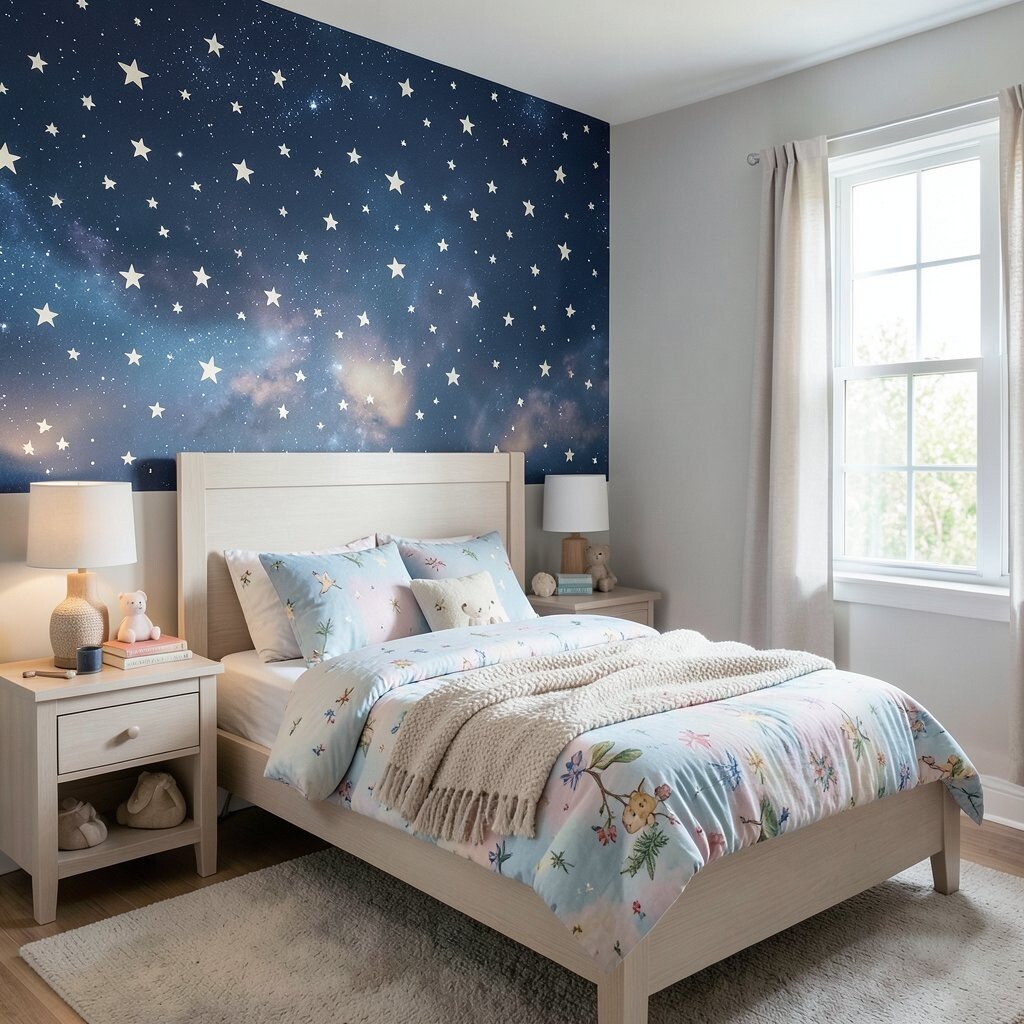
Turn the ceiling into a night sky using removable vinyl stars. The look is magical, and you can keep it playful instead of too serious.
Pick a mix of sizes so it feels like a real sky, then place them where kids naturally look when lying down. This helps kids associate the room with calm feelings, which supports smoother bedtime routines. If your child loves space, add a few glow-in-the-dark planets that fade gently after bedtime.
Use repositionable materials to avoid wall damage when tastes change. A quick tip is to test a small corner first so the surface is ready. You can also match the star colors to your bedding for a cohesive look without extra spending.
For personalization, let your child help place the stars, even if it takes a little longer. That small moment makes the room feel truly theirs. It also makes it easier to adjust the layout when new interests show up.
4. Storage Cubes That Look Like Toys
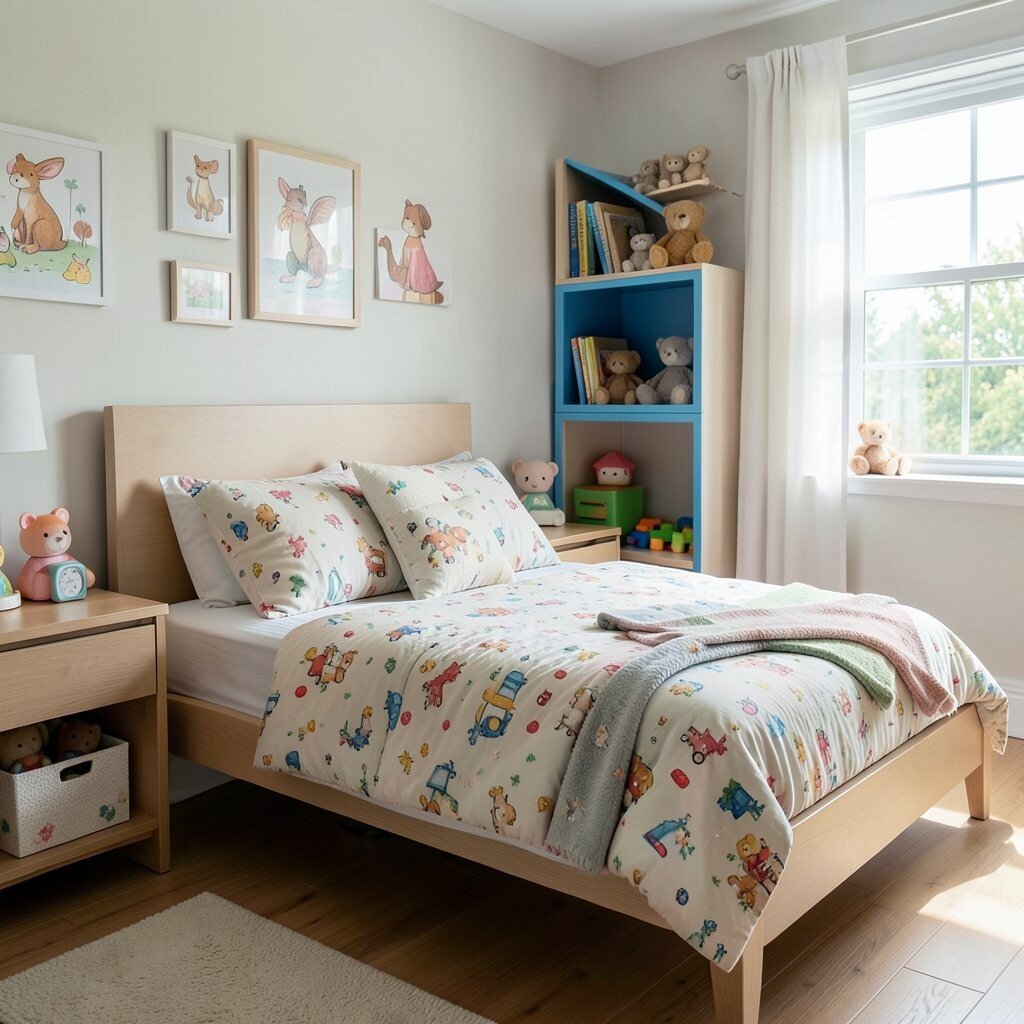
Clutter disappears faster when storage is both practical and fun to touch. Use colorful cube shelves, but label bins with pictures rather than words if your child is young.
Choose baskets for small items like art supplies and LEGO pieces, then slide them in so everything feels tidy. This gives kids a simple routine for cleaning up, which reduces stress for everyone. Opt for sturdy materials with rounded edges so the shelf feels safe in busy rooms.
5. Theme Bedding That Grows With Them
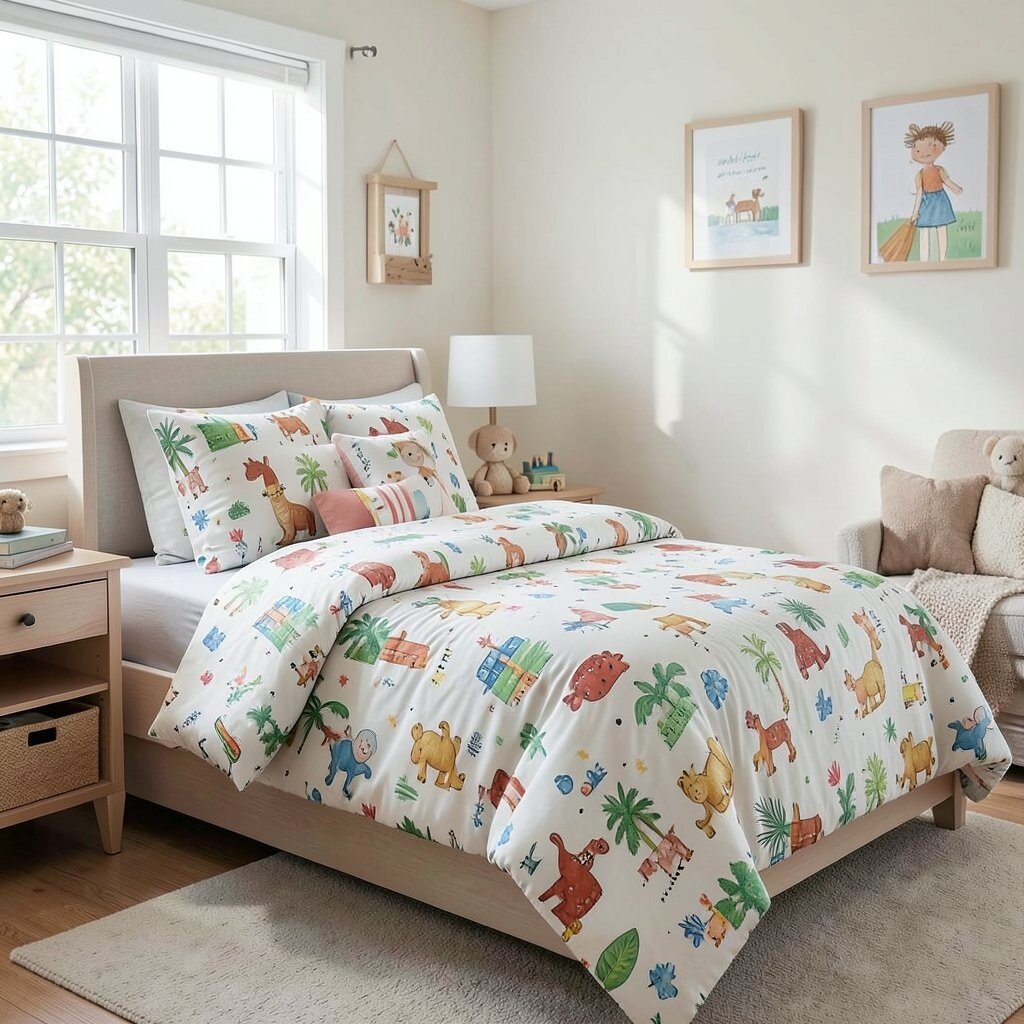
Bedding sets are the easiest way to make a room feel like a whole theme. Choose covers with patterns that can change through accessories, like a base design that works now and later.
Look for reversible quilts or duvet covers so you can update the vibe without buying everything again. This saves money over time and helps the room keep up with shifting tastes. Pick a neutral or softly colored foundation, then add themed throw pillows or wall art that can be swapped.
For personalization, let your child choose one hero item like a pillow shaped like a rocket or a favorite animal. Keep the rest of the room calmer so their choices stand out. If your budget is tight, shop for one standout piece at a time and build around it.
6. DIY Gallery Wall With Their Own Art
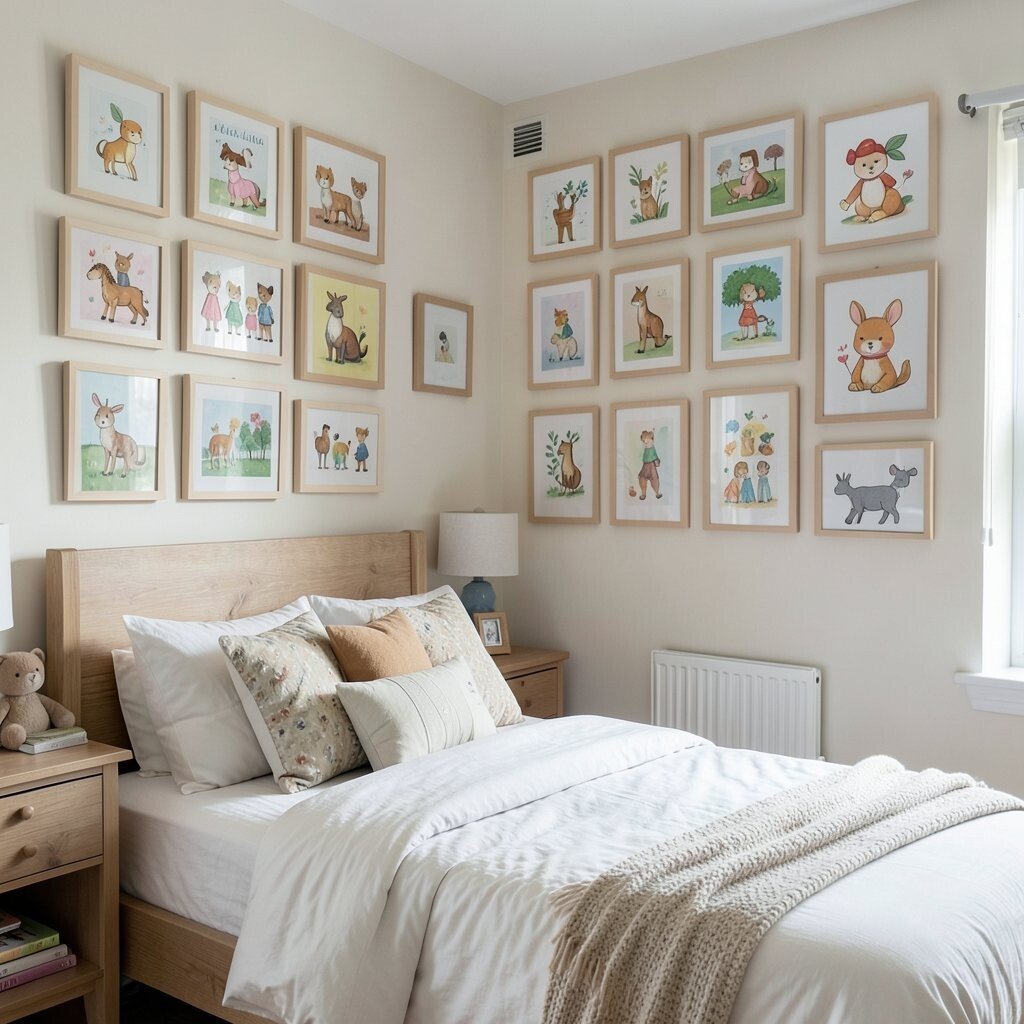
A gallery wall makes a bedroom feel proud and personal, especially when it includes your child’s creations. Mix framed drawings with prints of their favorite characters or simple photos of family moments.
Use a variety of frame sizes so the wall looks collected, not copied from a template. This gives kids a sense of accomplishment every time they pass it, and it can reduce the urge to tape things randomly everywhere. For practical tips, use clear sleeves for rotating artwork so you can swap pieces without remounting.
If you’re trying to keep costs low, use inexpensive frames from discount stores and upgrade with coordinating colors. Choose a theme like “space,” “ocean,” or “rainbows” to keep it cohesive. Let your child help pick where pieces go, which makes the whole project feel like a team effort.
7. Interactive Wall Hooks for Quick Outfit Wins
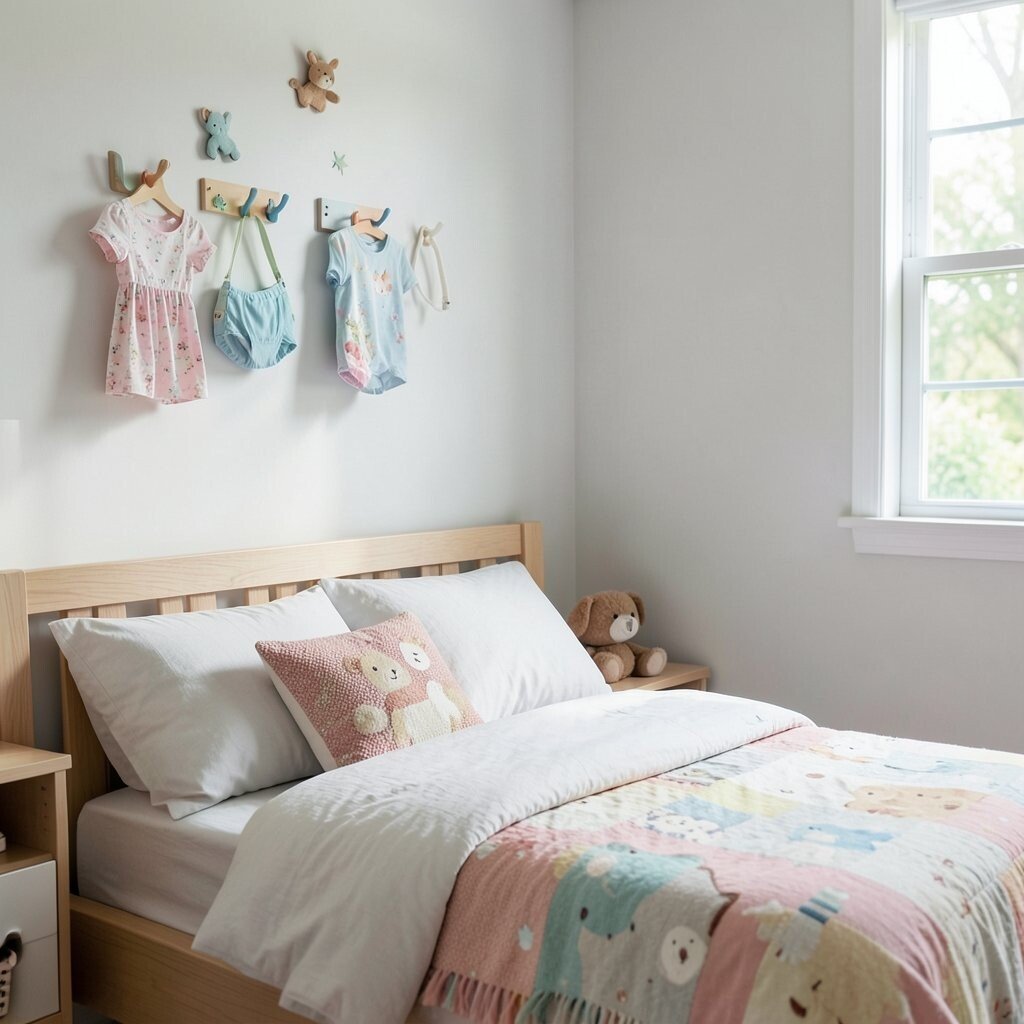
Kids don’t always notice what’s on the floor until it’s already a mess. Wall hooks give them an easy place to hang backpacks, costumes, or hoodies right after school.
Install hooks at child height so reaching feels possible without climbing. This supports independence and keeps daily items from piling up in the wrong spots. Choose hooks shaped like stars, animals, or simple hooks in bright colors to match the room’s fun style.
8. Climbing Corner With Safe Soft Mats
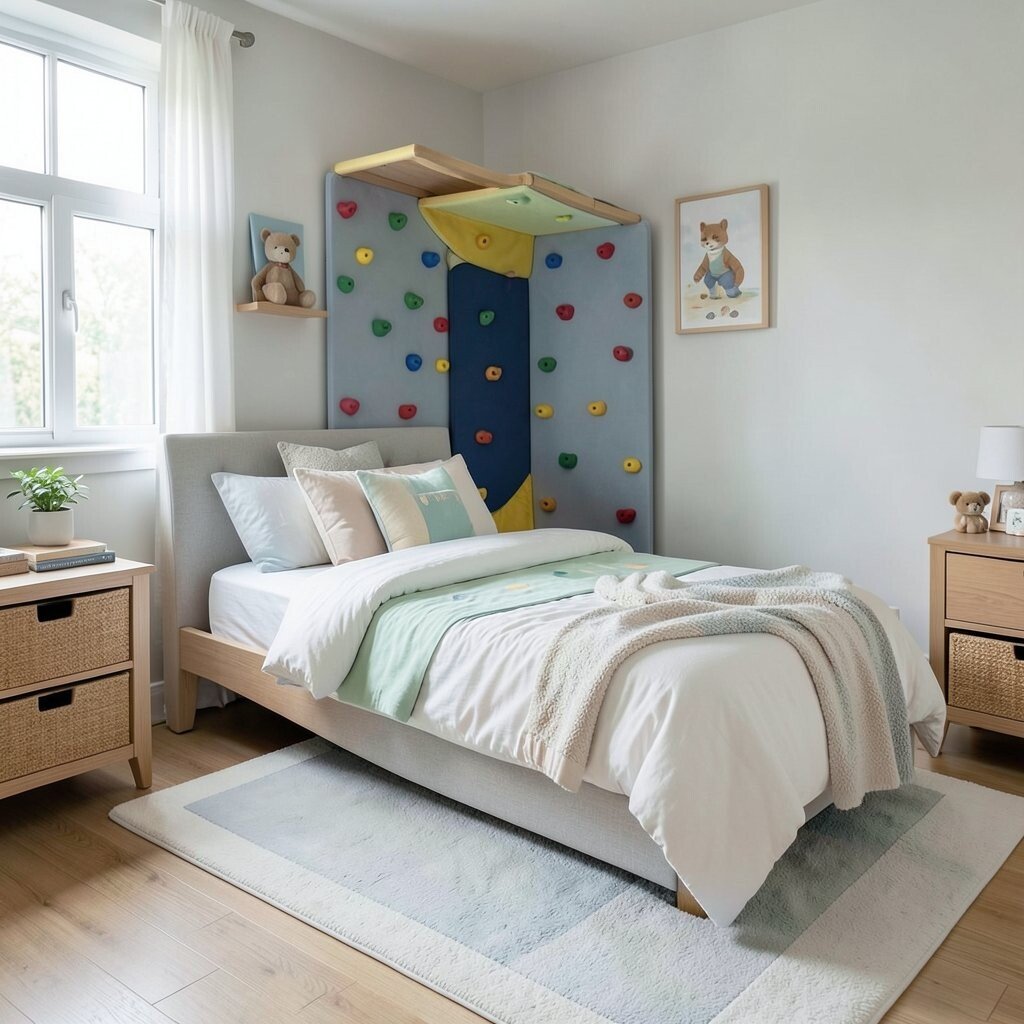
If your child loves to be active, create a small climbing corner instead of letting energy spill into everywhere. Use a sturdy climbing wall panel or a kid-safe ladder, then pair it with soft mats underneath.
This turns movement into play, which can help children burn energy and settle down faster. Keep the area clear and use non-slip mats so kids feel secure while practicing. For practicality, check that the hardware is securely mounted and follow weight guidelines for peace of mind.
Personalize by adding a small wall chart where kids can “collect” skills like reaching higher holds or climbing to a certain height. Pick colors that feel energizing but not overstimulating, like teal plus warm orange. Cost-wise, start with the essentials and add small upgrades only when you notice how often they use the space.
9. Curtain Canopy That Creates Instant Privacy
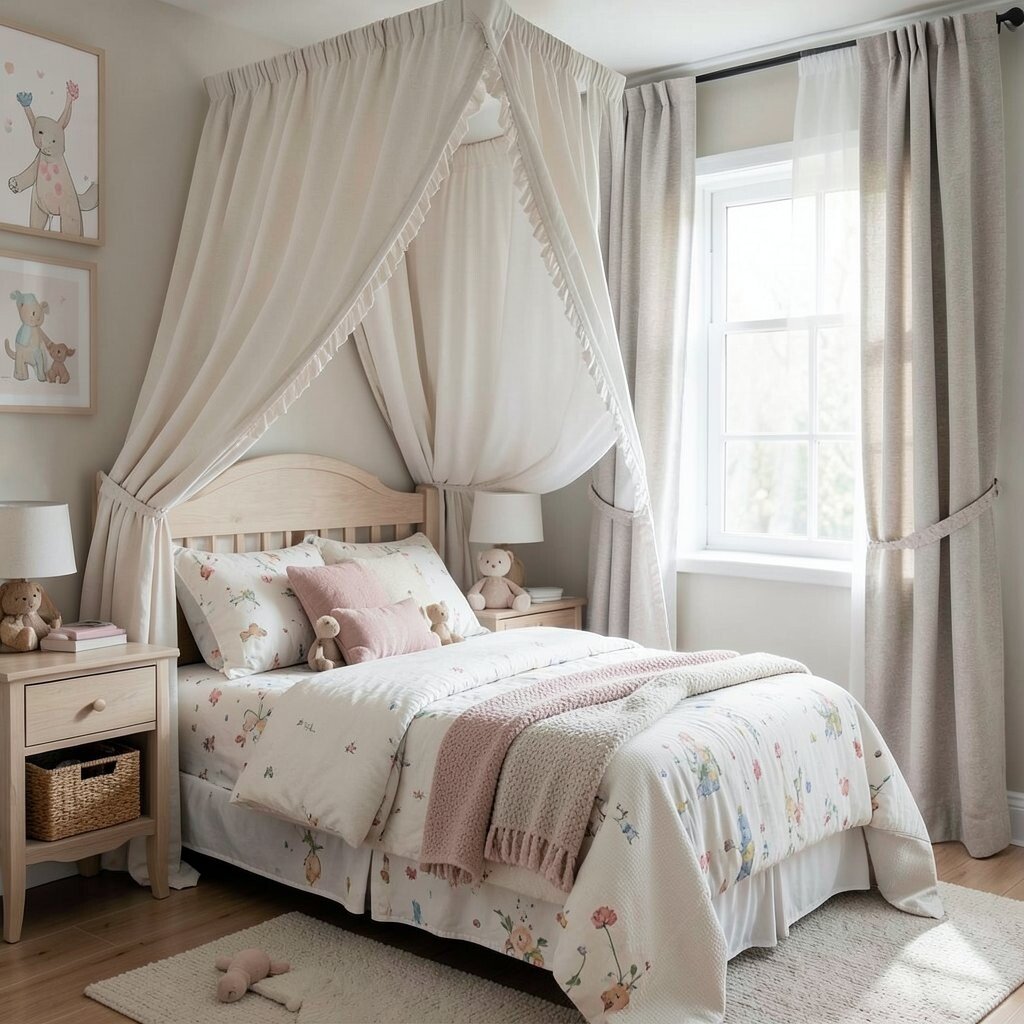
A canopy made from curtains can turn a simple bed into a special hideaway. The fabric softens the room and gives kids a cozy spot to read, play pretend, or just relax quietly.
Mount a ceiling track or use a tension rod if that works for your space. This helps the canopy stay steady while kids move around it, and it makes the room feel like a built-in fort. Choose sheer fabric for a light airy look or heavier fabric for a stronger “secret room” feel.
Personalize with fabric colors that match their personality, like calm pastels for gentle kids or bold patterns for adventurous ones. You can also add a small string of lights around the canopy for a warm glow at night. If you want lower cost, repurpose curtains from a thrift store and steam them so they look fresh.
10. Under-Bed Organizers With Label Pockets
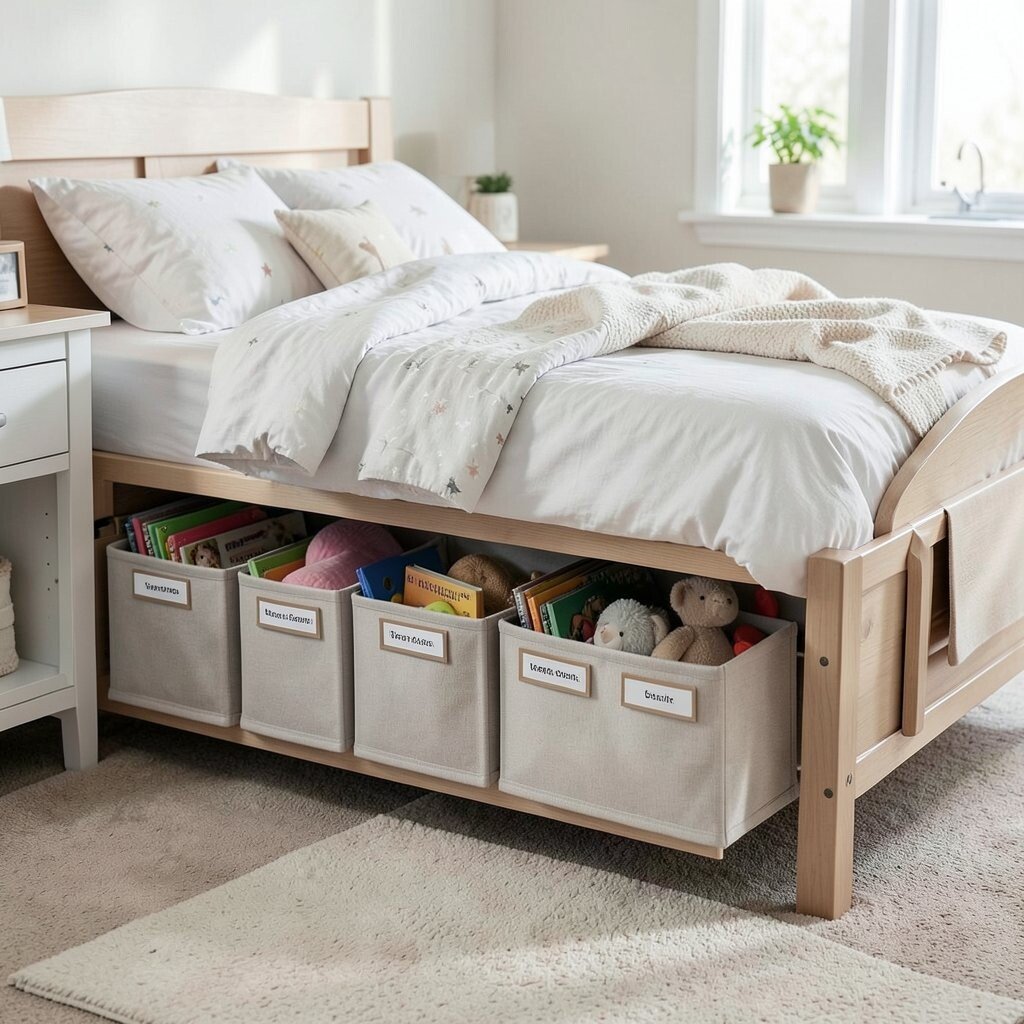
Under-bed space is often ignored, but it’s perfect for storing bins that kids don’t use daily. Choose drawers or rolling bins that slide smoothly so pulling them out feels easy.
Add label pockets with printed pictures or color stickers so kids can find things without asking. This reduces “Where is it?” moments and helps the room stay neat even when kids are busy. Consider using breathable fabric bins for soft items like pajamas or extra blankets.
For cost considerations, you can use sturdy storage boxes and add simple wheels later if you want. A smart tip is to keep the heaviest items closest to the center so bins move safely. Personalize by letting your child decorate one bin per category, like “art,” “blocks,” or “dressing up.”
11. Chalkboard or Whiteboard Wall for Daily Creativity
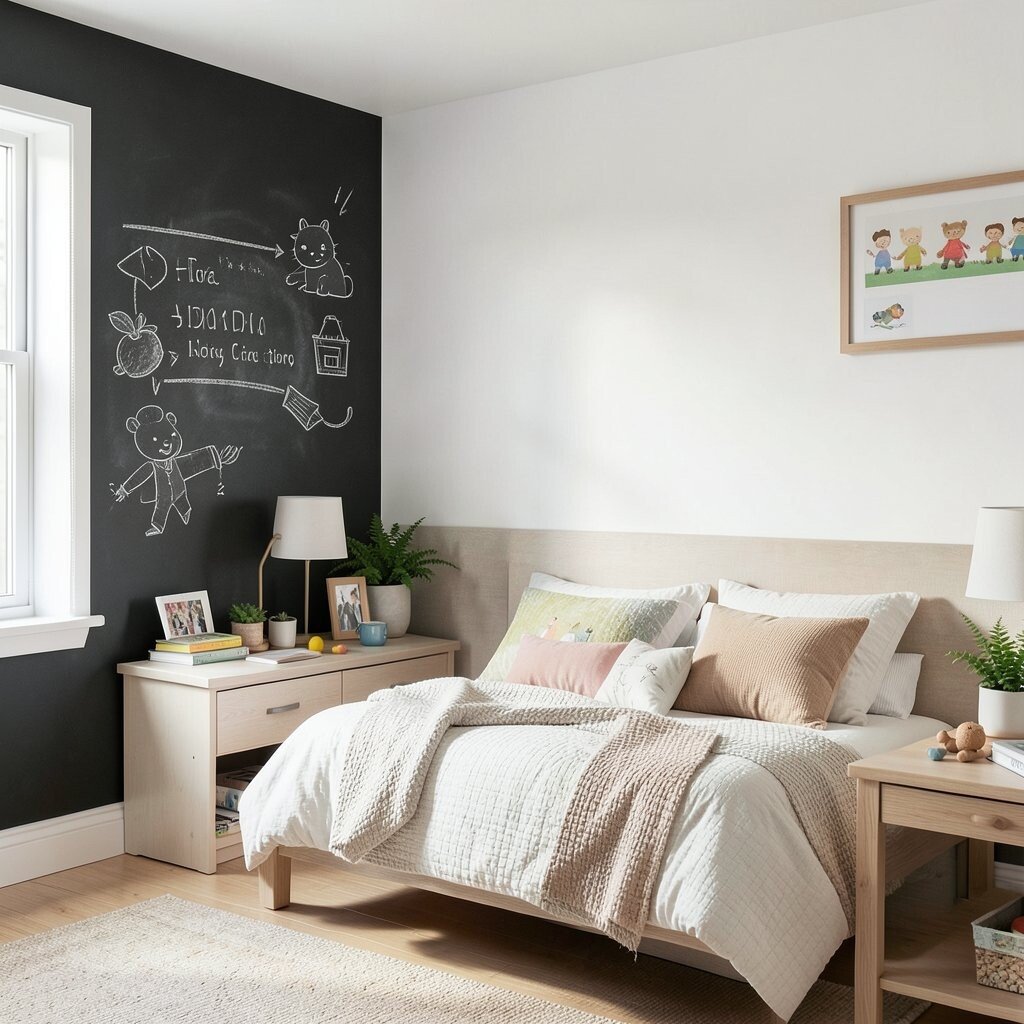
A chalkboard wall gives kids a place to draw that doesn’t take over paper everywhere. It also encourages quick doodles, math practice, and silly messages for family members.
Use framing or a border so the board looks intentional, and clean it easily with the right tools. This is a practical way to manage creativity since kids can draw freely and then erase when they’re done. Choose a whiteboard paint option if you prefer bright markers, or a classic chalk surface if your child likes textured lines.
Personalize the board by adding magnets shaped like animals or simple clip holders for notes. Keep a small eraser and chalk tray nearby so supplies stay with the board. For cost, start small with a removable board panel and expand if your child uses it every day.
12. Kids’ Desk With Adjustable Height and Good Lighting
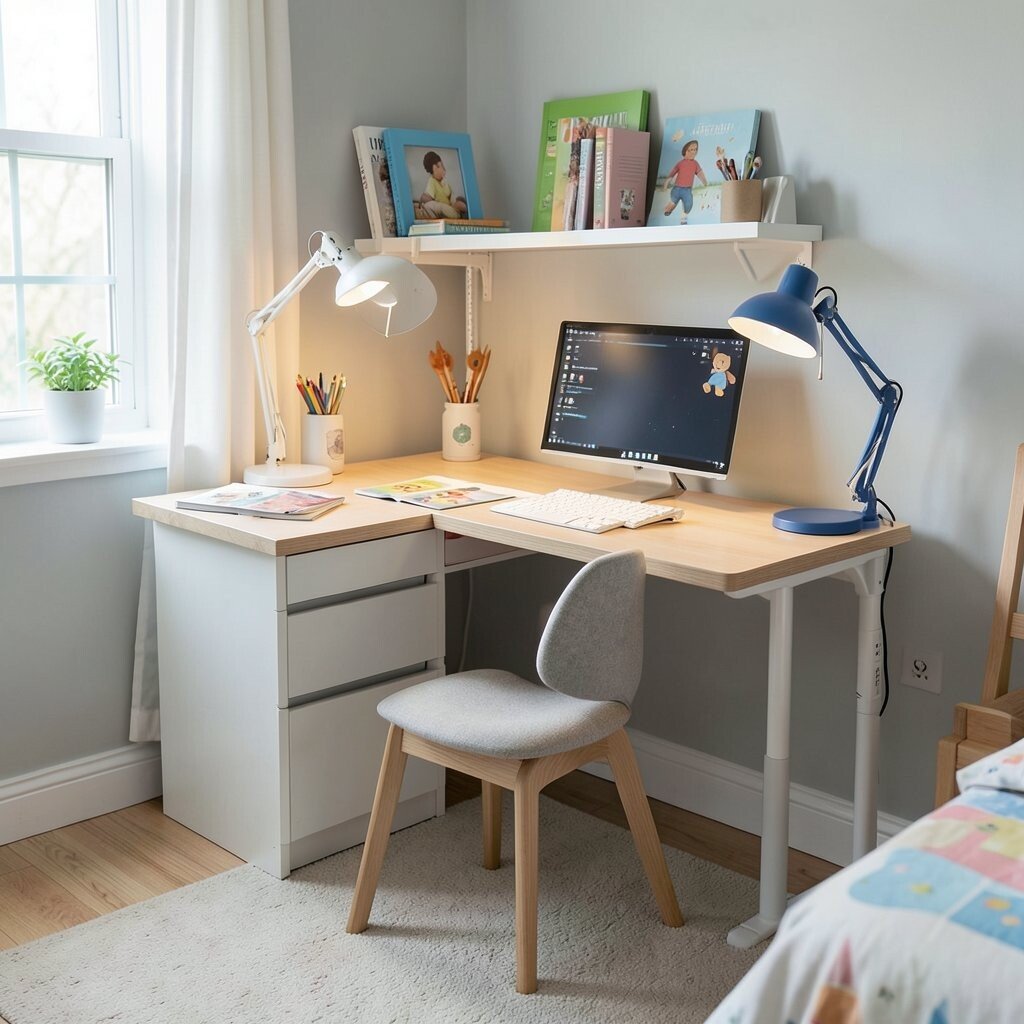
A kid-sized desk helps bedrooms feel more like a place for learning and making. Choose an adjustable height option so it lasts through growth spurts and changing interests.
Pair it with a desk lamp that can be angled, plus a comfortable chair with supportive cushioning. Good lighting makes drawing and building easier and can reduce eye strain during crafts. Keep the surface simple, then add a small tray for pencils, scissors, and crayons.
To personalize, hang a lightweight organizer behind the desk for bookmarks, stickers, and favorite pictures. Trends in kids’ rooms often include “making stations,” and this one supports that vibe without taking over the whole floor. Cost-wise, you can look for sturdy secondhand furniture and just update the chair cushion for comfort.
13. Wall Shelves at Reach Level for Favorite Stuff
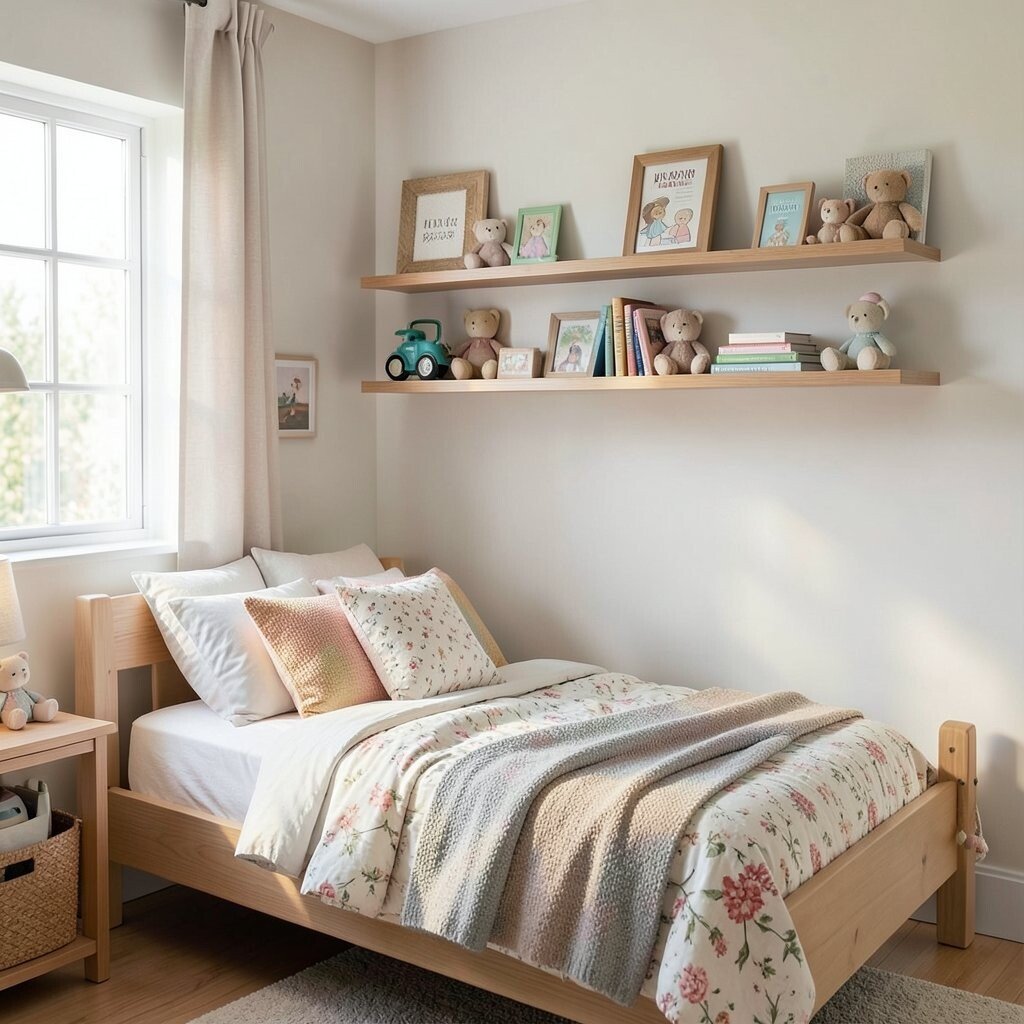
Floating shelves or low wall shelves help kids display their favorite toys, books, and collectible items. When it’s within reach, kids can rotate favorites and keep the room lively.
Use a mix of shelf heights so taller books and smaller objects look balanced. This creates a personalized “showcase” feel that also reduces mess since kids can put items back where they belong. Choose sturdy brackets and install into wall studs for safety, then smooth edges so hands are comfortable.
For practical tips, keep only a few items per shelf and rotate the rest in a closed bin. That way the display stays tidy and feels special instead of crowded. Personalize by adding a tiny backdrop color behind the shelf area, like a soft mint or warm cream, so the items pop.
14. Soft Rug Zones for Play, Reading, and Relaxing
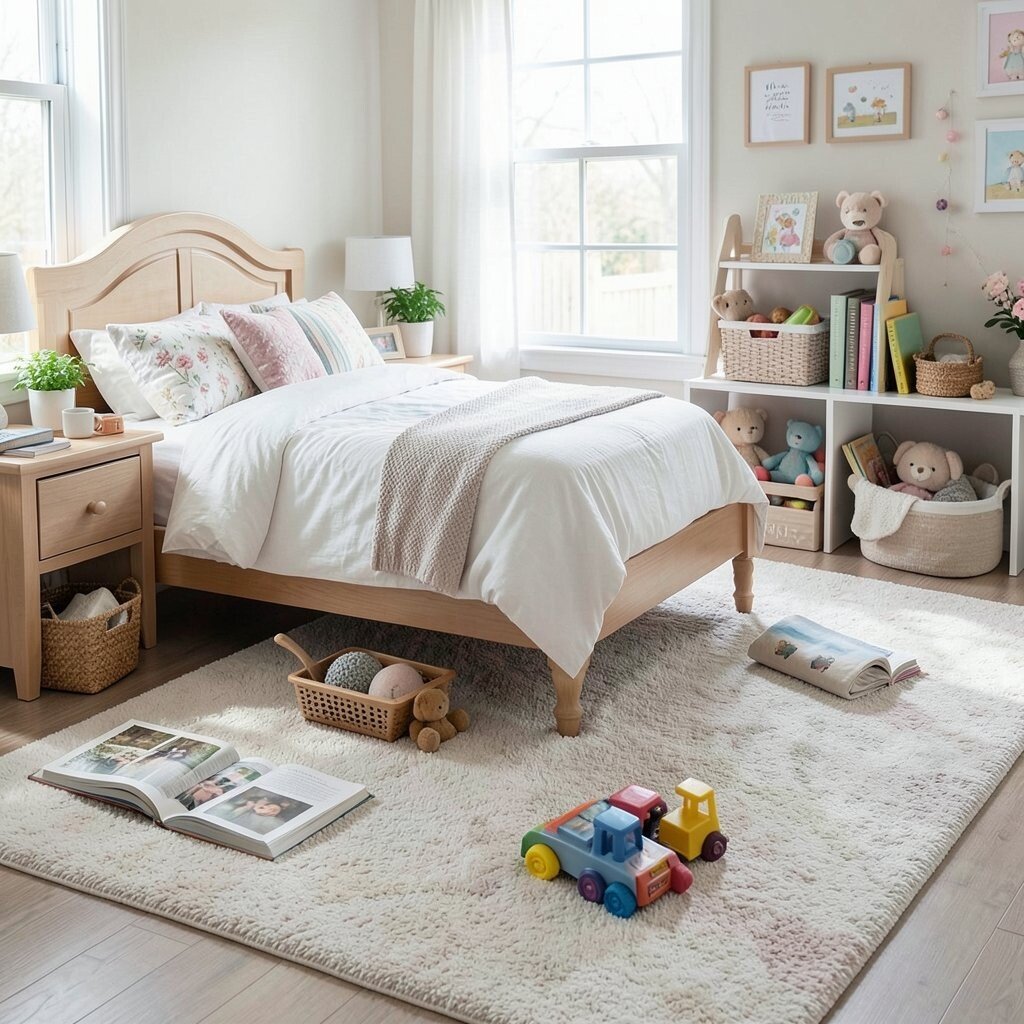
A big rug can define the “play zone” so toys don’t spread everywhere. Look for a soft, durable fabric that can handle spills and quick cleanups.
Choose a rug with colors that match the room’s palette, then place it under the bed or near the reading nook. This benefits kids by making the floor feel warmer and safer, especially for younger children who play on the ground. A simple rule is to size the rug so it anchors the space, giving the room a more finished look.
Personalize the zone with wall decals or small floor cushions that match the rug pattern. If cost is a factor, consider washable rugs or layered mats that you can shake out. A helpful trend is mixing textures, like pairing a plush rug with smooth shelving for balance.
15. Play Tent or Fort With Quick-Drop Storage
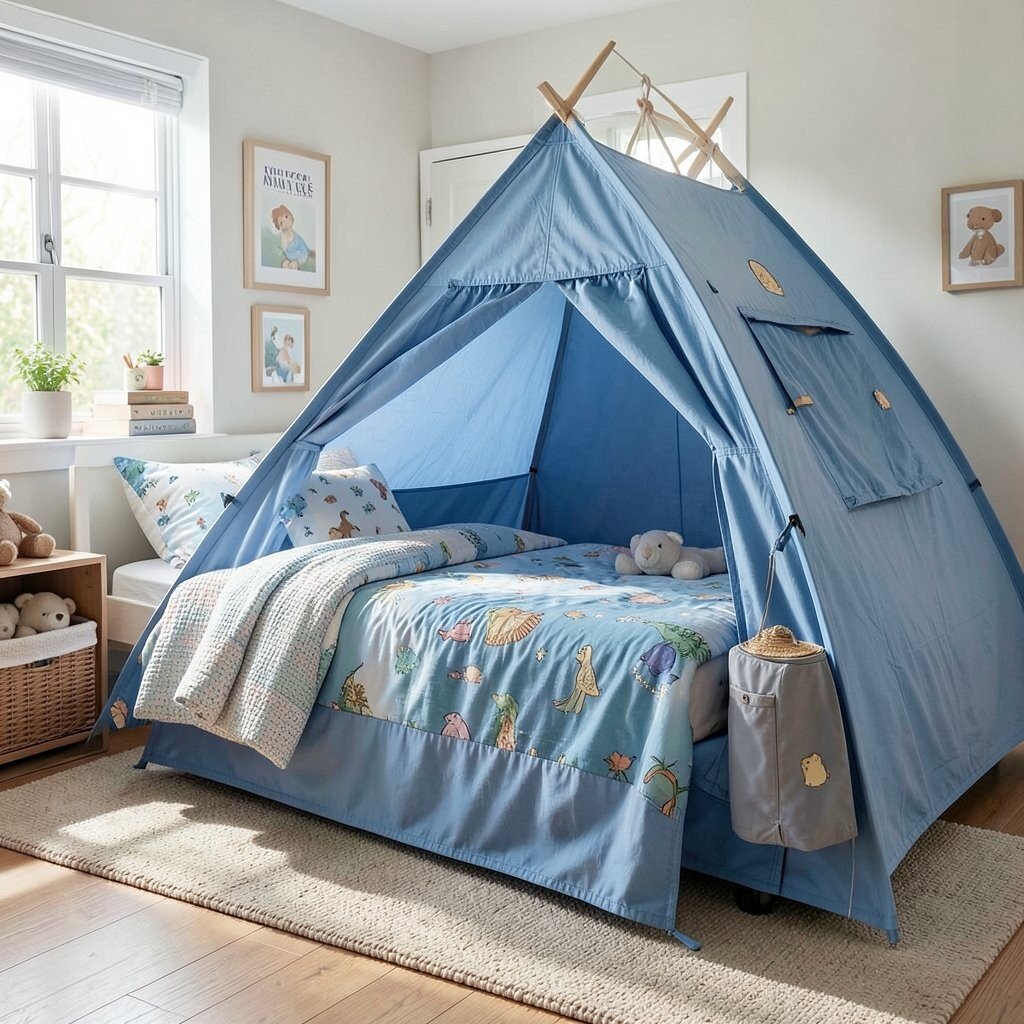
A tent or fort corner gives kids a special place to imagine bigger worlds. It can be as simple as a reading teepee or a larger fort setup for pretend games.
Add a soft storage bin or cube inside so toys can be collected quickly after play. This benefits busy families because cleanup becomes part of the game, not a separate chore. Pick materials that are easy to wipe and make sure the area stays clear of sharp edges.
Personalize with fairylight strands, themed blankets, and a small flag or sign made by your child. For cost considerations, start with a basic tent and add accessories gradually as your child uses it more often. Keep airflow in mind by leaving space for ventilation so it feels cozy instead of stuffy.
16. Personalized Name Sign and Mini Identity Corner
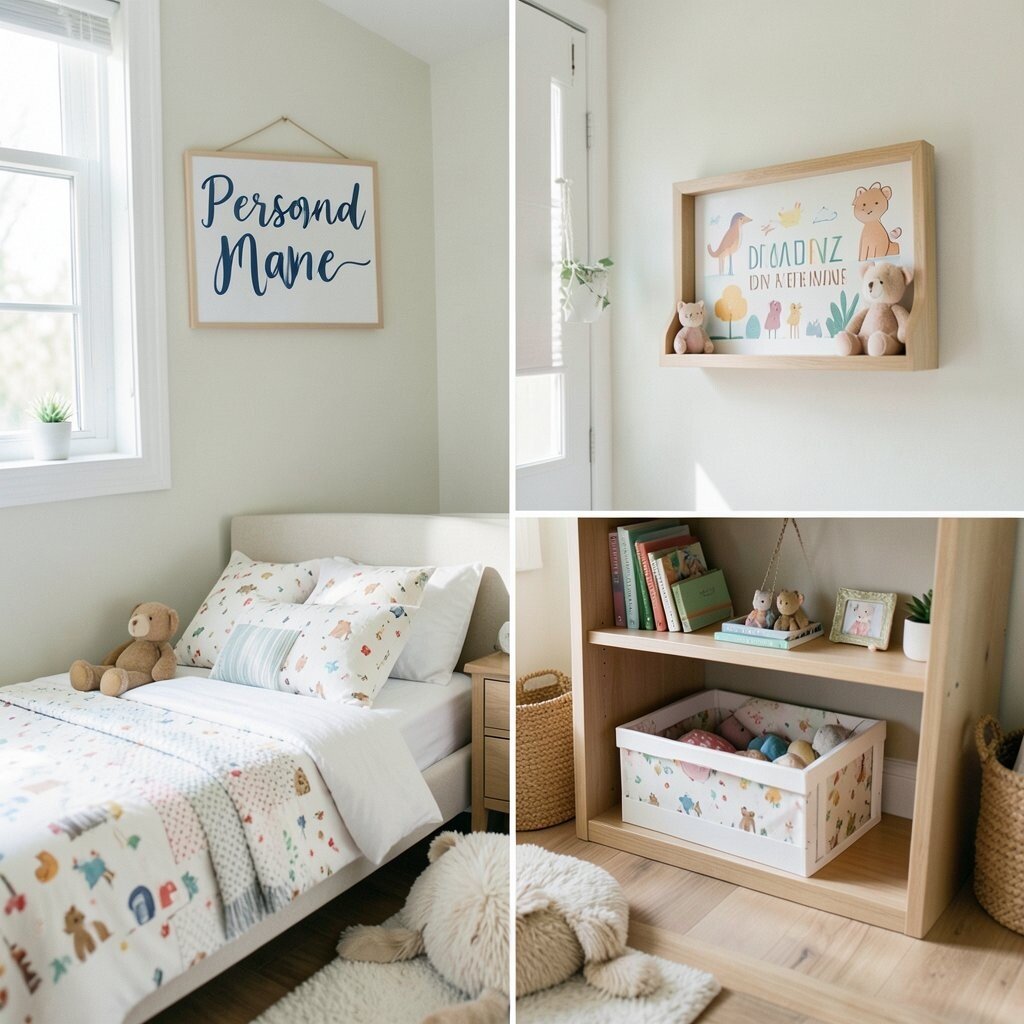
A name sign can make a kids’ room feel instantly more “theirs,” like a warm welcome every day. Choose a style that matches the room, such as wood letters, fabric banners, or a framed print with their favorite colors.
Build a mini identity corner with a small shelf, a framed photo, and a couple of meaningful items like a trophy, art medal, or a special rock from a trip. This helps kids connect the room with memories and pride, which often leads to better care and respect for the space. Keep items limited so the corner stays neat and doesn’t turn into visual overload.
For practical tips, secure frames properly and use easy-to-clean materials so dust and spills don’t become problems. You can personalize further by adding a growth chart nearby or a calendar sheet that marks important days. Cost-wise, a simple print and a few frames can look amazing, especially when you choose cohesive colors across the whole room.
As trends shift toward flexible, kid-led spaces, identity corners are a fun way to show personality without major renovations. Let your child update the items as interests change, so the room keeps feeling current. This approach also makes it easy to refresh the space during birthdays or new school years.