
Shoppers judge fast at a craft fair. Your display can make them stop, smile, and buy.
1. Build a Clear First Look

Your booth should make sense in a quick glance. When people can see what you sell right away, they feel calm and ready to shop.
Use strong signs, neat groupings, and one clear focal point. A tidy look helps your work feel more valuable, and it also makes your space feel special without costing much. Try raising some items on boxes or crates so the display has height and feels easier to see from far away.
2. Use Color With Care
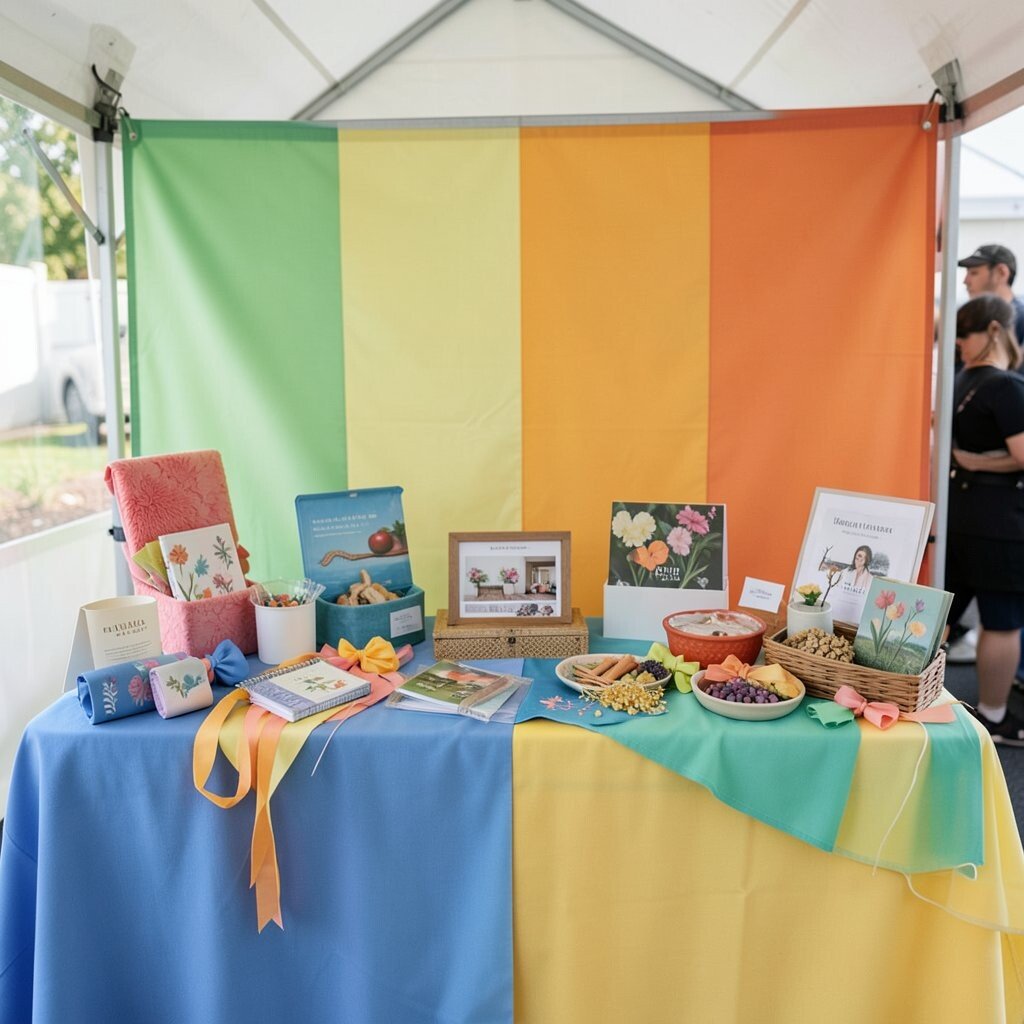
Color can pull people in before they even read your signs. A small set of colors can make your table look planned and polished.
Pick shades that match your products and your brand style. Bright colors can feel fun and modern, while soft tones can feel calm and handmade. If you want a fresh look without spending much, use colored fabric, paper, or ribbon to add interest.
Keep the color story simple so the booth does not look messy. Current fair trends often lean toward clean backdrops with bold accent colors, which helps items stand out. You can also use color to guide the eye toward your best sellers or new pieces.
3. Make Your Best Items Easy to Spot
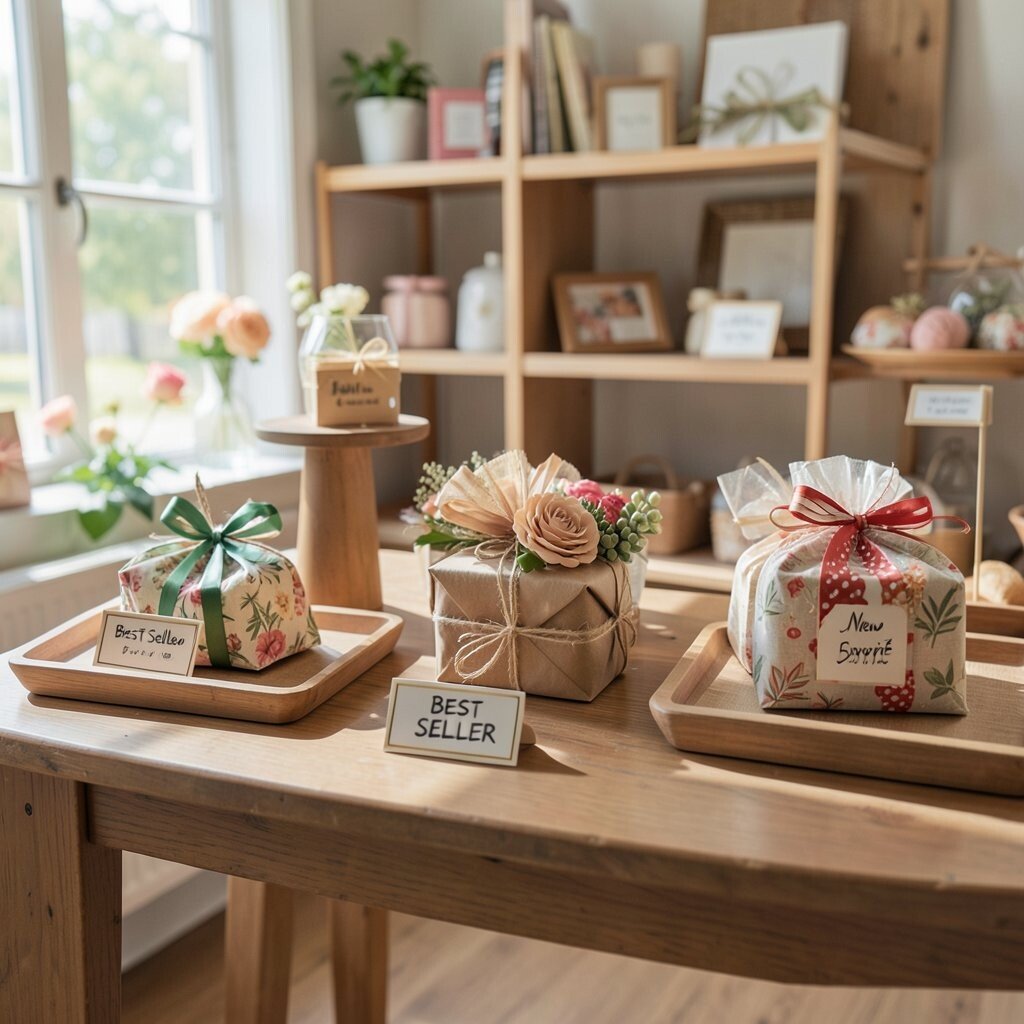
Your most popular pieces should not hide in the crowd. Put them where eyes land first, such as the front edge of a table or the center of a shelf.
This helps shoppers feel like they have found the good stuff fast. It also saves time for you because people ask fewer questions when the display already tells the story. A few simple stands, trays, or risers can help these items shine without a big cost.
Show more than one of each favorite item, but keep the group neat. If you sell gifts, place one item styled as a ready-to-give idea so buyers can picture it in real life. Small signs like “Best Seller” or “New Favorite” can add charm and guide attention.
4. Tell a Story With Small Scenes
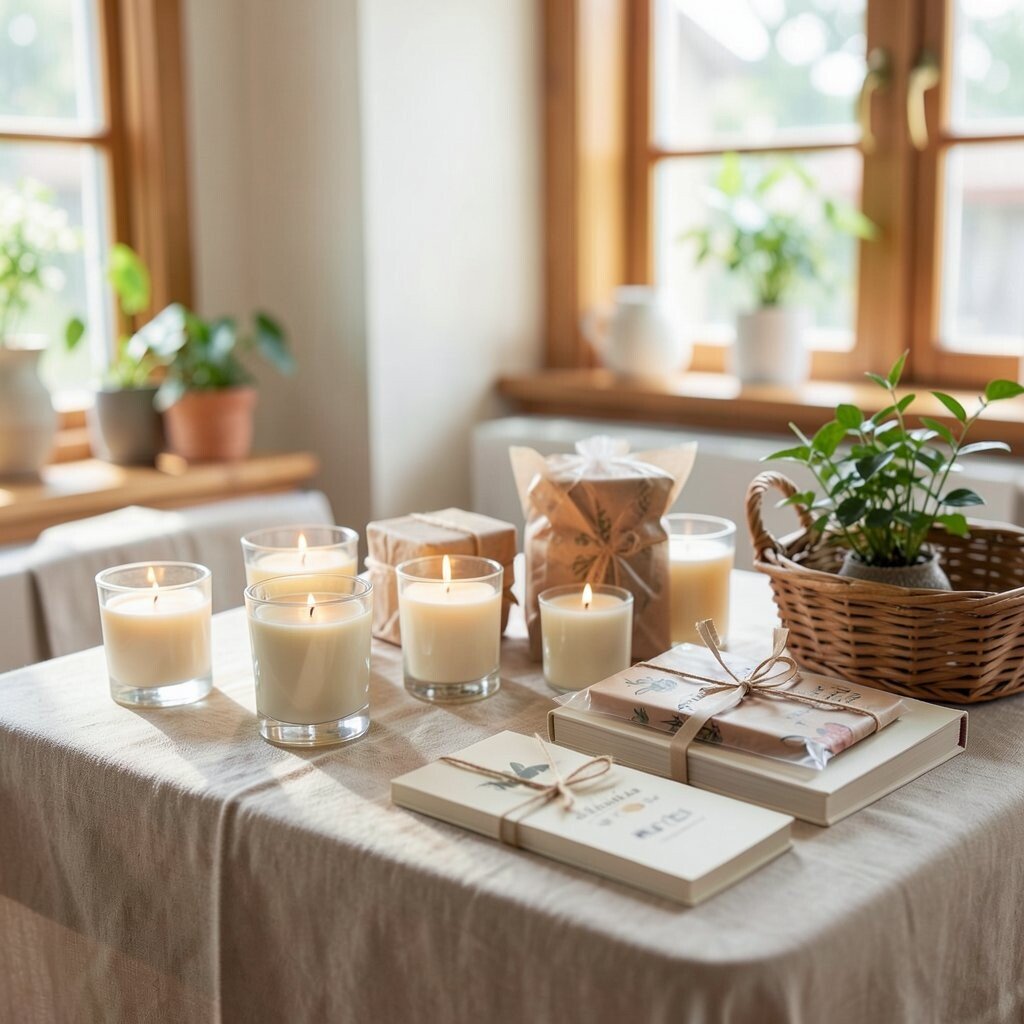
Shoppers often buy when they can imagine using the item at home. A small scene makes your booth feel warm and real.
Group matching items together, like candles with holders or cards with gift wrap. Add a simple prop or two, such as a basket, book, or plant, so the setup feels lived in. This kind of display can also make your work look more unique than a plain row of products.
5. Keep Your Table Neat and Easy to Shop
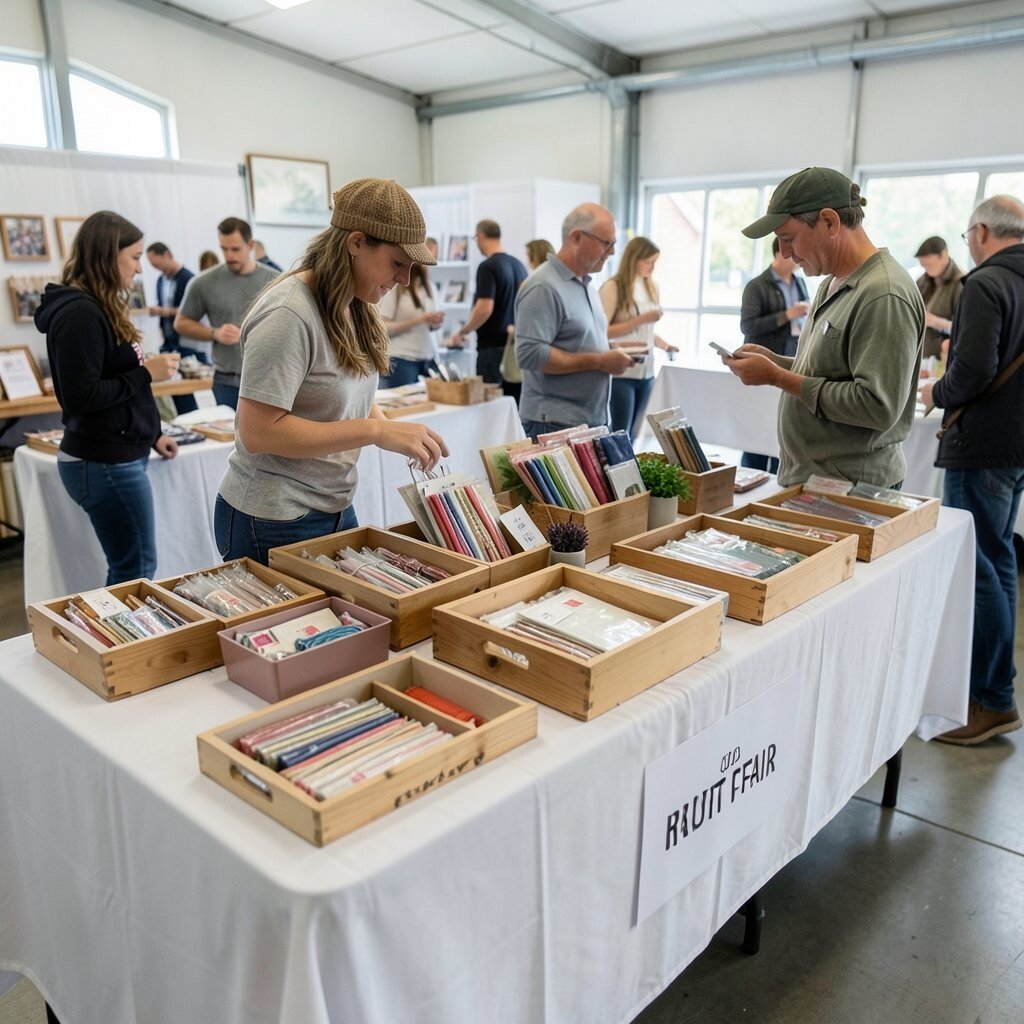
A clean booth helps people relax. If items are too packed together, shoppers may walk away before they even touch anything.
Leave small spaces between items so each piece can breathe. Use bins, trays, or dividers to keep parts grouped and easy to find. This makes shopping faster and also helps protect your work from getting bumped or tangled.
Good organization can save money too, since it lowers breakage and makes restocking simpler. Try to set up in a way that takes little effort during the day, so you can focus on talking with customers. A neat display also gives off a more professional feel, which can raise trust and sales.
6. Add Height and Layers
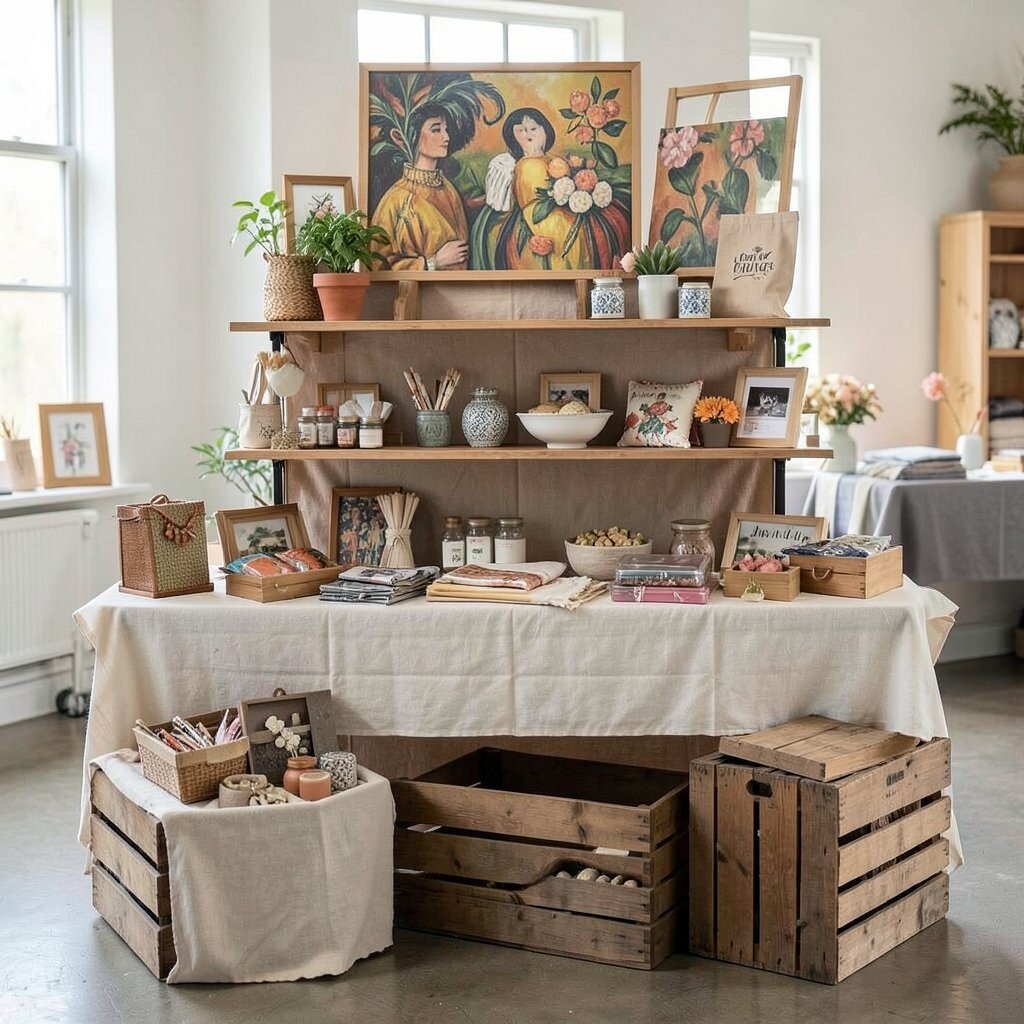
Flat tables can look plain and easy to pass by. Height gives your booth shape and makes it easier for the eye to move around.
Use crates, shelves, stands, or even sturdy boxes covered with cloth. Layering lets you show more items without crowding the table, and it can make your display feel rich and full. This is a smart way to get a larger look without spending a lot on new furniture.
Mix tall, medium, and low levels so the booth feels lively. Put the most eye-catching work at the top, then fill in with smaller pieces below. A layered setup also works well with current display trends, which often favor a boutique look over a plain market table.
7. Use Signs That Speak Simply
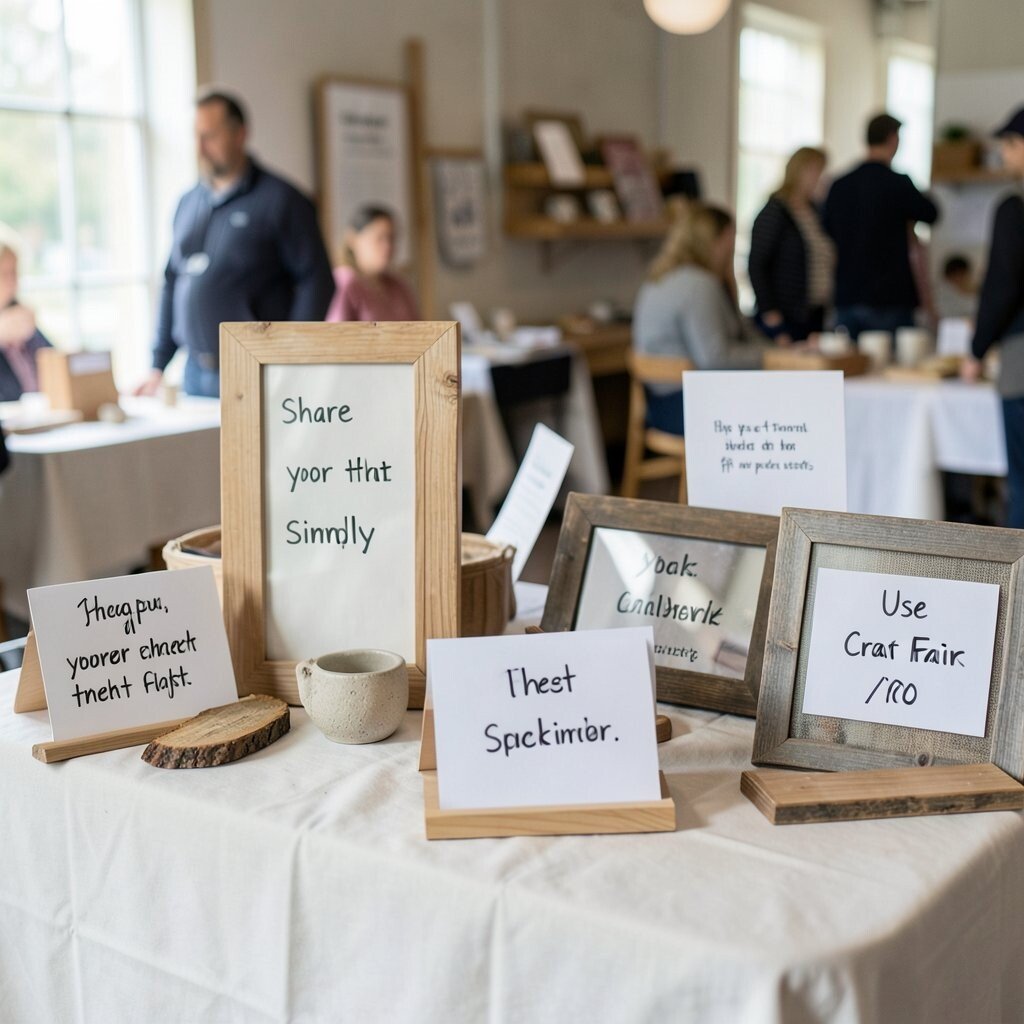
Good signs help shoppers understand your work fast. Clear words can turn a curious look into a real sale.
Keep signs short, bold, and easy to read from a few feet away. Share the item name, material, or price in a neat way that matches your style. Handwritten signs can feel personal and friendly, while printed signs can feel crisp and clean.
Choose sign materials that fit your budget, like cardstock, wood scraps, or reused frames. You can also add a tiny bit of your brand color to make signs feel like part of the booth. When signs look thoughtful, your whole display feels more put together.
8. Make the Booth Feel Like You
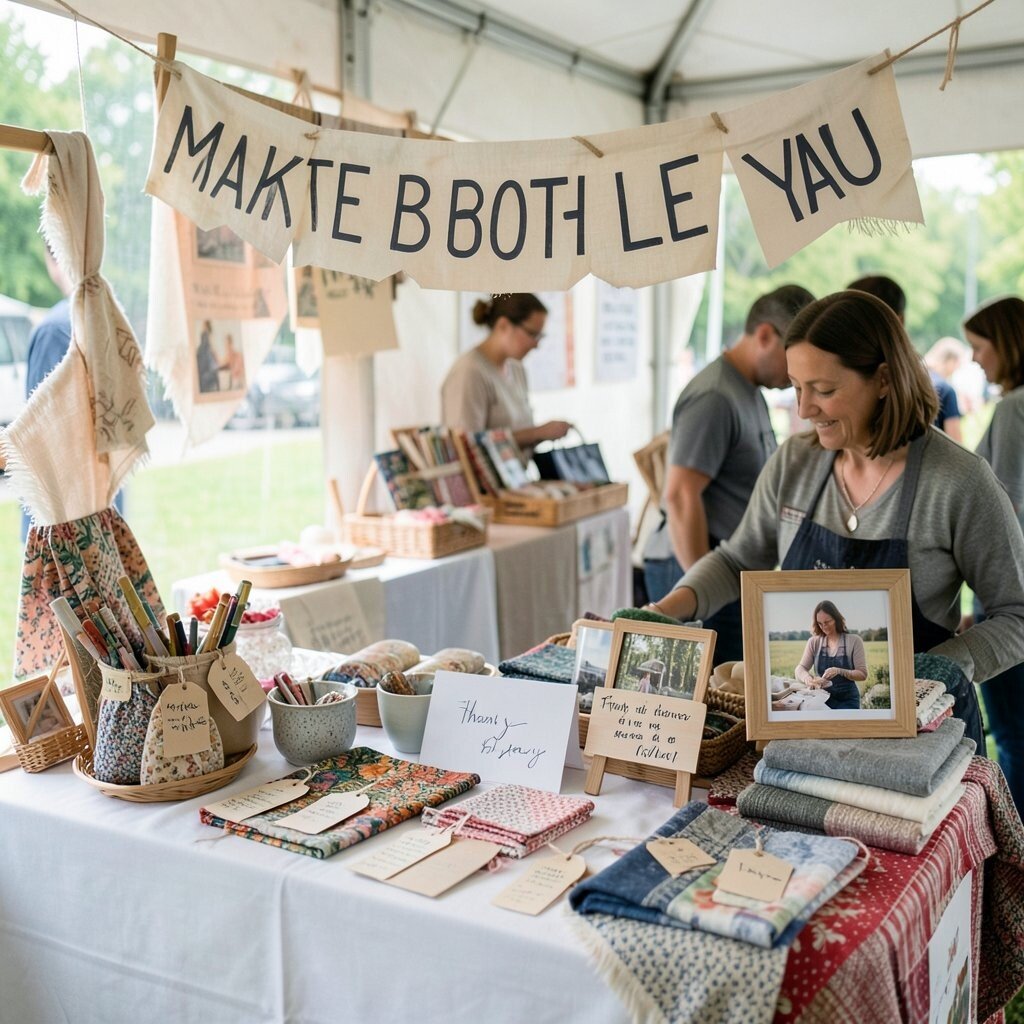
People love buying from a maker they remember. A booth with personality feels warmer than a booth that looks copied from a store.
Add touches that show your style, such as favorite fabrics, handmade tags, or a small photo of you working. These details help shoppers connect your face and story to the items on the table. That connection can make a simple product feel more special.
Personal touches do not need to cost much. A handwritten thank-you card, a custom banner, or a small sign about your process can do a lot. When your booth feels honest and human, shoppers often feel more willing to buy and return later.
9. Light It Well
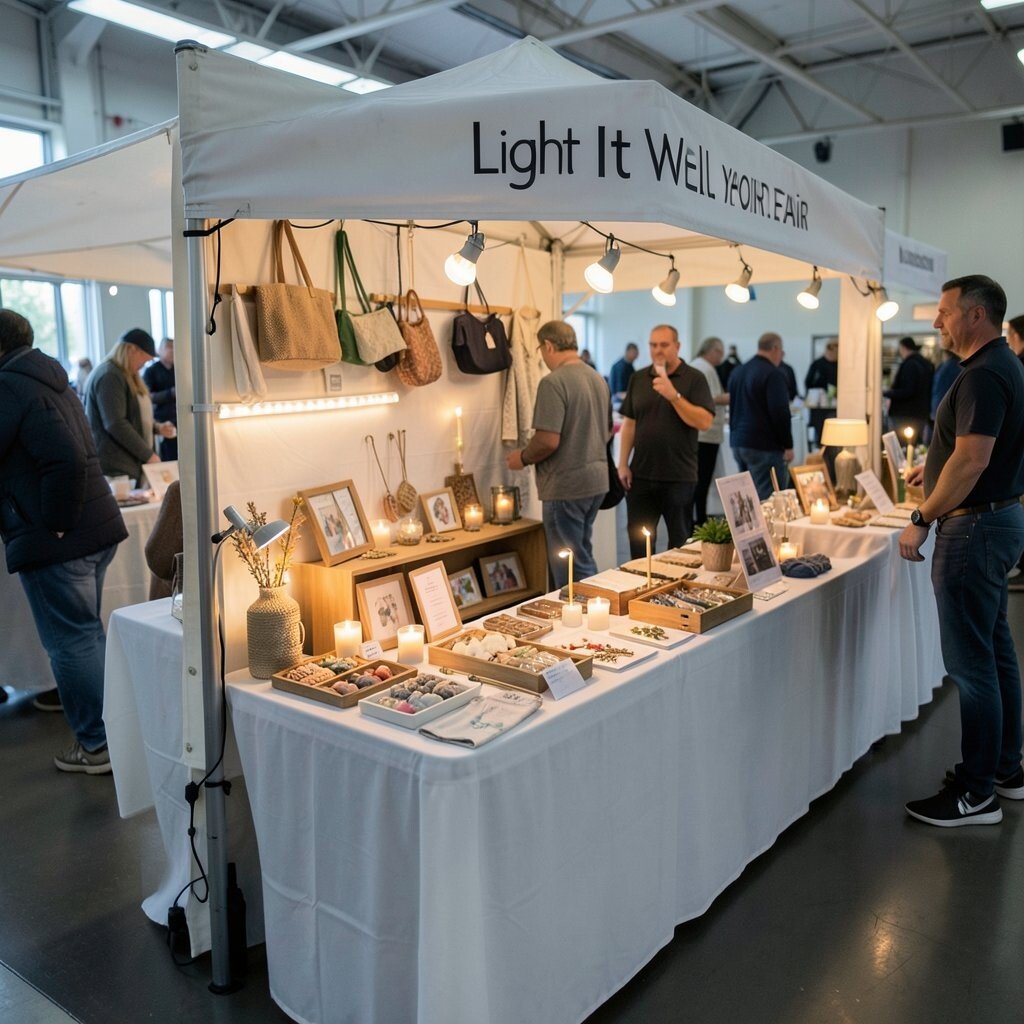
Light can change the whole mood of your display. A bright, welcoming booth often gets more attention than a dim one.
If the event space is dark, use small plug-in lights, battery lights, or battery candles where allowed. Good light shows color better and makes details easier to see, which helps buyers feel confident. Even a cheap light strip or clip lamp can make products look cleaner and more appealing.
Try to aim light at the products, not in shoppers’ eyes. Warm light can make handmade work feel cozy, while cooler light can help modern pieces feel crisp. Check how your display looks from the aisle so you know the booth still feels inviting from a distance.
10. Make Prices Simple and Friendly

People like to know prices without asking too much. Clear pricing makes shopping smoother and can lead to more quick buys.
Use tags, baskets, or small signs so prices are easy to spot. If you offer a range, group items by price or type so buyers can shop at their comfort level. Simple pricing also helps your booth feel honest, which builds trust fast.
Think about value as you set each price. A display that looks polished can help people understand why an item costs what it does. You do not need fancy supplies for this, just neat tags and a steady system that makes sense at a glance.
11. Show How Items Can Be Used
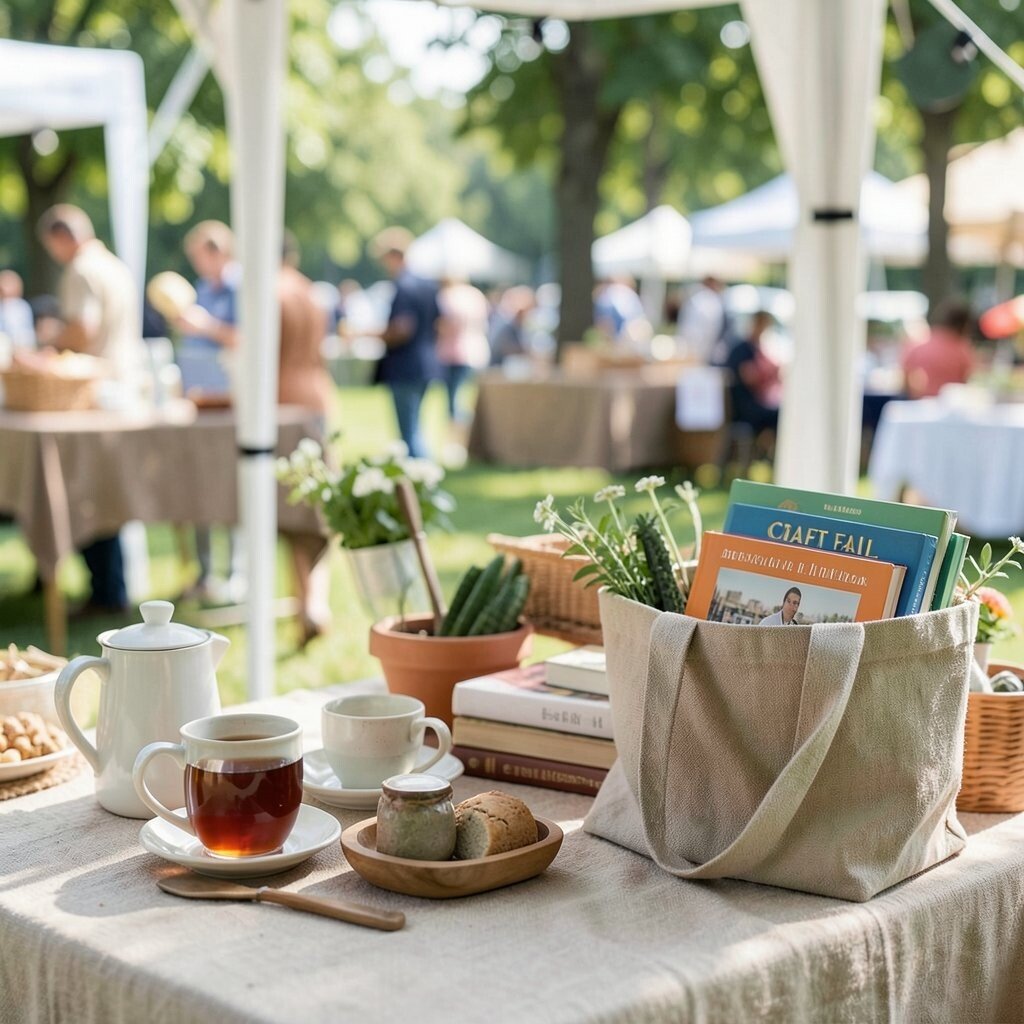
Shoppers often need help picturing the product in real life. A display that shows use can turn interest into action.
Place items with props that match their purpose, like a mug next to tea, or a tote filled with books. This makes the item feel more useful and helps buyers imagine it in their own day. It also gives your booth more life and charm.
Try to keep props simple so the product stays the star. Current shopping trends often favor “lifestyle” setups because they feel natural and easy to understand. A small use-based scene can be more powerful than a long sales pitch.
12. Keep Your Branding Consistent

When your booth looks consistent, shoppers remember you better. A steady style makes your business feel stronger and more professional.
Use the same colors, fonts, and tone across signs, tags, and packaging. Even small things like ribbon, tissue paper, or table cloths can support your brand look. This can help your booth stand out from nearby sellers without needing a huge budget.
Consistency also makes future fairs easier because you can reuse the same basics again and again. Add one or two unique touches to keep it fresh, but keep the main style the same. That balance makes your booth feel both new and familiar.
13. Create a Spot for Touch and Try

Many shoppers want to hold an item before they buy. A touch-friendly space can help them feel safe and interested.
Put out samples, demo pieces, or items that people can pick up without worry. For products like jewelry, fabric goods, soaps, or art prints, touch helps buyers feel quality right away. It also gives you a chance to talk about what makes your work special.
Be sure to keep a neat hand-care setup if needed, like wipes or a small sign with polite rules. This can protect your items while still making the booth friendly. Hands-on spots often feel more fun and can help people stay longer, which is good for sales.
14. Use Packaging as Part of the Display

Packaging is not just for after the sale. It can also help your booth look polished and ready for gifting.
Stack tissue, boxes, bags, and ribbon in a tidy way so buyers can imagine taking something home right away. Pretty packaging makes items feel more valuable and can make gifts easier to sell. If you want to keep costs down, use simple kraft bags, plain tissue, or stamps for a custom touch.
Try to match your packaging to your brand style so it feels like part of the booth. Gift-ready packaging is a strong trend because many fair shoppers want fast, easy presents. When buyers see that your items are ready to give, they often feel more likely to buy on the spot.
15. Watch How People Move
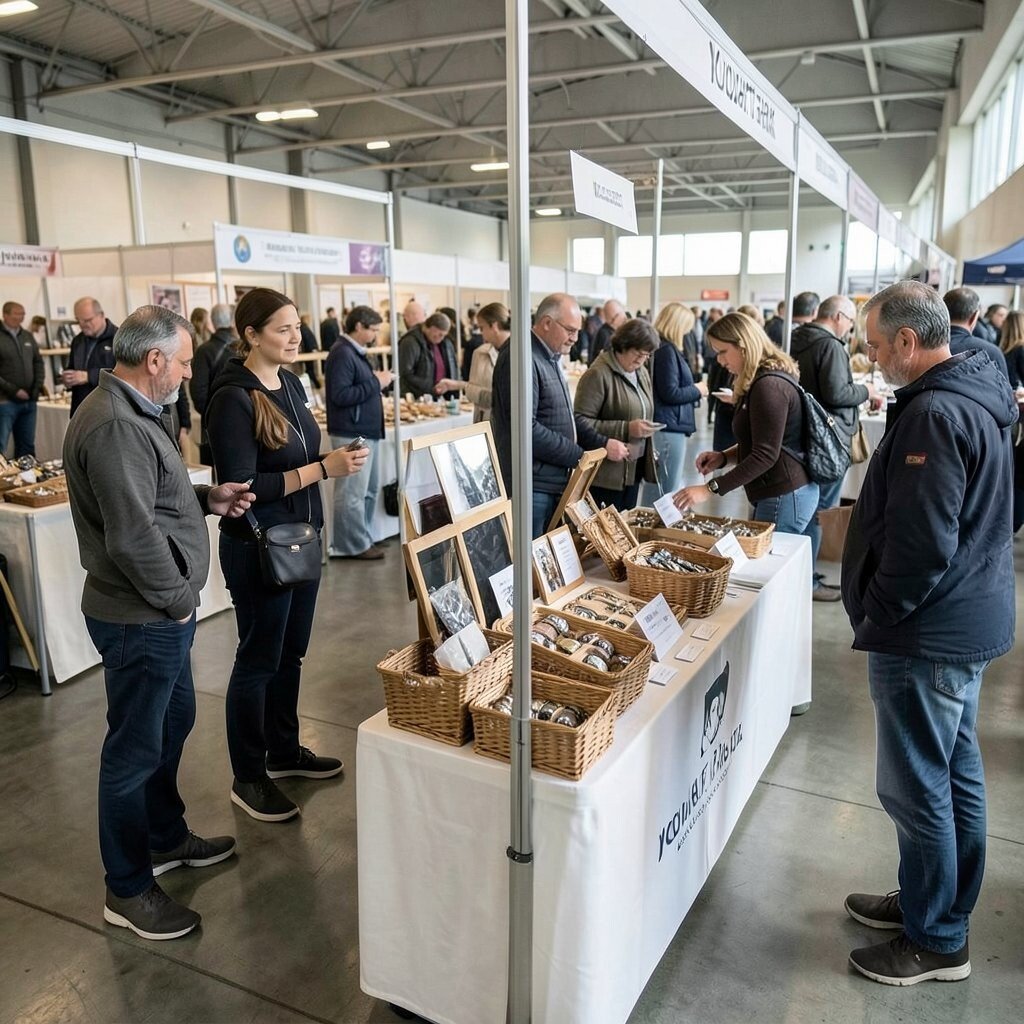
Your booth should work with the way people walk, stop, and look. A smart flow can make it easier for shoppers to stay longer.
Place open space where people first step in, then guide them toward the best pieces. Use shelves, baskets, and signs to lead the eye in a gentle path. This can help prevent crowding and make the booth feel calm instead of rushed.
Notice which items people reach for first and which spots get ignored. You can shift products during the event to improve the flow and make better use of the space. Small changes like moving a sign or raising a product can have a big effect on sales.
16. Refresh the Display as the Day Goes On

A booth can get tired fast after many visitors. Small updates help your space stay lively and appealing.
Straighten items, fill gaps, and swap in fresh pieces when needed. A neat booth signals care, and that care can make buyers trust the quality of your work. It also helps your display look full, even after several items have sold.
Bring extra supplies so you can fix the booth without stress. Tiny updates like fluffing fabric, wiping a sign, or changing one feature can keep the whole setup feeling new. This simple habit can protect your sales all day long.